PADI vs SSI in Thailand: Getting Your License
This site contains affiliate links. We may earn a commission at no extra cost to you.
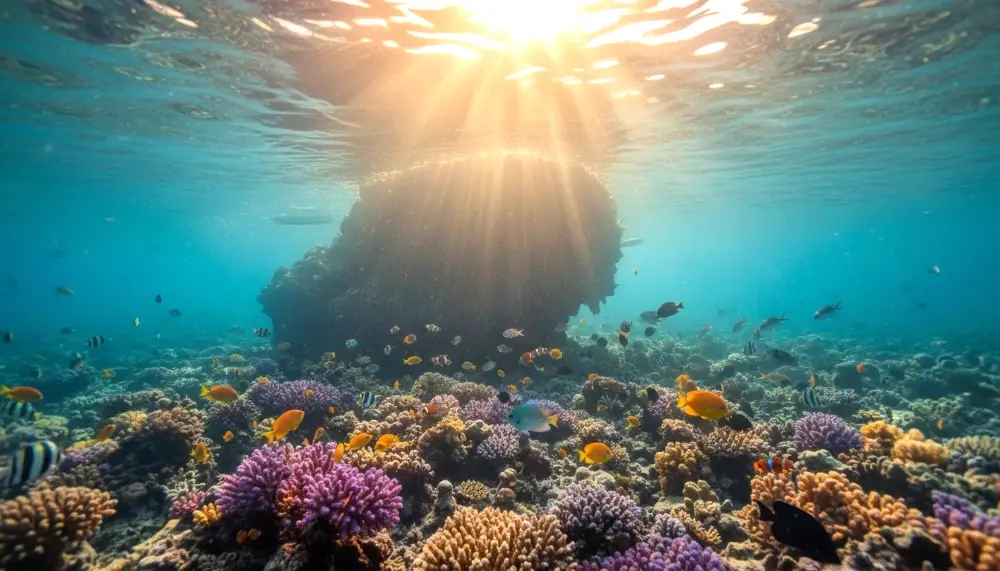
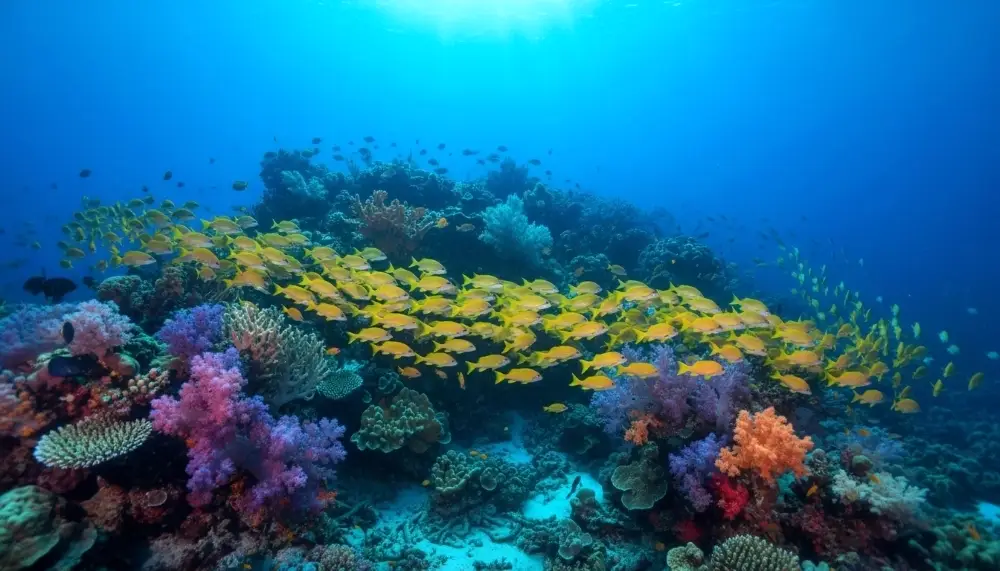
Thailand remains the global epicentre for scuba diving education, transforming thousands of travellers into certified explorers every single month. Whether you are drifting over the vibrant purple soft corals of Koh Lipe or navigating the granite pinnacles of the Similan Islands, the choice between PADI and SSI is the first real decision you will make on your underwater journey, and it is a more nuanced one than most first-timers expect.
The honest answer is that neither agency produces better divers. Both adhere to identical World Recreational Scuba Training Council safety standards, both are accepted at dive centres in every corner of the planet, and both will put the same qualification on your logbook at the end of four days in warm tropical water. What they do differently is the commercial structure, the learning experience, the price, and the culture of the school attached to each. Those differences matter, and this guide unpacks all of them so you can make the choice that genuinely fits your trip.
The Quick View:
- Budget Alignment: Open Water courses typically range from 9,000 THB to 14,500 THB depending on the region and agency. SSI schools consistently undercut PADI on advertised price due to lower licensing overhead costs passed to the student.
- Global Recognition: Both PADI and SSI certifications are ISO-certified and accepted at every professional dive centre worldwide. Presenting either card at a dive shop from Mexico to Micronesia will get you in the water without question.
- Digital Flexibility: SSI often provides lower entry costs due to free digital basic materials, while PADI offers a highly refined, premium app experience with a more structured self-study flow.

From temples to island tours, Klook
covers Thailand’s best experiences.
Hotel pickup is often included and
prices beat the pier walk-in rate.
PADI vs SSI: The Definitive Comparison
PADI (Professional Association of Diving Instructors) and SSI (Scuba Schools International) are the two largest scuba training agencies globally. Both adhere to World Recreational Scuba Training Council standards, which means the minimum safety requirements, depth limits, skill criteria, and qualification benchmarks are identical. A PADI Open Water diver and an SSI Open Water diver emerge from their courses with equivalent practical capability.
The primary difference lies in business philosophy. PADI operates as a franchise-based system where course materials are owned for life by the individual student. Once you pay for the digital course, that content is yours permanently through the PADI app regardless of which shop you complete the training with. SSI, by contrast, is centre-based: the free basic digital materials are accessible through any affiliated shop’s SSI portal, and access is tied to the training centre rather than purchased outright by the student.
In practical terms, this means SSI courses often appear cheaper on the front end because the school absorbs material costs as a business decision rather than passing them to the student individually. PADI courses price the lifetime material access into the course fee, which is why the advertised number is typically 1,000 to 2,500 THB higher. Neither model produces a better diver. Both produce a certified diver ready for recreational diving anywhere in the world.
| Feature | PADI (Professional Association of Diving Instructors) | SSI (Scuba Schools International) |
|---|---|---|
| Average Course Cost | 11,000 – 14,500 THB | 9,000 – 12,500 THB |
| Material Ownership | Lifetime access (Digital or Physical) | Digital access (Free basic, paid Pro) |
| Flexibility | Strict adherence to manual sequence | Instructors can adapt the order of skills |
| Certification Fee | Usually included in course price | Often separate or bundled at a lower rate |
| Global Presence | Largest network of dive centers | Rapidly growing second-largest network |

From classic Thailand highlights to
hidden-gem private tours. Cancel
free up to a day before your
start time if plans change.
The Cost of Submerging:
Obtaining a dive licence in Thailand costs between 9,000 THB and 16,000 THB for an Open Water certification, depending on agency, location, school size, and what is bundled into the price. Koh Tao remains the most affordable hub, with courses starting around 9,000 THB for SSI and 11,000 THB for PADI at competitive volume schools. Premium locations like Phuket or Khao Lak average 13,000 to 15,000 THB due to higher boat fuel costs, pier fees, and the quality of the dive sites used for qualification dives.
On Koh Tao, competition between dozens of established schools genuinely drives prices down, and many bundle basic accommodation into the course fee as a package deal. Arriving on the island and walking along the main drag comparing chalkboard prices is a well-worn ritual for budget-conscious certification students. In contrast, diving from Phuket involves larger, more luxurious day-trip boats with full buffet spreads, nicer equipment fleets, and qualification dives at sites like Shark Point or the Racha Islands, which justifies the higher price bracket.
When budgeting, always account for the “Plus Plus” culture sometimes found in higher-end resort-affiliated dive schools. This refers to the 10% service charge and 7% VAT that may not be reflected in the initial quoted price. In independent local dive shops, the price quoted is almost always the price paid. Ask explicitly whether the quote is inclusive of all fees before committing, including whether the certification processing fee is bundled or charged separately at the end.
One cost that surprises many first-timers is medical clearance. Both PADI and SSI require students to complete a medical questionnaire before beginning confined water training. If you disclose certain conditions (asthma, recent ear surgery, heart conditions), you may be asked to obtain a doctor’s sign-off before the school can accept you onto the course. This is not an obstacle, it is a safety mechanism, but it is worth knowing in advance if you have any relevant medical history so you can arrange clearance before you arrive at the dive shop.

Lock in your Thailand accommodation
early and beat peak-season price hikes.
Agoda’s filters let you compare options
side by side before you commit.
Understanding the Course Structure:
Both agencies structure their Open Water courses across three distinct phases, and understanding what each phase involves will help you know exactly what to expect across your three to four days of training.
Phase 1: Knowledge Development. This is the theoretical component. Both PADI and SSI now deliver this digitally: PADI through its eLearning platform accessed via the PADI app, and SSI through the MySSI app or a web browser. Both platforms cover the same core topics: how pressure affects the body underwater, how breathing gas works at depth, buoyancy principles, dive planning, and emergency procedures. Most students complete this phase at home before their trip, which means the first day at the dive school can begin in the pool rather than in a classroom. Starting your eLearning before you board your flight is one of the most practical things you can do to save time in Thailand.
Phase 2: Confined Water Training. This is the pool or shallow bay phase, where you practise the 20-plus skills that make up the core curriculum. Clearing a flooded mask, recovering a regulator, establishing neutral buoyancy, practising controlled emergency ascents: all of these are rehearsed in a calm, supervised environment before you ever go to depth. PADI requires skills to be completed in a specific order aligned with the manual chapters. SSI gives instructors more flexibility to adapt the sequence based on student confidence and comfort. For nervous students, the SSI approach often feels less regimented and more responsive to individual pace.
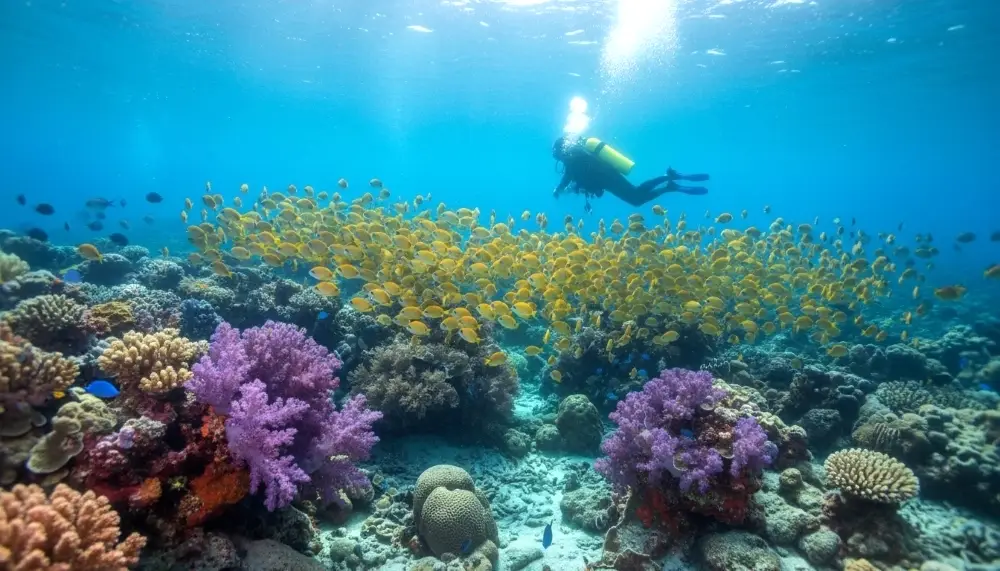
Phase 3: Open Water Dives. Four certification dives in open water, typically spread across two days. These dives take you to a maximum of 18 metres, apply the skills practised in confined water to a real reef environment, and are the component that most students remember most vividly. By the end of the fourth dive, your instructor signs off your qualification, and you receive a permanent certification card (physical and digital) that carries no expiry date.

Pick a Thailand eSIM plan that matches
your trip length on Airalo’s global
marketplace. Install before departure
and you’re online the moment you land.
Pro Tips For Stress Free Travel:

Grab and Bolt: Essential for getting to and from the piers without overpaying. Bolt is often 20% cheaper in Phuket, while Grab is more reliable in Koh Samui. Both apps require active mobile data and SMS verification on first setup, so activate your eSIM before you land.
Yesim: Pre-purchase an eSIM through Yesim, Airalo, or Saily to ensure you have signal the moment you step off the ferry at Mae Haad Pier. The MySSI and PADI apps both require live internet for logbook syncing and course material access, and public pier Wi-Fi is unreliable at best.
Klook and Get Your Guide: Use these for day-trip snorkelling or Discover Scuba experiences before you commit to a full certification course. Reading verified reviews across multiple operators on these platforms is the most efficient way to shortlist schools before you arrive.
NordVPN: Vital for booking through 12GO or Agoda on public pier Wi-Fi to protect your financial data. Liveaboard and marina hotspots are open networks. Log into anything financial without a VPN active and you are taking an unnecessary risk.
Logistics: Use the PADI Adventures app or the MySSI app to manage your digital logbooks and certification cards. Both apps allow you to log dives, track specialties, and present your certification digitally at any dive shop worldwide, which means you never need a physical card in your wallet.
Flight disruptions: If a delayed connection causes you to miss the first day of a pre-paid course, document everything immediately and contact the school as soon as possible. AirHelp is worth knowing about for qualifying delays on European-regulated routes, as they pursue compensation on your behalf with no upfront fee.

Skip the airport SIM queue in Thailand.
Yesim’s eSIM activates before takeoff
so you’re online the second your
plane touches the tarmac.
Regional Variance: Where to Train
Thailand’s diving is split between the Gulf of Thailand (Koh Tao, Koh Samui) and the Andaman Sea (Phuket, Khao Lak, Koh Lipe). The two coasts respond to different monsoon systems, so the optimal training location shifts depending on when you are travelling. The Gulf is ideal for year-round beginner training with calm, shallow bays and excellent visibility through most of the calendar, while the Andaman offers spectacular seasonal visibility and pelagic encounters from November through May.
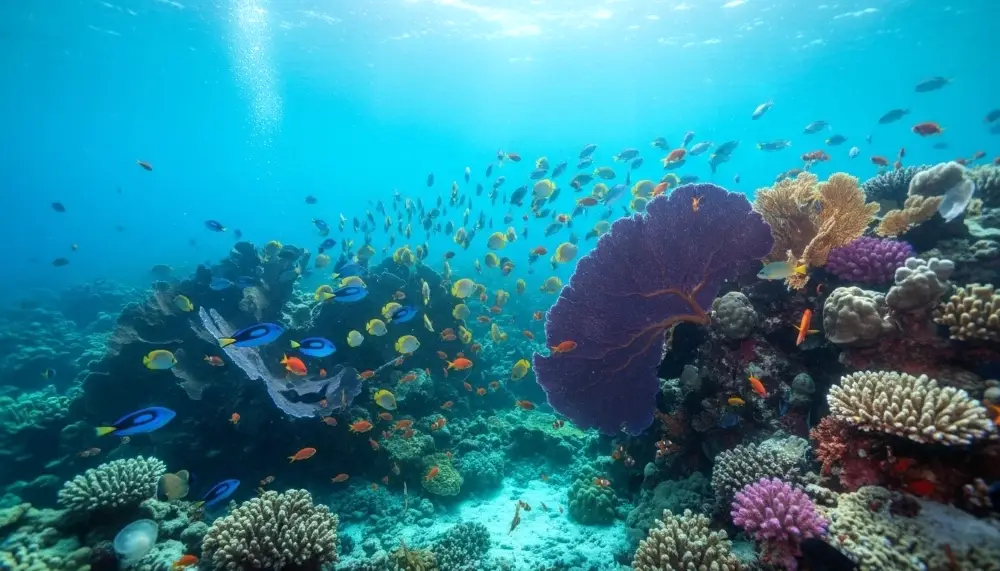
Koh Lipe: A boutique experience at the southern tip of Thailand, near the Malaysian border. Expect smaller groups, pristine reefs with genuinely high fish density, and a slower pace of training. Prices are slightly higher than Koh Tao due to the island’s remoteness and limited supply of schools, but the dive sites used for qualification dives are among the most beautiful in the country. A great choice for travellers who want a certification experience that feels personal rather than industrial.
Koh Tao: The global volume leader for recreational diving certifications. It is the most efficient place on Earth to get certified, with dozens of established schools competing aggressively on price, pace, and community. Big Blue, Ban’s, and Crystal are among the most widely reviewed, and each attracts a slightly different type of student. The environment is high-energy, social, and immediately welcoming. Koh Tao produces a particular kind of post-certification culture: students stay longer than planned because they enjoy both the diving and the island social scene. Book accommodation via Agoda or Booking.com well ahead during December through February when the island fills up.
Phuket and Khao Lak: Best for travellers who want to combine certification training with access to luxury resorts, international restaurants, and the world-class liveaboard scene. Khao Lak is the primary departure point for the Similan Islands. Most Open Water courses in this area are conducted at local sites like Shark Point, Anemone Reef, or the Racha Islands, all of which offer clear Andaman water and excellent biodiversity. Use 12GO to book ferry or bus connections between Bangkok and Surat Thani or Khao Lak ahead of Thai national holidays when transport fills completely.
What Happens After Open Water:
The Open Water certification is just the beginning. Most newly certified divers emerge from their qualification dives already thinking about the next level, and Thailand is uniquely well-positioned to facilitate exactly that progression.
Advanced Open Water (AOW): The natural next step, completed over two days and five adventure dives. AOW unlocks a maximum recreational depth of 30 metres and includes a mandatory deep dive and navigation dive, plus three elective specialties chosen from options like night diving, wreck diving, peak performance buoyancy, or underwater photography. On Koh Tao, AOW courses typically cost between 8,500 and 12,000 THB depending on agency and school.
Rescue Diver: Considered by most experienced divers to be the most genuinely rewarding course in the recreational programme. Rescue training teaches you to anticipate problems, manage dive emergencies, and assist other divers in distress. The course is physically demanding and emotionally engaging in a way that Open Water and Advanced courses are not. Many Rescue graduates describe it as transformative for their overall dive confidence.
Specialty Courses: Both PADI and SSI offer a wide range of single-day specialty certifications that open specific diving experiences. Nitrox (enriched air diving) is particularly popular on Koh Tao because it extends bottom time on repetitive dives, which matters enormously when you are doing two or three dives per day across a week. A Nitrox specialty typically costs 4,000 to 6,000 THB and can be completed in a single day between dives.
Divemaster and Instructor: For those considering a longer stay or a career pivot, Thailand is one of the world’s premier destinations for professional-level training. A Divemaster internship on Koh Tao typically runs six to twelve weeks and costs between 35,000 and 65,000 THB depending on the school and what is included. The combination of volume, site diversity, and established professional mentorship makes Koh Tao specifically an exceptional place to pursue a Divemaster or even an Instructor Development Course.
Choosing Your School: What Actually Matters
Once you have decided between PADI and SSI, the more important decision is actually which school to train with. The quality of your instructor and the culture of the dive centre matter far more to your experience than the badge above the door. Here is what genuinely separates good schools from great ones.
Instructor-to-student ratio: The agencies set maximum ratios (typically 8 students per instructor for confined water, 4 for open water dives), but many high-quality schools operate at lower ratios voluntarily. Ask directly before booking. If a school is vague about ratios, walk away. Small group sizes make an enormous difference to how quickly you learn and how comfortable you feel asking questions.
Equipment quality: Inspect the regulators, BCDs, and wetsuits before committing. Well-maintained equipment at a school suggests a wider culture of care and professionalism. Cracked mouthpieces, ill-fitting BCDs, and leaking wetsuits are signals that the school is cutting corners on maintenance, which is not where you want corners cut.
Dive site access: Ask which sites are used for open water qualification dives. On Koh Tao, some schools use sheltered bays close to shore, which is perfectly adequate for certification but less memorable. Others take students to sites like Chumphon Pinnacle or Sail Rock for their final dives, which transforms a training exercise into a genuinely extraordinary experience. Knowing this beforehand helps you choose a school that aligns with what you want from the course.
Reviews and reputation: Google reviews and TripAdvisor carry real signal on dive schools because the experience is so specific and immediate. Look for reviews that mention the instructor by name and describe the actual training process rather than just the island atmosphere. Get Your Guide and Klook both surface operator reviews with useful detail for day-trip experiences and can give you a starting shortlist before you arrive.
Etiquette and Customs:
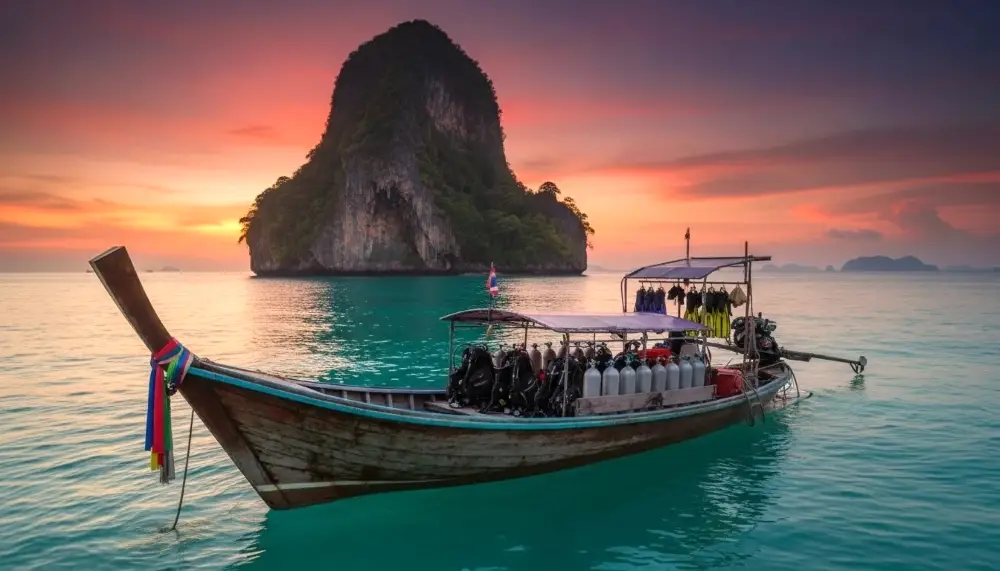
Thai diving culture carries the same warmth and social consideration that characterises Thai culture generally. Understanding a few key customs will make your time in any dive school significantly more enjoyable and respectful.
The concept of “Kreng Jai” (deep consideration for others) runs through every interaction. In a dive school context, this means being patient when briefings run long, not rushing instructors or boat crews, and being genuinely gracious when things do not go exactly to plan. Thai dive crews work extraordinarily hard in physical conditions that most students never fully appreciate: heavy tanks lifted in intense heat, engines maintained in salt air, ropes and anchor chains handled on rolling decks. Acknowledging that effort costs nothing and builds genuine goodwill.
“Sanuk” (the pursuit of fun and lightness) is equally important. Thai dive culture is not militaristic or overly formal. Instructors enjoy teaching students who are engaged, curious, and willing to laugh at themselves when they accidentally inflate their BCD in the wrong direction during pool training. Approaching the learning process with openness and good humour genuinely accelerates your progress because it keeps the sessions relaxed.
When the boat returns to the pier, a tip of 100 to 200 THB for the boat crew is a completely standard gesture of gratitude, and for certification courses that span several days, tipping the instructor at the end is also appreciated and common. It is not obligatory, but it reflects a genuine understanding of how the industry works.
Remove shoes before entering any dive shop that has a clearly indoor office area, and use the “Wai” (a small bow with palms pressed together) when greeting shop owners or instructors for the first time. These are small gestures that signal respect and are always noticed and appreciated.
Insurance, Safety, and Long Stays:
Scuba diving insurance is a topic most new divers underestimate until they need it. Standard travel insurance policies frequently exclude scuba diving entirely, or cap coverage at a shallow recreational depth that does not account for the full range of Open Water certification dives. Before you enter the water on any course, confirm explicitly that your policy covers scuba diving to at least 18 metres.
For travellers completing a course and then continuing to dive on a trip, DAN (Divers Alert Network) offers dedicated dive insurance that covers decompression sickness treatment, which is both the most expensive and the most likely serious risk in recreational diving. DAN membership starts at around $35 USD per year for basic recreational cover and is considered the gold standard in the dive community globally.
For remote workers, digital nomads, or anyone planning a stay of more than four weeks in Thailand to complete a certification or Divemaster programme, SafetyWing offers flexible international health coverage designed for exactly this kind of mobile, extended lifestyle. It covers emergency medical treatment, hospitalisation, and can be purchased on a rolling basis without the need for a fixed address or a defined return date, which makes it well-suited to the Koh Tao Divemaster intern lifestyle.
NordVPN is worth running on any device you use for financial transactions during your dive trip. Public Wi-Fi at piers, marina cafes, and liveaboard boats is typically unsecured. Booking follow-on accommodation via Agoda or Booking.com, purchasing ferry tickets through 12GO, or logging into internet banking over these networks without a VPN active is a genuine security risk that costs seconds to eliminate.
A Note for the Nervous:
The ocean is a powerful environment, and feeling nervous before your first dive is one of the most human responses imaginable. Virtually every diver, including the instructors teaching you, felt it the first time. The nervousness is not a signal to stop: it is a signal that you are taking the experience seriously, and experienced instructors recognise it instantly.
Thai instructors are specifically trained in managing student anxiety in confined water and open water environments. Reputable schools are highly accustomed to students who freeze during mask-clearing, or who need an extra ten minutes sitting on the steps of the pool before they are ready to go fully under. That is not a problem. That is part of the job, and good instructors are patient, calm, and entirely non-judgmental about pace.
If you know you are likely to be nervous, take one specific and practical step: choose a smaller school over a high-volume one. The large factory schools on Koh Tao are excellent at processing motivated students efficiently, but the environment is busy, social, and energetic in ways that can feel overwhelming for someone who needs a quieter, more individualised approach. A smaller shop with a 2:1 or 3:1 student-to-instructor ratio in confined water will give you genuinely more attention, more time, and a more responsive learning pace. The fish will wait. There is no deadline underwater.
For families with children, both PADI and SSI run Junior programmes from age 10. Junior Open Water divers are depth-limited to 12 metres and must dive with a certified adult, but the curriculum and skills are identical to the adult course. Family certification trips have become increasingly popular on Koh Tao, where the island’s calm bay sites and child-friendly schools make the experience genuinely accessible and memorable for all ages.
Frequently Asked Questions:
Is PADI better than SSI for finding work as a dive professional?
In the professional world, both are respected and both will open doors. PADI has a larger global market share, which means more dive centres may specifically advertise for PADI-certified Divemasters and Instructors, particularly in destinations where PADI dominates (much of the Caribbean, Red Sea, and Pacific). SSI is the preferred choice of many modern eco-resorts and boutique operators due to lower licensing overhead for the business, and its market share is growing rapidly. If your primary goal is professional work, PADI is marginally the safer bet for immediate employability in high-volume tourist destinations. If you prefer the SSI teaching philosophy and price point, the difference in job prospects at a global level is genuinely minor.
Can I switch from SSI to PADI later, or mix agencies across my certifications?
Yes, completely. The systems are modular and cross-recognised. You can complete your Open Water with SSI and your Advanced Open Water with PADI, or vice versa, without any conversion exams, penalties, or paperwork beyond standard course enrolment. Your certification card from each course shows the issuing agency and the qualification level, and dive operators worldwide accept cards from both agencies without question. The only context where mixing creates minor administrative complexity is if you are pursuing a professional rating (Divemaster or Instructor), where you will typically need all prerequisite certifications to be from the same agency. As a recreational diver, mixing is entirely seamless.
What is the minimum age to get certified in Thailand?
The minimum age is 10 years old for the Junior Open Water Diver certification, available through both PADI and SSI. Junior certified divers are depth-limited to 12 metres and must always dive with a certified adult companion. The curriculum is identical to the adult Open Water course. Children aged 8 and older can participate in Discover Scuba Diving programmes under close supervision in shallow, calm conditions. There is no upper age limit for recreational certification, and Thailand sees a consistent number of older adults completing their first Open Water certification every year.
Do I need to be a strong swimmer to get certified?
You must be able to swim 200 metres without stopping, using any stroke and without a time limit, and float or tread water for 10 continuous minutes. You do not need competitive swimming ability, advanced technique, or exceptional stamina. What matters is basic water comfort: the ability to stay calm in water where you cannot touch the bottom, and the physical capability to cover a moderate distance at your own pace. Most dive schools conduct the swim test in a pool or calm bay on the first day of the course before any diving begins. If you have concerns about the swim test, spend a few sessions in a pool before your trip to build confidence.
What visa options are available for a longer stay to complete dive training?
Most travellers completing a standard Open Water or Advanced Open Water course do so within a standard tourist visa or visa exemption period, which provides 30 to 60 days depending on nationality and entry method. For longer stays such as a Divemaster internship of six to twelve weeks, Thailand’s Destination Thailand Visa (DTV) allows 180 days per entry and can be extended for a further 180 days at a Thai Immigration office for a fee of 1,900 THB. The DTV is specifically designed for remote workers, digital nomads, and long-stay tourists and is available to most Western nationalities. Always verify current visa conditions with official Thai immigration sources before travelling, as entry requirements can change.
Is it worth doing the eLearning before I arrive in Thailand?
Absolutely, and it makes a significant practical difference to your experience. Both the PADI eLearning platform and the MySSI app allow you to complete the full knowledge development phase of the Open Water course before you set foot in Thailand. This typically takes four to six hours spread across a few evenings. If you arrive with the theory already completed and your knowledge reviews passed, your first day at the dive school can begin directly in the pool rather than in a classroom. On a tight itinerary, this effectively reduces the course from four days to three, or gives you an extra afternoon for fun dives after certification.
What should I look for when comparing dive schools on Koh Tao?
Focus on four things: instructor-to-student ratio in confined water and on open water dives, the dive sites used for qualification dives, equipment condition, and the school’s approach to nervous students. Ask directly whether the price quoted is fully inclusive of certification fees and equipment hire, or whether there are additional charges. Read reviews that name specific instructors rather than just praising the island atmosphere, as these give the most accurate signal of actual teaching quality. Shortlisting via Get Your Guide or Klook before arrival is a practical way to compare verified operators without needing to walk the main road on your first day.
Does my dive certification expire?
No. Both PADI and SSI Open Water certifications are valid for life with no expiry date. However, if you have not dived for two or more years, most reputable operators will require or strongly recommend a Scuba Review or ReActivate refresher session before taking you to depth. This is a short, supervised session in confined water that revisits the core skills and rebuilds muscle memory. It costs around 1,500 to 2,500 THB at most schools and is genuinely worth doing if there has been a long gap between your last dive and your next trip to Thailand.
Can I complete part of my course online before arriving and finish the dives in Thailand?
Yes, and this is increasingly the recommended approach. Both PADI and SSI support a referral system where the knowledge development and pool sessions can be completed at a dive school at home, with the open-water qualification dives completed at a participating school abroad. This is particularly useful for travellers who want to arrive in Thailand already past the confined water stage and use their time purely for open-water dives. Alternatively, completing only the eLearning at home and doing the pool and ocean dives in Thailand is entirely standard and costs no more than the standard course rate.
What is the difference between a Discover Scuba experience and a full Open Water certification?
A Discover Scuba Diving experience is a single-day introduction for uncertified participants. It includes a safety briefing, a shallow pool or confined water session, and one or two supervised open water dives to a maximum depth of 12 metres. No exam, no qualification, no permanent certification. It is a trial of scuba diving in a fully supervised setting. An Open Water certification is a multi-day course that produces a permanent, globally recognised qualification allowing you to dive independently with a buddy to 18 metres anywhere in the world. The skills, safety knowledge, and autonomy are entirely different. Discover Scuba credits do count toward future Open Water course credit at most schools if you decide to pursue full certification afterward.