How To Get Around Thailand
This site contains affiliate links. We may earn a commission at no extra cost to you.
The good news is that traveling around Thailand is surprisingly easy, affordable, and often part of the adventure itself. Whether you are hopping on a colourful tuk-tuk in Bangkok, catching a sleeper train to the north, or flying down to the islands, the country has an excellent mix of transportation options for every type of traveler. The trick is knowing which mode of transport suits which journey, and having enough local knowledge to avoid the common pitfalls that trip up first-timers.
This guide walks you through every major way to move around Thailand, from the BTS Skytrain to longtail boats, from overnight sleeper trains to shared songthaews, so you can plan your trip with genuine confidence and get more out of every single day.
Quick Answer:
If you are visiting Thailand for the first time, you will likely use a combination of transportation options.
The most common ways travelers move around the country include:
- TDAC Mandatory: All arrivals must complete the Thailand Digital Arrival Card (TDAC) online at least 3 days prior to entry.
- Cashless Transition: Download an eSIM app, to use PromptPay QR codes, now the primary payment method. Use apps like Grab or KBank for seamless transport transactions.
- Booking Windows: Secure 1st Class Sleeper trains and VIP buses at least 14 to 21 days in advance via the D-Ticket system or official providers.
- Budgeting: Local buses cost as little as 20 THB while first-class overnight trains range from 1,200 to 1,600 THB.
- Digital Tools: Download State Railway of Thailand (SRT) D-Ticket and Grab for seamless booking and navigation.
- Regional: Use trains for North-South corridors, buses for mountain routes like Mae Hong Son, and ferries for the Gulf or Andaman.
Need to store luggage? Use Radical Storage. Travelers can easily book storage online at verified local businesses, such as hotels, cafes, and shops, located near major train stations and landmarks. The service is straightforward and secure.

Skip the bus-station queue for Thailand.
Book online with 12Go, get an
e-ticket, and show it on arrival.
Refunds available on most routes.
Getting Around Bangkok:
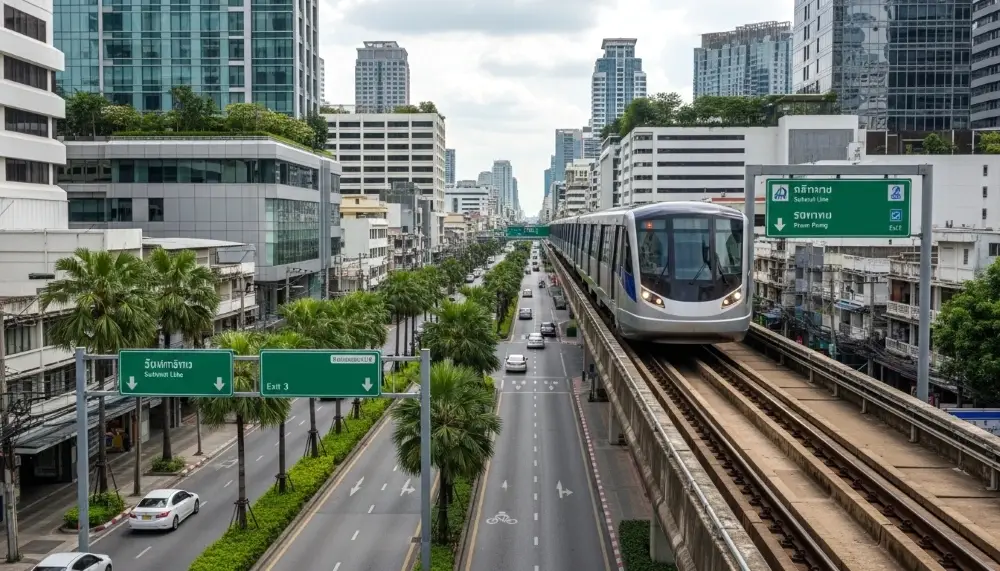
Bangkok is usually the first stop for international visitors, and while the city is massive, getting around is easier than you might expect once you understand the system.
BTS Skytrain and MRT Subway
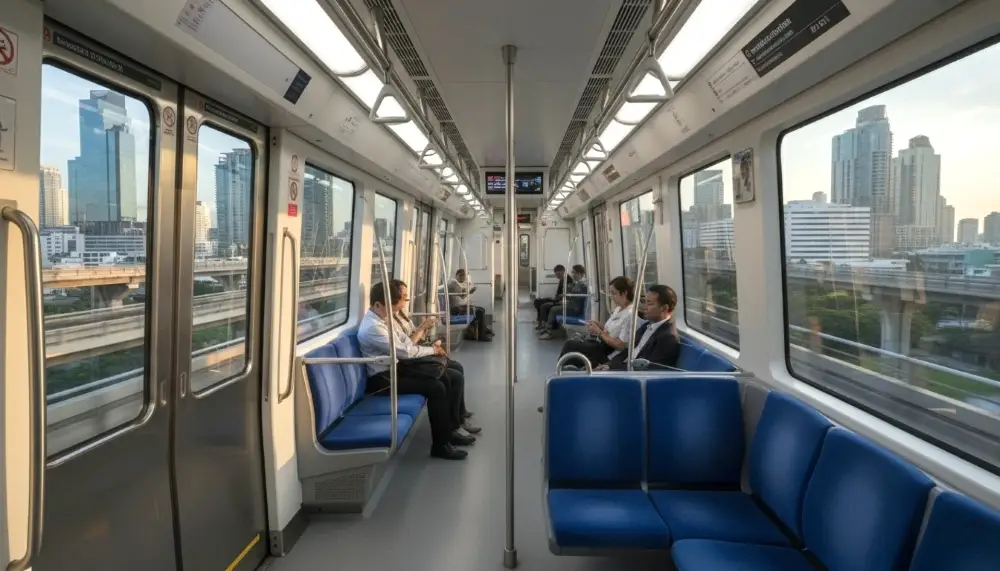
These modern rail systems are the fastest way to avoid Bangkok’s famous traffic. They connect many major areas including shopping districts, markets, and popular attractions. The BTS covers the Sukhumvit corridor and the Silom line, while the MRT Blue Line loops through the city centre and connects to the Airport Rail Link at Phetchaburi. The Purple Line extends north toward Nonthaburi, and the new Yellow and Pink Lines added in recent years have opened up previously hard-to-reach districts considerably.
Taxis and Ride Apps
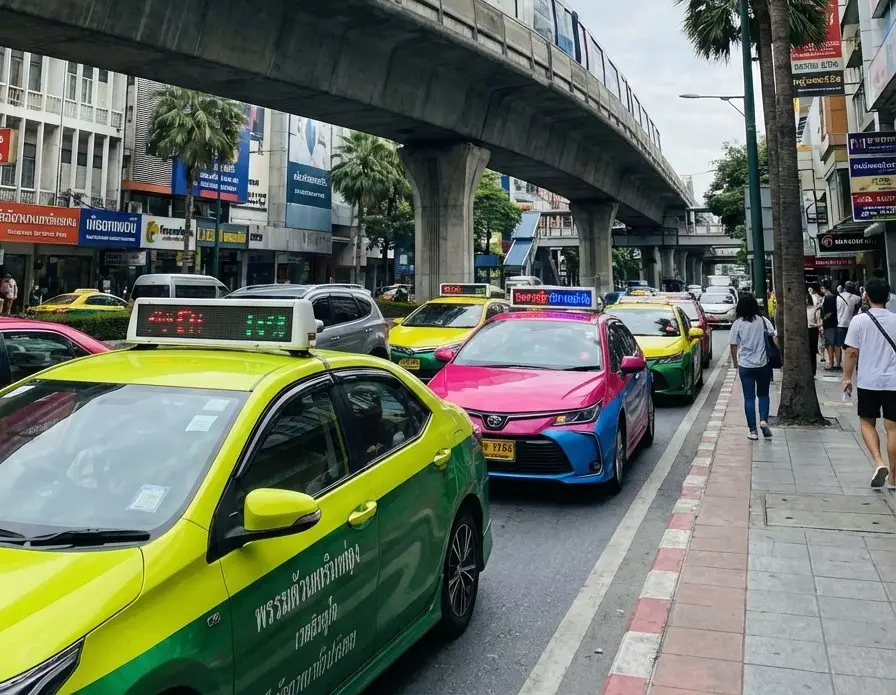
Metered taxis are everywhere and generally inexpensive. Ride apps like Grab are also widely used and remove the need to negotiate prices. Bolt frequently offers lower base fares in Bangkok, making it worth comparing both apps before booking. Always ensure your eSIM from Airalo, Yesim, or Saily is activated before arrival so these apps function correctly the moment you step out of immigration.
Tuk-Tuks
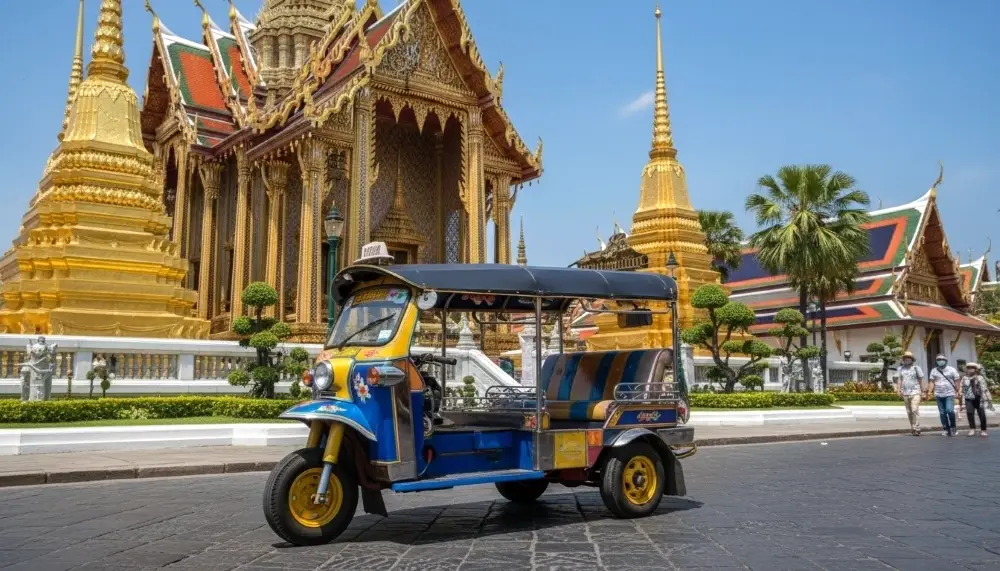
Tuk-tuks are iconic three-wheeled vehicles that have become a symbol of Thailand. They are fun for short rides, though they are usually more about the experience than the cheapest option. Never accept a tuk-tuk driver’s offer to take you to a “special shop” or “gem store” on the way. This is one of Bangkok’s most persistent tourist scams, costing the driver a commission and costing you time and potential money.
River Boats
The Chao Phraya River runs through the heart of the city, and public river boats are a surprisingly scenic way to reach famous temples and historic districts. The orange-flag boats are the most useful for tourists, stopping at major piers including Tha Chang (for the Grand Palace and Wat Pho), Banglamphu (for Khao San Road), and Asiatique (for the riverfront night market).
Bangkok Transport: Costs, Cards and Insider Shortcuts
The Rabbit Card is the BTS equivalent of London’s Oyster Card. Topping it up with credit (stored value) at any BTS station removes the need to queue for individual tickets every journey. It works across BTS Skytrain lines, Airport Rail Link, and selected buses. For visitors spending more than three or four days in Bangkok, picking one up at any staffed BTS booth for a 100 THB deposit is genuinely worthwhile.
The MRT uses a different token-based system, though contactless bank cards are now accepted at an increasing number of MRT gates. Bangkok is actively moving toward a unified transit card, and the integration between lines continues to improve year on year. Google Maps is highly reliable for routing across all Bangkok rail lines and clearly shows connections, walking times between stations, and fare estimates.
Canal boats (khlong boats) are an underused gem. The Saen Saep Canal service cuts a direct east-west path across the city, connecting Khao San Road to Pratunam and the Asok area for around 12 to 20 THB. During rush hour, this canal route can save 40 minutes compared to road-based alternatives. It is not glamorous, but it is the authentic Bangkok commuter experience and one that many long-term residents rely on daily.
For families or groups arriving with luggage, Welcome Pickups is the most stress-free airport transfer option, offering named drivers with fixed fares and no surge pricing. For longer journeys across the city, InDrive allows you to propose your own fare for a private car, which is particularly useful for negotiating rates on longer cross-city transfers during non-peak hours.

From classic Thailand highlights to
hidden-gem private tours. Cancel
free up to a day before your
start time if plans change.
Navigation By Train:
| Transport Type | Average Cost (THB) | Best For | Speed/Comfort Level |
|---|---|---|---|
| First Class Sleeper Train | 1,200 to 1,650 | Long Distance (Chiang Mai/Surat Thani) | High Comfort / Slow Speed |
| Second Class Sleeper Train | 600 to 900 | Bangkok to Chiang Mai / Southern routes | Medium Comfort / Slow Speed |
| VIP 24-Seater Bus | 600 to 950 | Inter-city / Mountainous Regions | Medium Comfort / Fast Speed |
| High-Speed Ferry | 450 to 1,100 | Island Hopping (Koh Samui/Koh Lipe) | Low Comfort / High Speed |
| Standard Longtail Ferry | 80 to 200 | Short island crossings and river routes | Basic / Fast for distance |
| Domestic Flight | 500 to 2,500 | Bangkok to Chiang Mai / Phuket / Krabi | Highest Speed / Variable Comfort |

From boutique guesthouses to five-star
resorts, Agoda has Thailand covered.
Strong Asia inventory means deeper
discounts than you’d find elsewhere.
The Sleeper Train Experience:
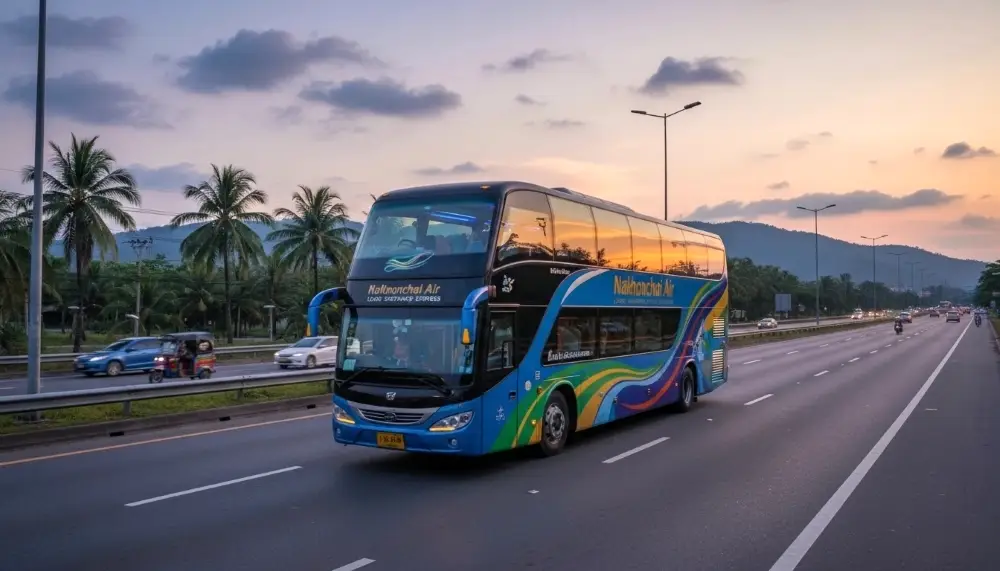
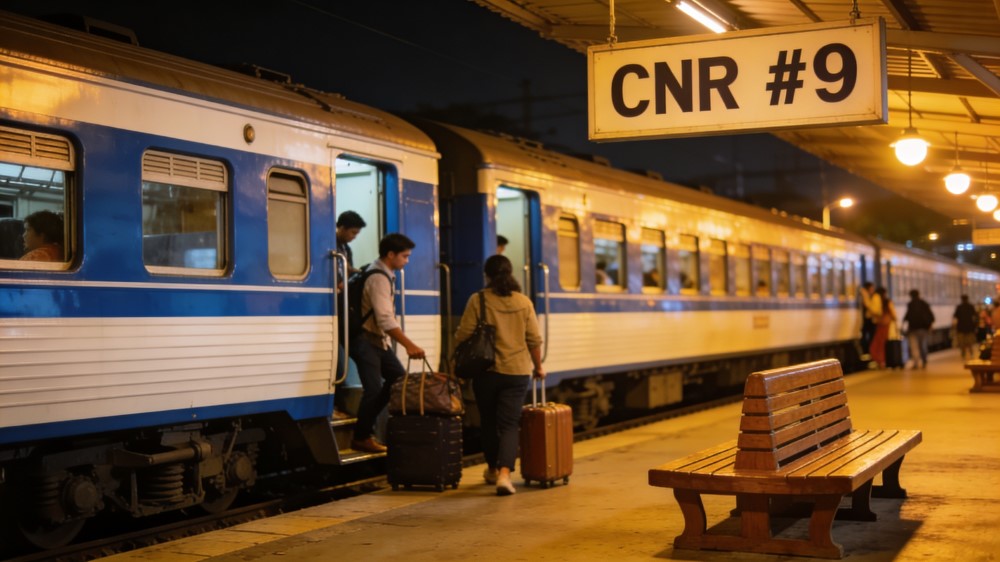
Ask any seasoned Southeast Asia traveler what their favourite Thailand transport memory is, and a significant number will describe waking up on the overnight sleeper train to the north as the sun rises over rice paddies and mist-covered hills. The SRT Special Express Number 9 (or Number 10 on the return) is the flagship of this experience, departing Hua Lamphong Station in Bangkok each evening and arriving in Chiang Mai the following morning.
First-class sleeper cabins are private two-berth compartments with air conditioning, fold-down beds, linen, and a lockable door. At around 1,200 to 1,650 THB per person, they represent extraordinary value for a combined overnight transport and accommodation. Second-class sleeping cars offer open-plan upper and lower berths separated by curtains, and are the sweet spot for budget travelers who still want a comfortable night’s rest.
The critical warning: these trains sell out. First-class berths on the Bangkok to Chiang Mai route are often fully booked three to four weeks in advance during peak season (November through February and July through August). Book through the SRT D-Ticket platform or via 12GO as soon as your travel dates are confirmed. Showing up at Hua Lamphong hoping to buy a sleeper ticket on the day is a reliable way to end up on a hard wooden seat in third class.

No taxi haggling at Thailand airport.
Welcome Pickups dispatch a vetted
local driver who knows the city,
fare confirmed before you fly.
Pro Tips For Stress-Free Travel:
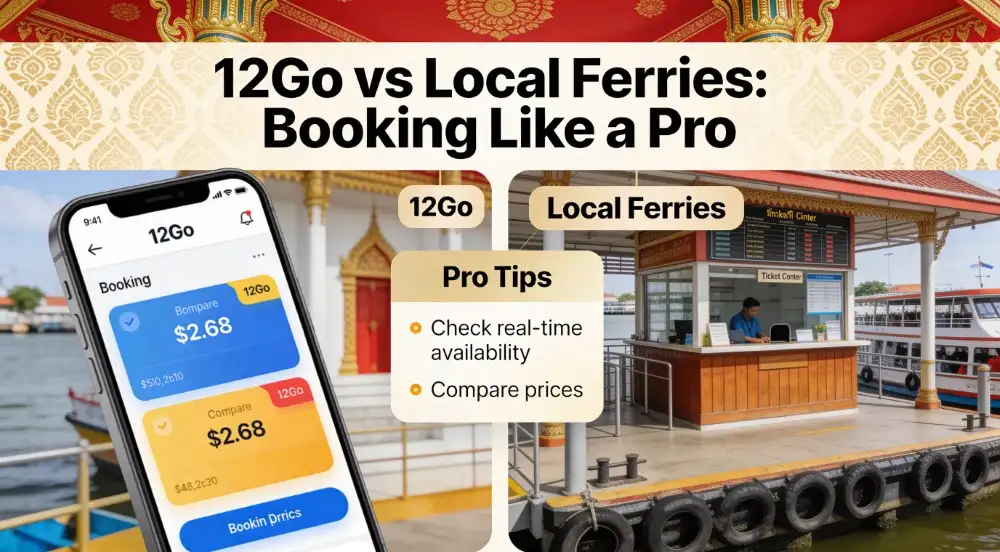
Transport Booking: 12Go.Asia and Baolau are the most reliable aggregators for train and bus tickets. They display real-time seat availability, accept international cards, and email your e-ticket immediately. This matters enormously when you are booking from abroad and cannot walk into a physical ticket office.
Ride-Hailing: Grab is the dominant force, but Bolt often offers lower rates in Bangkok and Phuket. InDrive is useful for bargaining long-distance private transfers. Both Grab and Bolt require active mobile data for the SMS verification step when first installing the app, so activating your Airalo, Yesim, or Saily eSIM before you board your flight home is essential.
Accommodation: Agoda remains the regional leader with the best Secret Deals, while Booking.com is preferred for its flexible cancellation policies.
Connectivity: Yesim or local SIMs from AIS provide the best coverage in remote islands.
Navigation and Safety: Google Maps is highly accurate for Bangkok’s Blue Line and Purple Line trains. Use NordVPN to access home streaming services during long layovers and to secure your connection on any public transport Wi-Fi network.
Financials: The Thai Baht (THB) is the only currency accepted. ATMs charge a flat 220 THB fee for foreign cards: withdraw the maximum amount (usually 20,000 to 30,000 THB) to minimise costs.
Storing Luggage? Use Radical Storage. Travelers can easily book storage online at verified local businesses, such as hotels, cafes, and shops, located near major train stations and landmarks. The service is straightforward and secure.


Forget swapping physical SIMs in Thailand.
Yesim works on most modern phones,
activates remotely, and keeps your
home number live on WhatsApp too.
Traveling Between Cities:
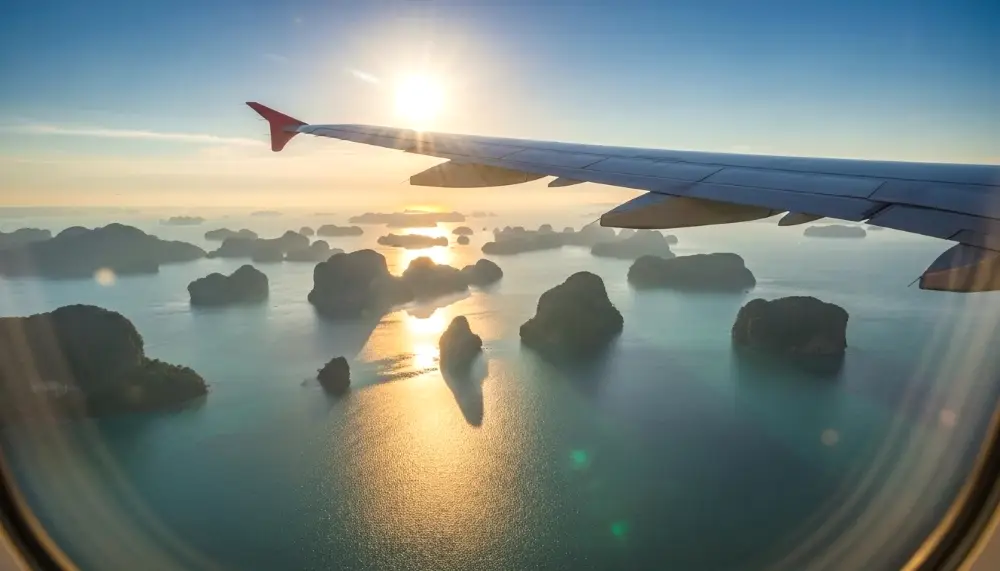
Thailand is a long country stretching over 1,500 kilometres from north to south, but getting between destinations is more straightforward than the distances might suggest.
Domestic Flights
Flying is the fastest option for covering long distances. Thailand’s domestic aviation network is genuinely competitive, with Thai AirAsia, Bangkok Airways, Nok Air, and Thai Lion Air all operating routes between the major hubs. When booked two to three weeks in advance, domestic fares between Bangkok and Chiang Mai or Phuket regularly drop below 700 THB one way, which is extraordinary value for a 90-minute journey.
Popular routes include:
- Bangkok to Chiang Mai
- Bangkok to Phuket
- Bangkok to Krabi
- Bangkok to Koh Samui
If your flight is significantly delayed or cancelled, AirHelp is a useful platform for understanding your compensation entitlements quickly, particularly for flights operated by EU-based carriers or departing from European airports on the way to Thailand.
Long-Distance Buses
The bus network is the most comprehensive transit system in Thailand, reaching every district in the country. Government-run Transport Co. buses (999) operate out of three main terminals in Bangkok: Mo Chit (North), Sai Tai Mai (South), and Ekkamai (East), offering tiered service levels from basic air-conditioned coaches to fully reclining VIP sleepers.
While trains offer romance, buses offer precision. The VIP 24-seater coaches are the Business Class of the road. These vehicles feature reclining massage seats, individual reading lights, and onboard snacks. For the Mae Hong Son Loop, these buses are the only reliable way to navigate the 1,864 hairpin turns with professional drivers who understand the mountain topography better than any tourist.
Minivans operate as the frantic connective tissue of the provinces. They are faster than large buses but often cramped. Use them for shorter hops like Bangkok to Kanchanaburi or Phuket to Krabi. Always locate the nearest bus station rather than relying on hotel pickups, which often include a commission markup. Book through 12GO for price transparency and confirmed departure times, particularly around national holidays when services fill days in advance.
Reaching Famous Islands:

Thailand’s southern islands are one of the country’s biggest draws. Places like Phuket, Koh Phi Phi, and Koh Samui attract millions of travelers every year. Getting there typically involves a combination of transportation.
Common routes include:
- Flight to a coastal city plus ferry
- Train or bus to the south plus ferry
- Direct flight to an island airport
For example, travelers often fly from Bangkok to Surat Thani and then take a ferry to islands like Koh Tao or Koh Phangan. Ferries and speedboats run frequently and are well organised, especially in popular tourist areas. Klook is also an excellent platform for pre-booking snorkelling tours, island day trips, and speedboat transfers directly from the major piers, often at better rates than buying at the pier itself.
Ferry Routes: Gulf vs Andaman and What To Know
Thailand’s island ferry network divides broadly into two coasts. The Gulf of Thailand coast (accessible from Surat Thani and Chumphon piers) serves Koh Samui, Koh Phangan, and Koh Tao. The Andaman coast (accessible from Phuket, Krabi, and Trang piers) serves Koh Lanta, Koh Phi Phi, the Similan Islands, and Koh Lipe. Understanding this distinction before booking prevents the classic mistake of flying into the wrong airport for the wrong island.
High-season ferry services (November through April) run frequently throughout the day with multiple operators competing on speed and price. Low season (May through October) sees reduced services, and the Andaman side experiences the full force of the southwest monsoon. Koh Tao and Koh Phangan on the Gulf side remain relatively sheltered year-round and are often the better island choices for June and July travelers.
Night ferries between the mainland and Koh Samui or Koh Phangan operate year-round and are popular with budget travelers who save a night’s accommodation cost. They are not luxurious, but a sleeping mat on the deck under a canopy of stars is a uniquely memorable Thailand experience. Book these through 12GO to guarantee your spot on popular crossings, particularly around the Full Moon Party dates when every ferry to Koh Phangan fills weeks in advance.
Getting Around Cities and Towns:
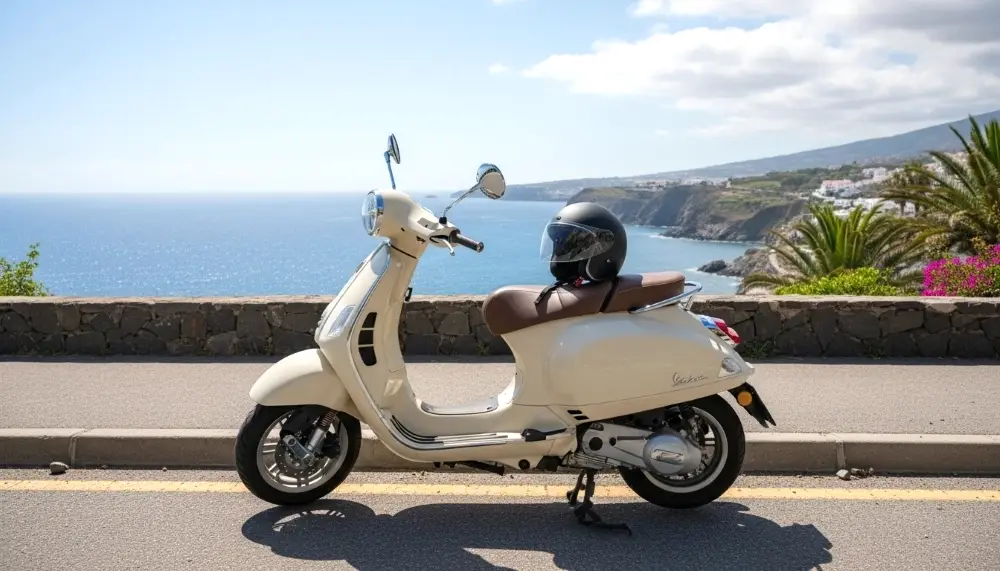
Once you arrive at your destination, you will find plenty of local transportation options that go well beyond standard taxis.
Songthaews
These shared pickup trucks with bench seating in the back operate like informal buses in many towns and cities. In Chiang Mai, the red songthaews (rot daeng) are the backbone of local transport. You flag one down, tell the driver your destination, and if it is on the way, he nods and you hop on for around 30 to 50 THB. In Chiang Rai and Pai, similar systems operate. Learning to use songthaews confidently is one of the best money-saving moves a traveler can make.
Motorbike Taxis
Motorbike taxis are fast, cheap, and ideal for short distances. Drivers wear coloured vests and wait at designated street corners and BTS exits throughout Bangkok. A short hop costs 20 to 40 THB and cuts through traffic that would cost a taxi driver 20 minutes to navigate. They are particularly useful for the “last mile” connection from a BTS or MRT station to a destination not on the rail network.
Scooter Rentals
Renting a scooter is popular in places like Chiang Mai and many islands. It gives travelers the freedom to explore beaches, viewpoints, and countryside areas at their own pace. If you choose to rent a scooter, always wear a helmet and drive cautiously, and please do not forget about travel insurance. SafetyWing’s Nomad Insurance covers motorbike accidents when you hold the appropriate licence, which is an important detail to confirm before you ride.
Scooter Rentals: The Full Picture
Renting a scooter unlocks a completely different version of Thailand. The freedom to pull over at a roadside waterfall, take a mountain pass at your own pace, or arrive at a beach before the tour buses do is genuinely transformative. But it comes with real responsibility that too many travelers underestimate until it goes wrong.
A valid International Driving Permit (IDP) with a motorcycle endorsement from your home country is legally required. Police checkpoints are frequent in Phuket and Chiang Mai, and fines range from 1,000 to 5,000 THB for riding without a helmet or appropriate licence. More importantly, most travel insurance policies explicitly exclude motorbike accidents when the rider does not hold the correct licence. This single oversight is responsible for enormous unexpected medical costs for travelers each year.
Always inspect the scooter thoroughly before accepting it, photographing any existing scratches or dents on your phone with a clear timestamp. Some rental shops attempt to charge for pre-existing damage on return. A 125cc automatic scooter is adequate for flat city roads and island routes; for mountain terrain like Doi Inthanon or the roads north of Pai, a 150cc or semi-automatic is considerably more appropriate and safer on the longer gradients.
The Northern Thailand Circuit:
The northern circuit centred on Chiang Mai is one of the most rewarding travel routes in all of Southeast Asia, but it requires a slightly different transport mindset than the south. Where the islands are served by straightforward ferry and flight combinations, the north rewards flexibility and a willingness to embrace slower, more scenic journeys.
From Chiang Mai, the key satellite destinations include Pai (three hours by mountain minivan), Chiang Rai (three hours by bus or minivan), Mae Hong Son (a full day by VIP bus via the mountain loop), and Lampang (two hours by train or bus). Each of these towns has its own distinct character, and the journey itself through Thailand’s highland landscapes is frequently as memorable as the destination.
The Chiang Mai to Pai route is served by frequent minivans departing from the Arcade Bus Terminal. The road involves over 700 curves through mountain terrain, and motion sickness tablets are genuinely recommended for anyone with sensitivity. The reward at the other end is a bohemian mountain town with hot springs, waterfalls, and a creative community that has attracted artists, musicians, and long-term nomads for years. Book accommodation in Pai through Agoda or Booking.com in advance during the high season, as guesthouses fill quickly and the best value properties are always the first to go.
For Nervous First-Timers:
If this is your first time traveling in Southeast Asia, it is completely normal to feel a little unsure about how everything works.
Thailand is one of the most beginner-friendly countries in the world for travelers. Transportation is well established, tourism is a huge part of the economy, and locals are generally welcoming and helpful. In major destinations, English is widely understood in hotels, stations, and travel agencies.
Many visitors arrive feeling nervous and leave wondering why they ever worried in the first place. The most important mindset shift is accepting that things will not always run to the minute. A minivan that was supposed to leave at 9:00 might leave at 9:20 because the driver is waiting for one more passenger. A ferry that was scheduled at 14:00 might be delayed by 30 minutes due to a late transfer coach. This is not a system failure: it is simply Thailand operating at its own pace. Building a little flexibility into each travel day transforms potential frustration into an easy-going acceptance that is very much part of the experience.
First-Timer Checklist: Before You Board Anything
A little preparation before you leave home eliminates the majority of first-timer stress. Here is what experienced Thailand travelers know to do before they step on the plane:
- Complete the Thailand Digital Arrival Card (TDAC) online at least three days before landing. It is mandatory and takes five minutes.
- Activate an Airalo, Yesim, or Saily eSIM before departure so Grab and Bolt apps receive their SMS verification codes the moment you land.
- Book your overnight sleeper train berths and any high-demand ferry crossings through 12GO as soon as your dates are confirmed.
- Set up a NordVPN subscription and activate it at the airport and on any hostel or hotel Wi-Fi throughout your trip.
- Check your travel insurance policy for motorbike cover and confirm your IDP includes a motorcycle endorsement if you plan to ride.
- Save the emergency number for Tourist Police (1155) in your phone before you need it.
For those planning an extended stay under the Destination Thailand Visa, SafetyWing’s rolling monthly insurance provides peace of mind on medical coverage from day one, without the commitment of an annual policy.
The Journey Is The Adventure:
One of the most beautiful parts of traveling in Thailand is that the journey itself becomes part of the experience. You might find yourself watching sunrise from a sleeper train window, cruising past golden temples on a river boat, or bouncing through a lively street in a tuk-tuk surrounded by the sounds and smells of the city.
Every ride adds another memory to your trip. The conversations you have with fellow passengers on an overnight bus, the impromptu stop a minivan driver makes at a roadside fruit stall, the moment a longtail boat rounds a limestone karst and reveals a hidden lagoon. None of these appear on any itinerary, and all of them are the reason people come back to Thailand again and again.
Thailand is a country that rewards curiosity and exploration. With so many easy ways to travel between cities, mountains, jungles, and islands, you are free to create an adventure that is completely your own. The infrastructure is there, the routes are well-worn, and the people you meet along the way make every journey worth taking.
So pack light, stay flexible, and enjoy the ride. Thailand is waiting.
Frequently Asked Questions:
What is the best way to travel between cities in Thailand?
Domestic flights are the fastest and often very affordable via carriers like Thai AirAsia or Bangkok Airways. For a more scenic experience, the SRT sleeper trains, especially the Number 9 or Number 10 Special Express cars, are excellent for the Bangkok to Chiang Mai route. Always book train tickets at least 30 days in advance as they sell out quickly during peak season. For destinations not served by rail, 12GO is the most reliable platform for securing VIP bus tickets across all major intercity routes.
How do I book ferries and buses in Thailand?
The most reliable way to book intercity buses and island ferries is through 12Go Asia. They provide e-tickets and clear departure instructions for major routes like Phuket to Phi Phi or Bangkok to Kanchanaburi. Avoid booking VIP buses from unauthorized agents on Khao San Road to avoid scams and delays. During peak national holidays such as Songkran and the December to January period, book at least two to three weeks ahead.
Is it safe to rent a scooter in Thailand?
Scooter rentals are popular but come with real risks. You must have a valid International Driving Permit (IDP) with a motorcycle endorsement from your home country to be legal. Police checkpoints are frequent in Phuket and Chiang Mai, with fines ranging from 1,000 to 5,000 THB for riding without a helmet or proper licence. Always photograph any pre-existing damage to the scooter before accepting it, and confirm your travel insurance covers motorbike accidents with the correct licence.
How do I get from Suvarnabhumi Airport to central Bangkok?
The Airport Rail Link (ARL) is the most efficient method. It costs 45 THB and connects to the Phaya Thai BTS station in approximately 30 minutes, bypassing the notorious Sukhumvit road traffic entirely. Official metered taxis are also available from Level 1 with a digital queue system. A 50 THB airport surcharge is added to the meter, plus expressway tolls of approximately 75 THB. Pre-booked transfers through Welcome Pickups are the best option for families or groups arriving with significant luggage.
Can I take a pet on Thai trains?
Pets are generally permitted only on non-air-conditioned third-class carriages. A small fee based on the weight of the pet is paid at the cargo office before boarding. For travelers relocating to Thailand with cats or dogs, Suvarnabhumi Airport (BKK) is the mandatory port of entry due to its dedicated Animal Quarantine Station. An import permit valid for 60 days and a health certificate are required, and animals must be microchipped and vaccinated for rabies at least 21 days before departure.
What is the DTV visa I keep hearing about?
The Destination Thailand Visa (DTV) is an initiative for remote workers, digital nomads, and those engaged in cultural or recreational activities. It allows for a stay of up to 180 days per entry, renewable for five years from the date of issue. It is obtained through a Thai embassy or consulate in your home country and requires proof of income or sufficient funds, along with a stated purpose of stay such as remote work or long-stay tourism.
What is the cheapest way to get around Thailand?
The cheapest long-distance option is second-class train travel, which costs a fraction of domestic flight prices and covers the main Bangkok to Chiang Mai and Bangkok to Surat Thani corridors. Within cities, songthaews (shared pickup trucks) and motorbike taxis are the most economical local options. Local government buses in Bangkok cost 20 THB per ride. For island ferries, booking directly at the pier (when availability allows) occasionally undercuts online rates, though 12GO is more reliable during peak season.
Do I need mobile data to use ride-hailing apps in Thailand?
Yes, and this is critical to prepare for in advance. Apps like Grab and Bolt require an SMS verification code the moment you install or first launch them. Without active mobile data at the point of installation, this code cannot be received and the app will not function. Activating an eSIM from Airalo, Yesim, or Saily before departing your home country ensures you have data connectivity from the moment you land, allowing you to set up ride-hailing apps, navigation, and payment apps without delay at the airport.
Are Bangkok taxis safe and how do I avoid being overcharged?
Bangkok metered taxis are generally safe and the vast majority of drivers are honest. Always insist that the driver uses the meter (say ‘meter, khrap’ or ‘meter, kha’). If a driver refuses the meter or quotes a fixed price that seems high, simply exit and hail the next taxi. Grab is an excellent alternative as fares are fixed before you confirm the ride, eliminating any negotiation. Avoid accepting rides from drivers who approach you inside airports or train stations, as these are almost always unmetered at inflated prices.
Is there a rail connection between Don Mueang Airport and Suvarnabhumi Airport?
Yes. The SRT Red Line connects Don Mueang Airport to Bang Sue Grand Station (Krung Thep Aphiwat Central Terminal), where you can connect to the MRT Blue Line and travel south toward Phetchaburi, which connects to the Airport Rail Link for Suvarnabhumi. Total journey time by rail between the two airports runs approximately 60 to 70 minutes. A free shuttle bus also operates directly between the two airports for passengers holding a valid onward flight ticket, though this takes 60 to 90 minutes depending on traffic.