Thailand 1 Month Itinerary
This site contains affiliate links. We may earn a commission at no extra cost to you.
Thailand in 2026 has transitioned from a high-volume backpacker circuit into a world-class destination for high-value slow travel. For those with 30 days to spare, the objective is no longer to check off as many islands as possible, but to immerse in the specific rhythms of the Kingdom.
Thailand is incredibly welcoming to first-time visitors too. The infrastructure is excellent, the food is world-class, and getting around the country is surprisingly easy. A month allows you to slow down, enjoy each destination, and experience the real rhythm of the country. All prices in this guide use a rate of 35 THB = $1 USD.
The Quick Summary:
- Bangkok and Central Thailand – culture, temples, street food, and city life
- Northern Thailand – mountains, temples, and relaxed culture around Chiang Mai
- Southern Thailand – stunning tropical islands and beaches
A simple and well-balanced route looks like this:
Week 1: Bangkok and nearby highlights
Week 2: Chiang Mai and Northern Thailand
Week 3: Southern islands in the Gulf of Thailand (Koh Samui, Koh Phangan, Koh Tao)
Week 4: Andaman Coast islands (Phuket, Krabi, or Koh Phi Phi)
This route gives you culture, adventure, nature, and beach time in a single trip.

Stay closer to the action in Thailand.
Agoda lists guesthouses to resorts
with verified reviews and instant
booking at competitive rates.
What’s It Going To Cost?
| Tier | Avg. Daily Cost | 30-Day Total (approx) | Accommodation Style | Primary Transport |
|---|---|---|---|---|
| Budget | 1,500 THB (~$43) | 45,000 THB (~$1,286) | Boutique Hostels / Fan Rooms | Public Bus and Trains |
| Mid-Range | 4,000 THB (~$114) | 120,000 THB (~$3,429) | 4-Star Hotels / Pool Villas | Grab and Domestic Flights |
| Luxury | 10,000 THB (~$286) | 300,000 THB (~$8,571) | 5-Star Resorts / Private Estates | Private Drivers and VIP Charters |
Week 1: Exploring Bangkok
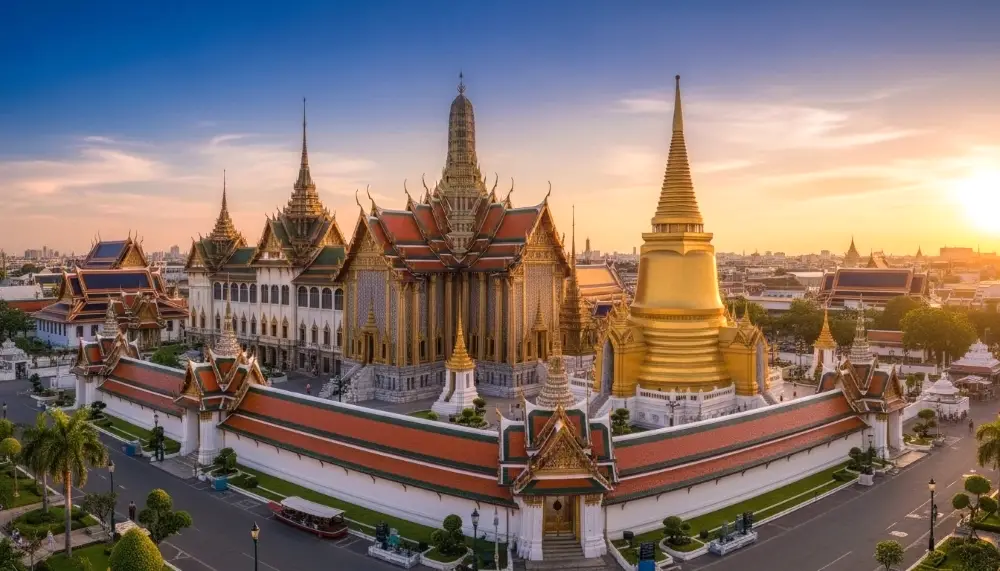
Having a full week in Bangkok rather than the three days most itineraries allow is one of the great advantages of a month-long trip. You can stop rushing and start actually living in the city. Some must-see temples include:
- The Grand Palace and Wat Phra Kaew (500 THB / ~$14 entry)
- Wat Pho and the Reclining Buddha (200 THB / ~$5.70 entry)
- Wat Arun along the Chao Phraya River (100 THB / ~$2.90 entry)
- Chinatown’s incredible street food scene (evenings on Yaowarat Road)
- Floating markets outside the city
Bangkok also makes a great base for short trips. Consider visiting Ayutthaya, the ancient capital filled with beautiful temple ruins (15–30 THB / ~$0.45–$0.85 by train), or exploring local markets and canal communities along the river. With seven days you can do this at a genuinely relaxed pace rather than cramming it all into an exhausting two-day sprint.
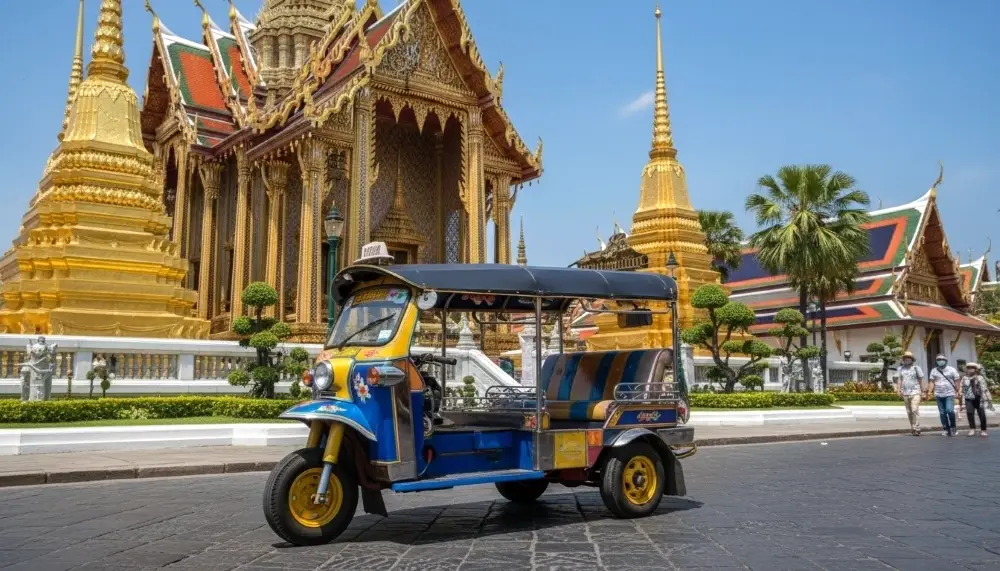
Avoid the temptation to use tuk-tuks for long distances; they are now largely a novelty for photography.
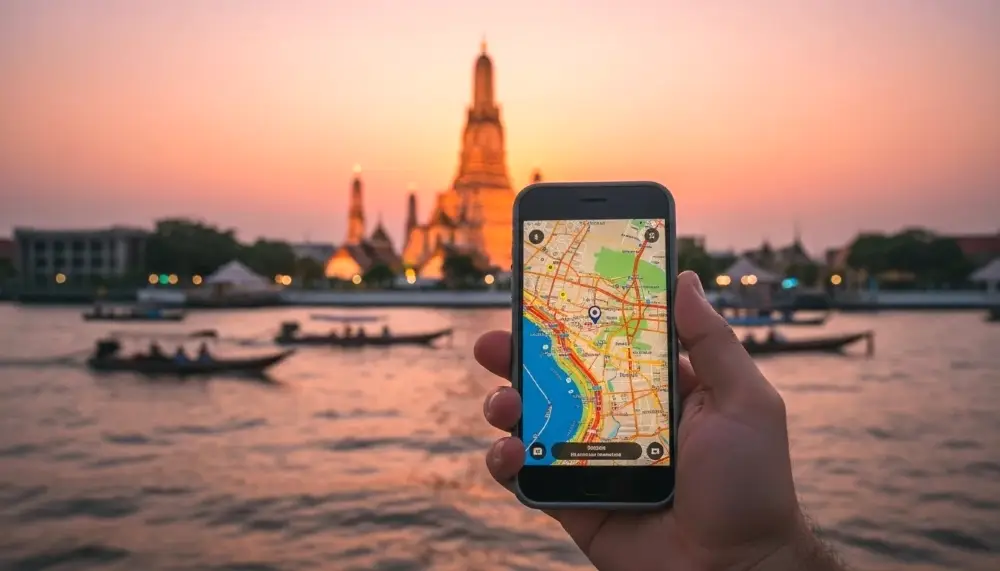
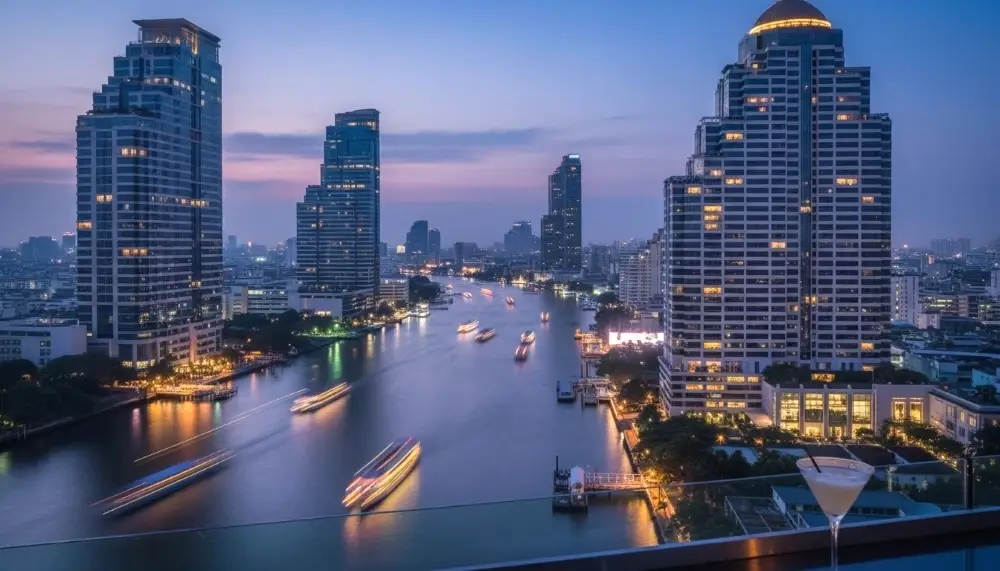
Use the BTS Skytrain and MRT Subway for speed (20–65 THB / ~$0.60–$1.85 per journey), and the ViaBus app to navigate the newly expanded electric bus network. For river transit, the Chao Phraya Tourist Boat (Blue Flag) offers a flat-rate day pass for 150 THB (~$4.30), providing a scenic, air-conditioned alternative to road traffic.

Skip the bus-station queue for Thailand.
Book online with 12Go, get an
e-ticket, and show it on arrival.
Refunds available on most routes.
A Hidden Gem: Kanchanaburi
Most two-week itineraries skip Kanchanaburi entirely. With a full month, you can spend one to two nights here, and it is genuinely worth it. Located about two hours west of Bangkok by train, the town sits at the confluence of the Kwai Yai and Kwai Noi rivers, surrounded by waterfalls, national parks, and WWII history.
The Bridge on the River Kwai and the Death Railway are the historical anchors, but the town has evolved into a relaxed riverside base for trekking, kayaking, and visiting Erawan National Park. Erawan’s seven-tier waterfall, with its famously turquoise pools, is among the most beautiful natural sights in the country. Entry to the park costs 300 THB (~$8.60) for foreigners.
Accommodation along the river in Kanchanaburi runs 600–1,500 THB (~$17–$43) per night for floating wooden bungalows with excellent sunset views. A third-class train from Bangkok’s Thonburi station costs just 100 THB (~$2.90) and passes through scenic countryside. Book tours and day trips from Kanchanaburi through Klook to secure ethical operators for the national park visits.
Week 2: Chiang Mai & The North
Chiang Mai is surrounded by mountains, jungle landscapes, and historic temples. The city itself is relaxed, friendly, and incredibly popular with travelers who want culture mixed with nature. Fly from Bangkok’s Don Mueang airport, budget carriers run this route from 1,200 THB (~$34) booked in advance.
Some favourite experiences in Chiang Mai include:
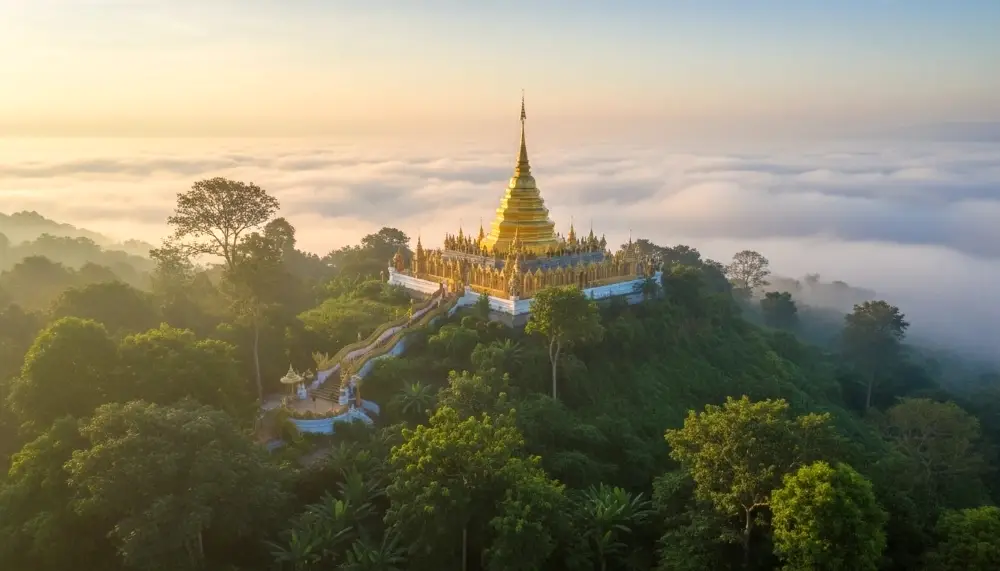
- Visiting Wat Phra That Doi Suthep temple overlooking the city (50 THB / ~$1.40 songthaew ride up, 30 THB / ~$0.85 entry)
- Exploring the Old City’s historic temples and moat-side cafes
- Taking a Thai cooking class (800–1,500 THB / ~$23–$43)
- Visiting ethical elephant sanctuaries (2,500–3,500 THB / ~$71–$100 for a full day)
- Hiking or exploring waterfalls in nearby national parks
With a full week in the north you can also visit the artistic town of Pai (3 hours by minivan, 150 THB / ~$4.30), or take a day trip to see the White Temple (Wat Rong Khun) and Blue Temple (Wat Rong Suea Ten) in Chiang Rai (3 hours by bus, 200 THB / ~$5.70).

Sanuk & Jai Yen
To travel well in the North, you need to understand Sanuk, the Thai philosophy that life should be fun, and Jai Yen (keep a cool heart).
In the North, the pace is slower. Rushing a service worker or displaying public frustration is seen as a significant loss of face (Sia Jai). A calm, respectful, smiling approach will always yield better service and deeper local connections.

A friendly driver, a clean car, and
a flat fare to your Thailand hotel.
Welcome Pickups handle logistics
so your trip starts the right way.
Week 3: Island Time in the Gulf
Fly from Chiang Mai to Koh Samui (direct, 2,500–4,000 THB / ~$71–$114) or fly to Surat Thani and take a ferry across (total journey around 1,800–2,200 THB / ~$51–$63). The Gulf of Thailand islands are ideal for a relaxed island-hopping experience, and the three most popular form a natural circuit.
Three of the most popular islands are:
- Koh Samui – the most developed island with great resorts and beaches. Mid-range hotels: 2,500–5,000 THB (~$71–$143) per night.
- Koh Phangan – famous for the Full Moon Party but also home to quiet northern beaches. Better value than Samui at 1,500–3,000 THB (~$43–$86) per night mid-range.
- Koh Tao – one of the best and most affordable places in the world to learn scuba diving. PADI Open Water courses start from around 9,000 THB (~$257).
These islands are close enough together that traveling between them is simple. Ferry crossings cost 150–350 THB (~$4.30–$10) and run frequently. Book in advance through 12GO during peak season to guarantee your seat.
During this week you can:
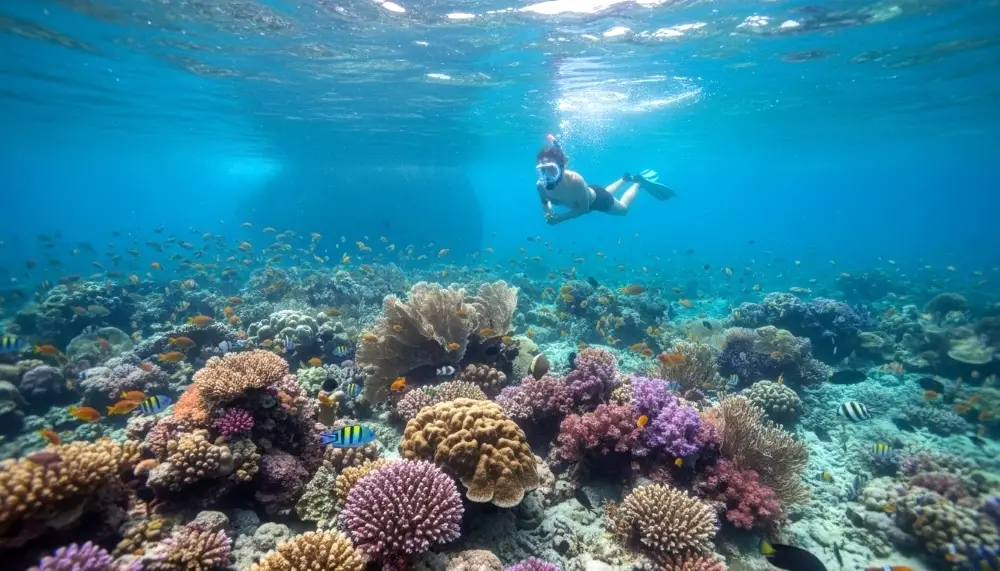
- Snorkel or dive coral reefs
- Relax on white sand beaches
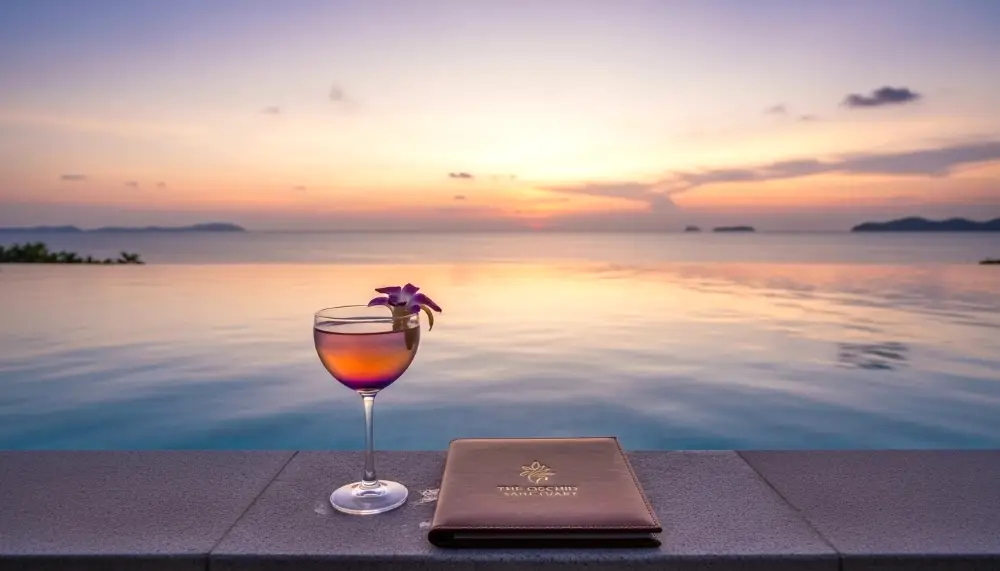
- Watch spectacular sunsets over the Gulf
- Explore hidden coves and viewpoints
- Enjoy beachside Thai food and 60 THB (~$1.70) beers from the 7-Eleven
This part of the trip often becomes travelers’ favourite memory.

Skip the planning headache in Thailand.
Klook offers day tours, tickets, and
experiences from around $25, with
instant confirmation to your phone.
Week 4: The Andaman Coast

For the final part of your Thailand adventure, head to the Andaman Coast, home to some of the country’s most dramatic scenery. Fly from Koh Samui or take a ferry to Surat Thani and then a bus south, or fly directly from Bangkok to Phuket (1,500–2,500 THB / ~$43–$71).
Popular destinations include:
- Phuket – Thailand’s largest island with beaches, nightlife, and great resorts. A base for the Similan Islands liveaboard diving scene.
- Krabi – a beautiful coastal area known for Railay Beach and dramatic limestone cliffs. More relaxed than Phuket, with better value accommodation.
- Koh Phi Phi – famous for its turquoise bays and stunning viewpoints. Best visited midweek to avoid the day-tripper crowds from Phuket.
Boat trips are a highlight of this region. Many visitors take island tours to hidden lagoons, snorkelling spots, and remote beaches. A four-island tour from Krabi costs 1,200–1,800 THB (~$34–$51) per person. Book through Klook or Get Your Guide for vetted operators.
| Region | Primary Focus | Recommended Duration |
|---|---|---|
| Central (Bangkok/Kanchanaburi) | Urban Gastronomy and History | 7 to 9 Days |
| North (Chiang Mai/Mae Hong Son) | Temperate Highlands and Craft | 7 to 9 Days |
| Gulf Islands (Samui/Phangan/Tao) | Island Life and Diving | 7 Days |
| Andaman Coast (Krabi/Phuket) | Marine Adventure and Limestone Scenery | 7 Days |
Which Mode Of Travel Is Best?
Many tourists default to domestic flights to Phuket (approximately 2,500 THB / ~$71). However, the Special Express #31 train from Bangkok to Surat Thani (approximately 1,600 THB / ~$46 for a 1st class sleeper) is the superior slow-travel choice. It saves the cost of a hotel night and provides a view of the Thai countryside that flying bypasses entirely.
Common travel methods across the month include:
- Budget flights between Bangkok, Chiang Mai, and southern hubs (1,200–2,500 THB / ~$34–$71)
- Overnight sleeper trains to northern Thailand (800–1,600 THB / ~$23–$46)
- Ferries connecting the islands (150–400 THB / ~$4.30–$11 per crossing)
- Minivans for shorter mountain routes (150–250 THB / ~$4.30–$7)
Book all long-distance transport through 12GO to lock in seats without queuing at stations or piers. Transportation is part of the adventure, and most journeys are surprisingly smooth.

Skip-the-line tickets and guided walks
in Thailand with English-speaking
guides. Read real traveller reviews
before committing to a single one.
Longer Stay Tips: Making the Most of a Full Month

A 30-day trip comes with practical considerations that shorter trips don’t. Here is what long-stay travelers consistently wish they had known before arriving.
Visa and entry: The 60-day visa exemption covers a 30-day trip comfortably, with 30 days spare. If you plan to re-enter or extend, a single in-country extension at any immigration office costs 1,900 THB (~$54) and adds 30 days. The TDAC digital arrival card must be completed within 72 hours of landing.
Laundry: Laundry shops are everywhere and cost 40–80 THB (~$1.15–$2.30) per kilogram. Drop off in the morning and collect in the afternoon. Pack fewer clothes than you think you need and use these services every few days. It is far cheaper and easier than handwashing or hotel laundry services.
Monthly accommodation discounts: If you plan to stay in one place for a week or more, ask for a weekly or monthly rate. Guesthouses and apartments in Chiang Mai in particular will often discount 20–30% for longer bookings made directly. For flexible short-term bookings, Agoda has the deepest Asia inventory, while Booking.com is better for free-cancellation rates if your plans might shift.
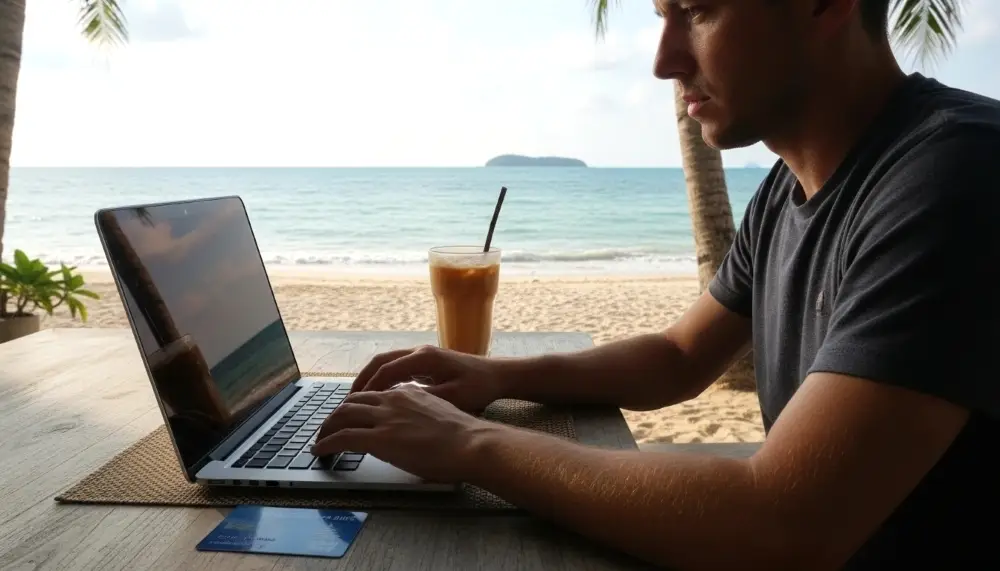
Co-working and connectivity: Bangkok, Chiang Mai, and the main islands all have well-established co-working cafe scenes. Expect to pay 200–500 THB (~$5.70–$14) for a day pass with fast Wi-Fi and coffee included. For reliable mobile data across all four regions, Airalo eSIMs are the easiest option, or buy a physical SIM from AIS on arrival (around 600–900 THB / ~$17–$26 for a 30-day unlimited plan).
Cultural Tips for First-Timers:
Thai culture runs deeper than most travellers expect, and a little awareness goes a long way. At the heart of it is Nam Jai, a kind of warm, generous spirit that shapes how people treat one another. You’ll see it reflected in the Wai, that gentle press of palms together in greeting. It is worth learning; even a clumsy attempt will earn you genuine smiles.
The monarchy and Buddhist faith are both deeply sacred here, so treat them accordingly. When you step into a temple like Wat Phra Kaew, cover your shoulders and knees. Always slip your shoes off before entering a home or temple. It is second nature to locals, and it will quickly become second nature to you too.
Eating out is mostly straightforward, though one thing catches people off guard: that “++” you’ll spot on menus in nicer restaurants simply means the price shown does not yet include the 10% service charge or 7% VAT. Worth knowing before the bill arrives.
Perhaps the most useful thing you can take with you is what Thais call Jai Yen, literally “cool heart.” Staying calm, speaking softly, and keeping a smile on your face will get you remarkably far. Losing your temper or raising your voice causes genuine embarrassment for everyone involved. Keep it light, keep it warm, and Thailand tends to open right up.


Skip the airport SIM queue in Thailand.
Yesim’s eSIM activates before takeoff
so you’re online the second your
plane touches the tarmac.
Pro Tips For Stress Free Travel:

The essential apps include Grab for transport, Agoda for lodging, and Google Translate with the offline Thai dictionary. For connectivity, a local SIM card provides better rates and higher speeds than international roaming, costing approximately 600–900 THB (~$17–$26) for a monthly unlimited plan. An eSIM via Yesim activates before you land and avoids any airport queue.
Security: NordVPN for public Wi-Fi in malls, airports, and co-working cafes.
Transport: Grab, Bolt, InDrive for city rides. 12GO for all trains, buses, and ferries.
Accommodation: Agoda, Booking.com. For stays of 30 days or more, contact properties directly after finding them on these platforms to negotiate a monthly rate.
Getting Around: Klook, Get Your Guide, 12GO for inter-city and inter-island travel.
Money: SuperRich exchange booths for best cash rates. Wise or Revolut cards to avoid foreign transaction fees on card payments.
Your Unforgettable First Month:
A month in Thailand gives you the freedom to truly experience the country rather than just visit it.
You’ll wander through golden temples in Bangkok, explore mountain landscapes in the north, and relax on some of the world’s most beautiful tropical beaches. Along the way you’ll taste unforgettable food, meet genuinely friendly people, and experience a culture that welcomes travelers with open arms.
For many people, one month in Thailand is just the beginning. Once you experience the rhythm of the country, you’ll almost certainly start planning your next adventure before the first one even ends.
Frequently Asked Questions:
What is the average cost for one month in Thailand?
A comfortable mid-range experience typically costs between 100,000 and 120,000 THB (~$2,857–$3,429) per person for 30 days. This includes boutique accommodation, domestic flights between regions, and daily dining at a mix of local markets and established restaurants. Budget travelers can manage on around 45,000 THB (~$1,286) per month, while luxury travelers should plan for 300,000 THB (~$8,571) or more.
Is a visa required for a 30-day stay?
Most nationalities receive a 60-day visa exemption upon arrival at international airports. This covers a 30-day trip with 30 days to spare. The mandatory Thailand Digital Arrival Card (TDAC) must be completed within 72 hours of landing.
Which region is best for slow travel?
The North, specifically the areas surrounding Chiang Rai and Mae Hong Son, offers the best conditions for slow travel. The lower cost of living and the depth of mountain culture allow for a more immersive experience than the faster-paced island hubs.
How do I handle healthcare during a long trip?
Thailand has world-class private hospitals, particularly in Bangkok, Chiang Mai, and Phuket. Ensure international travel insurance is active before departure. SafetyWing operates on a rolling monthly basis from around 1,400 THB (~$40) per month, making it practical for long stays. For minor ailments, local pharmacies are highly capable and many pharmacists speak excellent English.
Can I extend my stay beyond 30 days?
Yes. A single in-country visa extension at any Thai immigration office costs 1,900 THB (~$54) and adds 30 days to your stay. Bring your passport, a passport photo, and proof of accommodation. The process typically takes a few hours at walk-in immigration offices in Bangkok (Chaengwattana), Chiang Mai, Phuket, and on the main islands.
Is it safe to travel alone for a month in Thailand?
Yes. Thailand is consistently rated one of the best solo travel destinations in Asia. The established tourist trail means there are always other travelers nearby, English is widely spoken in tourist areas, and the country’s respectful culture makes solo travel comfortable for all genders. Use Grab and Bolt for transport, keep digital copies of important documents, and ensure your travel insurance is active.
What is the cheapest way to get between regions?
The overnight sleeper train from Bangkok to Chiang Mai costs around 1,000–1,600 THB (~$29–$46) and saves a night’s accommodation. Budget domestic flights (AirAsia, Thai Lion Air) cover Bangkok to Phuket or Koh Samui for 1,200–2,500 THB (~$34–$71) booked two to four weeks ahead. Inter-island ferries cost 150–400 THB (~$4.30–$11) per crossing. Book all transport through 12GO to compare options and lock in seats.