Opening A Thai Bank Account
This site contains affiliate links. We may earn a commission at no extra cost to you.
If you are planning to stay in Thailand for longer than a standard holiday, a local bank account moves quickly from a nice-to-have to a genuine practical necessity. The 220 THB fee on every foreign card ATM withdrawal adds up fast over months. QR code payments via a Thai banking app are how the country actually runs its economy, from market stalls to rooftop bars. And for those on long-stay visas, holding a Thai account is often part of meeting visa financial requirements entirely.
The good news is that opening a Thai bank account as a foreigner is genuinely achievable, and for DTV or retirement visa holders it is more straightforward than most people expect before they try. This guide covers the process properly: which banks to use, what documents to bring, which branches to target, how mobile banking works, and the practical steps that turn a potentially frustrating morning into a completed account.
Can Foreigners Open a Thai Bank Account?
Yes, foreigners can open a Thai bank account, and the process is considerably more accessible than the reputation it sometimes gets in online expat forums suggests.
The key variable is not the bank’s official policy: it is the branch, the staff member you encounter, and the quality of your document bundle. Those three factors matter more than almost anything else. The same application that gets rejected at one branch on a busy Saturday afternoon can be approved at a different branch on a quiet Tuesday morning with the same documents.
In general, the following categories of visitor have the most straightforward experience:
- Holders of the Destination Thailand Visa (DTV)
- Retirement visa (O-A) holders with the 800,000 THB seasoning requirement to meet
- Digital nomads and remote workers on long-stay permits
- Those employed by Thai companies with a Non-B visa and work permit
- Travellers staying for several months with a rental agreement as proof of address
Primary Requirement: A valid DTV or long-stay visa, or a Tourist Visa paired with a Residence Certificate from Immigration or your home country Embassy.
Recommended Banks: Bangkok Bank and Kasikornbank (K-Bank) offer the most streamlined processes for non-residents. Bangkok Bank is the most consistently cited as foreigner-friendly across all visa categories.
Initial Deposit: Minimum opening balances typically range from 500 THB to 2,500 THB depending on the branch and debit card tier selected.
Essential Requirement: A Thai mobile number is mandatory to activate the mobile banking app and PromptPay QR payment system. This cannot be substituted with a foreign number.
Branch Selection: Choosing a branch in a high-traffic expat area such as Sukhumvit in Bangkok or Nimmanhaemin in Chiang Mai meaningfully increases success rates compared to less-visited local branches.

From budget rooms to high-end resorts
in Thailand, Booking.com has the lot.
Genius members unlock an extra 10%
off thousands of properties worldwide.
Why Non-Residents Need Local Banking
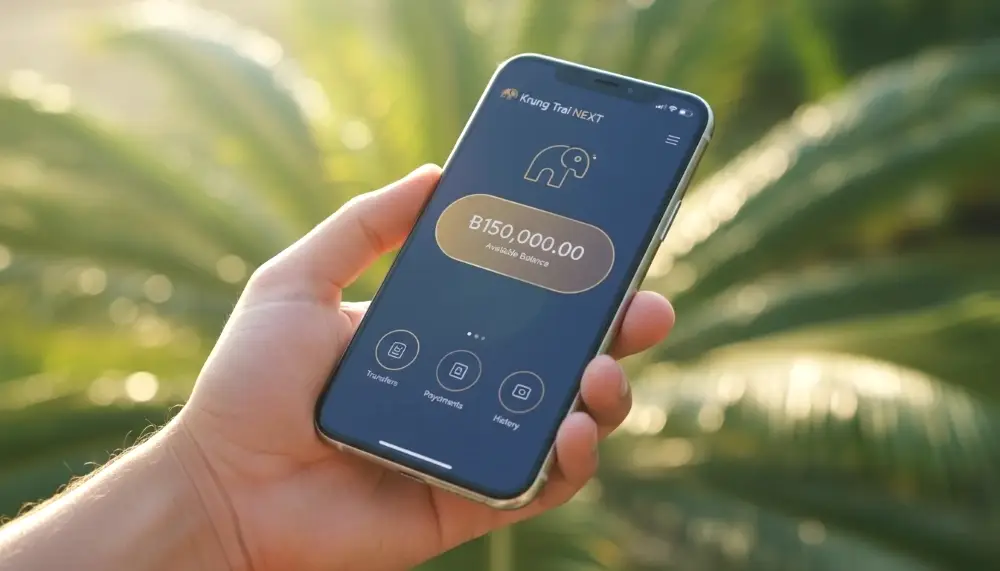
Thailand runs on PromptPay, a unified QR payment system integrated into every major Thai bank’s mobile app. This is not a niche feature used occasionally: it is the primary payment method used by the overwhelming majority of vendors across the entire country. The market stall at Chatuchak Weekend Market, the street noodle vendor in Chiang Mai’s old city, the neighbourhood pharmacy, the rooftop bar in Thong Lor, and your landlord for the monthly rent all accept payment via PromptPay QR scan.
Operating without a local account and relying entirely on foreign cards creates meaningful ongoing costs and friction:
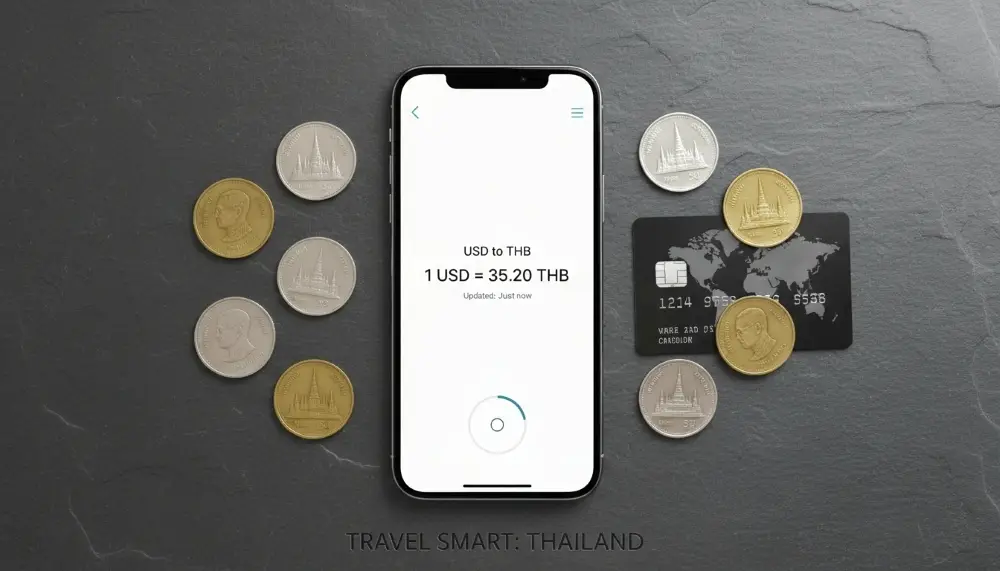
- Every ATM withdrawal with a foreign card incurs a 220 THB flat fee, regardless of the amount withdrawn. Over a three-month stay making two withdrawals per week, that adds up to approximately 5,720 THB in fees alone
- Many local delivery apps, transport platforms, and subscription services require a Thai card for payment
- Landlords strongly prefer and often insist on monthly rent paid via Thai bank transfer rather than cash or international methods
- Retirement visa holders must maintain their 800,000 THB deposit specifically in a Thai bank: there is no alternative
Before you have a Thai account, Wise and Revolut are the most cost-effective tools for ATM withdrawals and international transfers. Both offer significantly better exchange rates and lower withdrawal fees than standard foreign bank cards. Once you have a Thai account, they remain useful for moving money from home into Thailand at minimal cost.

Stay closer to the action in Thailand.
Agoda lists guesthouses to resorts
with verified reviews and instant
booking at competitive rates.
Documents You Need to Bring
Requirements vary by bank and occasionally by branch, but arriving with a comprehensive document bundle gives you the strongest possible position and removes any reason to send you away. Bring originals and photocopies of everything.
The core documents required by virtually every bank:
- Original passport with all pages photocopied
- Valid visa or entry stamp (DTV, O-A, Non-B, or tourist visa)
- A Thai address: your hotel booking confirmation, rental agreement, or condo registration
- A working Thai SIM card with a number you can receive SMS on immediately
Additional documents that strengthen the application and are sometimes specifically requested:
- A signed rental agreement (the single most useful additional document for DTV holders)
- A Residence Certificate from your local Immigration office or your home country Embassy in Bangkok
- A letter of reference from your hotel or guesthouse on headed paper
- For Tourist Visa holders: a Residence Certificate is often necessary and can be obtained at the nearest Immigration office for a small fee
One important practical point: make sure your Airalo, Yesim, or Saily eSIM (or your physical Thai SIM) is active and receiving SMS before you enter the branch. The bank will attempt to send an OTP verification code to your Thai number during the mobile banking activation process, and you need to receive it in real time while seated with the staff member. Arriving without a working Thai number means leaving without a working account.
Banking Options Comparison
| Feature | Bangkok Bank | Kasikornbank (K-Bank) | SCB (Siam Commercial) |
|---|---|---|---|
| Ease for DTV Holders | High: Most consistently reliable for non-residents across all visa types. | Medium: Award-winning app; requires branch-level approval and correct location. | Selective: Often requires work permits or longer-stay documentation. |
| Initial Deposit | 500 THB | 500 THB | 2,000 THB |
| Mobile App Quality | Functional and highly secure, with strong international transfer support. | Award-winning K-Plus app; the most user-friendly interface in the Thai market. | SCB Easy app is modern, fast, and well-designed. |
| International Transfers | Best option: global network and New York branch integration. | Good via Wise integration; smooth for incoming transfers. | Adequate for domestic use; less optimal for regular international transfers. |
Best Banks for Foreigners
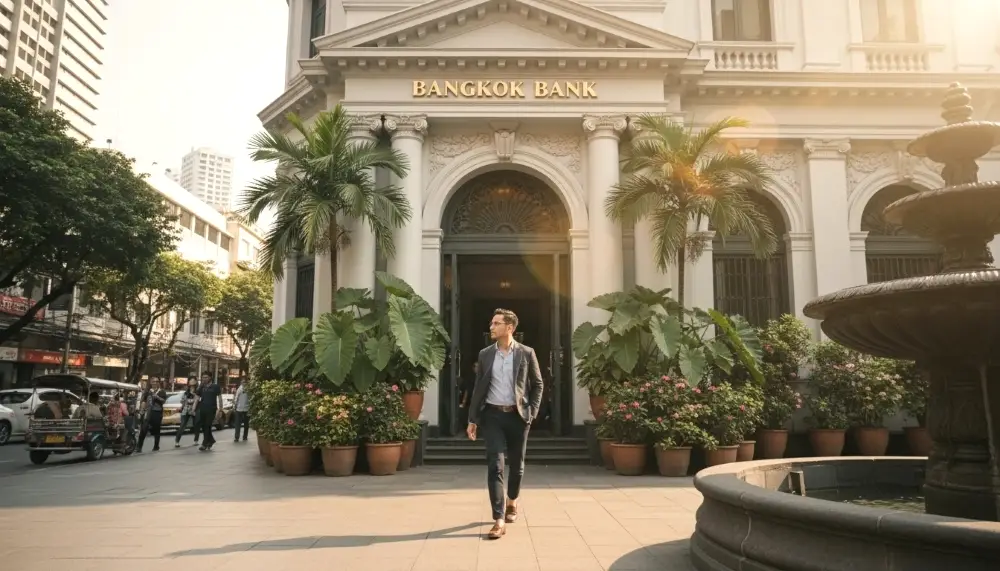
Thailand has several major retail banks, and the four most relevant for foreign residents and long-stay visitors are:
- Bangkok Bank: The most consistently recommended for foreigners across all visa categories. Strongest for international wire transfers via its global network. Good English language support at expat-area branches.
- Kasikornbank (K-Bank): Home of the K-Plus app, which is widely considered the best-designed banking application in the Thai market. Slightly more variable in its approval process for non-residents, but well worth pursuing for the app quality alone once approved.
- Siam Commercial Bank (SCB): The SCB Easy app is modern and capable. More selective on foreign account opening, often requiring work permits or extended visa documentation. Less accessible for tourist or DTV applicants without substantial documentation.
- Krungsri Bank (Bank of Ayudhya): A subsidiary of Japan’s MUFG, with good English support in major cities and a reasonably accessible process for long-stay visa holders. Less commonly discussed in expat forums but worth trying if the main three present difficulties.
The practical recommendation for most DTV holders and retirees is to start with Bangkok Bank and, if approved, consider also opening a K-Bank account for the superior app experience. Many long-term residents end up maintaining accounts at two banks for exactly this reason.

Lock in top-rated Thailand tours with
GetYourGuide’s free cancellation
up to 24 hours before. Reserve now
and pay later if dates aren’t set.
The DTV Advantage for Account Opening
The Destination Thailand Visa functions as a high-authority credential in the eyes of Thai bank officers in a way that a standard tourist visa or visa exemption stamp simply does not. It signals a legitimate, government-verified, five-year connection to the country. Staff at branches familiar with the DTV understand that holders represent stable, long-term contributors to the local economy rather than short-stay visitors.
DTV holders should present their digital e-visa or passport DTV stamp alongside a rental lease agreement or Residence Certificate as proof of local habitation. This combination, delivered politely with a complete document bundle, resolves the two questions Thai bank staff are actually trying to answer: is this person legally permitted to be here, and do they actually live somewhere locally?
The practical geography also matters. Branches in districts like Phrom Phong, Ekkamai, Ari, and Thong Lor in Bangkok, and Nimmanhaemin in Chiang Mai, handle DTV holders regularly and their staff understand the visa category. Branches in less-travelled areas may encounter DTV documentation for the first time and defer to a more cautious default position.
If you are on a Tourist Visa rather than a DTV, the process is more challenging but not impossible. A Residence Certificate obtained from the nearest Immigration office, combined with a rental agreement and a willingness to try multiple branches, succeeds for a meaningful proportion of applicants. Some banks also accept the purchase of a basic personal accident insurance product from the bank itself, costing around 2,000 to 5,000 THB annually, as an alternative credential to justify account opening without a long-stay visa.

Compare tours and tickets for Thailand
and book instantly on your phone.
Klook mobile vouchers mean no
printing, just turn up and go.
Where It Is Easiest to Open an Account

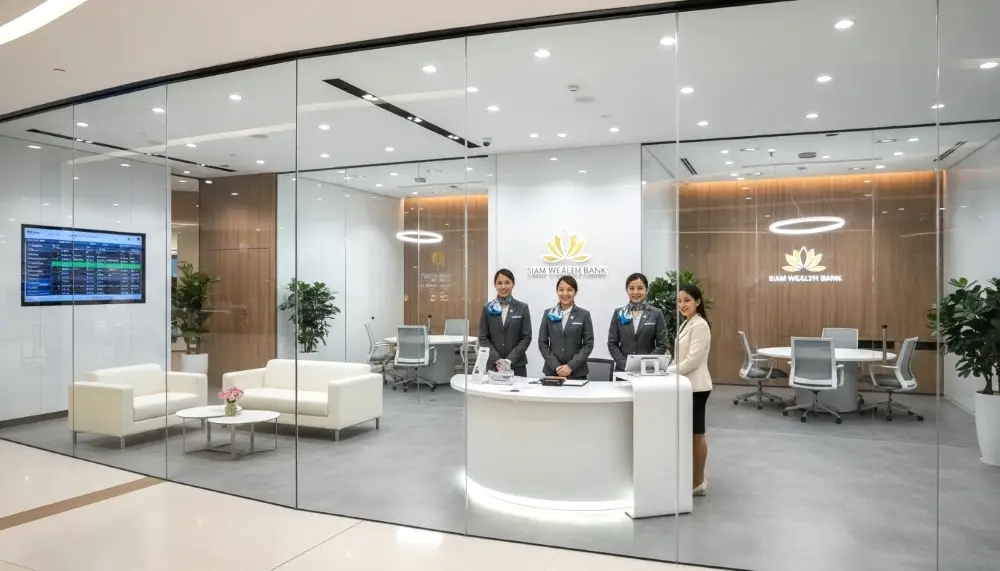
Branch location is one of the most significant practical variables in the account opening process. Branches in major expat and tourist destinations handle foreign applications regularly, their staff understand the relevant visa categories, and English communication is far more reliable. The same documents that produce a hesitant response at a local suburban branch tend to be processed efficiently at an expat-area branch.
The cities and areas where success rates are consistently highest:
- Bangkok: Sukhumvit corridor branches (especially Phrom Phong, Ekkamai, and On Nut), Ari, and Silom. These process the highest volume of foreign applications in the country.
- Chiang Mai: Nimmanhaemin area branches and those in the city centre near the old moat. High familiarity with DTV holders specifically.
- Phuket: Branches in Phuket Town, Rawai, and Bang Tao cater to a large permanent expat community.
- Pattaya and Hua Hin: Both have long-established retiree communities and branches accustomed to O-A retirement visa documentation.
- Koh Samui: Good access at central Chaweng and Lamai branches for longer-staying visitors.
A practical tip worth emphasising: if a branch declines your application, do not treat it as a definitive rejection of your eligibility. It is a rejection by that specific branch on that specific day. The application is not recorded centrally and does not affect your ability to apply at another branch immediately. Many people who succeed do so on their second or third attempt at a different location.
Step-by-Step Process for a Successful Application
Following this sequence gives you the best possible chance of completing the process in a single visit:
Step 1: Choose the right branch. Select a Bangkok Bank or K-Bank in an expat-heavy neighbourhood as described above. Check Google Maps reviews for any specific mention of foreign account opening: positive mentions from other expats are a reliable indicator.
Step 2: Time your visit correctly. Arrive on a weekday morning between 9:30 and 11:30 AM. Branches are quietest at this time and senior staff who can approve non-standard applications are more likely to be available. Avoid Fridays and the last working days before Thai public holidays.
Step 3: Dress appropriately. This is a cultural nuance that consistently makes a practical difference. Smart-casual attire, a collared shirt, and closed-toe shoes conveys the kind of seriousness that matters in a Thai social context. The concept of Greng Jai, showing respect through appearance and manner, applies in banking interactions just as it does elsewhere. What reads as casual in a Western office context can read as disrespectful here.
Step 4: Present your complete document bundle at the Information Desk. Request a “Savings Account with Mobile Banking and PromptPay.” Do not ask whether they serve foreigners: present your complete documentation as though the answer is obviously yes.
Step 5: Pay the initial deposit and debit card fee. Keep cash in Thai Baht for this. The deposit itself (typically 500 to 2,000 THB) and the debit card annual fee (200 to 800 THB) are paid at the branch on the day.
Step 6: Activate the mobile app before leaving. The staff member will assist with initial app setup. The SMS verification code goes to your Thai number in real time: make sure your Airalo, Yesim, or Saily eSIM or physical SIM is active and receiving messages before you sit down. Do not leave the branch until the app is fully functional and PromptPay is registered to your account.

Airalo covers Thailand with a range of
data plans from days to a month.
No physical SIM swap, no roaming
bill shock when you get back home.
Mobile Banking and PromptPay in Thailand
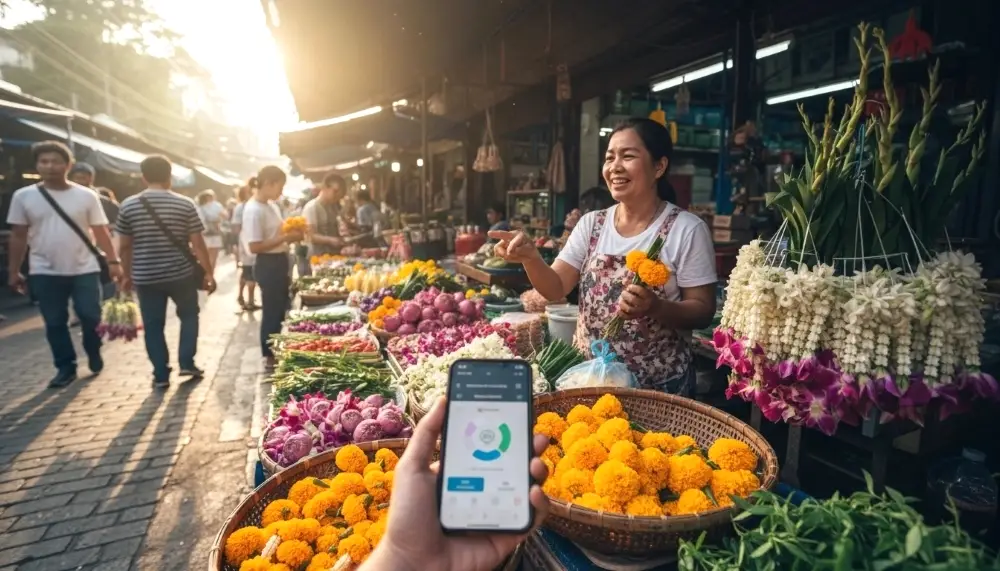
Thailand is significantly more advanced in digital payment infrastructure than most Western visitors expect. Once your account is open and your banking app is activated, you have access to a payment ecosystem that is genuinely faster and more integrated than anything available in the UK or most of Europe.
Your Thai banking app allows you to:
- Scan any vendor’s PromptPay QR code to pay instantly without entering card details
- Transfer money to other Thai accounts in seconds with zero fee for same-bank transfers
- Pay monthly rent to your landlord via bank transfer from your phone
- Pay utility bills, phone top-ups, and service subscriptions directly
- Link your account to Grab and Bolt for automatic ride and food delivery payments
- Receive international transfers directly into your account once it is established
QR code payments are genuinely ubiquitous. Every vendor at every level of the economy displays a PromptPay QR code: large shopping malls, street food carts, temple donation points, and tuk-tuk drivers who have updated to the digital age. Being able to pay by scan is not a convenience: after a few weeks it becomes the default and paying cash starts to feel like the awkward alternative.
NordVPN is worth mentioning in this context: Thai-based IP addresses trigger security flags on many home-country banking apps and online financial platforms. Routing through NordVPN when accessing your UK, Australian, or European accounts from Thailand restores normal access and prevents the frustrating lockout that catches many long-term visitors off guard.
Practical Tips for a Smooth Application
The following points come up consistently in the advice of those who have been through the process successfully:
- Target expat-area branches specifically: this single decision makes more difference than any other
- Dress smartly and be genuinely polite throughout: Thai culture rewards respectful conduct in ways that feel disproportionate by Western standards
- Visit on a quiet weekday morning when senior staff are available and the branch is not under pressure
- Bring every document you might possibly need, with photocopies: over-preparation is never penalised
- If declined, do not argue. Thank the staff member, leave politely, and try a different branch the same afternoon or the following day
- Have your Thai SIM active and receiving SMS before you sit down: you will need it in real time during the application
Thailand operates on a genuinely human level rather than rigid bureaucratic consistency, and this works in your favour when you approach the interaction correctly. A polite, well-prepared, respectfully presented applicant has a meaningfully higher success rate than the same person arriving casually or showing impatience when questioned.

Maps, Grab, translation apps all need
data in Thailand. Yesim’s eSIM installs
in a minute and gives you reliable
5G from the moment you arrive.
Pro Tips for Stress-Free Travel and Banking
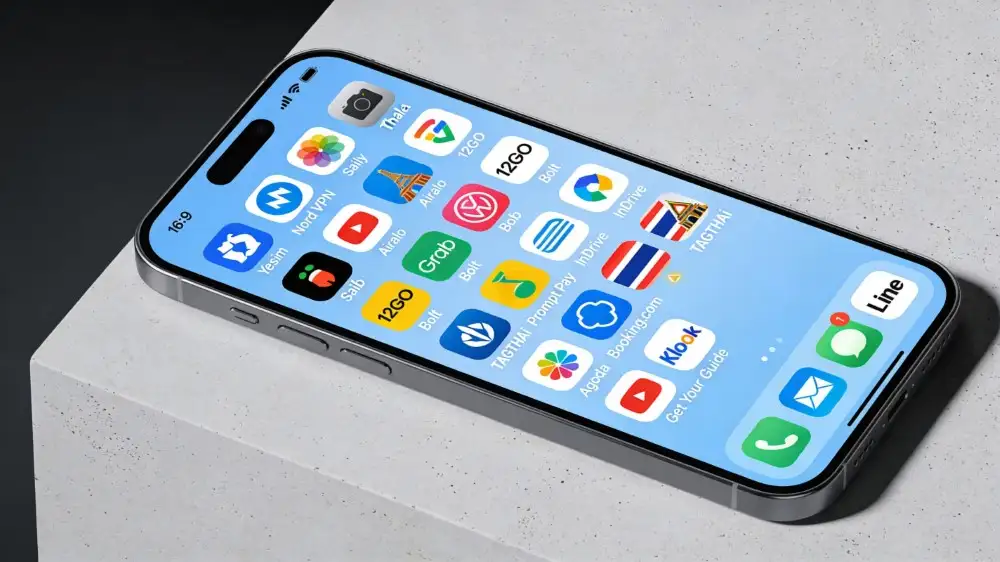
Before your account is open: Wise and Revolut are the best tools for currency conversion and ATM withdrawals in Thailand. Both offer dramatically better rates than standard bank cards and significantly lower fees than the 220 THB flat charge on foreign card ATM withdrawals. Top up Wise before you travel and use it as your primary spending tool until your Thai account is active.
Mobile connectivity: Your Thai SIM is required for banking app verification and cannot be bypassed. Activate an Airalo, Yesim, or Saily eSIM before boarding your flight so you have a working Thai number from the moment you clear immigration. For long-term stays, switch to a physical AIS or TrueMove SIM at a shopping centre for better 5G speeds at around 600 THB per month.
Digital security: NordVPN is essential for accessing home-country banking apps from Thailand. Thai IP addresses trigger security blocks on many UK, Australian, and European banking platforms. Route through NordVPN and everything functions normally. It also protects your financial information on the public Wi-Fi networks you will inevitably use in cafes and coworking spaces.
Transport to the branch: Grab and Bolt are the most reliable ways to reach specific branch addresses in Bangkok and Chiang Mai. Link your new Thai debit card to both apps once the account is active to remove the need for cash payments on rides entirely.
Accommodation near banking hubs: For those arriving specifically to set up their banking and residential arrangements, Agoda and Booking.com both carry serviced apartments and hotels near the main expat banking corridors in Sukhumvit and Nimman. Staying within the same neighbourhood as your target branch simplifies the logistics considerably.
Activities and day trips: Once settled, Klook and Get Your Guide offer competitive pricing on regional tours, cooking classes, and excursions. Both accept international cards and PromptPay QR payment once your Thai account is active.
Currency note: All Thai transactions are in THB. Be aware of the “Plus Plus” notation on menus and service agreements, which indicates 7% VAT and 10% service charge added to the displayed price. This applies at restaurants, some hotels, and certain service providers.
Do Not Stress If It Does Not Work First Time
If the first branch declines your application, the appropriate response is not frustration: it is a calm “thank you” and a walk to the next branch on your list. This is genuinely how the process works for many people who eventually succeed. A refusal at one branch is not a mark against you, it is not recorded centrally, and it has no bearing on your next attempt.
While you are working through the process, international cards function perfectly well throughout Thailand. Visa and Mastercard debit and credit cards are accepted in hotels, larger restaurants, shopping centres, and most major service providers. Wise and Revolut cover ATM withdrawals at far lower cost than standard bank cards. The absence of a Thai account is an inconvenience and a cost rather than a barrier to daily life.
Most people who follow the practical guidance above, targeting the right branches with a complete document bundle, dressed appropriately, on a quiet weekday morning, succeed within one or two attempts. It is worth treating it as a practical task rather than an obstacle, because that is genuinely what it is.
A Small Step Toward Living Here Properly

Opening a Thai bank account is not strictly necessary for a short holiday, but for anyone planning a meaningful length of stay it is one of those steps that changes the texture of daily life in a way that is difficult to appreciate until you experience it.
Paying for street food with a phone scan. Settling rent with a three-second transfer. Receiving your freelance payment or pension directly into a local account without ATM fees or conversion losses. These are small things individually, but they add up to a version of life here that feels genuinely integrated rather than perpetually visitor-adjacent.
Thailand has a way of making people feel at home more quickly than they expected, and a local bank account is one of the quiet but significant steps in that process. It is the moment the infrastructure of daily life starts working for you rather than around you.
Frequently Asked Questions
Can I open a Thai bank account on a 60-day Tourist Visa?
Yes, but it is more challenging than with a long-stay visa. Success on a Tourist Visa typically requires a Residence Certificate from your local Immigration office or home country Embassy, a rental agreement as proof of address, and in some cases the purchase of a basic personal accident insurance policy sold by the bank itself, which costs approximately 2,000 to 5,000 THB annually. Targeting branches in expat-heavy areas and arriving with a complete document bundle significantly improves the odds. A DTV or long-stay visa makes the process considerably more straightforward.
Which bank is best for receiving international wire transfers?
Bangkok Bank is widely regarded as the strongest option for international wire transfers due to its extensive global correspondent network and its integration with its New York branch, which simplifies USD transfers considerably. For smaller regular transfers from UK or European accounts, many long-term residents use Wise to send funds directly into a Thai K-Bank or Bangkok Bank account, which offers significantly better exchange rates and lower fees than a direct SWIFT wire.
How much are the annual debit card fees?
Expect to pay between 200 THB and 800 THB annually depending on the card tier and the benefits attached to it. Basic Visa Electron or Mastercard Debit cards sit at the lower end. Cards with travel insurance, purchase protection, or airport lounge access sit higher. The bank staff will present the options when you open your account: the standard basic card is perfectly sufficient for daily use.
Do I need a Thai phone number to open a bank account?
Yes, a Thai mobile number is mandatory and cannot be substituted with a foreign number. The banking app uses your Thai SIM for identity verification and sends transaction notification SMS to your Thai number. This is also why your SIM must be active and receiving messages during the account opening process itself: the staff member will attempt to send an OTP verification code to your number in real time. Use a post-paid or well-topped-up pre-paid SIM from AIS, TrueMove, or DTAC. An Airalo, Yesim, or Saily eSIM with a Thai number assigned works for this purpose if configured correctly before your visit.
Is there a minimum balance requirement?
Most basic Thai savings accounts require a minimum balance of 500 THB to 2,000 THB to remain active. If the balance falls to zero for an extended period (typically several months), the account may be automatically closed or moved to a dormant status requiring in-branch reactivation. For O-A retirement visa holders, the 800,000 THB seasoning requirement functions effectively as a mandatory minimum for visa purposes, though the bank account itself does not technically enforce this beyond its standard minimum.
What is PromptPay and how does it work?
PromptPay is Thailand’s national QR payment infrastructure, operated by the Bank of Thailand and integrated into every major Thai bank’s mobile app. Once your account is set up and PromptPay is registered (done in-branch during account opening), you can pay any vendor displaying a PromptPay QR code by opening your banking app, scanning the code, entering the amount, and confirming. The payment is processed instantly with zero transaction fee for amounts under 5,000 THB per transaction. It is used everywhere from street food stalls to major department stores and is the primary payment method for most Thai daily transactions.
Can I receive my pension or salary directly into a Thai bank account?
Yes, and this is one of the most practically useful features of having a Thai account for retirees and long-term remote workers. Most Thai banks, particularly Bangkok Bank, accept international SWIFT wire transfers in major currencies including GBP, EUR, AUD, and USD. Incoming international transfers are typically converted to THB at the bank’s published rate. Using Wise to send to your Thai account rather than a direct SWIFT transfer generally results in a better exchange rate and lower transfer fees, making it the preferred method for regular transfers for many long-term residents.
Will my home-country banking app work from Thailand?
Many home-country banking apps flag Thai IP addresses as suspicious and block access as a fraud prevention measure. This is particularly common with UK, Australian, and European banking platforms. The solution used by the overwhelming majority of long-term foreign residents is NordVPN, which routes your connection through your home country and restores normal access entirely. Without it, you may find yourself temporarily locked out of your home account at precisely the moment you need to transfer funds to Thailand, which is a frustrating situation worth avoiding with a simple precaution.
How long does the account opening process take?
At a well-prepared branch with a complete document bundle, the process from arrival to completed account typically takes between 45 minutes and 90 minutes. The time is split between the initial document review, the account application form (usually completed by a staff member on your behalf), the initial deposit payment, and the mobile banking activation. Ensuring your Thai SIM is active before you arrive removes the single most common cause of delay. Arriving when the branch is quiet (weekday mid-morning) also shortens the wait considerably.
Are there any ongoing tax implications of holding a Thai bank account?
For short-stay visitors, no. For those who become Thai tax residents by staying 180 or more days in a calendar year, the situation is more nuanced. Thai tax residency means that foreign-sourced income remitted into Thailand (including into your Thai bank account) is potentially subject to Thai Personal Income Tax. The rules were updated in 2024 and the previous year-delay loophole has been closed. If you are transferring significant income into Thailand and staying beyond the 180-day threshold, speaking to a Thai tax advisor before that threshold arrives is strongly recommended. Double Tax Agreements between Thailand and over 60 countries provide meaningful protection against being taxed twice on the same income.