Thailand Digital Nomad Visa (DTV) 2026: The Complete Guide
Thailand has become one of the most compelling remote work destinations on earth, and in 2026, there is finally a visa that matches that reputation. The Destination Thailand Visa (DTV) gives remote workers, freelancers, and lifestyle travellers a legal, stable, long-term pathway into a country that has quietly been mastering the art of making foreigners feel at home for decades.
This guide covers everything you genuinely need to know: the real requirements (not just the official summary), the documents that get applications rejected, the best embassies to apply through, the cost of living by city, and where to actually base yourself. Whether you are a freelance designer in Bristol, a remote developer in Chicago, or a content creator anywhere in between, read this before you book your flight.
The DTV at a Glance
Launched in July 2024, the Destination Thailand Visa is a 5-year multiple-entry visa that allows each entry to stay for 180 days, extendable once per entry for a further 180 days. That means in theory, you can stay for up to 360 consecutive days without leaving the country, then re-enter and do it all again, for five full years, on a single visa.
It is the most accessible and practical long-stay option Thailand has ever offered to remote workers, and the recent rollback of the 60-day visa exemption to 30 days makes the DTV even more attractive for anyone planning a serious stay.
- Validity: 5 years, multiple entry
- Stay per entry: 180 days, extendable to 360 days without leaving
- Application fee: 10,000 THB (~£225 / $285) per visa issuance
- In-country extension fee: 1,900 THB (~£43 / $54)
- Minimum age: 20 years old
- Apply from: Outside Thailand only, via a Thai Embassy or the official e-visa portal

Two Application Routes
The DTV has two distinct application pathways, and understanding which one applies to you is the first step to a successful application.
Route 1: Workcation (Remote Workers and Freelancers)
This is the route for anyone working remotely for a non-Thai employer, running a foreign-registered business, or earning freelance income from clients outside Thailand. You must show proof of employment or client contracts, recent payslips or invoices, and demonstrate that your income comes entirely from outside Thailand.
Route 2: Soft Power (Cultural and Lifestyle Activities)
This route covers people attending approved Thai activities including Muay Thai training, certified cooking schools, traditional arts courses, medical treatments, and sports training at accredited institutions. No employment documents are required, but you must provide enrolment confirmation from a qualifying institution. Note: language schools were removed from the approved soft-power category in late 2025 and applications based on language study alone are rejected.

GetYourGuide has Thailand’s best
tours and experiences covered with
verified operators and instant
mobile vouchers on arrival.
Long-Stay Visa Comparison 2026
| Feature | Destination Thailand Visa (DTV) | Long-Term Resident (LTR) | Thailand Privilege |
|---|---|---|---|
| Visa Fee | 10,000 THB (~£225 / $285) | 50,000 THB (~£1,125 / $1,430) | 900,000 THB+ (~£20,250 / $25,700) |
| Financial Requirement | 500,000 THB bank balance | $80,000 USD annual income | None (entry-level fee-based) |
| Visa Validity | 5 Years | 10 Years | 5 to 20 Years |
| Stay per Entry | 180 days (extendable to 360) | 1 Year (renewable) | 1 Year (renewable) |
| Best For | Remote workers, nomads, freelancers | High earners, senior professionals | Wealthy retirees and investors |
The Real Requirements: What Actually Gets Approved
The official requirements are straightforward on paper, but the gap between the published criteria and what embassies actually scrutinise is where most rejections happen. Here is what the DTV genuinely requires in 2026.
The 500,000 THB Bank Requirement
This is the most misunderstood and most common source of rejection. You must show 500,000 THB (approximately £11,200 / $15,500 at current mid-2026 rates) sitting in your personal bank account. Three critical details that catch people out:
- Seasoning is non-negotiable. The funds must have been in your account for at least 3 months before you apply, and most embassies want 6 months of statements. Funds transferred in specifically for the application are flagged and rejected. This is the single leading cause of DTV refusals in 2026.
- Foreign currency is accepted. You do not need to hold Thai baht. USD, GBP, EUR, and other stable currencies are accepted provided they meet the equivalent threshold on the date of your bank statement.
- Statements must be current. Most embassies require statements issued within 7 to 30 days of your application submission. A 3-month-old printout of a sufficient balance may still result in rejection if the document is stale.

Proof of Remote Work
This is where applications get vague and vague gets rejected. “I’m a freelancer” with no supporting documents is not sufficient. Embassies want to see specific, verifiable proof that you earn real income from outside Thailand. What works:
- An employment contract that explicitly states remote work is permitted and that your employer is registered outside Thailand
- Recent payslips from the past 3 to 6 months
- For freelancers: active client contracts, invoices, and bank statements showing those payments deposited (the invoices and deposits must reconcile)
- For business owners: company registration documents proving the business is incorporated outside Thailand
A LinkedIn profile, a portfolio website, or a general statement about your profession are not sufficient on their own. Get your documentation in order before paying the 10,000 THB fee, because it is non-refundable on rejection.
Health Insurance
The official position on health insurance for the DTV varies by embassy. Some require it formally, others do not. What is consistent in 2026 is this: if your chosen embassy requires insurance and you do not provide it, your application is rejected. The standard minimum when required is $50,000 USD in medical coverage for your intended stay period in Thailand, from an internationally recognised insurer.
Practical tips on DTV insurance:
- The policy must explicitly name Thailand as a covered destination.
- Your name on the certificate must match your passport exactly, including middle names and initials.
- $50,000 is the minimum, but given the cost of serious medical treatment in Thailand, £100,000 or more is genuinely worth considering. A single hospitalisation at a major private hospital can exceed the minimum threshold.
- SafetyWing and World Nomads both offer policies widely used by the DTV community that meet these requirements. Always confirm your specific embassy’s current rules before purchasing.

Where to Apply: Best Embassies in 2026
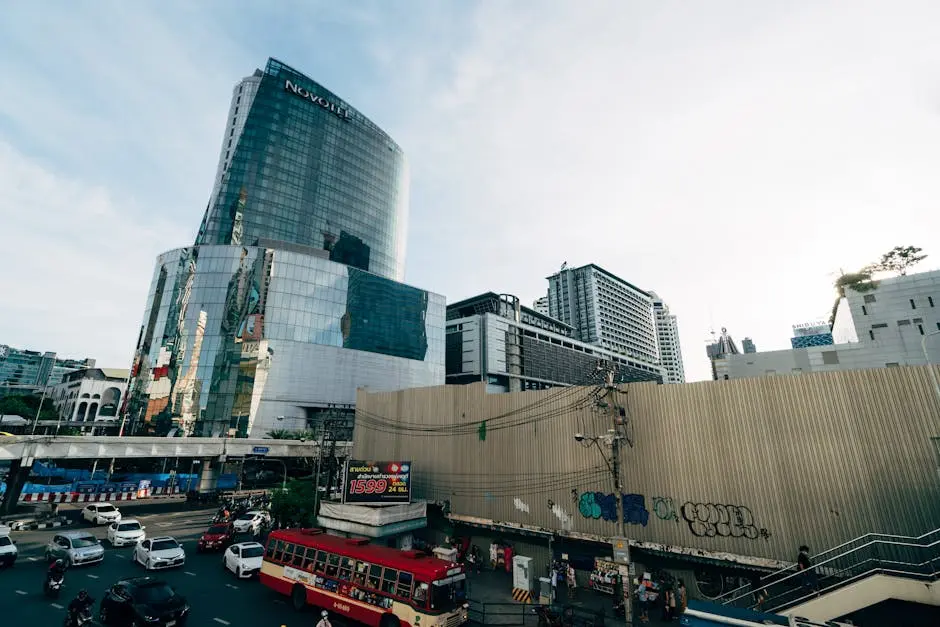
Almost all Thai embassies now require applications through the official e-visa portal rather than in-person submissions. Processing times officially run 5 to 15 business days, though in practice, especially during the peak season of October to February, waits of 3 to 6 weeks are common. Apply early.
Based on community reporting and approval patterns through mid-2026, the most straightforward embassies for DTV applications are:
- Vientiane, Laos: Historically flexible on documentation and fast on processing. Popular with nomads already in Southeast Asia who can easily make the trip.
- Kuala Lumpur, Malaysia: Reliable processing, good communication, and frequently used by those already travelling in the region.
- London, UK: Well-organised, clear on requirements, and strong approval rates for well-prepared applications from British and European applicants.
- Washington DC, USA: Straightforward process with good approval rates for US applicants with strong documentation.
Embassies that tend to be slower or stricter include Tokyo (very precise on document formatting), Beijing (longer processing times and high volume), and New Delhi (high application volume with significant delays). If you are rejected at one embassy, you can reapply immediately at another, once you have addressed the reason for refusal.

Compare tours and tickets for Thailand
and book instantly on your phone.
Klook mobile vouchers mean no
printing, just turn up and go.
Why Thailand Is So Popular With Remote Workers
The numbers make the case quickly. A remote worker earning a mid-range Western salary and relocating to Bangkok or Chiang Mai typically saves between $20,000 and $35,000 per year on rent alone, before factoring in food, transport, and everything else that costs a fraction of equivalent life in London, Sydney, or San Francisco.
But the appeal goes beyond pure cost. Thailand in 2026 has excellent digital infrastructure. Average internet speeds in Bangkok and Chiang Mai regularly exceed 300 to 600 Mbps, with co-working spaces offering dedicated fibre lines up to 1 Gbps in some locations. The healthcare system, while not free, is outstanding in quality and significantly cheaper than private care in the UK or USA. English is widely spoken in expat and tourist areas. And the time zone at UTC+7 aligns well with US Pacific morning sessions and European afternoon calls, meaning many remote workers find the schedule genuinely workable.
When your screens close for the day, Bangkok’s temples, Chiang Mai’s night markets, and the southern islands are right there waiting. Few countries get this balance right as effortlessly as Thailand.


Stay closer to the action in Thailand.
Agoda lists guesthouses to resorts
with verified reviews and instant
booking at competitive rates.
Where Digital Nomads Actually Live

Bangkok: Infrastructure and Energy
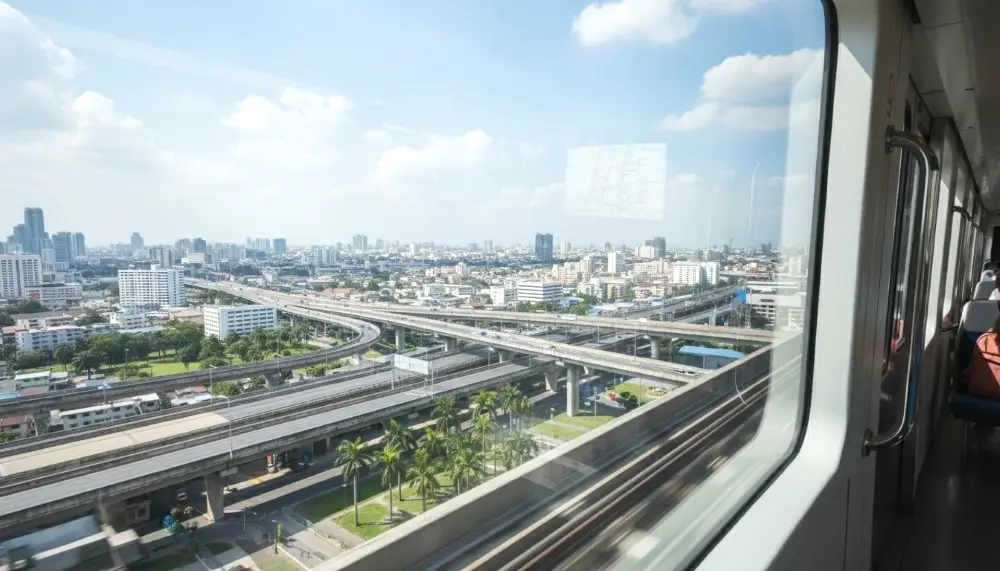
Bangkok is the infrastructure play. If your work requires fast, reliable connectivity, international networking, easy airport access, and a city that never quite stops, Bangkok delivers on all of it. The BTS Skytrain and MRT underground system make getting around central Bangkok comfortable and cheap; a monthly pass runs around £40 to £60. For off-BTS destinations, Grab fills the gap reliably.
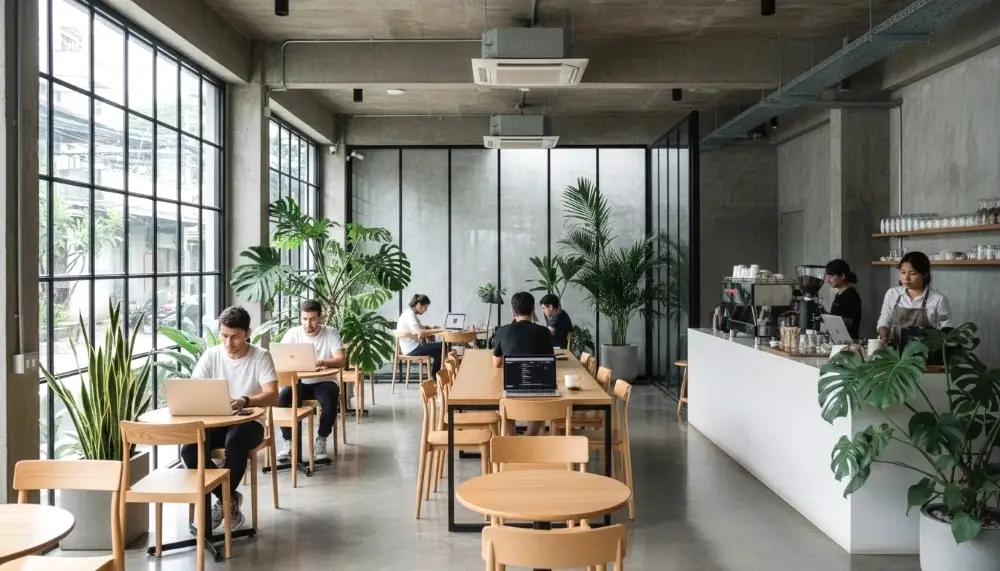
Thong Lor and Ari are the anchor neighbourhoods for the nomad community. Thong Lor is polished, high-end, full of excellent coffee shops and co-working spaces catering to a discerning crowd. Ari has a more local, residential feel but is rapidly developing into a boutique work hub. Comfortable monthly costs in Bangkok typically run $1,500 to $2,500 for a single remote worker living well, with furnished 1-bedroom apartments in Sukhumvit running from approximately 18,000 to 30,000 THB (~£400 to £675) per month. Best co-working options: The Hive, Hubba, and several WeWork-style spaces throughout the CBD. Book accommodation in advance via Agoda for the best long-stay monthly rates.
Chiang Mai: Deep Work and Community
Chiang Mai is widely regarded as the digital nomad capital of Southeast Asia, and it has held that title long enough for the infrastructure and community to be genuinely mature. This is not a city that is “getting good for remote workers.” It has been excellent for over a decade and keeps improving.
Nimmanhemin remains the nomad heartland, lined with co-working spaces, specialty coffee shops, and reliable fibre internet. For better value and a more authentic neighbourhood feel, Santitham sits just north and offers the same connectivity at noticeably lower rents. Monthly costs typically run $900 to $1,500 for a comfortable single lifestyle, with private apartments available from around 8,000 to 15,000 THB (~£180 to £340) per month. Best co-working spaces: Punspace (multiple locations), Yellow Coworking (24/7 access), and HUB53. The community here is real and active, with weekly meetups, skill-share events, and a support network that makes arriving as a stranger quite short-lived.
One genuine caveat: burning season from late January to April brings serious air quality issues. An air purifier at home is not optional during those months, and some nomads plan a month on the islands or in Bangkok as a seasonal escape. Book intercity transport on 12GO well in advance during these popular travel windows.


The Southern Islands: Phuket, Koh Samui, and Beyond
If the dream is a working view of turquoise water, Thailand’s islands deliver, with the caveat that the island lifestyle comes with trade-offs that Bangkok and Chiang Mai do not. Getting on and off requires a flight or a long ferry, connectivity in older properties can still be patchy, and costs are higher than Chiang Mai.
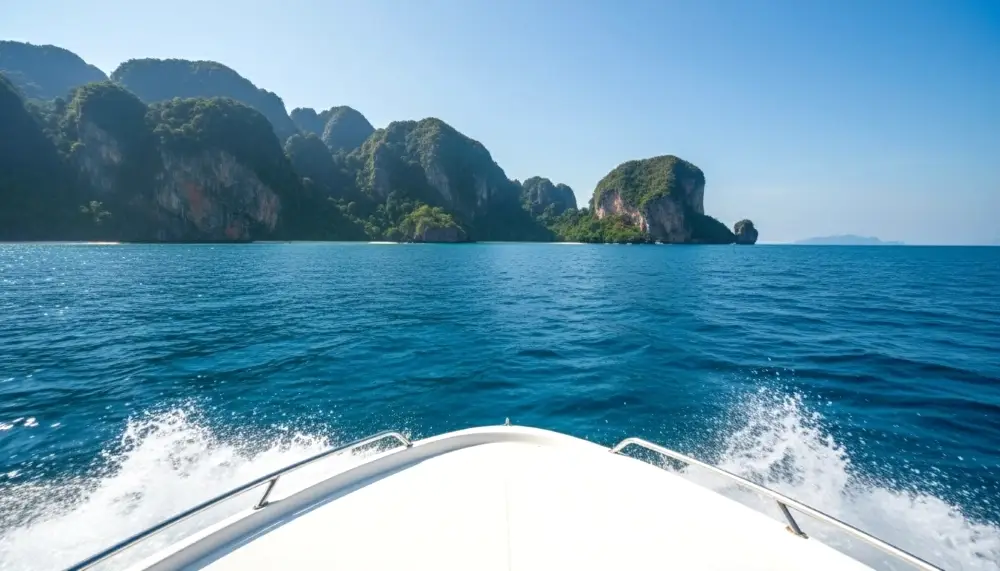
For Phuket, the interior districts of Kathu and Rawai offer a practical escape from the tourist pressure of Patong, with good co-working options, access to beaches, and proximity to Central Floresta for errands and shopping. Monthly costs typically run $1,400 to $2,800, making it more expensive than Chiang Mai but often cheaper than comparable coastal living in Europe or Australia. Koh Samui sits in a similar bracket. Koh Phangan is developing a real digital nomad scene focused on wellness and a slower rhythm, with co-working internet in some spaces now hitting 100 to 300 Mbps. Use Klook and Get Your Guide to pre-book day excursions and diving trips so nothing gets sold out once you arrive.
The DTV and Thai Tax: What You Need to Know
This section is important and frequently skipped. If you stay in Thailand for 180 days or more in a single calendar year, you become a Thai tax resident under Thai law and may be required to declare foreign income brought into Thailand during the year it was earned.
In practical terms for most DTV holders:
- Stays under 180 days in a calendar year: no Thai tax liability on foreign remote income.
- Stays of 180 days or more in a calendar year: you become a Thai tax resident and income remitted to Thailand may be assessable.
- US citizens remain subject to US federal taxation on worldwide income regardless of where they live. If you are American on the DTV, you will need both a US filing strategy and an understanding of your Thai position. Filing using IRS Form 2555 (Foreign Earned Income Exclusion) is the most common approach. Consult a qualified tax professional before committing to a full year’s stay.
- For the majority of UK, EU, and Australian DTV holders working for foreign employers, the practical tax exposure is manageable, but this is not a substitute for professional advice tailored to your specific country of residence and income structure.
NordVPN is worth mentioning here for a different reason: many nomads use Thai tax-year tracking to manage their days, and VPN access to home-country banking, payroll platforms, and professional services becomes essential for remote financial admin from Thai cafes and co-working spaces.

Travelling in Thailand with work?
NordVPN keeps remote access secure
on any network, even dodgy hotel
wifi or shared co-working hotspots.
Understanding Thai Culture as a Long-Term Visitor

Long-term visitors who make an effort to understand Thai culture and etiquette are rewarded quickly. Thai society places strong value on politeness, calm behaviour, and reciprocal kindness. A smile opens more doors here than almost anywhere else.
- Remove shoes before entering homes and many small businesses.
- Dress modestly when visiting temples and religious sites. Covered shoulders and knees are required, and many temples provide wraps at the entrance.
- Never raise your voice in public. Losing composure in Thailand is considered deeply impolite and will not resolve any situation. The Thai concept of “saving face” means that calm, indirect communication almost always gets better results.
- The Thai royal family is held in the deepest respect. Lèse-majesté laws are active and enforced, including for foreigners. Be mindful in all contexts.
- The Wai greeting (palms pressed together, slight bow) is the traditional form of respect. As a visitor, a warm smile and a Sawasdee-ka (women) or Sawasdee-krab (men) is genuinely appreciated everywhere from co-working receptions to local markets.
The “Land of Smiles” reputation is not a marketing line. It reflects something genuinely true about daily life here, and long-term visitors consistently say it is one of the qualities that keeps them from leaving.
Turning a Vacation Into an Adventure
One of the genuinely surprising things about Thailand is how quickly it reframes what is possible. What begins as a two-week holiday becomes a two-month stay, and for many people, the DTV turns a two-month stay into a two-year adventure. The structure of 180 days per entry with a 180-day extension gives you enough time to actually settle in rather than just visit.
You might spend your mornings working from a cafe in Chiang Mai, your afternoons training Muay Thai or exploring temples, and your weekends island hopping or hiking in national parks. The cost of access to all of this is a fraction of an equivalent lifestyle in Western Europe or North America. Welcome Pickups is excellent for fixed-price group transfers when you first arrive at Suvarnabhumi or Don Mueang, removing the stress of negotiating at the arrivals gate with luggage in hand.
Few places in the world make this balance feel so completely natural and so entirely affordable.

Pick a Thailand eSIM plan that matches
your trip length on Airalo’s global
marketplace. Install before departure
and you’re online the moment you land.
Pro Tips For Stress-Free Remote Life in Thailand

Grab and Bolt: Grab is more reliable in Koh Samui and Chiang Mai. Bolt tends to be cheaper in Phuket by around 20%. Both require an active mobile connection and SMS verification when you install them, so set up your eSIM before you land.
Yesim or Saily: Secure an eSIM before landing. Instant 5G from the moment you step off the plane is not just convenient, it is practically essential for app verification and real-time navigation from the arrivals hall.
Klook and Get Your Guide: Pre-book day trips, snorkelling excursions, cooking classes, and Muay Thai sessions. Availability for popular experiences sells out weeks in advance during high season.
NordVPN: Essential for accessing home-country banking, professional platforms, and booking through 12GO or Agoda on any public Wi-Fi. If you are on the DTV and working remotely, this is not optional.
Currency (THB): Keep small notes on you at all times. Street food, market stalls, island cleaning fees, and many smaller guesthouses do not take cards. 500 THB in 20s and 100s takes care of most daily spending without any friction.

Stay online in Thailand without the
daily data limits of tourist SIMs.
Yesim’s eSIM offers unlimited 5G
from around $10 for the whole trip.
Your Thailand Journey Starts Here
Whether you are planning a short working holiday or genuinely considering relocating your remote life to Southeast Asia for the next few years, the DTV removes the biggest historical obstacle: the constant need to leave, reset, and re-enter. You can now legally stay for up to 360 consecutive days per entry, on a single 5-year visa, for a one-time fee of 10,000 THB.
The requirement side is manageable for most mid-to-senior remote workers: 500,000 THB seasoned in your account, clean proof of foreign income, and a suitable insurance policy. Prepare your documents carefully before paying the government fee, choose your embassy strategically, and the process is far more straightforward than its reputation suggests.
From the electric energy of Bangkok to the focused calm of Chiang Mai and the turquoise waters of the southern islands, Thailand is not just a destination. For a growing number of remote workers, it is the answer to a question they had not quite known how to ask. Leaving is often the hardest part.
Frequently Asked Questions
Can I apply for the DTV while I am already inside Thailand?
No. The DTV must be applied for from outside Thailand, via a Thai Embassy or Consulate or through the official Thai e-visa portal. You cannot convert a tourist entry, a visa exemption stamp, or any other in-country status into a DTV. Popular application hubs for nomads already in Southeast Asia include Vientiane in Laos and Kuala Lumpur in Malaysia, both of which have strong approval records and manageable travel distances from Thailand.
Does the 500,000 THB need to stay in my account permanently?
No, the funds do not need to be permanently locked. However, they must be present in your account for a seasoning period of at least 3 months before you apply, and most embassies require 6 months of statements. The balance must still be at or above the threshold on your most recent statement at the time of submission. During your in-country 180-day extension, immigration officers may request updated bank statements, so maintaining the balance throughout your stay is strongly advisable.
Does the DTV include permission to work for Thai employers or Thai clients?
No. The DTV specifically allows remote work for companies or clients based outside Thailand. Working for a Thai employer, taking on Thai-based clients, or engaging in any work that competes with the local Thai labour market is not permitted under the DTV and could result in visa cancellation. The visa is designed for income that flows into Thailand from outside the country.
How does the 180-day extension process work?
Before your initial 180-day stamp expires, visit your local Thai Immigration Office and submit Form TM.7 along with your passport, a passport-sized photo, and the extension fee of 1,900 THB (approximately £43 or $54). This grants a further 180 days of in-country stay, taking you to a potential total of 360 days without leaving Thailand. Extensions are at the discretion of the immigration officer, so bring your full document set including your return ticket, accommodation proof, and bank statements.
Is health insurance mandatory for the DTV?
It depends on the embassy processing your application. Some embassies formally require health insurance with a minimum of $50,000 USD in medical coverage, while others do not ask for it. Given that the requirement varies by location and changes occasionally, the safest approach is to obtain a qualifying policy before applying regardless of what the embassy technically mandates. SafetyWing and World Nomads are both widely used by the DTV community and produce certificates that meet the standard requirements. Ensure the policy explicitly names Thailand as a covered destination and that your name matches your passport exactly.
What are the most common reasons DTV applications get rejected?
The leading rejection reasons in 2026 are: unseasoned bank funds (money transferred in specifically for the application rather than held over 3 to 6 months); vague proof of remote work (no contracts, invoices, or employment letters, only a LinkedIn profile or general description); inadequate health insurance (a policy with a $10,000 limit is not sufficient); missing or expired documents (passport photos older than 6 months, stale bank statements, expired insurance); and applying under the wrong category (claiming the soft-power route without valid course enrolment proof). The 10,000 THB application fee is non-refundable on rejection, so prepare your documentation thoroughly before submitting.
Does staying in Thailand on the DTV make me a Thai tax resident?
If you spend 180 days or more in Thailand within a single calendar year, you become a Thai tax resident under Thai law. This may create an obligation to declare foreign income remitted to Thailand during the year it was earned. For stays under 180 days in a calendar year, no Thai tax liability applies to foreign remote income. US citizens face additional complexity as they remain subject to US federal taxation on worldwide income regardless of location. If you plan a long stay, consult a qualified international tax professional before committing to a full year’s residence.
Can I bring dependants on the DTV?
Yes. Dependants including spouses, partners, and children can apply for a DTV under the same household application. Dependants must meet the age requirement (20 or older for independent applications) and will generally need to demonstrate their relationship to the primary applicant. Each dependant application requires its own set of documents and its own government fee. Contact your specific embassy for the exact supporting documentation required for dependant applications.
Can I re-enter Thailand multiple times on the same DTV?
Yes. The DTV is a multiple-entry visa valid for 5 years. You can leave Thailand and re-enter as many times as you wish within the 5-year validity window. Each new entry triggers a fresh 180-day stamp. The only limitation is that you cannot apply for the DTV while inside Thailand, so plan your first application from your home country or a neighbouring country before your initial arrival.
How does the DTV compare to simply using the 30-day visa exemption with extensions?
For a single trip of up to 60 days, the exemption plus one extension remains the simplest and cheapest option. For anyone planning 3 months or more in Thailand, or anyone who expects to return multiple times over the next few years, the DTV is significantly more practical. It removes border scrutiny, eliminates the need for border runs, provides full legal clarity on your status as a remote worker, and for the cost of 10,000 THB (a one-time fee valid for 5 years), it is one of the most cost-effective long-stay visa options anywhere in the world.