Grab vs Bolt vs InDrive: Thailand Ride-Sharing Review
This site contains affiliate links. We may earn a commission at no extra cost to you.
Navigating Thailand no longer requires the stressful negotiation with a curbside tuk-tuk driver in the humid heat. Instead, a trio of apps, Grab, Bolt, and InDrive, compete for dominance, offering everything from air-conditioned SUVs to nimble motorcycle taxis. Success in the Land of Smiles depends on knowing which app to open when the tropical rain begins to fall or the rush hour gridlock settles over Sukhumvit.
All three platforms now operate under tightened 2026 Department of Land Transport regulations, which means driver verification, vehicle registration, and GPS tracking are mandatory across the board. The days of completely unregulated digital hailing are over, and that is good news for every traveller in the country.
The Quick View:
- Best for Reliability: Grab remains the gold standard for availability and safety features across all regions.
- Best for Budget: Bolt consistently offers lower base fares in major urban hubs, often 20 to 40% cheaper than Grab for the same route.
- Best for Long Distance: InDrive allows for direct price negotiation, making it ideal for inter-city trips where metered pricing would be expensive.
- Safety Standard: As of March 31, 2026, all platforms must verify drivers via the ThaID system and ensure public transport registration (Ry. 17/18).
- Payment: Always carry THB cash for Bolt and InDrive; Grab supports seamless credit card integration via GrabPay.
12Go takes the guesswork out of
Thailand transport. Check real-time
availability and book in your own
language and currency in minutes.
Grab: The Reliable Titan of Southeast Asia
Grab is the most comprehensive and reliable ride-sharing platform in Thailand, offering the highest driver density and deepest feature set. It is the premium choice for travellers prioritising safety, English-language support, and cashless payments. While fares are typically 20% to 30% higher than competitors, its GrabCar and GrabTaxi services are available in nearly every major province.
In the bustling districts of Siam Square or Thong Lor, Grab is the most likely app to secure a ride during a monsoon downpour. The interface is polished, providing integrated food delivery through GrabFood and parcel services alongside transport. For those seeking a touch of luxury or travelling in groups, GrabVan and GrabCar Premium provide vetted, high-quality vehicles that navigate the sprawl of Bangkok with ease.
The platform has pioneered safety in the region. Features like the “Lady” service allow female passengers to request female drivers, and the 24/7 emergency button is linked directly to local authorities. While the cost is higher, the Fixed Fare model ensures that even if a driver takes a wrong turn near Victory Monument, the price on the screen remains the final price. No surprises, no arguments.
One critical requirement: Grab needs active mobile data to function from the moment you land. Activate your Airalo, Yesim, or Saily eSIM before your flight touches down so the app can receive SMS verification codes and connect to drivers immediately at the baggage carousel.

Skip-the-line tickets and guided walks
in Thailand with English-speaking
guides. Read real traveller reviews
before committing to a single one.
Bolt: The King of Urban Value
Bolt serves as the primary budget-friendly alternative to Grab, specialising in low-cost city transfers in Bangkok, Chiang Mai, and Phuket. By charging drivers lower commissions, Bolt passes savings to the passenger, often resulting in fares 40 to 100 THB cheaper than Grab for identical routes. It is the preferred app for daily commutes and short-distance urban hops.
While Grab feels like a concierge service, Bolt is a lean, efficiency-focused machine. In areas like Nimman in Chiang Mai or the beachfronts of Pattaya, Bolt drivers are plentiful during daytime hours. The trade-off for lower prices is often a higher frequency of cancellations during peak hours or heavy traffic, as drivers may pivot to higher-paying platforms during surge periods. If Bolt cancels on you twice in a row, switch to Grab without hesitation.
The app is significantly more basic than its green-clad rival. In 2026, Bolt has improved its safety protocols to meet new Department of Land Transport regulations, but it still lacks the extensive ecosystem of rewards and secondary services found in Grab. Think of it as a tool for getting from Point A to Point B without the convenience tax attached to larger platforms. For budget travellers doing multiple short rides daily across Bangkok, the savings add up meaningfully over a two-week stay.


Book Thailand day trips, attractions,
and activities in one place. Check
real reviews and lock in your spot
before the popular slots go.
InDrive: The Art of the Deal
InDrive operates on a unique peer-to-peer bidding model where passengers propose a fare and drivers counter-offer. This transparency makes it the most cost-effective option for long-distance journeys, such as Bangkok to Hua Hin or Phuket Airport to Rawai. It eliminates algorithmic surge pricing, allowing for fair market negotiation directly between the user and the driver.
Using InDrive feels like a digital version of the traditional Thai market experience. After entering a destination, the app suggests a fair price in THB. Drivers nearby then bid on the job, showing their vehicle type, rating, and distance. The passenger has the power to select the driver based on the best price or the fastest arrival time.
This model is particularly effective for “slow travel” enthusiasts who need to move between provinces. Because the price is negotiated upfront, there is no risk of the meter running in heavy traffic. However, InDrive is generally less populated in smaller towns, and the lack of credit card support means users must have physical THB or a local PromptPay QR setup ready. For island-based transfers or rural routes, always have a Grab backup open in the background.

Lock in your Thailand accommodation
early and beat peak-season price hikes.
Agoda’s filters let you compare options
side by side before you commit.
Ride-Sharing Comparison Table:
| Feature | Grab | Bolt | InDrive |
|---|---|---|---|
| Average 5km Fare | 120 to 160 THB | 80 to 110 THB | 70 to 100 THB (Negotiated) |
| Payment Options | Cash, Card, GrabPay | Cash, Card | Cash, PromptPay |
| Availability | Nationwide (High) | Major Cities (Medium) | Selected Hubs (Lower) |
| Vehicle Variety | Bikes, Cars, XL, Lux, Van | Bikes, Economy, Comfort | Cars, Motorcycles |
| Surge Pricing | Yes (algorithmic) | Yes (moderate) | No (user-negotiated) |
| English Support | Full app + CS support | Full app, limited CS | Basic app translation |
| Best For | Airport runs and safety | Daily city transit | Long distance and negotiation |
Which App Works Best by City:
The best app for your journey often depends less on the platform itself and more on where in Thailand you are standing when you open your phone. Here is a practical breakdown by destination:
Bangkok: All three apps are active and competitive. Use Bolt for short daytime hops in Sukhumvit, Grab for airport runs and late-night returns, and InDrive for longer cross-city journeys to areas like Lat Krabang or Bang Na where metered rides become expensive.
Chiang Mai: Grab and Bolt are both strong in the Old City, Nimman, and the Night Bazaar area. InDrive is worth opening for longer routes to Doi Inthanon or the Mae Rim Valley. Driver availability drops noticeably after 11pm, so always pre-book early morning airport departures through Grab the night before.
Phuket: Grab is significantly more reliable than Bolt here, particularly near Patong and the airport. Bolt is 20% cheaper when available, but cancellation rates are higher. InDrive is the smart choice for the fixed airport-to-resort corridor where standard limousine services overcharge by 40 to 60%.
Koh Samui: Grab is the dominant platform. Bolt has limited driver coverage outside the Chaweng strip. InDrive is workable for north-to-south island crossings. Traditional songthaews (shared trucks) remain a legitimate and cheap alternative for short hops between beaches.

From short trips to long stays in Thailand,
Airalo has flexible eSIM data plans
you install in minutes. Top up
remotely if you need more data.
Etiquette and Customs:
Navigating Thai transport requires an understanding of “Jai Yen” (cool heart). Traffic in Bangkok is legendary, and losing one’s temper with a driver is considered a loss of “Face.” Tipping is not mandatory but is deeply appreciated; rounding up to the nearest 20 or 50 THB is standard practice for exceptional service.
When using GrabTaxi (the metered option within the app), be aware that a 20 to 50 THB booking fee is often added to the meter price. Always check if “Plus Plus” charges (taxes and service fees) are included in the app estimate before you confirm. For motorcycle taxis (Win Moto), ensure the provided helmet is fastened securely. Local police in districts like Pathum Wan or Bang Rak are strict about helmet enforcement for foreign passengers, and fines are immediate.
A few habits that make every ride smoother:
- Pin your pickup point on the map rather than relying on auto-location in busy areas
- Send your driver a quick message in Thai via the in-app chat if your location is complex
- Confirm the plate number matches your app screen before getting in
- Sit in the back seat for both comfort and convention
- Never slam the door: it is considered disrespectful and will affect your rating

Pro Tips For Stress Free Travel:
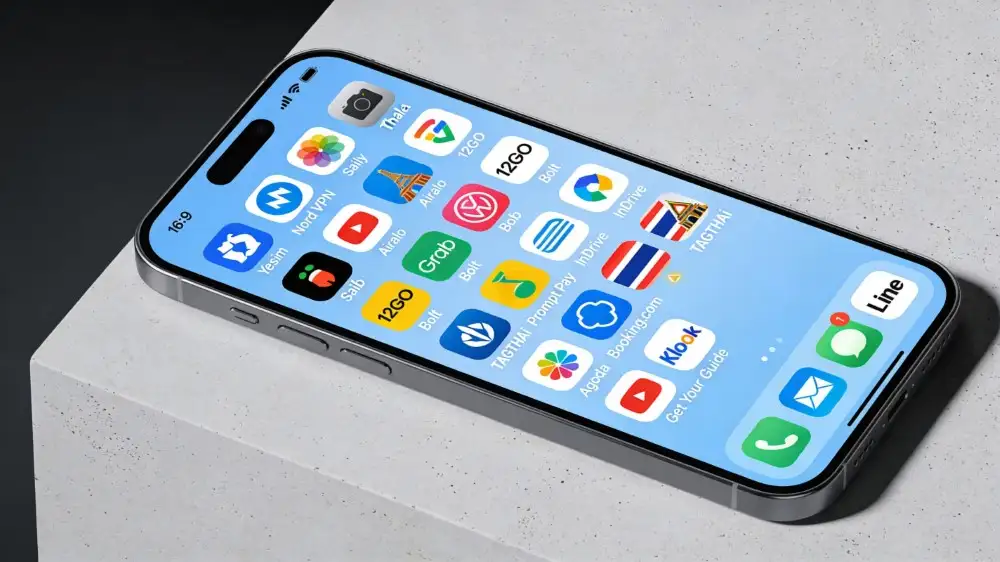
Grab & Bolt: Essential for getting to and from the piers without overpaying. Have both installed before you land so you can price-check between them in real time.
Yesim or Saily: Secure an eSIM before landing. Having 5G signal from the second you land is vital: every ride-sharing app needs live data to locate drivers, process payments, and send verification codes at the arrivals hall.
Klook & Get Your Guide: Use these for day trip ferries where snorkelling gear and lunch are included, as well as any tour where transport is bundled, removing the need to arrange a separate Grab ride to the pier.
Nord VPN: Vital for booking through 12Go or Agoda on public pier Wi-Fi to protect financial data. Use it any time you are connected to a network at a ferry terminal, hotel lobby, or airport lounge.
Currency (THB): Always keep 500 THB in small notes (20s and 100s). Bolt and InDrive drivers often prefer cash, and smaller islands rarely accept cards for pier fees or motorcycle taxi fares.

Maps, Grab, translation apps all need
data in Thailand. Yesim’s eSIM installs
in a minute and gives you reliable
5G from the moment you arrive.
Airport Transfers: A Special Case
Airport transfers deserve their own section because this is where the most confusion and overcharging happens. Every major Thai airport has a zone of unofficial “fixers” working the arrivals hall, directing arriving passengers toward overpriced private cars and limousines. Knowing your options before you land removes them from the equation entirely.
At Suvarnabhumi (BKK), the Grab pickup zone is well-signposted on Level 2 of the arrivals building. Fares to central Bangkok run 250 to 400 THB depending on traffic, compared with the 600 to 900 THB fixed-price taxis typically quoted in the hall. Toll fees (50 to 75 THB) are added on top and paid at the booth by the passenger.
At Phuket (HKT), the fixed-price limousine mafia is more entrenched. InDrive is the most effective counter: propose a fare to your resort before drivers at the taxi stand see you, and you will typically land a price 30 to 50% below the desk rate. Grab also works well at HKT if you walk to the designated pickup area near the car park rather than the arrivals concourse.
For families or groups arriving with significant luggage, Welcome Pickups is worth booking in advance. Their English-speaking drivers meet you by name at arrivals, handle luggage, and charge a fixed pre-agreed price with no negotiation required at the end of a long-haul flight.

Beyond the Holiday:
For those looking to extend their stay indefinitely, Thailand’s 2026 visa landscape offers unprecedented access. The Destination Thailand Visa (DTV) is the premier choice for remote workers and digital nomads, offering a five-year, multiple-entry stay for a 10,000 THB application fee.
When transitioning to long-term life in Thailand, transport needs change considerably. A GrabCar subscription or a monthly Bolt budget becomes as normal as a monthly transit pass back home. Many DTV holders eventually look into pet relocation for their companions. Using GrabVan or GrabXL is the most practical way to transport pet carriers from the airport to a new home in provinces like Rayong or the lush hills of the north, where driver familiarity with international passengers is still growing.
Long-stay residents in Thailand also find that ride-sharing apps reduce the pressure to buy or rent a motorbike immediately. In a city like Chiang Mai, Bolt and Grab can handle most daily logistics at a monthly cost well below vehicle rental, fuel, and the considerable risk of riding unfamiliar roads in a new country.
Confidence Booster:
Grab vs Bolt vs InDrive? Whichever you choose, you will be fine. Thailand is remarkably safe for solo travellers and the 2026 regulations have significantly tightened oversight across all platforms. Every ride-sharing driver is now legally required to display their public licence and vehicle registration (Ry. 18) within the app.
If a vehicle arrives with a different plate number than what is shown on your screen, decline the ride politely and report it through the app immediately. The presence of GPS tracking on all three platforms means your location is always being monitored by the platform’s security centre, providing a safety net that traditional street-hail taxis simply cannot match.
The simplest rule: always confirm the plate, always sit in the back, and always have your eSIM active so you can call for help or share your live location with someone you trust if anything feels wrong. These three habits, combined, mean your risk profile on a Thai ride-share is lower than hailing a black cab in most major Western cities.
Frequently Asked Questions
Which app is cheapest for Phuket Airport transfers?
InDrive is typically the cheapest for Phuket transfers because it allows you to bypass the fixed-price limousine rates at the arrivals stands. A negotiated ride to Patong or Kata through InDrive can come in significantly below the standard 800 to 1,000 THB charged by desk operators. Grab is the reliable backup if InDrive has limited driver availability when you arrive.
Do I need a Thai SIM card to use Grab?
You need active mobile data, but not necessarily a physical Thai SIM. Activating an eSIM from Airalo, Yesim, or Saily before your flight gives you instant connectivity on landing. This is actually the better option since it avoids the SIM card queue in arrivals. Drivers frequently call to confirm your exact pickup point in complex locations like shopping mall basement levels or the labyrinthine sois of Sukhumvit, so having a working number they can reach is strongly recommended.
Can I use these apps in the middle of the night?
Yes. Grab and Bolt operate 24/7 in Bangkok and Chiang Mai. However, in smaller islands or rural areas, driver availability drops significantly after midnight. It is always best to pre-book your Grab ride the night before for early morning airport departures, particularly in Koh Samui or Krabi where the driver pool is smaller outside peak hours.
Are tolls included in the app price?
No. In Thailand, the passenger is responsible for paying expressway tolls separately. The driver will usually ask ‘Expressway?’ before entering the motorway and you should say yes to avoid surface road traffic. Toll booths typically charge 50 to 75 THB and can be paid in cash directly at the booth, or the driver will add it to your final digital fare on Grab.
Is Bolt available outside Bangkok?
Bolt operates in Bangkok, Chiang Mai, and Phuket with reasonable driver density. Outside these three cities, availability drops considerably. In destinations like Krabi, Hua Hin, or Koh Samui, Grab is the more reliable choice. Always check driver availability in your specific location before committing to Bolt as your primary app for a trip.
How does InDrive handle disputes over the agreed price?
Because the fare is negotiated and confirmed in the app before the ride begins, the agreed price is the final price with no additions. If a driver attempts to charge more on arrival, show them the confirmed in-app fare and decline to pay extra. If the issue escalates, contact InDrive support through the app and report the driver immediately. The platform takes overcharging disputes seriously given that price transparency is its core selling point.
What happens if my Grab driver cancels at the last minute?
Cancellations happen, particularly during peak hours and heavy rain when drivers receive multiple requests simultaneously. If cancelled, re-request immediately as the same driver pool is still active. If you receive two or three consecutive cancellations, open Bolt as a parallel option. For time-sensitive airport departures, always book 30 to 45 minutes ahead rather than requesting on the spot.
Can I pay for Grab with a foreign credit card?
Yes. Grab accepts Visa and Mastercard through the GrabPay wallet, which you can top up with a foreign card before or during your trip. American Express is not universally supported. Bolt accepts cards in some markets but cash remains the most reliable payment method for Bolt and InDrive. Always have a supply of THB notes for any ride where your card payment might be declined.
Is it safe to use motorcycle taxis (Win Moto) in Bangkok?
Win Moto riders in their orange vests are a legitimate and fast way to navigate Bangkok’s gridlock for short distances. They are available through Grab’s bike option and as independent riders at designated roadside stands. Always insist on a helmet, confirm the fare before departing, and avoid them after dark or during heavy rain when road conditions become significantly more dangerous. They are not recommended for travellers unfamiliar with Thai traffic.
What should I do if a ride-share driver takes a different route to the one shown?
Stay calm and monitor the route on your in-app map. Drivers sometimes take legitimate shortcuts not reflected in the app’s suggested route, particularly in areas with heavy traffic. If the deviation appears suspicious or the driver ignores your requests to follow the app route, use the in-app emergency button to alert the platform’s safety team. Your GPS location is tracked throughout the journey. If you feel unsafe, ask to be dropped at the nearest public area and exit calmly.