Thai Street Food Guide
This site contains affiliate links. We may earn a commission at no extra cost to you.
Thai street food is one of the most exciting parts of visiting the country. It is vibrant, delicious, incredibly affordable, and available almost everywhere you go. From the bustling streets of Bangkok to the night markets of Chiang Mai and the beachside stalls of the southern islands, incredible food is never far away. Whether you are a budget backpacker eating your way through Thailand on 300 THB (~$8.50 USD) a day, a family searching for safe and satisfying meals between temple visits, or a digital nomad building a life around great coffee and even better curries, this guide is written for you.
The Quick View:
Thai street food is famous for being:
- Freshly cooked in front of you
- Extremely affordable
- Full of bold flavors
- Available everywhere, day and night
Budgeting: Average street meals cost 50 THB to 120 THB (~$1.40 to $3.40 USD) per person. A full day of eating well rarely exceeds 400 THB (~$11.50 USD) if you stick to market stalls and roadside carts.
Food Safety: High-turnover stalls with visible steam or high-heat wok cooking are the safest choices for travellers. A queue of locals is always the best endorsement money cannot buy.
Regional Variety: Northern Thailand focuses on rich, herbaceous curries, while Central Thailand excels in balanced sweet-spicy noodle dishes. Isaan leans sour and pungent, and the deep South is fearlessly hot.
Payment: PromptPay QR codes are ubiquitous in urban markets, but cash remains essential for smaller roadside carts. Withdraw THB before heading out, and keep a stash of 20 and 50 baht notes for convenience.
Connectivity: Before you land, activate an Airalo, Yesim, or Saily eSIM. Many Thai market payment apps and map tools send SMS verification codes the moment you connect to a network. If you are still fumbling with a local SIM at the baggage carousel, you will miss that window entirely.

Compare tours and tickets for Chiang Mai
and book instantly on your phone.
Klook mobile vouchers mean no
printing, just turn up and go.
Why Thai Street Food Is So Famous:
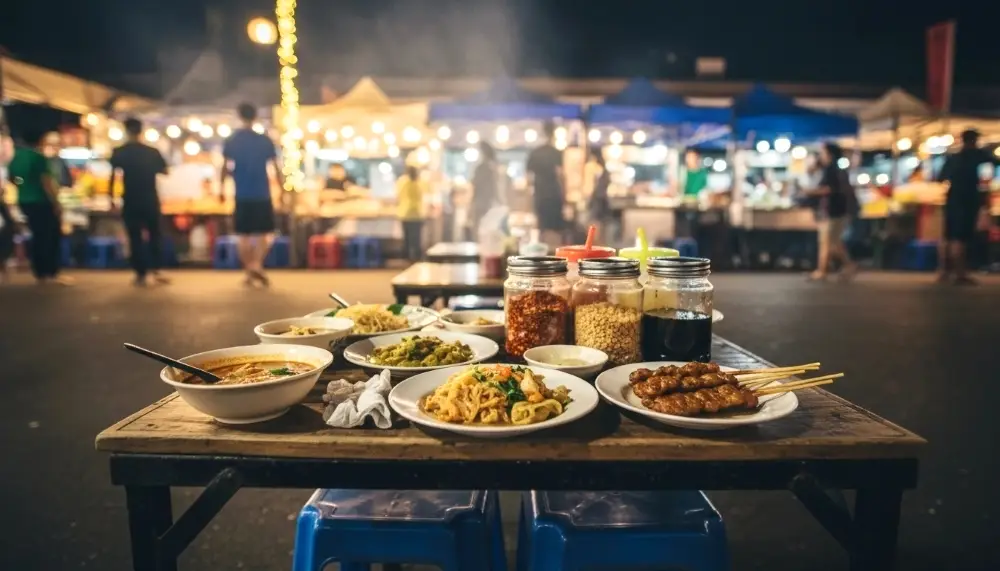
Thai street cuisine is divided into four distinct regions: Northern (Lanna), Northeastern (Isaan), Central, and Southern. Each offers a unique flavor profile ranging from the herbaceous, mild notes of Chiang Mai to the aggressive heat and turmeric-heavy seafood dishes found in Phuket and Krabi. The contrast between these regional kitchens is so dramatic that seasoned travellers often describe eating their way from north to south as a journey through four completely different countries.
A typical Thai dish balances:
- Sweet
- Sour
- Salty
- Spicy
That balance is what makes Thai food so addictive. It is not simply spicy food, and it is not simply noodle food. It is a precisely calibrated sensory experience that changes dish by dish, stall by stall, and region by region.
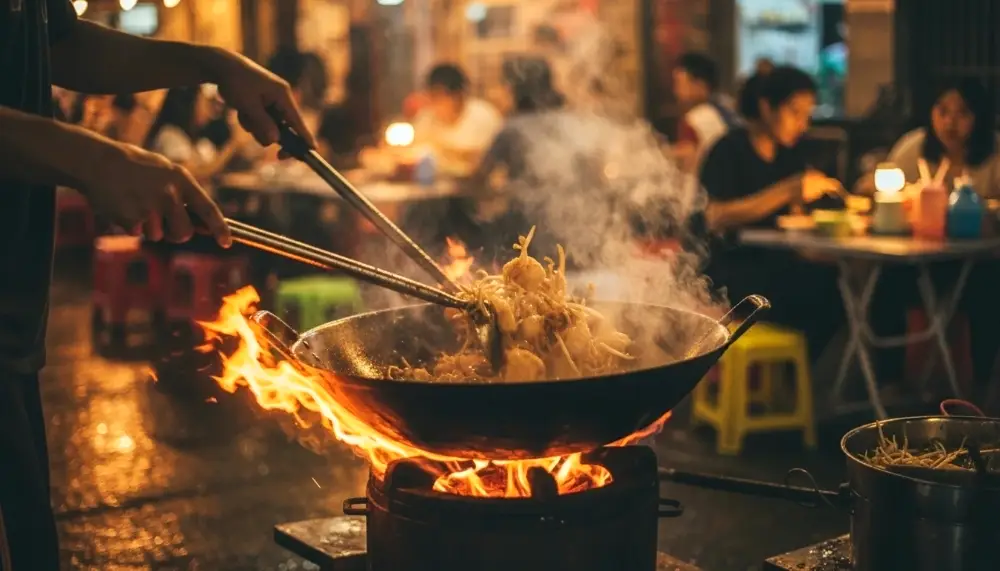
Street vendors cook quickly over high heat using fresh herbs like lemongrass, Thai basil, and coriander, along with ingredients such as fish sauce, lime juice, palm sugar, and chili. The wok hei (the breath of the wok, that slightly charred, smoky depth that only open-flame cooking creates) is something restaurant kitchens rarely replicate at full intensity. The result is food that feels vibrant, complex, and incredibly satisfying.
There is also a social dimension to Thai street food that is easy to overlook. Eating at a market stall is a communal act. Plastic stools get pulled close, strangers share condiment trays, and vendors remember the regulars. For long-stay travellers and expats especially, finding your regular stall becomes one of the quiet joys of life in Thailand. It is cheaper than cooking, friendlier than a restaurant, and infinitely more interesting than anything delivered to your door.

From classic Chiang Mai highlights to
hidden-gem private tours. Cancel
free up to a day before your
start time if plans change.
Must-Try Thai Street Food Dishes:
Khao Soi (North): A fragrant coconut curry noodle soup topped with crispy fried noodles and pickled mustard greens. The interplay between the silky braised noodles beneath and the shatteringly crisp ones on top is genuinely one of the world’s great culinary contrasts. Lamb and chicken versions are both common; the chicken thigh version at a good Chiang Mai stall is a benchmark worth chasing.
Som Tum (Isaan): Green papaya salad pounded with chili, lime, garlic, fish sauce, and palm sugar. It is fresh, furious, and deeply addictive. Request “Pet Nit Noi” for low heat if you are new to the dish. The Isaan version with fermented fish sauce (Pla Ra) is more pungent and polarising; the Bangkok-style version is a safer starting point.
Pad Kra Pao (Central): Holy basil stir-fry with minced pork or chicken and a crispy fried egg draped over jasmine rice. This is the ultimate Thai “soul food,” the dish that office workers, taxi drivers, and schoolchildren reach for at lunch. At 60 THB (~$1.70 USD) a plate, it is also extraordinary value.
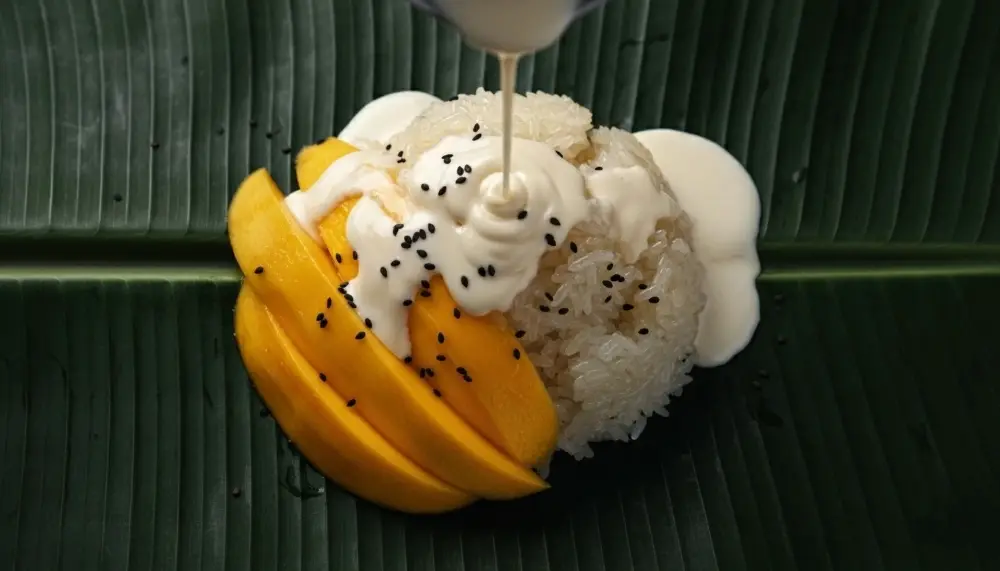
Mango Sticky Rice (Universal): Slices of ripe Nam Dok Mai mango served over glutinous rice saturated in sweet coconut cream with a pinch of salt. It is available year-round but peaks between April and June when the mangoes are at their sweetest. Do not leave Thailand without trying it at least twice.
Pad Thai: The dish that needs no introduction, though a genuinely great one bears little resemblance to the versions served abroad. Look for stalls using a flat iron griddle, not a deep pot. The noodles should have texture, the egg should be folded through rather than scrambled separately, and the tamarind base should be tangy rather than sweet. Garnish generously with dried chili, fish sauce, and a squeeze of lime.
Boat Noodles (Kuay Teow Reua): A rich, dark broth made with pork or beef blood, offal, and aromatic spices. Traditionally served in tiny portions from canal boats in Bangkok, the bowls are small by design: the idea is to order four or five and work through them. Concentrated, warming, and unlike anything else in Thai cuisine.
Moo Ping: Grilled pork skewers marinated in coconut milk, garlic, and coriander root. The best ones are cooked over charcoal and come with sticky rice in a small plastic bag. This is breakfast food in Thailand, available from 6am at market entrances across the country, and it is exceptional.
Trying these dishes from street vendors often gives you a more authentic experience than eating them in restaurants, partly because the vendors have often been making the same dish for decades, and partly because the high-volume turnover keeps ingredients fresher than any kitchen fridge can.
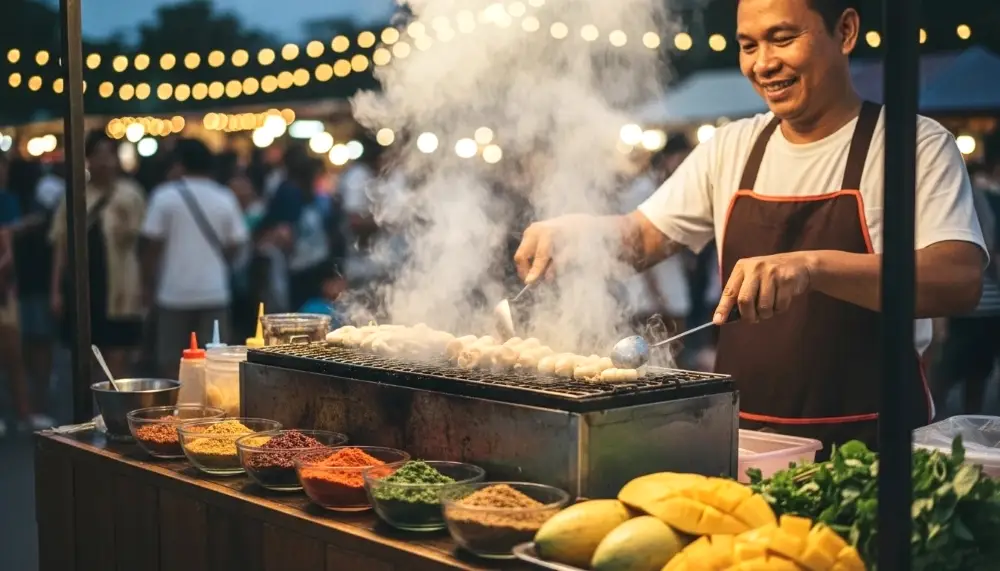
Regional Flavour Breakdown:
| Region | Dominant Flavors | Staple Ingredient | Heat Level (1-10) |
|---|---|---|---|
| Northern | Bitter, Herbaceous, Salty | Egg Noodles / Sticky Rice | 4 |
| Isaan | Sour, Pungent, Spicy | Fermented Fish (Pla Ra) | 9 |
| Central | Sweet, Creamy, Balanced | Jasmine Rice | 6 |
| Southern | Sharp, Spicy, Turmeric | Fresh Seafood | 10+ |
Cost Breakdown: What to Expect at Every Budget Level
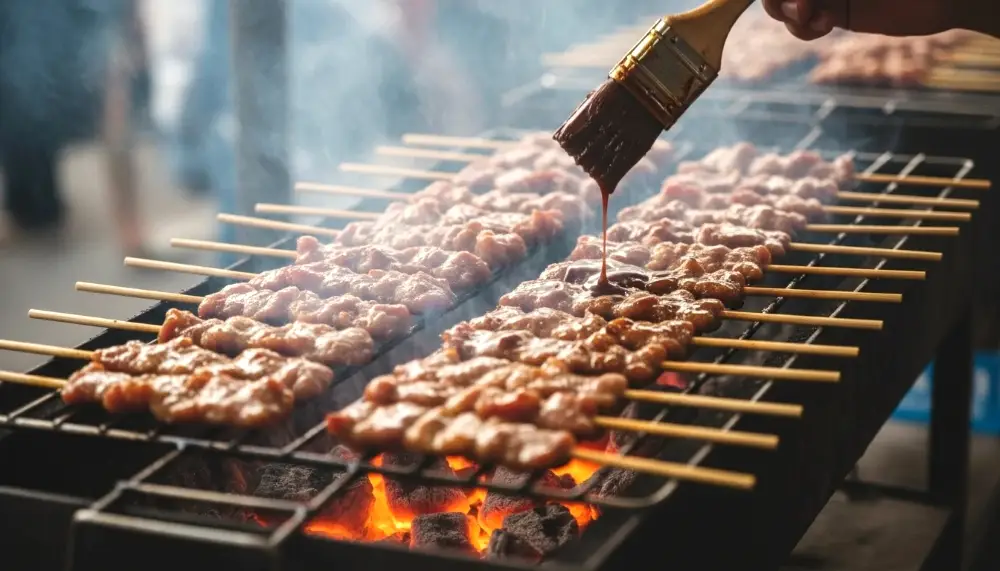
One of the great things about Thai street food is that it caters genuinely to every wallet. This is not budget food dressed up as local culture. This is simply how Thailand eats, across all income levels, from university students to wealthy Bangkok families who drive to a famous stall in a luxury SUV because nothing in their neighbourhood tastes as good.
Backpacker and Budget Traveller (300 to 400 THB / ~$8.50 to $11.50 USD per day): Three full meals, two snacks, and a fruit smoothie. Breakfast might be Moo Ping with sticky rice at 40 THB (~$1.10 USD), lunch a plate of Pad Kra Pao with egg at 60 THB (~$1.70 USD), and dinner a bowl of boat noodles and a mango sticky rice dessert for under 120 THB (~$3.40 USD) combined. This is entirely achievable and genuinely enjoyable, not a compromise.
Mid-Range Traveller (600 to 900 THB / ~$17 to $26 USD per day): Add fresh seafood dishes at coastal markets, sit-down noodle shops with aircon, and the occasional craft beer at a night market. You are eating everything the budget traveller eats, plus a few extras and a lot more comfort.
Families and Comfort Seekers (1,200 to 2,000 THB / ~$34 to $57 USD per day on food): Factor in restaurant meals alongside street food, skip the most challenging offal dishes, and add fresh juices, coconut water, and table-service meals with options for picky young eaters. Many families find Thai street food ideal precisely because dishes arrive quickly, portions are shareable, and there is always something mild enough for children on every menu.
Expats and Long-Stay Residents: The economics shift dramatically for those staying longer than a month. Many long-term residents eat almost exclusively from their local market stall for under 6,000 THB (~$170 USD) a month on food. When you add the social dimension and the sheer quality on offer, it becomes genuinely difficult to justify cooking at home very often.

Pick a Chiang Mai eSIM plan that matches
your trip length on Airalo’s global
marketplace. Install before departure
and you’re online the moment you land.
Where to Find the Best Street Food:
Street food is everywhere in Thailand, but some places are particularly famous for it. Here is where to focus your appetite.
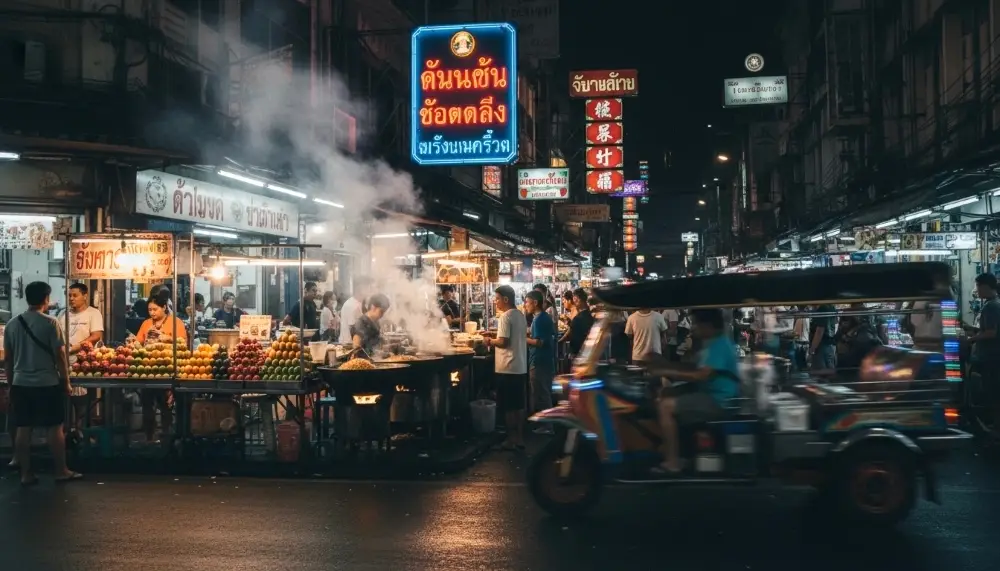
Thailand’s capital is a street food paradise. Areas like Yaowarat (Chinatown) and the Ratchada night markets offer endless rows of food stalls selling everything from noodles to grilled seafood. Yaowarat Road on a Friday or Saturday night is a pilgrimage worth making: the smell of roasting duck, bubbling congee, and wok-fried crab fills the air for an entire kilometre. The Or Tor Kor Market near Chatuchak is also excellent for premium produce and prepared foods at fair prices, popular with upscale locals and expat families alike. Use Grab or Bolt to reach specific food hubs like Bang Rak or Khlong Toei without the stress of navigating Bangkok traffic independently.
Northern Thailand’s cultural capital is known for its relaxed night markets and regional specialties like Khao Soi. The Saturday and Sunday Walking Streets (Wualai Road and Tha Phae Gate respectively) transform the old city into an enormous open-air food court once a week. The Warorot Market is the city’s most authentic wet market and a brilliant place to eat alongside locals early in the morning before the tourist crowds arrive.
In places like Phuket, Krabi, and Koh Samui, street food markets combine local Thai flavors with the freshest seafood you will find anywhere in the country. Phuket’s Old Town is particularly rewarding: the Sino-Portuguese architecture frames small hawker courts where you can eat outstanding Hokkien noodles, massaman curry, and grilled satay within 100 metres of each other. For island arrivals, Welcome Pickups is a reliable option for stress-free family airport transfers before you have had a chance to get your bearings.
Hua Hin and the Gulf Coast
Often overlooked by first-timers, Hua Hin’s night market on Dechanuchit Road is one of the most pleasant in the country: less overwhelming than Bangkok, more authentic than many tourist-heavy island markets, and with extraordinary fresh seafood at prices that still feel like a bargain even by Thai standards.
No matter where you travel in Thailand, you will almost certainly find a night market nearby filled with delicious food options. The country’s street food infrastructure is genuinely remarkable in its consistency and reach.

From boutique guesthouses to five-star
resorts, Agoda has Chiang Mai covered.
Strong Asia inventory means deeper
discounts than you’d find elsewhere.
How to Order Thai Street Food:
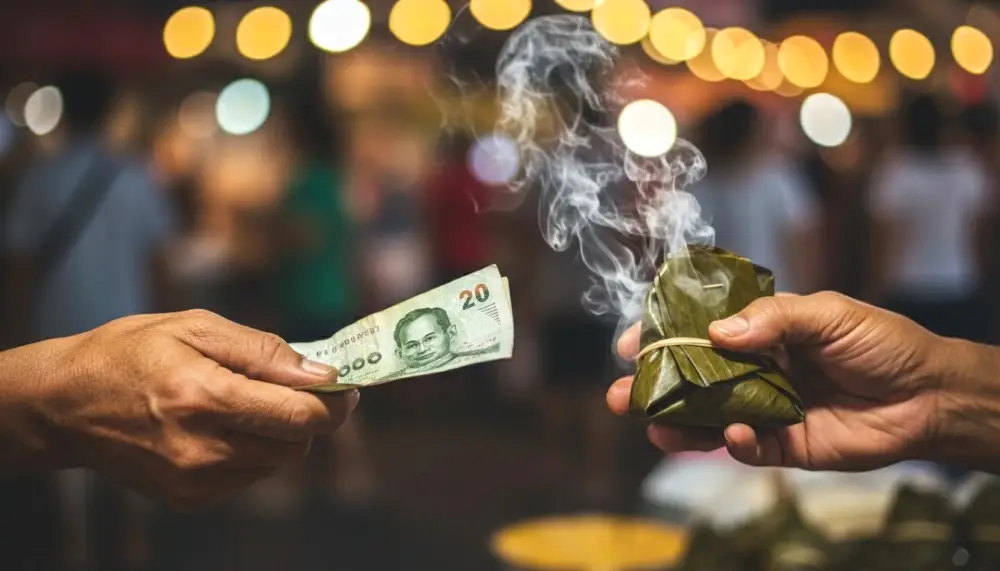
Ordering street food in Thailand is usually very easy, even if you do not speak a word of Thai. Most vendors use simple menus, laminated photo boards, or simply display the raw ingredients directly at the stall. You can point to what looks good, hold up fingers for quantity, and the rest tends to take care of itself.
A few helpful tips:
- Look for stalls with lots of local customers (a queue of locals is the only review that matters)
- Watch how dishes are prepared before ordering, particularly at meat stalls
- Carry small cash notes or coins; 20 and 50 baht notes are ideal
- Do not be afraid to smile and gesture; Thai vendors are patient and good-humoured
Google Lens has become indispensable for translating handwritten chalkboards or Thai-only menus at smaller stalls. Point your phone camera at any Thai script and the translation appears in real time. This works remarkably well in practice and removes one of the last genuine barriers to eating anywhere in the country. To use it reliably anywhere in Thailand, including rural markets and festival grounds with no Wi-Fi, you need active mobile data. Activate your Airalo, Yesim, or Saily eSIM before departing your home country so it is live the moment the wheels touch down.
Thai vendors are generally friendly and welcoming, especially when they see travellers genuinely enjoying their food. A thumbs up and an enthusiastic nod after a first bite will earn you enormous goodwill at almost any stall in the country, and occasionally a free extra portion of something good.
One more practical note: if you are travelling with dietary restrictions or allergies, prepare a small printed or screenshotted card in Thai that explains what you cannot eat. Thai Google Translate is accurate enough for this purpose, but having it pre-prepared saves time and avoids miscommunication when a stall is busy. Shellfish, peanuts, and fish sauce appear in dishes where you would least expect them; being specific and visual about restrictions is genuinely important.
Is Thai Street Food Safe?
Many first-time visitors worry about food safety when eating from street stalls. The good news is that Thai street food is generally very safe if you use common sense, and in many respects it is safer than restaurant food precisely because the volumes are so high and the turnover so constant. A stall that sells 300 plates of Pad Kra Pao a day is using fresh ingredients every few hours. A quiet restaurant kitchen may not be.
In fact, many street vendors cook food fresh to order, which can make it safer than food sitting under heat lamps in some restaurants. The visible cooking process is also a significant advantage: you can see the oil temperature, observe whether protein is cooked through, and assess the cleanliness of the workspace before committing to an order.
To stay comfortable while exploring street food:
- Choose busy stalls with high turnover
- Eat food that is freshly cooked and served hot
- Avoid stalls where food has been sitting out uncovered for extended periods
- Drink bottled or filtered water exclusively; tap water is not potable anywhere in Thailand
Shellfish deserves a specific mention. Fresh seafood at coastal markets is exceptional, but bivalves (clams, oysters, mussels) should ideally be ordered at stalls with very high turnover and consumed while steaming hot. Inland, unless you are at a well-established restaurant or market with refrigerated storage visible, it is safer to stick to chicken, pork, and vegetables.
For longer-stay travellers and expats who plan to eat street food daily for weeks or months, having a travel health plan in place makes sense. SafetyWing offers nomad-focused medical coverage that is genuinely affordable for extended stays, and it covers hospitalisation if a food-related illness or any other health issue requires serious attention. It is the kind of quiet reassurance that lets you eat adventurously without anxiety in the background.
Thousands of travellers enjoy Thai street food every day without any problems. A sensible, observant approach is all it takes to eat your way across this country in full confidence.

Affordable Chiang Mai data without the
tourist SIM hassle. Saily’s eSIM
works on most modern phones and
tops up remotely whenever needed.
Understanding Thai Spices:
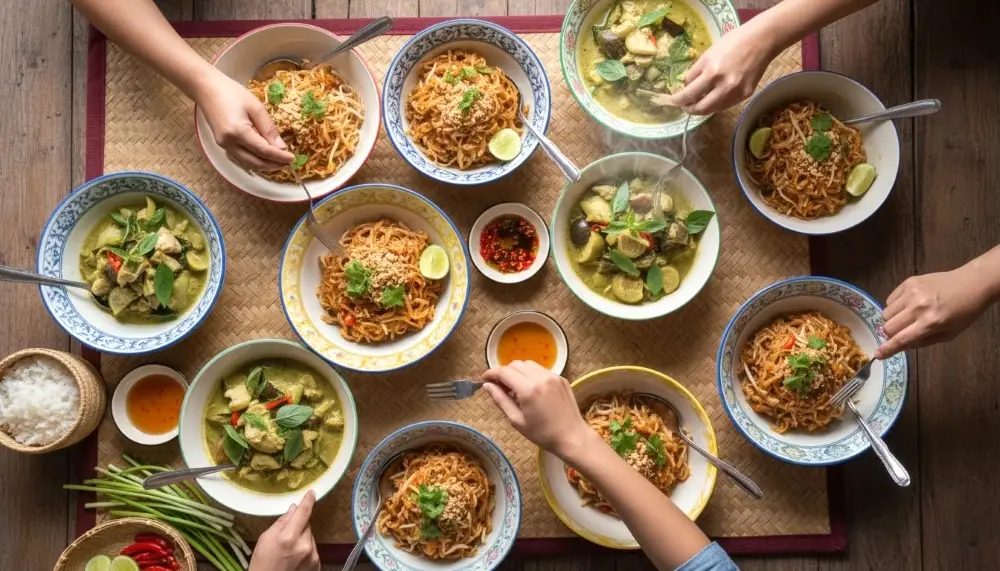
Spice levels in Thailand frequently exceed Western expectations, and the gap between what a Thai local considers “a little spicy” and what a first-time traveller considers a life-altering experience is considerable. Travellers should specify heat preferences using the terms “Mai Pet” (Not Spicy) or “Pet Nit Noi” (A Little Spicy). Understanding that bird’s eye chilies contain intense capsaicin levels helps in managing the physiological response to authentic street preparations.
The heat in Thai cooking is multifaceted. It is rarely just about the burn; it is about the balance of “phet” (spicy) against acidity and sweetness. When ordering at a stall in districts like Ari or Phra Khanong in Bangkok, the default setting for locals involves three to five bird’s eye chilies per dish. For those unaccustomed to this intensity, requesting a milder version is standard practice and does not offend the chef in the slightest. Thai cooks are pragmatic and want you to enjoy the food.
To neutralise a spice-induced burn, consume white rice or cucumber slices rather than water. Capsaicin is fat-soluble and binds to starch far more effectively than it disperses in liquid. Water intensifies and spreads the burn temporarily. A mouthful of plain rice, a piece of fresh cucumber, or a sip of coconut milk will bring relief far more quickly. This is why Thais almost always have plain rice on the table regardless of what else they are eating.
A note for families travelling with young children: most vendors will happily prepare a milder version of any dish if you ask clearly. Pad Thai, fried rice, and steamed dishes are reliably mild by default and are excellent entry points for younger eaters. The condiment tray at most stalls (typically containing dried chili, fish sauce, sugar, and vinegar) means adults can always add heat to their own portion without the whole dish being affected.
Night Markets: The Heart of Thai Street Food
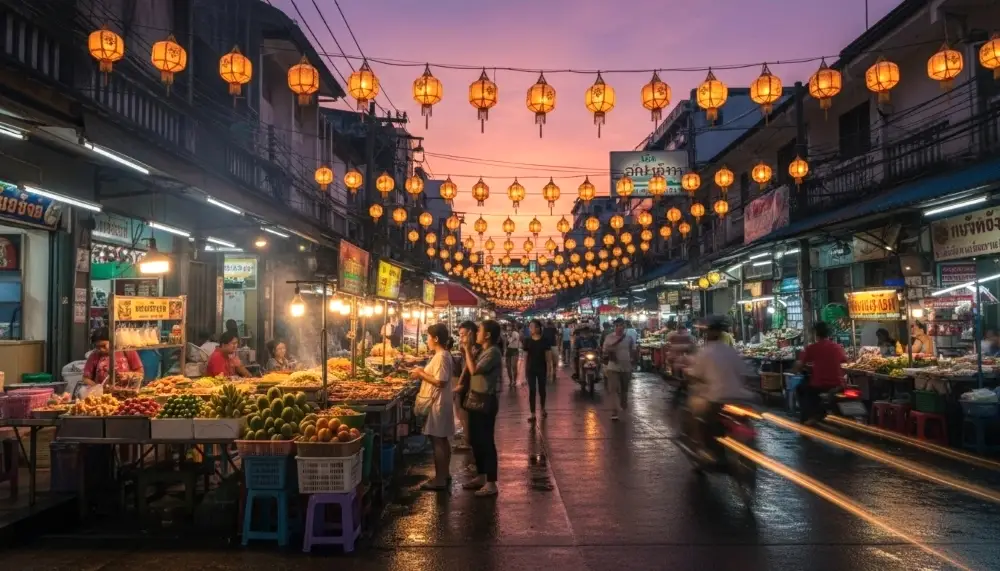
If you want the ultimate street food experience, visit a Thai night market. These lively markets usually open in the late afternoon around 4pm and stay busy well into the night, with peak atmosphere typically between 6pm and 9pm. Rows of stalls offer grilled meats, noodles, seafood, desserts, fruit smoothies, and much more.
The atmosphere is energetic and genuinely fun: music playing, string lights glowing overhead, and crowds browsing the endless food options. For first-time visitors, night markets are the perfect place to sample many different dishes in one evening without committing to a single restaurant menu.
Some of the most celebrated night markets in Thailand include:
Chiang Mai Night Bazaar: A permanent institution in the heart of the city, open every evening with an impressive range of northern Thai dishes alongside crafts and clothing stalls.
Talad Rot Fai (Train Night Market) in Bangkok: A sprawling, atmospheric market in the Ratchada area with excellent food, vintage goods, and a lively bar scene. Reached easily via MRT.
Phuket Weekend Market (Naka Market): The largest market on the island, with an extraordinary selection of southern Thai dishes, fresh produce, and seafood at genuinely local prices.
Pai Walking Street: In the mountain town of Pai in Mae Hong Son province, the weekly walking street market is small but exceptional, reflecting both Thai and hill tribe culinary traditions in a beautifully laid-back setting.
The strategy for getting the most from a night market is simple: arrive hungry, walk the entire length of the market once before buying anything so you can assess all options, then return to whatever caught your attention most. Resist the urge to order at the very first stall you find appealing. The best dish of the night is almost always three stalls further along.
Pro Tips For Stress-Free Street Food Exploration:

Modern street food exploration is aided enormously by digital payment and navigation tools. While cash is vital for rural carts and smaller roadside vendors, QR payments via local banking apps or GrabPay are standard across urban markets in Bangkok, Chiang Mai, and the major southern resort towns. Having both available means you are never turned away from a stall because of a payment mismatch.
Language: Google Lens is indispensable for translating handwritten chalkboards or Thai-only menus. Download the Thai language pack for offline use before you leave home.
Transport: Use Grab or Bolt to reach specific food hubs like Bang Rak or Khlong Toei in Bangkok, or the Night Bazaar area in Chiang Mai. Both apps require active data to function and send SMS verification codes on first login, so activate your eSIM before you land.
Connectivity: Yesim or Airalo eSIMs provide the data needed for Google Maps, translation tools, and real-time market reviews. Activate before departure. Saily is another solid option for short-stay plans.
Security: NordVPN is strongly recommended when accessing banking apps or making card payments on public market Wi-Fi. Open networks at large markets can be vectors for credential interception; NordVPN encrypts your connection and takes seconds to activate.
Finance: Withdraw THB from ATMs (typically 220 THB fee per transaction) or use Wise for better conversion rates. Wise’s debit card is accepted at an increasing number of market food courts with card readers and works at all standard Thai ATMs.
Getting There: If your flight is delayed en route to Thailand and you miss a connection, AirHelp can assist with compensation claims under applicable aviation regulations. It is worth having the app downloaded before any long-haul journey.
Intercity Travel: If your street food ambitions extend beyond one city (and they should), use 12GO to book buses, trains, and ferry crossings between destinations in advance. During Songkran and Chinese New Year, intercity transport sells out days ahead. Locking in tickets early prevents being stranded between food cities.
Accommodation Near Food Hubs: When booking hotels or guesthouses near the best market areas, Agoda consistently offers the most competitive rates for Thai properties, while Booking.com is strong for international brand hotels and properties with flexible cancellation. Both are worth comparing for any stay over three nights.
Cooking Classes and Food Tours: For a deeper dive into Thai cuisine, Get Your Guide and Klook both list excellent hands-on cooking classes and guided street food tours across Bangkok, Chiang Mai, and the islands. A guided first evening in an unfamiliar city’s market is often worth every baht, particularly if your time is limited and you want to go straight to the best stalls.

Forget swapping physical SIMs in Chiang Mai.
Yesim works on most modern phones,
activates remotely, and keeps your
home number live on WhatsApp too.
Vegetarian, Vegan, and Allergy-Friendly Street Food:
Vegetarian and vegan travellers can eat remarkably well on the Thai street food circuit, though it requires knowing the right flags to look for and the right words to say. The key phrase is “Mang-sa-wi-rat” (vegetarian) or more specifically “Jay” (vegan/no animal products), which refers to the strict Chinese Buddhist dietary tradition observed in Thailand.
Look for the yellow and red “Jay” flags (the Chinese character 斋 displayed prominently) outside stalls, especially during the Nine Emperor Gods Festival in October when the entire country shifts toward plant-based eating for ten days. During this period, even non-vegetarian stalls often offer Jay versions of their standard menu. Outside the festival, Jay stalls are concentrated around Chinese temples, university campuses, and older residential neighbourhoods in major cities.
Common dishes that can easily be requested vegetarian or vegan include Pad Thai (specify “mai sai gai, mai sai moo, mai sai goong” for no chicken, no pork, no prawns), vegetable fried rice, tofu pad kra pao, and most noodle soups where the broth can be switched to vegetable base on request. Mango sticky rice, fresh fruit, and most Thai desserts are naturally plant-based.
The more significant challenge for vegans is fish sauce, which appears in almost every Thai savoury dish as the default salt component. Being explicit about “mai sai nam pla” (no fish sauce) is essential. Some vendors use soy sauce as a substitute without any fuss; others find the substitution difficult with their standard preparation. In those cases, Jay stalls are the safest and most reliable option.
For severe allergies, particularly to shellfish, tree nuts, and peanuts, a printed Thai-language allergy card is the most reliable communication tool. Many travel health organisations offer printable allergy cards in Thai for free download. Carry it laminated and present it at every stall before ordering. Thailand’s culinary culture is accommodating by nature, and most vendors will do their best to help if the restriction is clearly communicated.
Thai Street Food for Digital Nomads and Long-Stay Travellers:
For those spending weeks or months in Thailand, street food quickly becomes less of a tourist activity and more of a daily rhythm. The economics are compelling: eating three genuinely excellent meals a day from market stalls costs less than a single restaurant lunch back home in most Western countries. The nutritional quality is high, the social dimension is enjoyable, and the variety is essentially inexhaustible.
Digital nomads working from Chiang Mai’s cafe district, Bangkok’s co-working hubs, or Koh Lanta’s beachside guesthouses all report the same pattern: breakfast from the market at 7am, a working lunch from the local stall, and dinner at whichever night market happens to be running that evening. Monthly food costs for someone eating this way typically land between 5,000 and 9,000 THB (~$143 to $257 USD), which is extraordinary value by any global standard.
A few practical notes for long-stay eaters. First, build relationships with two or three regular stalls and eat there often enough that the vendor recognises you. The portions get larger, the price stays the same, and you occasionally get fed something that is not on the menu. Second, eat breakfast at markets rather than at your accommodation. Most Thai hotels serve mediocre Western breakfasts at inflated prices; the local market 200 metres away serves outstanding food at a fraction of the cost. Third, learn five or six key Thai food words: the effort signals genuine respect and is received warmly by vendors who deal primarily with gesture-pointing tourists all day.
For medical coverage during extended stays, SafetyWing’s Nomad Insurance is purpose-built for this lifestyle. It covers hospitalisation, emergency evacuation, and a range of unexpected medical events at a monthly rate that competes favourably with any private insurance plan. It is widely used by the Thailand remote-work community and is worth activating before your first 30 days are up.
On the security side, working from market Wi-Fi or cafe networks while banking or accessing client systems is common but carries risk. NordVPN encrypts your connection on any public network and takes roughly ten seconds to activate. It is a small habit that removes a meaningful vulnerability from the remote-work lifestyle.
Frequently Asked Questions:
Is the water safe to drink in Thailand?
Tap water is not potable anywhere in Thailand, including in hotels and guesthouses. Always consume bottled or filtered water. Most restaurants and food stalls provide ice made from purified water, which is safe for consumption. When in doubt, ask for ice separately (in Thai: “nam kaeng”) or opt for sealed bottled water, which is available at virtually every market stall in the country for 10 to 15 THB (~$0.30 to $0.45 USD).
How much should I budget for food daily in Thailand?
A budget of 300 THB to 500 THB (~$8.50 to $14.50 USD) allows for three substantial street meals, snacks, and fresh fruit with room to spare. This covers breakfast (Moo Ping with sticky rice at around 40 THB), a midday plate of Pad Kra Pao at 60 to 80 THB, and a dinner of noodles or stir-fry plus a dessert for under 150 THB. High-end night markets, fresh seafood-heavy meals, or dining at tourist-facing restaurants may increase this to 800 to 1,200 THB (~$23 to $34 USD) per day. Expats and long-stay travellers who eat street food consistently often manage full monthly food costs of 5,000 to 8,000 THB (~$143 to $229 USD).
What are “Plus Plus” charges and do they apply at street food stalls?
In sit-down restaurants, particularly mid-range and upscale establishments, you may see “++” on the menu. This signifies that a 10% service charge and 7% Value Added Tax (VAT) will be added to the final bill, increasing the listed price by 17% in total. These charges are entirely absent at street stalls, market vendors, and roadside carts. All prices displayed at these venues are the final prices you pay. This is one of the many reasons that eating at street level in Thailand is not just affordable but genuinely transparent.
Can I find vegetarian and vegan street food in Thailand?
Yes, and more easily than in most countries. Look for the yellow and red “Jay” (斋) flags displayed outside stalls, especially during the Nine Emperor Gods Festival in October when plant-based eating is particularly widespread. Common dishes like Pad Thai, fried rice, and tofu stir-fries can be requested vegetarian (“Mang-sa-wi-rat”) or vegan (“Jay”) at most stalls. The key challenge for vegans is fish sauce, which appears in almost all savoury Thai dishes by default; specifying “mai sai nam pla” (no fish sauce) is important. Carrying a printed Thai-language allergy or dietary card greatly simplifies communication at busy stalls.
What is the best time of day to visit Thai street food markets?
This depends entirely on what you are looking for. Morning markets (6am to 9am) are exceptional for fresh produce, grilled skewers, rice-based breakfasts, and noodle soups. They are quiet, local-dominated, and often the most affordable time to eat. Lunchtime stalls (11am to 2pm) serve the office and worker crowd with fast, no-fuss plates of rice and stir-fry. Evening and night markets (5pm onwards) are the most atmospheric and diverse, offering the widest selection of dishes, desserts, and drinks. For first-time visitors, an evening market is the ideal entry point. For those who have been before and want authenticity, a pre-dawn market visit is unforgettable.
How do I handle Thai street food if I have a nut allergy?
Peanuts are a standard garnish or ingredient in many Thai dishes, including Pad Thai, Som Tum, satay sauces, and various curries. Tree nuts are less common but do appear. The most reliable approach is to carry a laminated allergy card written in Thai that clearly states you cannot eat peanuts or tree nuts and explains the severity of the allergy. Present this at every stall before ordering. Many travel health organisations offer free printable Thai-language allergy cards online. Avoid Pad Thai at busy stalls where cross-contamination from shared woks is likely if your allergy is severe. Steamed dishes, plain jasmine rice with simple vegetable stir-fries, and fresh fruit are generally safe default options.
Can I use cards and mobile payments at Thai street food stalls?
Increasingly yes, but cash remains essential, particularly at smaller roadside carts and rural markets. In Bangkok, Chiang Mai, and major tourist areas, many stalls now accept PromptPay QR code payments via Thai banking apps and GrabPay. However, you cannot rely on this universally. Always carry a supply of 20 and 50 baht notes for market eating. To use QR payment apps in Thailand, you will need active mobile data for SMS verification when setting up accounts; activate your Airalo, Yesim, or Saily eSIM before departure to ensure you can complete this process immediately on arrival rather than queuing for a local SIM card at the airport.
What should I do if I get sick from street food in Thailand?
Gastrointestinal upset does occasionally happen, most commonly from under-cooked shellfish, raw salads at lower-turnover stalls, or simply from your digestive system adjusting to a new cuisine and new bacteria in the first week. Oral rehydration salts (available at every pharmacy in Thailand for around 20 THB per sachet) are the first-line response. Rest, hydration, and plain rice are effective for mild cases. If symptoms include a high fever, blood in stools, or vomiting that persists beyond 24 hours, seek medical attention promptly. Thailand has excellent private hospitals in all major cities and tourist areas. For long-stay travellers, SafetyWing’s Nomad Insurance covers hospitalisation costs and is worth having active before you need it.
Are Thai cooking classes worth doing, and where is the best place to take one?
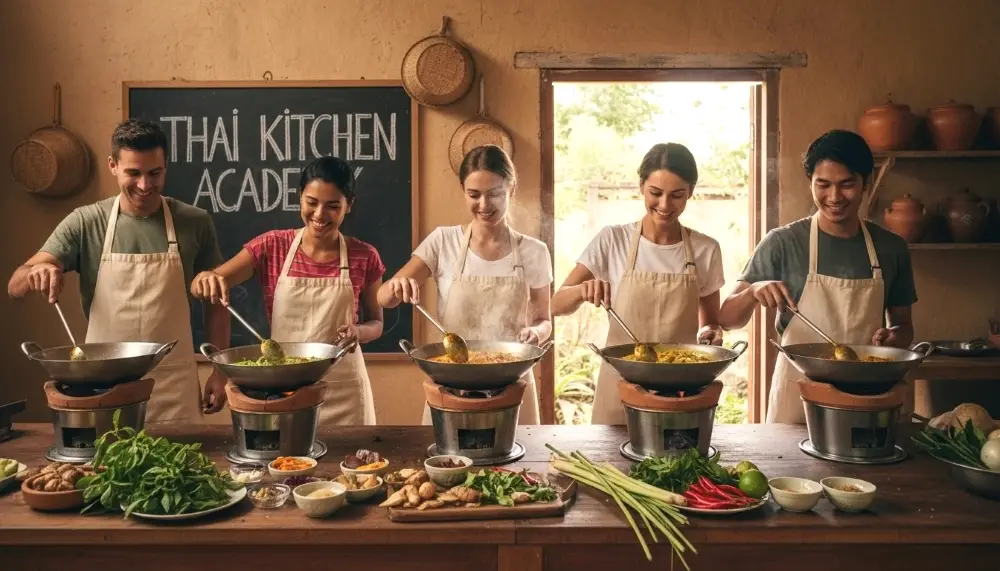
Absolutely worth doing, particularly in Chiang Mai, which has arguably the best concentration of cooking schools in Southeast Asia. A half-day class typically costs between 900 and 1,500 THB (~$26 to $43 USD) and includes a market visit, instruction on four to six dishes, and all ingredients. You leave with recipes, skills, and a genuinely different understanding of the flavours you have been eating all week. Bangkok also has excellent options, particularly classes that begin with a guided tour of a local wet market. Get Your Guide and Klook both list vetted options with honest reviews. Book at least a day ahead in high season, as quality classes fill quickly.
How spicy is Thai street food really, and can I control the heat level?
Thai street food at its default setting for local diners ranges from moderately spicy (Central Thailand) to genuinely ferocious (Southern Thailand and Isaan). The heat is not decorative; it is structural to the dish. That said, every dish can be modified if you ask clearly. Use “Mai Pet” for not spicy, “Pet Nit Noi” for a little spicy, and “Pet Mak” if you want the full experience. Vendors are accustomed to adjusting for visitors and will not take offence at a mild request. If you do misjudge your spice tolerance, reach for plain white rice or a slice of fresh cucumber rather than water: capsaicin is fat-soluble and binds to starch rather than dispersing in liquid, making rice a far more effective remedy than any amount of drinking water.