
Long Term Thailand Visas Explained
This site contains affiliate links. We may earn a commission at no extra cost to you.
If you have ever wondered whether it is possible to stay in Thailand longer than a standard holiday, the answer is an emphatic yes, and the pathway to doing so has never been clearer than it is in 2026. Thailand offers a genuinely diverse range of long-term visa options designed for tourists extending their travel, retirees building a new life, remote workers and digital nomads, those married to Thai nationals, people employed by Thai companies, and high-net-worth individuals wanting a premium residency arrangement.
This guide covers every major long-term visa category with the specific 2026 requirements, costs, and practical context that helps you understand not just what the options are, but which one actually suits your situation.
The Quick Summary
DTV (Destination Thailand Visa): The most relevant visa for remote workers, freelancers, and active early retirees. 5-year multi-entry, 180 days per entry, extendable once for a further 180 days. Requires 500,000 THB in any global bank account. Applied for outside Thailand via the official e-visa portal.
O-A Retirement Visa: The traditional path for those aged 50 and above. Requires 800,000 THB in a Thai bank or 65,000 THB monthly income. Renewable annually, with continuous stay permitted. Mandatory TGIA-approved health insurance of 3,000,000 THB.
LTR Visa: A 10-year high-wealth visa for Wealthy Global Citizens, Wealthy Pensioners, Work-from-Thailand Professionals, and Highly Skilled Experts. Requires a minimum of 80,000 USD annual income or specific asset and investment thresholds.
Marriage Visa (Non-O): For foreign nationals married to Thai citizens. Requires 400,000 THB in a Thai bank or 40,000 THB monthly income. Renewable annually.
Business Visa (Non-B): Mandatory for local employment in Thailand. Requires a sponsoring Thai company and a valid Work Permit. Separate from the DTV, which covers remote work for foreign employers only.
Thailand Privilege: A residency-by-investment programme offering 5 to 20-year multi-entry visas, ranging from 650,000 THB to 5,000,000 THB. Includes concierge immigration services.

Can You Stay in Thailand Long Term?

Yes, and Thailand’s visa landscape in 2026 is more accommodating to long-term international residents than it has ever been. The introduction of the DTV in 2024 and the LTR visa in 2022 filled significant gaps that previously forced many legitimate long-term residents into grey areas or annual bureaucratic cycles. The current suite of options genuinely covers the full spectrum of situations.
The main long-term visa categories available in 2026:
- Tourist visa with extension (up to 90 days, suitable for first trips and those exploring options)
- Education (ED) visa for enrolled students
- Retirement visa (O-A) for those aged 50 and above
- DTV for remote workers, freelancers, and soft power participants of any age above 20
- LTR for high-income, high-wealth, or highly skilled professionals
- Marriage visa (Non-O) for spouses of Thai nationals
- Business visa (Non-B) for those employed by Thai entities
- Thailand Privilege for those wanting a premium residency-by-investment arrangement
The right choice depends on your age, income, whether you work remotely or locally, and how much administrative involvement you are comfortable managing. Each category is covered in full below.

Skip-the-line tickets and guided walks
in Thailand with English-speaking
guides. Read real traveller reviews
before committing to a single one.
Understanding Thailand’s Visa System
Thailand’s visa system is structured around the purpose and duration of your intended stay. The entry point for most first-time visitors is either a visa exemption stamp (allowing 30 days for most Western nationalities, extendable once to 60 days in-country) or a tourist visa applied for in advance at a Thai embassy or consulate, which provides 60 days with a possible 30-day in-country extension.
Beyond the tourist entry level, the system divides into Non-Immigrant visa categories named by letter: O for personal/family reasons (marriage, retirement, accompanying family), B for business and employment, ED for education, and the newer DTV and LTR categories which operate under separate frameworks.
The 90-day reporting requirement applies to most holders of Non-Immigrant visas staying continuously in Thailand. It is a mandatory notification to Immigration of your current residential address, submitted either in person, by post, or online. It is separate from a visa renewal: you can be 90-day compliant and still need to renew your annual visa extension separately.
The TM30 system runs alongside visa administration: this is the requirement for landlords to notify Immigration within 24 hours whenever a foreign national moves into or returns to their property. As a tenant, ensuring your landlord files this promptly is important, as gaps in TM30 compliance create complications at visa extensions and 90-day reports.

Tourist Visas for Extended Travel
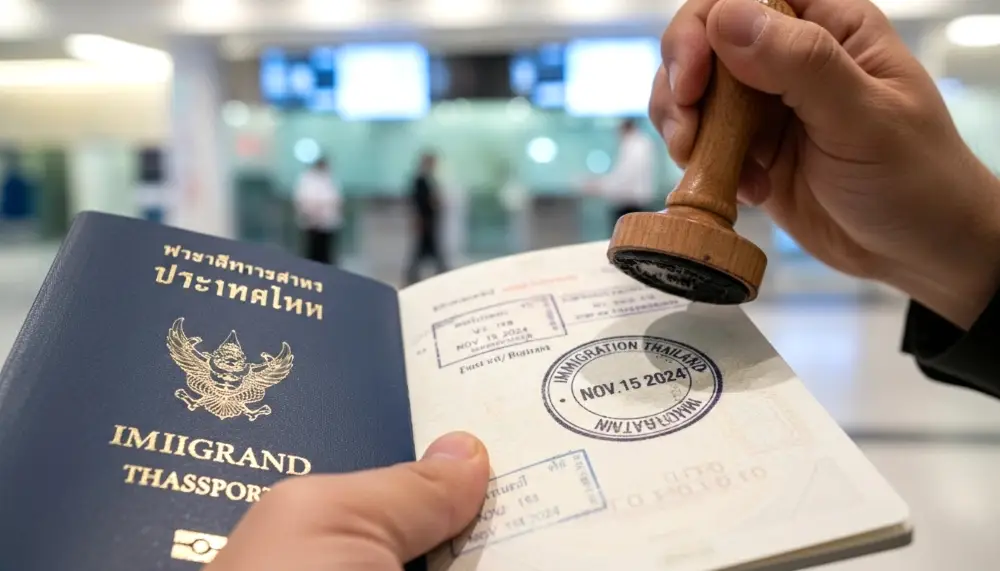
For first-time visitors wanting more than a short holiday, the tourist visa remains the simplest starting point. Applied for at a Thai Embassy or Consulate before travelling, a Single-Entry Tourist Visa (TR) provides an initial 60-day stay. A 30-day extension is available in-country at any Immigration office for 1,900 THB, giving a maximum of 90 days per entry.
A Multiple-Entry Tourist Visa (METV) provides up to six months of travel with 60 days per entry and costs around 6,000 THB. This suits those wanting to travel flexibly through Thailand and the region without committing to a long-stay visa category.
Important 2026 update: the previously common practice of sequential tourist visa entries through border runs has come under increased scrutiny. Immigration officers at land borders and some airports are more actively questioning travellers who appear to be using tourist entries for long-term residential purposes rather than genuine tourism. For anyone planning to stay in Thailand predominantly rather than travelling regionally, the DTV or another long-stay category is the appropriate legal route and avoids potential entry refusals.

Book Thailand day trips, attractions,
and activities in one place. Check
real reviews and lock in your spot
before the popular slots go.
The Destination Thailand Visa (DTV): The 2026 Gold Standard
The Destination Thailand Visa is the most significant addition to Thailand’s visa landscape in recent years and has become the definitive option for the modern long-stay visitor. It is a 5-year multiple-entry visa that grants 180 days per entry, extendable once for a further 180 days at a cost of 1,900 THB, making a total of up to 360 days possible on a single entry before an exit is required.
Who the DTV is for: Remote workers and freelancers earning income from outside Thailand, digital nomads, “soft power” participants (those studying Thai arts, culture, martial arts, or cuisine), medical and wellness tourists on extended treatment programmes, and early or active retirees who are not yet 50 or prefer not to lock 800,000 THB into a Thai bank.
Key requirements in 2026:
- Minimum age of 20
- 500,000 THB in liquid savings in any global bank account (not required to be Thai) maintained for 3 to 6 months prior to application depending on the consulate
- Proof of remote employment, freelance contracts, or qualifying soft power activity
- Health insurance with minimum coverage of approximately 50,000 USD (varies by consulate)
- Application submitted via the official Thai e-visa portal while physically outside Thailand
- One-time fee of 10,000 THB
What the DTV does not allow: Local employment in Thailand, signing contracts with Thai companies, or selling goods and services within the Kingdom. Work must genuinely be for foreign entities. The DTV also does not provide a path to permanent residency.
The DTV has effectively replaced the grey-area tourist visa cycle that defined nomad life in Thailand for the previous decade. DTV holders are now the most significant and fastest-growing segment of long-stay foreigners in cities like Chiang Mai and Bangkok’s Phra Khanong district. Activate your Airalo, Yesim, or Saily eSIM before boarding: Grab and Bolt require Thai SMS verification on arrival and your DTV application confirmation will also be sent to your registered number.

The O-A Retirement Visa
Thailand is one of the world’s most popular retirement destinations, and the Non-Immigrant O-A retirement visa is the traditional route for those aged 50 and above who want to live here continuously without regular border exits.
Key 2026 requirements:
- Minimum age of 50
- 800,000 THB held in a Thai bank account, seasoned for 2 months before renewal and 3 months after, OR monthly income of at least 65,000 THB verified by embassy letter or Thai tax records
- Mandatory TGIA-approved health insurance with minimum coverage of 40,000 THB outpatient and 400,000 THB inpatient per year (totalling at least 3,000,000 THB aggregate)
- Clean criminal record certificate from home country
- Medical certificate confirming absence of prohibited conditions
- 90-day address reporting to Immigration
The O-A provides a continuous one-year stay without any requirement to leave Thailand, which is its key practical advantage over the DTV for those with mobility considerations or who simply want the stability of staying in one place without a scheduled departure. It is renewed annually at your local Immigration office. The 800,000 THB deposit remains yours throughout but must remain in a Thai bank account, which is a meaningful capital tie-up compared to the DTV’s global bank statement approach.
Work is strictly prohibited on the O-A visa. Any form of employment, local or remote, requires a separate Non-B visa and Work Permit. For those still doing part-time consulting or freelance work for foreign clients, the DTV is the legally appropriate route even if you are over 50.

Pick a Thailand eSIM plan that matches
your trip length on Airalo’s global
marketplace. Install before departure
and you’re online the moment you land.
The Long-Term Resident (LTR) Visa
The Long-Term Resident (LTR) visa, managed by the Thailand Board of Investment, is a 10-year renewable visa designed specifically to attract four categories of high-value international residents to Thailand. It was introduced in 2022 and has been refined since, and it offers significant privileges beyond what any other Thai visa category provides.
The four LTR categories:
- Wealthy Global Citizen: Minimum 1,000,000 USD in personal assets and either 500,000 USD invested in Thai government bonds, Thai real estate, or an approved Thai fund, OR an annual income of 80,000 USD for the preceding 2 years
- Wealthy Pensioner: Aged 50 or above with a minimum annual pension or passive income of 80,000 USD (or 40,000 USD if paired with a qualifying investment in Thailand)
- Work-from-Thailand Professional: Employed by or contracted to a publicly listed company or established business with revenues exceeding 150,000,000 USD, earning a minimum of 80,000 USD annually
- Highly Skilled Expert: Specialists in targeted industries (science and technology, digital economy, healthcare, advanced manufacturing) with income thresholds that vary by sector
LTR privileges in 2026: A Digital Work Permit is included (allowing local business activity), no 90-day reporting requirement, fast-track immigration at Suvarnabhumi and other major airports, a flat personal income tax rate of 17% on Thai-sourced income (compared to the progressive rate of up to 35% for standard residents), and the ability to bring up to four dependants on companion LTR visas.
The LTR is the most comprehensive long-stay option Thailand offers, but the income and asset thresholds put it out of reach for the majority of long-stay visitors. For those who qualify, it removes virtually every bureaucratic friction point of Thai residency in one package.

The Marriage Visa (Non-Immigrant O)

The Non-Immigrant O (Marriage) visa allows foreign nationals married to Thai citizens to reside in Thailand for one year, renewable indefinitely. It has no minimum age requirement and the financial thresholds are lower than the retirement visa.
Key 2026 requirements:
- Valid marriage to a Thai national, with official Thai marriage certificate
- Either 400,000 THB seasoned in a Thai bank account for 2 months before the extension application, OR a verified monthly income of 40,000 THB via embassy letter or Thai tax records (P.N.D. 1)
- 90-day address reporting to Immigration
The application process begins at a Royal Thai Embassy or Consulate in your home country, which issues an initial 90-day Non-O entry. Once in Thailand, this is converted to a one-year extension at your provincial Immigration office. The financial proof must be current at the time of each annual renewal.
One important practical note: Immigration officers do conduct unannounced home visits to verify that marriages are genuine. Officers will speak with neighbours, request to see evidence of shared domestic life, and photograph the couple in their shared residence. This is standard practice and not cause for concern in a genuine marriage, but it is worth being aware of.
Unlike the O-A retirement visa, Marriage Visa holders can apply for a Work Permit if they find local employment, making this a somewhat more flexible category for those who may eventually want to work in Thailand.

From boutique guesthouses to five-star
resorts, Agoda has Thailand covered.
Strong Asia inventory means deeper
discounts than you’d find elsewhere.
Education (ED) Visas
The Education (ED) visa allows foreign nationals enrolled in approved Thai educational institutions to remain in the country for the duration of their studies, typically in 90-day increments renewable for as long as the course continues. It has no income or savings requirement, making it the most financially accessible long-stay option.
Qualifying study programmes include:
- Thai language courses at accredited language schools
- Muay Thai training at registered schools
- Thai cooking programmes at approved institutions
- University degree programmes
- Yoga teacher training and certified wellness programmes at approved providers
An important 2026 update: the ED visa has been subject to significantly stricter scrutiny following its historic misuse as a de facto long-stay permit. Immigration officers now conduct more regular attendance checks with schools, and institutions that issue ED visa support letters must maintain actual attendance records. Students who are enrolled purely for visa purposes without genuine attendance face increasing risk of visa cancellation and potential entry restrictions.
For those genuinely wanting to study Thai language, Muay Thai, or cooking as part of an extended stay, the ED visa remains a perfectly legitimate and useful option. For those primarily wanting a long-stay permit, the DTV is the appropriate route.


Need budget data in Thailand? Saily’s
eSIM plans start cheap and install
in a couple of minutes. Built by
the NordVPN team, security is solid.
The Business Visa (Non-B) and Work Permit
The Non-Immigrant B visa is the legal gateway for any foreign national employed by or operating a business in Thailand. It is entirely distinct from the DTV: the Non-B covers employment by a Thai entity and requires a separate Work Permit, whereas the DTV covers remote work for foreign employers only.
Key 2026 requirements:
- Sponsorship letter from a Thai-registered company with at least 2,000,000 THB in registered capital
- The sponsoring company must generally maintain a ratio of at least four Thai employees per foreign worker (BOI-promoted companies benefit from relaxed ratios)
- A separate digital Work Permit (e-Work Permit) obtained from the Department of Employment after entry
- 90-day address reporting to Immigration
The Work Permit defines exactly what professional activity the holder is permitted to engage in. Working outside the specified scope is a deportable offence. For entrepreneurs setting up a Thai Co., Ltd., the monthly accounting requirements including Social Security contributions and VAT filings represent ongoing overheads that require either a local accounting firm or someone with the relevant knowledge.
The 2026 e-Work Permit system has streamlined the application process significantly, replacing much of the previous paper-based system with an online portal. Processing times for straightforward applications at Board of Investment-promoted companies are now typically one to two weeks.
Thailand Privilege: The Premium Residency Programme
The Thailand Privilege Card (formerly Thai Elite) is a government-operated residency-by-investment programme offering 5 to 20-year multi-entry visas with premium concierge immigration services. It is the most straightforward route to extended legal residency for those with the budget, as it removes virtually all of the standard bureaucratic requirements in exchange for a one-time membership fee.
Membership includes a dedicated Elite Personal Assistant (EPA) who manages your immigration formalities, fast-track airport processing at Suvarnabhumi, no 90-day reporting (the concierge handles this), and access to partner benefits across hotels, spas, and golf clubs across the country. There is no income, savings, or employment requirement beyond the membership fee itself.
Thailand Privilege Tier Comparison (2026 Pricing)
| Membership Tier | Validity | Membership Fee (THB) | Annual Privilege Points |
|---|---|---|---|
| Bronze | 5 Years | 650,000 | 0 |
| Gold | 5 Years | 900,000 | 20 |
| Platinum | 10 Years | 1,500,000 | 35 |
| Diamond | 15 Years | 2,500,000 | 55 |
| Reserve | 20 Years | 5,000,000 | 120 |
Choosing the Right Visa: A Practical Decision Tree

The most common question is simply: which visa is right for my situation? The answer usually becomes clear quickly with a few practical filters:
Working remotely for a foreign employer or client? The DTV is your answer. It is specifically designed for this and provides the strongest legal footing with the least bureaucracy.
Aged 50 or above and fully retired with no income from work? The O-A retirement visa provides uninterrupted continuous stays with no exit requirement, which the DTV does not.
High income from passive or investment sources, aged 50+ or meeting wealth thresholds? The LTR Wealthy Pensioner or Wealthy Global Citizen category provides the most comprehensive package including a Digital Work Permit and the 17% flat income tax rate.
Married to a Thai national? The Non-O Marriage visa is the appropriate route, with no minimum age and lower financial requirements than the retirement visa.
Employed by a Thai company? Non-B visa and Work Permit only: this cannot be substituted by any other category.
Want zero bureaucracy and can afford the upfront cost? Thailand Privilege removes virtually all administrative friction for the duration of the membership.
Genuinely enrolled in a Thai language, martial arts, or cooking programme? The ED visa is valid, legal, and straightforward, provided your attendance is genuine.
Tax Residency: The 180-Day Rule
One aspect of long-term Thailand residency that every visa holder should understand is the tax residency threshold. This is separate from your visa status and applies regardless of which visa category you hold.
Any individual spending 180 or more days in Thailand in a single calendar year is classified as a Thai tax resident. Under rules updated and enforced from 2024, Thai tax residents are liable for Thai Personal Income Tax (PIT) on foreign-sourced income remitted into Thailand in the year it is transferred, with no deferred-year exception.
The progressive tax rates run from 0% on the first 150,000 THB of assessable income up to 35% on income above 5,000,000 THB. Double Tax Agreements (DTAs) between Thailand and over 60 nations prevent the same income from being taxed twice, and for most nationalities these agreements provide meaningful relief. However, planning before the 180-day threshold arrives rather than after is strongly recommended.
NordVPN is practically relevant here: accessing your home-country banking accounts, financial platforms, and tax filing portals from Thailand requires routing through your home country’s IP address, as many financial platforms flag Thai IPs as suspicious and restrict access. Having NordVPN active before you need it prevents a frustrating lockout at a critical moment.
Pro Tips for Stress-Free Long-Stay Living

Mobile data on arrival: Activate an Airalo, Yesim, or Saily eSIM before boarding your flight. Grab and Bolt require Thai SMS verification at setup, and this cannot be completed without a live Thai data connection. Being connected from the moment you clear immigration saves considerable frustration on arrival day.
Transport: Grab and Bolt are the primary transport apps for Bangkok and all major cities. Bolt tends to be cheaper for car journeys; Grab dominates food delivery. Link your Thai bank card to both once your account is active to remove the need for cash entirely on standard rides.
Accommodation: Agoda offers “Thai Resident” rates on many boutique and long-stay properties that genuinely beat other platforms. Booking.com provides useful backup for serviced apartments near immigration offices or medical hubs. Use both for the first few weeks while you scout long-term rental options in person.
Experiences and day trips: Klook and Get Your Guide both offer competitive pricing on regional tours, island hopping, cooking classes, and day trips. Pre-booking during peak season (November to March) and around Thai public holidays is worth doing: popular activities sell out.
Intercity travel: 12GO is the most reliable platform for booking buses, trains, and ferries in advance, particularly during Songkran (April), Christmas, and Chinese New Year when routes between Bangkok, Chiang Mai, and the southern islands sell out well ahead.
Digital security: NordVPN is essential for home-country banking access, accessing geo-fenced work platforms, and protecting financial data on shared Wi-Fi networks in cafes and coworking spaces.
Flight disruptions: For any long-haul connections on EU or UK-regulated routes, AirHelp makes compensation claims for qualifying delays or cancellations straightforward, often worth several hundred pounds per passenger with minimal effort required.

Maps, Grab, translation apps all need
data in Thailand. Yesim’s eSIM installs
in a minute and gives you reliable
5G from the moment you arrive.
Cultural Tips for Long-Stay Visitors

Staying in Thailand for months or years rather than weeks changes your relationship with the culture fundamentally. The polite observance expected of tourists becomes something more integrated: genuine familiarity with how Thai society operates, what it values, and how it responds to foreigners who engage with it respectfully.
The practical cultural norms that matter most for long-term residents:
- Show genuine respect in temples: dress modestly, remove shoes without being asked, and move quietly
- Maintain the Wai greeting appropriately: return it when offered, and initiate it with elders and those in formal roles
- Speak calmly and never display anger or frustration publicly: this causes significant social discomfort and achieves nothing practical
- Show deep and genuine respect for the monarchy and national symbols: this is not a cultural nicety, it is a legal requirement
- Learn Thai: even a modest vocabulary of polite greetings, numbers, and food terms produces disproportionate warmth from local people and makes daily life significantly richer
Thailand is genuinely called the Land of Smiles for earned reasons. Long-term visitors who engage with the culture respectfully rather than merely tolerating it tend to describe the experience of building local friendships and neighbourhood familiarity as one of the most unexpectedly rewarding parts of their time here.
Why Long Stays in Thailand Are So Popular
The question of why Thailand draws people back and keeps them is not difficult to answer once you have spent meaningful time here. The country offers an extraordinary combination of qualities that very few places anywhere in the world manage simultaneously.
- The energy and world-class infrastructure of Bangkok
- The mountain temples, cool air, and cafe culture of Chiang Mai
- The turquoise waters and island lifestyle of the south
- Food that is genuinely extraordinary at every price point
- Healthcare that is excellent and affordable
- A cost of living that makes a good life accessible rather than aspirational
- A culture that is genuinely warm towards respectful foreigners
The visa options now in place in 2026 mean that the practical barriers to staying as long as you want, in the legal category that fits your situation, are lower than they have ever been. The decision is yours to make.

Your Thai Adventure Might Last Longer Than You Think

For many visitors, Thailand begins as a simple two-week holiday and slowly transforms into something much larger. You arrive planning to stay a fortnight and find yourself, three months later, researching the DTV requirements from a cafe in Chiang Mai. Or you fly in for winter and realise in February that there is genuinely no reason to rush home.
Whether you eventually choose a tourist visa extension for a first longer stay, the DTV as a permanent remote work base, the retirement visa as the foundation of a new chapter of life, or the Thailand Privilege card for frictionless long-term residency, Thailand has a pathway that fits.
And once you are watching the light change over the Andaman Sea, or eating breakfast noodles from a market stall that knows your order, or finishing a working day from a mountain-view cafe with the best coffee you have had in years, you will very likely find yourself thinking what so many before you have thought: I wish I could stay longer. And in Thailand, you often can.
Frequently Asked Questions
Can I work on a Marriage Visa?
Yes. A Marriage Visa (Non-O) holder can apply for a separate Work Permit if they find local employment with a Thai company. This is a key distinction from the Retirement Visa (O-A), which strictly prohibits any form of paid work. For those working remotely for foreign employers or clients, the DTV is the appropriate category regardless of marital status.
What is the Plus Plus charge on restaurant bills in Thailand?
The ++ notation on Thai menus indicates that two additional charges will be added to the displayed price: a 10% service charge and 7% Value Added Tax (VAT). This is standard practice at mid-range and higher-end restaurants, hotel dining rooms, and beach clubs. Budget local restaurants and street food stalls generally charge the displayed price with no additions.
Do I need to tip in Thailand?
Tipping is not a formal cultural expectation in Thailand and is not obligatory, but it is increasingly common in tourist areas and genuinely appreciated by service staff. Rounding up to the nearest convenient amount for a taxi ride, leaving 50 to 100 THB for a massage therapist who did an excellent job, and leaving a small amount at a restaurant where the service was attentive are all appreciated gestures. In Thai culture, a note left quietly on the table is more appropriate than an ostentatious presentation.
Is the 90-day report still mandatory for all long-stay visa holders?
Yes for most categories. Holders of Non-O (Marriage and Retirement), Non-B (Business), and ED visas staying continuously in Thailand are required to report their current address to Immigration every 90 days. The DTV requires 90-day reporting only if the stay in a single entry exceeds 90 days. LTR visa holders and Thailand Privilege members are exempt from personal reporting, as the BOI and the Privilege concierge manage this on their behalf. The report can be submitted in person, by post, or online through the official Thai Immigration portal, though the online system has an inconsistent reputation for reliability.
Can I bring my pets to Thailand on a long-stay visa?
Yes, Thailand permits foreign nationals to import pets on long-stay visas. You will need an import permit from the Bangkok Animal Quarantine Station (AQS), issued before departure, along with a current rabies vaccination certificate, a health certificate issued within 7 to 10 days of travel, and microchip documentation. Some airlines have specific breed and size restrictions for live animal transport. Many expat-area condominiums in Phrom Phong, Thong Lor, and Bang Tao specifically market themselves as pet-friendly: confirm this explicitly with any landlord before signing a lease.
What is the difference between the DTV and the LTR visa?
The DTV (Destination Thailand Visa) is accessible to remote workers and freelancers earning any level of income from foreign sources, requiring 500,000 THB in savings and proof of remote work. It offers 5-year multi-entry with 180-day stays, no work permit, and no path to permanent residency. The LTR (Long-Term Resident) visa requires either 80,000 USD annual income, 1,000,000 USD in assets, or specific highly-skilled professional credentials. It offers 10 years with a Digital Work Permit included, no 90-day reporting, a flat 17% income tax rate on Thai income, and fast-track airport privileges. The LTR is significantly more comprehensive but the qualification thresholds exclude the majority of remote workers and nomads for whom the DTV is the appropriate route.
Can I apply for the DTV from inside Thailand?
No. The DTV must be applied for via the official Thai e-visa portal while physically located outside Thailand, or in person at a Thai Embassy or Consulate in a neighbouring country such as Vientiane, Kuala Lumpur, or Ho Chi Minh City. The application cannot be processed from within Thailand regardless of your current visa status. Most applicants apply from their home country before their first trip or during a scheduled departure from Thailand.
Does the 500,000 THB for the DTV need to be in a Thai bank?
No, this is one of the key practical advantages of the DTV over the O-A retirement visa. The 500,000 THB savings requirement for the DTV can be demonstrated via a bank statement from any bank in any country. It must typically have been maintained in the account for 3 to 6 months prior to application depending on the specific consulate you apply through. Transferring the funds the week before applying is a common reason for rejection: the seasoning period matters.
What happens to my Thai visa if I stay more than 180 days on the DTV?
The DTV grants 180 days per entry with one available 180-day extension (for a total of up to 360 days). After both periods are used on a single entry, you must leave Thailand and re-enter to reset the clock. Re-entry with your DTV is permitted at any point during the 5-year validity of the visa: the DTV itself does not expire with each entry. The exit and re-entry process is often used as an opportunity to visit a neighbouring country, and Penang, Singapore, Bali, and Vietnam are the most common destinations among DTV holders doing a scheduled re-entry.
Is Thailand working towards permanent residency or citizenship for long-stay foreigners?
Thailand does have a permanent residency (PR) programme, but it has extremely limited annual quotas (around 100 places per nationality per year) and requires 3 or more consecutive years of non-immigrant visa status, a Thai language test, and a thorough background check. In practice, very few foreigners achieve Thai PR each year. Thai citizenship through naturalisation is available but requires 10 or more years of PR status and significant language and cultural integration requirements. For the overwhelming majority of long-term foreign residents, the DTV, LTR, O-A, or Thailand Privilege provide sufficient stability without the need to pursue PR. The LTR in particular, with its 10-year renewable structure, effectively functions as a practical long-term residency solution for those who qualify.