Northern Thailand Road Trip
This site contains affiliate links. We may earn a commission at no extra cost to you.
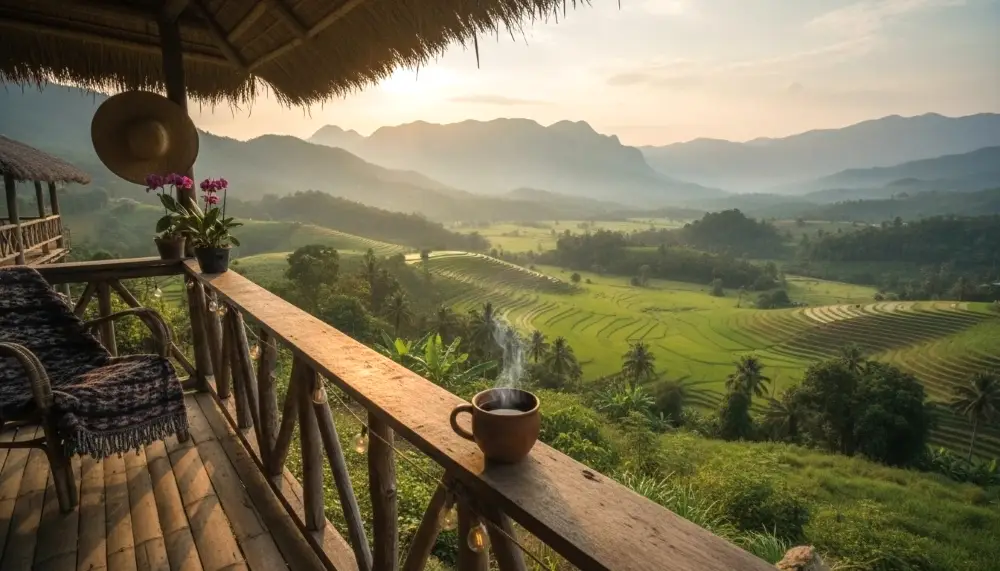
While many visitors begin their adventure in Bangkok or head straight to the famous southern islands, Northern Thailand offers something equally magical: a road trip through mountains, jungles, ancient towns, and peaceful countryside.
A Northern Thailand road trip is one of the most rewarding ways to experience the country. It allows you to explore at your own pace, discover hidden villages, and see a side of Thailand that many first-time visitors never expect. All prices in this guide use a rate of 35 THB = $1 USD.
The Quick Summary:
Absolutely. Northern Thailand is widely considered one of the best regions in Southeast Asia for scenic road trips.
Travelers love it because:
- Distances between destinations are manageable
- Roads are generally in good condition
- The scenery changes constantly, from mountains to rice fields
- Charming towns and temples appear around every corner
- It offers a calmer contrast to busy cities like Bangkok
Most travelers start their journey in Chiang Mai and explore the surrounding mountains and countryside over several days. Even if you’ve never driven in Thailand before, the region is surprisingly accessible and welcoming.

Compare hotel prices across Northern Thailand’s
best areas and book with confidence.
Filter by budget, location, or score
to find the right stay for your trip.
Why Northern Thailand Is Perfect:
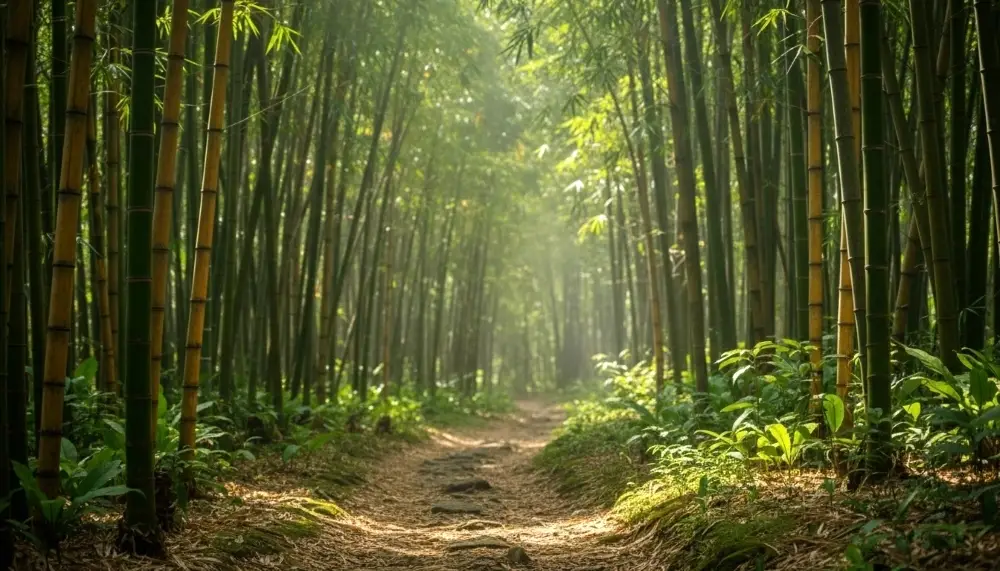
Northern Thailand has a relaxed pace that many travelers find comforting, especially on their first trip to the country. Unlike the fast energy of Bangkok, the north feels slower and more peaceful. Cities are smaller, traffic is lighter, and the atmosphere is friendly and easygoing.
Here are a few reasons first-time visitors love traveling here:
- Cooler mountain climate compared to the rest of Thailand (October to February can dip to 10-15°C at night)
- Incredible temples and cultural heritage rooted in the ancient Lanna Kingdom
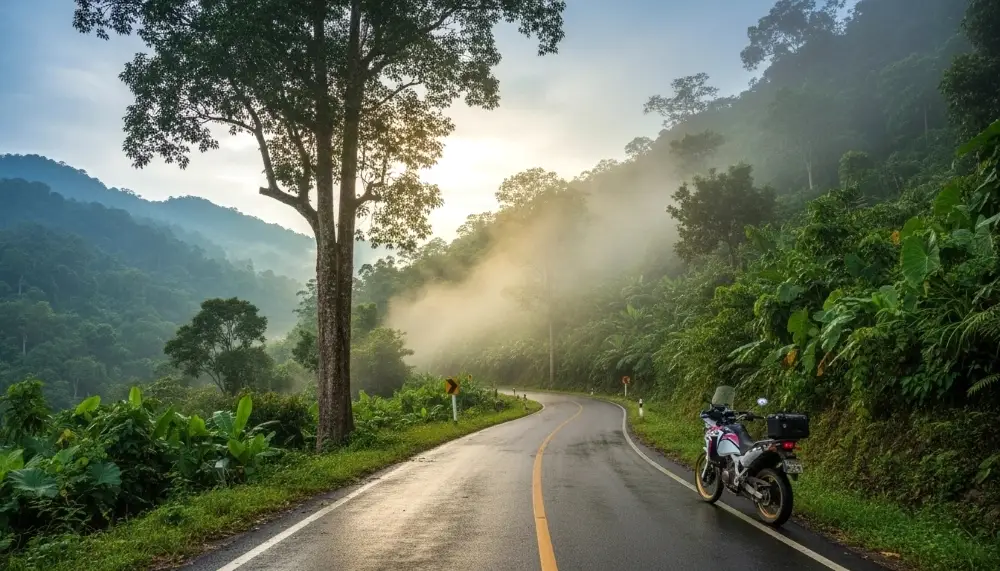
- Lush landscapes and winding scenic roads with genuine driving pleasure
- Delicious northern Thai cuisine unavailable anywhere else in the country
- Affordable, a comfortable mid-range guesthouse in Pai or Mae Hong Son costs 800-2,000 THB (~$23-$57) per night
It’s a place where you can truly slow down and enjoy the journey. Whether you’re a backpacker stretching every baht, a couple seeking romantic mountain retreats, or a family wanting something more culturally immersive than a beach resort, Northern Thailand adapts beautifully to what you need from it.

Lock in top-rated Northern Thailand tours with
GetYourGuide’s free cancellation
up to 24 hours before. Reserve now
and pay later if dates aren’t set.
The Classic Northern Thailand Road Trip:
Most road trips begin in Chiang Mai, the cultural heart of northern Thailand. From there, several beautiful routes branch out into the surrounding mountains. The classic loop covers roughly 800 kilometres and takes seven to ten days at a comfortable pace.
The classic route:
Chiang Mai → Pai → Mae Hong Son → Chiang Rai → back to Chiang Mai
Along the way you’ll encounter:
- Misty mountain viewpoints at 1,000+ metres elevation
- Traditional hill tribe villages (Karen, Hmong, Akha)
- Waterfalls hidden in the jungle
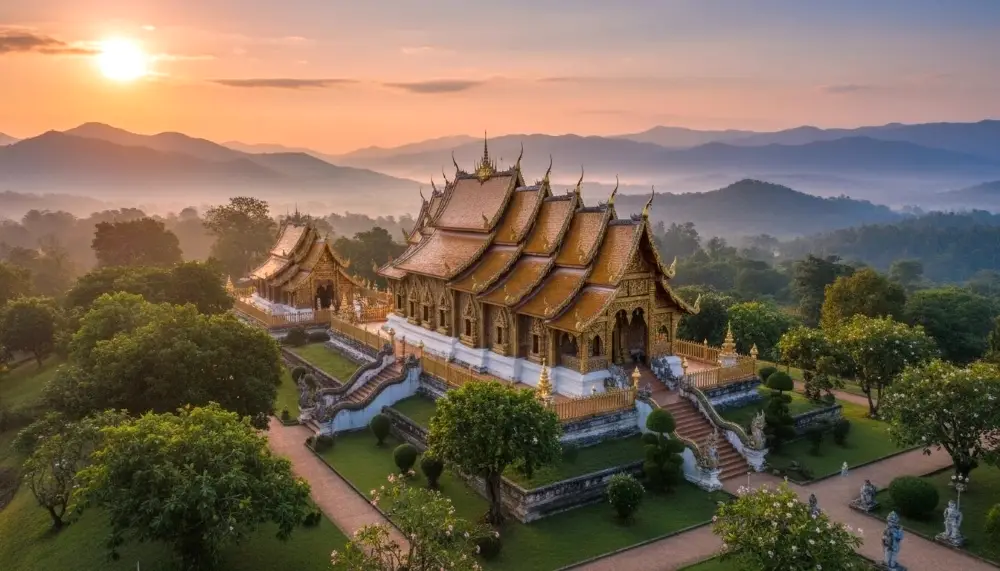
- Ancient Lanna-style temples perched on hillsides
- Quiet countryside roads surrounded by terraced rice fields
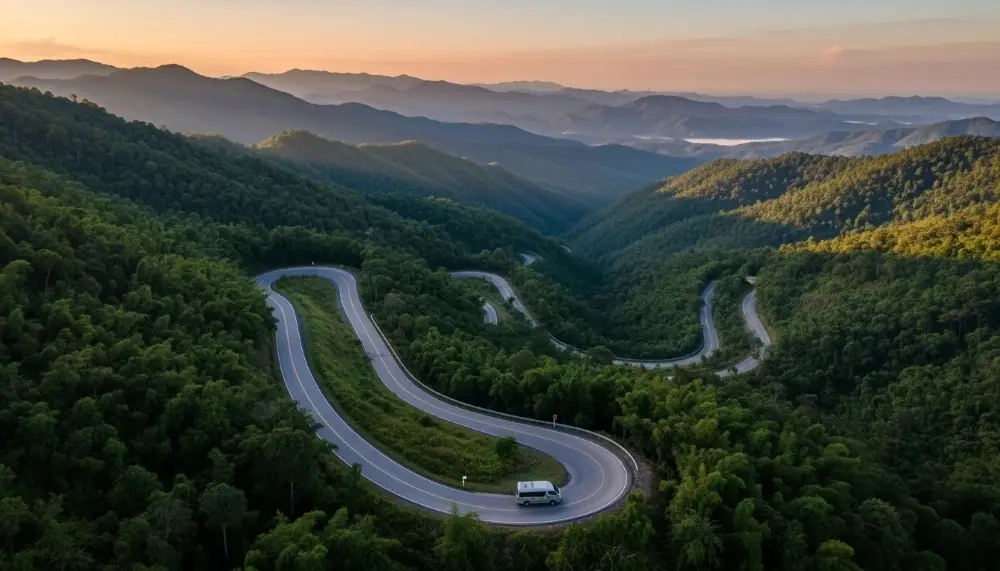
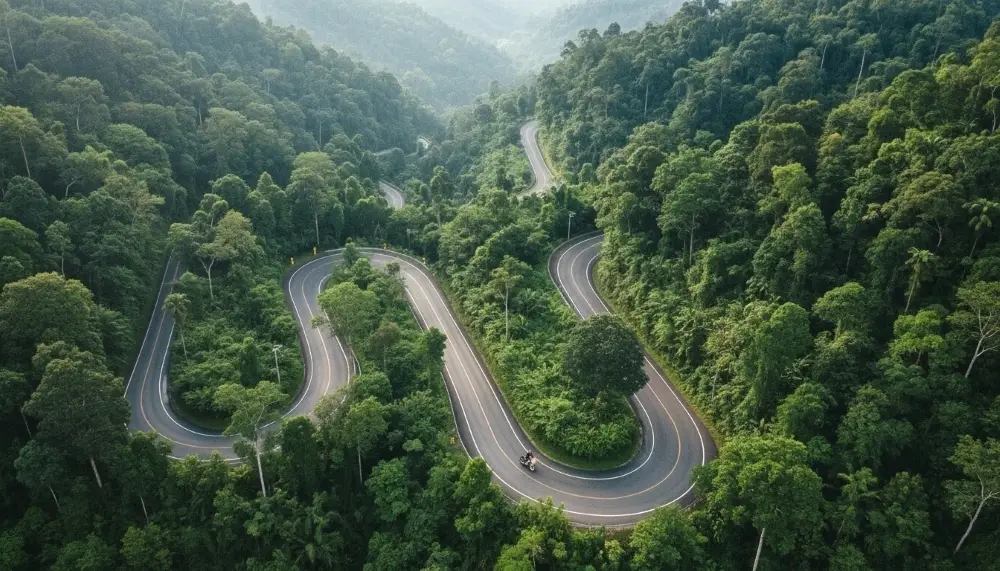
The stretch between Chiang Mai and Pai is famous for its 762 curves, winding through forested mountains for around three hours. It’s one of the most celebrated driving roads in Southeast Asia.
For those with more time, an extended loop swinging north through Doi Ang Khang and the Thai-Myanmar border town of Mae Sai adds another three to four days of extraordinary scenery with almost no other tourists in sight.
Day-by-Day Road Trip Guide:
Days 1-2: Chiang Mai base. Spend two days in Chiang Mai before collecting your rental vehicle. Explore the Old City moat, visit Wat Chedi Luang at sunset (free entry), and walk the Saturday or Sunday Walking Street markets. Stock up on snacks, a paper map as backup, and fill the tank. Petrol costs around 40-45 THB (~$1.15-$1.30) per litre at any PTT or Bangchak station. If you’re flying in, Welcome Pickups is a reliable option for a stress-free airport transfer, especially with luggage or family in tow.
Before you land, activate a Yesim or Airalo eSIM so you have data the moment you touch down. Local apps like Grab require SMS verification at the baggage carousel, and without mobile data that process stalls completely.
Day 3: Chiang Mai to Pai (125km, 3 hours). Leave early to enjoy the 762 curves in morning light rather than afternoon heat. Stop at the Huay Nam Dang viewpoint before descending into the Pai valley. Check into your guesthouse, then rent a bicycle or scooter (150-200 THB / ~$4.30-$5.70 per day) to explore the town.
Evening: Walking Street on the main road has some of the best cheap food in the north, budget 150-250 THB (~$4.30-$7) for a full dinner. Book your guesthouse in advance through Agoda, which consistently offers some of the strongest rates on small Pai properties.
Days 4-5: Pai and surroundings. Take two full days here. Day 4: Pai Canyon at sunrise (free), Pam Bok Waterfall (free), and Santichon Chinese Village. Day 5: hire a scooter and ride to Mo Paeng Waterfall, the World War II Memorial Bridge, and the natural hot springs (200 THB / ~$5.70 entry).
Book activities like trekking or bamboo rafting through Klook or directly with guesthouses in town. If you’re working remotely, the cafes along the main street have decent Wi-Fi. Use NordVPN whenever you connect to guesthouse or cafe networks.
Day 6: Pai to Mae Hong Son (110km, 2.5 hours). Continue west on Route 1095, one of the most beautiful mountain roads in Thailand. Stop at Lod Cave (300 THB / ~$8.60 entry with guide) en route.
Mae Hong Son sits in a deep valley surrounded by mountains and has a completely different feel to Pai: quieter, more local, and genuinely off the tourist circuit. Booking.com works well here for flexible cancellation policies if your plans are fluid.
Days 7-8: Mae Hong Son and the north. Sunrise at Wat Jong Kham and Wat Jong Klang beside the lake is unmissable and free. Hire a local guide for a day trek into the surrounding hilltribe villages (500-1,000 THB / ~$14-$29 per person). On Day 8, drive north toward Chiang Rai via Route 107, a longer route but spectacularly scenic. Get Your Guide lists excellent vetted day treks from Mae Hong Son if you prefer an organised group experience.
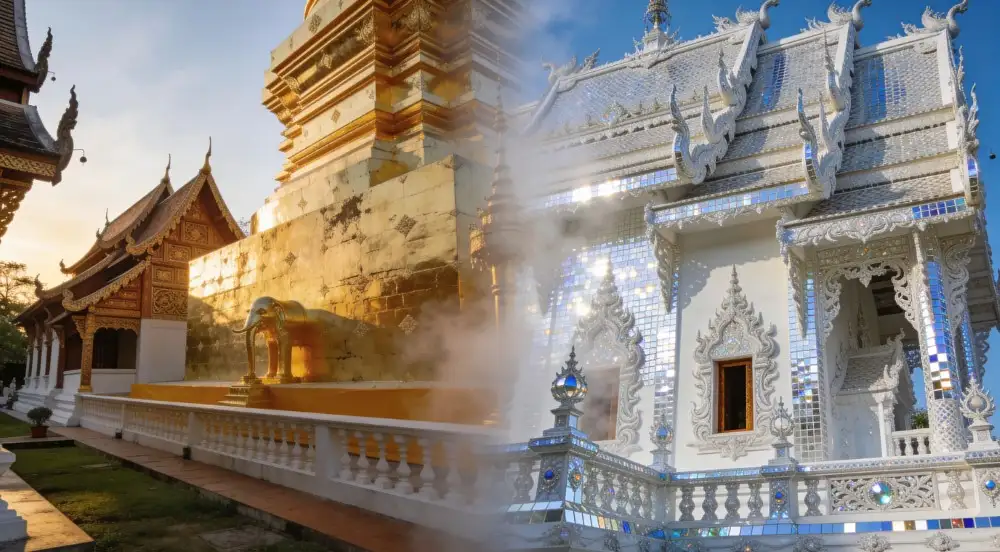
Days 9-10: Chiang Rai. The White Temple (Wat Rong Khun, 100 THB / ~$2.90 entry) and Blue Temple (free) are the headline stops. The Chiang Rai Night Bazaar on Day 10 is a relaxed end to the loop, far smaller and more local than Chiang Mai’s markets. Return to Chiang Mai on the expressway (around 3 hours), dropping off your rental before your onward flight.
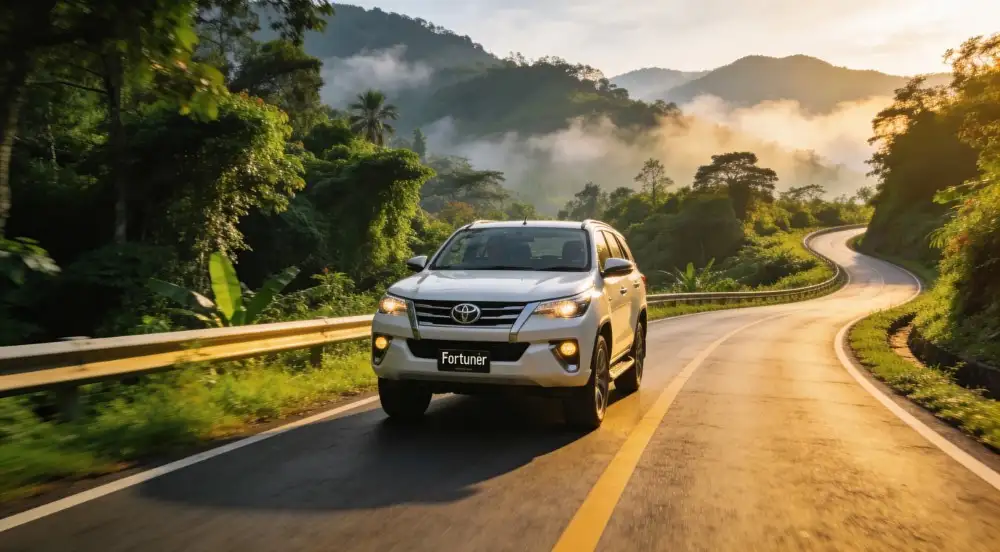

Skip the airport kiosk queue in Northern Thailand.
Airalo eSIMs are pre-loaded before
you fly and ready the instant you
connect to the local network.
Chiang Mai: The Gateway to the North
Chiang Mai is the perfect starting point for any Northern Thailand road trip. The city combines ancient temples, lively night markets, cosy cafes, and beautiful surrounding mountains. It’s also very easy for travelers to navigate.
Before heading out on the road, many visitors spend two to three days here exploring. Highlights include:
- The historic Old City temples (Wat Chedi Luang, Wat Phra Singh, free to enter)
- Night markets full of street food and handmade crafts
- Cooking classes and cultural experiences (800-1,500 THB / ~$23-$43), bookable in advance through Klook or Get Your Guide
- Doi Suthep temple overlooking the city (50 THB / ~$1.40 songthaew ride, 30 THB / ~$0.85 entry)
Chiang Mai is also Thailand’s digital nomad capital. The city has an extraordinary density of co-working spaces, fast-fibre cafes, and long-stay apartments. Remote workers often arrive intending to spend a week and find themselves still there three months later. If you’re considering an extended stay, SafetyWing offers flexible travel medical insurance that covers longer-term remote work stints without the cost of traditional expat health cover.
Chiang Mai offers a gentle introduction to Thai culture and is where you’ll collect your rental car or motorbike for the journey ahead.
Pai: A Mountain Town Full of Character
Pai is one of the most beloved stops in Northern Thailand. This small mountain town is known for its laid-back atmosphere, beautiful scenery, and welcoming traveler community. It sits at 800 metres elevation, making it noticeably cooler than Chiang Mai, especially at night in the cool season.
During the day you can explore:
- Pai Canyon at sunrise (free, arrive by 6am for empty trails)
- Natural hot springs (200 THB / ~$5.70 for the developed pools; free wild pools are a 10-minute walk upstream)
- Waterfalls and bamboo bridges
- Scenic countryside roads through rice paddies
Evenings in Pai are equally enjoyable, with the Walking Street market, live music, and cosy restaurants. A full dinner at a local spot costs 150-250 THB (~$4.30-$7). Most travelers stay two nights and wish they’d booked three. Accommodation ranges from 350 THB (~$10) bamboo bungalows for backpackers to gorgeous boutique guesthouses at 2,500 THB (~$71) per night for couples wanting something more special. Search Agoda early for peak season (December-January) as Pai fills up fast.

Affordable Northern Thailand data without the
tourist SIM hassle. Saily’s eSIM
works on most modern phones and
tops up remotely whenever needed.
Mae Hong Son: The Hidden Highlight:
Mae Hong Son is the most underrated stop on the northern loop, and for many road trippers, it becomes the unexpected favourite. Sitting in a deep valley ringed by mountains on the Myanmar border, it feels like a different country from Chiang Mai: quieter, more remote, and almost completely free of the mass tourism found further east.
The town itself is small enough to walk across in twenty minutes. The twin temples of Wat Jong Kham and Wat Jong Klang sit at the edge of a small lake and are genuinely one of the most serene temple settings in all of Thailand. Arrive at sunrise when mist fills the valley and the reflection sits perfectly in the still water. Entry is free.
From Mae Hong Son, guided day treks into the surrounding hills visit Karen and Shan hilltribe villages, including the famous “long neck” Kayan community (500-1,200 THB / ~$14-$34 per person depending on duration). Lod Cave, about 70 kilometres north, is one of the largest cave systems in Southeast Asia and must be visited with a local guide (300 THB / ~$8.60 entry). Accommodation in Mae Hong Son is excellent value at 600-1,500 THB (~$17-$43) per night for a good guesthouse.

Book Northern Thailand day trips, attractions,
and activities in one place. Check
real reviews and lock in your spot
before the popular slots go.
Chiang Rai and the Golden Triangle:
Further north, Chiang Rai offers a completely different atmosphere. The city is quieter than Chiang Mai but home to some of Thailand’s most visually striking temples.
The famous White Temple (Wat Rong Khun) looks almost surreal, with its intricate all-white design and modern artistic elements depicting contemporary figures alongside Buddhist iconography. Entry costs 100 THB (~$2.90). The Blue Temple (Wat Rong Suea Ten) is free and equally stunning, best visited in the late afternoon when the light turns golden against its deep blue exterior.
Nearby, the Golden Triangle marks the meeting point of Thailand, Laos, and Myanmar at the confluence of the Ruak and Mekong rivers. It’s a fascinating place historically and geographically, and many travelers include a short boat trip across to Laos (200-350 THB / ~$5.70-$10). The Black House (Baan Dam Museum), a short drive from town, is another unmissable stop: a striking complex of dark timber structures filled with artist Thawan Duchanee’s eccentric collections. Entry costs 80 THB (~$2.30). Many travelers include Chiang Rai as a key stop on their northern road trip, and it rewards at least two nights to see it properly.

Hidden Gems Worth the Detour:
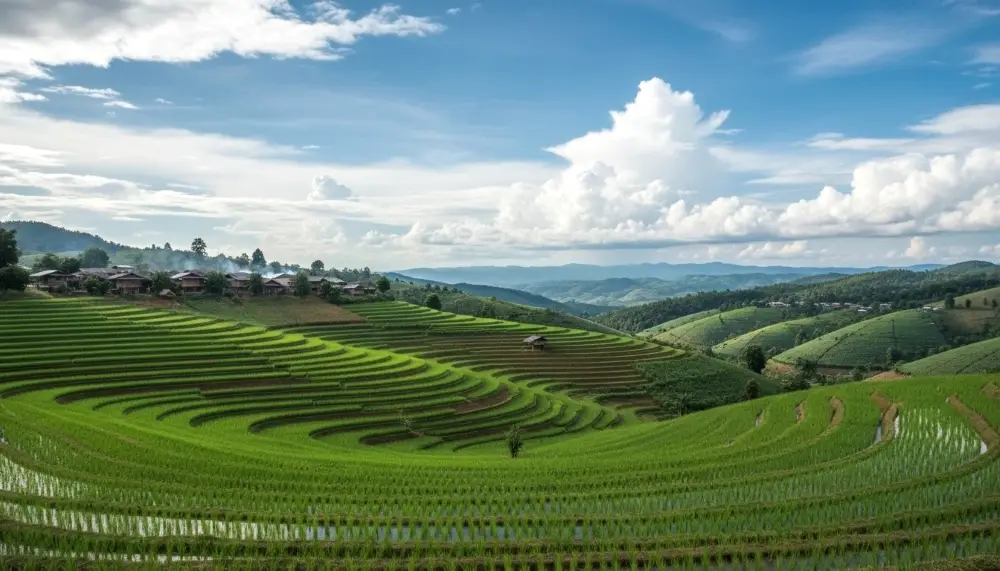
The classic loop is wonderful, but some of the most memorable moments on a Northern Thailand road trip happen when you deliberately leave the well-worn route. A few hidden gems worth building into your itinerary:
Doi Inthanon National Park. Thailand’s highest peak sits just 58 kilometres from Chiang Mai and is completely overlooked by most visitors. The summit reaches 2,565 metres and is cool enough to need a light jacket even in March. The park entrance fee is 300 THB (~$8.60) per person and 50 THB (~$1.40) for a vehicle. The twin chedis (pagodas) near the summit are arguably more beautiful than anything in Chiang Rai, and the Pha Dok Siew nature trail through cloud forest is extraordinary.
Doi Ang Khang. This royal agricultural station sits near the Myanmar border at 1,400 metres elevation and is famous for its strawberry fields, rose gardens, and cold-season fog. Almost no foreign visitors make it here, but Thai families flock in from November to February. A guesthouse room costs 800-1,500 THB (~$23-$43) per night.
Chiang Dao. A small town beneath Thailand’s third-highest peak, just 70 kilometres north of Chiang Mai. The Chiang Dao Cave system is one of the most atmospheric in the north (40 THB / ~$1.15 entry), and the town has an increasingly good selection of boutique eco-stays. It’s an easy one-night detour before heading toward Pai.
Mae Salong. A Chinese tea village perched at 1,200 metres near the Myanmar border. Former Kuomintang soldiers settled here after the Chinese Civil War and their descendants grow some of Thailand’s finest oolong tea. The village is covered in cherry blossom during late January to early February and feels completely unlike anywhere else in Thailand. Budget 200-350 THB (~$5.70-$10) for a generous afternoon tea tasting at one of the hilltop plantations.
What Driving in Northern Thailand Is Really Like:
Many first-time visitors feel nervous about driving in a new country, but Northern Thailand is actually one of the easier places in Southeast Asia to rent a car or motorbike. Traffic is light outside Chiang Mai, and the roads between main towns are sealed and well-maintained.
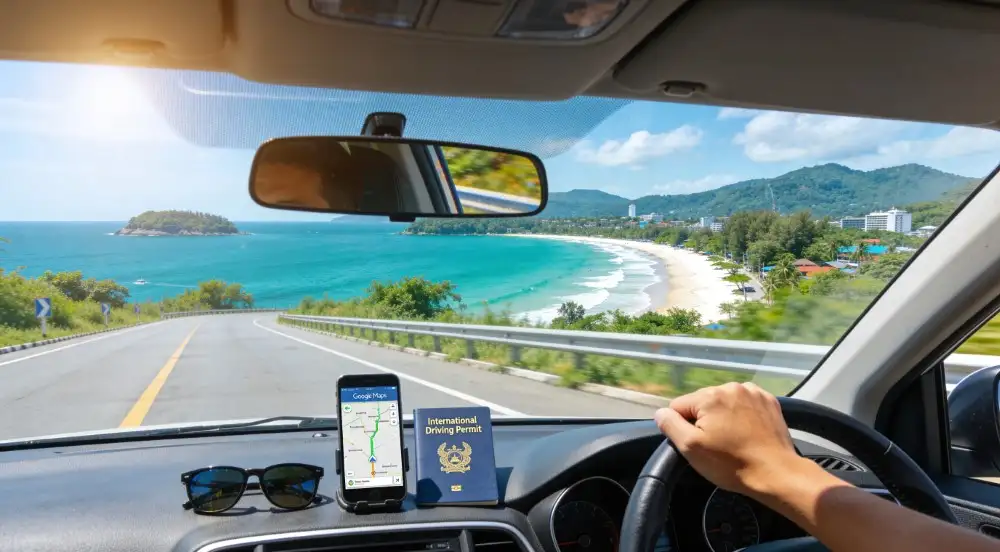
Licence requirements: A valid International Driving Permit (IDP) with the appropriate vehicle category is legally required to drive in Thailand. For motorbikes, you need an IDP that includes motorcycle endorsement. Driving without one invalidates your travel insurance. Obtain your IDP before leaving home, it cannot be issued abroad.
Rental costs: A small automatic car (Honda Jazz or similar) costs 800-1,500 THB (~$23-$43) per day from reputable Chiang Mai agencies. Manual scooters (125cc) run 200-300 THB (~$5.70-$8.60) per day; semi-automatic Honda PCX 150s are 300-400 THB (~$8.60-$11.40). Always take a full video of the vehicle before accepting it.
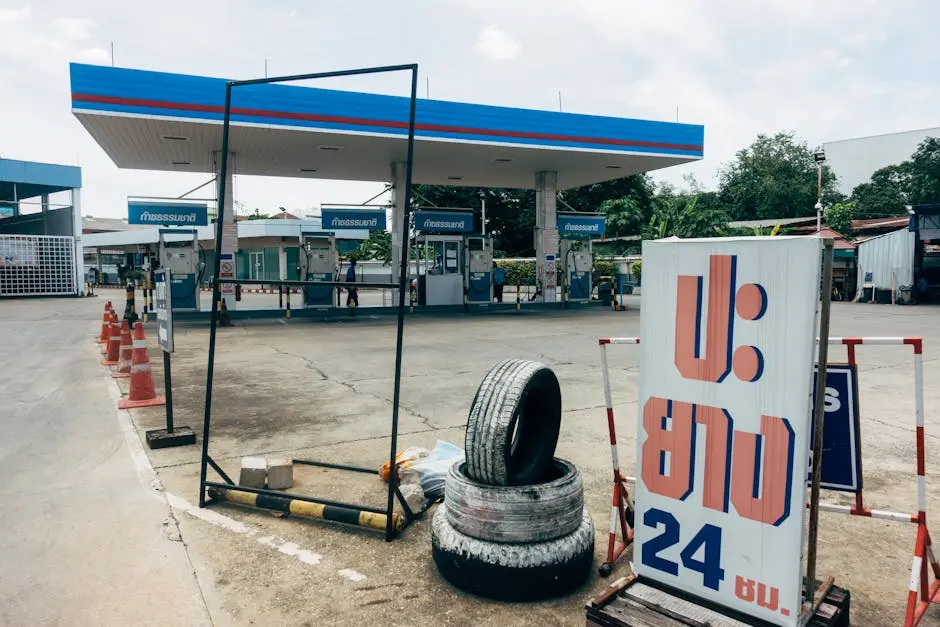
Fuel: PTT and Bangchak stations are everywhere on the main routes. Petrol costs approximately 40-45 THB (~$1.15-$1.30) per litre. The Chiang Mai to Pai to Mae Hong Son loop totals roughly 400-450 kilometres; budget around 600-800 THB (~$17-$23) for fuel across the full loop in a small car.
Navigation: Google Maps works well across most of the north, but mobile signal disappears in some mountain sections. Download offline maps before departure and consider a Yesim or Saily eSIM for reliable data coverage even in remote areas. Both services cover northern Thailand’s mountain zones without the daily data caps that frustrate users on standard tourist SIMs.
If you prefer not to drive, hiring a private driver costs 2,500-4,000 THB (~$71-$114) per day and is an excellent option for the mountain roads. Alternatively, Get Your Guide has vetted small-group tours from Chiang Mai that cover the main highlights. For intercity buses between towns if you’re travelling without a vehicle, 12GO is the most reliable platform for comparing and booking tickets ahead of national holiday surges when seats sell out fast.
Understanding the Culture of Northern Thailand
Northern Thailand has a slightly different culture from the rest of the country. The region was once part of the ancient Lanna Kingdom, which still influences local traditions, architecture, and food today.
Visitors often notice:
- Distinct Lanna temple styles, with tiered wooden roofs and gilded spires different from central Thai temples
- Unique northern Thai dishes: khao soi (curried noodle soup, 60-100 THB / ~$1.70-$2.90), sai ua sausage, and nam prik noom chilli dip
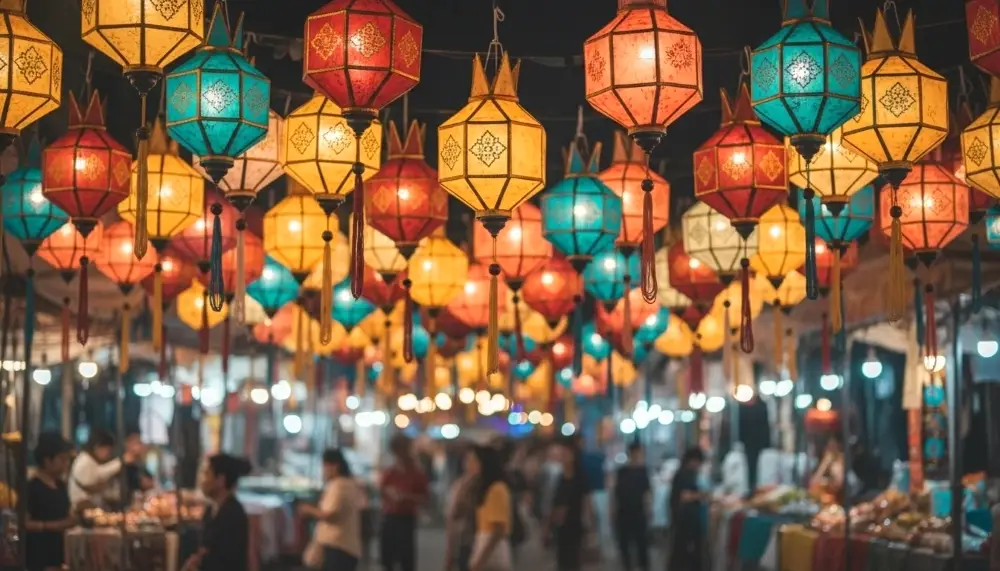
- Traditional festivals including Yi Peng (lantern festival, November) and Songkran (water festival, April)
- Strong local pride in regional heritage and a more reserved cultural style than Bangkok
Taking time to learn about these cultural details makes your journey much more meaningful. Greeting vendors and guesthouse owners with a simple Wai (hands pressed together) and “Sawasdee krap/ka” opens doors that a simple “hello” doesn’t. When visiting temples, carry a light scarf or sarong to cover your shoulders and knees. Most temples have loaners at the gate but bringing your own shows genuine respect, and locals notice.
Where to Stay Along the Route:
Accommodation across the northern route spans a wide range. Budget travelers will find excellent value in simple fan-cooled guesthouses at 300-500 THB (~$8.60-$14) per night in Pai and Mae Hong Son. Mid-range visitors can expect comfortable en-suite rooms with air conditioning, good Wi-Fi, and often a pool for 800-2,000 THB (~$23-$57). Families and those wanting something special will find luxury boutique resorts and private pool villas, particularly around Chiang Mai and Chiang Rai, for 3,500-8,000 THB (~$100-$229) per night.
A few accommodation notes worth knowing:
- Pai gets booked solid from late November through February. Reserve at least two to three weeks ahead on Agoda or Booking.com during this window
- Mae Hong Son has fewer quality options, so reading recent reviews carefully on Booking.com pays off
- Chiang Rai has excellent mid-range value and some surprisingly stylish boutique options near the Night Bazaar
- For an extended stay in Chiang Mai, monthly apartment rentals are readily available from 8,000-18,000 THB (~$229-$514) per month with utilities included
Pro Tips For Stress Free Travel:
Transport: Download Grab and Bolt for city rides. These apps provide fixed pricing, eliminating the need to negotiate with drivers who refuse the meter. Both apps require mobile data at setup, so activate your Airalo, Yesim, or Saily eSIM before departure to avoid the frustrating SMS verification delay at the baggage carousel.
Flights and delays: If your international connection into Chiang Mai is disrupted, AirHelp is the fastest way to understand and pursue any compensation you may be entitled to under EU261 or equivalent regulations. It takes minutes to check a claim and costs nothing upfront.
Accommodation: Agoda often has deeper discounts in Asia compared to other platforms, while Booking.com remains reliable for flexible cancellations.
Experiences: Use Klook or Get Your Guide to book elephant sanctuary visits (ensure they are ethical, no-riding facilities), day treks, and Chiang Rai day tours. Both platforms offer free cancellation on most Northern Thailand activities, which is useful if mountain weather changes your plans.
Connectivity: Yesim provides reliable eSIM data packages that work across all of northern Thailand including remote mountain areas. Always use NordVPN when connecting to public Wi-Fi in malls or guesthouses.
Long-stay health cover: If you’re spending more than a few weeks exploring the north as a remote worker or prospective expat, SafetyWing’s Nomad Insurance is worth having. It’s billed monthly with no lock-in, covers emergency medical treatment, and is accepted at Chiang Mai’s private hospitals.
Currency: Exchange cash at SuperRich (orange or green booths) in Chiang Mai before heading into the mountains. ATMs are scarce in Pai and Mae Hong Son. Always carry 20 and 100 THB notes for small purchases at village markets and roadside stalls.


Stay online in Northern Thailand without the
daily data limits of tourist SIMs.
Yesim’s eSIM offers unlimited 5G
from around $10 for the whole trip.
If You’re Nervous About Visiting Thailand

Many first-time travelers feel a little uncertain before their first trip to Thailand. That’s completely normal.
The truth is that Thailand is one of the most traveler-friendly countries in the world. Tourism infrastructure is excellent, people are welcoming, and it’s easy to find help if you need it.
Northern Thailand in particular is known for its relaxed atmosphere and friendly locals. Visitors often arrive feeling nervous but leave wondering why they waited so long to visit. Solo travelers, same-sex couples, families with young children, and elderly visitors all navigate the north with confidence once they’re on the ground. The locals are patient, English is widely spoken in tourist areas, and even getting briefly lost on a mountain road tends to result in a friendly local pointing you in the right direction.
A Road Trip You’ll Never Forget
A Northern Thailand road trip offers something truly special. You’ll drive through misty mountains, explore peaceful temples, eat incredible food, and discover charming towns that feel worlds away from busy tourist hubs.
Whether you spend a week exploring the region or take a longer journey through its winding roads, the experience becomes one of the most memorable parts of any Thailand adventure.
For many travelers, Northern Thailand ends up being their favourite part of the entire country. And once you’ve seen it for yourself, it’s easy to understand why.
FAQ: Northern Thailand Road Trip
How long does the Northern Thailand road trip take?
The classic loop (Chiang Mai → Pai → Mae Hong Son → Chiang Rai → Chiang Mai) covers approximately 800 kilometres and takes 7 to 10 days at a comfortable pace. A shorter version focusing on Chiang Mai and Pai only takes 4 to 5 days. Adding hidden gems like Doi Inthanon, Chiang Dao, or Mae Salong pushes the total to 12 to 14 days, which is genuinely worth it if your schedule allows. The most common mistake is rushing: these roads reward slow travel, and most stops deserve at least two nights.
Do I need an International Driving Permit (IDP) for Northern Thailand?
Yes. A valid International Driving Permit is legally required to drive any vehicle in Thailand, including motorbikes. You need an IDP that includes the appropriate vehicle category (car or motorcycle). Driving without one invalidates your travel insurance and creates legal exposure in the event of an accident. IDPs must be obtained in your home country before departure, they cannot be issued abroad. Most national automobile associations issue them on the same day with a valid driving licence and passport photo.
Is it safe to drive the road between Chiang Mai and Pai?
The 762-curve mountain road (Route 1095) is well-maintained but requires full concentration throughout. It is perfectly safe for experienced drivers in good weather conditions. Avoid driving it at night or in heavy rain, when visibility drops significantly and the road surface becomes unpredictable. First-time motorbike riders should take a car instead: the road’s winding descents are technically demanding, and the drop-offs on the shoulder are significant. Always wear a helmet. If you are prone to motion sickness as a passenger, take medication before departure.
What is the best time of year for a Northern Thailand road trip?
November to February is the ideal window. Temperatures are cooler (15-25°C during the day), skies are clear, and the mountain scenery is at its most dramatic. November also coincides with the Yi Peng lantern festival in Chiang Mai, one of Thailand’s most spectacular annual events. March to May should be avoided: agricultural burning across the region produces a thick haze that significantly reduces visibility and air quality, and can cause respiratory discomfort. June to October brings rain, which makes the jungle lush and waterfalls powerful, but mountain roads require extra caution during heavy downpours.
How much does a Northern Thailand road trip cost?
A comfortable mid-range 7-day road trip costs approximately 15,000-25,000 THB (~$429-$714) per person excluding international flights. This covers car rental (800-1,500 THB per day), fuel (600-800 THB for the full loop), accommodation (800-2,000 THB per night), food (300-600 THB per day), and activities and entrance fees (500-1,500 THB for the week). Budget travelers doing it by motorbike and staying in guesthouses at the lower end can comfortably halve these costs. Families or those opting for boutique resorts should budget 30,000-50,000 THB (~$857-$1,429) per person for the same duration.
Can I do the road trip on a scooter or do I need a car?
Both are popular and practical. Scooters (150-300 THB per day) are the classic choice and give you maximum freedom on narrow mountain roads and village trails. However, they require a motorcycle-endorsed IDP and are more physically demanding over long mountain stretches in heat or rain. A small automatic car (800-1,500 THB per day) is more comfortable for couples with luggage, offers better protection in rain, and is well-suited to the sealed roads on the main route. For families with children, a car is strongly recommended. Larger motorbikes (250cc-400cc) are available from specialist rental shops in Chiang Mai for more experienced riders who want the best of both worlds.
Are there ATMs in Pai and Mae Hong Son?
Yes, but they are limited and not always reliable. Pai has two to three ATMs that occasionally run out of cash during peak season (December and January). Mae Hong Son has a small number of ATMs but foreign card fees and availability can be unreliable, particularly on weekends. Withdraw enough cash in Chiang Mai before leaving: 3,000-5,000 THB (~$86-$143) per person should cover 2 to 3 days in each smaller town including accommodation, food, and activities. Most guesthouses and local restaurants along the route are cash-only.
Is Northern Thailand suitable for families with young children?
Absolutely. Northern Thailand is one of the most family-friendly regions in Southeast Asia. The pace is relaxed, food options are wide-ranging, and distances between stops are manageable with children in the back seat. Highlights that work particularly well for families include Doi Inthanon National Park (cooler temperatures, easy walking trails, stunning scenery), the elephant sanctuaries near Chiang Mai (ethical, no-riding facilities recommended via Klook or Get Your Guide), the night markets in Chiang Mai and Chiang Rai, and the Pai area’s open countryside. Book a car rather than motorbikes, bring child-appropriate sun protection and insect repellent, and keep a flexible itinerary that allows for rest days.
What should I eat on a Northern Thailand road trip?
Northern Thai cuisine is genuinely distinct from the food you’ll find in Bangkok or the south, and trying the regional specialities is one of the great pleasures of the trip. Must-try dishes include: khao soi (rich coconut curry with egg noodles, 60-100 THB / ~$1.70-$2.90), sai ua (spiced pork sausage grilled over charcoal), nam prik noom (roasted green chilli dip served with vegetables and sticky rice), khao tom (rice soup, an excellent light breakfast), and gaeng hang lay (a Burmese-influenced pork belly curry). Street food stalls and small local restaurants are your best bet for authenticity and price. The Walking Street markets in both Pai and Chiang Mai are excellent for grazing across multiple dishes in one evening.
Can I extend my trip into Laos or Myanmar from Northern Thailand?
Yes, and it’s a popular addition for travelers with more time. From Chiang Rai, the Mae Sai border crossing leads into Myanmar’s Tachileik, accessible for a short day trip without a visa in most cases (confirm current entry requirements before travel as rules change). For Laos, the Chiang Khong crossing connects to Huay Xai on the Laos side, from where the famous slow boat down the Mekong to Luang Prabang departs. Most nationalities receive a Laos visa on arrival. Book onward bus or minivan tickets from Chiang Rai to Chiang Khong through 12GO to lock in seats ahead of time, particularly during the high season when transport fills quickly.