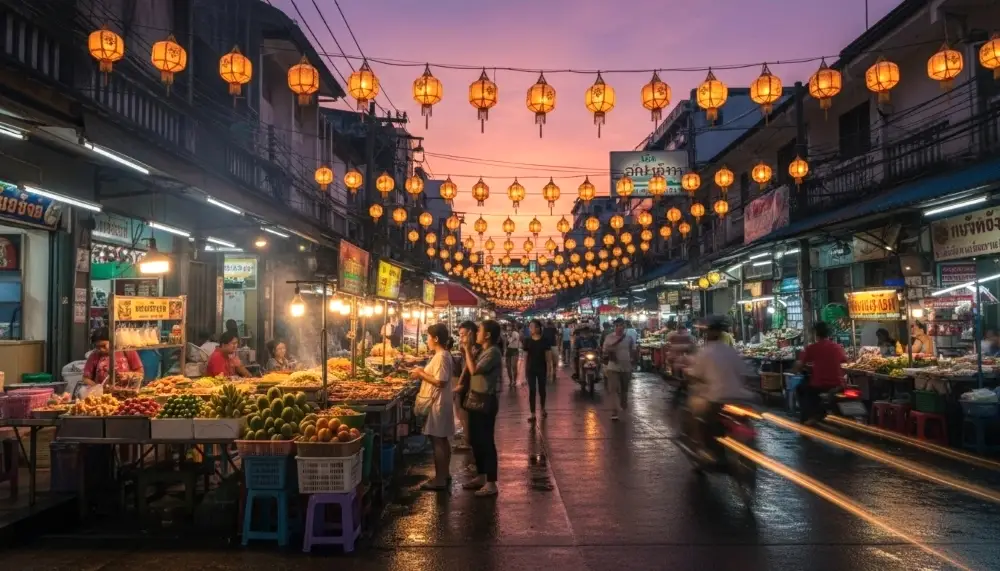
Chiang Mai Night Markets
This site contains affiliate links. We may earn a commission at no extra cost to you.
Night markets are more than just places to shop. They are where locals eat dinner, travelers discover handmade crafts, musicians perform under streetlights, and the whole city seems to gather together. All prices in this guide use a rate of 35 THB = $1 USD.
If you want to experience the real atmosphere of northern Thailand, exploring Chiang Mai’s night markets should be at the top of your list.
Quick Guide: What Are Chiang Mai Night Markets?
Chiang Mai night markets are evening street markets where vendors sell food, clothing, souvenirs, art, and handmade crafts. Most markets open around 17:00 to 18:00 and stay lively until 22:00 to 23:00. Entry to all of them is free. Budget 300 to 600 THB (~$8.55 to $17.15) per person for a relaxed evening of food and browsing.
The most popular night markets include:
- Chiang Mai Night Bazaar (Chang Klan Road, daily)
- Sunday Walking Street Market (Ratchadamnoen Road, Sundays only)
- Saturday Night Market (Wua Lai Road, Saturdays only)
- Kalare Night Market (off Chang Klan Road, daily)
- Anusarn Market (South of the Night Bazaar, daily)
Each market has its own personality, but they all offer the same wonderful mix of street food, local culture, and relaxed exploration.

From temples to island tours, Klook
covers Chiang Mai’s best experiences.
Hotel pickup is often included and
prices beat the pier walk-in rate.
Chiang Mai Night Bazaar: The Most Famous Market
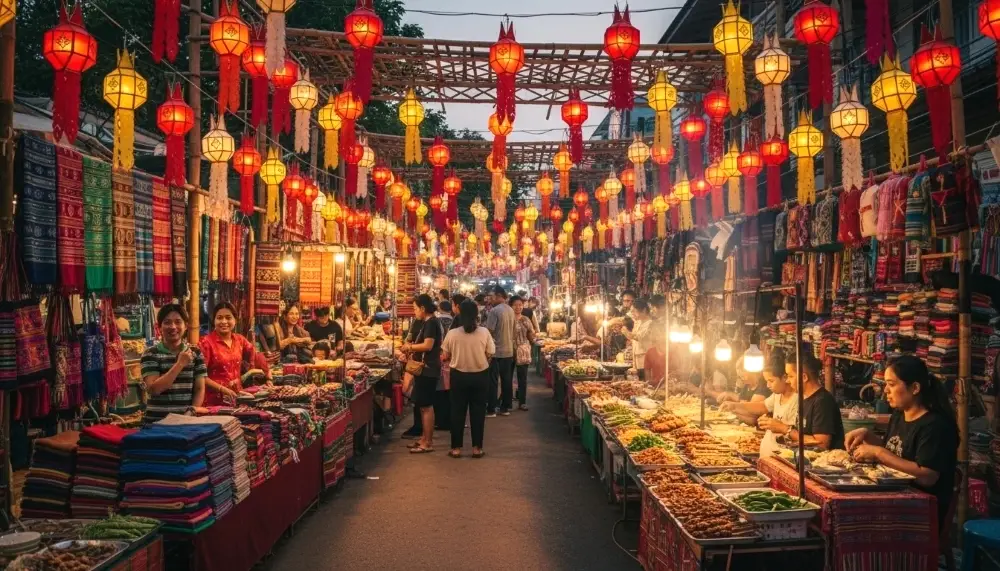
Stretching along Chang Klan Road, this bustling market runs every night from around 18:00 and is one of the most famous markets in Thailand. It caters primarily to tourists and is the easiest market to find for first-time visitors. Clothing starts from 150 to 400 THB (~$4.30 to $11.40), souvenirs from 50 to 300 THB (~$1.43 to $8.55), and street food from 40 to 100 THB (~$1.15 to $2.85) per dish.
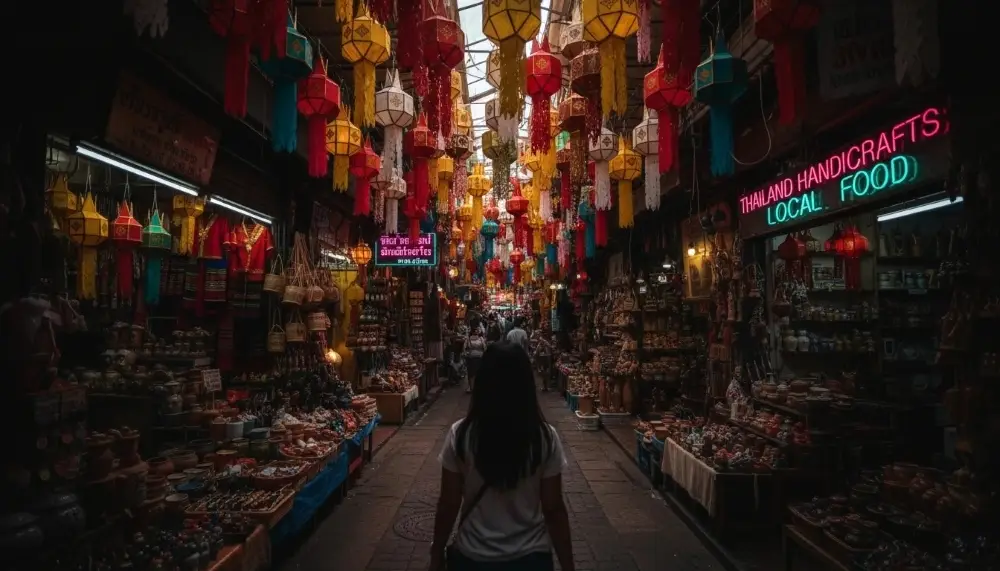
Here you will find handmade crafts, Thai silk, jewellery and silverware, artwork and paintings, clothing and souvenirs, street food stalls, and small bars with live music. The Night Bazaar feels like a festival every evening. Lanterns hang above the street, performers entertain crowds, and the smell of grilled meats and noodles fills the air.

Lock in top-rated Chiang Mai tours with
GetYourGuide’s free cancellation
up to 24 hours before. Reserve now
and pay later if dates aren’t set.
Sunday Walking Street Market:
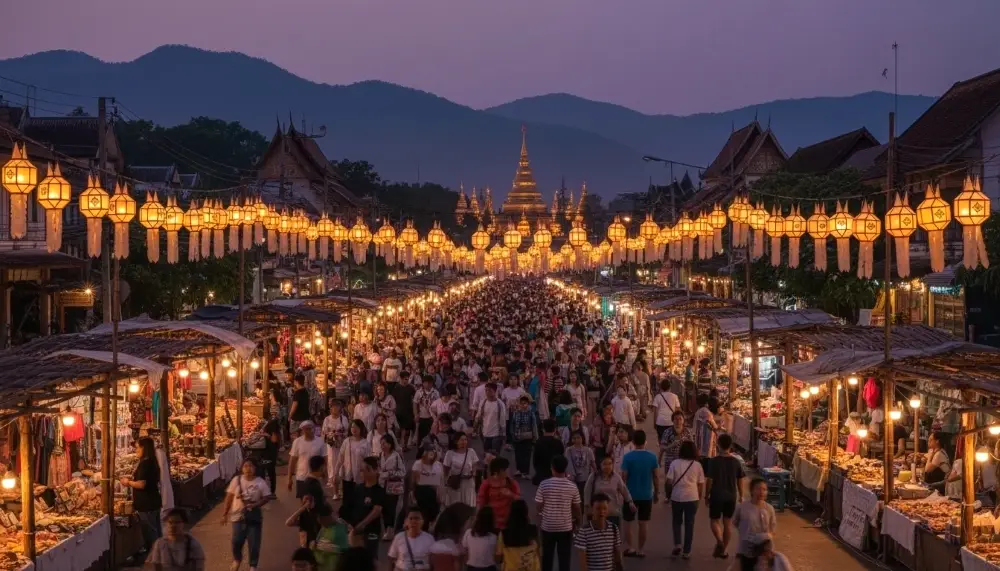
Many travelers say the Sunday Walking Street Market is the best market in Chiang Mai, and it is hard to argue. Running every Sunday from 17:00 to 22:00 along Ratchadamnoen Road from Tha Phae Gate to Wat Phra Singh, this market prioritises local craftspeople over commercial vendors. Entry is free.
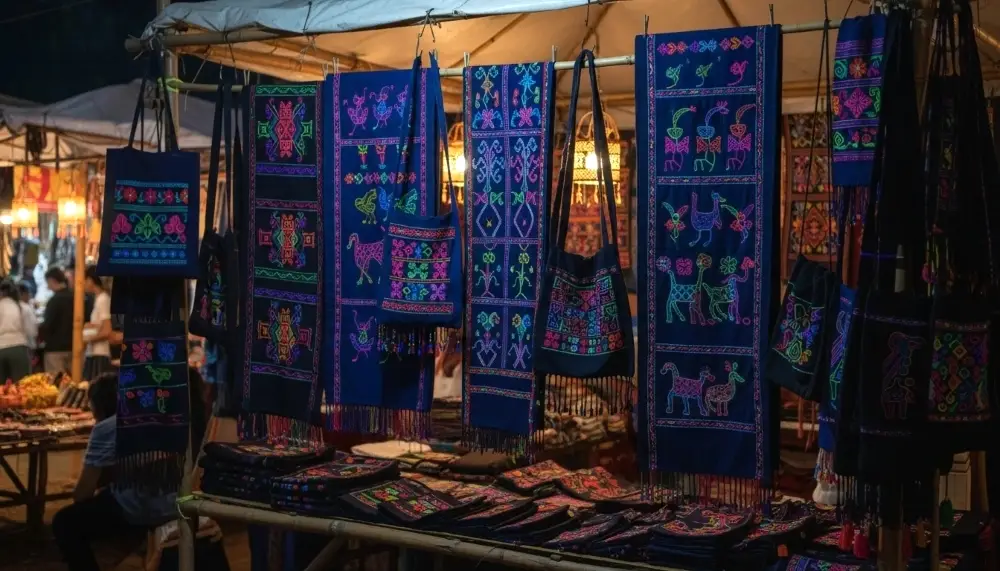
Here you will discover handmade crafts from local artists, traditional hill tribe textiles at 200 to 800 THB (~$5.70 to $22.85), wooden carvings, local snacks and desserts at 30 to 80 THB (~$0.86 to $2.30) each, and street musicians and cultural performances. The atmosphere feels creative and relaxed. Families, artists, and travelers all wander together through the lantern-lit streets.
Arriving early (around 17:00) is a good idea, as the market gets very busy after 19:00. At 18:00, the National Anthem plays and the entire market comes to a complete standstill for approximately 60 seconds.

From short trips to long stays in Chiang Mai,
Airalo has flexible eSIM data plans
you install in minutes. Top up
remotely if you need more data.
The Saturday Night Market: Wua Lai Road
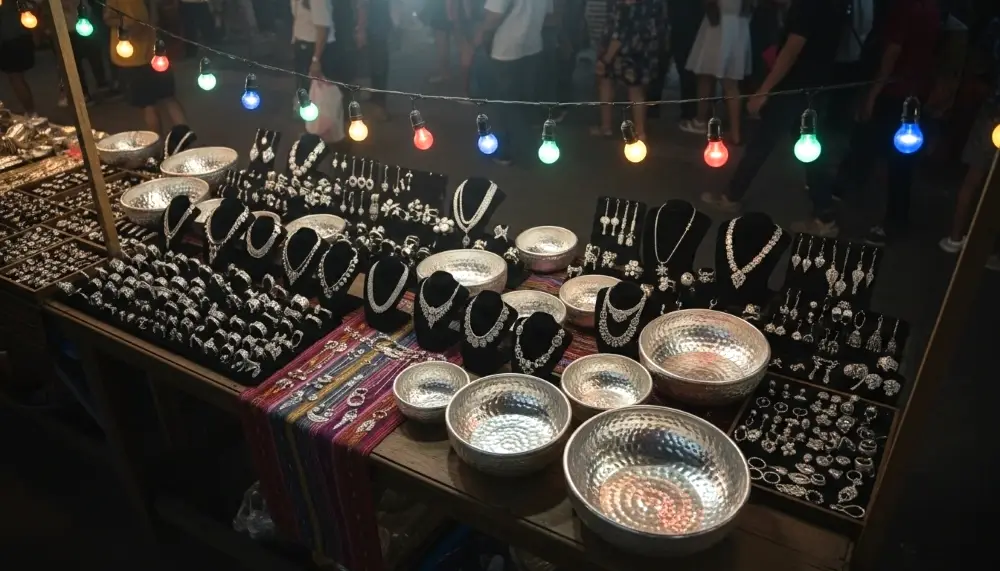
The Saturday Night Market on Wua Lai Road is Chiang Mai’s most local and least touristy walking market. Running every Saturday from 17:00 to 22:00, it sits just south of the Old City moat and is set in the heart of the city’s traditional silversmith quarter. Entry is free. It is consistently less crowded than the Sunday market and has a noticeably more authentic community atmosphere.
What makes Wua Lai different: The market specialises in genuine Chiang Mai silverwork, lacquerware, and hand-painted ceramics rather than mass-produced souvenirs. Silver jewellery pieces start from 300 to 2,000 THB (~$8.55 to $57.15) depending on weight and craftsmanship. Many of the silversmiths selling here also work at the workshops visible along the adjacent sois. This is where to buy silver if you want a piece that was actually made in Chiang Mai.
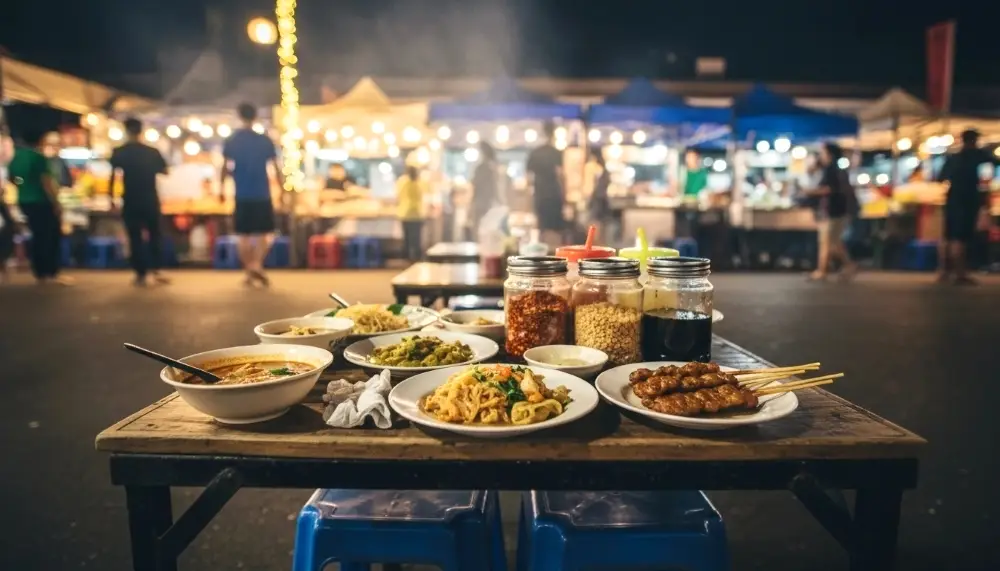
Food: Northern Thai street food dominates, including Sai Oua sausages at 40 to 60 THB (~$1.15 to $1.71) per skewer, Khao Kha Moo (braised pork leg on rice) for 60 to 80 THB (~$1.71 to $2.30), and fresh fruit shakes at 40 to 60 THB (~$1.15 to $1.71). The Wat Sri Suphan (the Silver Temple) is located midway along Wua Lai Road and is worth entering while the market is open for a completely different atmosphere from the street outside.
Comparison of Night Markets:
| Market | Day | Hours | Primary Focus | Best Time |
|---|---|---|---|---|
| Sunday Walking Street | Sunday | 17:00 to 22:00 | Local Artisans and Culture | 17:00 to 19:00 |
| Wua Lai (Saturday) | Saturday | 17:00 to 22:00 | Silverware and Lacquerware | 18:00 to 21:00 |
| Night Bazaar | Daily | 18:00 to 23:00 | Commercial Goods and Souvenirs | 20:00 to 22:30 |
| Kalare Night Market | Daily | 18:00 to 23:00 | Live Shows and Food | 19:00 to 22:00 |
| Anusarn Market | Daily | 18:00 to 23:00 | Nightlife and Street Food | 20:00 to 23:00 |

Stay closer to the action in Chiang Mai.
Agoda lists guesthouses to resorts
with verified reviews and instant
booking at competitive rates.
The Food: One of the Best Parts
Street food at the Sunday Walking Street focuses on authentic Northern Thai flavours. Prices typically range from 20 to 30 THB (~$0.57 to $0.86) for small snacks to 80 to 100 THB (~$2.30 to $2.85) for full noodle dishes. Avoid the stalls selling generic Western-style food near the gate and head instead toward the courtyard of Wat Phan Tao, where vendors serve Northern Thai staples in biodegradable packaging.
Northern Thai dishes to look for at any Chiang Mai night market include Sai Oua (a lemongrass-heavy pork sausage, 40 to 60 THB / ~$1.15 to $1.71 per skewer), Khao Kha Moo (stewed pork leg served over rice, 60 to 80 THB / ~$1.71 to $2.30), Miang Kham (betel leaf wraps filled with ginger, lime, and peanuts, 30 to 50 THB / ~$0.86 to $1.43 for a set), and Roti (sweet or savory Thai pancakes, 40 to 60 THB / ~$1.15 to $1.71). Fresh fruit shakes using local passion fruit and mango cost 40 to 60 THB (~$1.15 to $1.71).

Saily’s Chiang Mai eSIM costs less than
most tourist SIMs charge per day.
Easy install, transparent pricing,
and solid NordVPN infrastructure.
A Night Market Budget Guide:
A realistic spend for a single evening at any of the major Chiang Mai markets breaks down as follows for one person. Entry to every market is free.
Budget evening (food only, no shopping): 2 to 3 street food dishes at 40 to 80 THB each plus a fruit shake comes to around 180 to 300 THB (~$5.15 to $8.55) total. This is a fully satisfying dinner at any of the walking markets.
Mid-range evening (food plus a few souvenirs): Add a handwoven scarf at 200 to 400 THB (~$5.70 to $11.40) or a silver bracelet at 300 to 600 THB (~$8.55 to $17.15) and the total evening spend reaches 600 to 1,000 THB (~$17.15 to $28.55) per person.
Splurge evening (gifts and quality crafts): Quality silverwork from the Wua Lai Saturday Market runs 800 to 3,000 THB (~$22.85 to $85.70) per piece. Hill tribe textiles or hand-painted lacquerware start from 500 to 1,500 THB (~$14.30 to $42.85). A full splurge shopping evening could reach 3,000 to 5,000 THB (~$85.70 to $142.85) per person. Bring cash. Thai ATMs charge a flat 220 THB (~$6.30) per foreign card withdrawal so withdraw before you arrive.
Pro Tips For Stress Free Travel:
Transport Apps: Use Grab or Bolt for transparent pricing to and from the markets. A Grab ride from Nimman to the Old City costs 60 to 100 THB (~$1.71 to $2.85). InDrive is excellent for negotiating longer distances.
Accommodation and Tours: Agoda offers the best rates for Lanna-style boutiques near the Old City. Use Klook or Get Your Guide for pre-booked food tours or evening market walking tours with a guide.
Connectivity: Yesim or local AIS/True SIM cards provide 5G coverage across all market areas. Monthly data plans cost 600 to 900 THB (~$17.15 to $25.70). Use NordVPN for secure banking on public Wi-Fi at nearby cafes.
Currency: The Thai Baht (THB) is essential. While QR payments via PromptPay are common at larger stalls, small market vendors require physical cash. Thai ATMs charge a flat 220 THB (~$6.30) per foreign card withdrawal.


Stay online in Chiang Mai without the
daily data limits of tourist SIMs.
Yesim’s eSIM offers unlimited 5G
from around $10 for the whole trip.
Shopping for Unique Thai Souvenirs:
Chiang Mai is known as Thailand’s creative and artistic hub, so the markets are full of unique handmade items. Popular items include handwoven scarves (200 to 600 THB / ~$5.70 to $17.15), bamboo and wood products (100 to 500 THB / ~$2.85 to $14.30), handmade soap and Thai herbal products (80 to 200 THB / ~$2.30 to $5.70 per piece), elephant-themed artwork, hill tribe clothing (300 to 800 THB / ~$8.55 to $22.85), and lanterns and home decorations (150 to 400 THB / ~$4.30 to $11.40).
A practical tip: prices are generally fixed at the Sunday Walking Street, where most vendors are actual artisans. The Night Bazaar and commercial stalls welcome bargaining and expect you to negotiate 10 to 20% below the first asking price. Never bargain aggressively as this is considered rude and will often simply end the transaction.
A Safe and Easy Experience:
Many first-time travelers feel slightly nervous before visiting Thailand, especially when imagining busy markets. The good news is that Chiang Mai night markets are very welcoming and easy to explore. The markets are well-lit and busy with families and tourists, vendors are friendly and used to international visitors, prices are generally low and clearly displayed, and the atmosphere is relaxed rather than chaotic.
Even if you are new to Thailand, it is very easy to walk around, browse, and enjoy the evening. If anything goes wrong, Tourist Police are reachable on 1155 and have English-speaking officers available 24 hours. Many travelers say these markets are where they first start to feel comfortable in Thailand.
Why Night Markets Are A Big Part of Thai Culture:
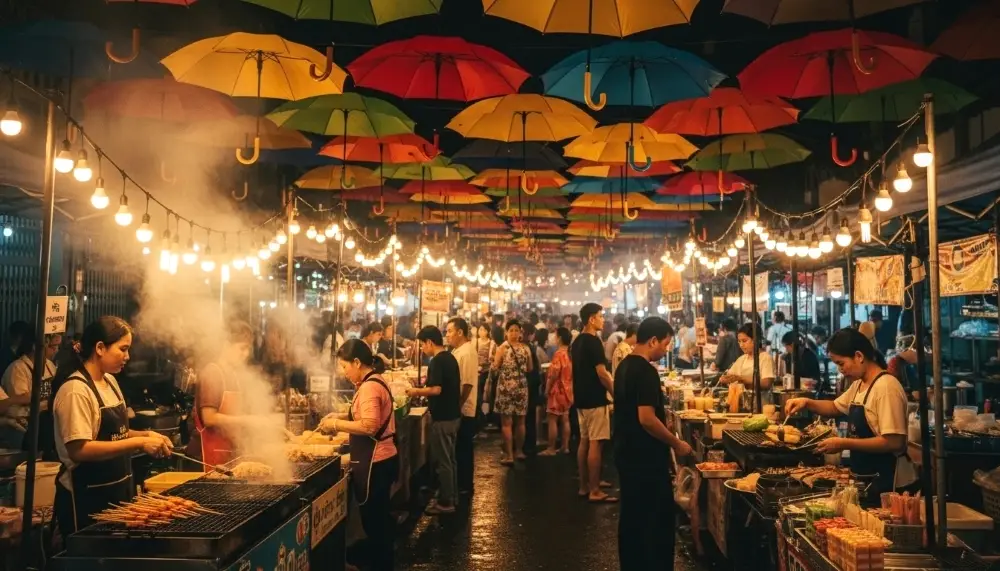
Night markets are not just tourist attractions. They are part of everyday Thai life. In Thailand’s warm climate, evening is when people come out to socialise, eat, and relax after the heat of the day. Markets become gathering places where friends meet for dinner, families stroll together, musicians perform, and artists sell their creations.
The night market tradition in Chiang Mai is deeply connected to the city’s Lanna heritage. The Sunday and Saturday walking markets were deliberately designed to promote local craft traditions and keep skills like silversmithing, weaving, and lacquerwork commercially viable. When you buy a handmade piece at Wua Lai or the Sunday market, you are directly supporting a craft that has been practiced in this city for several centuries. This relaxed evening lifestyle is one of the things visitors quickly fall in love with.
Helpful Tips for Visiting Night Markets:
At 18:00, the Thai National Anthem plays over public loudspeakers. The entire market will come to a complete standstill. Stop walking, remain silent, and wait until the music concludes before resuming your activity. Avoid pointing with your feet or touching the heads of any statues or locals, as these are significant cultural taboos.
Bring small cash. Most vendors prefer Thai Baht rather than cards. Withdraw before arriving as ATM queues near the markets can be long on busy evenings.
Go hungry. You will want to try multiple dishes. Budget 200 to 300 THB (~$5.70 to $8.55) for a full street food dinner.
Wear comfortable shoes. You will likely be walking for two to three hours on uneven pavement and stone temple grounds.
Arrive early for the walking markets. The Sunday and Saturday markets get very crowded after 19:30. Arriving at 17:00 gives you the best vendor selection and cooler temperatures.
Markets in Thailand are meant to be explored slowly, so take your time and enjoy the experience.
Frequently Asked Questions:
What time does the Sunday Walking Street start?
The market officially begins at 17:00, though some vendors are still setting up until 17:30. It reaches full capacity by 19:00 and concludes around 22:00. Arrive between 17:00 and 18:00 for the best experience before the main crowds arrive.
Is the market open if it rains?
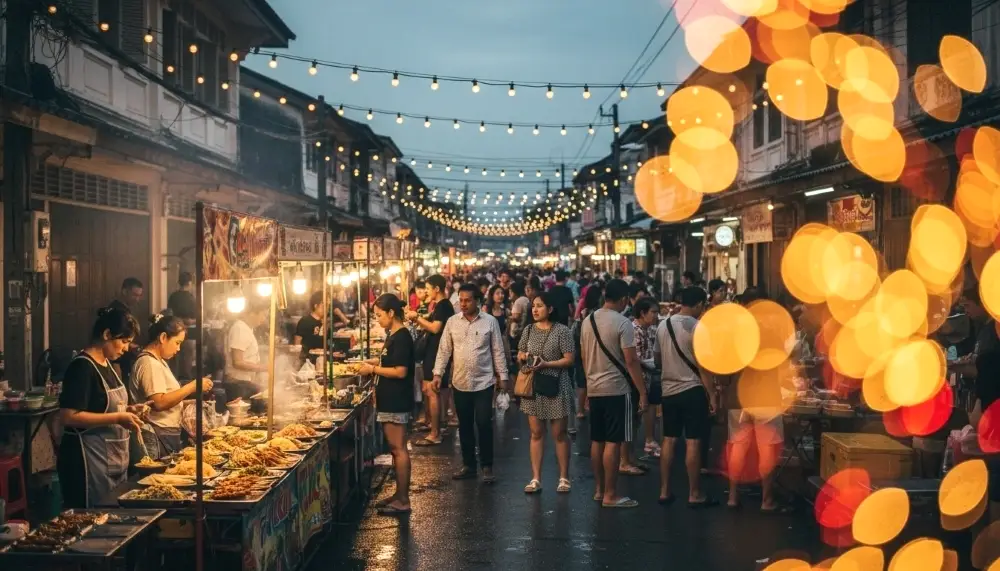
The market operates during light rain, though many vendors will cover their stalls with plastic sheets. In the event of a heavy tropical downpour, the market may close early or experience a significant reduction in vendors. The rainy season runs from June to October. Always carry a small umbrella.
Can I use credit cards at the Sunday market?
Most vendors are cash-only. Some larger stalls or permanent boutiques along the road may accept Thai QR payments (PromptPay), but international credit cards are rarely accepted for small street transactions. Thai ATMs charge a flat 220 THB (~$6.30) per foreign card withdrawal, so withdraw before you arrive.
Are there toilets available at the market?
Public toilets are located within the temple complexes (Wat Phan Tao and Wat Chedi Luang) along the Sunday market route for a small fee of 5 to 10 THB (~$0.14 to $0.29). These are generally well-maintained. Some restaurants and cafes near the market allow toilet use for customers.
Where is the best place to stay near the market?
Staying near Ratchadamnoen Road in the Old City allows you to walk directly into the Sunday market without dealing with Sunday evening traffic congestion. Old City guesthouses start from 600 to 800 THB (~$17 to $22.85) per night. Search current availability on Agoda for the best mobile-only rates on Old City boutique properties.
What is the difference between the Sunday and Saturday markets?
The Sunday Walking Street on Ratchadamnoen Road is the larger of the two, with more vendors, more street food, and a stronger international tourist presence. The Saturday Night Market on Wua Lai Road is smaller, more local, and specialises in genuine Chiang Mai silverwork and lacquerware. Both run from 17:00 to 22:00. If you are in Chiang Mai for a full week, both are worth visiting.
How much money should I bring to a Chiang Mai night market?
For a food-only evening, 200 to 300 THB (~$5.70 to $8.55) covers a full dinner of two to three dishes and a drink. For a mid-range evening with a few small souvenirs, budget 600 to 1,000 THB (~$17.15 to $28.55). For a serious shopping evening focused on silverwork or textiles at the Saturday market, budget 2,000 to 5,000 THB (~$57.15 to $142.85). All markets are cash-only for most vendors.
Is bargaining expected at Chiang Mai night markets?
It depends on the market. Prices at the Sunday and Saturday walking markets are generally fixed, as most vendors are the artisans themselves. At the Night Bazaar and commercial stalls, bargaining of 10 to 20% below the first asking price is normal and expected. Never bargain aggressively or make an offer you are not prepared to accept, as this is considered impolite.
What is the Kalare Night Market?
The Kalare Night Market is located off Chang Klan Road, adjacent to the main Night Bazaar area, and runs daily from around 18:00 to 23:00. It is most famous for its nightly cultural shows including Thai traditional dance and Muay Thai demonstrations (free to watch with food and drink purchase). It is more entertainment-focused than the walking markets and a good option on a Sunday or Saturday when the walking markets are not running.
Is the Chiang Mai Night Bazaar the same as the Sunday Walking Street?
No. These are two completely different markets in different locations. The Night Bazaar runs every night on Chang Klan Road and caters primarily to commercial goods and tourists. The Sunday Walking Street runs once a week on Ratchadamnoen Road inside the Old City and focuses on local Lanna artisans and authentic northern Thai crafts. Most visitors prefer the Sunday Walking Street for quality and atmosphere.