Thai Culture & Etiquette
This site contains affiliate links. We may earn a commission at no extra cost to you.
Thailand is one of the most welcoming countries in the world, and for many travelers it becomes a place they return to again and again. The food, landscapes, temples, and beaches are unforgettable, but what truly makes Thailand special is the warmth of its people.
Understanding a few simple aspects of Thai culture and etiquette will make your trip smoother, more respectful, and far more rewarding. The good news is that Thailand is incredibly forgiving to visitors. Even small efforts to respect local customs are appreciated and often met with a smile.
The Quick Summary:
In simple terms, Thai culture is built around respect, politeness, and social harmony. Visitors don’t need to memorize complicated rules just keep a few key principles in mind.
The most important ideas are:
- Respect for people, especially elders
- Respect for religion and the monarchy
- Maintaining calm and politeness in public
- Being mindful of body language
Follow these basic guidelines and you’ll find that Thailand is one of the easiest and most pleasant countries in the world to travel through. Thai society is structured around the concept of kreng jai, a deep-rooted instinct to avoid causing discomfort to others. It shapes everything from how disagreements are handled to how servers interact with guests in restaurants. Once you understand this, a great deal of Thai behaviour that might initially seem puzzling starts to make complete sense.
Before your flight even lands, it’s worth sorting out mobile data. Airport queues at SIM counters can be lengthy, and apps like Grab require immediate SMS verification. Activating an Airalo, Yesim, or Saily eSIM plan before departure means you’ll have connectivity the moment you step off the plane, without fumbling at a kiosk. This small step saves real frustration, especially on late-night arrivals.

From boutique guesthouses to five-star
resorts, Agoda has Thailand covered.
Strong Asia inventory means deeper
discounts than you’d find elsewhere.
Kindness Is Part of the Culture:
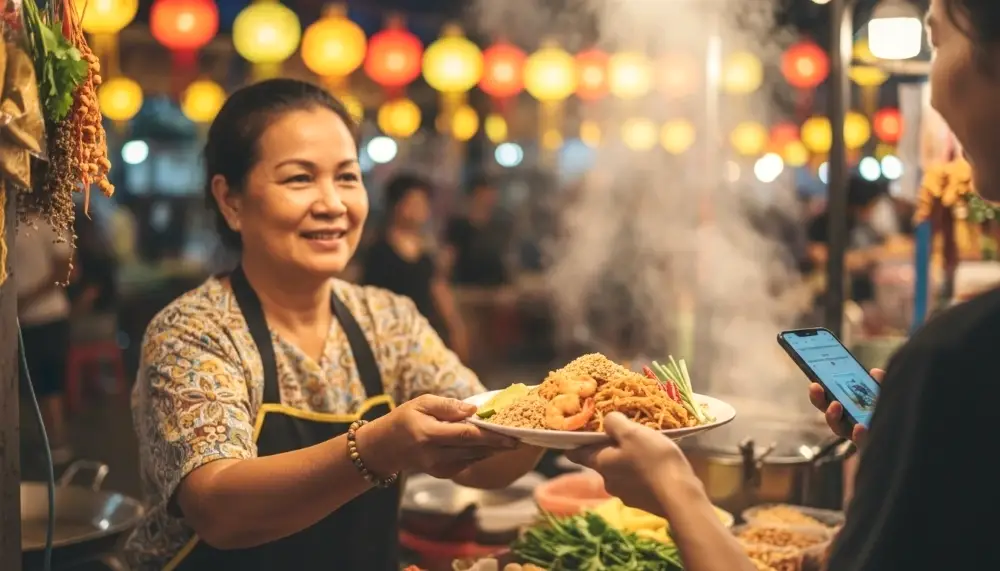
Thailand is often called “The Land of Smiles,” and it’s not just a tourism slogan. Smiling is a natural part of Thai communication and is often used to show politeness, friendliness, or even to smooth over awkward situations.
For visitors, the best approach is simple: remain calm, friendly, and patient.
Raising your voice or showing frustration rarely helps in Thailand. Instead, a relaxed attitude and a smile will usually solve problems faster than confrontation.
This easygoing approach is one of the reasons travelers quickly fall in love with the country. But it’s worth understanding that the Thai smile carries many layers. There is the smile of genuine warmth when you attempt a few words in Thai. There is the polite smile that masks discomfort. There is the amused smile when a foreigner does something culturally clumsy but well-intentioned. Learning to read context matters as much as recognising the expression itself.
Thais place enormous value on sanuk, the concept that life should contain an element of fun and lightness. Even work should have some enjoyment woven through it. This doesn’t mean Thai people are frivolous. It means they have a cultural immune system against unnecessary stress. Travelers who embrace this spirit rather than fighting it tend to have dramatically better experiences. Missed a bus? Sit down, order a cold drink, and enjoy the unexpected hour. That’s the Thai way, and it’s contagious in the best possible sense.

GetYourGuide has Thailand’s best
tours and experiences covered with
verified operators and instant
mobile vouchers on arrival.
The Wai: Thailand’s Traditional Greeting
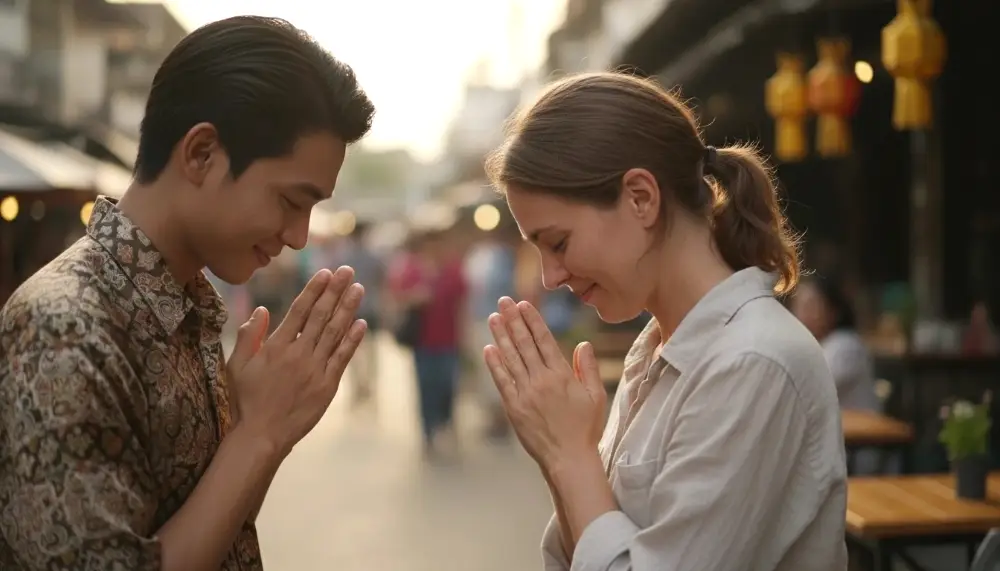
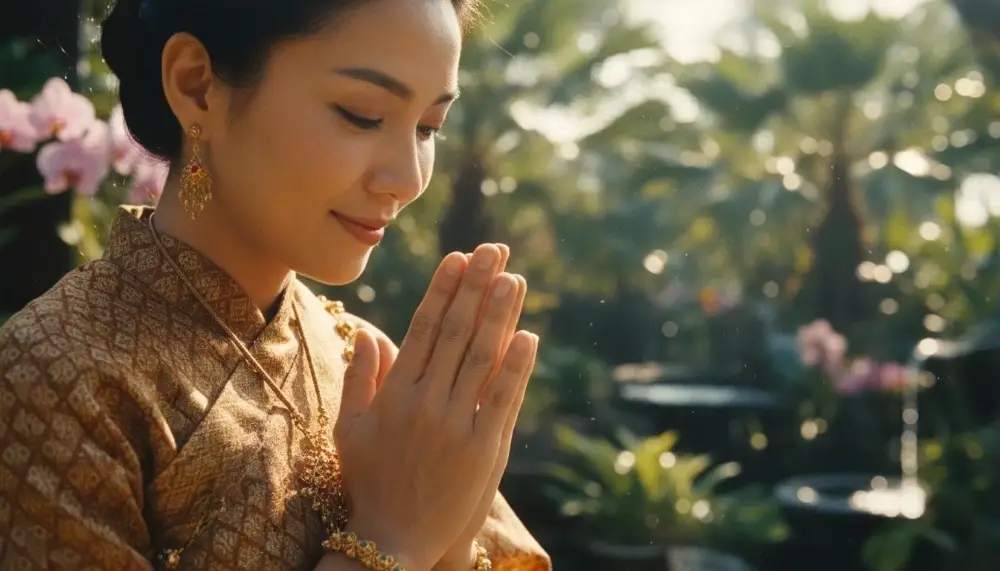
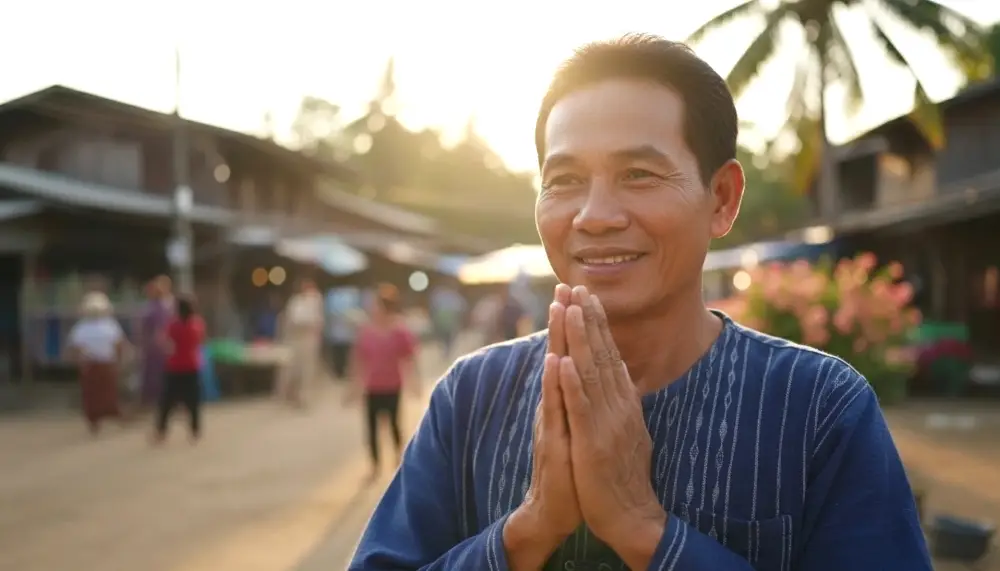
The Wai is the traditional Thai greeting performed by pressing palms together at chest or face height with a slight bow. It signals status, gratitude, and apology. Generally, a younger or lower-status person initiates the Wai, while the elder or higher-status person acknowledges it with a smile or a reciprocal gesture.
The Wai is more than a hello. It is a measurement of respect. In high-traffic hubs like Siam Square or during a business meeting in Sathorn, the height of the hands dictates the level of reverence. For peers, thumbs touch the chin. For elders, thumbs touch the nose. For monks or royalty, thumbs reach the forehead. Never Wai to service staff or children; a polite nod and a smile suffice. This maintains the social equilibrium that Thais value above all else.
Some simple guidelines:
- Return a wai when someone greets you with one
- A small nod or smile is also acceptable
- Do not wai children or service staff who greet you first
- The higher the hands are placed, the more respectful the greeting
The Wai also functions as a thank you and an apology. If a vendor goes out of their way to help you, a small Wai as you leave acknowledges the exchange with genuine grace. If you accidentally bump into someone in a crowded night market, a quick Wai communicates regret without a word of the language needing to pass between you. It is one of the most efficient and beautiful pieces of social technology in Southeast Asia, and visitors who use it even imperfectly are almost always received with delight.
Temple Etiquette:
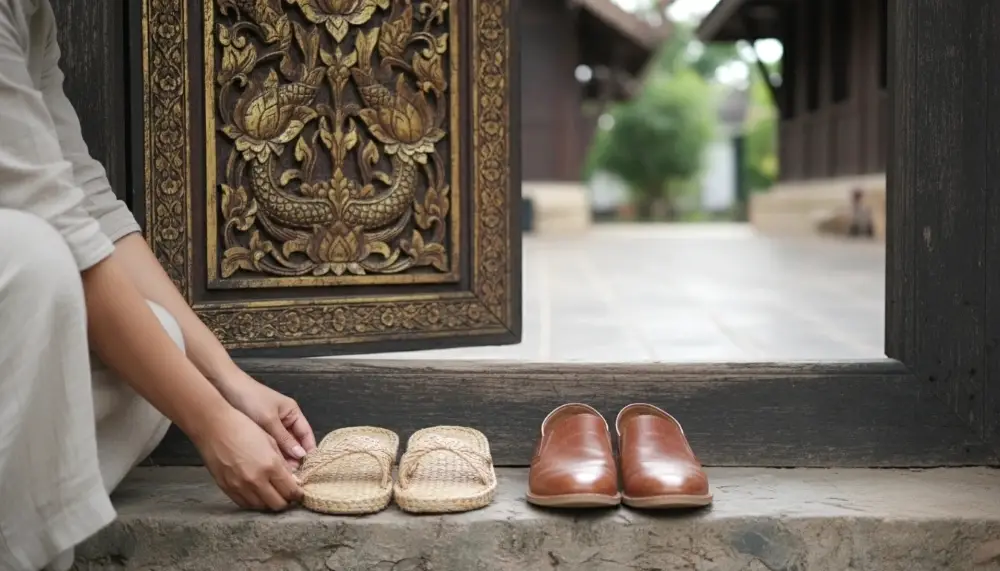
Appropriate temple attire requires covering the shoulders, chest, and knees. Sheer fabrics, ripped jeans, and sleeveless tops are prohibited in religious spaces. Carrying a lightweight sarong or linen shirt provides a quick solution for spontaneous visits to historical sites like Ayutthaya or Wat Arun.
Temples are active places of worship, so visitors should dress and behave respectfully.
Basic temple etiquette includes:
- Cover shoulders and knees
- Remove shoes before entering temple buildings
- Speak quietly and move calmly
- Never climb on Buddha statues or sacred structures
- Avoid pointing your feet toward Buddha images
Thailand has over 40,000 temples, ranging from grand royal complexes visited by thousands of tourists daily to remote forest monasteries where a handful of monks meditate in near-total silence. Each environment carries its own unspoken code of conduct. The busier tourist temples like Wat Phra Kaew in Bangkok operate with clear signage, dress rental stations at the entrance, and well-worn visitor paths. Smaller provincial wats require more independent judgment. As a general principle, if you wouldn’t do it in a church or mosque, don’t do it in a temple.
Photography is usually permitted in temple grounds but not always inside the main prayer hall (ubosot). Look for posted signs, and when in doubt, watch what local worshippers are doing. Using flash photography toward sacred images is considered disrespectful even where it’s technically permitted. Pre-booking temple passes for premium sites through Get Your Guide or Klook often includes skip-the-queue access during peak season, saving hours during the busy November to February period.
| Location Type | Footwear Policy | Clothing Requirement | Expected Volume |
|---|---|---|---|
| Royal Palaces | Strictly Removed | Full length trousers/skirts | Silent/Whispered |
| Rural Forest Wats | Removed at Threshold | White or neutral modesty | Silence Mandatory |
| Urban Shrines | Usually Retained | Neat casual | Normal Ambient |

Skip the airport kiosk queue in Thailand.
Airalo eSIMs are pre-loaded before
you fly and ready the instant you
connect to the local network.
Respecting The Monarchy:
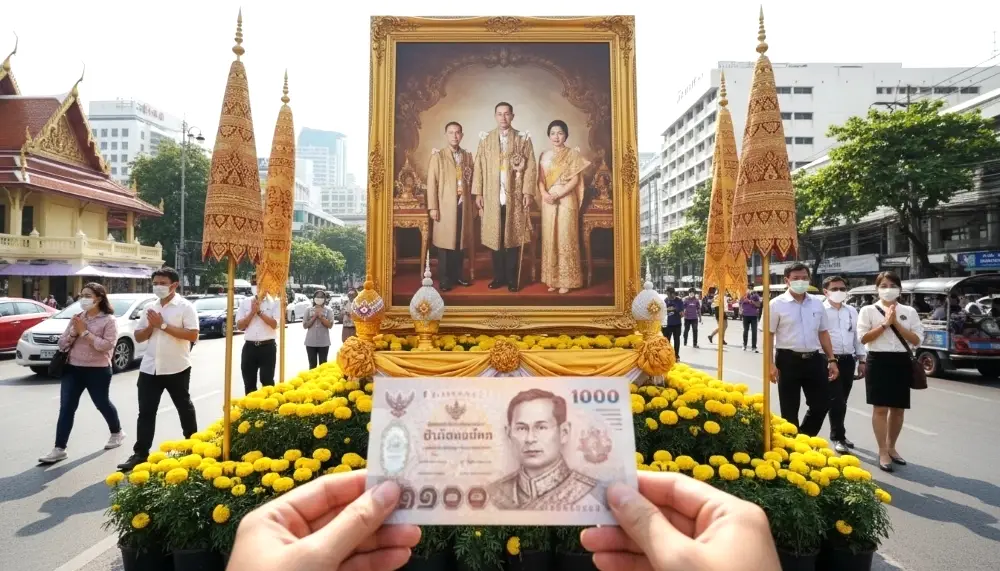
The Thai Royal Family is revered with deep sincerity. Lèse-majesté laws are strictly enforced, making any derogatory comment or act toward the King or Royal Family a serious criminal offense. This extends to physical currency, as the King’s image appears on all Thai Baht notes and coins.
At 08:00 and 18:00, the National Anthem plays in public spaces like railway stations and parks. Movement stops. Pedestrians stand still until the music concludes. If a coin or note drops, never use a foot to stop it from rolling. This act is considered a profound insult. In cinemas, expect to stand for the Royal Anthem before the film begins. Silence and stillness during these moments demonstrate a high level of cultural respect.
Visitors should always treat these images with respect.
A few important things to remember:
- Never make jokes or negative comments about the monarchy
- Stand during the royal anthem played in cinemas
- Avoid stepping on Thai currency, as it features the King
It’s also worth understanding that reverence for the monarchy is not merely legal compliance. For the vast majority of Thai people, the Royal Family represents a genuine source of national identity and pride. Portraits of the King appear in homes, businesses, schools, and public buildings throughout the country. Treating these with the same casual disregard you might extend to a political poster at home would cause genuine offence. The safest and most respectful approach is simple: follow the lead of those around you, keep your opinions to yourself, and engage with genuine curiosity rather than critique.
For most travelers, this simply means being respectful and aware of the importance the monarchy holds in Thai society.
Body Language Matters:
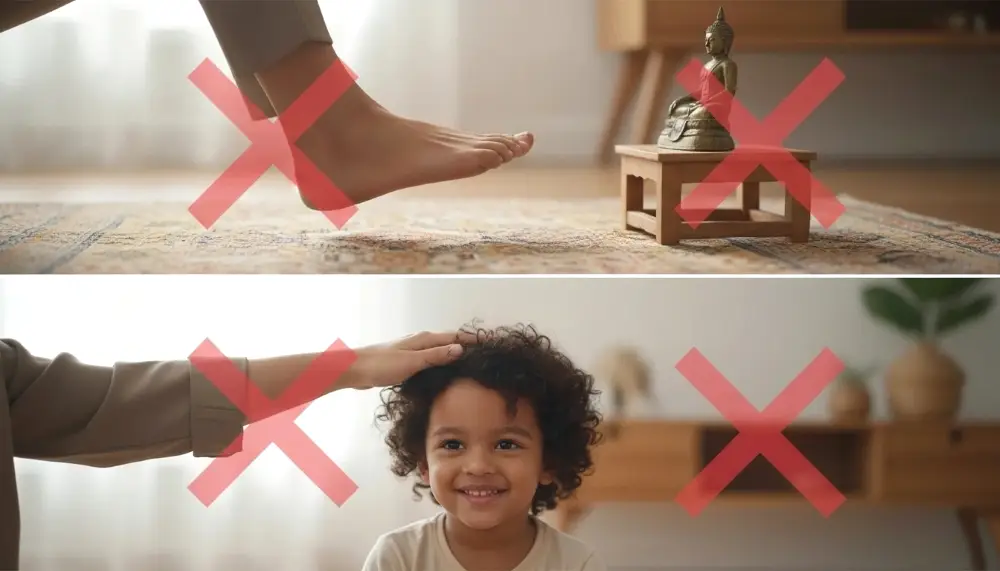
Thai culture dictates a vertical hierarchy where the head is the most sacred part of the body and the feet are the lowliest. Never touch a Thai person’s head, even a child’s, and avoid pointing feet at people, religious icons, or the King’s image on Thai Baht notes.
Walking through the narrow soi of Ari or relaxing in a Chiang Mai park requires spatial mindfulness. If accidentally stepping over someone’s legs, a quick apology is necessary. When sitting in a temple, tuck the feet behind the body (the mermaid pose) to ensure the soles never face the Buddha. In residential areas, look for the pile of shoes outside the door; removing footwear is a non-negotiable entry requirement for homes and many independent boutiques.
Public displays of affection between couples are generally frowned upon in more traditional or rural settings. Holding hands is broadly accepted, but kissing and embracing in public, particularly near temples or government buildings, draws disapproval. This is one area where Bangkok’s cosmopolitan tourist zones are noticeably more relaxed than the rest of the country.
Pointing with a single finger is also considered rude in most contexts. When indicating a direction or drawing attention to something, use the whole hand, palm facing upward. Beckoning someone toward you is done with the hand held downward and the fingers waving in a gentle scooping motion, the opposite of the Western upward-facing wave. These small adjustments in physical communication signal genuine cultural awareness, and Thais notice them.

Skip the planning headache in Thailand.
Klook offers day tours, tickets, and
experiences from around $25, with
instant confirmation to your phone.
Dining Etiquette and Manners:
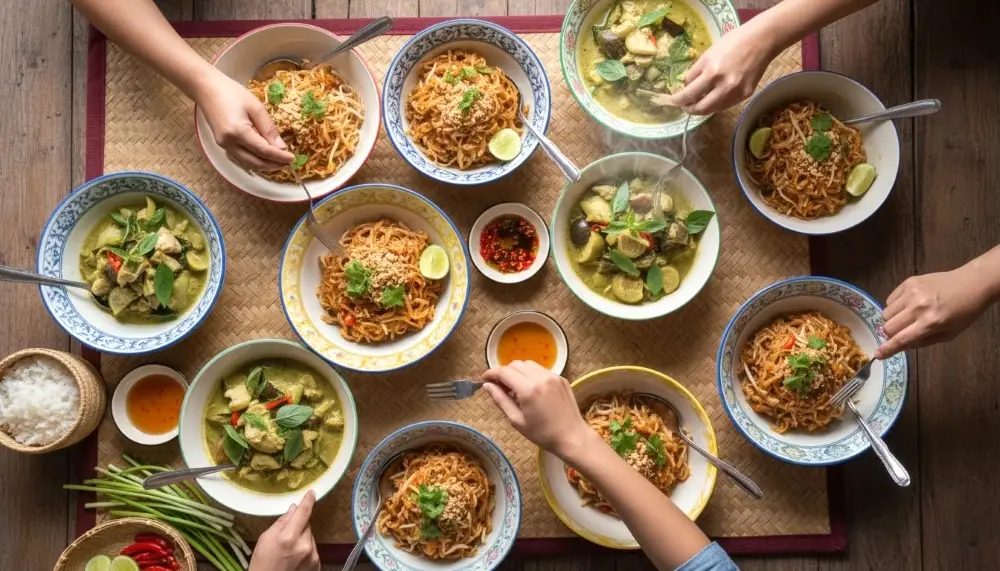
Dining is communal in Thailand. Use the spoon in the right hand to eat and the fork in the left to push food onto the spoon. Tipping is not traditionally required but is increasingly common in tourist areas. A 20 THB to 50 THB tip for porters or drivers is appreciated.
A few helpful dining tips:
- Use a spoon as your main utensil (with a fork to help push food onto it)
- Avoid sticking chopsticks upright in rice
- Wait for others to begin eating before starting
- Share dishes rather than ordering individually
Street food markets in Bangkok, Chiang Mai, and the southern islands are fantastic places to experience this social style of eating.
Trying new foods is part of the adventure. Thai meals are designed around balance: sour, sweet, salty, bitter, and spicy elements arrive together and complement one another. Ordering a single dish and eating alone is perfectly possible but misses the full picture. When dining with a group, the table fills with shared plates, rice arrives for everyone, and dishes are rotated throughout the meal. This approach creates conversation, generosity, and a sense of shared experience that a solo plate simply cannot replicate.
In rural areas and family-run restaurants, the eldest person at the table often takes the first bite as a silent gesture of respect. Watching and following your host’s lead is always the safest approach. In upscale Bangkok restaurants or resort dining on Koh Samui, international norms blend more comfortably with Thai ones, but the underlying values of sharing and unhurried enjoyment remain. Agoda and Booking.com are both useful for finding hotels where breakfast is included, which simplifies the morning routine considerably for families managing young children.

Need budget data in Thailand? Saily’s
eSIM plans start cheap and install
in a couple of minutes. Built by
the NordVPN team, security is solid.
Showing Respect to Monks:
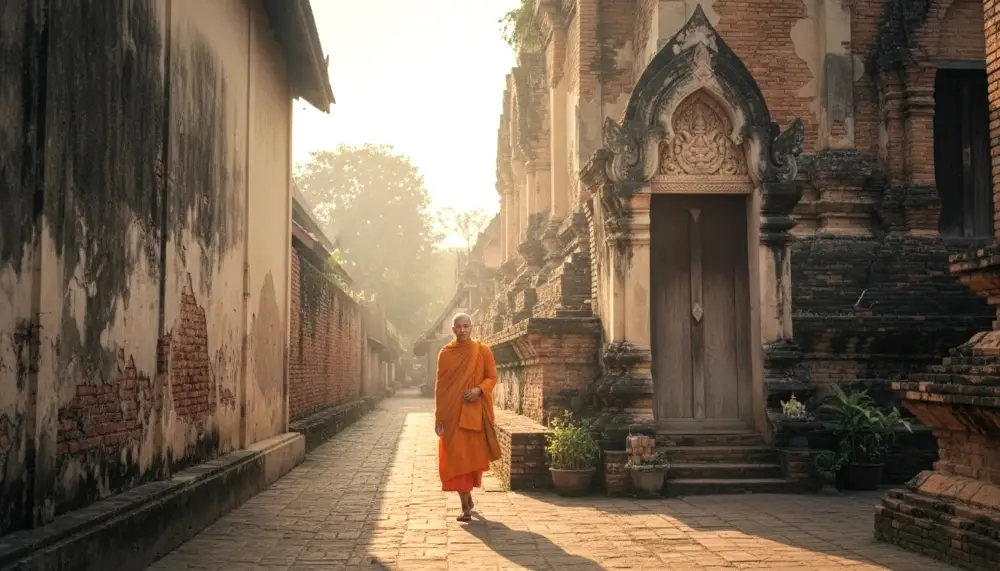
Buddhist monks are highly respected in Thai society, and you’ll see them frequently in temples, markets, and even on public transport.
Visitors don’t need to follow complex rules, but a few simple guidelines are helpful:
- Women should not touch monks or hand items directly to them
- Avoid sitting higher than a monk when possible
- Give monks space when they are walking or standing
- Dress respectfully when visiting temples
Watching monks collect morning alms (tak bat) is a beautiful and meaningful part of Thai daily life. This ceremony takes place at dawn in towns and villages across the country, with monks walking barefoot in single file while local people kneel and offer food. It is not a tourist performance. In Luang Prabang-style packaged experiences, lines of camera-wielding visitors have turned this ritual into something of a spectacle, and Thailand’s monastic communities are increasingly sensitive about the same thing happening here. If you wish to observe, keep a respectful distance, remain silent, and do not use flash photography.
Women who wish to offer food during alms-giving should place it in a bowl on the ground or hand it to a male companion to pass forward. If sitting on public transport and a monk boards, it is respectful to offer your seat. Monks follow strict precepts and their daily routines deserve the same consideration you would extend to any religious figure in their place of worship.
Cultural Awareness:
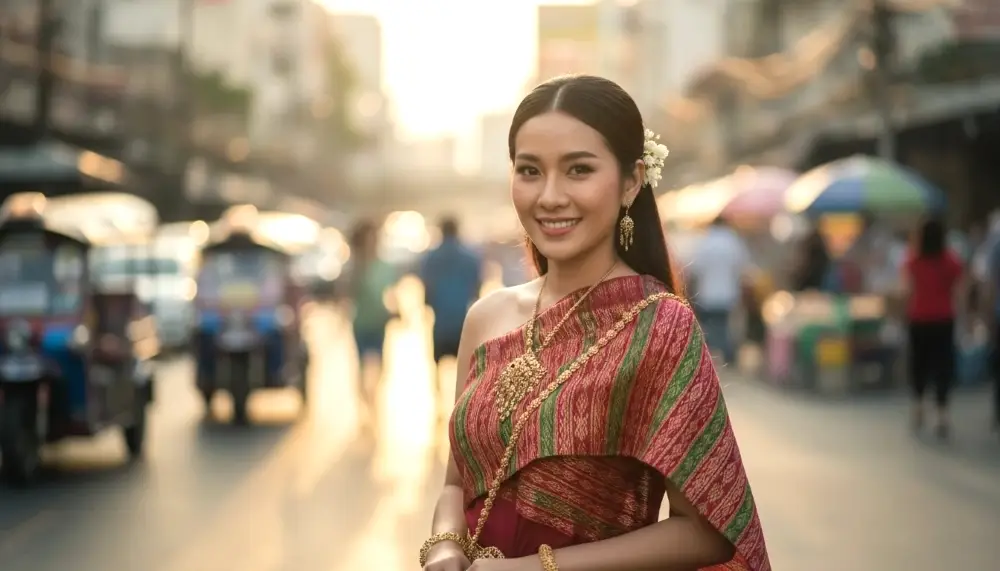
Ruk Sa Na is the practice of avoiding public confrontation, criticism, or embarrassment. Raising one’s voice or displaying anger is viewed as a loss of self-control and results in an immediate breakdown of communication. Calm, soft-spoken negotiation always yields better results.
Simple gestures like returning a wai, dressing respectfully at temples, or sharing food the local way help create genuine connections.
Whether you’re exploring the temples of Bangkok, wandering through night markets in Chiang Mai, or relaxing on the beaches of the southern islands, cultural awareness helps you experience Thailand more deeply. The concept of face (saving one’s dignity and that of others) underpins much of daily interaction. A direct refusal, a blunt correction, or a public disagreement strips face from the person on the receiving end and causes lasting discomfort in the relationship. Thai communication tends to work in gentle circles rather than straight lines, and patience with this style pays dividends.
Learning even a handful of Thai words demonstrates respect and opens doors that remain firmly closed to those who make no effort. Sawasdee krap (hello, for men) and sawasdee ka (hello, for women), khob khun (thank you), and mai pen rai (no problem/never mind) will carry you further than you’d expect. Thai people genuinely appreciate the attempt, and the laughter that often follows a mangled pronunciation is warm rather than unkind.
Thailand Is Very Forgiving:
One of the best things about traveling in Thailand is that locals are incredibly understanding toward visitors.
No one expects tourists to know every cultural rule. If you accidentally make a mistake, it’s rarely a big deal.
What matters most is attitude. If you’re friendly, respectful, and open to learning, Thai people are usually delighted that you are interested in their culture.
Many travelers arrive feeling nervous about doing something wrong, but quickly realize how welcoming and relaxed the country truly is. The key distinction is between careless disrespect and genuine ignorance. Thai people are extraordinarily good at reading intent. A tourist who wanders into a temple in shorts because they didn’t know better will be gently redirected by a guard or a smiling local. A tourist who has been told the rules and ignores them communicates something else entirely, and the response will be cooler.
The greatest gift you can give yourself before arriving in Thailand is to approach the country with genuine curiosity rather than a checklist of things to see. The cultural layer, once you begin to notice it, enriches every single experience. A meal becomes a lesson in hospitality. A conversation with a tuk-tuk driver becomes a window into family life and aspiration. A moment of stillness at a riverside temple at dawn becomes something that stays with you for years. Thailand rewards the attentive traveler more generously than almost anywhere else on earth.
Pro Tips For Stress-Free Travel:

Apps: Download Grab or Bolt for transparent ride-hailing prices. Use Get Your Guide for pre-booked tours to avoid tourist pricing. Yesim or NordVPN ensures secure connectivity for digital nomads.
Currency: Always carry small denominations of THB. Many local vendors cannot break a 1,000 THB note.
Navigation: Use Google Maps but verify with Apple Maps in rural areas like Mae Hong Son for better terrain accuracy.
Airport Transfers: Families and larger groups arriving at Suvarnabhumi or Don Mueang will find Welcome Pickups a reliable option for pre-booked, fixed-price transport directly to their hotel. No meter negotiations, no language barriers at midnight.
Intercity Travel: For overnight trains from Bangkok to Chiang Mai, or bus routes to the border during Songkran or other public holidays, book ahead through 12GO to secure your preferred class before seats disappear. Last-minute tickets during national holiday surges are genuinely difficult to find.
Digital Security: If you work remotely from cafes in Nimman Road or Silom, NordVPN provides an encrypted connection on public Wi-Fi networks. It takes two minutes to set up and removes a significant layer of vulnerability from your daily workflow.
Long-Stay Health Cover: Remote workers and slow travelers staying three months or longer should look at SafetyWing for flexible, affordable medical cover that doesn’t require committing to an annual policy. It works on a rolling monthly subscription and covers hospital admission, which is the expense that genuinely matters.
Flight Issues: If a connection gets disrupted on the way to or from Thailand, AirHelp specialises in processing compensation claims against airlines for delays and cancellations, including routes through major European and Asian hubs. Worth knowing before you need it.

Forget swapping physical SIMs in Thailand.
Yesim works on most modern phones,
activates remotely, and keeps your
home number live on WhatsApp too.
Social Hierarchies and the Concept of Face:
Thai society operates along clear hierarchical lines that influence almost every interaction. Age, profession, wealth, and religious status all factor into how people position themselves relative to one another. The language itself reflects this: Thai has multiple registers, with distinct vocabulary used when speaking to monks, royalty, elders, and peers. For foreign visitors, navigating all of this with fluency is impossible and unnecessary. But understanding that the hierarchy exists helps make sense of moments that might otherwise feel confusing.
One practical consequence is that juniors rarely contradict their seniors openly, even when they disagree. In a business context, this can lead to situations where a Thai colleague says yes when they mean maybe, or agrees to a deadline they know cannot be met, simply to avoid causing discomfort. Understanding this as a cultural feature rather than dishonesty changes how you interpret and respond to it.
For travelers, the hierarchy most commonly manifests in interactions at temples, with older shopkeepers, and during formal occasions. Greeting the most senior person in a room first, allowing elders to be seated before you sit, and avoiding correcting Thai people in front of others are all small gestures that communicate genuine respect. They cost nothing and generate an enormous amount of goodwill.
Festivals, Traditions and the Calendar:
Thailand’s cultural calendar is rich with celebrations that offer some of the most memorable experiences available to any traveler. Understanding what these events mean, rather than simply attending them as spectacles, deepens the experience considerably.
Songkran (Thai New Year, mid-April) is the most famous, a three-day water festival that began as a gentle ritual of pouring water over elders’ hands as a blessing and has evolved into the world’s largest water fight. In Bangkok’s Silom Road and Chiang Mai’s moat area, it becomes an exuberant, soaking free-for-all. But in smaller towns and villages, the traditional elements remain: temple visits, merit-making, and the respectful bathing of Buddha images. Both versions are worth experiencing.
Loy Krathong (November full moon) sees rivers and canals across Thailand filled with small lotus-shaped floats carrying candles, incense, and flowers. It is among the most visually extraordinary things you will ever witness. Chiang Mai’s version, which includes the release of thousands of sky lanterns simultaneously, has become internationally famous. Book accommodation well in advance through Agoda or Booking.com for these periods as rooms fill months ahead.
Visakha Bucha (May full moon) marks the birth, enlightenment, and passing of the Buddha. Alcohol sales are restricted across the country on this day. Temples hold candlelit processions after dark, and the atmosphere is one of quiet, genuine reverence. It is one of the best opportunities to observe Thai Buddhist practice at its most sincere.
Intercity travel during all major Thai holidays demands forward planning. Buses, trains, and ferries fill rapidly in the days surrounding Songkran and the December-January holiday window. Locking in tickets through 12GO several weeks ahead is strongly recommended, particularly for overnight sleeper trains on the Bangkok to Chiang Mai route.
Dress Codes Beyond the Temple:
Most visitors quickly grasp the temple dress code, but clothing expectations extend well beyond religious sites. Government offices, immigration departments, hospitals, and schools all carry informal expectations of modest presentation. Arriving at a visa extension appointment at an immigration office in beachwear is technically permitted and practically unwise. Staff have considerable discretion, and a well-dressed applicant tends to receive more patient service.
In beach destinations like Koh Samui, Phuket, and Krabi, norms are considerably more relaxed and swimwear is ubiquitous on the seafront. The moment you step off the sand and into a town, market, or restaurant, a cover-up is both courteous and culturally appropriate. This transition is genuinely easy to make and signals awareness without requiring any sacrifice of comfort.
For business travelers and digital nomads working from co-working spaces in Bangkok’s Ekkamai district or Chiang Mai’s Nimman area, smart casual is the effective standard. Thai professionals dress well, and appearing polished communicates seriousness. NordVPN is worth installing before you travel if you rely on secure remote access to company servers or client systems, as public co-working and cafe Wi-Fi networks carry real risks across the region.
Tattoos are increasingly common in Thailand’s urban areas and tourist zones. However, sacred Buddhist imagery rendered as tattoo art occupies a particularly sensitive category. Visible tattoos depicting the Buddha, temple architecture used decoratively, or monk silhouettes are considered deeply disrespectful in formal and religious contexts. Cover them with clothing or bandages when entering government buildings, temples, or attending formal occasions.
Bargaining, Commerce and Fair Dealing:
Bargaining is an accepted and expected part of commerce in markets, independent shops, and when negotiating tuk-tuk fares. It is not expected in supermarkets, department stores, petrol stations, or restaurants with printed menus. Understanding where negotiation is appropriate saves awkwardness on both sides.
Effective bargaining in Thailand works through a spirit of good-natured exchange rather than aggressive confrontation. Start at roughly 50 to 60 percent of the initial asking price, express genuine interest in the item, and let the negotiation move in comfortable increments. Accepting a counter-offer with a smile and a thank you closes the transaction in a way that feels good for everyone. Walking away abruptly after a vendor has met your stated price is considered rude.
The concept of tourist pricing is real throughout Thailand. It reflects a commercial reality rather than an attempt at deception: local purchasing power and visitor purchasing power are genuinely different. The premium is rarely egregious in absolute terms. Arguing passionately to save 20 THB (roughly 55 pence) on a mango sticky rice while someone is working a market stall from 6am to midnight is a cultural misstep that experienced travelers learn to avoid. Pay a fair price, express appreciation, and move on with the transaction carrying genuine warmth on both sides.
Using ride-hailing apps like Grab or Bolt removes the negotiation from urban transport entirely. Fares are metered, transparent, and display before you confirm the booking. For airport arrivals with heavy luggage, a pre-booked Welcome Pickups transfer handles the journey without any of the price theatre that can accompany informal taxi ranks outside arrivals halls.
Frequently Asked Questions:
Is it okay to wear a Buddha tattoo?
While not illegal, visible Buddha tattoos are considered highly offensive and are regarded as low-culture behaviour by many Thais. Cover them with clothing or bandages when entering temples, government buildings, or any formal setting. This applies equally to other sacred Buddhist imagery including temple motifs and monk silhouettes rendered as decorative art on the body. The sensitivity is genuine rather than performative, and covering up is a simple gesture of respect that costs nothing.
Can I use my left hand to give items to people?
The right hand is the clean hand for giving and receiving in Thai culture. Using both hands simultaneously to pass a gift, a business card, or a credit card is the most respectful approach and is interpreted as a sign of genuine care and high regard for the recipient. When handing money to a vendor in a market, using both hands or the right hand alone is the culturally appropriate choice.
What should I do if I hear the National Anthem in public?
Stop walking immediately and stand at attention until the music finishes. If you are seated in a park or public space, stand up. The anthem plays at 08:00 and 18:00 daily in public areas including parks, railway stations, and some markets. Simply follow the lead of the Thai people around you, who will stop and stand without any fuss. The whole thing lasts around one minute and the expectation is universal, not reserved for formal occasions.
Do I need to tip my Grab or Bolt driver?
Tipping ride-hailing drivers is not mandatory, but rounding up the fare to the nearest 20 or 50 THB is a kind gesture that is genuinely appreciated. For longer journeys or drivers who help with heavy luggage, a small cash tip handed directly is perfectly acceptable. Restaurant tipping is increasingly common in tourist areas: leaving 20 to 50 THB on the table at a local restaurant or 10 percent at a mid-range venue is the current norm in Bangkok and the major resort towns.
Is it safe for women to travel solo in Thailand?
Thailand is widely considered one of the more accessible and relatively safe destinations in Southeast Asia for solo female travelers. The culture of politeness and non-confrontation works in a visitor’s favour in most situations. Standard precautions apply: avoid poorly lit areas late at night, use metered taxis or Grab rather than unmarked vehicles, and trust your instincts if a situation feels uncomfortable. Connecting with other travelers through hostel common rooms and co-working spaces is easy in Bangkok, Chiang Mai, and the main island hubs.
Can I visit temples during religious holidays?
Most temples remain open to visitors during Buddhist holidays, but the atmosphere shifts considerably. On Visakha Bucha, Makha Bucha, and Asanha Bucha days, temples fill with Thai worshippers making merit, and the candlelit evening processions are genuinely moving to witness. Dress especially conservatively on these occasions, move quietly, and give worshippers priority at shrines and prayer areas. Alcohol sales are restricted or prohibited on major Buddhist holidays, so plan accordingly if this affects your evening arrangements.
How should I behave during Songkran?
Songkran is Thailand’s most exuberant national celebration and participation in the water-throwing is both welcome and expected in the major street areas during the three central days (13 to 15 April). Protect your phone and valuables in a waterproof case or bag. Avoid pointing water guns at monks, the elderly, or people who are clearly not participating. In quieter residential streets and rural areas, the festival retains a gentler character focused on temple visits and family gatherings. Treating it with awareness of both its celebratory and spiritual dimensions makes for a richer experience.
What are the rules around photographing Thai people?
Always ask permission before photographing individuals, particularly in rural villages, markets, or at religious ceremonies. Most Thais in tourist areas are happy to be photographed and many enjoy it. A smile and a gesture toward your camera is usually sufficient to establish consent. Never photograph military installations, government buildings marked with no-photography signs, or royal ceremonies without explicit permission. In temples, avoid pointing a camera directly at monks without first indicating your intention respectfully. Candid street photography in busy markets is generally fine but reading the room matters.
Is there anything I should know about Thai gift-giving customs?
Gifts are appreciated but not obligatory in most visitor contexts. If you are invited to a Thai home, bringing fruit, quality biscuits, or flowers is a thoughtful gesture. Avoid marigolds and white flowers, which are associated with funerals. Gifts are typically not opened immediately in the presence of the giver, as tearing open packaging enthusiastically can appear greedy. Present and receive gifts with both hands or the right hand alone. Wrapping matters: neat, careful presentation reflects well on the giver.
How do I handle being overcharged as a tourist?
A degree of tourist pricing is a normal feature of commerce in Thailand and reflects genuine economic differences rather than malicious intent. For market goods, gentle bargaining is expected and appropriate. For metered taxis, always ensure the meter is running before the journey begins. For tuk-tuks, agree a price before you set off. Using Grab or Bolt removes fare ambiguity entirely. If you feel a restaurant bill is incorrect, check it calmly and politely: errors do happen. Avoid raising your voice or causing a scene regardless of the provocation, as this is the single fastest way to make a bad situation worse in Thai culture.