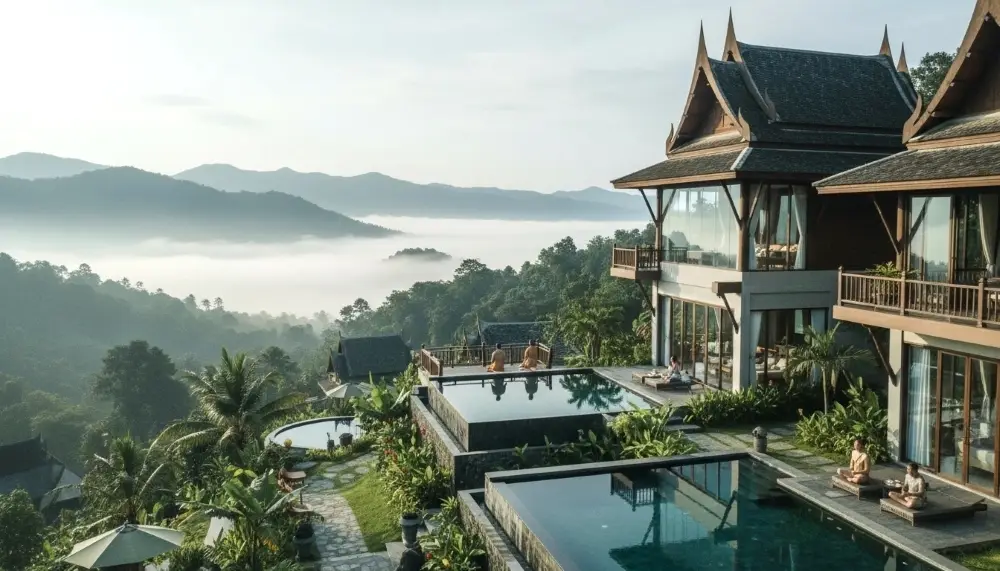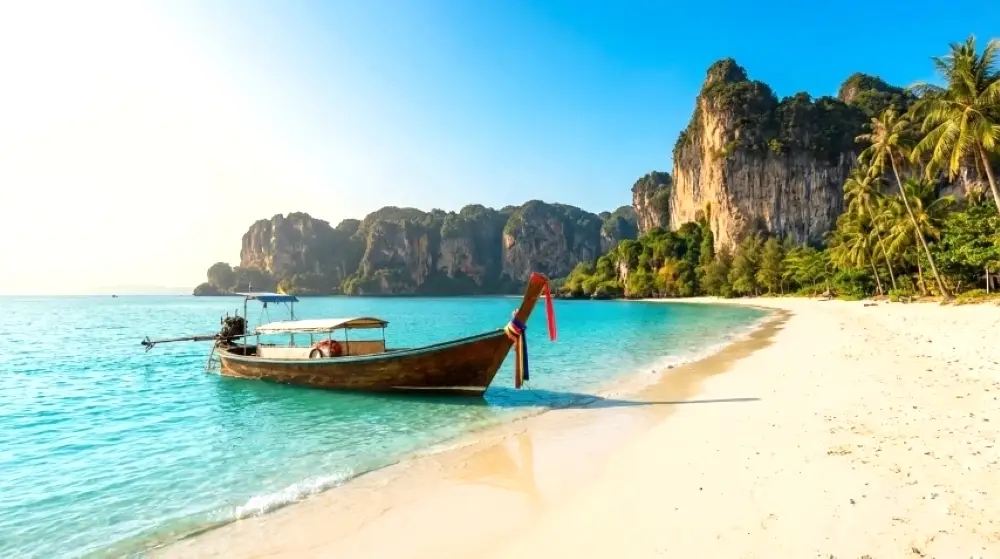
Living In Phuket
There is a moment, somewhere around day three of a Phuket holiday, when the question shifts from “what shall we do tomorrow?” to something quieter and more serious: “what if we just stayed?” It happens to travellers from rainy British cities, burnt-out professionals from Hong Kong, young remote workers drifting south from Chiang Mai, and retirees who arrived on a two-week package and never quite left. Living in Phuket draws people in because the island does not ask very much of you. The weather is warm, the food is extraordinary, the cost of living is manageable, and the sea is always within reach.
The Quick Summary
Monthly Budgets: A comfortable expat lifestyle ranges from 65,000 THB to 150,000 THB depending on location and international school fees. Budget-conscious long-termers in Kathu or Nai Harn can get by comfortably on less.
Entry Requirements: Long-term stays typically utilise the Destination Thailand Visa (DTV), Education (ED) Visa, or Long-Term Resident (LTR) programme. Each has specific income or skills requirements worth researching before arrival.
Regional Variance: The south offers a bohemian surf energy (Rawai and Nai Harn), the northwest coast provides manicured luxury (Bang Tao and Laguna), and the east side centres on maritime life and practical logistics (Chalong).
Connectivity: Phuket International Airport (HKT) is a genuine long-haul hub with direct routes bypassing Bangkok entirely. This matters enormously for anyone flying back to Europe or Australia regularly.

Keep your Phuket plans flexible with
Booking.com’s free-cancellation stays.
Reserve now, decide later, and pay
only when your dates are confirmed.
What Is Living In Phuket Really Like?
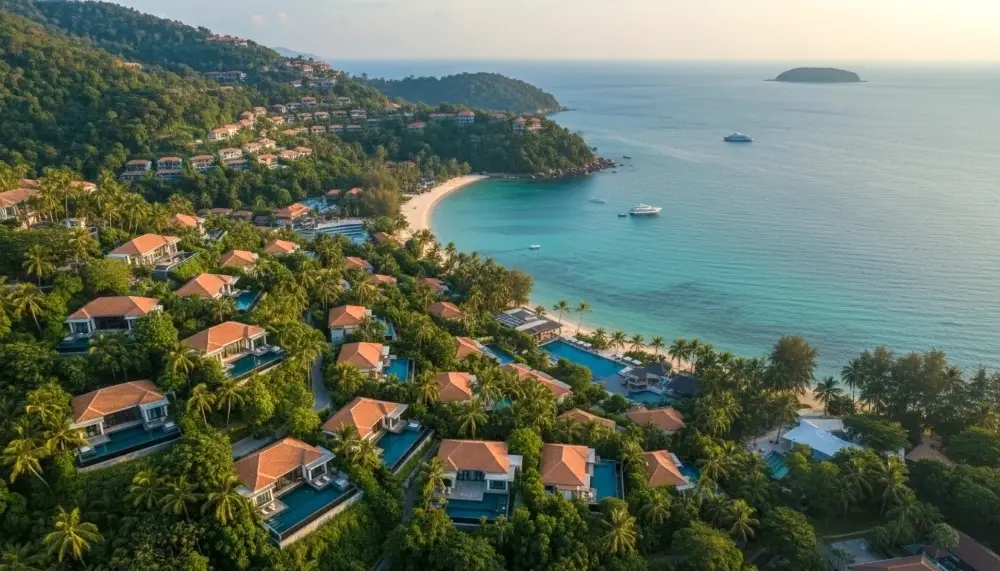
Living in Phuket means enjoying island life with the comforts of modern infrastructure, without the isolation that usually comes with it. This is not some sleepy backwater with unreliable power. The island has grown into a genuinely complete destination for long-term residents.
Unlike many tropical destinations that feel remote after a few weeks, Phuket keeps delivering. Everything you might reasonably need is here:
- International hospitals with English-speaking consultants
- Modern shopping centres and well-stocked supermarkets
- Reliable fibre broadband and a thriving coworking scene
- International schools following British and IB curricula
- A genuinely diverse restaurant landscape covering every cuisine imaginable
- An international airport with direct long-haul flights
At the same time, you are surrounded by palm trees, beaches, temples, and small Thai communities that keep the island feeling authentic rather than manufactured. The key is knowing which part of Phuket to plant yourself in, and that decision shapes everything.
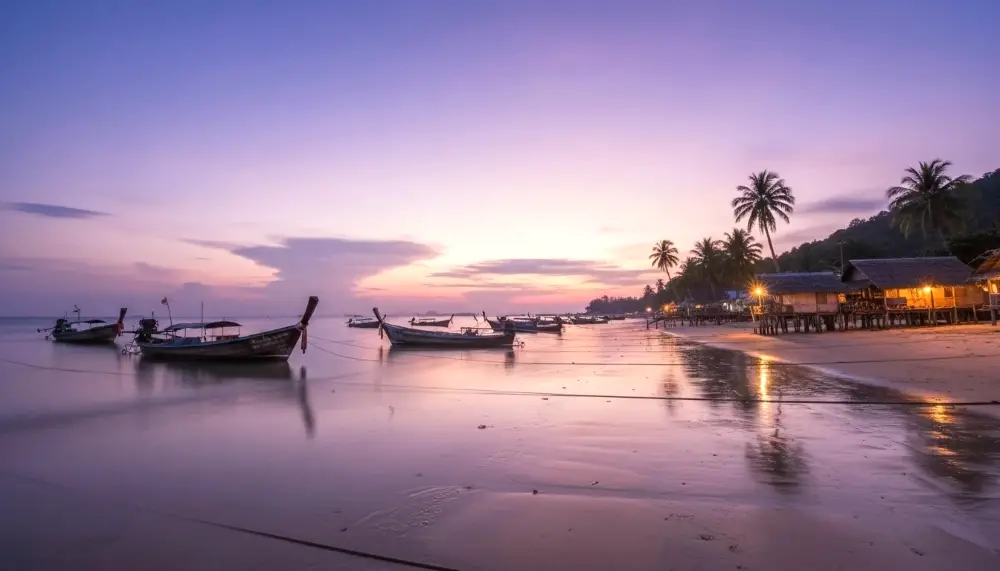
For many people, it strikes the perfect balance between adventure and everyday comfort. Mornings can involve a swim at a near-empty beach before the tour boats arrive. Afternoons can mean a productive few hours at a cafe with genuinely fast Wi-Fi. Evenings bring that golden light over the Andaman and a bowl of something spectacular costing less than a coffee back home.

Lock in top-rated Phuket tours with
GetYourGuide’s free cancellation
up to 24 hours before. Reserve now
and pay later if dates aren’t set.
Living Costs Across Phuket Neighbourhoods
Living costs in Phuket vary significantly by district. Coastal enclaves like Bang Tao and Surin command premium prices for luxury pool villas and proximity to high-end beach clubs, while inland areas like Kathu or the southern stretch around Rawai offer far better value for long-term rentals without sacrificing lifestyle. A realistic monthly budget of around 80,000 THB covers quality housing, a scooter or car, private dining a few nights a week, and the odd weekend trip to a nearby island.
| District | 2-Bedroom Villa Rental (Monthly) | Local Meal Price | Atmosphere |
|---|---|---|---|
| Bang Tao / Laguna | 75,000 – 180,000 THB | 150 – 450 THB | Upscale, manicured, family-centric |
| Rawai / Nai Harn | 45,000 – 95,000 THB | 60 – 250 THB | Bohemian, fitness-focused, expat-heavy |
| Kathu / Central | 25,000 – 55,000 THB | 50 – 150 THB | Local, convenient, budget-friendly |
A practical note on budgeting: the biggest variable for families is always schooling. International school fees in Phuket range from around 300,000 THB to well over 700,000 THB per year, per child. This single line item shifts a comfortable family budget dramatically. Couples or solo residents working remotely will find the island considerably more affordable than those figures suggest at first glance.
For longer stays and apartment hunting, both Agoda and Booking.com carry long-stay listings that are worth comparing before committing to anything on arrival. A week or two in a serviced apartment while you scout neighbourhoods properly is money well spent.
Why So Many People Choose Phuket
Phuket is Thailand’s largest island and, by a considerable margin, its most developed. It draws long-term visitors, digital nomads, retirees, and expat families in roughly equal measure, and unlike some destinations that serve one crowd well and the others poorly, Phuket has evolved to accommodate all of them.
One reason is simple: the lifestyle just works. Life here tends to move at a slower, more considered pace without ever feeling sleepy or stuck. There is always something nearby, but nothing demands your attention if you do not want it to. That rhythm suits people making the shift from high-pressure urban careers particularly well.
Some of the biggest practical lifestyle benefits include:
- Warm tropical weather year-round, with the wetter months between May and October bringing lush greenery rather than anything genuinely disruptive
- Easy access to world-class beaches without fighting tourist crowds in the residential areas
- A welcoming international community that makes building friendships surprisingly straightforward
- Affordable food, services, and transport compared to Western equivalents
- Endless nearby islands to explore on weekends without ever needing a long-haul flight
For many people coming from colder climates or stressful city environments, the shift in everyday texture can feel genuinely transformative. The novelty does not fade the way people sometimes fear it will. After years on the island, long-term residents still talk about the quality of light over the Andaman in the dry season as something they genuinely never take for granted.
The Expat Infrastructure: Visas and Legality
Securing legal residency in Phuket requires navigating specific visa categories, and the landscape in 2026 is both more streamlined and more strictly enforced than it was even three years ago. The good news is that Thailand has done genuine work to create pathways that suit modern working patterns.
The Destination Thailand Visa (DTV) has become the gold standard for digital nomads and remote workers. It offers five years of flexibility with multiple-entry rights, requires proof of remote work or specialised skills, and carries a one-time fee that represents exceptional value when broken down annually. For retirees and high-net-worth individuals, the Long-Term Resident (LTR) visa offers a different package with certain tax and banking benefits that make the formalities of long-term financial life considerably easier.
For families moving with children enrolled in local international schools, the Education (ED) visa remains a viable route. Parents of enrolled children can often obtain accompanying visas that simplify the household’s status considerably.
Practically speaking, all of Phuket’s immigration administration happens at the Immigration Office in Phuket Town or the secondary branch in Patong. If you are new to Thai bureaucracy, the TM30 system deserves specific attention: it is a mandatory notification that your landlord must file whenever a foreign national moves into a property. Failing to ensure this is updated promptly creates complications during visa extensions, and it is your responsibility to confirm it has been done correctly, even if the obligation technically falls on your landlord.
One thing long-term residents consistently recommend: activate your mobile data plan before leaving the airport. App-based services like Grab for taxis and food delivery require SMS verification on Thai networks. Having an Airalo, Yesim, or Saily eSIM pre-loaded and active before you clear baggage reclaim means you are set up before the taxi queue rather than fumbling with a SIM card in the arrivals hall.

Streaming and banking apps sometimes
geo-block from Phuket. NordVPN
gives you a home-country IP so
things work like they do at home.
Getting Here and Getting Around
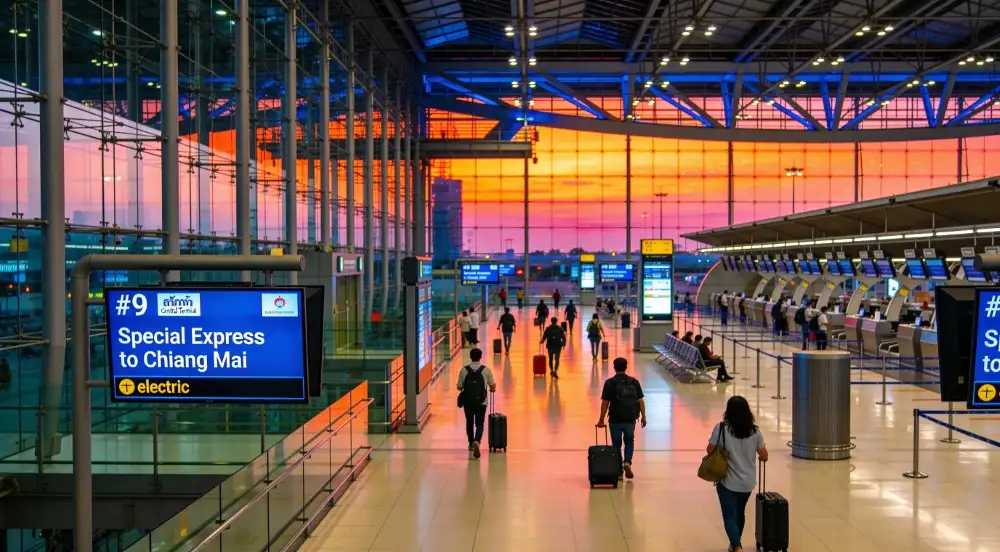
Phuket International Airport (HKT) punches significantly above its weight for a regional island hub. Direct routes connect to London, Frankfurt, Sydney, Dubai, and most of Asia without the Bangkok layover that used to be unavoidable. For expats flying home to visit family, this is genuinely life-changing. A Gatwick to Phuket direct ticket removes four or five hours of total journey time and the associated stress of a connection.
If you do experience delays or cancellations on those long-haul legs, AirHelp is worth having bookmarked. Compensation claims for EU-regulated flights are more accessible than most people realise, and a delayed connection can be worth several hundred pounds in reimbursement with almost no effort on your part.
For arriving families with luggage and small children, Welcome Pickups offers pre-arranged airport transfers with fixed pricing and English-speaking drivers. It removes the taxi negotiation entirely, which matters at midnight after a twelve-hour flight with fractious children.
Within Phuket itself, most long-term residents end up with a scooter or car relatively quickly. The island is not well-served by public transport in the conventional sense, and while songthaews (shared pickup trucks) run fixed routes between major areas, they are slow and infrequent. Grab operates reliably across most of the island for point-to-point trips. For intercity travel to the mainland or up towards Krabi and Surat Thani for ferry connections, 12GO is the platform to use for booking buses and trains ahead of time, particularly around Thai national holidays when seats go quickly.

Education and Family Life in the Tropics
Phuket hosts over a dozen world-class international schools, the majority following British National Curriculum or International Baccalaureate (IB) frameworks. British International School Phuket (BISP) and United World College (UWC) are frequently cited by expat families as providing genuinely elite facilities and pastoral care, making the island a compelling destination for any family prioritising their children’s education alongside lifestyle.
The practical reality of family life here centres heavily on the outdoors. Weekends are spent at the Blue Tree Water Park in Cherngtalay, learning to sail at the Royal Phuket Yacht Club, or taking the ferry across to quieter islands for the afternoon. Children growing up in Phuket tend to develop a comfort with the sea and with cultural diversity that is genuinely difficult to replicate elsewhere.
A note on dining with children: the “Plus Plus” pricing system is standard at higher-end establishments across Thailand. Expect a 10% service charge and 7% VAT added on top of any menu price. Budget accordingly at fancier beach clubs and hotel restaurants. At local family-run spots, which remain the overwhelming majority of where you will actually eat day-to-day, the price on the board is the price you pay.
For activities, both Get Your Guide and Klook are excellent for booking day excursions, cooking classes, temple visits, and island-hopping tours. Pre-booking during peak season (November to March) is worth doing, as quality experiences fill up quickly.

Pick a Phuket eSIM plan that matches
your trip length on Airalo’s global
marketplace. Install before departure
and you’re online the moment you land.
The Different Areas of Phuket
The biggest decision facing any prospective long-termer is where to base themselves. Phuket is not a small island, and its neighbourhoods have genuinely distinct personalities. Getting this choice right makes an enormous difference to your daily quality of life.
Patong
- The island’s most famous nightlife hub, anchored by Bangla Road
- Busy, energetic, and full of short-stay entertainment options
- Great for a week’s visit but the noise and crowd density make it a poor choice for long-term living
Kata and Karon
- Beautiful long beaches with a noticeably more relaxed pace than Patong
- A good balance of tourist infrastructure and residential calm
- Popular with families on longer holidays and surfers during the wet season
Rawai and Nai Harn
- Consistently the favourite area among long-term expats and digital nomads
- A genuine local feel with excellent seafood markets and neighbourhood cafes
- Close to Phuket’s most naturally beautiful beaches and within easy reach of the Phi Phi ferry
Bang Tao and Laguna
- The island’s most upscale residential corridor, with luxury villa communities and five-star resorts
- Excellent international school access and family infrastructure
- The highest rental costs on the island, but justifiably so for those who want polished and managed living
Phuket Town
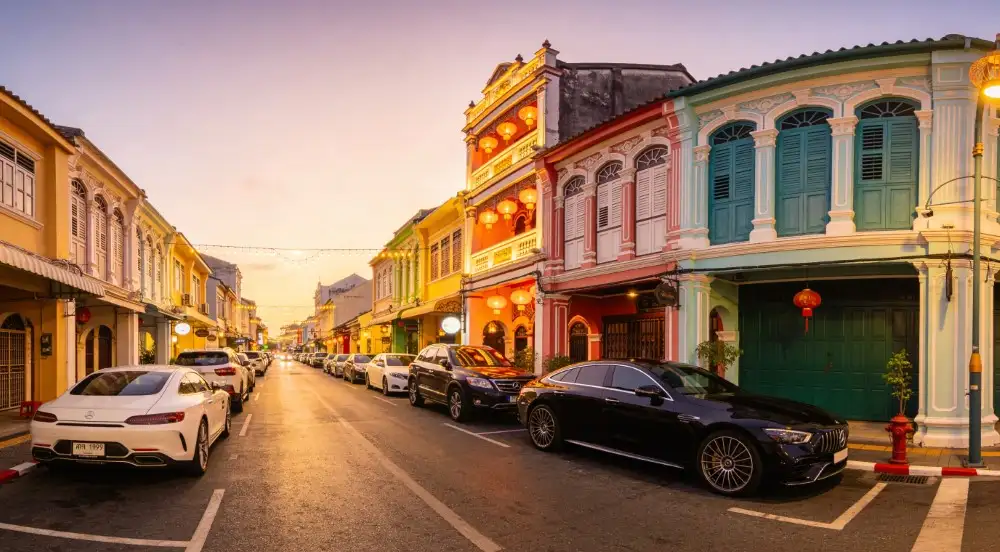
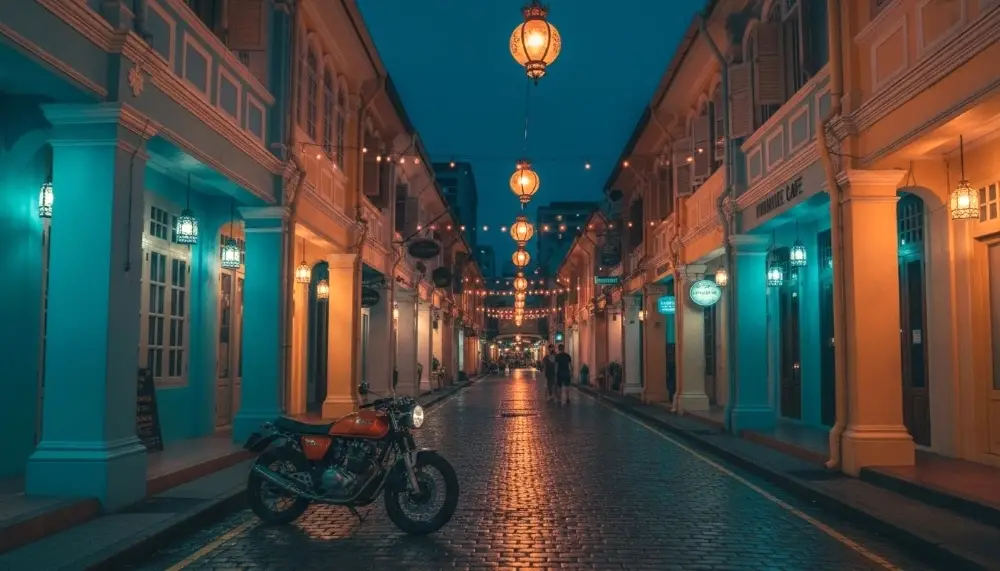
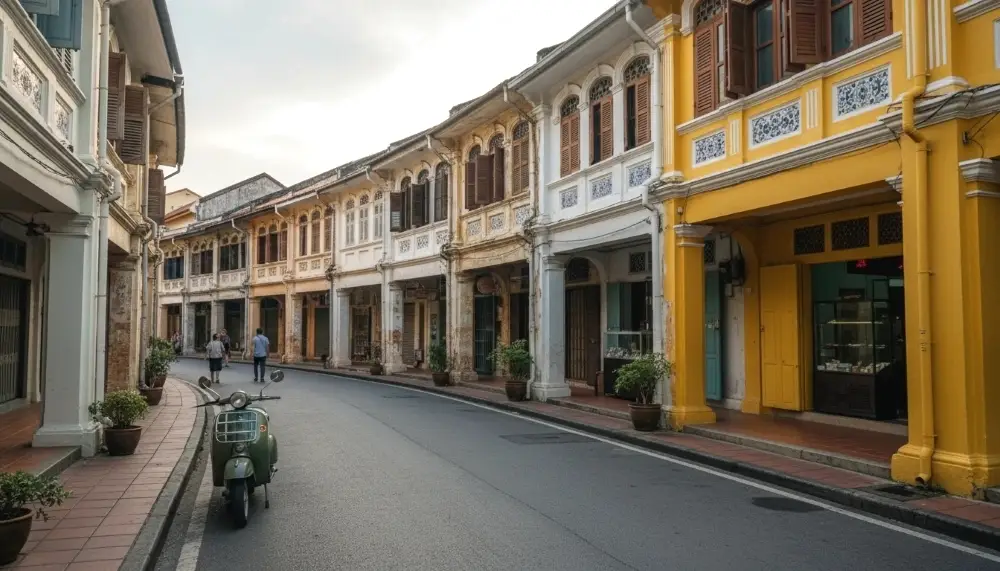
- Rich in Sino-Portuguese history with some of the island’s most beautiful architecture
- A creative and independent scene of cafes, galleries, and independent restaurants
- Considerably more affordable to rent in than the coastal areas, and genuinely pleasant for those who prefer urban texture over beachside living
Working Remotely from Phuket
Phuket has matured into one of Southeast Asia’s more reliable bases for remote work, and the infrastructure around it has improved considerably over the last few years. Fibre broadband is widely available in residential areas, coworking spaces have proliferated across Rawai, Nai Harn, and Bang Tao, and the island’s time zone (GMT+7) places it in a workable overlap with both European morning sessions and Australian afternoon ones.
The practical reality of working from cafes deserves a frank word. Public Wi-Fi in Thailand is genuinely useful, but it is unencrypted, and you are frequently sharing a network with a large number of strangers. Anyone handling sensitive client work, accessing company systems, or simply wanting basic online privacy should be using NordVPN as a matter of course. It takes thirty seconds to connect and it removes a category of risk that simply does not need to exist.
For health cover, SafetyWing’s remote work health insurance has become the default recommendation in most expat circles for good reason. It covers hospitalisation, emergency treatment, and outpatient care across Thailand at a monthly cost that sits well below any comparable Western policy. Phuket’s international hospitals are genuinely good, but they are not free, and a straightforward appendix operation without coverage can cost north of 150,000 THB.
The DTV visa mentioned earlier was specifically designed with this lifestyle in mind. It legitimises what many long-termers were previously navigating through grey areas, and the peace of mind of being properly documented is worth the application process.

Compare tours and tickets for Phuket
and book instantly on your phone.
Klook mobile vouchers mean no
printing, just turn up and go.
The Food Is Extraordinary
Food is a huge part of everyday life in Thailand, and Phuket has its own distinct culinary identity beyond the national standards. This is an island that was historically connected to southern China through trade, and that heritage shows in the food. Hokkien influence runs through the local noodle dishes and preserved ingredients that you simply will not find in the north. The seafood, sourced fresh from the Andaman daily, reaches a quality that spoils you very quickly for anywhere else.
Eating locally is where the real value lies. A proper meal at a family-run spot costs almost nothing:
- Pad Thai from a street vendor: 60 to 80 THB
- Green curry with rice at a local restaurant: 80 to 120 THB
- Mango sticky rice for dessert: 40 to 60 THB
- Whole grilled fish at a beachside seafood market: 250 to 450 THB depending on size
- Phuket-specific Hokkien noodles with pork and prawns: 70 to 100 THB
Night markets are absolutely central to the social rhythm of island life. Naka Weekend Market, the Phuket Town Walking Street on Sundays, and the smaller evening markets in Rawai and Chalong are lively, affordable, and full of things worth eating. They are also genuinely community spaces where expats and locals mix without the transactional edge that tourist restaurants can develop.
For those missing home comforts, the international restaurant landscape is genuinely diverse. Italian trattorias, Japanese omakase counters, proper Lebanese meze, and multiple vegan cafes with real culinary ambition all exist and are consistently good. Phuket has long been a destination sophisticated enough to attract talented chefs who want to live somewhere beautiful.

Culture and Local Life
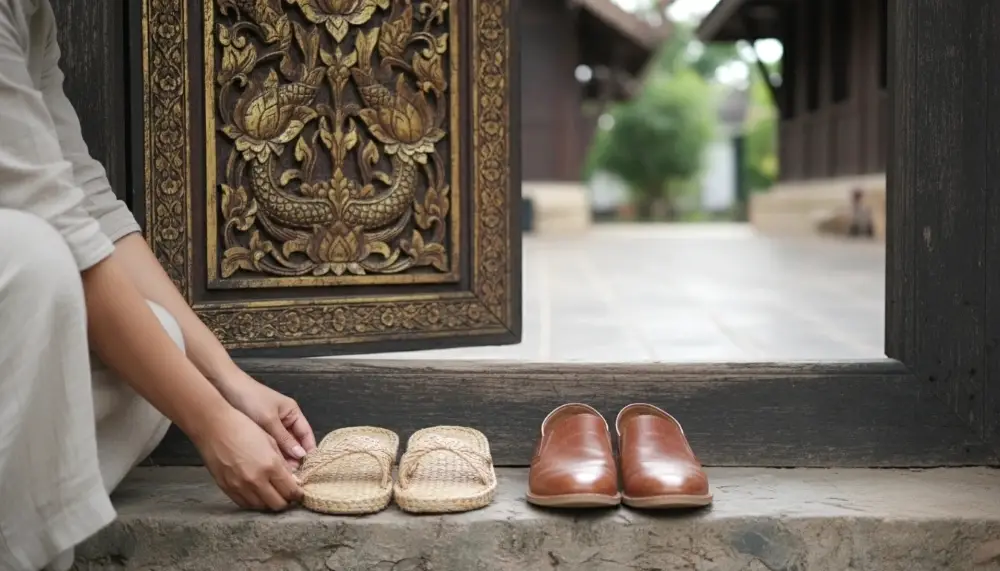
Living in Phuket means absorbing Thai culture as part of daily life rather than observing it from the outside as a visitor. Over time, the practices that feel unfamiliar on a first trip become second nature, and that process of integration is one of the genuinely rewarding parts of long-term island living.
Thailand’s reputation as the Land of Smiles is earned and consistent. Thai people are generally friendly, respectful, and patient with foreigners who make an effort, even a small one, to understand local norms. That effort is noticed and reciprocated warmly.
A handful of cultural basics help newcomers settle in more easily from the start:
- Show genuine respect in and around temples: modest dress, quiet behaviour, and reverence for religious objects is expected and appreciated
- Remove shoes before entering homes, many small shops, and any space where you notice others doing the same
- The royal family is held in the deepest respect: commentary that would be unremarkable in a Western context can cause genuine offence here
- A polite smile and a gentle “mai pen rai” (never mind, no worries) navigates most small social friction without drama
Many long-term visitors say that the warmth and patience of the local community is the single biggest reason they feel comfortable staying year after year. The kindness is not a performance for tourists. It persists in everyday neighbourhood life in ways that genuinely matter over time.
Easy Travel Around Thailand
One of the less-discussed advantages of living in Phuket is how effortlessly the rest of Thailand and the broader region becomes accessible. The airport and the ferry infrastructure mean that weekend adventures are genuinely easy rather than theoretical.
Short domestic flights connect Phuket to:
- Bangkok: an hour in the air, a completely different world
- Chiang Mai: temples, mountains, and cooler air in the north
- Krabi: forty minutes and you are in a completely different limestone karst landscape
- Koh Samui: the Gulf coast offers a different energy and a different sea
By ferry and speedboat, the Phi Phi Islands are 45 minutes away. Koh Lanta, Koh Yao Noi, and Koh Yao Yai are all reachable for day trips or weekends. The practical effect is that island life never feels claustrophobic, because the options for changing scenery are constantly available without requiring serious planning or budget.
For inter-island and mainland connections, locking in tickets through 12GO ahead of peak periods (Songkran in April, the Christmas and New Year window, and Chinese New Year) is worth doing. These routes sell out, and the flexibility of last-minute travel disappears during those periods entirely.

Is Phuket Safe?

For first-time visitors feeling uncertain about arriving in Thailand, Phuket is genuinely one of the easiest entry points. The island is deeply accustomed to international visitors, English is widely spoken across tourist and residential areas alike, and the practical infrastructure for foreign residents is robust.
The main area of genuine risk that deserves honest discussion is road safety. Scooter accidents are the most common cause of injury among foreign visitors and residents. Thai roads are not forgiving, traffic can be chaotic in peak tourist areas, and the tendency of some arrivals to rent a scooter on their first day without relevant experience leads to preventable accidents. Wear a helmet always, take time to understand the flow of local traffic before venturing onto busier roads, and consider a car hire rather than a scooter if you have children or are not an experienced rider.
Beyond that specific caution, day-to-day life in Phuket is safe and comfortable. You will find:
- Clear travel and transport infrastructure throughout the island
- Well-equipped hospitals and pharmacies across all major areas
- Locals who are genuinely willing to help when asked
- A well-developed expat community with accessible advice and social networks
Many travellers arrive quietly worried about culture shock and leave wondering why they took so long to come. The island is genuinely welcoming, and the combination of Thai hospitality and strong international infrastructure means the adjustment period is usually shorter than people expect.
Building a Second Home
It is surprisingly common for people to visit Phuket once and then find that something has shifted in how they think about where they want to spend their time. What starts as a holiday becomes a longer stay. A longer stay becomes a pattern. A pattern becomes a commitment. The island has a quality that is hard to pin down precisely but is consistently reported by long-term residents: it feels like home without requiring you to give up who you are.
For many expats, Phuket occupies a specific emotional category: not their origin country, not a temporary arrangement, but a genuine home that happens to be extraordinarily beautiful. The combination of tropical setting, welcoming culture, and the practical ease of modern life makes it compelling in a way that sustains years rather than months.
The expat community itself is unusually diverse and unusually social. There are running clubs, sailing clubs, yoga communities, language exchange groups, and enough international sports bars showing Premier League matches on Sunday mornings to keep anyone from feeling entirely cut off. The social infrastructure has grown organically around the resident population and it shows.
The Beginning of a Bigger Adventure
For first-time visitors to Thailand, Phuket is the perfect introduction: complete enough to feel safe, beautiful enough to feel extraordinary, and connected enough to make deeper exploration easy from day one.
It offers stunning scenery, fantastic food, vibrant culture, and all the practical infrastructure that makes adjusting to life abroad genuinely manageable. But it is also just the beginning of what Thailand has to offer. Once island life has settled into your rhythm, the pull of the rest of the country tends to make itself felt. The streets of Bangkok. The temples and mountain mists of Chiang Mai. The quieter islands further south where the boats thin out and the water gets even clearer.
Phuket opens the door to a much bigger journey, and for many people who end up loving Thailand deeply, it is precisely where that love began: over a bowl of noodles at a roadside market, or at the edge of the sea on a Tuesday morning with nowhere particular to be.

Maps, Grab, translation apps all need
data in Phuket. Yesim’s eSIM installs
in a minute and gives you reliable
5G from the moment you arrive.
Frequently Asked Questions: Living In Phuket
What is the realistic monthly cost of living in Phuket for a single person?
A single person living comfortably in Phuket, with a decent rented apartment, a scooter for transport, regular local dining with occasional international restaurants, and social activities, can expect to spend between 35,000 and 60,000 THB per month. Budget-focused individuals staying in Kathu or Phuket Town and eating locally regularly spend less. Those choosing beachside areas like Bang Tao or entertaining frequently will spend more. The key variable is accommodation, which can range from 12,000 THB for a studio in an inland area to 60,000 THB for a private pool villa near the coast.
Which visa is best for remote workers wanting to live in Phuket long-term?
The Destination Thailand Visa (DTV), introduced in 2024 and refined since, is currently the best option for remote workers and digital nomads. It offers a five-year validity with multiple-entry rights and requires proof of remote employment or freelance income. The application requires evidence of at least 500,000 THB in savings or equivalent income, along with documentation of your work arrangement. It legitimises the long-term stay that many remote workers were previously managing through visa runs or tourist visa renewals, and the peace of mind is worth the administrative effort involved.
Is Phuket a good place to raise children as an expat family?
Phuket is genuinely well-suited to family life, largely because of the quality of its international schools and the outdoor lifestyle available year-round. Schools like British International School Phuket (BISP) and United World College follow British National Curriculum and IB frameworks respectively, with facilities and pastoral care that compare well to independent schools in the UK. Children grow up comfortable with the sea, exposed to significant cultural diversity, and often multilingual. The main consideration is cost: international school fees can add 300,000 to 700,000 THB per child annually to a family’s budget, which fundamentally changes the economics of the move.
What is the best area of Phuket to live in for expats?
The answer depends heavily on your priorities. Rawai and Nai Harn are consistently cited as the most popular areas among long-term expats: they offer a genuine neighbourhood feel, excellent local food markets, access to beautiful beaches without the tourist crowds, and relatively affordable rents. Bang Tao and Laguna suit affluent families wanting polished villa communities and proximity to the best international schools. Phuket Town suits those who prefer urban texture, the most affordable rents on the island, and a genuine connection to Thai cultural life. Patong is excellent for short visits but almost universally considered unsuitable for long-term living.
How reliable is the internet in Phuket for remote working?
In well-populated residential areas and tourist zones, internet reliability is good. Fibre broadband from providers like AIS, True, and 3BB is widely available in villas and apartment blocks, with speeds suitable for video calls and cloud-based work. Coworking spaces in Rawai, Bang Tao, and Phuket Town offer consistent high-speed connections with backup options. The main caveat is that remote hillside or jungle properties occasionally have infrastructure gaps. Always confirm the internet setup before committing to a long-term rental, and consider a backup mobile data SIM from one of the major Thai providers for occasions when your home connection drops.
What healthcare is available in Phuket and is it good enough for long-term residents?
Phuket has a well-developed private healthcare system that is widely regarded as genuinely good by regional standards. Bangkok Hospital Phuket and Vachira Hospital are the primary facilities, with English-speaking consultants across most departments. The quality of routine care, specialist appointments, and emergency treatment is high. The cost without insurance is not trivial: a straightforward procedure can run to tens of thousands of baht, and a serious hospitalisation significantly more. Most long-term residents use either a comprehensive international health policy or, for digital nomads on tighter budgets, SafetyWing nomad insurance, which covers hospitalisation and emergency care at a monthly cost far below comparable Western products.
Do I need to speak Thai to live comfortably in Phuket?
No, and the majority of long-term expats in Phuket function entirely in English across their daily lives. In tourist areas and expat-heavy neighbourhoods, English is widely spoken by locals working in service industries, restaurants, healthcare, and accommodation. That said, learning basic Thai phrases is genuinely worthwhile: it is warmly received by local people, makes navigating markets and less-touristy situations considerably easier, and signals a respect for the culture that opens doors socially. Even a limited vocabulary of polite greetings, numbers, and food vocabulary changes your experience of the island meaningfully.
What is the weather like in Phuket year-round, and does the wet season affect daily life?
Phuket’s dry season runs roughly from November to April, with the most reliable weather and the calmest seas. This is peak tourist season and prices for accommodation reflect it. The wet season runs from May to October, with the heaviest rainfall typically in September. In practice, wet season living is perfectly manageable: rain tends to arrive in heavy, short afternoon bursts rather than all-day drizzle, and the island remains green, lush, and functional. Some beach clubs and boat services reduce operations during the roughest weeks, but daily life, work, and most leisure activities continue without significant disruption. Many long-term residents actually prefer the wet season for the lower prices, fewer tourists, and the dramatic beauty of the landscape.
Can foreigners own property in Phuket?
Foreign nationals cannot own land in Thailand outright, but there are several legitimate routes to property ownership and long-term security. Foreigners can own a condominium unit outright in freehold, provided foreign ownership within the building does not exceed 49% of total floor area. Villa and house ownership is typically structured through long-term leasehold agreements (30 years, renewable) or through a Thai Limited Company, the latter requiring careful legal advice to ensure it is structured correctly. The market for foreign buyers in Phuket is well-developed and there are experienced property lawyers on the island who specialise in exactly this area. Always use independent legal counsel rather than relying on a developer’s in-house advisors.
What do long-term residents wish they had known before moving to Phuket?
A few things come up consistently. First, the TM30 reporting requirement: many arrivals are not aware that their landlord must register their address with immigration, and gaps in this record complicate visa extensions. Verify it is done correctly from the outset. Second, the importance of neighbourhood choice: spending a month in your target area before committing to a long lease saves enormous amounts of adjustment later. Third, transport: Phuket without personal transport is frustrating. Budget for a scooter or car from the start. Fourth, the social scene builds quickly if you engage with it: expat community groups, sports clubs, and coworking spaces are unusually welcoming to newcomers. And fifth: the food is so consistently excellent at the local level that many residents find themselves cooking at home far less than they expected, which is genuinely not a problem.