Best Temples In Bangkok
This site contains affiliate links. We may earn a commission at no extra cost to you.
Bangkok is a city that dazzles the senses. Towering skyscrapers, buzzing street markets, rooftop bars, and glowing neon lights all compete for attention. Yet tucked among the energy and chaos are some of the most beautiful and peaceful places in all of Thailand, its temples.
If you are planning your first trip to Thailand, visiting Bangkok’s temples is an experience you simply should not miss. All prices in this guide use a rate of 35 THB = $1 USD.
Quick Answers:
Budgeting: Allocate between 500 and 1,000 THB (~$14 to $29) per person for a comprehensive day of major temple sightseeing, including entry fees, ferry crossings, and a Grab ride or two.
Dress Code: Mandatory coverage of shoulders and knees for all genders. The Grand Palace strictly prohibits leggings and torn jeans. Sarongs are available to borrow at the gate.
Peak Hours: Arrive by 08:30 to beat the heat and the influx of large tour groups. The Grand Palace closes at 15:30 so an early start is essential.
Connectivity: Use Grab or Bolt for transparent pricing to temple districts like Phra Nakhon. Download Yesim before landing to have data active the moment you clear immigration.

Book Bangkok day trips, attractions,
and activities in one place. Check
real reviews and lock in your spot
before the popular slots go.
What Are The Best Temples In Bangkok?
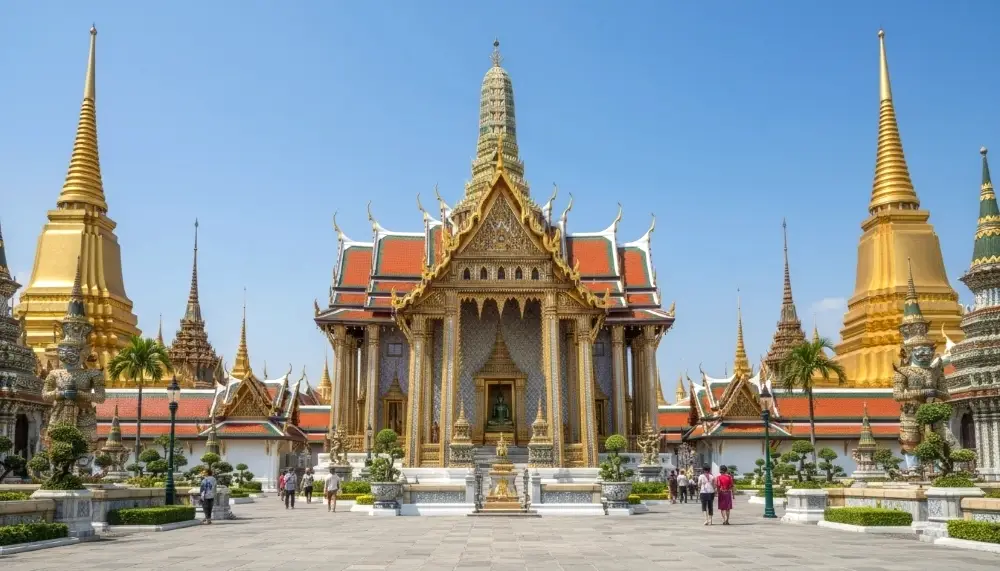
If you only have time to visit a few temples in Bangkok, these are widely considered the must-see highlights:
- Wat Phra Kaew (Temple of the Emerald Buddha), 500 THB (~$14)
- Wat Pho (Temple of the Reclining Buddha), 300 THB (~$8.55)
- Wat Arun (Temple of Dawn), 100 THB (~$2.85)
- Wat Saket (The Golden Mount), 100 THB (~$2.85)
- Wat Benchamabophit (The Marble Temple), 20 THB (~$0.57)
Each temple offers something unique, from enormous golden statues to panoramic city views, and together they provide an incredible introduction to Thai culture and spirituality.

Lock in top-rated Bangkok tours with
GetYourGuide’s free cancellation
up to 24 hours before. Reserve now
and pay later if dates aren’t set.
The Bangkok Temple Comparison:
Detailed planning ensures a seamless transition between the historic district and the riverside. Use this data to prioritize your itinerary based on time and budget.
| Temple Name | Entry Fee (THB) | Entry Fee (USD) | Primary Highlight | Opening Hours |
|---|---|---|---|---|
| Wat Phra Kaew | 500 THB | ~$14 | Emerald Buddha and Grand Palace | 08:30 to 15:30 |
| Wat Pho | 300 THB | ~$8.55 | 46m Reclining Buddha | 08:00 to 18:30 |
| Wat Arun | 100 THB | ~$2.85 | Iconic Porcelain Prang | 08:00 to 18:00 |
| Wat Saket | 100 THB | ~$2.85 | Panoramic Golden Mount Views | 07:00 to 19:00 |
| Wat Traimit | 100 THB | ~$2.85 | 5.5-ton Solid Gold Buddha | 08:00 to 17:00 |
| Wat Benchamabophit | 20 THB | ~$0.57 | Italian Marble Architecture | 06:00 to 18:00 |
Why Temples Are So Important:
Temples, known locally as wats, are at the heart of Thai culture. They are not just tourist attractions. They are active places of worship, community gathering spaces, and centres of Buddhist learning.
Thailand is a deeply Buddhist country, and monks are highly respected figures in everyday life. When you visit a temple, you are stepping into a place that holds deep spiritual meaning for locals.
For travellers, this adds a special layer to the experience. It is not just about architecture and photography. It is about witnessing a living culture that has remained largely unchanged for centuries.

Stay closer to the action in Bangkok.
Agoda lists guesthouses to resorts
with verified reviews and instant
booking at competitive rates.
Entry Fees and Costs:
Entry fees for Bangkok temples range from 20 to 500 THB (~$0.57 to $14) for foreign visitors. The Grand Palace remains the most expensive at 500 THB (~$14), while smaller neighbourhood wats may only request a small donation. Payments are primarily cash-based (THB), though larger complexes now accept Thai QR payments.
The Grand Palace and Wat Phra Kaew function as a single complex. Your 500 THB (~$14) ticket also includes entry to the Queen Sirikit Museum of Textiles. For Wat Pho, located just south of the palace, the 300 THB (~$8.55) fee includes a complimentary bottle of water, which is a welcome relief in the midday sun.
Wat Arun requires a cross-river ferry ride from Tha Tien Pier, costing approximately 5 THB (~$0.15). The entrance fee here is 100 THB (~$2.85). To avoid scams, ignore any individuals outside the gates claiming the temple is closed for a holiday or private ceremony. These are almost always diversions intended to lure you into a tuk-tuk tour of jewellery shops. Trust only the official ticket counters at the gate.

From short trips to long stays in Bangkok,
Airalo has flexible eSIM data plans
you install in minutes. Top up
remotely if you need more data.
Pro Tips For Stress Free Travel:
Transport: Use the MRT Blue Line to Sanam Chai Station for direct access to Wat Pho. Use Grab or Bolt for door-to-door service with fixed pricing. BTS single journeys cost 20 to 65 THB (~$0.60 to $1.85).
Navigation: Download Yesim eSIM before landing. Google Maps is highly accurate for ferry pier locations and walking routes between the Old City temples.
Money: Carry THB in small denominations. Most temple ticket booths remain cash-only. Thai ATMs charge a flat 220 THB (~$6.30) fee per foreign card withdrawal, so withdraw the maximum in a single transaction.
Safety: Use NordVPN when accessing public Wi-Fi at cafes near the river.
Booking: For guided tours that bypass the logistics, check Klook or Get Your Guide for early bird temple walks and skip-the-line Grand Palace tickets. Tours cost 1,200 to 2,500 THB (~$34 to $71) per person.


Forget swapping physical SIMs in Bangkok.
Yesim works on most modern phones,
activates remotely, and keeps your
home number live on WhatsApp too.
Wat Phra Kaew: The Most Sacred
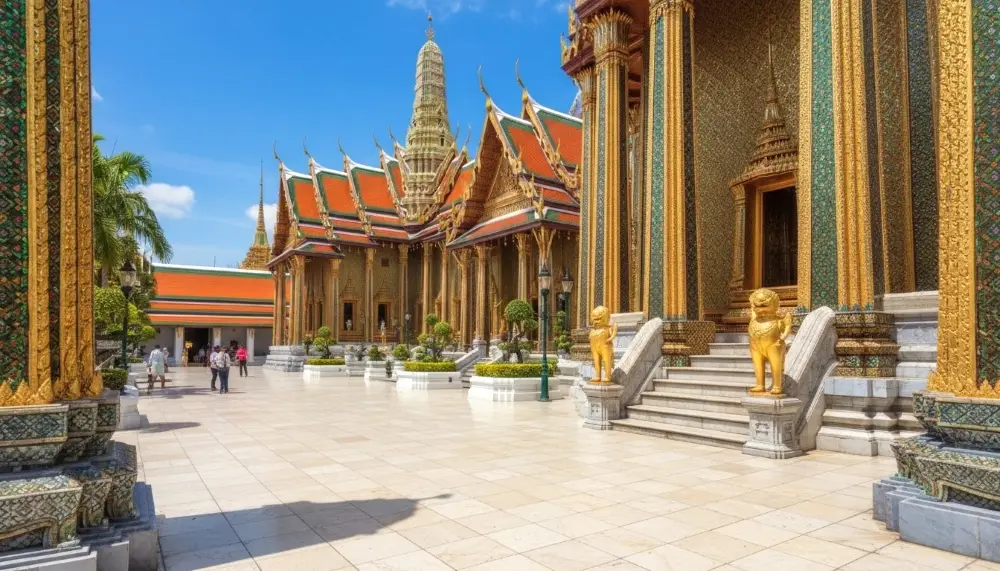
Located within the grounds of Bangkok’s Grand Palace, Wat Phra Kaew is considered the most sacred temple in the entire country. Entry: 500 THB (~$14). Open 08:30 to 15:30 daily.
Inside the temple sits the Emerald Buddha, a revered statue carved from a single block of jade. Although the statue is relatively small, its importance to Thai people is enormous. The King of Thailand changes the Buddha’s golden seasonal robes three times a year.
The temple complex itself is breathtaking, with golden stupas, glittering mosaics, and elaborate murals depicting scenes from Thai mythology. Allow at least 1.5 to 2 hours to explore the full complex properly. First-time visitors are consistently amazed by the sheer detail found in every direction.
Wat Pho: Giant Reclining Buddha
Just a short walk from the Grand Palace sits Wat Pho. Entry: 300 THB (~$8.55), which includes a complimentary bottle of water. Open 08:00 to 18:30 daily.
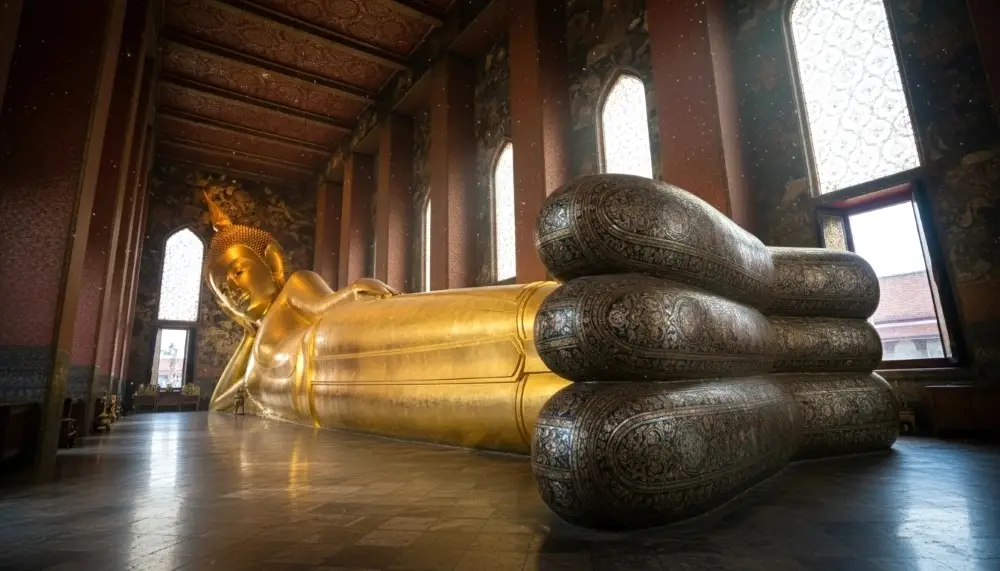
This temple is famous for its enormous reclining Buddha statue, which stretches an incredible 46 metres long and is covered in gold leaf. The statue represents Buddha entering Nirvana, and it is one of the most impressive religious sculptures in Thailand.
Wat Pho is also known as the birthplace of traditional Thai massage. Inside the temple grounds you can receive a 30-minute traditional massage from trained practitioners for 260 THB (~$7.40), one of the most authentic massage experiences in the city.
Wat Arun: Beautiful Riverside Temple
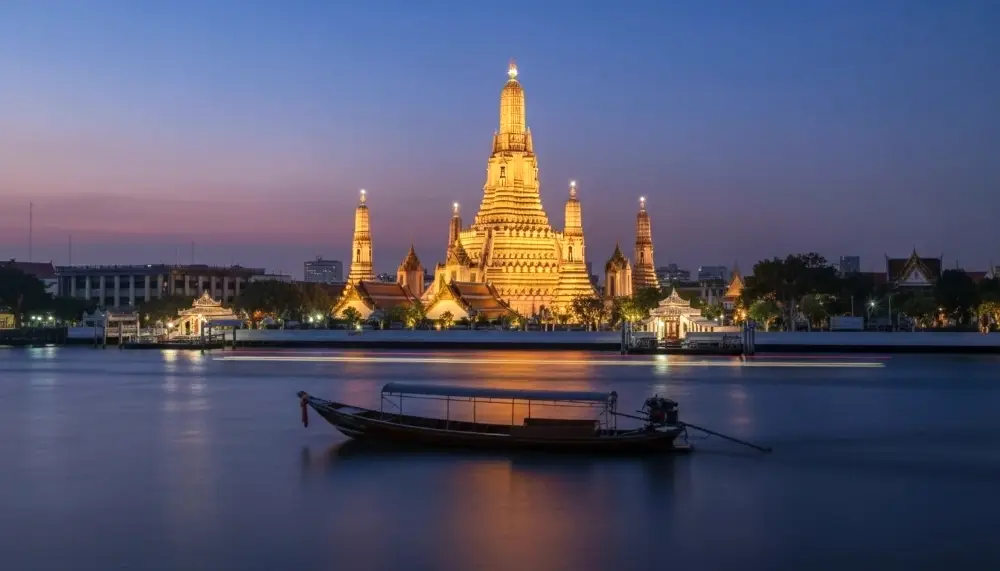
Wat Arun sits along the banks of the Chao Phraya River. Entry: 100 THB (~$2.85). Cross-river ferry from Tha Tien Pier: 5 THB (~$0.15). Open 08:00 to 18:00 daily.
Its towering central spire is decorated with colourful porcelain and seashell fragments that shimmer in the sunlight. Visitors can climb partway up the steep steps for beautiful views of the river and surrounding city.
Wat Arun is particularly magical at sunset, when the temple glows warmly as the sun dips behind Bangkok’s skyline. If you enjoy photography, this is one temple you will definitely want your camera for.
Wat Saket: The Golden Mount
For travellers looking for a quieter temple experience, Wat Saket offers something special. Entry: 100 THB (~$2.85). Open 07:00 to 19:00 daily.
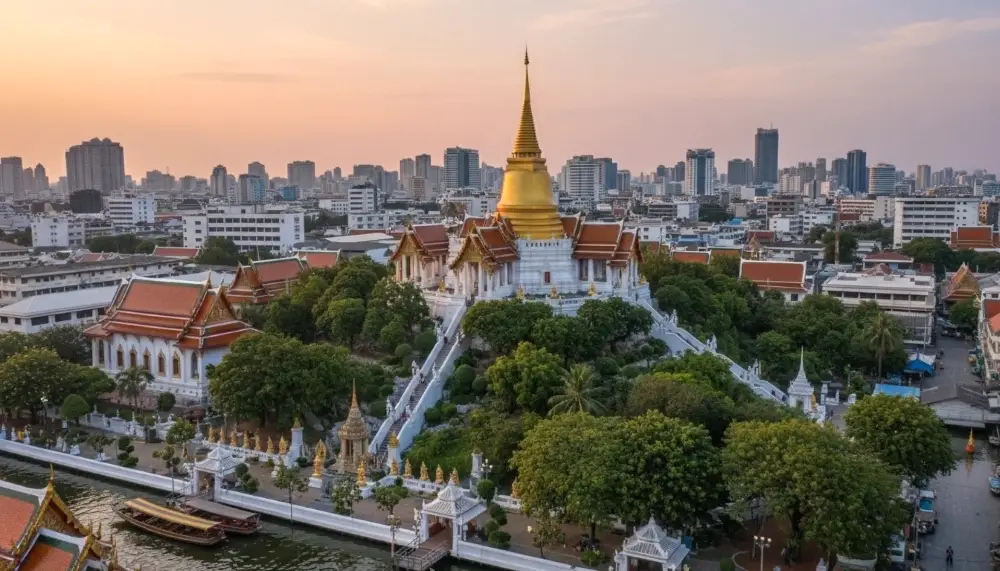
This temple sits atop an artificial hill known as the Golden Mount. Visitors climb a gentle spiral staircase of about 344 steps to reach the summit. The ascent is lined with bells and prayer wheels and takes around 10 to 15 minutes at a relaxed pace.
At the top you will find:
- A gleaming golden stupa housing relics of the Buddha
- Panoramic 360-degree views of Bangkok’s Old City
- A peaceful atmosphere away from the busy streets below
The climb is easy and partially shaded, making it a pleasant break from the city’s heat. At 100 THB (~$2.85) it is also one of the best-value views in Bangkok, comparable to rooftop bars charging 450 to 700 THB (~$13 to $20) per cocktail.
Wat Benchamabophit: Marble Temple
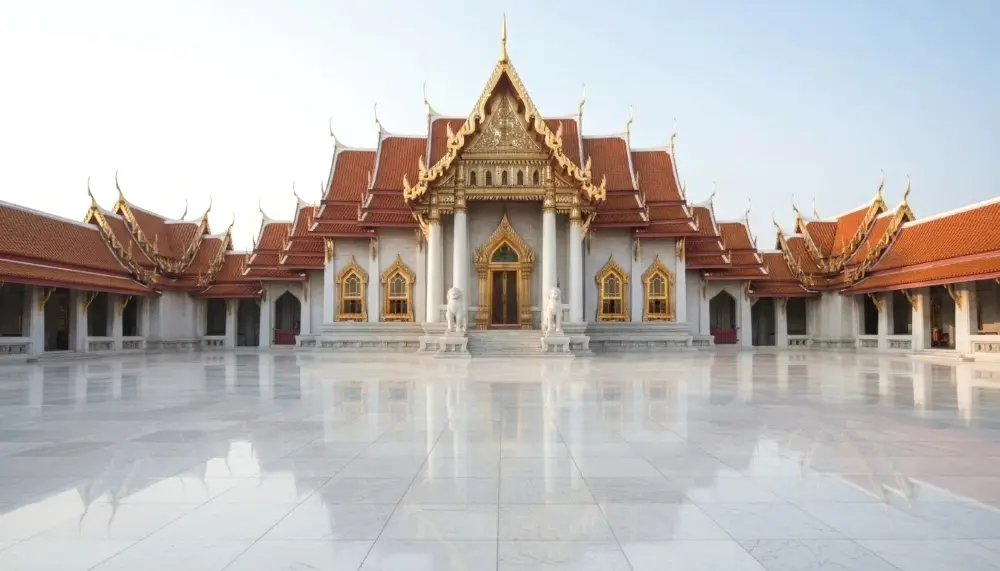
Often called the Marble Temple, Wat Benchamabophit is one of Bangkok’s most elegant temples. Entry: 20 THB (~$0.57). Open 06:00 to 18:00 daily.
Built from imported Italian marble, the temple features a stunning combination of European materials and traditional Thai architecture. The result is a uniquely beautiful structure that feels both grand and peaceful.
In the courtyard behind the main temple, visitors can see dozens of Buddha statues representing different artistic styles from across Asia. It is one of Bangkok’s most photogenic temples and tends to be significantly less crowded than the major riverside sites. The MRT Blue Line to Si Ayutthaya station is the fastest way to arrive.
Wat Traimit: The Solid Gold Buddha
Wat Traimit in Bangkok’s Chinatown (Yaowarat) houses one of the most remarkable objects in the entire country: a 5.5-tonne, 3-metre-tall Buddha image made entirely of solid gold. Entry: 100 THB (~$2.85). Open 08:00 to 17:00 daily.
The statue is estimated to be worth over 1.5 billion US dollars at current gold prices, making it the world’s largest solid gold image. The story of its discovery is equally compelling. For centuries the image was concealed under a layer of plaster, believed to have been applied to protect it from Burmese invaders. In 1955 it was accidentally cracked during a move, revealing the gold hidden beneath.
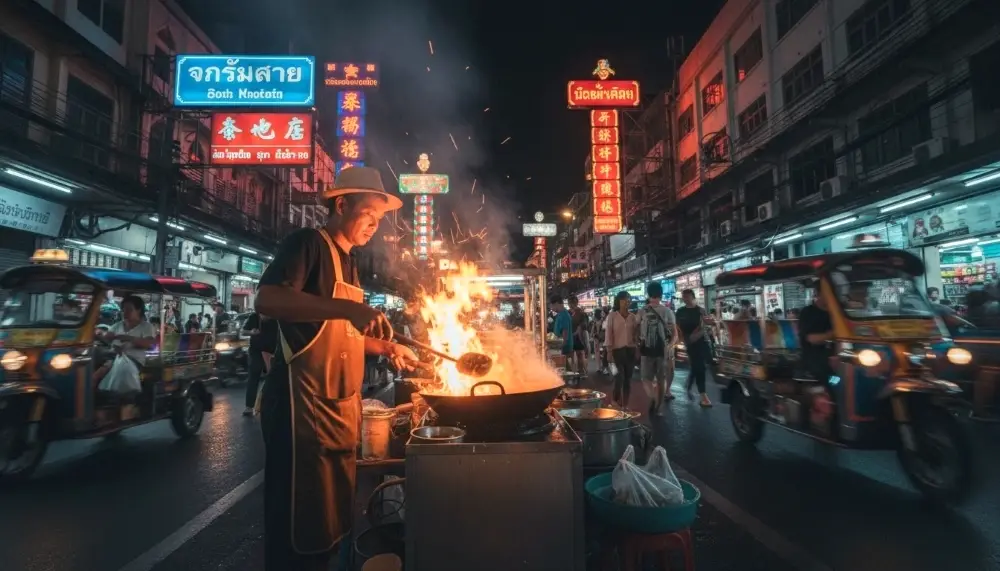
Wat Traimit is located at the entrance to Yaowarat (Chinatown), making it a natural starting point before an evening of street food along Yaowarat Road. Combined with a dinner at the Chinatown food stalls (200 to 400 THB / ~$5.70 to $11.40 for a full spread), it makes for one of Bangkok’s best value evenings out.
The One-Day Temple Circuit:
The Grand Palace, Wat Pho, and Wat Arun can all be completed in a single day for under 1,000 THB (~$29) per person including entry fees, ferry crossings, and a light lunch. This is Bangkok’s classic riverside temple circuit and the best way to cover the three most important sites efficiently.
08:30: Arrive at the Grand Palace and Wat Phra Kaew as the gates open. This is the single most important thing to do first, as the 500 THB (~$14) entry includes the full palace complex. Allow 1.5 to 2 hours. Buy a bottle of water from a street vendor outside for 15 to 20 THB (~$0.43 to $0.57) rather than inside the complex where prices are higher.
10:30 to 11:30: Walk five minutes south to Wat Pho (300 THB / ~$8.55). Allow 45 to 60 minutes for the Reclining Buddha and the temple gardens. If you want a massage, book it at the on-site school for 260 THB (~$7.40) for 30 minutes.
12:00: Walk to Tha Tien Pier and take the 5 THB (~$0.15) cross-river ferry to Wat Arun (100 THB / ~$2.85). Spend 45 to 60 minutes here and climb the central prang for river views. This is the best photography window before the afternoon haze builds.
13:30: Ferry back to the east bank and eat lunch at one of the riverside restaurants near Tha Tien Market, where a full meal costs 150 to 300 THB (~$4.30 to $8.60). The circuit is complete. Total cost for entry and transport: approximately 915 THB (~$26) per person.
Temple Etiquette:
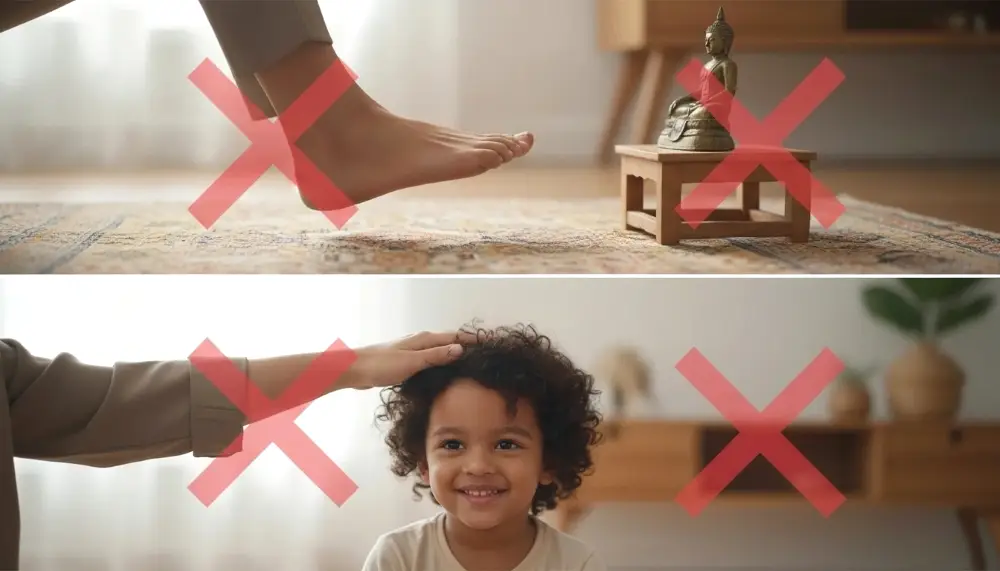
Temple etiquette in Bangkok is rooted in “Kreng Jai” (consideration) and deep respect for the monarchy and Buddhism. Visitors must dress modestly, remove shoes before entering any Ubosot (ordination hall), and keep their heads lower than Buddha images. Public displays of affection and pointing feet at sacred objects are strictly forbidden.
When entering a temple, step over the raised wooden threshold rather than on it, as local belief suggests a guardian spirit resides within the wood. Inside the main halls, sit with your feet tucked behind you. Pointing your toes toward a Buddha image or a monk is considered a grave insult in Thai culture.
Photography is generally permitted in temple courtyards but often restricted inside the primary shrine rooms. Always look for “No Photography” signage. Women must never touch a monk or hand items directly to them. Instead, place the item on a saffron receiving cloth or hand it to a male companion to pass on.
Are Temples Safe For First-Timers?
Many people visiting Thailand for the first time feel a little nervous about navigating a large city like Bangkok.
The good news is that temple visits are generally very easy and very safe. Most major temples are located close together near the Chao Phraya River, making them simple to explore in one day using river boats at 5 THB (~$0.15) per crossing, metered taxis, or the MRT Blue Line.
Tourist areas around the temples are busy, well-lit, and full of friendly locals and fellow travelers. The biggest practical risk is the closed-temple scam at the Grand Palace entrance, which is covered in the Entry Fees section above. Tourist Police number: 1155.
Frequently Asked Questions:
What is the strictest dress code in Bangkok?
The Grand Palace and Wat Phra Kaew enforce the strictest rules. Men must wear long trousers (not shorts or three-quarter length) and shirts with sleeves. Women must wear long skirts or trousers that cover the ankles. Transparent clothing, sleeveless tops, and ripped jeans are strictly prohibited. Sarongs and cover-ups are available to borrow at the gate at no charge.
Can I buy a multi-temple pass for Bangkok?
No unified Temple Pass exists. Each site is managed independently or by the Royal Household. You must purchase individual tickets at each gate in cash. Bring small denominations of THB as change can be limited at busy ticket booths.
Are temples open on public holidays?
Yes, most major temples remain open 365 days a year. However, certain halls within the Grand Palace may be closed during royal ceremonies. Always check the official Bureau of the Royal Household website for specific closures during the King’s Birthday or Coronation Day.
Is tipping expected at Thai temples?
Tipping is not required, but donation boxes (Sankhadan) are located near the altars. If you receive a blessing from a monk or use a temple-provided sarong, a small donation of 20 to 50 THB (~$0.57 to $1.40) is a respectful gesture to help with the temple’s maintenance.
How much does it cost to visit all the major Bangkok temples in one day?
The three-temple riverside circuit (Wat Phra Kaew 500 THB, Wat Pho 300 THB, Wat Arun 100 THB) plus the cross-river ferry (5 THB each way) costs approximately 910 THB (~$26) per person in entry fees alone. Adding a Grab ride to the palace area (150 to 200 THB / ~$4.30 to $5.70) and lunch near Tha Tien (150 to 300 THB / ~$4.30 to $8.60) brings a full day to around 1,200 to 1,400 THB (~$34 to $40) per person all-in.
What is the best order to visit the temples?
Start with the Grand Palace and Wat Phra Kaew at 08:30 when it opens and the temperature is manageable. Walk south to Wat Pho (10 to 15 minutes on foot). Take the 5 THB ferry across to Wat Arun for the best mid-morning light for photography. Return to the east bank for lunch. This order matches the opening hours and avoids the worst of the midday heat inside the palace complex.
What is Wat Traimit and is it worth visiting?
Yes. Wat Traimit in Chinatown houses the world’s largest solid gold Buddha image, a 5.5-tonne, 3-metre-tall statue estimated to be worth over $1.5 billion USD. Entry is 100 THB (~$2.85). It is one of Bangkok’s most extraordinary sights and is far less crowded than the Grand Palace. Combine it with an evening of street food along Yaowarat Road for one of Bangkok’s best value days out.
Can I visit Bangkok temples for free?
Some neighbourhood wats charge only a small donation or nothing at all. Wat Benchamabophit costs just 20 THB (~$0.57). Several lesser-known wats in the Old City and Chinatown are free to enter and are genuine places of worship rather than tourist attractions. The major landmark temples (Grand Palace, Wat Pho, Wat Arun, Wat Saket) all charge entry fees for foreign visitors.
Can I take a guided temple tour in Bangkok?
Yes, and for first-time visitors a guided tour is genuinely worthwhile. A knowledgeable guide provides historical and cultural context that is impossible to get from signage alone. Half-day temple tours covering the riverside circuit cost 1,200 to 2,500 THB (~$34 to $71) per person through Klook or Get Your Guide. Most include transport, skip-the-line access, and all entry fees in the price.
What should I wear to visit Bangkok temples?
Cover shoulders and knees for all genders. Lightweight linen trousers and a short-sleeve shirt with collar work well for men. A long cotton skirt or loose trousers with a light blouse works well for women. Avoid leggings, shorts, sleeveless tops, and transparent fabrics. Wear shoes that slip off easily as you will remove them frequently at ordination halls and main shrines. If you arrive underprepared, free sarongs are available to borrow at the Grand Palace and Wat Pho gates.