Temples in Chiang Mai
This site contains affiliate links. We may earn a commission at no extra cost to you.
Chiang Mai is often called the “Rose of the North,” and it does not take long to see why. Nestled in the misty mountains of Northern Thailand, this city is the spiritual and cultural heart of the country, famous for its relaxed atmosphere and over 300 breathtaking temples (known as Wats). All prices in this guide use a rate of 35 THB = $1 USD.
For many travelers, exploring these sacred sites becomes the most memorable part of their journey, offering a glimpse into the deep artistic heritage of the Lanna Kingdom, from shimmering gold leaf to ancient, weathered brick.
Quick Summary:
Best Time to Visit: 06:30 to 09:00 to avoid the midday heat and tour bus crowds.
Total Temples: Over 300 (known as Wats). Most are in or around the Old City moat.
Must-See: Wat Phra That Doi Suthep (mountain views, 30 THB / ~$0.86) and Wat Chedi Luang (ancient ruins, 50 THB / ~$1.43).
Entry Fees: Most neighbourhood wats are free. Major landmarks charge 20 to 50 THB (~$0.57 to $1.43). Cash only at ticket booths.
Digital Essentials: Download the Grab app for transparent pricing and use a Thai eSIM for seamless navigation.
Digital Donations: While small cash is still king for merit-making, many major Chiang Mai temples now have QR Code PromptPay stands for donations. International travel cards like Wise can be used to scan and donate.

Compare tours and tickets for Chiang Mai
and book instantly on your phone.
Klook mobile vouchers mean no
printing, just turn up and go.
A Warm Welcome to The Cultural Heart:
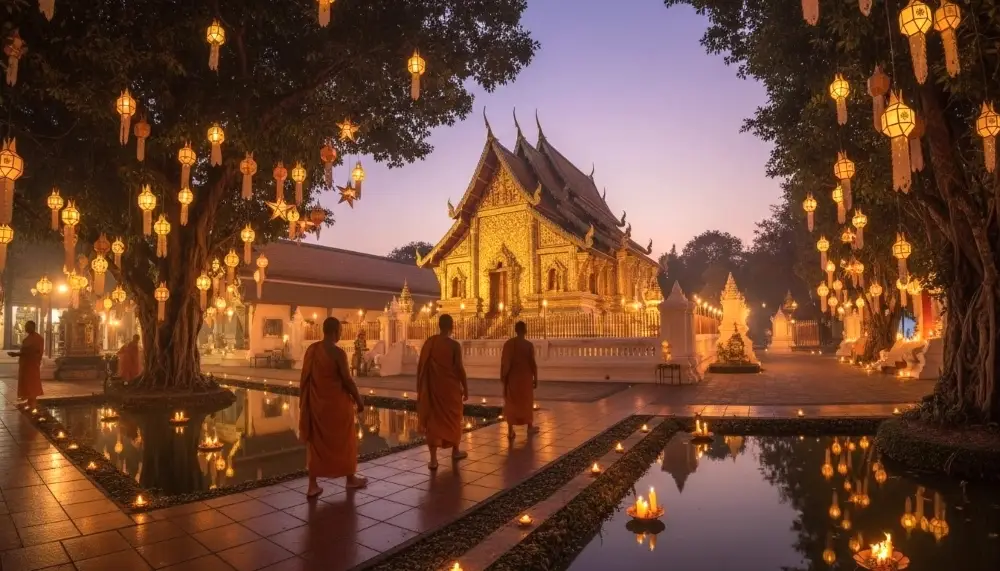
If you are planning your first trip to Thailand, one destination you will hear about again and again is Chiang Mai. Nestled in the misty mountains of Northern Thailand, this Rose of the North is famous for its relaxed atmosphere, rich Lanna culture, and above all its breathtaking temples.
For many travelers, visiting temples in Chiang Mai becomes the most spiritual and memorable part of their journey. Each Wat offers a glimpse into Thailand’s deep artistic heritage, ranging from shimmering gold leaf to ancient weathered brick.
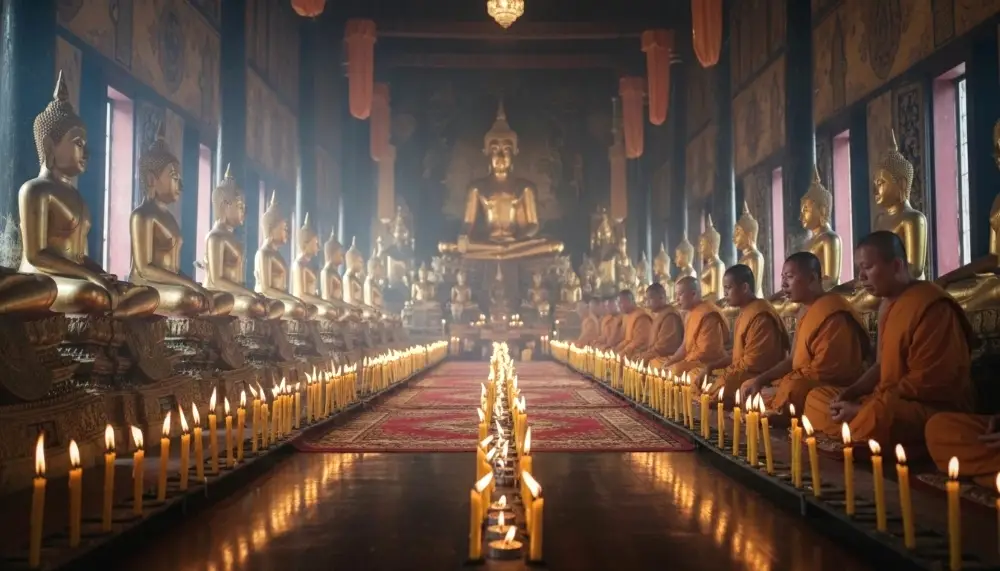
Whether you are wandering through quiet courtyards at sunrise or watching monks chant in the orange glow of sunset, Chiang Mai’s temples offer a sense of peace that stays with you long after you fly home.

From classic Chiang Mai highlights to
hidden-gem private tours. Cancel
free up to a day before your
start time if plans change.
Which Temples Define Chiang Mai?
The essential temples of the Old City include Wat Chedi Luang, Wat Phra Singh, and Wat Phan Tao. These sites represent the pinnacle of Lanna architecture, housing significant Buddha images and massive stone structures that survived the 1545 earthquake. Each offers a distinct glimpse into the historical and spiritual evolution of the North. Combined entry for all three costs under 100 THB (~$2.85) per person.
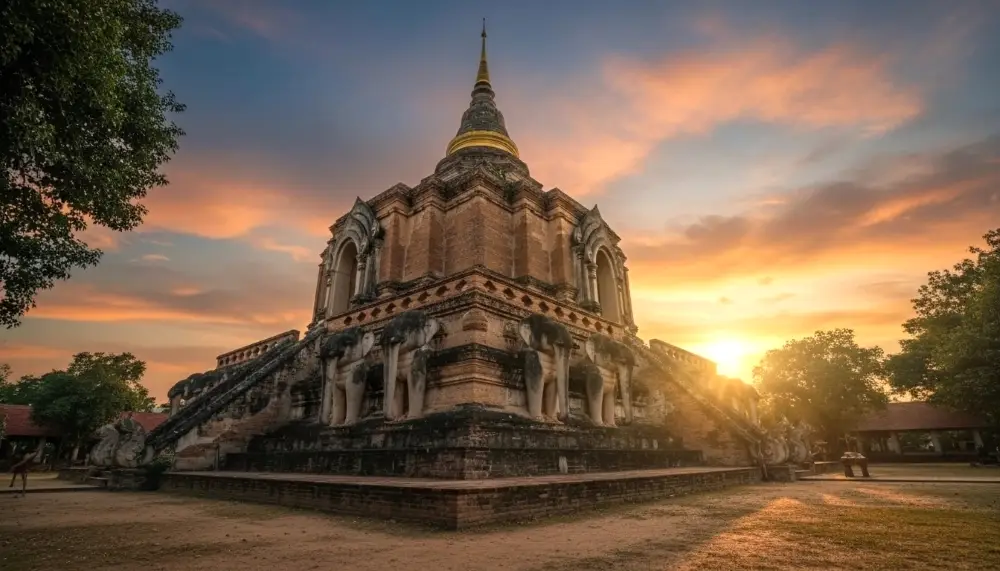
Wat Chedi Luang stands as a monolithic tribute to the past. The massive brick chedi, once the tallest structure in ancient Chiang Mai, looms over the city centre. While the upper portions remain jagged from seismic activity centuries ago, the base features stone elephants that seem to guard the very ground they stand on. Adjacent is the City Pillar (Sao Inthakin), a site of immense local importance where photography is strictly prohibited inside the shrine.
A short walk away lies Wat Phan Tao, one of the few remaining all-wood temples in the city. Built from massive teak planks once used as a royal palace, its dark weathered exterior contrasts sharply with the glitz of surrounding gold-leaf structures. During festivals, the garden behind the prayer hall is transformed into a sea of flickering oil lamps, providing a silent, meditative atmosphere.

Stay closer to the action in Chiang Mai.
Agoda lists guesthouses to resorts
with verified reviews and instant
booking at competitive rates.
Chiang Mai Temple Comparison:
| Temple Name | Entry (THB) | Entry (USD) | Primary Feature | Suggested Duration |
|---|---|---|---|---|
| Wat Phra Singh | 50 THB | ~$1.43 | Lion Buddha Image | 45 minutes |
| Wat Chedi Luang | 50 THB | ~$1.43 | Massive Ruined Chedi | 60 minutes |
| Wat Phan Tao | Free | Free | Teak Wood Construction | 20 minutes |
| Wat Phra That Doi Suthep | 30 THB | ~$0.86 | Mountain Golden Stupa | 60 to 90 minutes |
| Wat Umong | Free | Free | Forest Meditation Tunnels | 45 to 60 minutes |
| Wat Sri Suphan | 50 THB | ~$1.43 | All-Silver Ordination Hall | 30 minutes |
Pro Tips For Stress Free Travel:

For transport, Grab and Bolt are the dominant apps. While red Songthaews (truck taxis) at 30 to 40 THB (~$0.86 to $1.15) per person are iconic, Grab provides fixed pricing to prevent the tourist rate often encountered by those unfamiliar with local fares. For booking activities beyond the city walls, Klook and Get Your Guide offer vetted operators for Doi Inthanon or elephant sanctuaries.
Accommodation: Agoda often has the most competitive rates for boutique guesthouses within the Old City walls. Thai ATMs charge a flat 220 THB (~$6.30) per foreign card withdrawal.
Currency: Always carry small denominations of THB. Many smaller temples do not have change for 500 or 1,000 THB notes. A typical temple-hopping day covering entry fees costs under 200 THB (~$5.70) per person.
Connectivity: Yesim or local AIS SIMs offer 5G coverage that remains stable even within thick temple walls. Monthly data plans cost 600 to 900 THB (~$17.15 to $25.70).
Security: Use NordVPN when accessing hotel Wi-Fi to manage banking or travel bookings.

Maps, Grab, translation apps all need
data in Chiang Mai. Yesim’s eSIM installs
in a minute and gives you reliable
5G from the moment you arrive.
The Most Famous Temples In Chiang Mai:
Wat Phra That Doi Suthep (The Golden Crown)
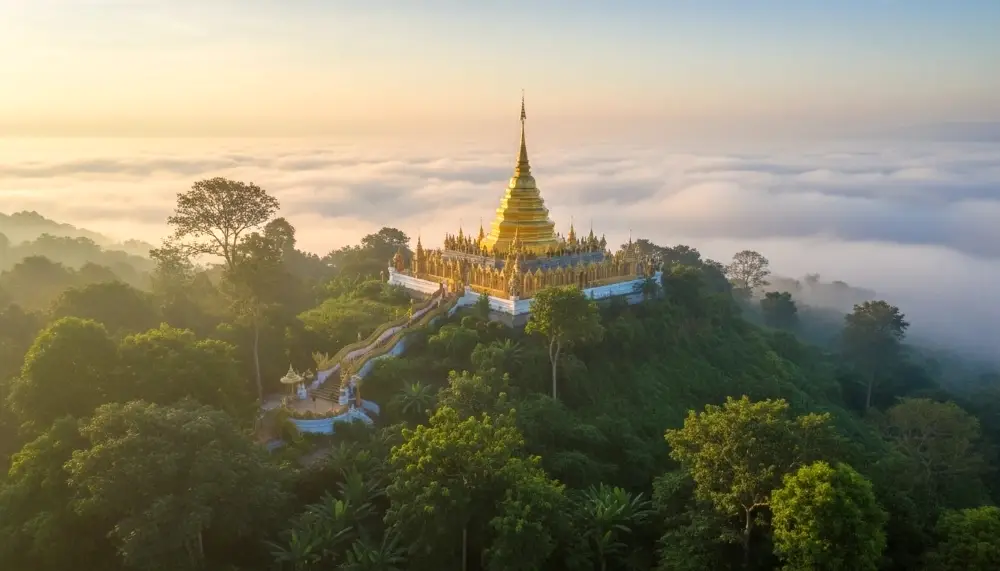
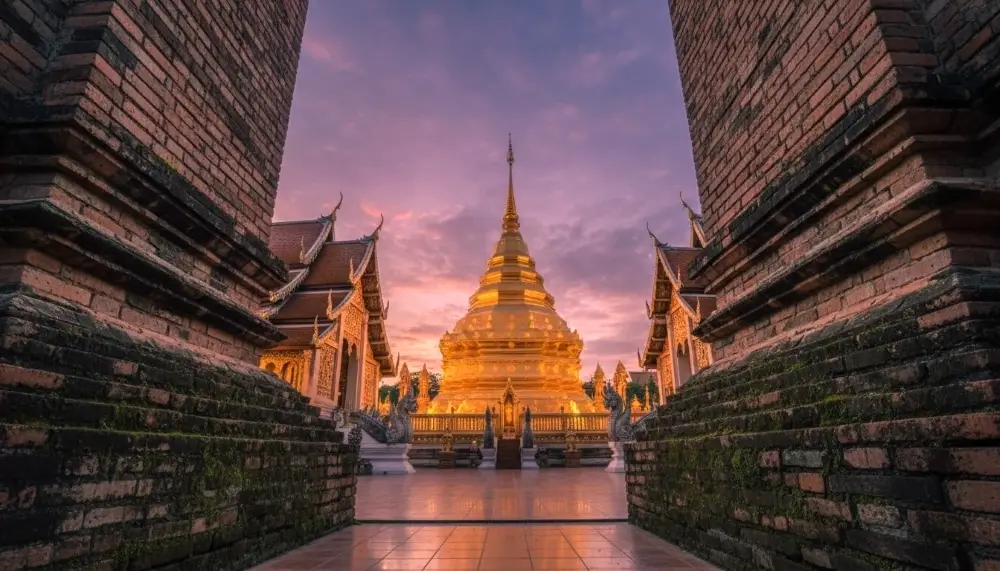
Sitting high on a mountain overlooking the valley, this is the most famous temple in Northern Thailand. Entry: 30 THB (~$0.86). After a winding drive up the mountain, you climb 306 steps (or take the tram at 50 THB / ~$1.43 return) to reach a dazzling golden stupa surrounded by prayer bells.
Pro Tip: Go for sunrise (arrive by 06:30) to hear the monks chanting. The view of the city waking up below is spectacular.
Logistics: The drive takes about 30 to 45 minutes from the Old City via red Songthaew (50 to 80 THB / ~$1.43 to $2.30 per person) or private Grab (200 to 350 THB / ~$5.70 to $10 return).
The Experience: The upper terrace is a sensory overload of golden umbrellas, shrines, and the constant, gentle ringing of prayer bells.
Wat Chedi Luang (The Ancient Giant)
Located in the heart of the Old City, this temple features a massive 15th-century brick chedi that was partially destroyed by an earthquake in 1545. Entry: 50 THB (~$1.43). Monk Chats are held here regularly, offering a rare opportunity to ask questions directly to resident monks.
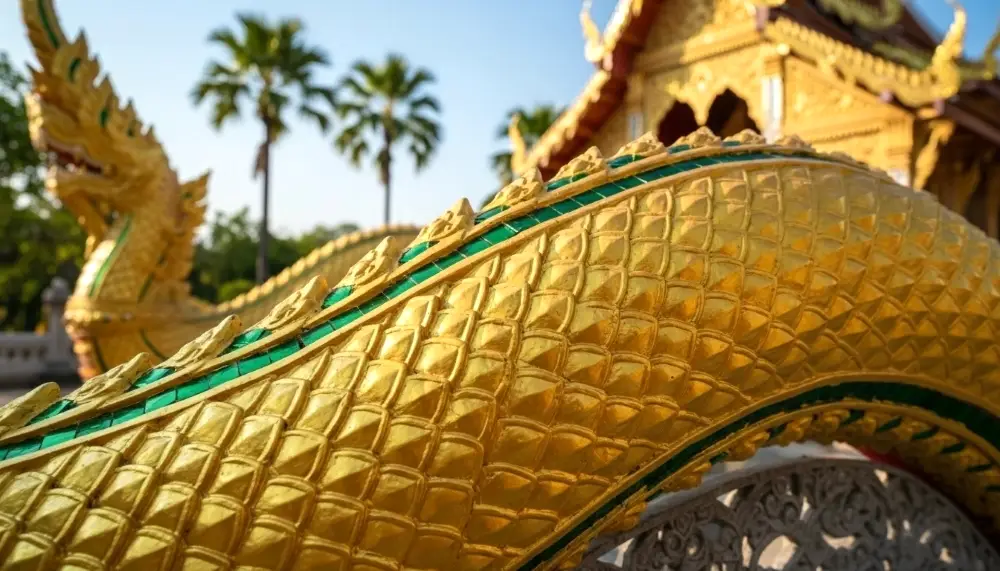
Evening View: It feels incredibly atmospheric at night when the elephant carvings are illuminated.
Unique Feature: This temple once housed the famous Emerald Buddha before it was moved to Bangkok’s Grand Palace. The replica on display today was gifted by King Bhumibol.
Wat Phra Singh (The Lanna Masterpiece)
Wat Phra Singh Woramahawihan acts as the western anchor of the Old City. Entry: 50 THB (~$1.43). As a First Class Royal Temple, it houses the Phra Singh (Lion Buddha), the most highly revered image in the North.
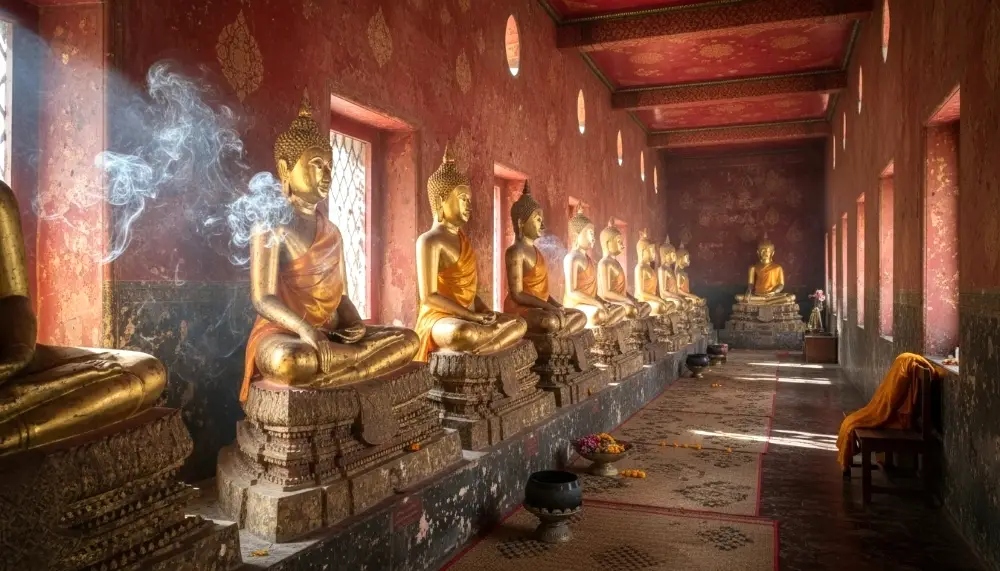
Architecture: The pinnacle of Lanna-style design, featuring sweeping wing-like wooden roofs and intricate gold filigree. The interior walls are covered in murals depicting local life and folklore from the 1800s, offering a visual history lesson more vivid than any textbook.
Wat Umong (The Forest Tunnels)
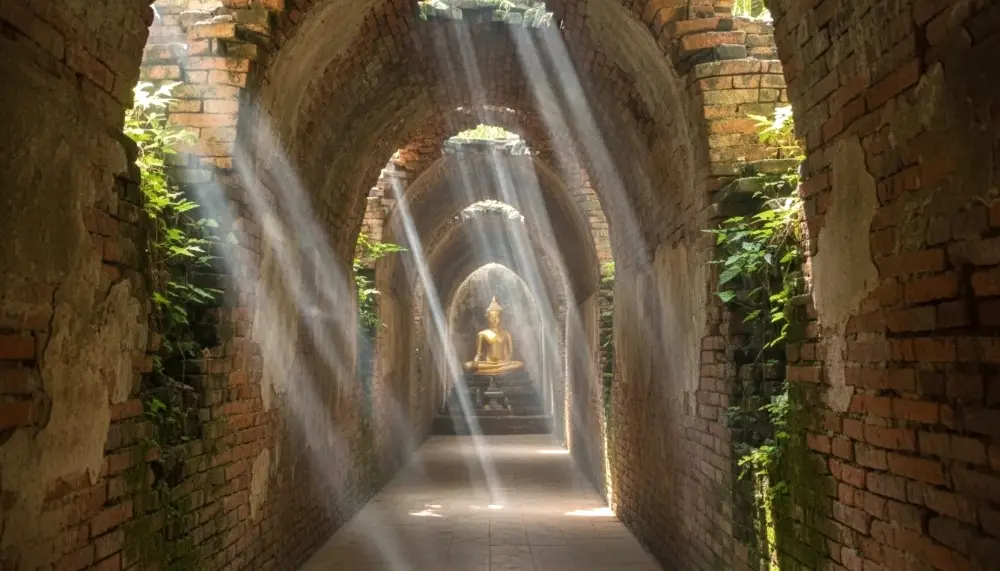
Hidden in the trees at the base of the mountain, Wat Umong is unique for its ancient meditation tunnels. Entry: Free. It feels more like a jungle retreat than a city temple, offering a stark contrast to the gold-heavy sites of the city centre.
The Tunnels: Originally built in the 14th century, the brick-lined tunnels were designed to keep meditating monks from wandering into the forest. Beyond the tunnels, the grounds feature a talking tree garden with proverbs in English and Thai, and a large lake where you can feed fish and turtles.
Wat Sri Suphan: The Silver Temple
Located just outside the South Gate in the historic silversmith district of Wua Lai Road, Wat Sri Suphan is one of the most visually distinctive temples in all of Thailand. Entry: 50 THB (~$1.43) for the main ordination hall. The entire building is clad in beaten silver panels, with intricate mythological reliefs covering every surface from floor to ceiling.
The ordination hall is restricted to men due to old religious traditions. Women can explore the extensive exterior gardens, the adjacent workshop where silversmiths craft temple decorations, and the beautifully decorated outer walls of the hall itself. This restriction is not unusual for ordination halls across Thailand, and the exterior alone is worth the visit and entry fee.
The best time to visit is late afternoon when the silver catches the low sun and the detail of the metalwork becomes most visible. The surrounding Wua Lai Road area is also Chiang Mai’s main silversmith quarter, making it easy to combine a temple visit with browsing handmade jewellery and Lanna metalwork at 200 to 2,000 THB (~$5.70 to $57) per piece.
The One-Day Old City Temple Circuit:
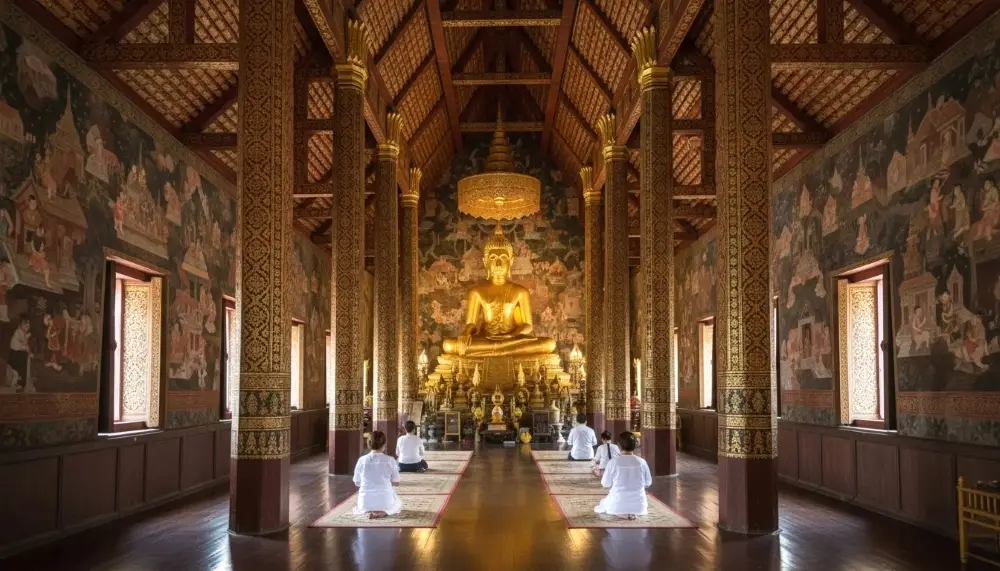
The Old City temples are clustered tightly enough that three to four major wats can be visited comfortably on foot in a single morning. This is the classic Chiang Mai temple circuit that first-time visitors consistently rate as their most memorable day in the city. Total entry cost for the circuit below: 150 THB (~$4.30) per person.
08:00: Start at Wat Chiang Man (free, oldest temple in the city, northeast corner of the moat). Arrive before the crowds for a quiet courtyard and the chance to see the resident monks at morning activity. Allow 20 to 30 minutes.
08:45: Walk 10 minutes south to Wat Chedi Luang (50 THB / ~$1.43). This is the most architecturally dramatic stop. Allow 45 to 60 minutes, including the City Pillar shrine. Monk Chats run from 09:00 to 11:00 daily.
10:00: Step next door to Wat Phan Tao (free). The all-teak interior takes 15 to 20 minutes and provides a quiet contrast to the stone drama of Wat Chedi Luang.
10:30: Walk 10 minutes west to Wat Phra Singh (50 THB / ~$1.43), the circuit’s grand finale. Allow 45 minutes for the murals and the main shrine. By 11:30 the heat and tour buses are peaking, making this the ideal moment to finish and find a shaded cafe for 80 to 120 THB (~$2.30 to $3.43). Total circuit walking time: under 30 minutes. Total cost including entry: under 200 THB (~$5.70) per person.
What Are the Best Alternatives to Avoid Crowds?
While the major sites draw the most attention, Wat Chiang Man and Wat Lok Moli offer quieter, high-authority spiritual experiences. Wat Chiang Man is the oldest temple in the city, established by King Mengrai in 1296. It is famous for its Elephant Chedi, where fifteen life-sized brick-and-stucco elephants emerge from the base of a golden spire, and it houses two highly revered miniature Buddha images: the Crystal Buddha and the Marble Buddha. Entry is free.
Wat Lok Moli, located just north of the Chang Phuak Gate, features stunning dark wood carvings and a distinct silver-themed aesthetic. The entrance is flanked by two large white elephants, and the main hall features an intricate ceiling decorated with zodiac symbols. This site is particularly popular with locals for merit-making, offering a more authentic atmosphere than the tourist-heavy centre. Entry is free.
A Unique Cultural Experience:
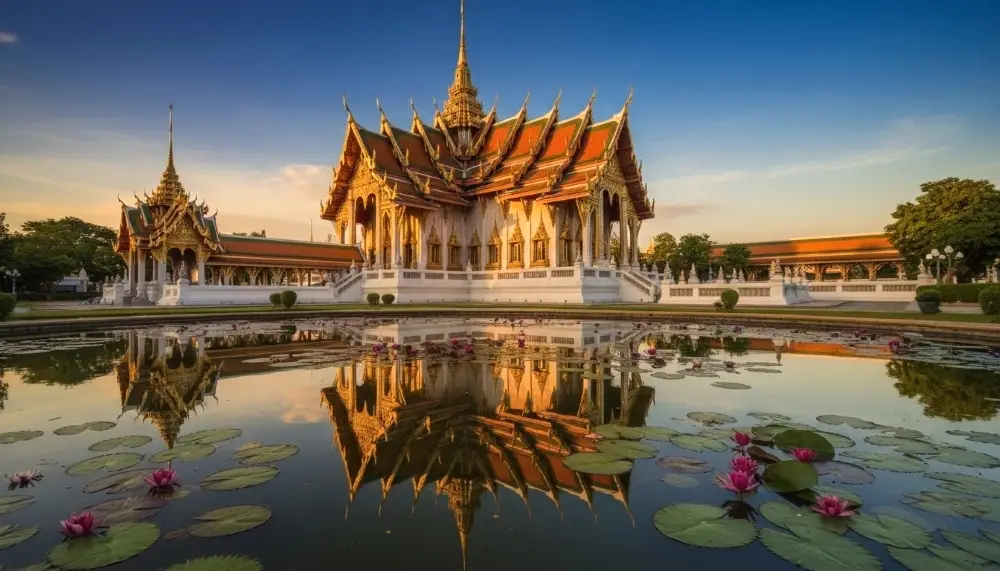
Temples in Thailand are not just tourist attractions. They are living spiritual spaces where locals come to pray, meditate, and make merit. Visitors are welcome, but it is important to show respect.
A few simple guidelines help ensure a positive experience:
- Dress modestly (cover shoulders and knees). Many major temples offer sarong rentals for 20 to 40 THB (~$0.57 to $1.15).
- Remove shoes before entering temple buildings
- Speak quietly and respectfully
- Never point your feet toward Buddha statues
- Ask permission before photographing monks
Following these customs is not difficult, and locals truly appreciate visitors who show interest in Thai culture.
The Joy Of Temple Hopping:
Inside the Old City walls, temples are often just a few minutes’ walk apart, making the area perfect for relaxed wandering. Many travelers enjoy simply strolling through the streets and discovering temples unexpectedly.
A typical temple exploration day might include morning coffee near the Old City (80 to 120 THB / ~$2.30 to $3.43), visiting two or three nearby temples (under 200 THB / ~$5.70 total entry), stopping for Thai street food at 40 to 80 THB (~$1.15 to $2.30) per dish, relaxing in a quiet temple garden, and watching sunset from a rooftop bar. The experience feels unhurried and immersive rather than rushed.
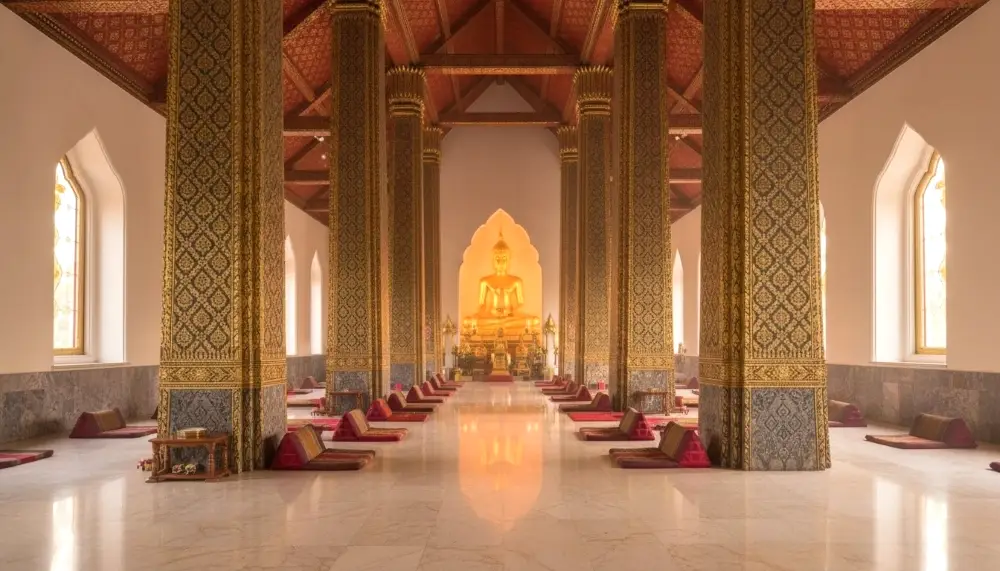
What to Wear for Temple Hopping:
Thailand has a strict dress code for sacred spaces: shoulders and knees must be covered. Here is how to stay cool while remaining respectful:
The Pro Option: Moisture-wicking, anti-odor hiking pants that look like chinos. Perfect for going from a temple visit straight to a coworking space without changing.
The Budget Option (The Sarong): Carry a light cotton scarf or sarong. You can wrap it over your shoulders or around your waist when entering a temple. Cost: 100 to 200 THB (~$2.85 to $5.70) at any Old City market. Many major temples also rent sarongs at the gate for 20 to 40 THB (~$0.57 to $1.15).
The Mid-Range Choice (Linen Trousers): Invest in a pair of high-quality linen or loose cotton pants. They are breathable, look great in photos, and keep you temple-ready all day. Chiang Mai night market prices: 150 to 400 THB (~$4.30 to $11.40) per pair.
Understanding Temple Etiquette & Culture:
Thai temples are living spiritual spaces, not just museums. Following these customs shows deep respect for the local community:
Photography: Always look for “No Photo” signs inside the main halls. Never photograph someone praying without permission.
Feet are Low: Never point your feet toward a Buddha statue or a monk. In Thai culture, feet are considered the lowest and dirtiest part of the body. Sit with feet tucked sideways or behind you.
The Wai: You do not need to bow deeply, but a small Wai (palms together at chest height) and a slight head bow when entering is a beautiful gesture. Thai people genuinely appreciate the effort.

Chiang Mai As Part Of A Bigger Adventure:
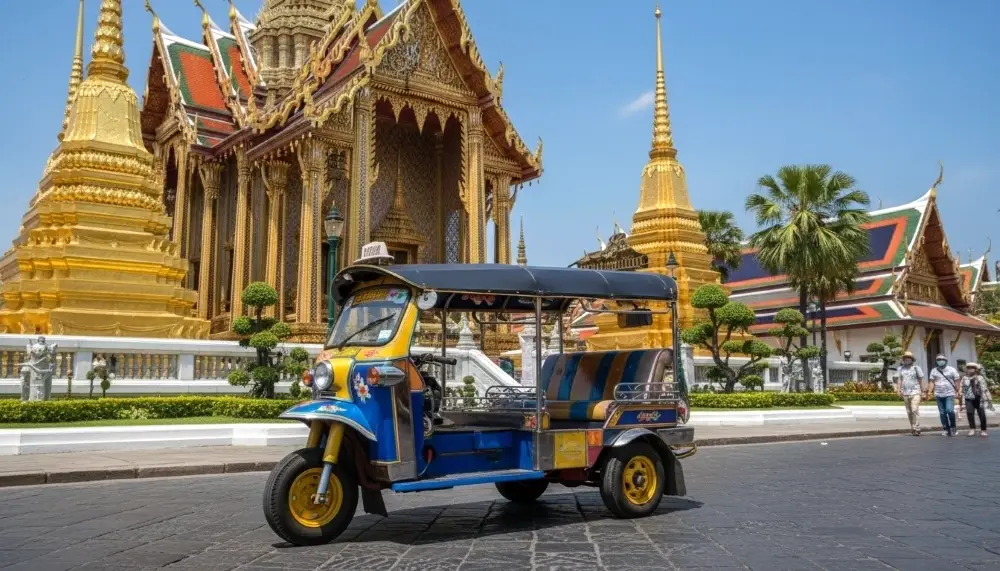
Many first-time visitors build their Thailand itinerary around three main regions: Bangkok for vibrant city life and famous temples, Chiang Mai for culture, mountains, and historic temples, and the southern islands for beaches and tropical scenery.
Chiang Mai provides a perfect balance between adventure and relaxation. After the energy of Bangkok, its slower pace feels refreshing. Flights from Chiang Mai to Bangkok operate multiple times daily at 800 to 2,000 THB (~$22.85 to $57) booked in advance. Temple visits often become the cultural highlight of the entire journey.
Frequently Asked Questions:
What is the dress code for Chiang Mai temples?
Visitors must cover shoulders and knees. Transparent fabrics, tank tops, and short skirts are prohibited. Many major temples offer sarong rentals at the entrance for 20 to 40 THB (~$0.57 to $1.15). A lightweight cotton sarong purchased at any Old City market for 100 to 200 THB (~$2.85 to $5.70) is the most practical permanent solution.
Is there an entry fee for every temple in the Old City?
No. Of the over 300 temples in Chiang Mai, only the major historical sites charge an entry fee for foreigners. Wat Phra Singh and Wat Chedi Luang cost 50 THB (~$1.43) each. Wat Phan Tao, Wat Chiang Man, Wat Lok Moli, and Wat Umong are all free. The one-day Old City temple circuit costs under 200 THB (~$5.70) total.
How do I use the Grab app for temple hopping?
Download the app, register your card or select cash, and pin your destination. Choose between cars (80 to 180 THB / ~$2.30 to $5.15 across the Old City), SUVs, or motorbikes. For Doi Suthep, a Grab return trip costs 200 to 350 THB (~$5.70 to $10). It is the most reliable way to ensure fair pricing compared to negotiating with street taxis.
Can I talk to the monks at the temples?
Yes. Wat Chedi Luang hosts Monk Chats daily from 09:00 to 11:00. These scheduled sessions allow tourists to ask questions about Buddhism and Thai culture while monks practice their English. Respectful dialogue is highly encouraged. Always wait for the monk to initiate or indicate openness to conversation.
What is the best time of day to visit Chiang Mai temples?
06:30 to 09:00 is ideal for cooler temperatures and smaller crowds. Monks are most active at dawn, offering a more authentic spiritual atmosphere. Sunset (17:00 to 18:30) is the most photogenic window for exterior shots at Doi Suthep and Wat Phra Singh. Avoid 10:00 to 15:00 when midday heat and tour bus arrivals peak.
What is Wat Sri Suphan and is it worth visiting?
Yes. Wat Sri Suphan (the Silver Temple) on Wua Lai Road is covered entirely in beaten silver panels with intricate mythological reliefs. Entry is 50 THB (~$1.43). The ordination hall is restricted to men due to religious tradition, but the exterior walls and surrounding silversmith workshops are accessible to all. The late afternoon light is the best time to visit for photography.
How long should I spend in Chiang Mai to see the temples?
Two full days covers the essential temple circuit comfortably. Day one: Old City circuit (Wat Chiang Man, Wat Chedi Luang, Wat Phan Tao, Wat Phra Singh) as a morning walk, with Wat Sri Suphan and Wua Lai Road in the late afternoon. Day two: Doi Suthep in the early morning (30 to 40 minutes from the city) and Wat Umong in the late afternoon. Budget under 400 THB (~$11.40) per person in entry fees for both days.
How do I get to Doi Suthep from the Old City?
Take a red Songthaew from Tha Phae Gate area for 50 to 80 THB (~$1.43 to $2.30) per person each way, or book a private Grab return for 200 to 350 THB (~$5.70 to $10). The red Songthaew runs frequently from around 06:30 until 17:00. Allow 30 to 45 minutes travel time each way.
Are Chiang Mai’s temples safe to visit alone?
Yes. The Old City temple area is exceptionally safe, busy with both locals and visitors, and well-patrolled during daylight hours. Standard urban awareness applies (keep bags to the front in crowds, ignore strangers claiming temples are closed for private ceremonies). Tourist Police are reachable on 1155. Doi Suthep and Wat Umong are also safe but are best visited during daylight hours only.
What is a Monk Chat and where can I find one in Chiang Mai?
A Monk Chat is a scheduled open conversation session where travelers can meet resident monks and ask questions about Buddhism, Thai culture, and temple life. Wat Chedi Luang runs the most established programme, typically from 09:00 to 11:00 daily in the main courtyard. No booking is required. Dress modestly, remove shoes, and let the monk set the pace of the conversation.