Where To Stay In Bangkok
This site contains affiliate links. We may earn a commission at no extra cost to you.
The city is huge, vibrant, and full of different neighbourhoods, each offering a completely different experience. The good news is that Bangkok is very traveler-friendly, with excellent transport, welcoming locals, and accommodation for every style and budget. All prices in this guide use a rate of 35 THB = $1 USD.
Choosing the right area can make your first trip smoother, easier, and far more memorable.
Quick Answer: The Best Areas To Stay
If you’re visiting Bangkok for the first time, these areas are usually the best choices:
- Sukhumvit offers the highest density of luxury hotels and global dining with seamless BTS Skytrain access.
- Riverside provides a premium experience focusing on heritage, five-star service, and scenic ferry transport.
- Old Town (Rattanakosin) suits history enthusiasts seeking proximity to the Grand Palace and Wat Pho.
- Siam remains the primary hub for high-end retail and family-oriented entertainment.
- Digital Nomads and long-stay travelers favor Ari or On Nut for local community vibes and lower cost of living.
Each area has its own atmosphere, so your choice depends on what kind of Bangkok experience you want.
| Neighbourhood | Best For | Transport Hub | Mid-Range Price (THB) | Mid-Range Price (USD) |
|---|---|---|---|---|
| Sukhumvit | Nightlife and Dining | BTS Asok / MRT Sukhumvit | 2,500 to 4,500 THB | ~$71 to $129 |
| Riverside | Luxury and Views | BTS Saphan Taksin / River Pier | 5,500 to 12,000 THB | ~$157 to $343 |
| Silom | Business and Greenery | BTS Sala Daeng / MRT Si Lom | 2,200 to 4,000 THB | ~$63 to $114 |
| Siam | Shopping and Families | BTS Siam (Interchange) | 3,000 to 5,500 THB | ~$86 to $157 |
| Ari | Local Vibes and Cafes | BTS Ari | 1,500 to 3,000 THB | ~$43 to $86 |
| Khao San / Old Town | Temples and Backpackers | Boat / Taxi | 600 to 2,000 THB | ~$17 to $57 |

Compare hotel prices across Bangkok’s
best areas and book with confidence.
Filter by budget, location, or score
to find the right stay for your trip.
Sukhumvit: Convenient Area For First-Timers
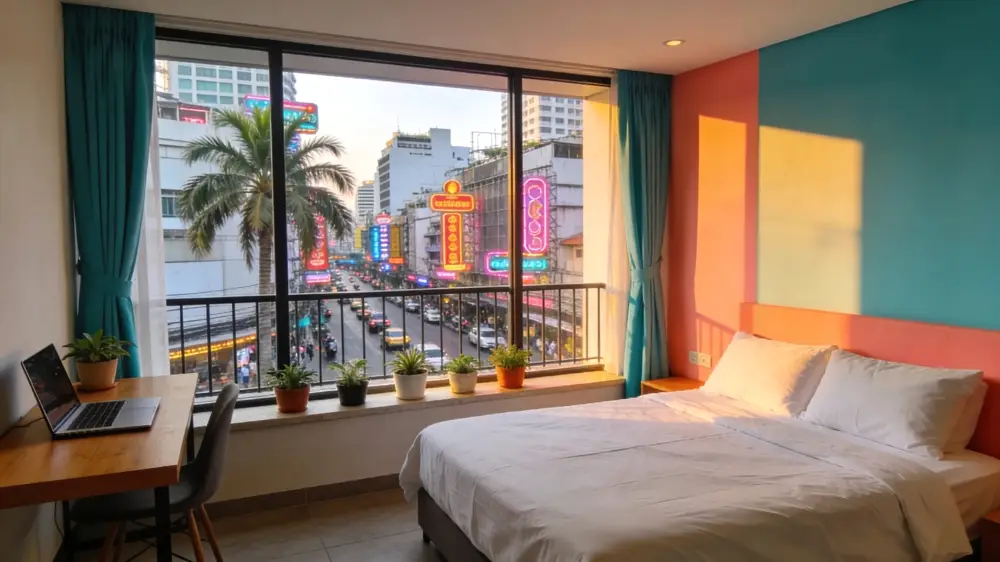
Sukhumvit is the premier choice for travelers seeking international convenience, diverse culinary options, and vibrant nightlife. It centres on the BTS Sukhumvit Line, stretching from Nana to Thong Lo, offering a massive concentration of high-rise hotels, rooftop bars, and shopping malls like Terminal 21 and EmQuartier. Mid-range hotels run 2,500 to 4,500 THB (~$71 to $129) per night.
Sukhumvit is a sprawling district. To master it, focus on the specific BTS stations. Lower Sukhumvit (Nana and Asok) caters to those who thrive on sensory overload, street markets, and rapid transit access. Asok serves as the critical intersection between the BTS Skytrain and the MRT Blue Line, making it the most strategic point for those planning to explore the entire city.
Further east, Phrom Phong and Thong Lo offer a more refined atmosphere. This is the heart of Bangkok’s Japanese community and its upscale social scene. Expect sophisticated wine bars, high-end omakase restaurants, and sleek boutique hotels. For a more residential feel with lower prices, venture to On Nut or Phra Khanong, where local markets still dominate the landscape.
Why visitors love staying in Sukhumvit:
- Excellent BTS Skytrain access with connections to every part of the city
- Huge choice of hotels and serviced apartments at every price point
- Great international restaurants alongside local street food
- Vibrant nightlife from rooftop bars to live music venues
- Easy access to Terminal 21 and EmQuartier shopping

Compare tours and tickets for Bangkok
and book instantly on your phone.
Klook mobile vouchers mean no
printing, just turn up and go.
Riverside: Beautiful Scenic Bangkok
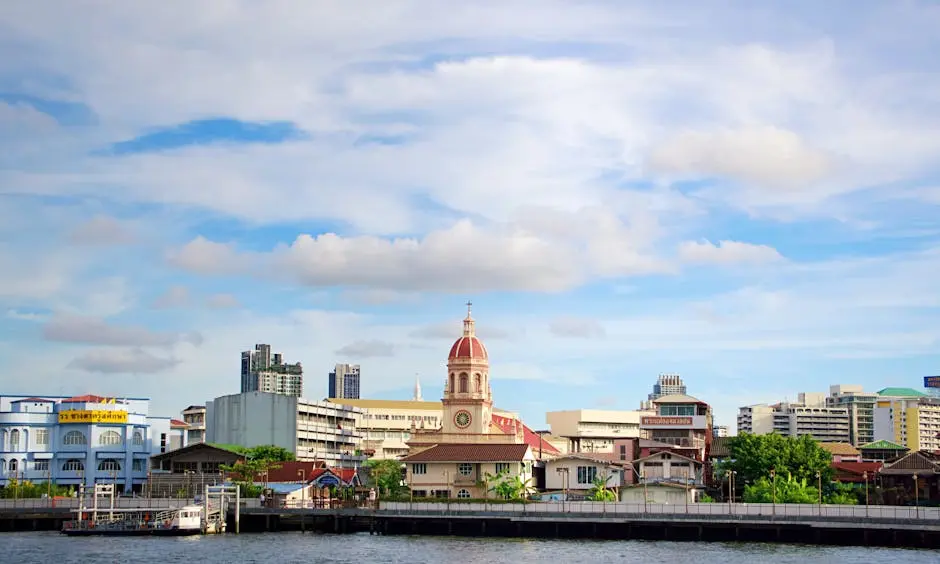
The Riverside district is the pinnacle of luxury and historical charm, situated along the banks of the Chao Phraya River. It is best suited for couples, luxury seekers, and those who prioritize scenic views and a slower pace of travel using the iconic river taxi system. Nightly rates at the top properties run 5,500 to 12,000 THB (~$157 to $343).
The river represents the soul of Bangkok. Staying here offers a respite from the inland traffic congestion. Properties like the Mandarin Oriental, The Peninsula, and Four Seasons provide world-class service that justifies the higher price point. The arrival of ICONSIAM has solidified this area as a shopping destination that rivals the city centre.
Navigation here relies on the river. The Chao Phraya Express Boat and the private hotel shuttles connect guests to the BTS Saphan Taksin station. This allows for a seamless transition from the tranquil waterfront to the bustling commercial districts. Evening views of Wat Arun illuminated across the water provide a visual experience unmatched elsewhere in the city.
Highlights of staying by the river:
- Stunning views of the river and illuminated temples after dark
- Easy boat transport directly to the Grand Palace and Wat Arun
- Luxury hotels and historic colonial-era properties
- Peaceful escape from inland traffic with ICONSIAM shopping nearby

GetYourGuide has Bangkok’s best
tours and experiences covered with
verified operators and instant
mobile vouchers on arrival.
Pro Tips For Stress Free Travel:

Transport: Grab and Bolt are essential for ride-hailing. Motorbike taxis (Win) are the fastest way to bypass gridlock for solo travelers. BTS single journeys cost 20 to 65 THB (~$0.60 to $1.85).
Connectivity: Yesim or local SIM cards from AIS or DTAC provide the most reliable 5G coverage. Use NordVPN for secure banking transactions on public Wi-Fi in hotel lobbies and cafes.
Booking: Agoda often provides the most competitive rates for Thai properties. Klook or Get Your Guide are the standard for booking day trips to Ayutthaya or Kanchanaburi.
Money: The Thai Baht (THB) is a cash-heavy economy. While major malls accept cards, street food and smaller shops require physical currency. Thai ATMs charge a flat 220 THB (~$6.30) per foreign card withdrawal, so withdraw the maximum in one transaction.

Skip the airport SIM queue in Bangkok.
Yesim’s eSIM activates before takeoff
so you’re online the second your
plane touches the tarmac.
Siam: The Heart Of Bangkok Shopping
Siam is the undisputed centre for retail therapy and family entertainment, while Silom functions as the financial heart with a dual life as a nightlife and greenery hub. Both offer exceptional connectivity via the BTS Silom Line and proximity to Lumphini Park. Mid-range hotels in Siam run 3,000 to 5,500 THB (~$86 to $157) per night.
Siam is effectively a giant outdoor mall. With Siam Paragon, Siam Center, and MBK all within walking distance, it is the logical choice for those with shopping as a primary objective. It is also remarkably flat and accessible, making it the best neighbourhood for travelers with young children or mobility concerns.
Expect to find:
- Giant malls and designer brands within walking distance
- Food courts with incredible Thai food from 80 to 200 THB (~$2.30 to $5.70) per dish
- Cinemas, cafes, and entertainment complexes
- Direct access to the BTS Skytrain interchange station
Siam is energetic and modern, and it is a great base if you want everything within walking distance.
Silom: A Great Balance Of Everything
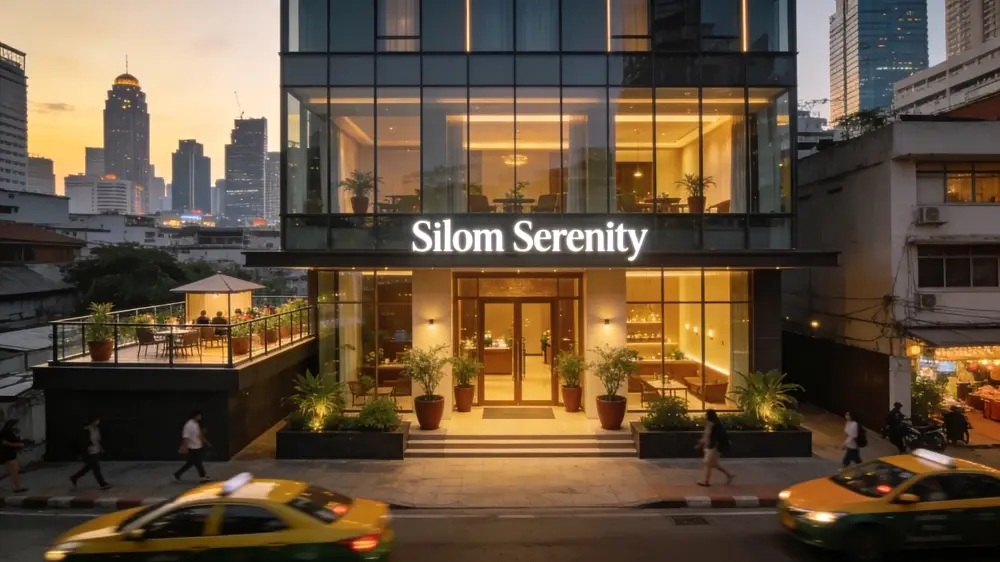
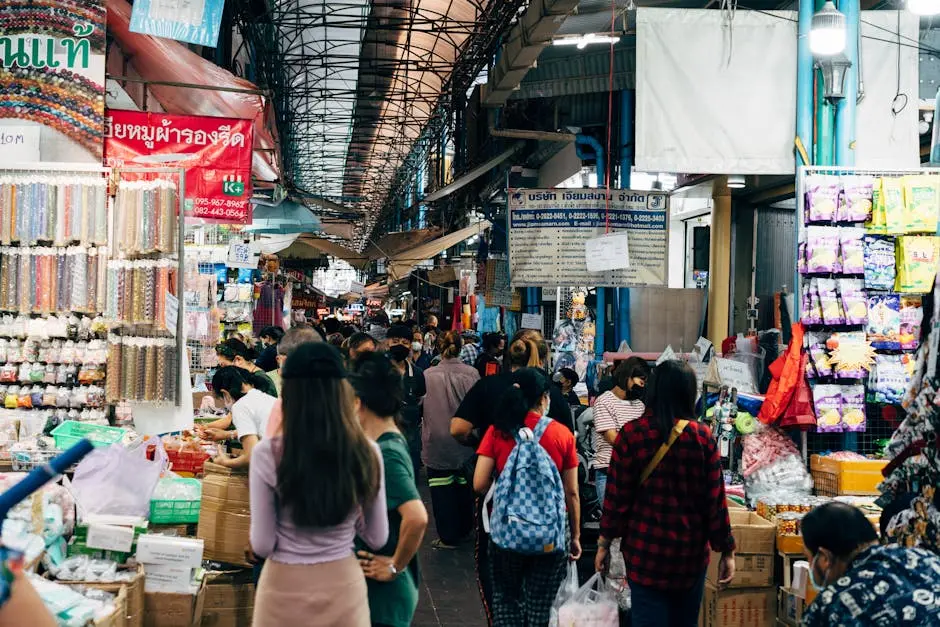
Silom provides a different balance. By day it is a suit-and-tie business district. By night, it transforms. The area around Patpong is famous for its markets and bars, while the streets near the MRT Silom station offer quick access to Lumphini Park, the city’s green lung. Silom is also home to some of the city’s most respected medical facilities and heritage skyscrapers. Mid-range hotels run 2,200 to 4,000 THB (~$63 to $114) per night.
Reasons travelers enjoy staying in Silom:
- Easy BTS and MRT access covering both Skytrain lines
- Close to Lumphini Park for morning runs and outdoor space
- Lots of restaurants and street food stalls at local prices
- Convenient midpoint between the Old City and modern Sukhumvit
It is a comfortable middle ground between sightseeing, nightlife, and transport convenience.
Khao San Road & Old Town:
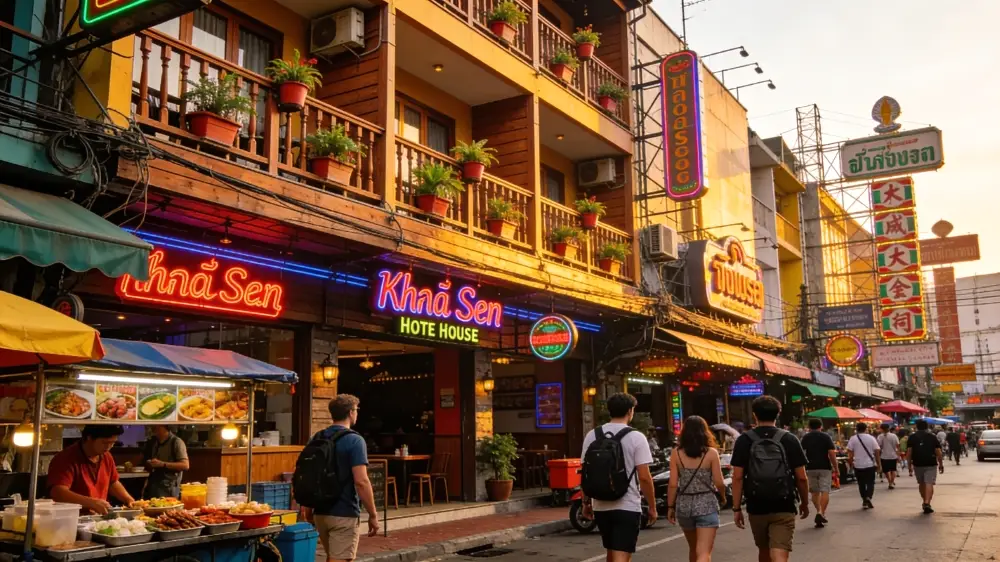
Many travelers discover Thailand through the backpacker hub around Khao San Road. This area is lively, chaotic, and packed with hostels, guesthouses, street food, and travel cafes. Dorm beds start from 350 THB (~$10) and private rooms from 600 to 1,200 THB (~$17 to $34) per night. It is also closer to Bangkok’s most famous temples and historic landmarks than any other area.
The main trade-off is transport. Khao San Road is not on the BTS or MRT network. Getting to Sukhumvit or Siam requires a Grab ride (100 to 150 THB / ~$2.85 to $4.30) or a metered taxi. If you plan to spend most of your time in the Old City temples, it is ideal. If you want to range widely across the city, it adds time and cost to every journey.
Nearby attractions include:
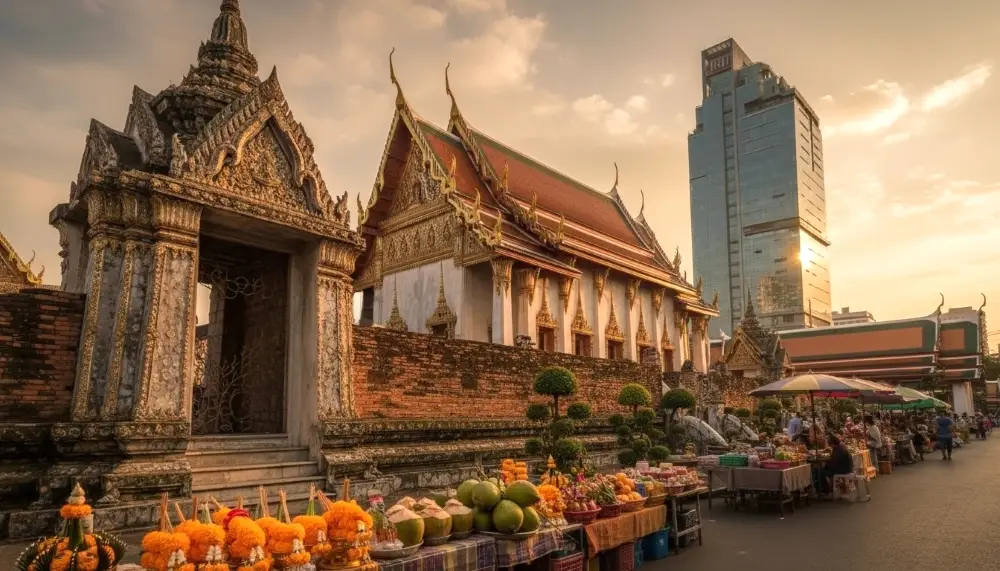
- The Grand Palace (500 THB / ~$14 entry, 10-minute walk)
- Wat Pho, Temple of the Reclining Buddha (200 THB / ~$5.70)
- Wat Arun across the river (100 THB / ~$2.85 plus 5 THB ferry)
- Traditional markets and the Talat Noi heritage neighbourhood
Ari and On Nut: The Local Alternatives
Both Ari and On Nut were briefly mentioned in the Quick Answer but deserve their own explanation. They are two of the most popular choices for longer-stay visitors, digital nomads, and anyone who wants to live like a Bangkok local rather than a tourist.
Ari (BTS Ari station, northern Sukhumvit Line) is a low-rise neighbourhood of independent coffee shops, plant-based restaurants, dog-friendly cafes, and a Saturday morning farmers market. It has none of the neon intensity of lower Sukhumvit and attracts a mix of expats, Thai professionals, and creatives. Mid-range accommodation runs 1,500 to 3,000 THB (~$43 to $86) per night, and serviced apartments for longer stays can be found from 18,000 to 30,000 THB (~$514 to $857) per month.
On Nut (BTS On Nut station, eastern Sukhumvit Line) is the budget-conscious choice on the Skytrain with direct access to the airport rail link interchange at Phaya Thai. Accommodation here runs 800 to 2,000 THB (~$23 to $57) per night. The local wet market, Tesco Lotus, and dozens of street food stalls at 50 to 80 THB (~$1.40 to $2.30) per dish make it one of the most cost-effective places to stay in the city while remaining on a major BTS line.
What to Expect on Arrival:
Before you land, it is worth knowing what to expect in the first few hours. Most international flights arrive at Suvarnabhumi Airport (BKK). The Airport Rail Link (ARL) runs to Phaya Thai BTS station for 45 THB (~$1.30) and takes around 30 minutes. A metered taxi to central Bangkok costs 300 to 400 THB (~$8.60 to $11.40) including the expressway toll. Avoid unlicensed touts in the arrivals hall.
Most Bangkok hotels offer check-in from 14:00. If you arrive earlier, your room may not be ready. Use this time productively. Radical Storage has verified luggage storage locations near major BTS stations across the city. Drop your bags and start exploring immediately rather than sitting in a lobby waiting for check-in. Book a slot online before you land so it is confirmed on arrival.
ATMs are available throughout Suvarnabhumi arrivals and at every 7-Eleven in the city. Each foreign card withdrawal carries a 220 THB (~$6.30) fee, so withdraw the maximum amount (20,000 to 30,000 THB / ~$571 to $857) in a single transaction. The best exchange rates are at SuperRich booths (orange or green) found in major malls, not at airport kiosks.
Understanding Bangkok’s Transport:
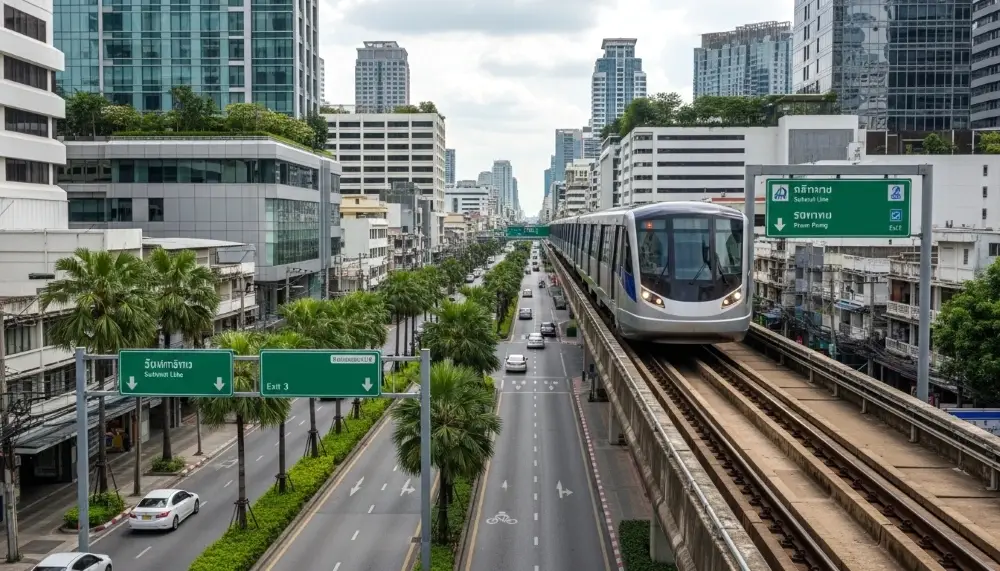
One reason Bangkok works so well for visitors is its excellent transport system. Even though the city looks huge on a map, getting around is surprisingly straightforward.
Key transport options include:
- BTS Skytrain, fast, clean, and perfect for tourists (20 to 65 THB / ~$0.60 to $1.85 per journey)
- MRT subway, useful for reaching Chinatown, Lumphini, and the NIST area
- River boats, the Blue Flag day pass costs 150 THB (~$4.30) and covers all temple stops
- Grab taxis, transparent fixed pricing, available city-wide within minutes
- Tuk-tuks, fun for short rides but always agree on a price before boarding
When choosing where to stay, being within five minutes’ walk of a BTS or MRT station is the single most important factor for easy exploration.
Frequently Asked Questions:
Which neighbourhood is best for first-time visitors?
Sukhumvit near Asok is the most practical choice due to the intersection of the BTS and MRT lines, providing easy access to both modern attractions and the historic Old Town. Mid-range hotels here run 2,500 to 4,500 THB (~$71 to $129) per night. If budget is the priority, On Nut on the same BTS line offers accommodation from 800 to 2,000 THB (~$23 to $57) with the same connectivity.
Is it better to stay near the river or in the city centre?
Choose the Riverside for a romantic or high-end luxury experience with iconic views of Wat Arun. The Mandarin Oriental and Peninsula start from around 8,000 THB (~$229) per night. Choose the city centre (Siam or Sukhumvit) if you prefer walking to shops, diverse dining, and late-night entertainment at lower prices.
How much should I budget for a hotel in Bangkok?
Budget guesthouses and hostels start at 350 to 1,000 THB (~$10 to $29) per night. Quality mid-range hotels range from 2,000 to 4,500 THB (~$57 to $129) per night. Luxury five-star properties typically start at 6,000 THB (~$171) and can exceed 25,000 THB (~$714) per night for river-view suites at the Mandarin Oriental or Peninsula.
Which area is closest to the airport?
For Suvarnabhumi (BKK), staying near the Airport Rail Link stations (Phaya Thai BTS or Makkasan MRT) is most efficient. The ARL runs to Phaya Thai for 45 THB (~$1.30). For Don Mueang (DMK), hotels near the SRT Red Line or in the northern districts like Chatuchak are preferable.
Is Khao San Road worth staying at in 2026?
Yes, if your priority is the Old City temples and meeting other travelers on a tight budget. Dorm beds start from 350 THB (~$10) and private rooms from 600 THB (~$17). The trade-off is transport: there is no BTS or MRT station nearby, so reaching Sukhumvit or Siam requires a Grab ride of 100 to 150 THB (~$2.85 to $4.30). For a quiet first visit focused on temples, it is excellent value.
What is the difference between lower and upper Sukhumvit?
Lower Sukhumvit (Nana to Asok BTS stations) is dense, loud, and ideal for travelers who want everything immediately available including street food, bars, and transport. Upper Sukhumvit (Phrom Phong to Thong Lo) is quieter, more expensive, and favoured by expats and long-term visitors for its Japanese restaurants, wine bars, and boutique hotels. On Nut and Phra Khanong at the far eastern end offer the lowest prices on the Skytrain line.
Is Bangkok safe for solo female travelers?
Yes. Bangkok consistently ranks among the safest large cities in Asia for solo female travelers. Violent crime against tourists is extremely rare. Standard precautions apply: use Grab rather than hailing taxis on the street at night, keep an eye on your drink in bars, and trust your instincts in unfamiliar areas. Staying in a BTS-connected neighbourhood ensures you are never far from a well-lit, well-populated station.
Where should digital nomads stay in Bangkok?
Ari (BTS Ari) is the top choice for nomads who want a local, creative atmosphere with excellent independent coffee shops and reasonable accommodation at 1,500 to 3,000 THB (~$43 to $86) per night. Ekkamai and Thong Lo on the upper Sukhumvit Line are popular for their co-working cafe density. On Nut is the most cost-effective option at 800 to 2,000 THB (~$23 to $57) per night while staying on the Skytrain. Monthly serviced apartments in Ari or Thong Lo run 18,000 to 35,000 THB (~$514 to $1,000) per month.
What is the best area for families with young children?
Siam is the most practical for families due to its flat, walkable layout, direct BTS interchange access, and proximity to Siam Paragon (which has a large aquarium and cinemas), MBK Center, and numerous family-friendly food courts. Mid-range hotels in Siam run 3,000 to 5,500 THB (~$86 to $157) per night and are used to international families.
Can I store luggage if I arrive before hotel check-in?
Yes. Most major hotels will hold bags at the bell desk if you have a confirmed booking, though it is worth calling ahead to confirm. For guaranteed secure storage near any BTS or MRT station, Radical Storage operates a network of verified drop-off points across Bangkok. Book online before arrival to have the slot confirmed when you land.
How do I get the best hotel rates in Bangkok?
Book through Agoda for the deepest Asia-specific discounts, particularly on local boutique properties that do not list prominently on global platforms. Booking.com is better for free-cancellation flexibility. For last-minute deals, the Agoda and Booking.com apps often show mobile-only rates that are 10 to 20% below the web price. Booking at least two to three weeks ahead during peak season (December to February) is strongly recommended for popular areas.