Best Things To Do In Chiang Mai
This site contains affiliate links. We may earn a commission at no extra cost to you.
Chiang Mai is one of Thailand’s most beloved destinations, and it is easy to see why. Nestled among misty mountains in northern Thailand, this historic city blends ancient temples, vibrant markets, lush nature, and a relaxed atmosphere that many travelers instantly fall in love with. All prices in this guide use a rate of 35 THB = $1 USD.
If you are planning your first trip to Thailand, here are the best things to do in Chiang Mai and why they deserve a place on your itinerary.
Quick Answer: The Best Things To Do?
The best things to do in Chiang Mai include exploring ancient temples, visiting ethical elephant sanctuaries, wandering through vibrant night markets, and experiencing the region’s beautiful mountains and waterfalls.
Top experiences include:
- Visiting Wat Phra That Doi Suthep (30 THB / ~$0.86 entry)
- Exploring Chiang Mai Old City temples (free to 20 THB / ~$0.57)
- Shopping at the famous Sunday Night Walking Street (free entry)
- Visiting an ethical elephant sanctuary (2,500 to 3,500 THB / ~$71 to $100)
- Taking a Thai cooking class (800 to 1,500 THB / ~$22.85 to $42.85)
- Exploring Doi Inthanon National Park (300 THB / ~$8.55 entry)
Chiang Mai combines culture, adventure, and relaxation in a way few destinations can.


From temples to island tours, Klook
covers Chiang Mai’s best experiences.
Hotel pickup is often included and
prices beat the pier walk-in rate.
Explore The Temples Of Chiang Mai Old City:
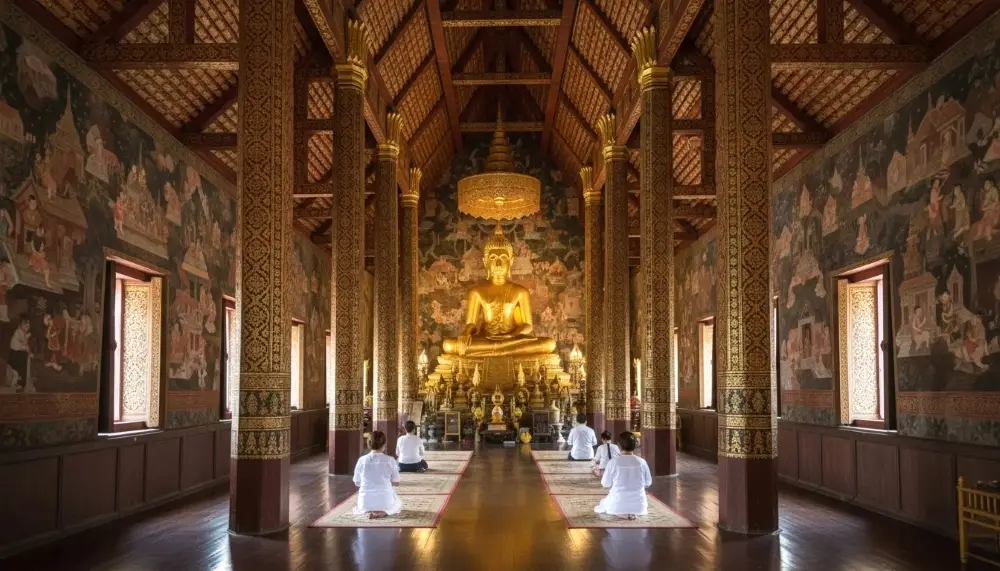
The Old City of Chiang Mai is a square mile enclosed by ancient moats, housing over 300 Buddhist temples. The most significant are Wat Chedi Luang, known for its massive ruined pagoda, and Wat Phra Singh, which houses the highly revered Phra Singh Buddha image. Most Old City temple entry costs 20 to 40 THB (~$0.57 to $1.15) for foreigners.
Beyond the major sites, seek out Wat Sri Suphan, the Silver Temple located just outside the South Gate in the silversmith district of Wua Lai. The main ordination hall is restricted to men due to religious tradition, though the exterior is accessible to all. When entering any temple, shoulders and knees must be covered. Carry a sarong or light scarf to avoid being turned away at the gates.
Some of the most famous include:
- Wat Chedi Luang, known for its massive partially ruined pagoda (40 THB / ~$1.15)
- Wat Phra Singh, one of the most revered temples in northern Thailand (20 THB / ~$0.57)
- Wat Chiang Man, the oldest temple in the city (free)

Lock in top-rated Chiang Mai tours with
GetYourGuide’s free cancellation
up to 24 hours before. Reserve now
and pay later if dates aren’t set.
Chiang Mai Activity and Cost Guide:
| Activity | Location | Cost (THB) | Cost (USD) | Best For |
|---|---|---|---|---|
| Wat Phra That Doi Suthep | Doi Suthep Summit | 30 THB | ~$0.86 | Photography and Views |
| Elephant Nature Park | Mae Taeng Valley | 2,500 to 3,500 THB | ~$71 to $100 | Ethical Wildlife |
| Sunday Walking Street | Ratchadamnoen Road | Free | Free | Street Food and Crafts |
| Thai Cooking Class | Various schools | 800 to 1,500 THB | ~$22.85 to $42.85 | Food and Culture |
| Doi Inthanon National Park | 60 km south of city | 300 THB | ~$8.55 | Nature and Waterfalls |

Lock in your Chiang Mai accommodation
early and beat peak-season price hikes.
Agoda’s filters let you compare options
side by side before you commit.
Visit The Iconic Wat Phra That Doi Suthep:
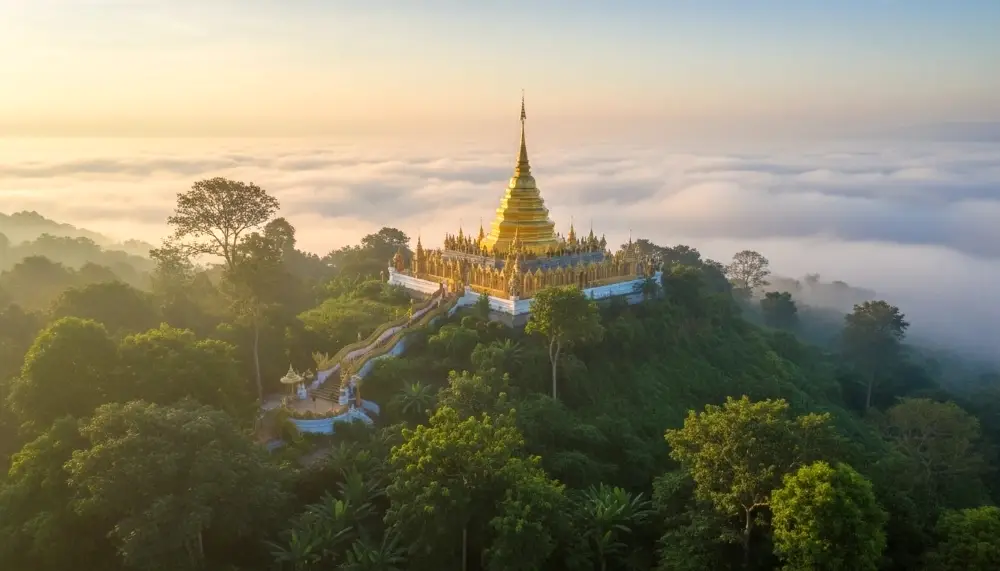
Chiang Mai’s primary mountain attraction is Wat Phra That Doi Suthep, a golden spire overlooking the valley at 1,080 metres above sea level. Entry costs 30 THB (~$0.86). Visitors reach the summit via a winding 18-kilometre mountain road, followed by a 306-step Naga staircase. The site serves as a spiritual beacon and provides the most comprehensive panoramic views of the city below.
The ascent to Doi Suthep is more than a sightseeing trip. For those seeking a local alternative to the tourist vans (red songthaew, 50 to 80 THB / ~$1.43 to $2.30 per person shared), the Monk’s Trail (Wat Pha Lat Hike) offers a shaded, moderate climb through the forest, emerging at a serene temple halfway up the mountain that feels completely removed from the modern world.
Early morning and sunset are particularly magical times to visit. The air is cooler, the crowds are smaller, and the golden chedi glows beautifully in the soft light. For many travelers, this temple becomes one of the most memorable moments of their entire trip.

From short trips to long stays in Chiang Mai,
Airalo has flexible eSIM data plans
you install in minutes. Top up
remotely if you need more data.
Pro Tips For Stress Free Travel:

Transport Apps: Use Grab or Bolt for transparent pricing in the city. InDrive is excellent for negotiating longer distances to mountain trailheads. A Grab ride from the airport to the Old City costs 100 to 160 THB (~$2.85 to $4.57).
Accommodation and Tours: Agoda offers the best rates for Lanna-style boutiques. Use Klook or Get Your Guide for pre-booked elephant sanctuary visits, cooking classes, and mountain treks.
Connectivity: Yesim or local AIS/True SIM cards provide 5G coverage even in the foothills. Monthly unlimited data plans cost 600 to 900 THB (~$17.15 to $25.70). Use NordVPN for secure banking on public Wi-Fi.
Currency: The Thai Baht (THB) is essential. While QR payments via PromptPay are common in larger establishments, small market vendors and temple ticket booths still require physical cash. Thai ATMs charge a flat 220 THB (~$6.30) per foreign card withdrawal.

Forget swapping physical SIMs in Chiang Mai.
Yesim works on most modern phones,
activates remotely, and keeps your
home number live on WhatsApp too.
Experience An Ethical Elephant Sanctuary:
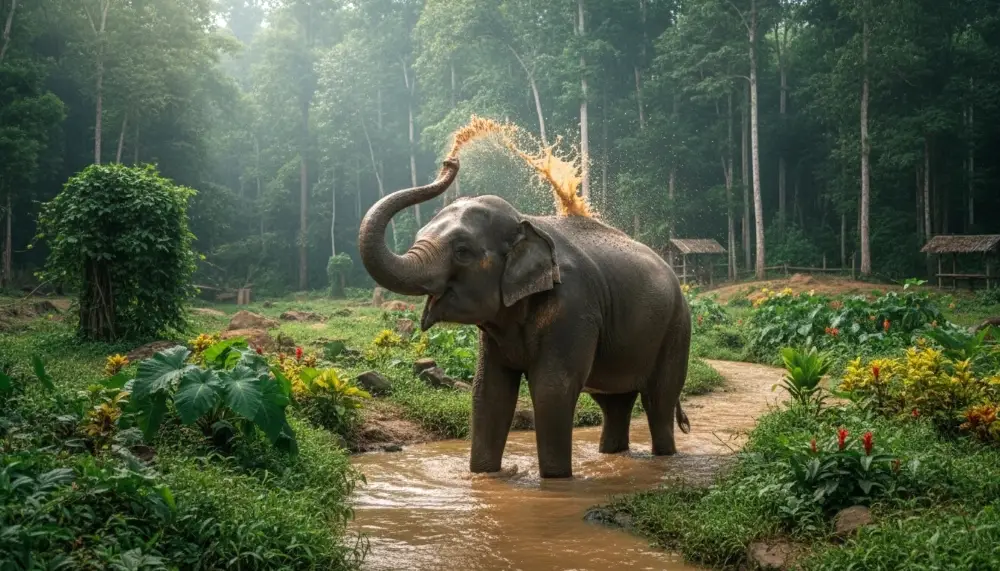
Seeing elephants is high on many travelers’ Thailand bucket lists, and Chiang Mai is one of the best places to do this responsibly. Several ethical elephant sanctuaries near the city focus on rescue, rehabilitation, and education rather than entertainment. A full-day visit costs 2,500 to 3,500 THB (~$71 to $100) per person including transport from the city.
Visitors can typically feed elephants, walk beside them through forest areas, learn about elephant conservation, and watch them bathe and socialise naturally. Avoid places that offer elephant riding or circus-style performances. Responsible sanctuaries allow you to observe these incredible animals in a more natural and respectful way.
Book in advance through Klook or Get Your Guide as popular sanctuaries like Elephant Nature Park and Elephant Jungle Sanctuary fill weeks ahead during peak season (November to February). Free cancellation up to 24 hours before is standard on most listings.
Wander Through Chiang Mai’s Night Markets:
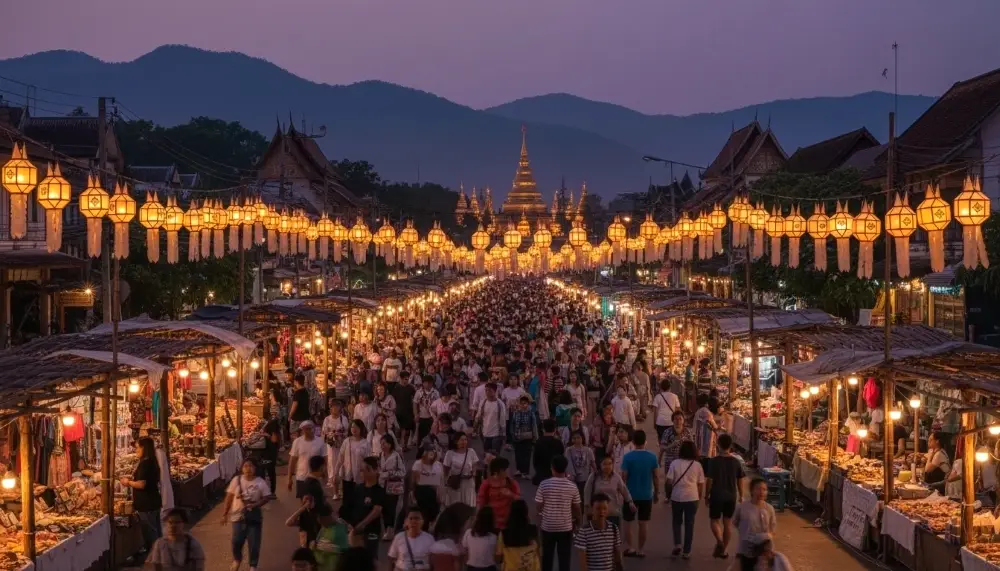
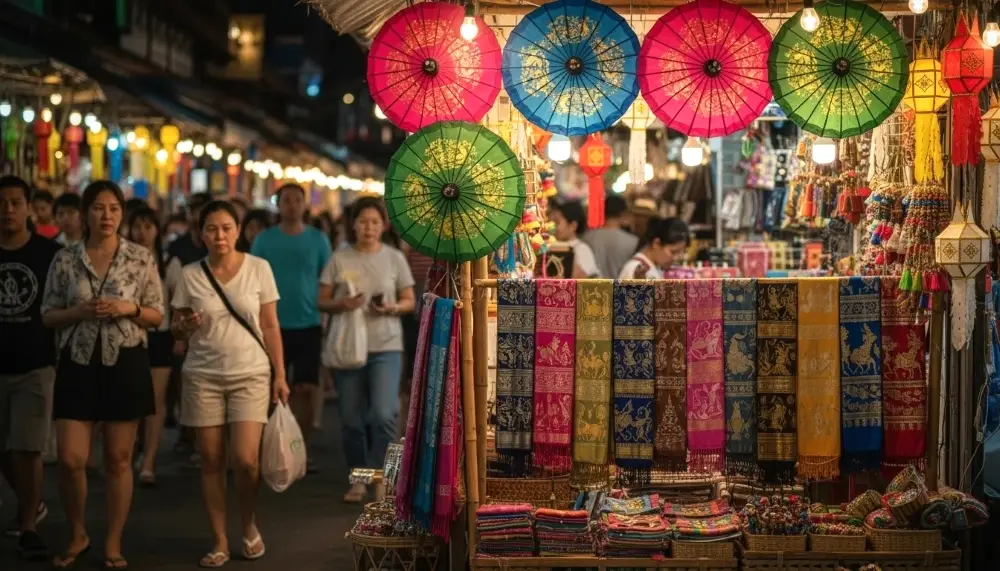
The Sunday Walking Street is Chiang Mai‘s premier cultural market, stretching from Tha Phae Gate down Ratchadamnoen Road every Sunday from 17:00. This market prioritises local craftsmanship, featuring hand-woven textiles, northern silverwork, and street food unique to the Lanna region, such as spicy Sai Oua sausage at 30 to 50 THB (~$0.86 to $1.43) per skewer. Entry is free.
While the Night Bazaar on Chang Klan Road runs daily, it often caters to mass-produced goods. The Sunday market remains the authentic soul of the city. Navigate the crowds by arriving early, and ensure you are within earshot of the public speakers at 18:00 when the national anthem plays. The entire market will come to a respectful standstill, a powerful display of Thai social harmony. Here you will find:
- Handmade crafts and Lanna textiles
- Clothing and souvenirs at 150 to 500 THB (~$4.30 to $14.30) per item
- Street food stalls with dishes from 40 to 100 THB (~$1.15 to $2.85)
- Live music and traditional Lanna performances
Take A Thai Cooking Class:
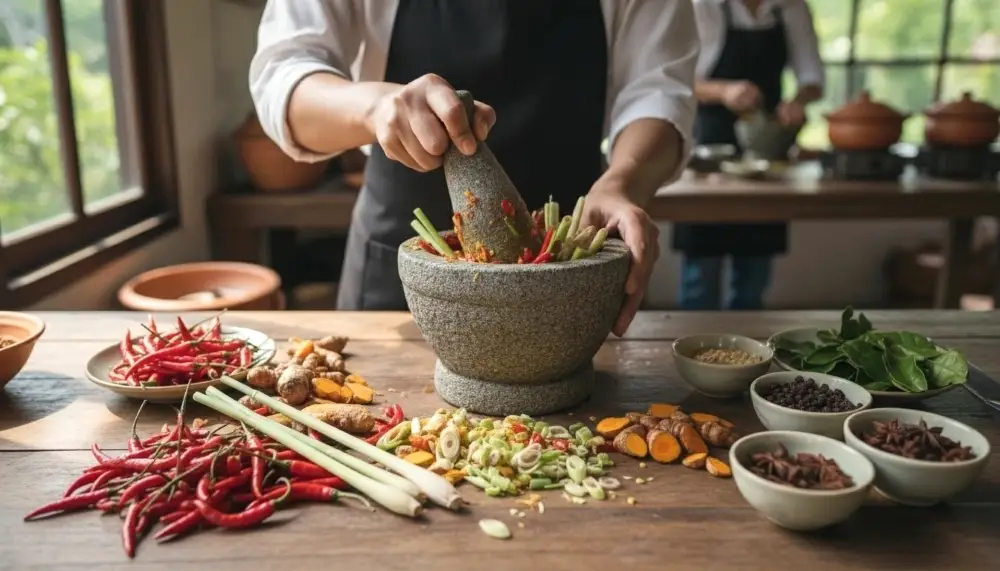
Thai food is famous around the world, and Chiang Mai is one of the best places to learn how to cook it. Many cooking schools offer half-day or full-day classes that begin with a visit to a local market to select fresh ingredients.
A half-day class covering four to five dishes typically costs 800 to 1,200 THB (~$22.85 to $34.30) per person. A full-day class with market tour, seven to eight dishes, and a recipe booklet runs 1,200 to 1,500 THB (~$34.30 to $42.85). Most classes include all ingredients, a welcome drink, and a sit-down lunch or dinner of everything you cook. You will typically learn classic dishes including Pad Thai, green curry, Tom Yum soup, and mango sticky rice.
Cooking classes are fun, social, and surprisingly easy even for beginners. Book through Klook or Get Your Guide for verified schools with free cancellation. You will leave with recipes you can recreate at home long after your Thailand trip ends.
Doi Inthanon National Park: Thailand’s Roof:

Doi Inthanon National Park is home to Thailand’s highest peak at 2,565 metres above sea level and is one of the most rewarding day trips from Chiang Mai. Located about 60 kilometres southwest of the city, the park encompasses cloud forest, tiered waterfalls, two Royal Chedis, and some of the most diverse birdlife in Southeast Asia. Entry costs 300 THB (~$8.55) for foreigners.
The summit: Drive or join a guided tour to the peak, where temperatures drop to 10 to 15°C even in the hot season, a striking contrast to the 35°C heat in the valley below. A light jacket is essential year-round. The summit viewpoint is often shrouded in mist, which gives the forest an almost mystical quality.
The Royal Chedis: Two ornate pagodas built to honour King Bhumibol and Queen Sirikit stand at around 2,200 metres with manicured gardens and panoramic mountain views. Wachirathan Waterfall, the park’s most impressive cascade, is a 15-minute walk from the main road.
Getting there: Guided day tours from Chiang Mai cost 1,200 to 2,000 THB (~$34.30 to $57) per person through Klook or Get Your Guide, including transport and a park guide. Self-drive by rented motorbike (150 to 250 THB / ~$4.30 to $7.15 per day) or car is also popular and gives more flexibility at the waterfalls.
Relax In Chiang Mai’s Café Culture:
Chiang Mai has developed a reputation as one of Thailand’s best cities for cafes and creative spaces. Across the Old City and the Nimmanhaemin area, you will find beautifully designed cafes serving excellent northern Thai coffee, fresh pastries, and relaxed brunch menus at 80 to 200 THB (~$2.30 to $5.70) per item.
Nimman Road (short for Nimmanhaemin) is the epicentre of this scene. The One Nimman complex and Maya Mall area are lined with independent coffee shops, co-working spaces, and boutique brunch restaurants that draw both long-term nomads and weekend visitors from Bangkok. A specialty coffee costs 80 to 120 THB (~$2.30 to $3.43) at most Nimman establishments.
Many digital nomads and long-term travelers choose Chiang Mai partly because of this laid-back cafe culture. It is the perfect place to slow down for an afternoon and enjoy the relaxed northern Thai lifestyle. Monthly rent in the Nimman area for a one-bedroom condo runs 12,000 to 20,000 THB (~$343 to $571), significantly less than Bangkok equivalents.
Is Chiang Mai Good For First-Timers?
Absolutely. Many travelers say Chiang Mai is the easiest place in Thailand to fall in love with the country. It offers incredible culture, friendly locals, amazing food, and unforgettable nature without the intensity of larger cities.
If Bangkok feels like an exciting introduction to Thailand’s energy, Chiang Mai often feels like a place where travelers can slow down, explore deeper, and really connect with the culture. A daily budget of 1,200 to 2,000 THB (~$34.30 to $57.15) covers accommodation, three meals, local transport, and one paid activity comfortably.
It is also a great base before heading south to Thailand’s famous islands and beaches. Flights from Chiang Mai to Bangkok, Phuket, and Koh Samui operate multiple times daily at 800 to 2,500 THB (~$22.85 to $71.40) booked in advance.
Frequently Asked Questions:
What is the best way to get from Chiang Mai Airport to the Old City?
A pre-paid taxi from the airport counter costs approximately 150 THB (~$4.30) or book via the Grab app for 100 to 160 THB (~$2.85 to $4.57) depending on vehicle type. The journey takes around 20 to 30 minutes. There is no rail link from Chiang Mai Airport. Avoid unlicensed drivers outside the terminal exit.
Is the water safe to drink in Chiang Mai?
Tap water is not potable. Drink bottled water (10 to 15 THB / ~$0.29 to $0.43 at any 7-Eleven) or use the water refill machines found on street corners for 1 THB per litre. Most restaurants use commercial ice made from purified water, which is safe for consumption.
When is the best time to visit Chiang Mai?
The Cool Season from November to early February is ideal, with daytime temperatures around 25 to 28°C and chilly evenings in the mountains. Avoid the Burning Season (March to April) when agricultural haze from field burning significantly reduces air quality across the entire north. The rainy season (June to October) brings green landscapes and fewer crowds.
How much does it cost to visit an elephant sanctuary near Chiang Mai?
A full-day ethical elephant sanctuary visit costs 2,500 to 3,500 THB (~$71 to $100) per person including transport from the city. Half-day visits to smaller sanctuaries start from 1,500 THB (~$42.85). Book in advance through Klook or Get Your Guide as popular sanctuaries like Elephant Nature Park fill weeks ahead during peak season (November to February).
How do I get to Doi Suthep temple from the Old City?
Take a red songthaew (shared pickup truck taxi) from Tha Phae Gate or Chiang Mai Zoo Road for 50 to 80 THB (~$1.43 to $2.30) per person each way, or book a private Grab or Bolt ride for 200 to 350 THB (~$5.70 to $10) return. The red songthaew is the most common tourist option and runs frequently throughout the day until around 17:00.
What is the Sunday Walking Street and when does it run?
The Sunday Walking Street (Wualai Walking Street) runs every Sunday from 17:00 to 22:00 along Ratchadamnoen Road in the Old City. Entry is free. It features handmade Lanna crafts, northern Thai street food (40 to 100 THB / ~$1.15 to $2.85 per dish), live music, and traditional performances. The atmosphere peaks between 18:00 and 20:00.
How much does a Thai cooking class cost in Chiang Mai?
A half-day cooking class covering four to five dishes costs 800 to 1,200 THB (~$22.85 to $34.30) per person. A full-day class with market tour and seven to eight dishes runs 1,200 to 1,500 THB (~$34.30 to $42.85). Most classes include all ingredients, a welcome drink, and a meal of everything you cook. Book through Klook or Get Your Guide for verified schools with free cancellation.
Is Doi Inthanon worth visiting as a day trip from Chiang Mai?
Yes, strongly. Doi Inthanon National Park (300 THB / ~$8.55 entry) is Thailand’s highest peak at 2,565 metres and offers cloud forest, tiered waterfalls, two Royal Chedis, and temperatures 15 to 20°C cooler than the city. Guided tours cost 1,200 to 2,000 THB (~$34.30 to $57) per person. Self-drive by motorbike (150 to 250 THB / ~$4.30 to $7.15 per day rental) gives the most flexibility. Allow a full day.
What is the best area to stay in Chiang Mai?
The Old City is the most convenient base for first-time visitors, with temples, markets, and restaurants all walkable. Nimman Road (Nimmanhaemin) is better for digital nomads and cafe-culture enthusiasts, with one-bedroom condos from 12,000 to 20,000 THB (~$343 to $571) per month. Santitham is a quieter residential area popular with long-term expats. Most visitors stay in the Old City or Nimman for easy access to both.
How much does a day in Chiang Mai cost?
A comfortable day covering accommodation, three meals, local transport, and one paid activity costs 1,200 to 2,000 THB (~$34.30 to $57.15) per person. A budget day (guesthouse, street food, free temple visits) can be done for 600 to 900 THB (~$17.15 to $25.70). Adding an elephant sanctuary or Doi Inthanon tour pushes a single day to 3,500 to 5,000 THB (~$100 to $143) per person including all activities.