Living In Chiang Mai
This site contains affiliate links. We may earn a commission at no extra cost to you.
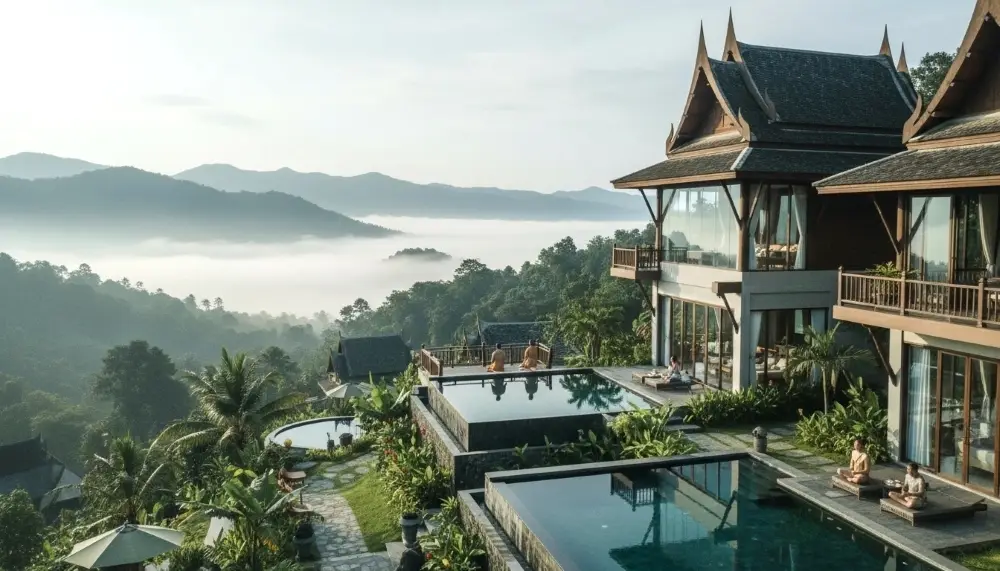
For many travellers visiting Thailand for the first time, the idea of actually living somewhere in the country, even temporarily, can feel both exciting and slightly daunting. Northern Thailand’s mountain city of Chiang Mai is consistently the place where visitors first start imagining a slower, more immersive experience of the country. It is quieter than Bangkok, cooler than the south, and carries a cultural richness that gets under your skin in a way that is genuinely difficult to explain until you have felt it yourself.
Whether you are planning a longer stay, a digital nomad adventure, a family relocation, or simply want to understand what life looks and feels like beyond the tourist route, Chiang Mai delivers in every direction.
The Quick Summary:
Budget: 30,000 to 85,000 THB per month depending on lifestyle, accommodation choice, and how often you eat at international restaurants rather than local stalls.
Visa Options: Destination Thailand Visa (DTV) for long-term remote workers, 60-day visa exemption for short stays, or the Long-Term Resident (LTR) Visa for high earners. Always verify current requirements with your nearest Thai embassy before applying, as criteria have changed multiple times since 2024.
Best Neighbourhoods: Nimmanhaemin for modern amenities and co-working density, Santitham for authentic local prices, and the Old City for cultural immersion and heritage.
Best Time to Live Here: November to February for genuinely cool, clear weather. Avoid February to April if air quality is a concern: this is the agricultural burning season and PM2.5 levels can reach hazardous levels.

From budget rooms to high-end resorts
in Chiang Mai, Booking.com has the lot.
Genius members unlock an extra 10%
off thousands of properties worldwide.
Thailand Visa Guide: What You Need to Know in 2026

Thailand’s visa rules have evolved considerably since 2023, and working from outdated information is one of the most common mistakes long-stay planners make. Here is a clear, practical breakdown of the main options available to Chiang Mai-bound travellers and residents in 2026.
Visa Exemption (Tourist Entry)
Citizens of the UK, most EU countries, Australia, New Zealand, the United States, and over 60 other nationalities currently receive a 60-day visa exemption stamp on arrival. This was extended from the previous 30-day default as part of Thailand’s post-pandemic tourism recovery programme. A single extension of 30 days can be obtained at the Chiang Mai Immigration Office (on Airport Road) for 1,900 THB, giving a maximum stay of 90 days. Carry proof of onward travel and evidence of sufficient funds at the point of entry. Border runs to reset the exemption clock are possible but are being scrutinised more carefully at both land and air borders.
The Destination Thailand Visa (DTV): The Remote Worker’s Best Option
The DTV was launched in mid-2024 and has been updated through 2025, making it the most practical long-stay visa for remote workers, freelancers, slow travellers, and their dependants. Key details for 2026:
- Valid for 5 years from date of issue with unlimited multiple entries
- Each entry allows a 180-day stay, extendable once for a further 180 days at the Chiang Mai Immigration Office (1,900 THB)
- Minimum applicant age: 20 years old
- Financial requirement: a bank balance of at least 500,000 THB evidenced by a statement dated within 3 months of application
- Application fee: 10,000 THB, paid at your nearest Royal Thai Embassy or consulate
- You may not work for Thai-based employers but may continue remote work for overseas clients or companies
- Dependants (spouse and children under 20) can be included on a linked application
The DTV is far more accessible than the traditional Non-Immigrant B work permit route and does not carry the age restriction (50+) or the Thai bank account requirement of the Retirement Visa. Requirements have been refined multiple times since launch, so always confirm the latest criteria directly with your embassy before applying rather than relying on forum posts or articles that may be 6 to 12 months out of date.
Long-Term Resident Visa (LTR)
For high earners and high-net-worth individuals, Thailand’s Board of Investment offers the LTR Visa: a 10-year renewable visa with significant tax advantages and fast-track airport clearance. It targets skilled remote workers earning a minimum of $80,000 USD per year, wealthy retirees, and specialist professionals in targeted industries. Applications are processed through the Thailand Board of Investment portal.
Thailand Privilege (Formerly Thailand Elite)
The Thailand Privilege programme offers 5-year to 20-year membership visas for a one-time fee starting at approximately 600,000 THB. It includes VIP airport services, immigration concierge support, and annual renewals without ongoing financial evidence requirements. It is popular among affluent retirees and long-stay property investors who value certainty and convenience above all else.

From classic Chiang Mai highlights to
hidden-gem private tours. Cancel
free up to a day before your
start time if plans change.
What is the Cost of Living in Chiang Mai?
Living in Chiang Mai costs between 30,000 THB and 85,000 THB monthly depending entirely on lifestyle choices. A modern studio apartment in Nimmanhaemin averages 12,000 to 18,000 THB per month. Local meals at street stalls cost 50 to 80 THB. International or restaurant dining runs 250 to 600 THB per meal. Internet and utilities typically add around 3,000 THB to your monthly baseline.
The Thai baht stretches significantly further in Chiang Mai than in coastal hubs like Phuket or Bangkok. Rent is the largest variable in any monthly budget. A standard one-bedroom condo in a building with a pool and gym in the Chang Phueak district offers extraordinary value by almost any international standard. Daily costs are genuinely modest: a fresh coconut at Siri-wattana Market costs 40 THB, and a monthly gym membership at Muscle Factory or the Maya Lifestyle Shopping Centre averages 1,500 THB. A single sit-down massage at a reputable local parlour runs 250 to 300 THB per hour.
For accommodation, Agoda and Booking.com both carry strong Chiang Mai inventory and are particularly useful for securing serviced apartments or hotel rooms during an initial scouting visit before committing to a longer lease. Book a month upfront while you explore neighbourhoods in person rather than signing a 12-month contract on arrival.

Monthly Budget Breakdown:
| Expense Category | Budget Nomad (THB) | Mid-Range Professional (THB) | Luxury Expat (THB) |
|---|---|---|---|
| Accommodation | 8,000–12,000 | 15,000–25,000 | 40,000–60,000+ |
| Daily Food and Drink | 9,000–12,000 | 15,000–20,000 | 30,000–45,000 |
| Transport and Leisure | 4,000–6,000 | 8,000–15,000 | 20,000–30,000 |
| Utilities and Internet | 1,500–2,500 | 2,500–4,000 | 4,000–6,000 |
| Health and Wellness | 1,500–3,000 | 3,000–6,000 | 6,000–15,000 |
Where Should Remote Workers Live in Chiang Mai?
Location choice in Chiang Mai dictates your entire daily rhythm. The city is compact enough to move between neighbourhoods easily, but each area has a genuinely distinct personality. Here is how they break down for different types of long-stay resident:
Nimmanhaemin: The Digital Nomad Heartbeat
Nimman is the modern face of Chiang Mai. It is packed with specialty coffee shops, co-working spaces like Yellow Coworking, boutique fashion outlets, and the One Nimman lifestyle complex. Internet speeds are reliable and fast throughout the area. It is the easiest neighbourhood to integrate into as a new arrival because the entire infrastructure is built around an internationally mobile population. Rents here are the highest in the city, but you pay for proximity to everything you need within a 10-minute walk.
Santitham: The Insider’s Choice
Most newcomers flock to the Old City for the romance of it, but the real value is found in Santitham. Positioned between Nimman and the Old City, this is a gritty, genuinely authentic neighbourhood where locals outnumber foreigners on every street. Street food here runs 40 to 60 THB per dish rather than the 80 to 120 THB “tourist tax” pricing found on the main tourist strips. Rents are 20 to 30% lower than Nimman for equivalent space. It is the neighbourhood where expats who have lived in Chiang Mai for more than a year quietly migrate to once the novelty of Nimman wears off.
Old City: Culture and Character
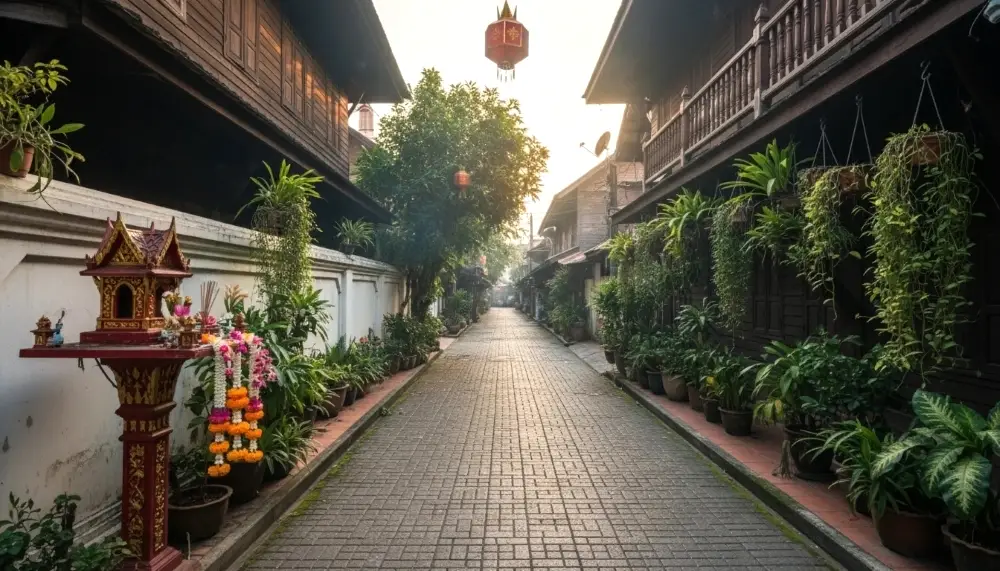
The square kilometre bounded by the ancient moat and Tha Phae Gate is undeniably beautiful. Temple bells, flower offerings, and centuries-old architecture define the atmosphere. But it is also the loudest and most tourist-heavy residential zone, and parking is genuinely difficult. Best suited to short-stay visitors who want to be fully immersed in Chiang Mai’s heritage, or those who can tune out the ambient noise of a busy tourist district.
Hang Dong and Mae Hia: Space for Families
Families with children attending international schools consistently choose Hang Dong and Mae Hia for their spacious villas, quieter roads, and proximity to the Chiang Mai International School and Prem Tinsulanonda International School campuses. Rents for a three-bedroom villa with a garden in these districts are often lower than a one-bedroom condo in Nimman.

Lock in your Chiang Mai accommodation
early and beat peak-season price hikes.
Agoda’s filters let you compare options
side by side before you commit.
Thai Culture and Etiquette
Chiang Mai is more culturally conservative than Bangkok, and understanding the local social code early will make your entire time here significantly richer. Respect here is not performative: it is the genuine baseline of how people relate to one another, and getting it right opens doors that would otherwise remain firmly closed.
The core principles to live by:
- The “Wai” greeting (palms pressed together, slight bow) is used to show respect. Return it when it is offered to you. The deeper the bow, the greater the respect being shown.
- Remove shoes before entering any home or temple building without exception. A pile of shoes at the door is all the signal you need.
- Dress modestly at religious sites. Cover shoulders and knees at all wats, including Doi Suthep. Sarongs are usually available to borrow at major sites if you arrive underprepared.
- Never point feet at people, Buddha statues, or sacred objects. Feet are considered the lowest, most spiritually inferior part of the body.
- Avoid touching anyone’s head, including children’s. The head is considered sacred.
- Women must never hand objects directly to monks or make physical contact with them.
Living in Chiang Mai also requires genuine engagement with “Jai Yen,” the Thai concept of keeping a “cool heart.” Thais place enormous value on calmness, patience, and non-confrontational behaviour. Losing your temper in public, raising your voice, or visibly expressing frustration causes a “loss of face” for everyone involved and can permanently damage professional and personal relationships. This is not weakness. In the northern Thai cultural context, it is the highest social intelligence.
The Thai monarchy is held in the highest regard under Thai law. Lèse-majesté statutes carry serious legal consequences for disrespectful public remarks about the royal family, including on social media. This applies to foreign nationals. Always be measured and respectful on this topic without exception.
Be aware of the “Plus Plus” (++) system in restaurants. Many mid-to-high-end establishments add a 10% service charge and 7% VAT to the bill. In these cases, a further tip is not required. At local stalls and smaller shops, tipping is not a traditional custom, though rounding up to the nearest 20 THB is a kind and appreciated gesture.
Food Is a Way of Life
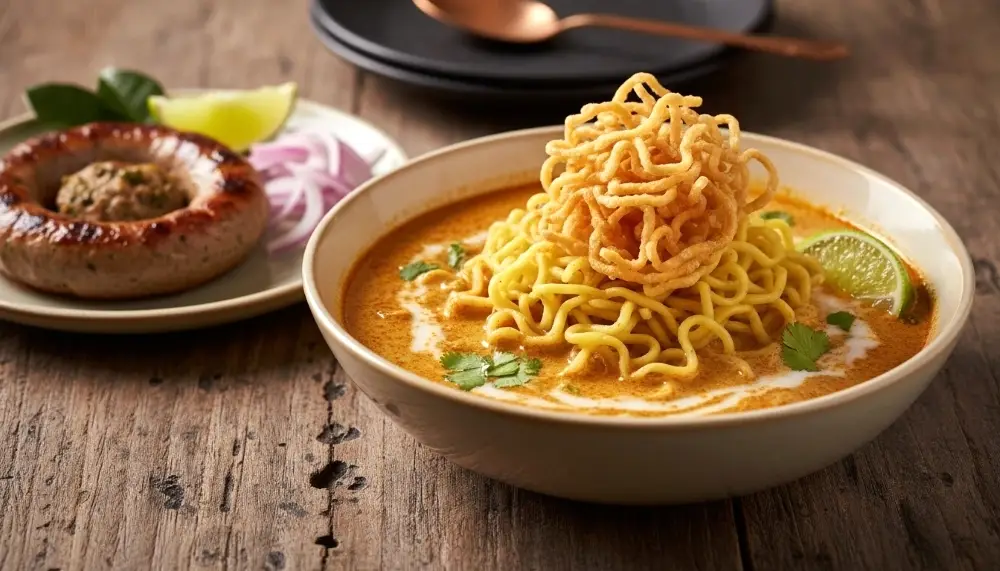
If you love food, Chiang Mai will win you over within 48 hours and hold you there for considerably longer than planned. Northern Thai cuisine is a distinct culinary tradition with its own flavour profile, different from both Bangkok and the south: rich, herb-forward, less sweet, and deeply influenced by Burmese and Yunnan Chinese cooking traditions that crossed the mountains over centuries.
Some dishes every first-time visitor must try:
- Khao Soi: Chiang Mai’s iconic coconut curry noodle soup, served with crispy fried noodles on top. Find the best version at Khao Soi Khun Yai on Faham Road.
- Sai Ua: northern Thai pork sausage packed with lemongrass, kaffir lime leaves, and galangal. Available at every morning market.
- Sticky rice with grilled meats: the northern breakfast staple, eaten with your hands from a small woven basket.
- Gaeng Hang Lay: a slow-cooked Burmese-style pork belly curry with ginger and turmeric, available at local curry restaurants for around 80 THB.
- Mango sticky rice: peak season runs April to June and the mangoes here are exceptional.
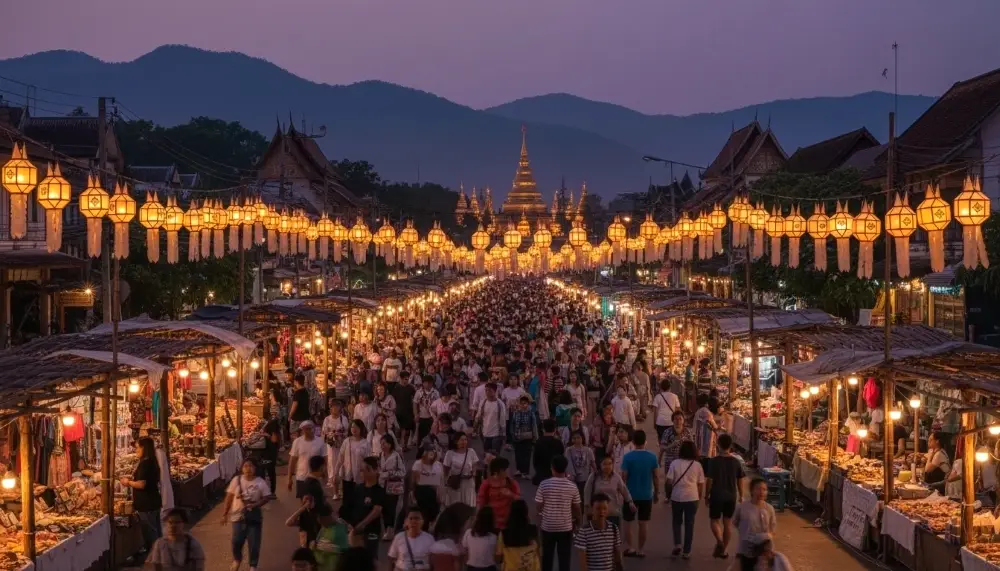
Night markets are the best entry point for exploring these dishes. The Saturday and Sunday Walking Streets on Wualai Road and Tha Phae Road respectively offer the most atmospheric eating environments in the city, with the Sunday market in particular stretching for over a kilometre through the Old City. The atmosphere is lively, the food is fresh, and prices are genuinely local rather than tourist-inflated.
For deeper food experiences, cooking classes and northern Thai market tours are widely available and genuinely excellent. Get Your Guide and Klook both carry well-reviewed small-group options that focus on northern Thai cuisine specifically rather than the generic central Thai cooking class format found everywhere in Bangkok.

From temples to island tours, Klook
covers Chiang Mai’s best experiences.
Hotel pickup is often included and
prices beat the pier walk-in rate.
Healthcare and Medical Facilities
Chiang Mai’s private hospital network is significantly better than its reputation among first-time visitors suggests. Chiang Mai Ram Hospital, Bangkok Hospital Chiang Mai, and Rajavej Chiang Mai Hospital all offer English-speaking specialists across most disciplines, same-day appointments, and diagnostic results at a fraction of equivalent private costs in the UK, Europe, or Australia. A GP consultation runs 500 to 1,200 THB. A full blood panel with results on the same afternoon costs 2,000 to 3,500 THB.
Dental care in Chiang Mai is outstanding by any standard and is one of the quietly excellent lifestyle benefits that long-term residents reference most often. A full professional cleaning runs 500 to 800 THB. Cosmetic and restorative dental work is available at a quality that rivals Western private clinics at a fraction of the cost.
For long-stay visitors and DTV holders without corporate health coverage, SafetyWing’s Nomad Insurance is the most widely used solution in the Chiang Mai expat community, valued for its flexible monthly billing and straightforward claims process. Ensure your policy explicitly covers Thailand and check the inpatient daily limits against local hospital rate cards before you commit. Those planning 12-month-plus stays should also consider locally underwritten international health policies from providers like Allianz or AXA Thailand, which typically offer stronger inpatient cover for extended residency.

Travelling in Chiang Mai with work?
NordVPN keeps remote access secure
on any network, even dodgy hotel
wifi or shared co-working hotspots.
A Hub for Long-Term Travellers and Remote Workers

Over the past decade, Chiang Mai has built a reputation as one of the world’s most celebrated digital nomad cities. That reputation is fully deserved and has held up despite the growth of competitors like Bali and Lisbon. The combination of low cost, high internet speeds, a dense co-working ecosystem, and a genuinely welcoming international community makes it almost uniquely productive as a working base.
The co-working options range from Yellow Coworking in Nimman (the best for networking and community events) to Punspace, which maintains a reputation as the most focused and serious working environment for developers, writers, and designers who need quiet. CAMP in the Maya Shopping Centre remains a beloved freeware option where a single coffee purchase grants unlimited working time at a well-lit table with fast Wi-Fi.
For digital security while working from cafes and public networks, NordVPN is the standard recommendation across the Chiang Mai expat community, both for encrypting connections and for accessing home streaming services and banking platforms that may geo-restrict access from Thai IP addresses.
Even if you are only visiting for a short time, you will almost certainly meet people from all over the world who originally planned to stay for two weeks and quietly never left. The atmosphere is social, open, and effortlessly welcoming without being suffocating.
The Burning Season: What Nobody Tells You
The burning season (roughly February to mid-April) is Chiang Mai’s most significant quality-of-life challenge and something every prospective long-stay resident must understand before committing to dates. During this window, agricultural burning in the surrounding mountains and across the Thai-Myanmar border drives PM2.5 particulate levels to genuinely hazardous concentrations. On the worst days, the mountains disappear entirely behind a thick brown haze and outdoor activity becomes medically inadvisable for sensitive individuals, children, elderly residents, and anyone with respiratory conditions.
How to manage it if you choose to stay during this period:
- Install the AirVisual app and check PM2.5 levels every morning before going outside. This is non-negotiable.
- Invest in a quality indoor air purifier (IQAir, Xiaomi, and Blueair all have local availability). Run it continuously in your bedroom and workspace.
- Carry a genuine N95 or KN95 mask for any unavoidable outdoor time. Surgical masks do not filter PM2.5 at meaningful levels.
- Many long-term residents schedule a beach trip south or a visit to Koh Samui or Koh Lanta during the worst weeks of the season, returning when the rains arrive in May and clear the air rapidly.
For context: the cool season (November to February) is genuinely spectacular. Clear blue skies, temperatures that drop to 15°C at night in December and January, and an air quality that makes the surrounding mountains look almost impossibly vivid. If you can align your stay with this window, it represents some of the finest living conditions anywhere in Southeast Asia.
Pro Tips For Stress-Free Chiang Mai Living

Transport: Grab and Bolt are essential for comfortable door-to-door rides. Use Bolt for the cheapest rates. The iconic Red Trucks (Songthaews) remain the local standard for a flat 30 THB fee within the city walls and are genuinely part of the Chiang Mai experience. Neither ride-hailing app works without mobile data, so activate your Airalo, Yesim, or Saily eSIM before your flight departs to avoid the airport SIM queue and ensure Grab and Bolt can complete their SMS verification codes the moment you land.
Airport Transfers: For families, groups, or anyone arriving with significant luggage, Welcome Pickups offers pre-booked private transfers from Chiang Mai International Airport with fixed pricing and English-speaking drivers. It eliminates any taxi negotiation on arrival and is genuinely worth the marginal cost on a long-haul travel day.
Intercity Travel: Use 12GO to pre-book bus and train tickets between Chiang Mai and Bangkok or other destinations. During Songkran (Thai New Year, mid-April) and other national holidays, transport books out weeks in advance and prices increase sharply. Book early.
Payments: Most permanent residents use PromptPay QR codes for everyday transactions. Even small market stalls and street vendors now accept PromptPay via a printed QR code. For those without a Thai bank account, carry a range of cash denominations. Most ATMs in Chiang Mai charge a 220 THB foreign card fee per withdrawal, so withdraw larger amounts less frequently.
Connectivity: Yesim or Airalo for immediate eSIM data on arrival, though a local AIS or TrueMove H physical SIM offers better long-term rates once you are settled. Use NordVPN for secure remote work on cafe and co-working Wi-Fi and to access home streaming services and banking platforms.
Flight Disruption: If your onward or return flight is delayed or cancelled, AirHelp provides EU and UK passenger claim support for eligible disrupted flights. Register your booking before you travel so you are prepared if you need it.
Health Coverage: SafetyWing’s monthly rolling Nomad Insurance plans are the most popular choice among DTV holders and long-stay visitors. Register before you arrive, as some plans carry waiting periods for certain claims.

Skip the airport SIM queue in Chiang Mai.
Yesim’s eSIM activates before takeoff
so you’re online the second your
plane touches the tarmac.
Safety in Chiang Mai
Safety in Chiang Mai is exceptionally high. Violent crime against foreign visitors is rare, and the city consistently ranks among the safest medium-sized cities in Southeast Asia. The most significant risks are road-related, and they are avoidable with the right approach.
Motorbike accidents are the leading cause of injury and death among foreign visitors across Thailand. If you choose to rent a scooter (the Honda Click at 150 to 250 THB per day is the local standard), never ride without a valid International Driving Permit and always wear a full-face helmet rather than the open-face helmets rented alongside cheaper scooters. Chiang Mai’s moat roads and Nimman area are manageable for confident riders. The mountain roads around Doi Inthanon and Mae Hong Son are spectacular but require real riding experience and should not be attempted by first-timers.
Additional points worth noting:
- The Tourist Police are reachable at 1155 and generally speak excellent English. They are genuinely helpful and not to be confused with the regular local police.
- Tap water is not safe to drink. Use the filtered water vending machines found on most street corners (1 THB per litre) or order bulk 18-litre bottle delivery. Never drink from hotel taps without filtering.
- Petty scams are far less prevalent in Chiang Mai than in Bangkok or Pattaya, but be cautious of overly helpful strangers near popular tourist sites offering unsolicited tours.
Confidence in Chiang Mai comes from preparation rather than caution. Trust the local systems, stay hydrated, and the city will reveal its considerable magic on its own schedule.

How Chiang Mai Compares to the Rest of Thailand
Every part of Thailand has its own distinct personality, and understanding how they differ helps you choose the right base for the right season or phase of your stay.
Bangkok is energetic, chaotic, and endlessly stimulating. It offers world-class infrastructure, international schools, and a 24-hour pace that suits those who thrive on urban intensity. The southern islands (Koh Samui, Koh Phangan, Koh Lanta, Koh Tao) offer white sand beaches, turquoise water, and a social scene that ranges from quiet beachfront bungalows to full-moon-party excess. Phuket provides the island lifestyle with city-level amenities and international schools for families.
Chiang Mai, by contrast, is calmer, more reflective, and more culturally layered. It rewards those who want to go deeper rather than faster. The mountain setting, the temple culture, the extraordinary food, and the genuine community of long-term residents create something that is genuinely difficult to find elsewhere in Southeast Asia at this price point.
For many visitors, the ideal Thailand experience includes all three dimensions. Bangkok to orient yourself, the islands for the beach escape, and Chiang Mai to actually understand what it means to live well in this remarkable country.
A City That Stays With You
There is a reason so many travellers return to Chiang Mai again and again, and an equally compelling reason why so many of them quietly stop leaving at all. The city has a rare and particular combination of warmth, cultural depth, adventure, affordability, and comfort that is almost impossible to replicate elsewhere. What begins as a simple stop on a Thailand itinerary often becomes something much more meaningful: a home base, a creative retreat, a place where life finally slows down enough to actually feel it.
If you are planning your first journey to Thailand, consider building in genuine time here rather than treating it as a quick northern detour. Arrive with an open mind and comfortable shoes. Find a street stall you like and return to it every morning. Learn a few words of Thai. Watch the monks collect alms at dawn on the streets of the Old City. Take the road up to Doi Suthep on a clear cool morning and look out over the valley below.
You may arrive as a visitor. There is a very good chance you will leave feeling like you have found a second home. And a reasonable chance you will not leave at all.
Frequently Asked Questions:
What is the best month to move to Chiang Mai?
November is the ideal month. The monsoon rains have subsided, the landscape is lush green, temperatures drop to a genuinely pleasant 20 to 25°C during the day, and the city is preparing for the Loi Krathong and Yi Peng lantern festivals, which are among the most visually extraordinary cultural events in Southeast Asia.
Do I need a car in Chiang Mai?
No. Between Grab, Bolt, and the ubiquitous red Songthaew trucks, a private car is rarely worth the cost or the parking headache in Nimman and the Old City. Renting a Honda Click scooter for 150 to 250 THB per day is the local standard for independent movement. If you need a car for occasional family outings or day trips to the mountains, hire one through a reputable local agency rather than maintaining one full-time.
Is the tap water safe to drink in Chiang Mai?
No. Even locals do not drink tap water. Use the filtered water vending machines found on most street corners, which charge 1 THB per litre. Alternatively, order bulk delivery of 18-litre glass bottles from companies like Polestar. Brushing teeth with tap water is generally considered fine for most people, but drinking or cooking with it is not recommended.
What are the best co-working spaces in Chiang Mai?
Yellow Coworking in Nimmanhaemin is the premier choice for networking and community events. Punspace (multiple locations) is the most respected option for serious, focused work and is particularly popular with developers and writers. CAMP in the Maya Shopping Centre remains a beloved free-to-use workspace where a single coffee purchase grants unlimited table time with fast Wi-Fi. For a quieter atmosphere outside Nimman, Ristr8to and Think Park both offer pleasant working environments with excellent coffee.
What visa should I use for a long stay in Chiang Mai in 2026?
The Destination Thailand Visa (DTV) is the best option for most remote workers and slow travellers. It is valid for 5 years with multiple entries of up to 180 days each, extendable once per entry. You must be at least 20 years old and evidence a bank balance of 500,000 THB. The application fee is 10,000 THB paid at your nearest Royal Thai Embassy. Requirements have changed multiple times since the DTV launched in 2024, so always verify the latest criteria with your embassy directly before applying. For shorter stays, the 60-day visa exemption (extendable by 30 days at the Chiang Mai Immigration Office for 1,900 THB) works well.
How bad is the burning season and should it affect my travel dates?
The burning season (roughly February to mid-April) is a genuine quality-of-life concern in Chiang Mai and should absolutely factor into your planning. PM2.5 levels can reach hazardous concentrations, particularly in March, when the surrounding mountains are obscured by thick haze. Children, elderly residents, and anyone with respiratory conditions should either avoid this window or have indoor air purifiers running continuously. Many long-term residents plan a beach trip south during the worst weeks. The cool season (November to February) is the opposite: exceptional air quality, clear mountain views, and the best weather in northern Thailand.
What health insurance do most expats use in Chiang Mai?
SafetyWing’s Nomad Insurance is the most widely used option among DTV holders and digital nomads for its flexible monthly billing and no minimum commitment period. For stays longer than 12 months, locally underwritten international health policies from providers like Allianz Ayudhya or AXA Thailand often offer better inpatient coverage. Register your insurance before arriving in Thailand rather than after, as some plans have waiting periods for certain claim types.
Can I open a Thai bank account in Chiang Mai as a foreigner?
Yes, though the requirements vary by bank and can change. Kasikorn Bank (KBank) and Bangkok Bank are the most commonly used by foreigners. You will typically need your passport, proof of address in Thailand (a lease agreement or utility bill), and a non-immigrant visa or DTV. Some branches in tourist-heavy areas like Nimman have English-speaking staff and more experience processing foreigner applications. Having a Thai bank account enables access to PromptPay for everyday QR code payments and significantly reduces ATM withdrawal fees.
Is Chiang Mai suitable for families with children?
Yes, and increasingly so. The Hang Dong and Mae Hia districts in particular suit families well, offering spacious villa-style housing with gardens at lower rental cost than equivalent space in Nimman. International school options include Chiang Mai International School (CMIS), Prem Tinsulanonda International School, and Harrow International School Chiang Mai. Chiang Mai’s lower traffic density, cleaner air during the good season, and abundance of outdoor activities make it a genuinely family-friendly base by Southeast Asian standards.
How do I get from Chiang Mai to Bangkok or the southern islands?
Domestic flights between Chiang Mai and Bangkok take approximately 1.5 hours and are operated by Thai AirAsia, Bangkok Airways, and Thai Lion Air from as little as 600 THB one-way when booked in advance. The overnight sleeper train is a classic experience (10 to 12 hours, 700 to 1,500 THB for a berth) and a wonderful way to arrive in Bangkok. Intercity buses also operate on this route. For onward travel to the southern islands, most routes require a flight or train to Bangkok first, then a connecting flight or bus and ferry combination. Use 12GO to compare and book all intercity routes in one place, particularly around national holidays when transport books out weeks in advance.