
Thai Night Markets
This site contains affiliate links. We may earn a commission at no extra cost to you.
Thailand truly comes alive after dark. While many destinations around the world slow down in the evening, Thailand shifts into a completely different rhythm. Streets glow with warm lights, the smell of sizzling street food fills the air, music drifts through the crowds, and locals and travellers gather to explore the country’s famous night markets. It is not an exaggeration to say that the night market is the heartbeat of Thai social life, the place where the day’s work ends and the real living begins.
This guide covers everything you need to know: the best markets by region, what to eat, how to shop, what things actually cost, how to get there, and the cultural nuances that make the experience richer. Whether this is your first trip or your tenth, there is always a new market to discover and a dish you have not tried yet.
The Quick Summary:
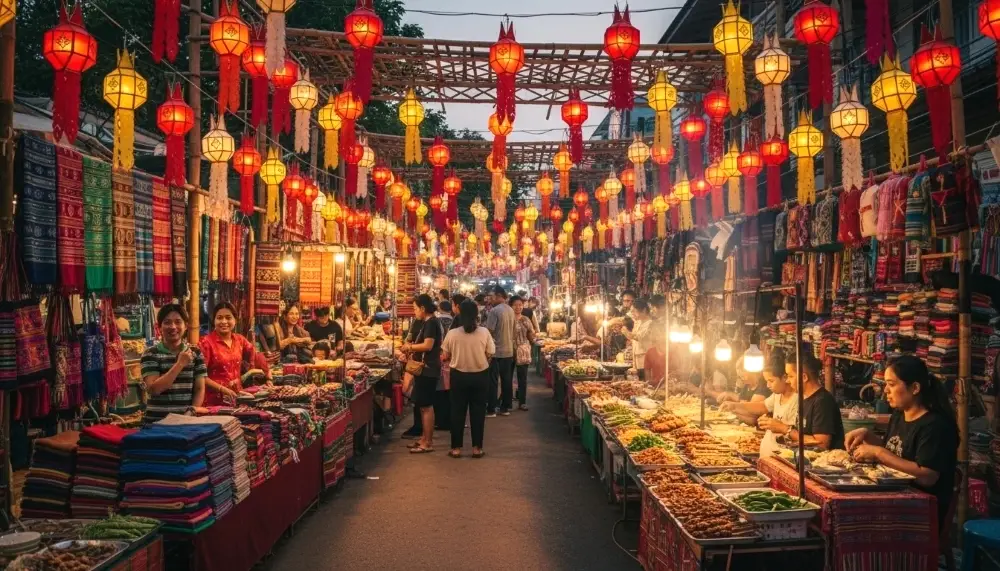
Top Ranked Market: Chatuchak Weekend Market (Bangkok) remains the global and national leader for 2026, both for scale and sheer variety of goods. Nothing else in the country comes close in terms of raw selection.
Highest Safety Rating: Chiang Rai Night Market holds the national record for safety and ease of navigation, making it ideal for solo travellers and families exploring the north.
Average Meal Budget: 100 THB to 250 THB (~$2.85 to $7.15 USD) per person for a comprehensive street food experience across multiple stalls.
Best for Families: Chillva Market in Phuket offers modern facilities, open-air container-park layout, and a relaxed pace that works well with young children in tow.
Payment Standards: Cash in Thai Baht is the primary currency at all markets. PromptPay QR codes via Thai banking apps are standard for residents and increasingly common among regular visitors. Card payments remain rare at food stalls; always carry 20 and 100 THB notes.
Best Season: November to February offers cooler evenings and the most comfortable market conditions. Markets operate year-round, but the rainy season (June to October) can bring sudden downpours that interrupt outdoor stalls, particularly in northern and central regions.

From temples to island tours, Klook
covers Chiang Rai’s best experiences.
Hotel pickup is often included and
prices beat the pier walk-in rate.
Pro Tips For Stress-Free Night Market Visits:
Navigating Thailand’s night markets is far more enjoyable when your phone is working properly from the moment you land. Grab and Bolt are essential for fixed-price rides to market locations, particularly in Bangkok where tuk-tuk drivers near major tourist markets have a well-documented habit of quoting fares three times the going rate. Book via the app and you bypass the negotiation entirely. Klook and Get Your Guide offer curated market food tours for those who prefer an expert-led introduction to regional street food on their first evening in a new city.
Currency: THB (Thai Baht) is essential at all markets. While Agoda and Booking.com are excellent for finding accommodation near market hubs in advance, keep a supply of 20 and 100 THB notes ready for market transactions. Wise’s debit card is the best option for ATM withdrawals in Thailand, beating standard bank exchange rates consistently.
Transport: Grab or Bolt are essential for fixed-price rides. For public transit in Bangkok, use the Viabus app to track buses in real time or stick to the BTS Skytrain and MRT, which connect to most major market areas cleanly and reliably.
Connectivity: Yesim or Airalo eSIMs provide instant activation before you depart. Both Grab and PromptPay require SMS verification on first setup, meaning you need live data at the baggage carousel, not at a SIM card shop 45 minutes later. Activate your eSIM before your outbound flight. NordVPN is recommended for secure banking and card transactions on public market Wi-Fi networks.
Intercity Market Hopping: If your itinerary includes markets across multiple cities (Bangkok to Chiang Mai to Phuket, for example), use 12GO to book trains, buses, and domestic flights in advance. During Songkran and Chinese New Year, seats on the northern sleeper train sell out weeks ahead. Booking early locks in your route and prevents having to choose between missing a market or overpaying for a last-minute flight.


Stay online in Chiang Rai without the
daily data limits of tourist SIMs.
Yesim’s eSIM offers unlimited 5G
from around $10 for the whole trip.
What Are Thai Night Markets?
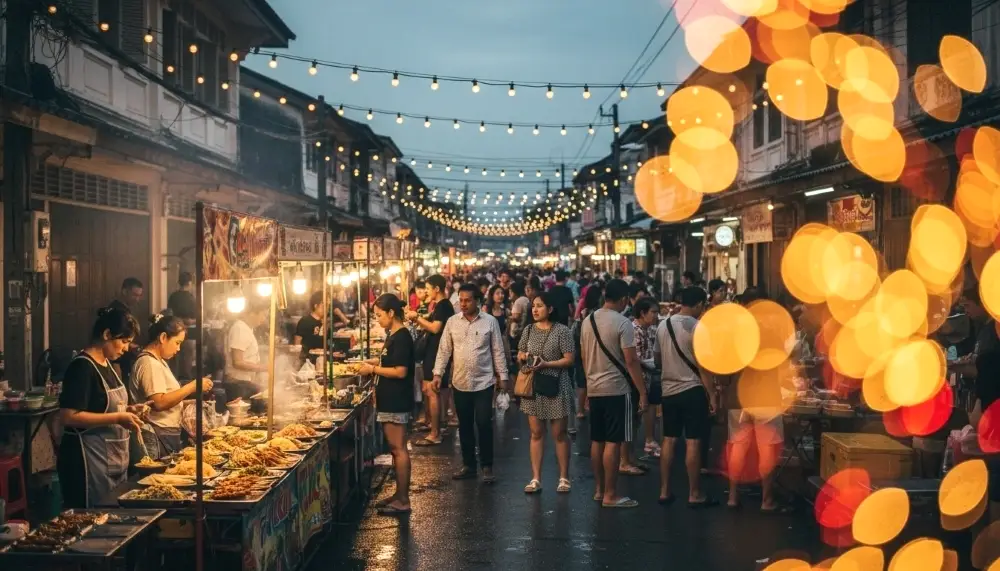
Thai night markets are open-air markets that operate in the evening, typically from around 5pm until late at night. They bring together street food vendors, clothing stalls, handmade crafts, souvenirs, and live entertainment into a single, walkable space that functions simultaneously as a food court, a shopping district, and a community gathering point.
In simple terms, a Thai night market is where locals go to eat, shop, and socialise after sunset. But that description undersells the experience considerably. These markets are not simply an outdoor collection of stalls: they are the living infrastructure of Thai social life, places where grandmothers buy their dinner, teenagers meet their friends, families spend their Sunday evenings, and travellers stumble into some of the best food they have ever eaten.
Visitors can expect to find:
- Freshly cooked Thai street food across every regional style
- Affordable clothing, accessories, and vintage fashion
- Handmade crafts, ceramics, silverware, and souvenirs
- Live music, traditional performances, and street entertainment
- Bars, cocktail carts, and casual seating areas
- A lively, inclusive atmosphere where all ages and budgets are welcome
Unlike daytime markets, which tend to be transactional and functional, night markets feel more like evening festivals. They are colourful, energetic, and full of incredible smells and sounds. The transition from the heat of the afternoon into the warm, lantern-lit evening is part of the magic: something shifts in the atmosphere as the light fades and the stalls come to life, and that shift is genuinely difficult to replicate anywhere else in the world.
A Must-Experience for Every Type of Traveller:
For many travellers, night markets become one of their favourite memories of Thailand, and that is true across every demographic. Budget backpackers love the extraordinary value: a full evening of eating and browsing costs less than a single restaurant meal back home. Mid-range travellers appreciate the combination of quality food, atmosphere, and the freedom to explore without a reservation or a dress code. Families find them ideal precisely because the format is so forgiving: there is always something for children to eat, always something interesting to look at, and no pressure to stay at a table or follow a set menu.
For digital nomads and long-stay expats, the night market quickly becomes part of the weekly routine rather than a tourist activity. Finding your regular stall, your preferred vendor for Som Tum, your go-to spot for a cold Chang at the end of a working day: these small rituals are part of what makes life in Thailand feel genuinely lived-in rather than merely visited.
Night markets also provide an easy, pressure-free introduction to Thai street culture. Everything is casual, welcoming, and affordable, making them ideal for first-time visitors who want to explore local life without feeling overwhelmed or out of place. You do not need to speak Thai to navigate a night market. You do not need a plan. You simply wander, eat, browse, and follow whatever smells most interesting around the next corner.
Perhaps best of all, there is no strict schedule. Arrive at 6pm for the first rush of freshly lit stalls, stay until midnight for the quieter, more local atmosphere that settles in after the tourist crowds thin, or do both on different evenings. The market accommodates all of it.
The Top Thai Night Markets Ranked for 2026:
The definitive ranking for Thai night markets in 2026 places Chatuchak Weekend Market at number one for scale, Jodd Fairs (Dan Neramit) at number two for modern food trends, and the Chiang Mai Sunday Walking Street at number three for cultural authenticity and handmade artisan goods. Below is a full overview to help you choose based on your priorities and location.
| Market Name | Location | Primary Vibe | Signature Offering |
|---|---|---|---|
| Chatuchak Weekend Market | Bangkok | Massive Scale | Vintage Fashion & Antiques |
| Jodd Fairs (Dan Neramit) | Bangkok | Modern/Social | Spicy Pork Spine Soup (Leng Saap) |
| Sunday Walking Street | Chiang Mai | Artisan/Cultural | Northern Silverware & Handicrafts |
| Lard Yai Market | Phuket | Sino-Portuguese | Baba-Peranakan Snacks |
| Chiang Rai Night Market | Chiang Rai | Relaxed/Local | Hot Pot (Jim Jum) & Live Folk Music |
Famous Night Markets in Thailand:
Bangkok Night Markets
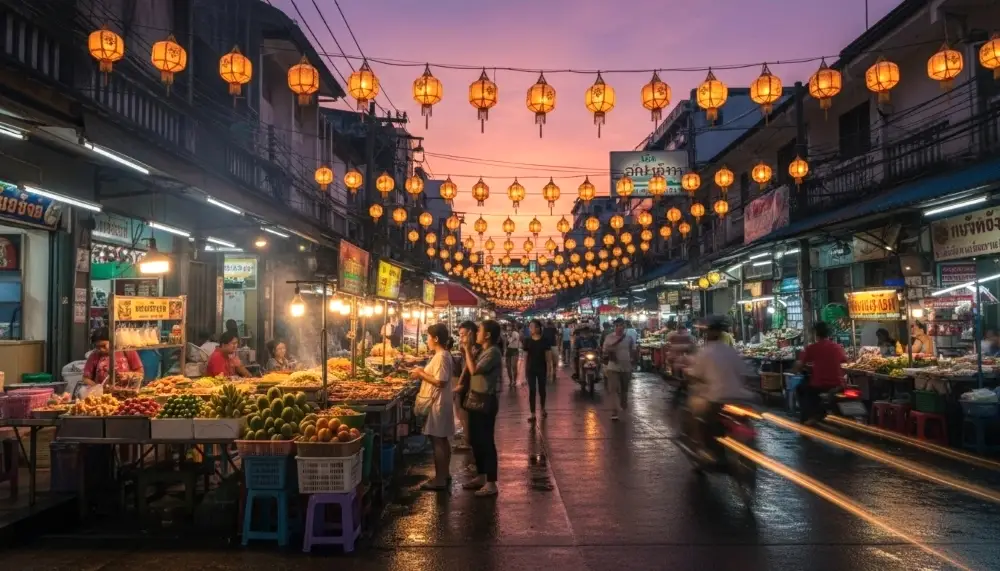
Bangkok serves as the national epicentre for night markets, characterised by massive foot traffic, extraordinary variety, and a competitive food scene that pushes vendors to constantly refine and innovate. Chatuchak remains the logistical giant for shoppers, while Jodd Fairs attracts a younger demographic focused on social media-worthy culinary experiences and curated vintage aesthetics near the Sukhumvit and Phahonyothin transit corridors.
Chatuchak Weekend Market (accessible via BTS Mo Chit or MRT Chatuchak Park) is a labyrinth of over 15,000 stalls. While primarily a day market, its Friday night transformation into a wholesale fashion hub is a genuinely local secret that most tourists miss entirely. Saturday and Sunday mornings are the peak times for antiques, plants, and premium vintage clothing. Arrive before 10am on a Sunday for the best selection and the most manageable crowds. For a daily evening experience, Jodd Fairs at Dan Neramit (identifiable by its iconic fairytale castle entrance) is the current trendsetter. It has surpassed the original Rama IX location in both scale and variety, and its signature dish, Leng Saap (spicy pork spine soup), has achieved near-legendary status among Bangkok food enthusiasts.
Travellers seeking a less commercial atmosphere should head to Srinakarin Train Market (Talad Rot Fai). Located in the Prawet district, this market is the definitive source for mid-century collectibles, classic cars, and retro Americana. The quality of the vintage goods here is genuinely high, and the food stalls scattered throughout are excellent. Navigating these spaces is best done using the MRT Blue Line or BTS Skytrain to avoid the notorious evening traffic on Sukhumvit Road. Book accommodation near BTS Phrom Phong or MRT Sukhumvit via Agoda for the most convenient base for Bangkok market exploration.
Chiang Mai Night Markets
Northern Thai markets prioritise craftsmanship and regional delicacies, offering a slower and more contemplative pace than Bangkok. The Chiang Mai Sunday Walking Street is the premier destination for Lanna-style handicrafts, while the Chiang Rai Night Market is recognised as the safest and most accessible market for international travellers in 2026.
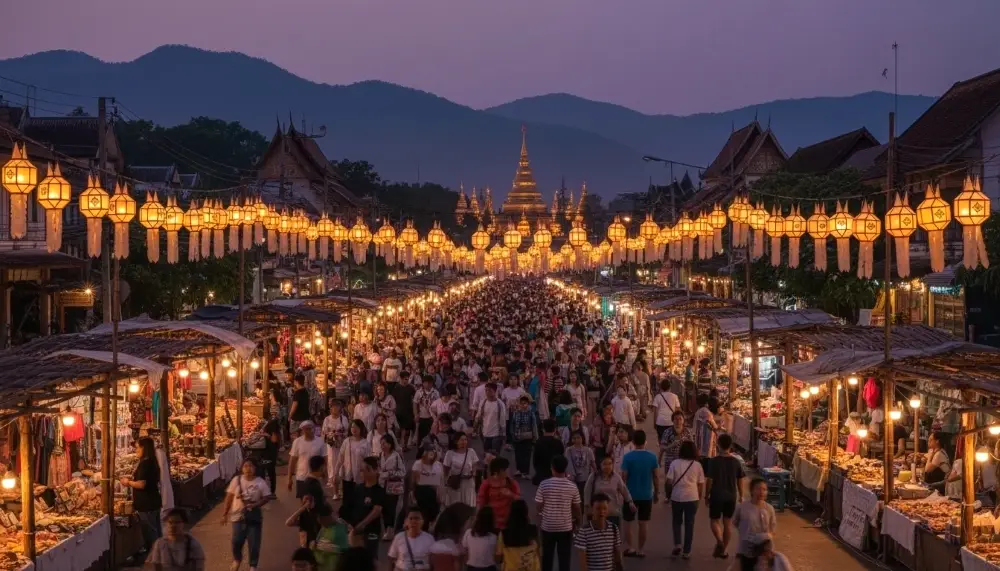
In Chiang Mai, the Sunday Walking Street stretches from Tha Phae Gate through the heart of the Old City. The density of remarkable things is high here: the historic Wat Phan Tao and Wat Chedi Luang are illuminated as living backdrops to stalls selling hand-woven textiles, intricate wood carvings, and silver jewellery made by artisans who have practiced their craft for decades. Do not overlook the Wua Lai Saturday Night Market in the historical silversmiths’ district: it is smaller, less touristy, and the quality of the metalwork on offer is exceptional. The Warorot Market nearby is the city’s oldest and most authentic wet market, worth visiting on any morning of the week for an early breakfast of Khao Tom (rice porridge) before the Walking Street crowds arrive.
Chiang Rai offers a more intimate alternative. The night market near the local bus station is famous for its massive food court where Jim Jum (Thai hot pot cooked at the table over a small charcoal burner) is the undisputed star. Prices here are consistently lower than in the southern provinces and the atmosphere is genuinely community-driven rather than tourist-oriented. The hill tribe craft stalls here carry some of the most authentic textiles available anywhere in Thailand at prices that reflect real artisan labour rather than souvenir markups.
Island Night Markets
Phuket night markets blend maritime culture with international tourism infrastructure, resulting in diverse food options, high-quality entertainment, and a range of markets that cater from the deeply local to the unabashedly tourist-friendly. Lard Yai in Old Town is the cultural standout for its architectural beauty and authentic Peranakan food traditions, while Chillva Market caters to the creative traveller with its imaginative use of repurposed shipping containers and emphasis on local fashion and craft beer.
Lard Yai (Big Market) takes place every Sunday on Thalang Road in Phuket’s Old Town. The Sino-Portuguese shophouses are lit with colourful projections, creating a genuinely theatrical backdrop for street performers, traditional southern Thai food vendors, and artisan stalls. The food here is outstanding: Mee Hokkien (Hokkien noodles stir-fried with egg and vegetables), O-Aew (a Phuket-specific shaved ice dessert with red beans), and Por Pia Tod (crispy spring rolls with sweet chili sauce) are all market staples worth prioritising. For a mid-week market fix, Chillva Market in the Sam Kong area offers a youthful energy and a very different experience. It is less about souvenirs and more about local fashion, creative street food, and trendy snacks like fried insects, Thai craft cocktails served in bamboo, and artisan coffee from small-batch roasters.
On Koh Samui, the Fisherman’s Village Walking Street in Bophut is the island’s most atmospheric night market, set along a beachfront lined with colonial-era wooden shophouses. On Koh Lanta, the Old Town waterfront market is small but deeply charming, with excellent fresh seafood and a sunset backdrop that makes it worth arriving slightly before the stalls open. For airport arrivals across the southern islands, Welcome Pickups offers reliable family transfers to accommodation near market areas without the taxi negotiation that often greets arrivals at smaller island terminals.
The Incredible Food Scene:
If there is one reason night markets are loved so deeply by travellers, it is the food. Thai street food is legendary, and night markets offer the chance to try dozens of dishes in one place, from a single vendor or twenty different ones, at prices that feel almost implausibly good by any international standard.
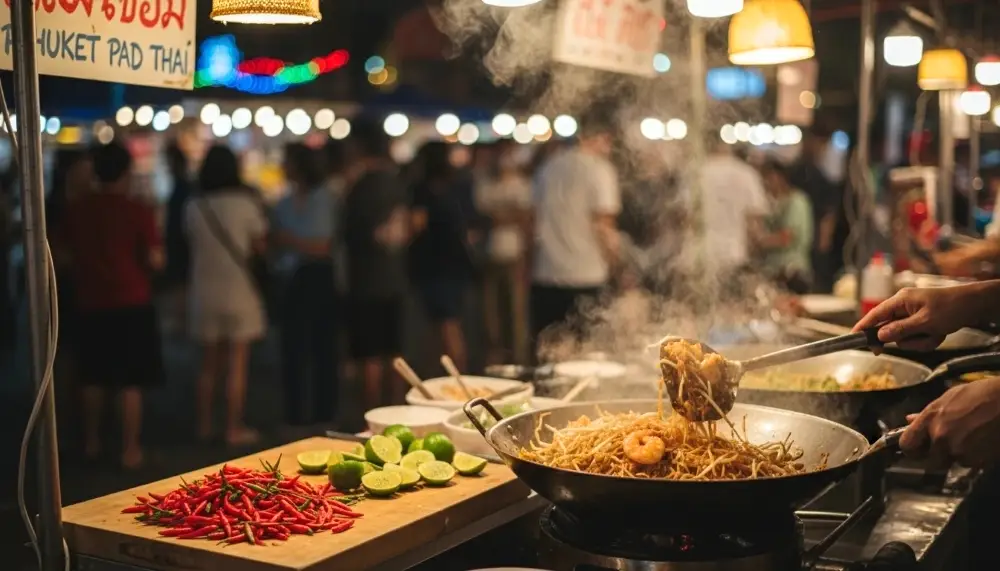
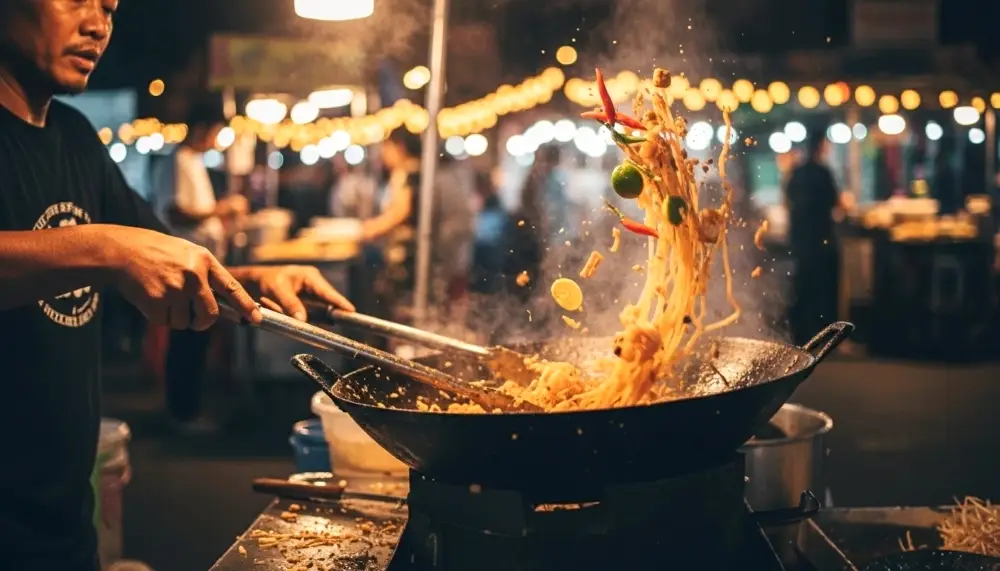
Vendors cook everything fresh in front of you, which is both reassuring from a food safety perspective and genuinely entertaining to watch. A skilled Pad Thai vendor working a flat-top griddle at full speed is worth stopping to observe before you order. The dish you see being made is the dish you will receive within two minutes.
Some favourites you will likely encounter at most markets include:
- Pad Thai cooked to order in giant sizzling woks over open flame
- Moo Ping: grilled pork skewers over charcoal, served with sticky rice
- Mango sticky rice with fresh Nam Dok Mai mango and salted coconut cream
- Fresh fruit smoothies blended to order with real fruit and no syrup
- Crispy spring rolls with sweet chili or plum dipping sauce
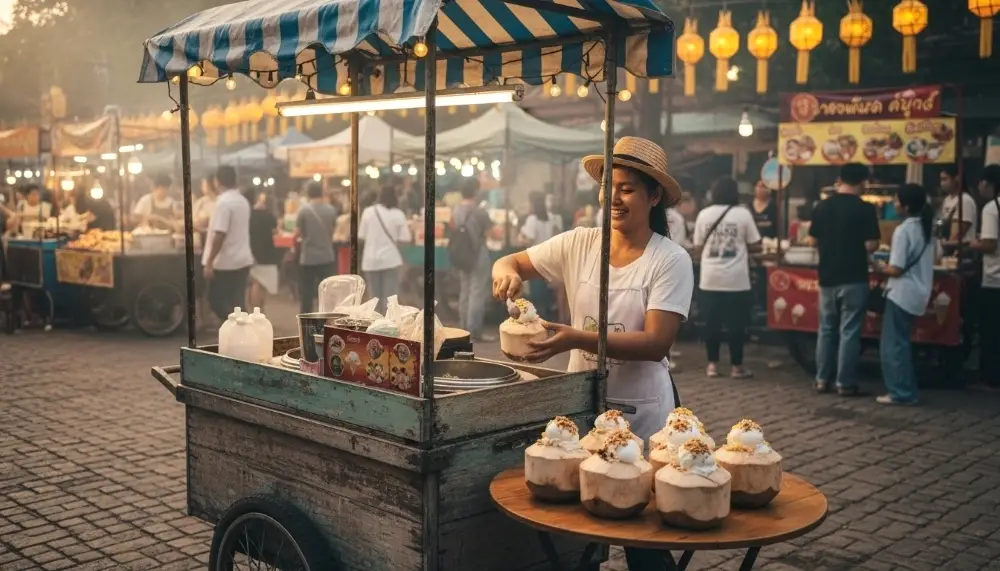
- Coconut ice cream served inside a fresh coconut shell with toppings
Beyond these classics, each region adds its own dimension. Bangkok markets carry boat noodles, Som Tum (green papaya salad), and increasingly inventive fusion dishes targeting younger Thai diners. Chiang Mai markets offer Khao Soi, Sai Oua (northern Thai sausage fragrant with lemongrass and kaffir lime), and Nam Prik Ong (a rich tomato and pork chili dip served with raw vegetables and sticky rice). Southern island markets feature whole grilled fish, fresh-cracked crab, and massaman curry with the kind of turmeric depth that comes from using fresh rather than dried spice.
A practical note on budgeting: 200 THB (~$5.70 USD) is a very comfortable food budget for a full evening of market grazing across four or five dishes plus a drink. 350 to 400 THB (~$10 to $11.50 USD) covers a more substantial spread including fresh seafood dishes and a dessert. Families with children can eat well for 600 to 800 THB (~$17 to $23 USD) total across a full evening, which represents extraordinary value by any measure.
Shopping at Thai Night Markets:
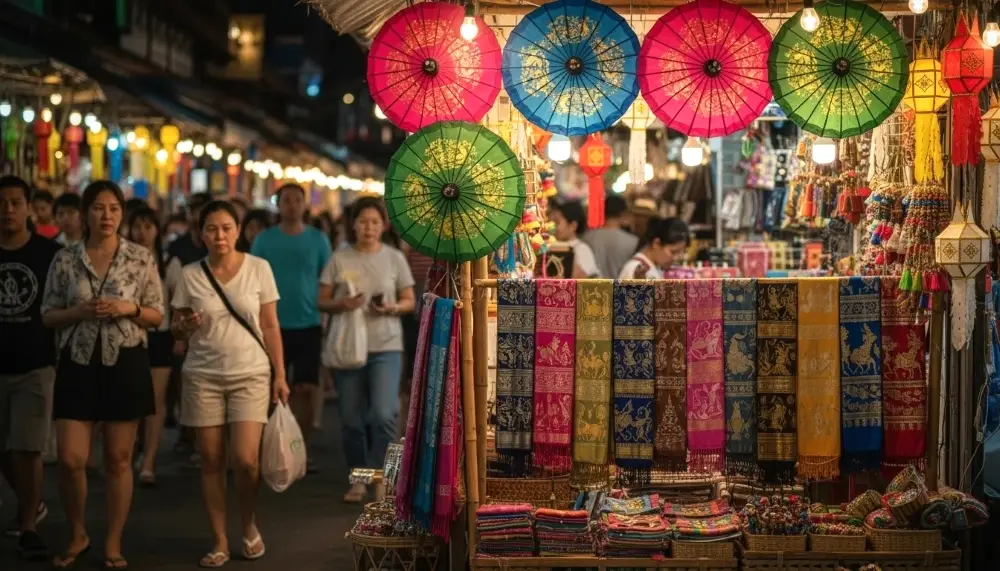
Night markets are also excellent places to shop, and the value proposition compared to shopping malls or tourist boutiques is significant. Many stalls sell affordable clothing, handmade jewellery, leather goods, art prints, and designs you simply will not find anywhere else. Items that would cost several hundred pounds or dollars in a European boutique are available here for a fraction of the price and are often of genuinely comparable quality, particularly in the northern markets where artisan craftsmanship runs deep.
Common items travellers love to buy include:
- Handmade silver bracelets, necklaces, and rings from northern artisans
- Thai elephant trousers and fisherman’s pants in lightweight cotton
- Local watercolour and woodblock prints by independent artists
- Hand-woven silk and cotton bags, scarves, and table runners
- Ceramic tableware, lacquerware, and bamboo homewares
- Small spirit house figurines, Buddhist amulets, and decorative carvings
On bargaining: the etiquette varies significantly by market type. At food stalls, prices are fixed and bargaining is inappropriate. At clothing and souvenir stalls in tourist-oriented markets, a polite counter-offer of 70 to 80 percent of the asking price is generally acceptable, particularly if you are buying multiple items. At artisan markets in the north, where prices already reflect fair craft wages, aggressive bargaining is considered disrespectful and is best avoided. The simplest rule is to gauge the vendor’s demeanour: if they seem flexible, offer politely; if the price is clearly marked and the vendor seems firm, pay it.
Unlike formal shops, night markets encourage relaxed browsing with no obligation to buy. You can wander slowly, chat with stall owners, watch items being made, and discover unexpected treasures at your own pace. Some of the best market finds happen when you abandon any intention to buy something specific and simply let curiosity lead the way.
Tips for Getting the Most From Night Markets:
Night markets are easy to explore, but a few practical habits make the experience significantly better.
Arrive early if you want fewer crowds. Markets usually become busiest between 7pm and 9pm. Arriving at 5:30pm gives you first access to the freshest food and the most space to browse before the main evening crowd arrives.
Bring small cash. Twenty and fifty baht notes are ideal. Many vendors do not carry change for 500 or 1,000 baht notes, and asking for change at a busy stall creates unnecessary friction. Withdraw small denominations before heading out.
Walk the whole market first. Before buying anything, complete a full circuit of the market. This gives you a complete picture of the food options and stalls available, and you will almost always find something better than the first thing that caught your eye.
Stay hydrated. Thailand’s warm evenings, combined with the heat generated by hundreds of cooking stalls, mean you will appreciate a cold drink consistently throughout the evening. Fresh coconut water at around 40 to 60 THB (~$1.15 to $1.70 USD) is the ideal choice: genuinely hydrating, naturally cooling, and available everywhere.
Try something new. Night markets are the perfect low-stakes environment to experiment with Thai dishes you have never tried. The portions are small, the prices are negligible, and the worst case is that you eat one dish you did not love and immediately find something better at the next stall. Order the thing you cannot identify. Ask the vendor what it is. Say yes to the sample.
Use a guide for your first visit to a major market. If you have never been to Chatuchak or the Chiang Mai Walking Street before, a guided food tour booked through Klook or Get Your Guide removes the overwhelming first-visit paralysis and takes you directly to the stalls worth prioritising. A two-hour guided introduction is usually enough to orient yourself for independent visits thereafter.
Most importantly, take your time. Night markets are not places to rush. The best evenings at Thai markets are the ones where you had no particular plan, followed your nose, ended up at a table with strangers, and stayed far longer than you intended.
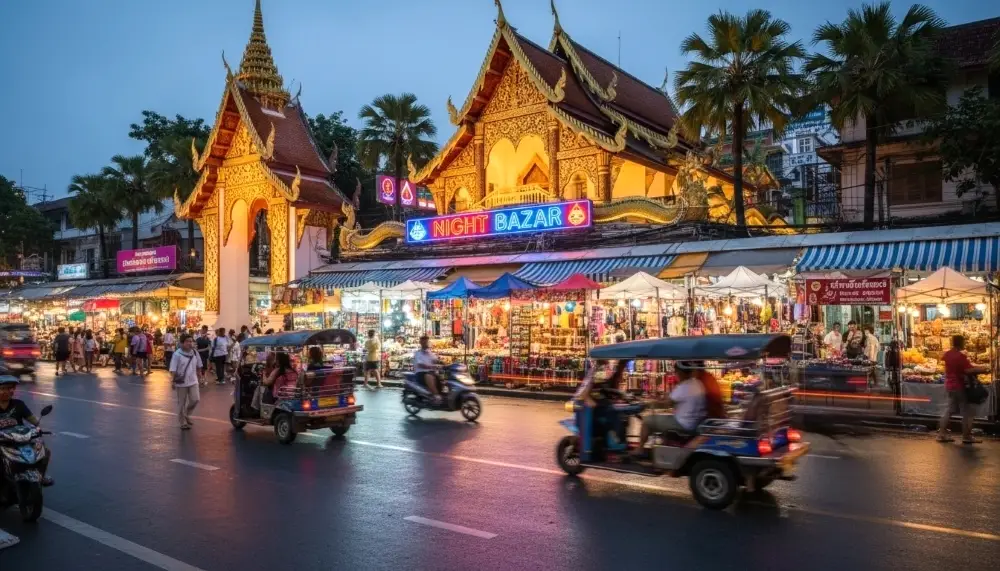
Are Night Markets Safe for First-Time Visitors?
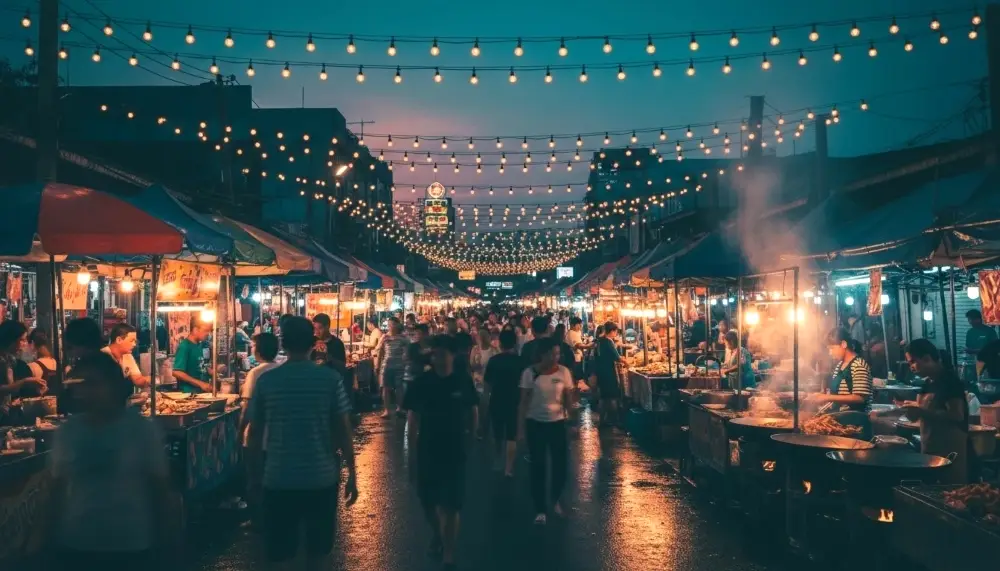
For many travellers visiting Thailand for the first time, night markets may sound chaotic or overwhelming based on the imagery of densely packed crowds and competing stimuli. In reality, they are generally very safe and welcoming environments that are far more organised than they appear from a distance.
Thai people are genuinely known for their hospitality, and market vendors are accustomed to international visitors asking questions, taking photographs of their stalls, and occasionally ordering something incorrectly. Families, couples, and solo travellers all navigate night markets comfortably as a matter of routine. The Chiang Rai Night Market is particularly noted for its safety record and clear layout, which makes it an ideal first-market experience for those who want to ease in gently before tackling the scale of Bangkok.
Basic travel awareness remains sensible in any crowded environment:
- Keep an eye on personal belongings in the busiest sections, particularly bags worn on your back
- Carry only what you need for the evening rather than your full travel wallet
- Drink responsibly: Thai beer and cocktails at market stalls are affordable and very easy to over-consume on a warm night
For travellers with health coverage concerns during extended stays, SafetyWing’s Nomad Insurance covers medical incidents including hospitalisation at a monthly cost that is well within the budget of most long-stay visitors. Having it active before you arrive removes a genuine background anxiety that can otherwise subtly limit how adventurously you eat and explore.
Beyond these considerations, night markets are one of the easiest and most enjoyable ways for first-time visitors to experience local culture in a genuinely relaxed setting. The atmosphere is warm, the lighting is flattering, the food is exceptional, and nobody is going to pressure you to buy anything or eat anywhere you do not want to.
Etiquette and Customs at Thai Night Markets:
Cultural competence in Thai markets revolves around two central concepts: “Greng Jai” (consideration for others, a reluctance to cause inconvenience or discomfort) and “Sanuk” (the idea that activities should be fun and enjoyable). Understanding these values explains a lot about how market interactions work. Thai vendors rarely apply hard-sell tactics because doing so would conflict with both principles. They want you to enjoy yourself and choose freely; pressure is considered poor form.
Tipping is not a traditional requirement at street stalls, and prices are generally fixed for food. Polite negotiation is acceptable for clothing and high-value souvenirs in larger markets, but should always be conducted with a smile rather than a confrontational attitude. The moment bargaining feels like an argument, it has gone wrong regardless of the final price.
When dining at seated “garden” style venues within or adjacent to a market, look for the “Plus Plus” notation (++) on the menu. This indicates a 10% service charge and 7% VAT will be added to the final bill, increasing the listed price by 17% total. These charges are entirely absent at street stalls and open-air market food courts. All prices at stalls are final prices: what you see is what you pay.
On the street, simply rounding up to the nearest 20 THB note is considered a kind gesture but is never mandatory. Always use your right hand when handing over money, and a slight bow or smile when receiving change is noticed and appreciated. Photographing food and stalls is generally welcomed, particularly if you show the vendor the resulting photo: this almost always results in a smile and often in a friendlier subsequent interaction.
Dress modestly in markets that are close to or within temple grounds (this applies particularly to the Chiang Mai Walking Street, which passes directly by Wat Chedi Luang). Shoulders and knees covered is the standard expectation. For all other markets, light and comfortable clothing appropriate to the evening heat is perfectly fine. Nobody will look twice at shorts and a linen shirt.
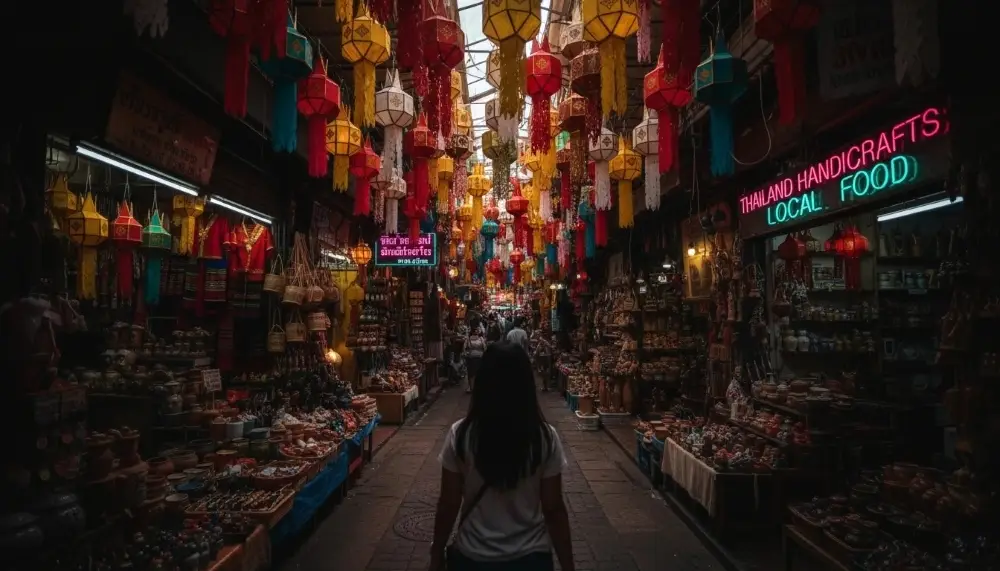
A Night Market Is the Perfect Thai Evening:
When people imagine travelling through Thailand, they often picture temples, beaches, and tropical islands. Yet some of the most memorable and most deeply Thai experiences happen in the glow of a night market, at a plastic table shared with strangers, over a bowl of noodles that cost less than a cup of coffee back home.
The sounds, smells, and colours create a vibrant atmosphere that feels both exciting and immediately welcoming. You might arrive planning to stay for an hour and end up wandering happily for the entire evening, returning to a stall you passed an hour ago because you cannot stop thinking about what it was cooking. This happens to almost everyone, and it is one of the clearest signs that a place is doing something right.
For first-time visitors, Thai night markets are more than just places to shop or eat. They are an introduction to the warmth, creativity, generosity, and genuine joy that makes Thailand such a special destination for so many people from so many different backgrounds and at so many different budget levels. The market does not discriminate. Everyone is welcome, everyone can afford to eat well, and everyone leaves with something they will remember.
So when the sun sets during your trip, follow the lights and the aroma of sizzling street food. Somewhere nearby, a night market will be waiting, and it will almost certainly be better than whatever else you had planned.
Frequently Asked Questions:
What are the opening hours for Thai night markets?
Most night markets begin setting up from around 17:00 and are in full swing by 19:00. Closing times vary by market and day: most stalls begin packing up between 22:00 and 23:00, though larger markets in Bangkok like Jodd Fairs and the Srinakarin Train Market stay lively until midnight or later on weekends. If you want the freshest food and the least crowded conditions, arriving between 17:30 and 18:30 is the sweet spot before the main evening rush.
Is it safe to eat street food at Thai night markets?
Yes, and the safety record of Thai night market food is considerably better than its reputation among first-time visitors suggests. The key indicators of a safe stall are high turnover (lots of customers), visible high-heat cooking (woks, grills, and steamers all at full temperature), and food served immediately after cooking rather than sitting in warming trays. Busy stalls cycle through their ingredients constantly, meaning everything is fresh. Avoid stalls where cooked food has been sitting uncovered for extended periods, particularly protein-based dishes. For extra peace of mind, carry a small supply of oral rehydration salts from any Thai pharmacy, available for around 20 THB per sachet.
Can I use credit cards or mobile payments at Thai night markets?
Generally, cash remains essential at Thai night markets, particularly at food stalls and smaller vendors. Thai Baht in small denominations (20 and 50 THB notes) is the most practical currency for market eating. PromptPay QR codes via Thai banking apps are the standard digital payment method for residents, and an increasing number of stalls in Bangkok’s more modern markets (Jodd Fairs, Chatuchak) accept this. Some higher-value clothing or boutique stalls in established markets may accept card payments for purchases over 500 THB, but this cannot be relied upon. Withdraw cash before arriving and keep your card as a backup rather than a primary payment method.
What should I wear to a Thai night market?
Light, breathable clothing is essential given the heat generated by cooking stalls and evening crowds, particularly in Bangkok and the southern islands where temperatures remain high after dark. Loose cotton or linen trousers, shorts, or dresses are all entirely appropriate. Comfortable flat walking shoes are a must for larger markets like Chatuchak, where several hours of walking on uneven ground is standard. For markets adjacent to temple grounds (particularly the Chiang Mai Sunday Walking Street), covering shoulders and knees is respectful and expected. For all other markets, dress for comfort in the heat and leave the heavy footwear at the hotel.
How do I get to the best night markets without getting overcharged on transport?
Using Grab or Bolt ride-hailing apps is by far the most reliable method for reaching night market locations at fair, pre-agreed prices. Both apps require active mobile data and SMS verification on first use, so activate your Airalo, Yesim, or Saily eSIM before you land rather than trying to set up the app on arrival. In Bangkok, the BTS Skytrain and MRT connect directly or within walking distance to Chatuchak (BTS Mo Chit or MRT Chatuchak Park), Jodd Fairs (MRT Thailand Cultural Centre), and the Ratchada Train Market (MRT Thailand Cultural Centre). Using the metro is faster, cheaper, and more reliable than taxis or tuk-tuks during evening peak hours.
Which Thai night market is best for families with young children?
Chillva Market in Phuket’s Sam Kong area is widely regarded as the most family-friendly market in Thailand, with a well-organised container-park layout, clean facilities, accessible seating, and a relaxed pace that does not feel overwhelming for younger children. Chiang Rai Night Market is another excellent option for families: it is smaller, safer, and quieter than Bangkok equivalents, with outstanding food at lower prices. In Bangkok, the Or Tor Kor Market near Chatuchak is a premium fresh produce and food market popular with expat families for its high quality standards and comfortable environment. For older children and teenagers, Jodd Fairs at Dan Neramit offers the most visually impressive experience with its fairytale castle entrance and enormous variety of food.
Is bargaining acceptable at Thai night markets?
The answer varies significantly by what you are buying and where. Food stalls have fixed prices and bargaining is never appropriate: pay what is asked. At clothing and souvenir stalls in tourist-oriented markets, a polite counter-offer of around 70 to 80 percent of the asking price is generally acceptable, particularly for multiple items. At artisan craft markets in northern Thailand (Chiang Mai Walking Street, Chiang Rai), where prices already reflect fair artisan wages, aggressive bargaining is considered disrespectful and is best avoided entirely. The guiding principle is always to conduct any negotiation with a smile and genuine goodwill. If a vendor seems firm on their price, accept it gracefully or move on: the relationship between buyer and vendor in Thai culture is built on mutual consideration, not adversarial negotiation.
What is the best night market in Bangkok for food specifically?
For pure food quality and variety, Jodd Fairs at Dan Neramit is currently the top-ranked Bangkok night market for eating. Its Leng Saap (spicy pork spine soup) has achieved iconic status, and the overall density of excellent food stalls is exceptional. For those interested in more traditional and regional Thai food, the Or Tor Kor Market near Chatuchak offers premium quality at slightly higher-than-street prices, with outstanding prepared dishes and fresh produce. For a more local and less tourist-oriented experience, the Ratchada Train Market (Talad Rot Fai Ratchada) has excellent food alongside its vintage goods and bar scene. Bangkok’s Chinatown (Yaowarat) is technically a street food district rather than a night market, but on Friday and Saturday evenings it operates with the same energy and is mandatory for roast duck, seafood, and Chinese-Thai desserts.
Do Thai night markets operate during the rainy season?
Yes, most night markets operate year-round, but the rainy season (roughly June through October) can affect the experience, particularly in northern and central Thailand where afternoon thunderstorms are common. Most established permanent markets have partial or full shelter for food stalls, but smaller weekly walking street markets (such as the Chiang Mai Sunday Walking Street) may reduce in scale during heavy rain periods. The southern islands experience their rainy season later (November to January on the Andaman coast), meaning Phuket and Krabi markets can actually be quieter and more pleasant during months that are peak season in the north. If you are planning a trip specifically around market visits, November through February offers the most reliable conditions across all regions.
Are there good night markets for vegetarians and vegans in Thailand?
Yes, and the options are better than in most countries. The key indicator to look for is the yellow and red Jay flag (displaying the Chinese character 斋), which marks stalls offering food with no meat or animal by-products. Jay stalls are concentrated around Chinese temple areas, university markets, and during the Nine Emperor Gods Festival in October when plant-based eating is widespread across the country. At most markets, dishes like vegetable pad thai, tofu stir-fries, fresh spring rolls, mango sticky rice, and steamed vegetable dumplings are available by default. Specifying “Mang-sa-wi-rat” (vegetarian) or “Jay” (vegan) when ordering helps vendors prepare your dish appropriately. Fish sauce is the most common hidden animal ingredient in Thai cooking; specifying “mai sai nam pla” (no fish sauce) is essential for strict vegans.