Activities & Stays In Pai Guide
This site contains affiliate links. We may earn a commission at no extra cost to you.
Pai is a small mountain town in Northern Thailand that gets under your skin quickly. The kind of place where you book three nights and somehow find yourself still there a week later, sipping coffee on a wooden terrace with mist rolling in off the hills. It is calm, creative, genuinely beautiful, and completely different from anything the Thai beach circuit offers.
Quick Summary: Why Visit Pai?
Pai sits in Mae Hong Son province in northern Thailand, surrounded by green hills, rice fields, jungle, and winding rivers. It draws an eclectic crowd: backpackers on tight budgets, digital nomads chasing mountain air and fast Wi-Fi, Thai weekenders, expat creatives, and families looking for something more relaxed than the resort belt.
People visit Pai for:
- Scenic mountain views and countryside roads
- Waterfalls, hot springs, and jungle trails
- Relaxed cafes and spectacular sunset viewpoints
- A genuinely welcoming backpacker and nomad culture
- Night markets, street food, and live music
Unlike Thailand’s busy cities or crowded islands, time moves differently here. Rent a scooter, follow a dirt road until it ends at a waterfall, and you will understand the appeal immediately.


Stay closer to the action in Pai.
Agoda lists guesthouses to resorts
with verified reviews and instant
booking at competitive rates.
Where Is Pai?
Pai sits roughly 130 km (80 miles) northwest of Chiang Mai, tucked into a river valley at an elevation of around 800 metres. The surrounding hills belong to Mae Hong Son province, one of the most sparsely populated and visually striking corners of the country.
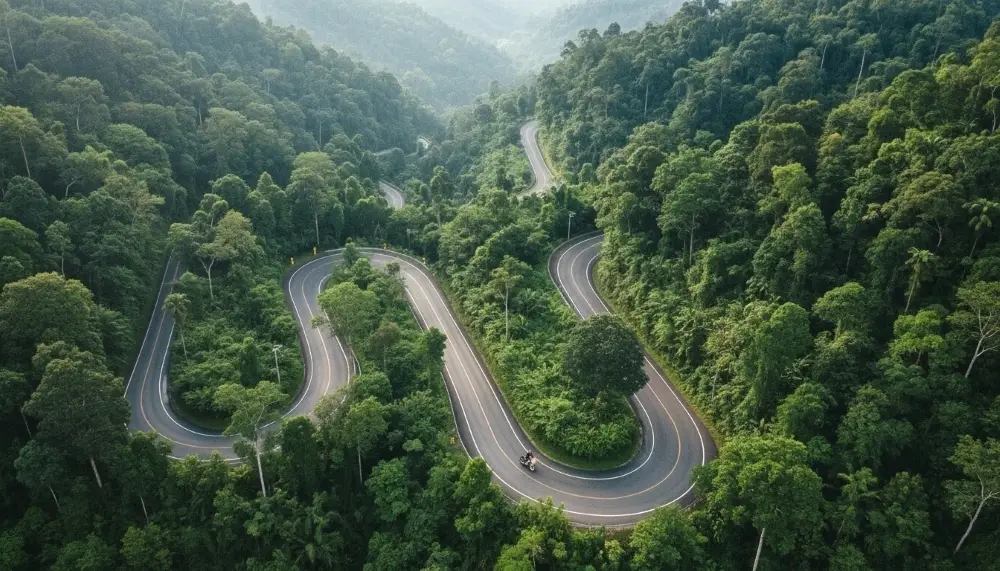
The road between Chiang Mai and Pai is famous in its own right. It contains over 700 curves, climbing through mountain forest before dropping into the Pai valley. Experienced riders on motorbikes treat it as a highlight of the trip. First-timers on the minivan would do well to bring motion sickness tablets.
Once you arrive, the town itself is small enough to cover on foot. Everything worth exploring in the centre is within a comfortable 15-minute walk.

Skip-the-line tickets and guided walks
in Pai with English-speaking
guides. Read real traveller reviews
before committing to a single one.
How to Get to Pai
Almost all visitors arrive from Chiang Mai, which connects easily to Bangkok and other major Thai cities by air. Fly into Chiang Mai and the rest of the journey is straightforward.
Minivan (most popular): Shared minivans depart from Chiang Mai’s Arcade Bus Terminal multiple times daily and take around 3 to 4 hours. Book ahead through 12GO during Thai public holidays and long weekends, as seats sell out fast. This is the easiest option for most travellers, including families.
Scooter or motorbike: Confident riders love doing this road themselves. The mountain scenery is genuinely world-class, and stopping at viewpoints whenever you feel like it is one of the great simple pleasures of northern Thailand. Allow a full day and start early.
Private taxi: A private transfer from Chiang Mai suits families with young children or travellers who want a comfortable, door-to-door journey without the shared minivan squeeze. Welcome Pickups and similar providers can arrange fixed-price private cars with luggage space.
Before you board: Download Grab on your phone before leaving Chiang Mai. Mobile data is essential the moment you arrive anywhere new in Thailand, so activating an Airalo, Yesim, or Saily eSIM before departure means your apps and maps work instantly from the moment the minivan pulls into town.

From short trips to long stays in Pai,
Airalo has flexible eSIM data plans
you install in minutes. Top up
remotely if you need more data.
The Atmosphere of Pai
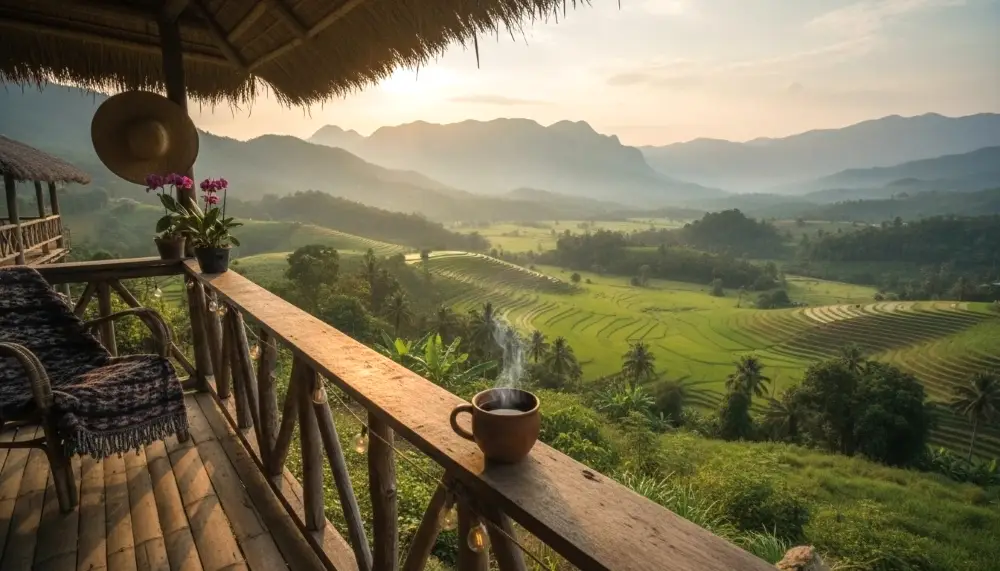
The town is small enough to explore entirely on foot, with cozy cafes, music bars, street food stalls, and artisan shops scattered along relaxed walking streets. The pace is unhurried by design. Nobody is rushing anywhere, and that energy is contagious within about four hours of arrival.
You will find a genuine mix of travellers here:
- Budget backpackers doing the northern loop
- Digital nomads on monthly guesthouse stays
- Thai families on weekend breaks from Chiang Mai
- Artists, musicians, and long-term expats
- Couples looking for something quieter than the islands
During the day, people explore nature and enjoy quiet cafes. In the evening, the town comes alive with the Pai Night Market, live music spilling out of small bars, and social open-air restaurants that encourage lingering.

From temples to island tours, Klook
covers Pai’s best experiences.
Hotel pickup is often included and
prices beat the pier walk-in rate.
Things to Do in Pai
Many travellers rent a scooter for a few days and explore the area at their own pace. The countryside around Pai rewards spontaneity. The best moments often come from turning down an unmarked road and seeing where it leads.
Pai Canyon: Narrow red ridges drop sharply into the valley below. Walking the ridge at golden hour, with the hills glowing behind you, is one of those moments you will describe to people for years. Arrive about 45 minutes before sunset.
Pam Bok Waterfall: A hidden cascade tucked between tall limestone cliffs and dense jungle. The walk in is short but the setting feels completely remote. Wear shoes you do not mind getting wet.
Tha Pai Hot Springs: Natural thermal pools surrounded by lush vegetation. The larger pools are great for soaking after a full day on a scooter. Entry costs around 200 THB (~6 USD) per person.
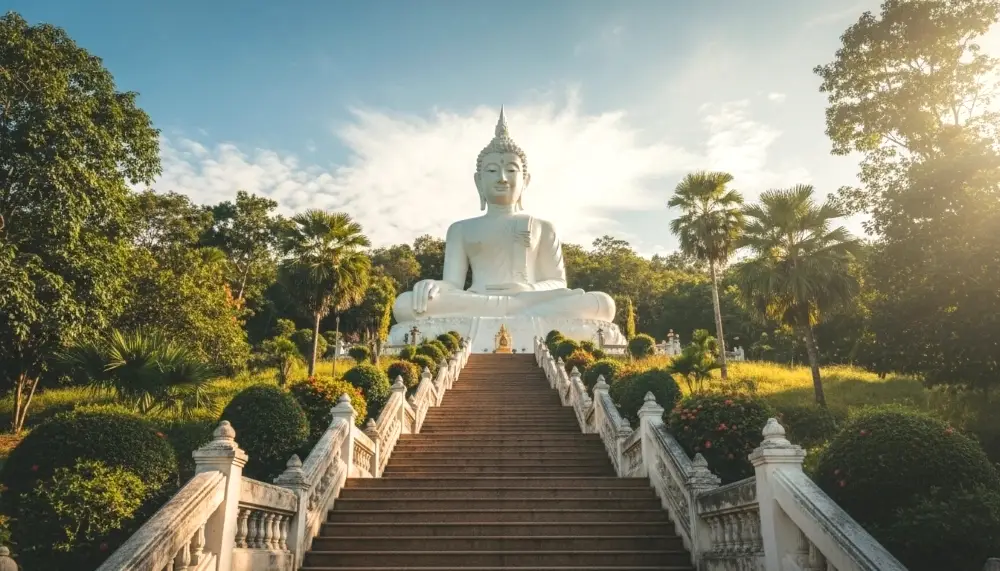
White Buddha at Wat Phra That Mae Yen: A large white Buddha statue on a hilltop overlooking the entire Pai valley. The climb up the stairs is short but the view from the top stretches across the surrounding rice fields and mountains.
Pai Night Market: Every evening the main street transforms into a lively stretch of street food vendors, handmade craft stalls, and live acoustic performances. Budget around 150 to 300 THB (~5 to 9 USD) for a relaxed evening of eating and browsing.
Mor Paeng Waterfall: One of the easier waterfalls to reach and popular with locals for swimming. A natural rock slide into the pool below makes it a favourite with families and younger travellers.
For guided day trips, cooking experiences, or organised trekking, both Get Your Guide and Klook list quality vetted operators running out of Pai and Chiang Mai.

Need budget data in Pai? Saily’s
eSIM plans start cheap and install
in a couple of minutes. Built by
the NordVPN team, security is solid.
Pro Tips For Stress-Free Travel

Transport: Grab is the reliable standard for short rides and transfers, though Bolt often offers lower fares for car and motorbike taxis. Both require mobile data to function, so have your eSIM active before arrival.
Accommodation Booking: Agoda consistently shows stronger inventory and “Mobile Only” deal pricing for northern Thailand properties compared to most western booking platforms. Booking.com is worth cross-referencing for guesthouses and boutique stays.
Connectivity: Use Yesim for instant eSIM activation before you fly, or pick up a local AIS SIM for the best rural coverage in the northern hills. Mobile signal in Pai town is solid; once you ride out into the countryside it thins out, so download your maps offline.
Navigation: Google Maps is accurate for street-level Pai navigation. Use Klook for fixed-price airport and city transfers if you are arriving late or coordinating a group.
Security on Public Wi-Fi: Cafes and guesthouses in Pai offer free Wi-Fi but open networks carry real risks. Run NordVPN whenever you are working remotely or accessing banking apps from cafe connections.
Long-Stay Health Cover: Remote workers and anyone planning an extended stay in northern Thailand should look at SafetyWing for affordable rolling health and travel insurance that covers you without requiring a fixed return date.

Forget swapping physical SIMs in Pai.
Yesim works on most modern phones,
activates remotely, and keeps your
home number live on WhatsApp too.
Food and Cafes in Pai
One of Pai’s genuinely pleasant surprises is the quality and variety of food on offer. For a town this small, the culinary scene punches well above its weight, driven partly by the long-term expat community and partly by Thai cafe culture spreading northward from Chiang Mai.
You will find a broad mix across all budget levels:
- Smoothie bowls and fresh fruit shakes from 60 to 120 THB (~2 to 4 USD)
- Thai street food and noodle dishes from 50 to 100 THB (~1.50 to 3 USD)
- Western-style breakfasts and specialty artisan coffee
- Dedicated vegetarian and vegan restaurants with full menus
- Relaxed sunset bars with cocktails and live acoustic sets
A full restaurant meal with a drink in Pai typically runs between 150 and 400 THB (~4.50 to 12 USD) per person, depending on whether you are at a street stall or a proper cafe. Eating here rarely feels rushed. The culture of lingering over a meal with a good view is deeply embedded.
Where to Stay in Pai
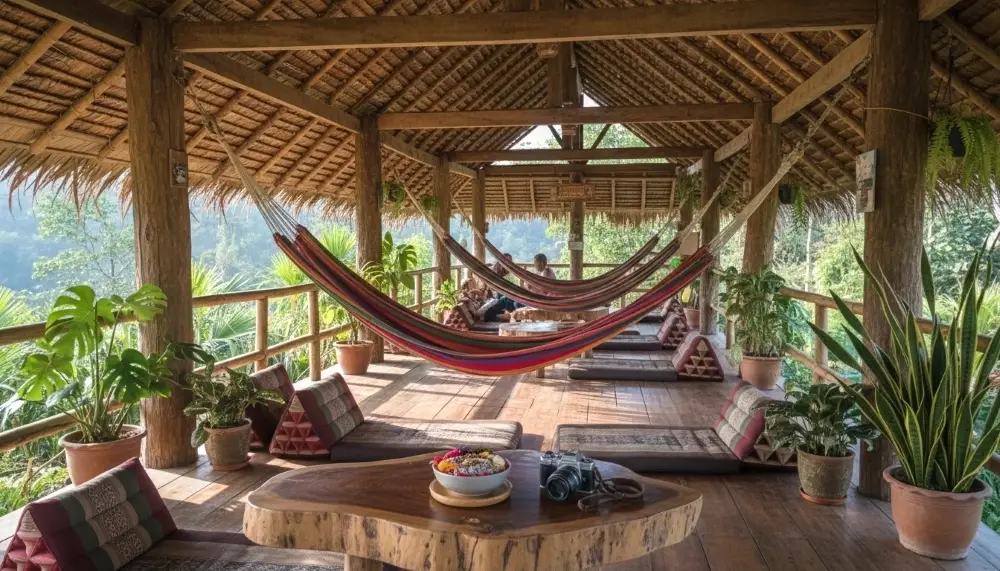
Pai’s accommodation scene covers a wide spectrum, from bamboo bungalows at 300 THB (~9 USD) a night to boutique riverside villas with private pools. The town and its surrounding valley offer genuinely good value at every level.
Budget (300 to 600 THB per night, ~9 to 18 USD): Guesthouses and basic bungalows in the town centre or just outside it. Most include fan cooling, hot showers, and free Wi-Fi. The social atmosphere at these places is excellent for solo travellers.
Mid-range (800 to 1,800 THB per night, ~24 to 55 USD): Air-conditioned rooms, better beds, and often a small garden or rice field view. This bracket gives you the best combination of comfort and value. Agoda consistently shows the strongest selection here for Pai properties.
Upscale (2,000 THB and above per night, ~60 USD plus): Private pool villas, riverside retreat resorts, and boutique eco-lodges set in the hills outside town. Booking.com alongside Agoda is worth checking for longer stays at this level, as prices can vary noticeably between platforms.
Book at least a few days in advance during Thai public holidays, Chinese New Year, and the December to February high season. Pai is small and quality rooms disappear quickly.
A Different Side of Thailand
Many visitors arrive in Thailand expecting beaches and islands. Places like Phuket, Krabi, and Koh Samui are famous for a reason, but they represent only one version of the country.
Pai offers something completely different. Instead of beaches, you get mountains, cool evenings, jungle landscapes, and a pace of life that feels genuinely restorative. For travellers who have spent time in Bangkok or the busy southern coasts, Pai lands like a breath of actual mountain air.
It also shows a quieter, more creative side of Thai culture that most first-time visitors simply do not expect. The hill tribe communities in the surrounding countryside, the organic farms, the independent cafes run by young Thai entrepreneurs from Chiang Mai: all of it adds texture that the resort circuit rarely provides.
Helpful Travel Tips for Pai
A few things worth knowing before you arrive:
1. Stay at least two nights: Pai genuinely rewards slowing down. Two nights is the minimum; three or four nights is the sweet spot for most travellers.
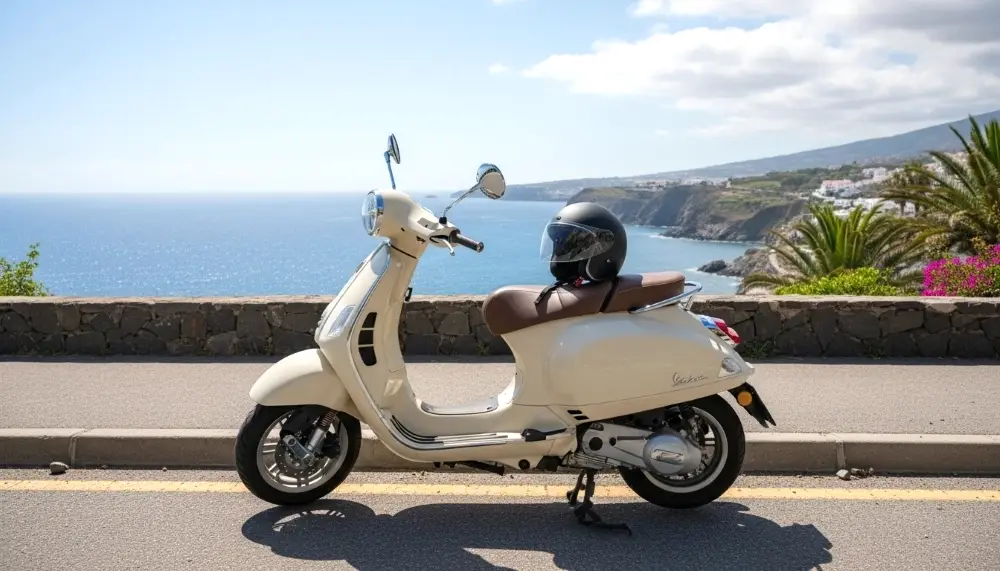
2. Rent a scooter if you are comfortable riding one: Most of the best attractions sit outside the town centre, and a scooter gives you full freedom to explore at your own rhythm. Daily rental runs around 150 to 250 THB (~4.50 to 7.50 USD).
3. Bring a light jacket: Evenings in the mountains can drop noticeably, especially from November through February. Even in warmer months, the altitude makes nights cooler than you might expect.
4. Prepare for the road if prone to motion sickness: The minivan from Chiang Mai is comfortable but the 700-plus curves are real. Take tablets before you board, sit near the front, and keep your gaze on the horizon.
5. Catch at least one sunset from the hills: Whether it is Pai Canyon, the White Buddha hilltop, or a cafe with a valley view, the sunsets here are among the finest in northern Thailand and cost nothing to enjoy.
6. Cash is important: Many smaller stalls and guesthouses operate on a cash basis. ATMs are available in town but carry modest fees. Withdraw enough for a few days when you first arrive.
Is Pai Safe for First-Time Travellers?
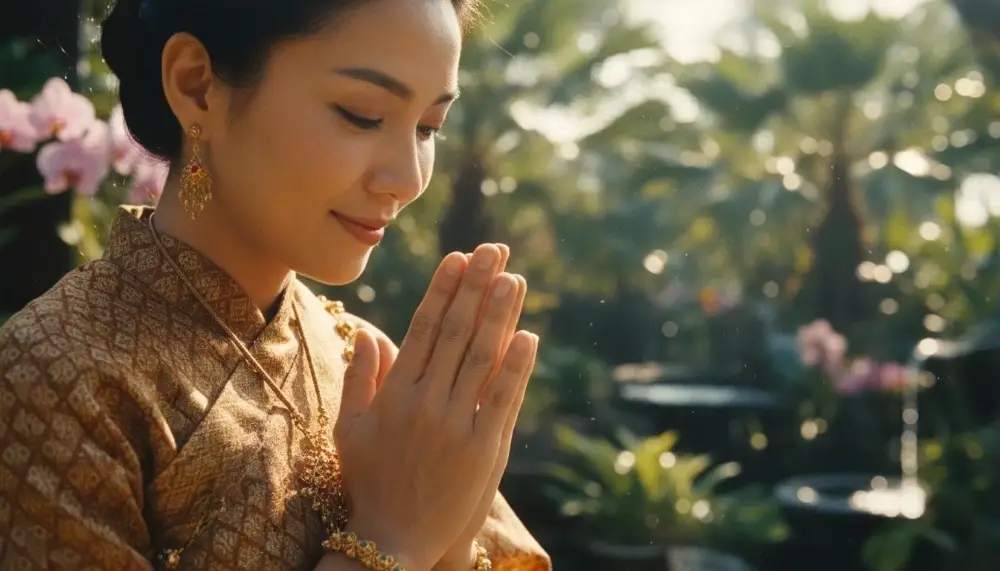
Pai is widely considered one of the safest and most relaxed places in Thailand. The town is small, well-lit at night, and genuinely welcoming to solo travellers, couples, and families alike.
Petty theft can occasionally occur in busy market areas, as in any tourist town. Keep bags secure, do not leave valuables visible on a parked scooter, and use the in-room safe at your guesthouse if one is available. Beyond that, basic common sense is all you need.
Many first-time visitors to Thailand say Pai was where they felt most comfortable and at ease during their entire trip. Locals are friendly, English is widely spoken in hospitality settings, and the international traveller community creates a relaxed and social environment that makes it easy to meet people.
Why So Many Travellers Fall in Love with Pai
Pai has a particular way of capturing people. Visitors who plan to stay two nights find themselves rescheduling buses. Others leave, get two hours down the mountain road, and turn around.
It is not just the scenery, though that is extraordinary. It is the combination of mountain air, the complete absence of urgency, slow mornings that stretch naturally into long afternoons, the quality of the sunsets, and the feeling that the rest of the world is operating on a schedule that simply does not apply here.
For first-time visitors to Thailand, Pai often becomes the most memorable stop on an entire trip. Not because it is the most dramatic or the most famous, but because it is the place where travel started to feel effortless.

Final Thoughts: Should You Visit Pai?
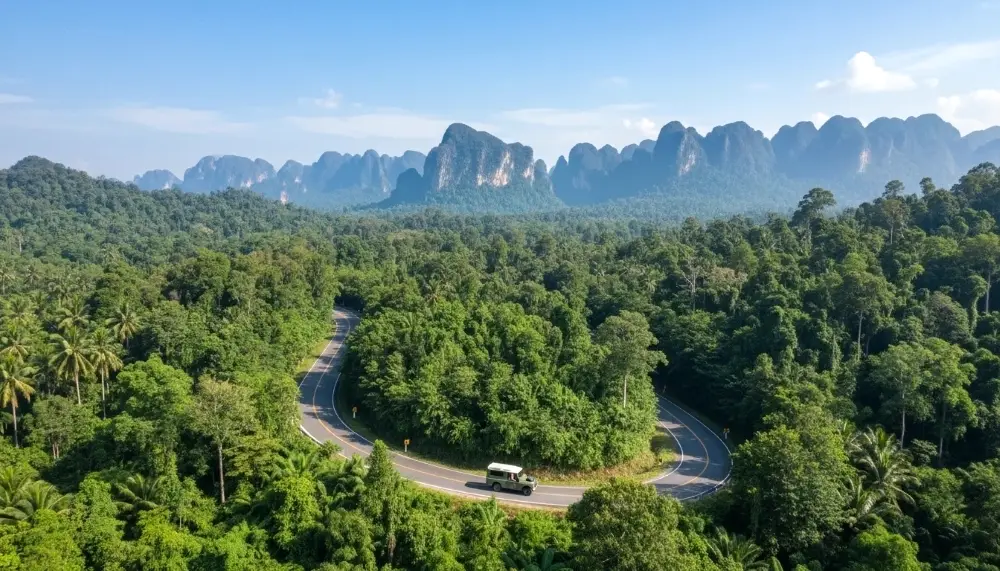
If you are exploring northern Thailand, Pai absolutely deserves a place on your itinerary. After the energy of Bangkok and the culture of Chiang Mai, it offers something completely distinct: a calm, scenic, creative corner of the country that shows a side of Thailand many visitors never find.
Whether you are here to chase waterfalls, watch sunsets from canyon ridges, sample your way through the night market, or simply sit in a cafe with a coffee and a view of the hills, Pai delivers the kind of travel experiences that stay with you.
Thailand is full of genuinely incredible destinations. Pai is one of those rare places that reminds you why people fall in love with travelling in the first place. First-time visitors especially: do not skip it.
Frequently Asked Questions
How many days should I spend in Pai?
Most travellers find that two to four nights is the sweet spot. Two nights gives you enough time to cover the main attractions at a comfortable pace. Three or four nights allows for more leisurely exploration, a day trip into the countryside, and time to simply settle into the town’s relaxed rhythm without feeling rushed. Many people who plan two nights end up extending to four or five once they arrive.
What is the best time of year to visit Pai?
The cool season from November through February is the most popular and arguably the best time to visit. Temperatures are pleasant during the day (around 20 to 25 degrees Celsius) and genuinely cool at night, sometimes dropping to 10 degrees or below in January. The rainy season from June through October brings lush green landscapes and fewer tourists, but road conditions can be unpredictable. March and April are dry but warm, with some smoke haze from agricultural burning in the hills.
Is Pai suitable for families with young children?
Yes, Pai works very well for families. The town is compact and easy to navigate, traffic in the centre moves slowly, and there is no shortage of open green spaces, swimming spots, and relaxed cafes where children are welcome. The hot springs, Mor Paeng Waterfall (which has a natural rock slide into a swimming pool), and the White Buddha hilltop are all family-friendly attractions. A private transfer from Chiang Mai rather than a shared minivan is recommended for families with young children to avoid the motion sickness risk on the winding mountain road.
Do I need a licence to rent a scooter in Pai?
Technically yes. A valid motorcycle licence (or international driving permit covering motorcycles) is required to legally ride a scooter in Thailand. Many rental shops do not check, but if you are involved in an accident without a valid licence, your travel insurance will almost certainly be void and you could face legal liability. If you are not a confident rider or do not hold the correct licence, hiring a driver or joining a guided tour for countryside excursions is the safer option.
What currency is used in Pai and can I use cards?
The Thai Baht (THB) is the local currency. ATMs are available in central Pai and accept most international cards, though withdrawal fees apply. Cash is essential for street food stalls, night market vendors, guesthouses, and smaller scooter rental shops. Larger restaurants and some accommodation providers accept cards, but it is wise to carry sufficient Baht for at least two to three days at a time. Avoid exchanging money at hotels as the rates are typically poor.
How do I get from Chiang Mai to Pai?
The most popular option is a shared minivan, which departs from Chiang Mai’s Arcade Bus Terminal multiple times daily and takes around three to four hours. Book in advance through 12GO during Thai public holidays as seats sell out. More adventurous travellers ride the route on a rented motorbike, which takes a full day with stops but offers spectacular scenery. Private taxis are also available for families or those who prefer a direct, comfortable transfer. There is no train service to Pai.
Is there reliable mobile data and Wi-Fi in Pai?
Mobile data coverage in Pai town is solid on the major Thai networks, with AIS providing the best rural coverage for trips into the surrounding countryside. Most guesthouses and cafes offer free Wi-Fi, though speeds vary. For digital nomads and remote workers, a local AIS SIM or a pre-activated eSIM from providers like Airalo, Yesim, or Saily is the most reliable setup. If you plan to work from cafe networks, running NordVPN is a sensible precaution on open public connections.
What should I pack for a trip to Pai?
A light jacket or layer is essential, particularly from November through February when evenings can drop significantly. Comfortable walking shoes or trainers work better than sandals for waterfall trails and canyon walks. Sunscreen and insect repellent are important for outdoor activities. If you plan to rent a scooter, closed-toe shoes are strongly recommended. Modest clothing (covering shoulders and knees) is appropriate when visiting temples. A small day bag, a portable power bank, and a reusable water bottle round out a practical Pai packing list.
Are there ATMs in Pai and do they charge fees?
Yes, there are several ATMs in central Pai operated by major Thai banks including Bangkok Bank, Kasikorn Bank, and Krungsri. All charge a foreign transaction fee of 220 THB (~6.50 USD) per withdrawal as of 2025, which is standard across Thailand. To minimise fees, withdraw larger amounts less frequently. Some accounts, particularly those from digital banks and travel-focused debit cards, may reimburse international ATM fees. Check with your bank before travelling.
Can Pai work as a base for remote workers on a longer stay?
Absolutely. Pai has become a genuine hub for digital nomads and remote workers, particularly during the cool season. Monthly guesthouse and villa rental rates drop significantly compared to nightly prices, with comfortable air-conditioned rooms available from around 8,000 to 15,000 THB per month (~240 to 460 USD). The cafe scene is strong, with several spots offering reliable Wi-Fi and a culture of long-stay working. For health and emergency cover during an extended stay, SafetyWing offers flexible rolling travel medical insurance well suited to nomads without a fixed return date.
Continue Planning Your Trip

“`