Thai Cooking Classes
This site contains affiliate links. We may earn a commission at no extra cost to you.
Thai cooking classes are one of the most popular activities for visitors, and for good reason. They offer a fun, hands-on way to dive into Thai culture while learning recipes you can recreate long after your trip ends.
Whether you’re exploring bustling Bangkok, relaxing in Chiang Mai’s green mountains, or island hopping in the south, you’ll find cooking schools everywhere. And the best part? You don’t need any cooking experience to enjoy them.
Quick Summary:
- Budget: Group sessions typically range from 800 THB to 2,500 THB per person (~£18 to £57 / $22 to $68 USD).
- Entry Requirements: Most schools require 24-hour advance booking; no specific permits are needed for short-term workshops. Cooking schools can help with things like DTV Destination Thailand Visa applications.
- Regional Variance: Central Thailand focuses on heat and sweetness, Northern Thailand on earthy herbs, and Southern Thailand on intense spice and turmeric.
- Out and About: Market tours are standard in morning classes and provide essential cultural context for ingredient selection.
Before your class begins, you’ll need reliable mobile data for maps, translation apps, and getting to schools that sit well outside city centres. Activating an Airalo, Yesim, or Saily eSIM before you leave home means you’re connected the moment you land, with no queues at airport SIM counters and no SMS verification delays for apps like Grab.

Skip the planning headache in Chiang Mai.
Klook offers day tours, tickets, and
experiences from around $25, with
instant confirmation to your phone.
Are Thai Cooking Classes Worth It?
Yes, absolutely and without reservation.
Most classes last between 3 and 5 hours and include:
- A guided visit to a local market
- Hands-on cooking instruction
- Several dishes to prepare yourself
- All ingredients and equipment provided
- A full meal at the end
They’re beginner-friendly, social, and surprisingly affordable. Many travelers say their cooking class ends up being one of the highlights of their entire Thailand trip. Part of what makes them so consistently memorable is the combination of learning and doing. You’re not watching a demonstration or following a video.
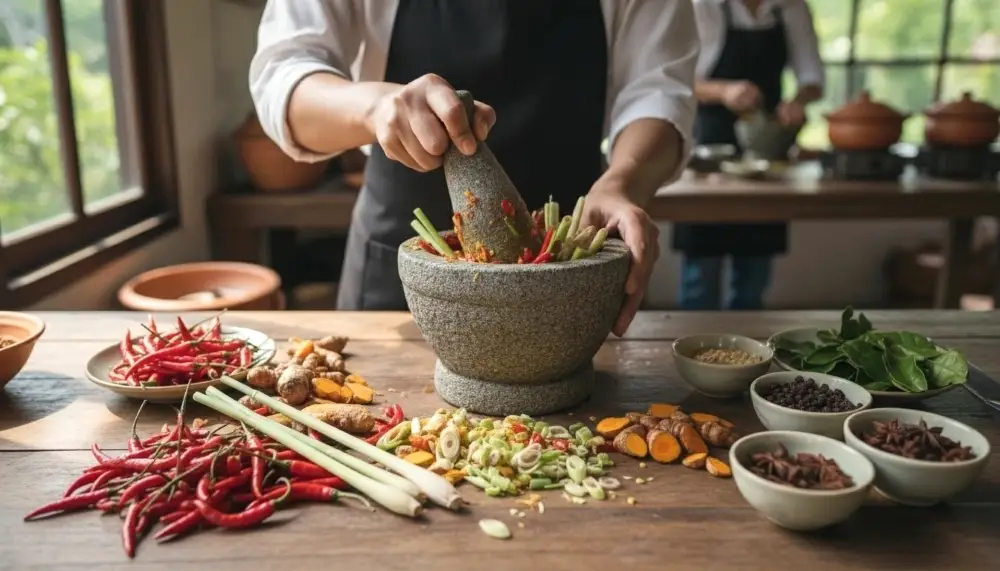
You’re at a station with your own wok, making your own curry paste from scratch, and the chef standing next to you has cooked this dish thousands of times and knows exactly which stage smells right and which heat setting will ruin it. That live, responsive teaching is something no recipe card or YouTube video can replicate.
For budget travelers, even a mid-range class at 1,500 THB (~£34 / $42 USD) is exceptional value when you factor in the market tour, all ingredients, tuition, and a meal that would cost at least that much in a decent restaurant. For families, it’s an activity that works across age groups and leaves everyone with a shared story. For digital nomads on a longer stay, a Thai cooking class early in the trip reframes the entire food culture around you in a way that pays dividends for months.

Lock in top-rated Chiang Mai tours with
GetYourGuide’s free cancellation
up to 24 hours before. Reserve now
and pay later if dates aren’t set.
Thai Culinary Education:
Thai cooking classes are categorized into three tiers: home-style garden schools, professional academy workshops, and luxury hotel masterclasses. Most sessions last four to six hours and include a guided market tour to source galangal, kaffir lime, and fermented shrimp paste. Prices vary by region, with Bangkok being the most expensive.
| Class Type | Average Price (THB) | Best Location | Primary Focus |
|---|---|---|---|
| Home-Style Garden | 800 – 1,200 | Chiang Mai (Old City) | Traditional recipes and atmosphere |
| Professional Academy | 2,500 – 4,500 | Bangkok (Bang Rak) | Technical precision and plating |
| Luxury Masterclass | 5,000 – 8,000 | Phuket (Bang Tao) | Premium ingredients and wine pairing |
What Happens During a Thai Cooking Class?
You’ll usually start with a short introduction to Thai ingredients and flavors. Many classes begin with a visit to a local market where instructors explain herbs, spices, vegetables, and sauces used in Thai cooking.
Participants typically cook several dishes step by step with guidance from a local chef. Some schools allow each person to prepare their own individual dishes, while others work in small groups.
Common dishes taught include:
- Pad Thai
- Green curry
- Tom Yum soup
- Mango sticky rice
- Papaya salad (Som Tam)
Once everything is finished, everyone sits down together to enjoy the meal they just created. It’s relaxed, interactive, and usually full of laughter.
The market portion of the morning deserves more attention than it typically gets in pre-booking descriptions. Walking through a Thai wet market with a knowledgeable guide is a genuinely different experience from wandering through one alone. You learn to distinguish fresh galangal from ginger by smell as much as appearance. You understand why the pungent, almost overwhelming smell of fermented shrimp paste (kapi) is not something to shy away from but an essential building block of depth in so many southern dishes. You watch the instructor negotiate with vendors in Thai and pick up fragments of context that shift how you understand every meal you eat for the rest of your trip. Book morning classes where at all possible specifically for this reason.
Bangkok: The Heart of Central Cuisine:
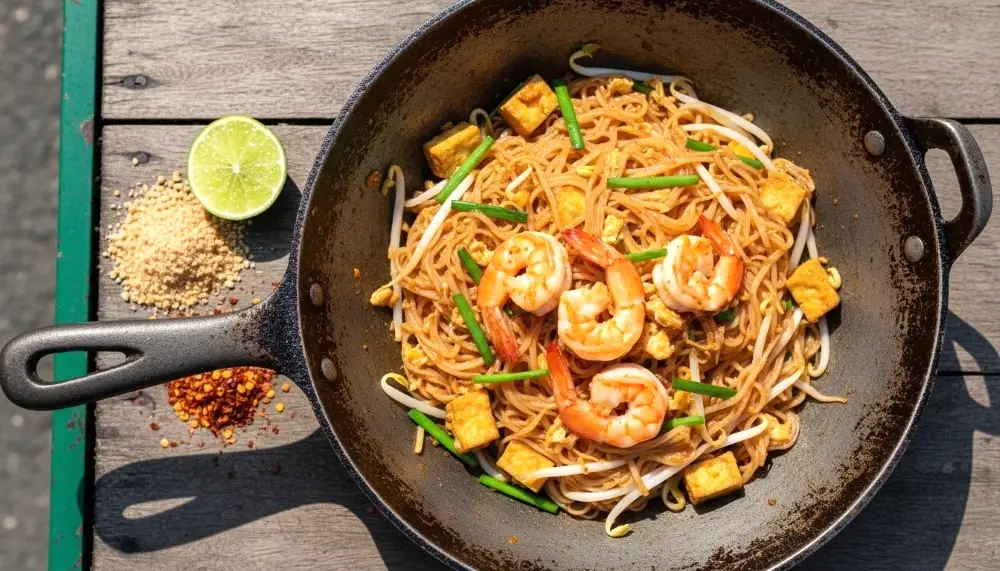
Cooking classes in Bangkok emphasize the sophisticated balance of Central Thai flavors, often featuring Royal Thai Cuisine techniques. Locations in Bang Rak and Sukhumvit provide access to historic markets like Or Tor Kor. These classes are ideal for travelers seeking high-level technical skills and refined presentation styles.
The capital city serves as the ultimate classroom for those obsessed with precision. In the dense, humid alleys of Bang Rak, classes often begin at dawn. Students navigate the narrow stalls of local wet markets, learning to identify the difference between ginger and galangal or how to select the perfect coconut for pressing fresh milk.
The Central style is characterized by its complexity. Unlike the rustic dishes of the provinces, Bangkok’s culinary heritage is influenced by the Royal Court, demanding intricate fruit carving and the delicate tempering of heat with palm sugar. The focus here is on the iconic staples: Tom Yum Goong, Pad Thai, and Green Curry. For a superior experience, avoid the large-scale tourist operations near Khao San Road. Instead, seek out boutique schools in the Silom and Ari areas that limit class sizes to six participants to ensure individual attention from the chef.
Getting to cooking schools across Bangkok’s spread-out districts is straightforward if you use Grab or Bolt for door-to-door transfers, or the BTS Skytrain for locations near central interchange stations. For schools in Or Tor Kor market’s neighbourhood near Chatuchak, the MRT is the fastest option during morning rush hour. Klook and Get Your Guide both carry Bangkok’s best-reviewed classes with verified ratings and easy mobile booking, which makes comparing options significantly faster than trawling individual school websites.

Pick a Chiang Mai eSIM plan that matches
your trip length on Airalo’s global
marketplace. Install before departure
and you’re online the moment you land.
Chiang Mai: Organic Farms and Lanna Traditions
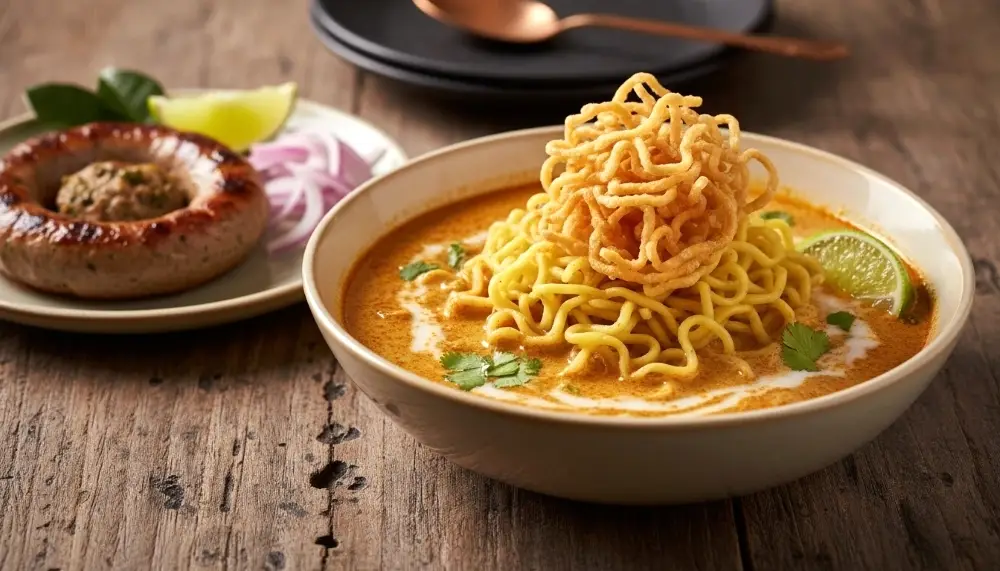
Chiang Mai offers a rustic, farm-to-table approach where students often pick ingredients directly from onsite organic gardens. The curriculum focuses on Northern Lanna specialties, such as Khao Soi and Sai Oua. These classes provide a relaxed, immersive environment that highlights the region’s unique use of bitter herbs.
Traveling north to the Rose of the North shifts the palate entirely. The cooler climate and mountain geography of Chiang Mai produce a different variety of produce, and the cooking schools reflect this through their garden-centric layouts. Many of the top-rated schools, including those in the Mae Rim district or near the Tha Phae Gate, transport students to out-of-town farms where the morning begins not at a market stall but among rows of fresh-grown herbs.
The Northern Lanna style is distinct for its lack of coconut milk in many traditional curries and its heavy reliance on dried spices and pork. Students spend significant time mastering the mortar and pestle to create the thick, aromatic pastes required for Gaeng Hang Lay, a slow-braised pork curry with Burmese origins that is among the most satisfying dishes in the entire Thai repertoire. The atmosphere is generally more communal and relaxed than the fast-paced kitchens of Bangkok, making Chiang Mai the natural choice for travelers who want to linger over the process rather than race through it.
Chiang Mai is also one of Thailand’s most established hubs for long-stay visitors and digital nomads. If you’re spending several weeks in the city, a cooking class early in your stay pays dividends across every subsequent meal: you begin reading menus differently, ordering more adventurously, and engaging with food vendors in a way that simply isn’t possible without context. Accommodation in the Old City or Nimman Road areas puts you within easy reach of most cooking schools, and both Agoda and Booking.com carry strong selections across all budgets from guesthouse to boutique hotel.
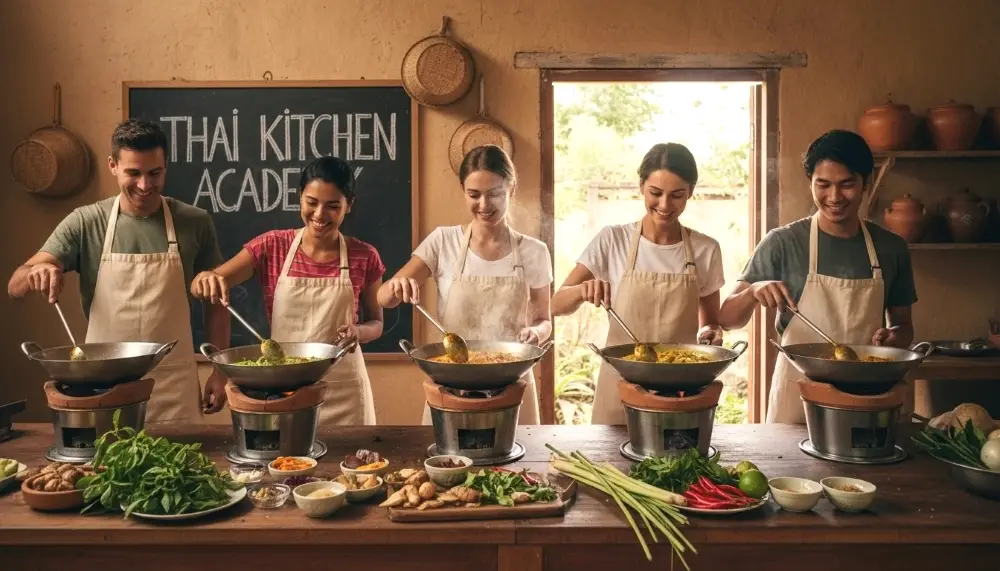
Southern Thailand: Spice, Seafood, and Turmeric:
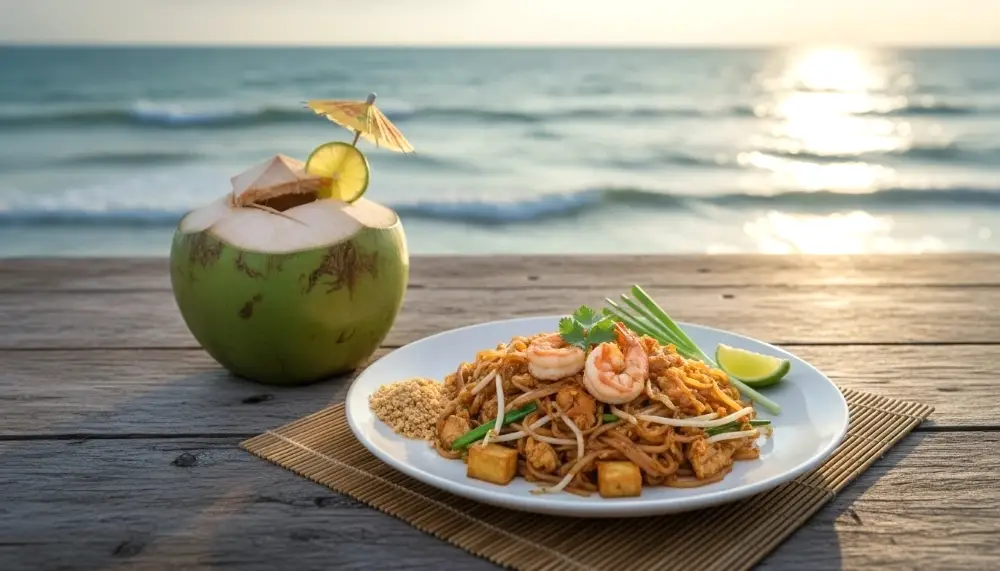
Cooking classes in Southern Thailand, particularly in Phuket and Koh Samui, are defined by intense spice levels and the heavy use of fresh turmeric. The curriculum centres on seafood and pungent curries like Gaeng Som. These classes often integrate coastal culture and outdoor beachside kitchen setups.
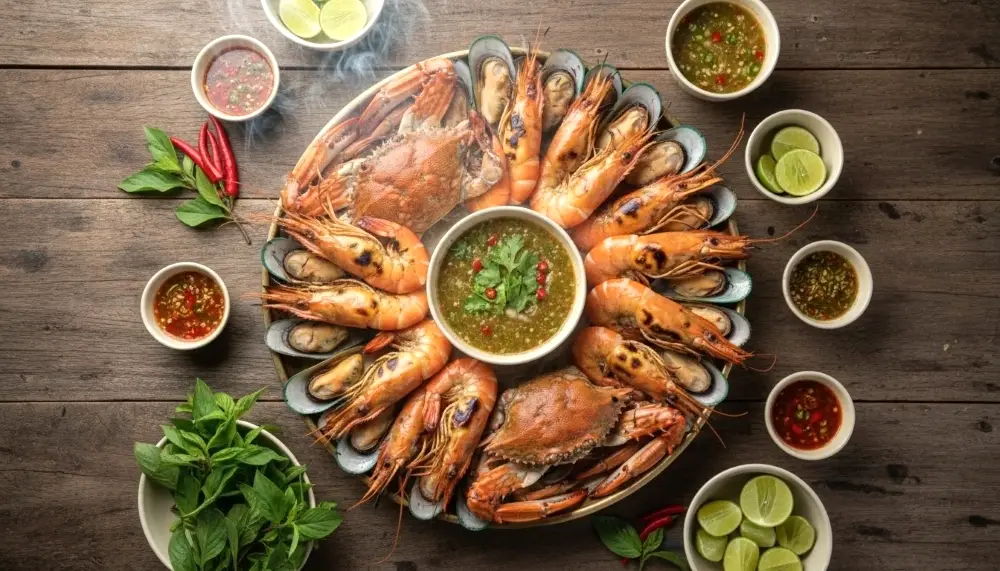
The South is where the heat reaches its zenith. Influenced by Malay and Indonesian flavors, the cuisine here is unapologetically bold. In Phuket Town or along the shores of Krabi, classes emphasize the use of turmeric for its antiseptic properties and vibrant yellow hue.
Expect to work with an abundance of fresh seafood sourced directly from the Andaman Sea or the Gulf of Thailand. A highlight of Southern classes is learning to balance the intense sourness of tamarind with the fire of dried red chilies. For an authentic insight, look for classes that teach the preparation of Khua Kling, a dry-fried minced meat curry that tests the limits of spice tolerance and rewards those who lean into it.
Southern cooking classes tend to be smaller and more intimate than their Bangkok equivalents, partly because the tourism infrastructure here skews toward resort experiences rather than mass-market activities. This works strongly in your favour. A class of four or five people on a private villa terrace overlooking a limestone bay, with a chef who has cooked these recipes for thirty years, is a fundamentally different experience from a tourist school in a busy Bangkok street. Booking through Klook or Get Your Guide for southern island classes is advisable well in advance during the high season months of November through February, when accommodation is full and activities book out weeks ahead.

Affordable Chiang Mai data without the
tourist SIM hassle. Saily’s eSIM
works on most modern phones and
tops up remotely whenever needed.
Perfect for First-Timers:
For first-time travelers, Thai cooking classes offer something special that sightseeing alone cannot provide: a real connection to the culture.
Food plays a huge role in everyday life in Thailand. Learning how dishes are prepared gives you insight into local ingredients, traditions, and cooking techniques that have been passed down for generations.
Cooking classes also provide a comfortable environment for travelers who may feel nervous exploring the country on their own. You’ll usually be surrounded by other visitors, guided by friendly instructors who are used to helping beginners. It’s a safe, welcoming way to experience authentic Thai culture.
There’s also a social dimension that catches most first-timers off guard. The shared activity of cooking together breaks down the reserve that can exist between strangers. By the time you’re sitting down to eat a meal you’ve collectively produced, conversation flows easily. Travel friendships have been forged in cooking school kitchens all over Thailand, particularly in Chiang Mai where the format lends itself to a full day out rather than a quick half-morning activity.
Families with children from around eight years old upward will find most schools genuinely accommodating. Children are typically given age-appropriate tasks (grinding pastes, mixing sauces, garnishing dishes) and the interactive format holds attention in a way that temple visits or museum tours rarely manage for younger travelers. Check with individual schools about minimum age policies before booking, as these vary. For families arriving at Suvarnabhumi or Don Mueang, a pre-booked Welcome Pickups transfer gets everyone to their hotel without the taxi-rank scramble, which is a worthwhile investment on day one especially with children and luggage in tow.

Lock in your Chiang Mai accommodation
early and beat peak-season price hikes.
Agoda’s filters let you compare options
side by side before you commit.
What You’ll Learn:
Thai cuisine is famous for its balance of flavors: sweet, sour, salty, and spicy.
During a cooking class, instructors explain how these flavors work together using fresh ingredients such as:
- Lemongrass
- Kaffir lime leaves
- Galangal
- Thai basil
- Chili peppers
- Coconut milk
- Fish sauce
Many travelers are surprised to learn how simple some dishes actually are once you understand the ingredients. Green curry paste, for instance, is fundamentally just a collection of fresh aromatics pounded together: green chilies, shallots, garlic, galangal, lemongrass, kaffir lime zest, coriander root, and shrimp paste. Understanding this demystifies an ingredient that can seem impossibly exotic in a Western supermarket and turns it into something you can actually replicate at home.
The techniques you take away are equally useful. Wok discipline (cooking fast over very high heat and knowing when to move ingredients and when to leave them) is something that transforms home cooking well beyond Thai dishes. The same applies to balancing seasoning: Thai cooking teaches you to taste continuously, to adjust fish sauce against lime juice, to moderate chili heat with palm sugar, and to trust your palate rather than a fixed measurement. These are transferable skills, and experienced travelers who have done multiple cooking classes across different countries consistently rate Thai classes among the most practically useful.
Vegetarian and Dietary Needs:
Thai cuisine contains a significant number of hidden animal products, most notably fish sauce and shrimp paste, which appear in dishes that might otherwise appear vegetarian. A good cooking class addresses this directly and is an invaluable resource for vegetarian and vegan travelers who want to eat well and safely throughout their trip.
Most reputable schools offer dedicated vegetarian or vegan menus, either as a separate class or as an adaptation of the standard curriculum. The substitutions are often more interesting than simply removing an ingredient: soy sauce replaces fish sauce, fermented tofu replaces shrimp paste, and mushroom stock replaces chicken base. These are not compromises but genuinely delicious alternatives that have their own place in Thai Buddhist temple cooking.
Travelers with nut allergies should flag this clearly at booking, as peanuts appear in satay sauces, certain curries, and some salad dressings. Shellfish allergies require similar vigilance given how widely prawn and crab appear across Thai menus. Gluten-free diets are generally well-accommodated since Thai cuisine relies on rice rather than wheat as its starch base, though soy sauce and some ready-made curry pastes can be problematic. Always communicate your requirements directly with the school rather than assuming the booking platform has passed on the information, as this is where miscommunications most frequently occur.
Practical Tips Before Booking a Class:
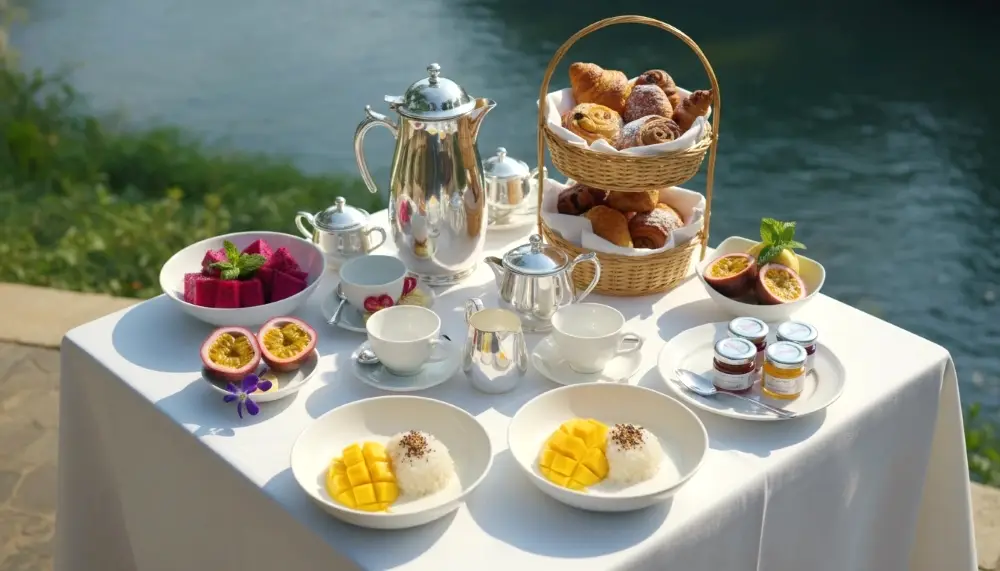
If you’re planning to try a cooking class in Thailand, a little preparation can help you choose the best experience.
Here are a few helpful tips:
- Book ahead during high season. Popular classes fill up quickly, particularly November through February and during Songkran in April.
- Choose smaller groups for a more hands-on experience. Six to eight participants is ideal; classes above fifteen start to feel impersonal.
- Check dietary options if you’re vegetarian, vegan, or have allergies. Confirm this directly with the school after booking.
- Morning classes almost always include market visits. Afternoon and evening sessions use pre-sourced ingredients.
- Come hungry. You’ll cook between three and six dishes depending on the school. Eating a full breakfast beforehand is a waste of stomach capacity you will genuinely regret.
Many schools also provide recipe books so you can recreate the dishes once you return home. Ask specifically whether the booklet is included in the price or sold separately, as this varies. A physical booklet is more useful than a digital PDF for most home cooks, but either is better than trying to reconstruct a dish from memory three weeks after landing back in England in the middle of winter wondering why your green curry tastes nothing like the one in Chiang Mai.
Don’t Worry If You’re Not a Cook:
One of the biggest concerns first-time travelers have is whether they need cooking skills to join a class. The answer is absolutely not.
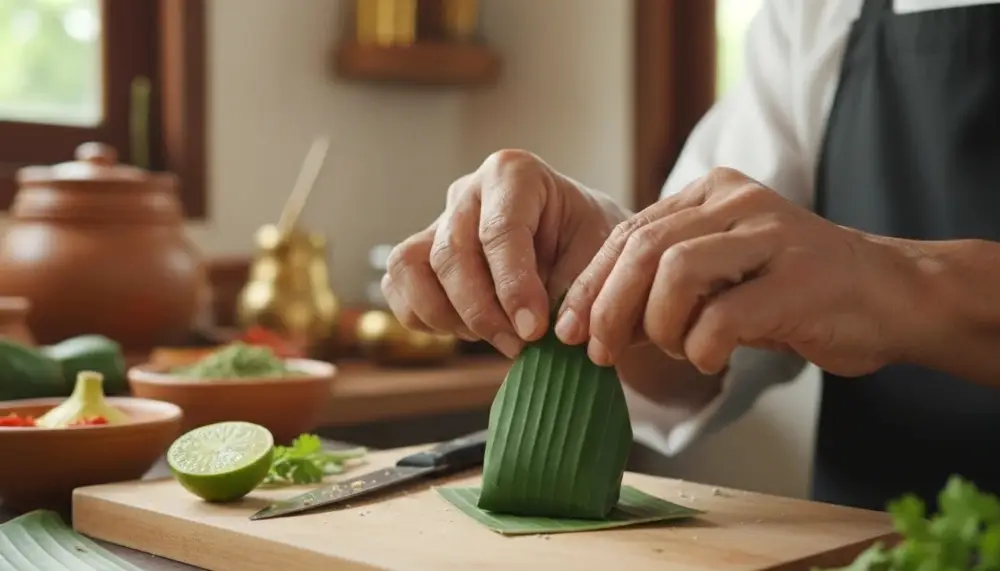
Thai cooking classes are designed specifically for beginners. Instructors guide you step by step and prepare most ingredients ahead of time. Think of it less like a professional cooking course and more like a relaxed cultural experience where food happens to be the focus. If you can chop vegetables and stir a pan, you’ll do just fine.
The instructors who run these schools are, as a rule, exceptional communicators. They’ve spent years working with visitors who arrive speaking no Thai, holding a knife incorrectly, and uncertain whether galangal is a root or a leaf. They find this charming rather than frustrating. The best instructors have a quiet genius for meeting each student exactly where they are: the nervous beginner gets patient reassurance, the confident home cook gets a technical challenge, and the curious traveler gets the cultural context behind every ingredient. It is teaching as hospitality, and it is genuinely impressive to watch.
For remote workers and digital nomads who want to maintain their workflow around a class, most morning sessions finish by early afternoon, leaving a productive working day ahead. Co-working cafes in Bangkok’s Ekkamai and Ari districts, and Chiang Mai’s Nimman Road corridor, are all within easy reach of cooking schools. Using NordVPN on cafe and co-working Wi-Fi networks protects your connection on public networks, which is particularly relevant if you’re accessing work systems or client platforms from shared internet in unfamiliar locations.
A Delicious Souvenir:
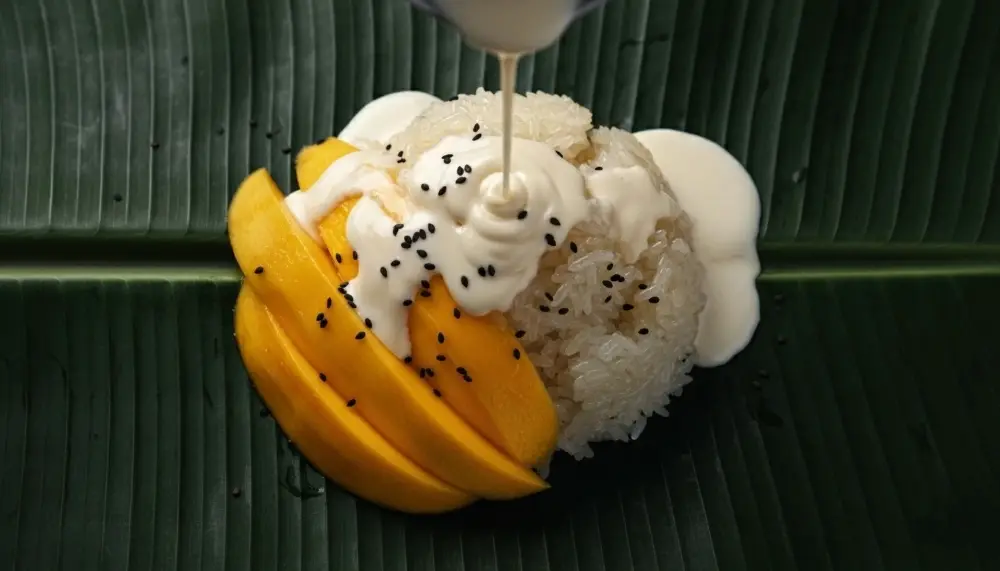
Long after your Thailand adventure ends, the recipes you learn in a cooking class become one of the most meaningful souvenirs you can bring home.
Cooking Thai food later can instantly transport you back to your trip. The smell of lemongrass hitting a hot wok, or the first bubble of coconut milk breaking the surface of a curry, carries the same sensory charge as a photograph but engages you far more completely.
Many travelers say cooking Thai dishes at home becomes a way to relive their journey. And once friends taste your homemade pad Thai or green curry, you’ll likely find yourself sharing stories of Thailand again and again.
There’s also a practical dimension to the souvenir. Spice pastes, dried herbs, fish sauce, and palm sugar are all available in Asian supermarkets across the UK and Europe, and the quality has improved considerably over the past decade. With a good recipe and the technique learned in class, recreating restaurant-quality Thai food at home is genuinely achievable. Many schools will advise you on which ingredients to buy before you leave Thailand, as certain items (particularly fresh galangal and kaffir lime leaves) are significantly better sourced in-country. A small vacuum-sealed package of dried curry paste or a bottle of good fish sauce tucked into checked luggage makes one of the most useful and personal gifts you can bring back for someone who loves to cook.
Pro Tips For Stress-Free Travel:
To ensure a seamless transition from the hotel to the stovetop, use the following digital resources and local insights:
Safety: Always use NordVPN when accessing booking sites on public Wi-Fi in cafes or airports. One compromised session on an unencrypted network is all it takes to create a serious problem mid-trip.
Transport: Use Grab or Bolt to reach cooking schools located outside the main city centres. In Bangkok, the BTS Skytrain and MRT are more reliable during peak traffic hours. Both apps require SMS verification, so activate your Airalo, Yesim, or Saily eSIM before landing.
Booking Platforms: Klook and Get Your Guide offer competitive rates and verified user reviews for the most popular schools. Free cancellation windows on most listings mean you can book ahead without committing rigidly to a date.
Connectivity: Ensure a stable connection via Yesim or a local SIM to use Google Translate at the wet markets. Rural market signage is rarely in English, and real-time translation is genuinely useful for reading ingredient labels and understanding vendor explanations.
Payments: While large schools accept credit cards, many market vendors only accept cash in Thai Baht or PromptPay QR codes. Carry small denominations: a 1,000 THB note at a market stall causes genuine inconvenience for both parties.
Intercity Travel: If your cooking class itinerary takes you between Bangkok, Chiang Mai, and the southern islands, book buses and trains through 12GO well ahead of national holidays and peak season. Seats on popular overnight routes sell out weeks in advance during Songkran and the December to January holiday window.
Long-Stay Cover: Digital nomads and slow travelers doing a multi-month stint in Thailand should look at SafetyWing for rolling monthly health cover. It’s designed specifically for people who don’t want to commit to an annual policy and covers hospital admission, which is what matters.


Skip the airport SIM queue in Chiang Mai.
Yesim’s eSIM activates before takeoff
so you’re online the second your
plane touches the tarmac.
FAQ’s:
Do I need prior cooking experience to join a Thai cooking class?
No prior experience is needed. Thai cooking classes are designed from the ground up for beginners, with instructors guiding you through every step from ingredient preparation to final seasoning. Professional academies in Bangkok offer advanced technical modules for those with a culinary background who want a genuine challenge, but the standard group class assumes no knowledge whatsoever. If you can hold a knife and stir a pot, you are fully qualified.
Are market tours included in evening classes?
Usually not. Most Thai wet markets operate at peak capacity in the early morning hours, and by midday the best produce has been sold. Evening classes typically focus on the cooking process itself using pre-sourced ingredients. If the market experience matters to you, and it genuinely adds a great deal to the overall session, book a morning class specifically for this reason. Many schools describe their market visit in detail on their booking page; use this as a filter when comparing options on Klook or Get Your Guide.
Can I take the recipes home after the class?
Almost every reputable school provides a recipe booklet as part of the package, either as a physical printed copy or a digital PDF sent after the session. Ask at the time of booking whether this is included in the price or sold separately. A physical booklet is more practical for most home cooks. Some schools also advise on which Thai ingredients are worth buying before you leave the country, as items like fresh galangal and kaffir lime leaves are significantly superior when sourced locally.
What should I wear to a Thai cooking class?
Wear light, breathable clothing and closed-toe shoes. Kitchen environments in Thailand can become very hot, particularly during the warmer months between March and May, and wet markets often have uneven, slippery surfaces from water and ice used to keep produce fresh. Avoid loose sleeves that could catch on a wok handle or open flame. Most schools provide aprons, but wearing something you don’t mind getting splattered is sensible given the nature of curry paste work and high-heat wok cooking.
How far in advance should I book a cooking class?
During peak season (November to February) and around major Thai holidays including Songkran in April, popular classes at well-reviewed schools fill up two to three weeks in advance. Booking through Klook or Get Your Guide gives you access to real-time availability and, in most cases, free cancellation up to 24 hours before the session. Outside peak periods, a few days’ notice is usually sufficient, but earlier booking always gives you more choice of school, time slot, and group size.
Are Thai cooking classes suitable for children?
Yes, most schools welcome children from around eight years old upward, and the interactive format tends to hold younger attention far more effectively than passive sightseeing. Children are typically given age-appropriate tasks such as grinding pastes, mixing sauces, and arranging garnishes. Check minimum age policies directly with the school before booking, as these vary by institution and some advanced classes have higher age requirements. Families should also confirm whether child pricing is available, as many schools offer reduced rates for under-12s.
What is the difference between a home-style class and a professional academy?
Home-style garden schools, most prevalent in Chiang Mai, offer a relaxed farm-to-table experience with smaller groups, organic ingredients picked from onsite gardens, and a focus on traditional recipes rather than technical precision. Professional academies in Bangkok prioritise knife skills, plating techniques, and the kind of consistency expected in restaurant kitchens. Luxury hotel masterclasses add premium ingredients, wine pairing, and a more formal atmosphere. The right choice depends on whether you want a memorable cultural experience (home-style) or transferable culinary skills (academy).
Can vegetarians and vegans fully participate in Thai cooking classes?
Yes, and Thai Buddhist temple cooking provides a rich tradition of meat-free recipes that forms the basis of most vegetarian and vegan adaptations. Fish sauce is replaced with soy sauce, shrimp paste with fermented tofu, and meat proteins with tofu, mushrooms, or jackfruit. Most reputable schools offer dedicated vegetarian or vegan menus; confirm this at the time of booking and reiterate it directly with the school the day before your class. Do not rely solely on a note left in a booking platform field, as communication between platforms and individual schools is not always reliable.
Which city offers the best Thai cooking class experience?
Each region offers something genuinely distinct and the best choice depends on what you want to learn. Chiang Mai provides the most immersive, relaxed experience with farm settings and Northern Lanna specialties like Khao Soi. Bangkok delivers technical precision and access to Royal Thai Cuisine traditions in professional kitchen environments. Southern Thailand, particularly Phuket and Koh Samui, offers intimate small-group classes focused on seafood and bold spice-forward cooking in beautiful coastal settings. If you are visiting multiple regions, taking a class in each gives you a genuinely comprehensive picture of how dramatically Thai regional cooking differs.
How do I get to a cooking school if it is outside the city centre?
For schools within Bangkok, the BTS Skytrain and MRT cover most central neighbourhoods efficiently. For schools in Chiang Mai’s Mae Rim district or southern resort areas outside main towns, Grab or Bolt provide transparent fixed pricing without meter negotiation. Schools often offer shared pickup from central hotel areas, which is worth asking about at booking. Whichever option you use, you will need active mobile data from the moment you arrive: activate an Airalo, Yesim, or Saily eSIM before departure so Grab is functional at the baggage carousel without needing airport SIM counter queues.
What happens if my flight is delayed and I miss my cooking class?
Contact the school directly as soon as you know about the delay. Most reputable schools will reschedule without charge given genuine travel disruption, particularly if you notify them ahead of the session rather than after. For flight delays involving compensation claims against the airline, AirHelp specialises in processing these on your behalf for routes through European and major international hubs, often recovering amounts that cover the cost of the class and more. Keep your boarding pass and any delay documentation from the airline.