Best Airports In Thailand: BKK vs DMK vs CNX vs HKT
This site contains affiliate links. We may earn a commission at no extra cost to you.
In Thailand, the choice of arrival port dictates the rhythm of an entire expedition. Whether landing amidst the sleek, glass-and-steel expanse of Suvarnabhumi or the bustling, nostalgic corridors of Don Mueang, each gateway offers a distinct introduction to the Land of Smiles. This expert guide navigates the logistics, costs, and strategic advantages of Thailand’s four primary aviation hubs to ensure a seamless entry. Whether you are a backpacker squeezing every baht, a family checking into a five-star resort, or a remote worker scouting your next long-stay base, the airport you choose shapes everything that follows.
The Quick View:
Thailand has four major international airports, each positioned to serve a completely different style of journey. Knowing which one aligns with your itinerary before you book a flight saves hours of unnecessary ground travel and a surprising amount of money. Here is the distilled view:
- BKK (Suvarnabhumi): Best for long-haul international arrivals, luxury services, and direct rail access to Sukhumvit.
- DMK (Don Mueang): The primary hub for budget carriers like AirAsia; ideal for domestic hops to islands or the north.
- CNX (Chiang Mai): Best for immediate access to Northern Thai culture, mountainous landscapes, and digital nomad hubs.
- HKT (Phuket): The gateway to the Andaman Sea; essential for travelers heading straight to beach resorts or island hopping.
Use Radical Storage if you need to leave bags whilst out and about. Travelers can easily book storage online at verified local businesses, such as hotels, cafes, and shops, located near major train stations and landmarks.

12Go takes the guesswork out of
Thailand transport. Check real-time
availability and book in your own
language and currency in minutes.
Suvarnabhumi Airport (BKK):
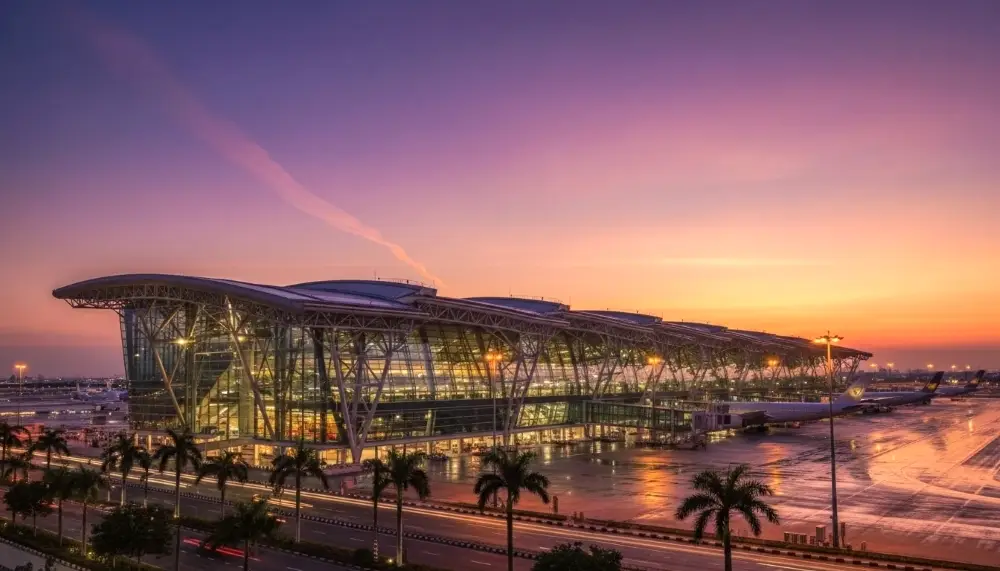
Suvarnabhumi Airport (BKK) serves as Thailand’s primary international hub, handling full-service global carriers and major regional flights. Located 30 kilometres east of Bangkok, it offers the most robust infrastructure, including the Airport Rail Link, extensive luxury duty-free options, and dedicated facilities for pet relocation and specialised visa processing.
Travelers arriving here benefit from the Airport Rail Link (ARL), which connects to the MRT Blue Line at Phetchaburi and the BTS Sukhumvit Line at Phaya Thai. A standard journey to the city centre costs approximately 45 THB and bypasses the notorious Bangkok traffic. For first-time visitors especially, this rail connection is a genuine game-changer. You step off the plane, follow universally clear English signage, and arrive at the heart of Sukhumvit in under 30 minutes for less than £1.
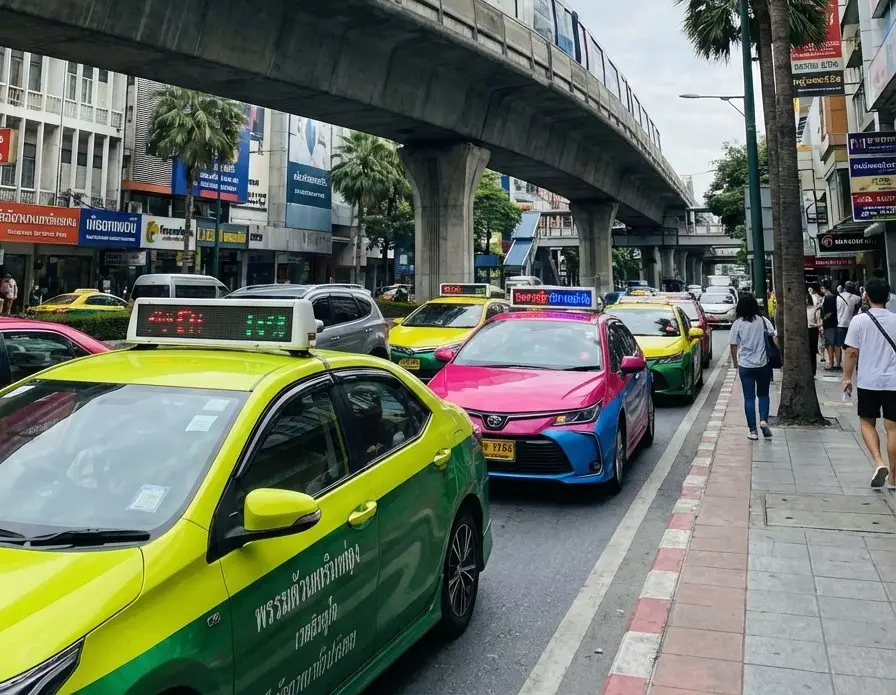
For those preferring a direct route, the official taxi stand on Level 1 utilises a digital queue system. A surcharge of 50 THB is added to the metered fare, and passengers are responsible for expressway tolls, which typically total 75 THB. When dining at BKK, look for “Magic Food Point” on Level 1 near Gate 8 for authentic, affordable Thai meals, avoiding the inflated prices of the upper-level international chains. If your flight is delayed or cancelled, note that AirHelp is an excellent resource for understanding your passenger rights and submitting compensation claims without the bureaucratic stress.
BKK: What To Expect On Arrival
The scale of Suvarnabhumi takes some newcomers by surprise. The terminal building is genuinely enormous, and the walk from the gate to immigration can take 20 minutes if you land at a remote pier. Budget extra time, particularly on overnight long-haul arrivals when immigration queues swell. The e-Arrival Card, now mandatory, must be completed online before landing to streamline the process.
Once through arrivals, the concourse on Level 2 is where you will find AIS and DTAC SIM card counters offering tourist packages (typically 299 THB for 8 days of data). However, the smarter move is to activate an Airalo, Yesim, or Saily eSIM before you board your outbound flight at home. Ride-hailing apps like Grab require an SMS verification code the moment you install them. Without active mobile data at the baggage carousel, that verification code never arrives, and you are left negotiating with unofficial taxi drivers. Activating your eSIM data plan before departure eliminates this problem entirely.
Families arriving with children will find BKK particularly well-equipped. Dedicated fast-track lanes for families with young children operate at immigration, and the arrivals hall has nursing rooms, pushchair-accessible lifts, and a children’s play area near the food court. For groups of four or more, Welcome Pickups offers flat-fee, pre-booked airport transfers that take the complete guesswork out of the taxi situation, particularly appreciated after a 12-hour flight with tired children in tow.

A friendly driver, a clean car, and
a flat fare to your Thailand hotel.
Welcome Pickups handle logistics
so your trip starts the right way.
Don Mueang International (DMK):
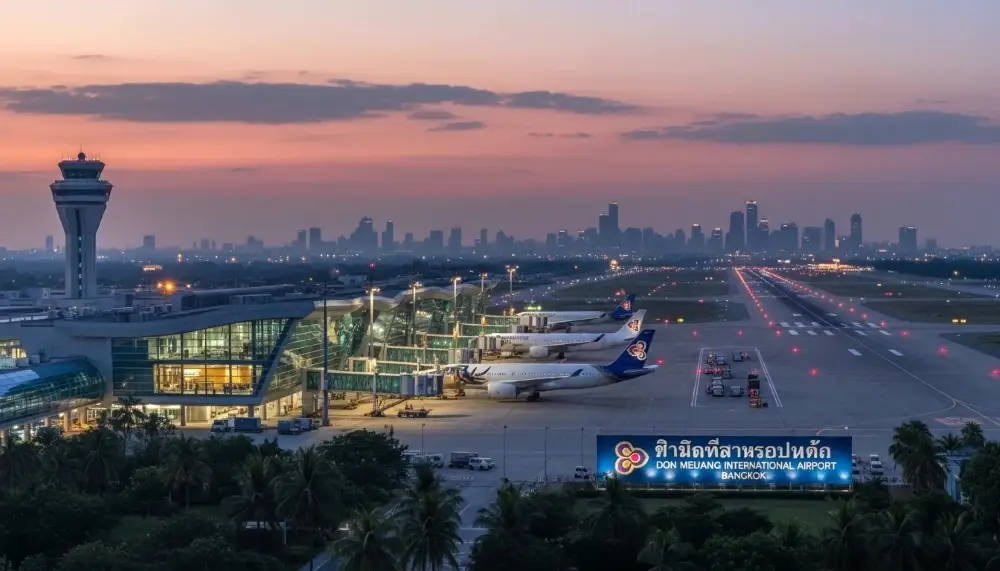
Don Mueang International (DMK) is the secondary Bangkok hub catering specifically to low-cost carriers like Nok Air and Thai AirAsia. Located 22 kilometres north of the city centre, it is the most cost-effective choice for domestic transfers and short-haul regional flights within Southeast Asia.
While older than BKK, DMK has undergone significant modernisation. It remains a favourite for savvy explorers due to its compact layout and faster transit times from curb to gate. The SRT Red Line now provides a rail connection to Bang Sue Grand Station (Krung Thep Aphiwat Central Terminal), though many travelers still prefer the A1 or A2 airport buses (30 THB) that run frequently to BTS Mo Chit.
The vibe at DMK is unpretentious and functional. It serves as a vital link for those heading to secondary cities like Khon Kaen or Phitsanulok. Travelers should note that while DMK handles international budget flights, its duty-free and lounge offerings are more modest than its sister airport. It is the pragmatic choice for those prioritising budget over Terminal 1 luxury.
DMK: The Backpacker’s Command Centre
For the budget traveler mapping out a classic Thailand loop, Don Mueang is genuinely strategic. AirAsia operates an extraordinary web of domestic routes from here, connecting Bangkok to Chiang Mai, Krabi, Hat Yai, Udon Thani, and beyond for fares that regularly undercut the train by a significant margin when booked in advance. If your itinerary involves island hopping or a rapid northern circuit, routing through DMK for domestic legs saves both money and overnight bus time.
One thing seasoned travelers know: book domestic legs well in advance, particularly around Songkran (Thai New Year, mid-April) and the December holiday period, when seats disappear rapidly and prices triple. Using 12GO to lock in bus, train, and ferry connections across these peak periods is far smarter than showing up at the counter and hoping for the best. The platform covers routes departing from and connecting to all four major airports, making it particularly useful for multi-leg itineraries.
There is a food court on the third floor of Terminal 1 at DMK that serves genuinely good, locally priced meals. A bowl of boat noodles or pad kra pao runs around 60 to 80 THB, which is a world away from the branded international chains that dominate the more visible areas. Finding it requires a short walk past the check-in counters, but it is absolutely worth it. The airport also has a 24-hour convenience store cluster near the domestic departures where you can stock up on snacks, local SIMs, and travel adapters before your onward flight.

Book flights in and out of Thailand
at the best available price.
Aviasales searches budget carriers
and full-service airlines together.
Comparing the Hubs: 2026 Logistics Data
| Feature | Suvarnabhumi (BKK) | Don Mueang (DMK) | Chiang Mai (CNX) | Phuket (HKT) |
|---|---|---|---|---|
| Primary Use | Long-haul / Full Service | Budget / Domestic | Northern Hub | Island Gateway |
| City Distance | 30 km | 22 km | 4 km | 32 km |
| Taxi to Centre | 400–600 THB | 300–450 THB | 150–200 THB | 600–900 THB |
| Rail Connection | Airport Rail Link | SRT Red Line | None | None (Bus Only) |
| Lounges Available | Multiple (Coral, Miracle) | Limited | Basic | Several (Int’l terminal) |
| 24hr Food Options | Yes (extensive) | Yes (limited) | Limited hours | Yes (international terminal) |
| Pet Quarantine | Yes (dedicated station) | No | No | No |

Stay closer to the action in Thailand.
Agoda lists guesthouses to resorts
with verified reviews and instant
booking at competitive rates.
Chiang Mai International (CNX):

Chiang Mai International (CNX) is the primary gateway to Northern Thailand, located remarkably close to the historic Old City. It serves as a critical hub for travelers seeking mountainous trekking, temple exploration, and the vibrant culture of the Lanna kingdom without the long transit times of Bangkok hubs.
Landing at CNX feels significantly more personal than the capital’s behemoths. The proximity to the city centre is a major advantage: a pre-paid taxi from the airport counter costs a flat rate of 150 THB to most locations within the city walls. For the adventurous, the RTC City Bus (30 THB) offers a reliable loop through Nimman and the Old City.
CNX is currently undergoing expansions to accommodate its status as a favourite for digital nomads and long-term residents. The terminal features local coffee kiosks that serve beans grown in the nearby mountains of Mae Wang and Samoeng, offering a literal taste of the region before you even leave the arrivals hall.
CNX: The Digital Nomad’s Favourite Landing Pad
Chiang Mai has been one of Southeast Asia’s leading remote work destinations for over a decade, and CNX is where that adventure begins. The moment you step outside arrivals, the air is cooler, the pace is calmer, and the city is genuinely walkable. Most of the co-working cafes, coliving spaces, and long-stay guesthouses that make Chiang Mai so beloved are concentrated in the Nimman and Santitham neighbourhoods, both reachable in a 120 THB Grab ride from the terminal.
For remote workers considering an extended stay under the Destination Thailand Visa (DTV), Chiang Mai makes a compelling case as a base. Monthly costs for comfortable living run far below Bangkok equivalents. Long-stay accommodation can be sourced at remarkable value through Agoda and Booking.com, with serviced apartments in Nimman regularly listed at rates that include fast fibre internet, laundry, and a rooftop pool.
Health cover is one thing many digital nomads overlook until something goes wrong. SafetyWing is particularly popular in the Chiang Mai nomad community, offering rolling monthly travel medical insurance that covers hospital stays, emergency evacuation, and outpatient care across Thailand at a fraction of the cost of comprehensive private insurance. Getting this sorted before you board your flight to CNX is straightforward and takes about five minutes online.
When using the many excellent but open Wi-Fi networks in Nimman’s coffee shops, always connect through NordVPN. Thailand’s cafe culture means hundreds of people sharing the same network at any given moment, and sensitive banking or work logins are genuinely at risk on unprotected connections. It is a small habit that costs very little and protects a great deal.

Skip-the-line tickets and guided walks
in Thailand with English-speaking
guides. Read real traveller reviews
before committing to a single one.
Phuket International (HKT):
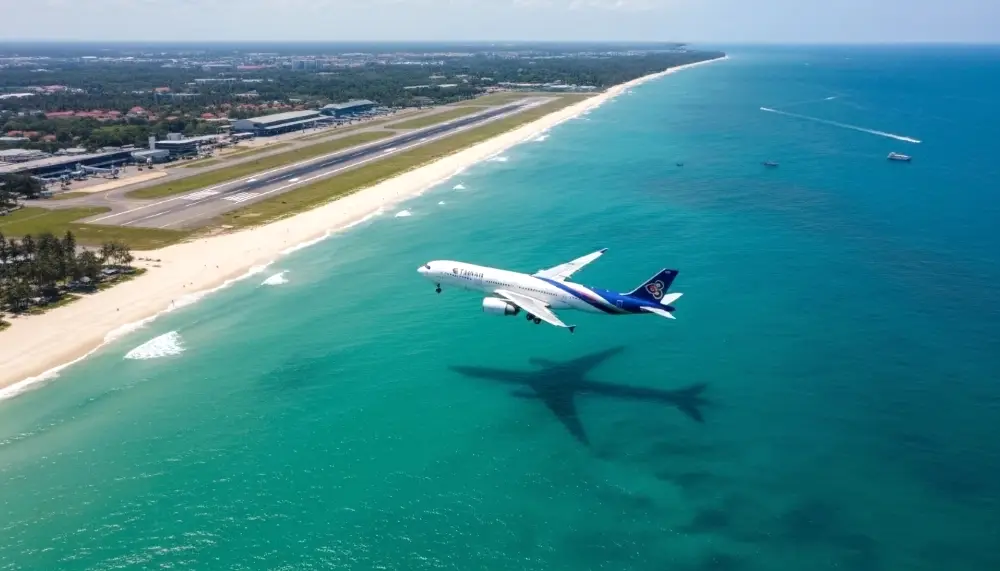
Phuket International (HKT) is Thailand’s second busiest airport, serving as the essential entry point for the Andaman Coast. Positioned on the northern tip of the island, it provides direct access to world-renowned beaches like Patong, Kata, and the limestone karsts of Phang Nga Bay.
HKT is split into two distinct terminals: International and Domestic. The arrival experience is often defined by the stunning views of Mai Khao beach during the final approach. However, transportation here is notably more expensive than elsewhere in Thailand. The Phuket Smart Bus (100 THB) is the most economical way to reach the southern beaches, though it is slow.
Most travelers opt for ride-hailing apps or pre-booked private transfers. Be aware that the “Taxi Mafia” reputation of Phuket is slowly fading as apps like Grab and Bolt gain official pickup zones, providing much-needed price transparency. Always confirm the fare in THB before the vehicle departs to avoid the “plus plus” surprises often found in tourist-heavy zones.
HKT: Families, Resorts & Island Hopping Strategy
Phuket airport is, above all else, a resort gateway. The vast majority of passengers arriving at HKT have a hotel check-in on their mind, and the infrastructure reflects that. If you are travelling as a family with luggage, a pre-booked Welcome Pickups transfer makes the most sense. Fixed pricing to Patong typically runs 700 to 800 THB (around £15 to £17), which is fair for a fully air-conditioned vehicle with a named driver holding your sign at arrivals. Compare that to the stress of negotiating with unmarked taxis outside and it is an easy decision.
Phuket also serves as the staging point for some of Thailand’s most spectacular island excursions. Phi Phi, Similan Islands, James Bond Island, and the Phang Nga Mangrove tours all depart from Phuket-area piers. Booking day trips and snorkelling excursions in advance through Get Your Guide or Klook consistently delivers better pricing and confirmed departure times, which matters enormously when those trips fill up weeks ahead during peak season (November to March).
For affluent families and couples staying at five-star resorts in Kamala, Surin, or Bang Tao, it is worth knowing that most luxury properties in these areas offer complimentary airport shuttle services. Confirm this when booking through Agoda or Booking.com and save the transfer cost entirely. Some of the Marriott and Anantara properties, for example, send private vehicles at no additional charge for direct bookings above a nightly threshold.
Practical Tips for Stress-Free Travel:

Essential Apps: Download Grab and Bolt for transparent transport pricing. Use Welcome Pickups for airport transfer bookings.
Connectivity: Pre-order a local SIM via Yesim or pick up an AIS/DTAC tourist SIM at the airport (typically 299 THB for 8 days). Better still, activate an Airalo or Saily eSIM before you depart home so your ride-hailing apps work the moment you land.
Currency: All airports have ATMs and exchange booths. For the best rates, look for the SuperRich (Orange or Green) counters, usually located on the basement level near rail links.
Security: Always use a Nord VPN when connecting to free airport Wi-Fi to protect personal data.
Accommodation: Use Agoda or Booking.com for last-minute airport hotel stays if you have a late arrival.
Storing Luggage? Use Radical Storage. Travelers can easily book storage online at verified local businesses, such as hotels, cafes, and shops, located near major train stations and landmarks. The service is straightforward and secure.

Stay online in Thailand without the
daily data limits of tourist SIMs.
Yesim’s eSIM offers unlimited 5G
from around $10 for the whole trip.
Airport Lounges: Are They Worth It?
For long layovers or early morning departures, accessing an airport lounge transforms the experience substantially. At BKK, the Miracle Lounge and Coral Executive Lounge both offer walk-in access for non-premium passengers at around 700 to 800 THB per person. What you get in return is free hot food, a full bar, fast private Wi-Fi, shower facilities, and a dramatically quieter environment. For a family with a five-hour layover, this can be genuinely excellent value.
At HKT, the Phuket Lounge in the international terminal operates on a similar walk-in model and is particularly popular with travelers catching early connecting flights onward to the Maldives or Sri Lanka. At CNX, lounge options are more modest, but the compact terminal means you are never far from a comfortable seat and a decent cup of northern mountain coffee.
For frequent travelers, a Priority Pass or Dragon Pass membership pays for itself within a few trips through the region. If you are spending extended time in Thailand and transiting regularly, it is worth investigating whether your current travel credit card includes lounge access as a benefit before paying out of pocket.
Transferring Between BKK and DMK:
One of the most common logistical questions on Thailand travel forums is how to transfer between Suvarnabhumi and Don Mueang when arriving on an international flight and continuing domestically on a low-cost carrier. The two airports are 30 kilometres apart, and getting it wrong can mean a missed connection.
A free shuttle bus does operate between BKK and DMK for passengers with a valid onward flight ticket departing from the other airport. The journey takes 60 to 90 minutes depending on traffic, which is the critical caveat. During peak hours (7:00 to 9:30 and 16:00 to 19:30), Bangkok’s expressways can add significant time. Budget a minimum of three hours between your international arrival at BKK and your domestic departure from DMK, and consider four hours during the high season if you are travelling with checked luggage.
The SRT Red Line train connection between the two airports is the more reliable option when traffic is a concern. From BKK, take the Airport Rail Link to Phaya Thai, then connect to the Red Line heading north to Don Mueang Station, which is a short walk from the terminal. Total journey time by rail runs approximately 60 to 70 minutes and bypasses road traffic entirely. The cost is minimal, under 50 THB each way, making it the clear choice for solo travelers or couples.
Beyond The Holiday:

For those considering a permanent move or an extended stay of up to five years, the Destination Thailand Visa (DTV) has revolutionised the process for remote workers and adventurers.
If relocating with pets, BKK is the preferred port of entry due to the dedicated Animal Quarantine Station. Bringing a cat or dog requires an import permit (valid for 60 days) and a health certificate.
Ensure your companions are microchipped and vaccinated for Rabies at least 21 days before departure. Thailand is incredibly pet-friendly, particularly in neighbourhoods like Ari in Bangkok or Nimman in Chiang Mai.
Long-Stay Planning: What To Sort Before You Land
The DTV opens extraordinary doors for remote workers, freelancers, and location-independent professionals. It allows stays of up to 180 days per entry, with a total validity of five years, and can be obtained via a Thai embassy or consulate in your home country relatively quickly compared to older long-stay visa options. Upon arrival, CNX and BKK are both well-equipped to process DTV holders, though Suvarnabhumi has dedicated lanes that move faster during peak immigration periods.
Before committing to any long-stay accommodation search, it is worth taking time to explore options across both Agoda and Booking.com simultaneously. The two platforms often surface different properties and different pricing for the same hotel, particularly for monthly or extended stay rates. Serviced apartments in the Nana and Asok neighbourhoods of Bangkok, and around the Nimman area of Chiang Mai, represent excellent value for those wanting furnished spaces with all utilities included.
Health coverage is non-negotiable for extended stays. SafetyWing’s Nomad Insurance is a rolling monthly subscription that covers emergency medical treatment, hospitalisation, and evacuation across Thailand, and can be purchased or renewed from anywhere in the world. For those staying longer than 90 days, supplementing with a local Thai health plan from a provider like AXA or BUPA Thailand gives broader outpatient coverage at competitive rates. Thailand’s hospital quality, particularly at Bangkok Hospital and Bumrungrad International, is genuinely world-class at a fraction of Western prices.
Things To Do Straight From The Airport:
Each airport drops you within reach of iconic experiences that do not require any additional planning. From BKK, the ARL to Phaya Thai connects you directly to the Chatuchak Weekend Market, one of the world’s largest, where 15,000 stalls sell everything from handmade jewellery to rescued animals. From CNX, a 10-minute tuk-tuk ride places you inside the moat of the Old City, where Wat Chedi Luang rises dramatically above the surrounding temples.
From HKT, the Phuket Smart Bus will take you south through the entire island, dropping off at Rawai, Kata, and Karon before terminating at Patong. If you arrive on a day when the sea is calm and visibility is excellent, booking a longtail boat to the Coral Island day trip directly through Klook or Get Your Guide is a wonderful way to begin a beach holiday immediately, rather than spending the first afternoon recovering in a hotel room.
For travelers with long layovers at BKK (six hours or more), the airport’s proximity to the Siam area via the ARL makes a quick shopping trip to ICONSIAM or a foot massage in Asok genuinely feasible. Many transit passengers do exactly this, storing their carry-on luggage at the left luggage facility in the arrivals hall (around 100 THB per bag) and exploring the city for a few hours before clearing departure security. It is one of those moves that transforms a frustrating wait into a proper Bangkok micro-adventure.
Confidence Booster: Staying Safe and Scam-Free
Thailand is remarkably safe and its airports are designed for ease of use. Signage is universally available in English, and Tourist Police are stationed at clearly marked kiosks to assist with any disputes or lost items.
If a driver approaches you inside the terminal offering a “special price,” politely decline and head to the official taxi stand or use a ride-hailing app. This simple habit ensures you are protected by official regulations and fair pricing.
At all four airports, the areas immediately outside arrivals can feel overwhelming during peak times, with drivers, touts, and greeters creating noise and pressure. The calmer approach is to walk a little further into the designated zones before engaging anyone. Official metered taxis at BKK and DMK always have a digital queue number printed on your slip, and no legitimate driver will ask you to follow them to a car park. If anything feels off, step back inside the terminal and find the Tourist Police desk. They are genuinely helpful and available 24 hours a day.
Frequent Asked Questions:
Which airport is better for a first-time visitor to Bangkok?
Suvarnabhumi (BKK) is the clear choice for first-time visitors. It handles the vast majority of international long-haul arrivals, offers the Airport Rail Link for a fast and affordable transfer to the city centre, and has the most comprehensive services, including English-speaking Tourist Police, 24-hour food courts, and multiple ATMs and currency exchange counters. The signage is excellent, the layout is logical, and the infrastructure is built to handle millions of international travelers each year.
Is there a free shuttle between BKK and DMK?
Yes, a free shuttle bus operates between the two airports for passengers with a valid flight ticket departing from the other airport. The journey takes 60 to 90 minutes depending on traffic. During peak commuter hours (7:00 to 9:30 and 16:00 to 19:30), allow a minimum of 90 minutes and consider the SRT Red Line rail connection as a more reliable and traffic-free alternative, taking around 60 to 70 minutes and costing under 50 THB.
How much should I tip airport staff?
Tipping is not mandatory in Thailand and airport staff do not expect it. However, rounding up a taxi fare or giving 20 to 50 THB to a porter who assists with heavy luggage is a warm and appreciated gesture. At restaurants within the airport, a tip of 20 to 50 THB is appropriate if you have received good service. The key Thai social principle is that appreciation should feel genuine rather than transactional.
What does Plus Plus (++) mean on airport menus?
The plus plus notation indicates that the listed price excludes the 10% service charge and 7% Value Added Tax. This means the true cost of the meal is approximately 17.7% higher than the displayed menu price. This practice is common in hotel restaurants, airport lounges, and upscale dining venues throughout Thailand. Street food stalls, food courts, and local market eateries never apply this surcharge and charge the exact listed price.
Can I get a VAT refund at the airport?
Yes. Thailand operates a VAT refund scheme for international visitors. To qualify, you must have spent at least 2,000 THB in a single day at participating shops displaying the VAT Refund for Tourists sign, and you must be departing Thailand within 60 days of purchase. Collect the P.P.10 form at each shop, then visit the VAT Refund for Tourists kiosks located before the immigration counters at BKK and HKT. You must have both your original receipts and the purchased goods available for inspection. Refunds are issued in Thai baht cash or to your credit card.
What is the best way to get from Phuket Airport to Patong Beach?
There are three main options. The Phuket Smart Bus (100 THB) runs a route from the airport through the island’s west coast beaches, including Kamala, Patong, Kata, and Karon, stopping roughly every 30 minutes. The journey to Patong takes approximately 60 to 90 minutes. Grab and Bolt ride-hailing apps now operate official pickup zones at HKT and typically charge 400 to 550 THB to Patong with fixed, transparent pricing. Pre-booked private transfers through Welcome Pickups offer a named driver, fixed fare, and are ideal for families or groups with significant luggage.
Is Chiang Mai Airport close to the city centre?
Yes, CNX is exceptionally close by Thai airport standards, just 4 kilometres from the historic Old City moat. A metered taxi or Grab ride from the airport to the Old City, Nimman, or Santitham costs 120 to 180 THB and takes under 15 minutes in normal traffic. This proximity is one of the features that makes Chiang Mai so welcoming to first-time visitors and long-stay residents alike. There is no rail connection, but the short distance means transport costs are minimal regardless of which option you choose.
Can I buy a SIM card at all four Thailand airports?
Yes, all four airports have AIS and DTAC SIM card counters in the arrivals hall. Tourist SIM packages typically start at 299 THB for 8 days of data. However, the smarter strategy is to activate an eSIM from providers like Airalo, Yesim, or Saily before you depart your home country. Ride-hailing apps like Grab require an SMS verification code when you install them, and without active mobile data at the baggage carousel that code cannot be received. An eSIM eliminates this problem and ensures you are connected and able to book transport the moment you land.
What should I do if my flight is delayed or cancelled at a Thai airport?
First, contact your airline directly at the customer service desk in the terminal. Under EU Regulation 261/2004 (for flights departing EU countries or arriving on EU carriers), you may be entitled to compensation for significant delays. For flights not covered by EU rules, your entitlements depend on the airline’s policy and the reason for the disruption. AirHelp is a reputable platform that can assess your claim for compensation quickly and handle the airline communication on your behalf, typically working on a no-win no-fee basis. Keep all boarding passes and confirmation emails as documentation.
Is it safe to use free Wi-Fi at Thai airports?
Free Wi-Fi is available at all four major Thai airports and is generally reliable for basic browsing. However, open public networks are inherently less secure than private connections, and sensitive activities such as online banking, work logins, or accessing company VPNs should always be conducted through a VPN. NordVPN is widely used by travelers and expats throughout Thailand and encrypts your connection regardless of the underlying network. Activating your VPN before connecting to any airport Wi-Fi is a simple habit that significantly reduces your exposure to data interception on shared networks.