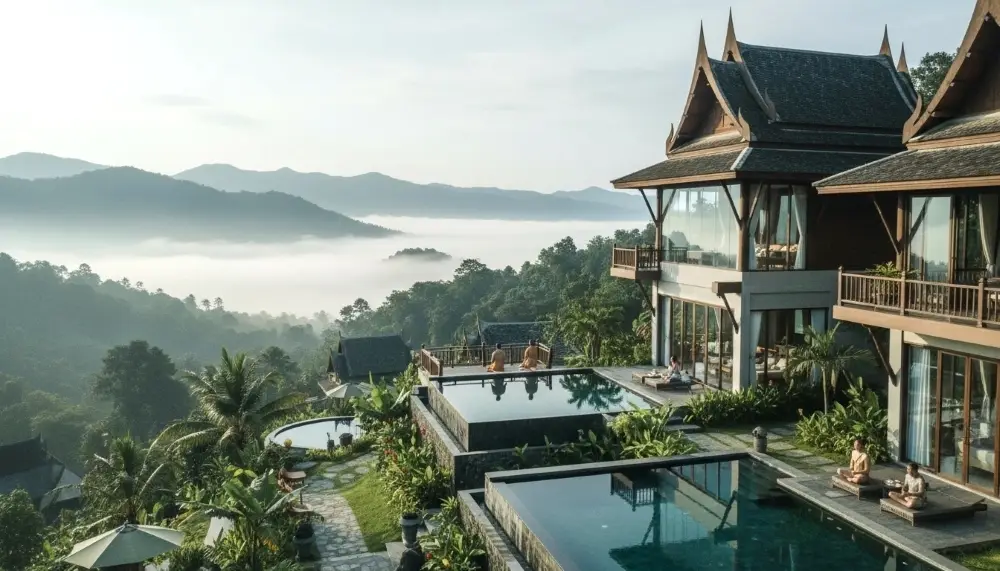
Renting Apartments In Thailand
This site contains affiliate links. We may earn a commission at no extra cost to you.
Renting an apartment in Thailand is one of the most practical and satisfying ways to turn a holiday into something deeper. Whether you are staying for a month, several months, or committing to a longer arrangement on a retirement or nomad visa, the country offers an enormous range of comfortable, affordable accommodation across every budget and lifestyle. The process is genuinely simpler than most first-timers expect, and the standard of what is available at every price point consistently surprises arrivals from Western Europe and Australia.
This guide covers everything you need to know: the types of property available, where to find them, what to budget, how leases and deposits work, what the legal requirements are, and the practical tips that make the process smooth rather than stressful.
Quick Answer: Is Renting Easy?
Yes, renting an apartment in Thailand is straightforward, affordable, and genuinely welcoming to foreigners across the entire country.
- Monthly Budgets: Entry-level studios start at around 8,000 THB per month. Quality mid-range condos run from 15,000 to 30,000 THB. Luxury high-rise units range from 25,000 to 60,000 THB and above.
- Standard Deposit: Expect to pay two months’ security deposit plus the first month’s rent upfront, totalling three months of rent to move in.
- Essential Platforms: Facebook Marketplace and the Line app are the primary tools for direct owner contact. Skip the glossy Western portals and go where Thai landlords actually list.
- Legal Duty: Landlords must file a TM30 report with immigration within 24 hours of a foreign tenant’s arrival. This is non-negotiable for those on any long-stay visa and affects your ability to renew.
Across the country you will find:
- Modern condominiums in Bangkok, Chiang Mai, and the major coastal towns
- Budget studio apartments ideal for long-stay backpackers and cost-conscious nomads
- Beachside apartments and hillside villas on the southern islands
- Serviced apartments designed specifically for digital nomads and shorter-term professional stays
The overwhelming majority of rentals come fully furnished and ready to move into immediately, which makes settling in remarkably easy for first-time visitors who arrive with a suitcase rather than a removal van.

Keep your Thailand plans flexible with
Booking.com’s free-cancellation stays.
Reserve now, decide later, and pay
only when your dates are confirmed.
Finding a Property: Direct Owner Sourcing

The most effective way to find a rental in Thailand in 2026 is to bypass the agency route entirely and go direct to owners. This approach removes commission layers, typically results in lower monthly rates, and produces more flexible lease terms for stays exceeding six months. The platforms to use are not the glossy Western property portals: they are where Thai landlords and residents actually list.
Facebook Marketplace is the primary hub for immediate availability. The search function allows filtering by specific neighbourhoods, which is essential in a city like Bangkok where the character of one area can be entirely different from the next street over. Searching “Owner Direct” within localised Facebook groups surfaces listings that never reach the agency-managed portals.
Line is the communication platform of choice for virtually every Thai landlord. Once you identify a property, contact is handled almost exclusively through Line. Clear, polite, and patient communication matters here. Always ask for a video walkthrough before committing to an in-person visit: it saves time on both sides and immediately reveals anything the photos were strategically avoiding.
Before signing anything with a private owner, request a copy of the Tabien Baan (house registration document) to verify that the person you are dealing with is the actual owner or has documented authorisation to rent the property. This single step prevents the small number of fraudulent listing situations that trip up arrivals who skip it.
For those who prefer a more curated search before arriving, both Agoda and Booking.com carry long-stay listings that are useful for benchmarking prices by area and booking a short initial stay in a building you are seriously considering for a longer lease. A week in the actual building tells you far more than any set of photos.

Book Thailand day trips, attractions,
and activities in one place. Check
real reviews and lock in your spot
before the popular slots go.
Pro Tips for Stress-Free Arrival and Property Hunting
Activate your data before you land. Moving between property viewings, using Google Maps to test commute times, running translation apps, and messaging landlords on Line all require a live data connection from the moment you arrive. Activate an Airalo, Yesim, or Saily eSIM before boarding your flight so you step out of arrivals connected and functional. For stays beyond a month, switch to a physical AIS or TrueMove SIM for better 5G speeds at around 600 THB per month.
Grab and Bolt: Essential for moving between viewings efficiently and for testing real commute times from any property to wherever you plan to work or spend your time. Both apps give metered, fair-priced rides without any negotiation.
Agoda: Use this for a test stay in a building or neighbourhood before signing a long-term lease. One week in the actual area you are considering tells you more about daily life there than any amount of research from home.
NordVPN: Necessary for managing banking, reviewing sensitive lease documents, and accessing home-country financial accounts on public Wi-Fi. Thai IP addresses trigger fraud blocks on many UK, Australian, and European banking platforms, and NordVPN resolves this by routing through your home country.
Currency: Always carry some Thai Baht in cash for small administrative fees, key card deposits, and the first rental payments. Most landlords expect the initial deposit and advance rent in cash. ATM withdrawals with a foreign card carry a 220 THB fee per transaction: Wise and Revolut offer significantly lower conversion and withdrawal costs for ongoing transfers.
Welcome Pickups: If you are arriving with significant luggage or relocating with family, a pre-arranged airport transfer removes the taxi negotiation entirely and gets you to your temporary accommodation or hotel without the stress of navigating an unfamiliar transport system with bags.


Maps, Grab, translation apps all need
data in Thailand. Yesim’s eSIM installs
in a minute and gives you reliable
5G from the moment you arrive.
Comparison of Popular Rental Platforms
| Platform | Target Audience | Primary Benefit | Price Range (Est.) |
|---|---|---|---|
| Facebook Marketplace | Locals and Savvy Expats | Direct negotiation with owners, lowest rates | 8,000 to 45,000 THB |
| Living Insider | Professional Landlords | High-quality photography, detailed maps, verified listings | 15,000 to 80,000 THB |
| Renthub.in.th | Students and Budget Travellers | Transparent utility pricing, simple interface | 5,000 to 15,000 THB |
| Agoda Long Stays | Newcomers and Trial Renters | Test a building before committing to a lease, English support | Variable, typically 20,000 THB+ |
Navigating the Lease: Deposits, Utilities, and the TM30
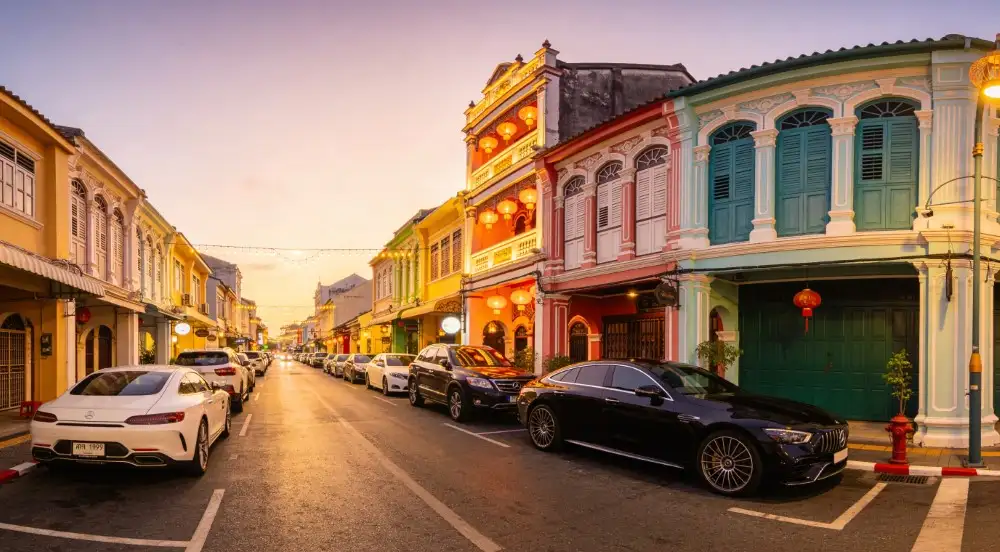
Standard Thai lease agreements require a two-month security deposit and one month of advance rent, meaning you pay the equivalent of three months upfront to move in. Deposits for landlords owning more than three units are now protected under 2025 consumer regulations, mandating refunds within 30 days of move-out provided no damage disputes exist.
Electricity rates are the single most important clause to verify before signing anything. Always ensure the agreement explicitly states that electricity is billed at the Government Rate. In some older buildings, landlords add a surcharge that can effectively double a monthly electricity bill. The government rate sits at approximately 4.5 to 5 THB per unit. If a contract quotes anything higher, it warrants negotiation or walking away.
Water billing should similarly reflect the Municipal Waterworks rate. The surcharge practice is less common for water than electricity, but confirming it costs nothing and prevents surprises.
Inventory documentation is critical. On the day you move in, photograph every surface, behind every curtain, inside every appliance, and note anything pre-existing in writing. Attach this documentation to your lease copy and send a timestamped copy to yourself. Thai rental culture places genuine value on returning a property in the condition it was received: thorough documentation at the start makes that conversation entirely straightforward at the end.
The TM30 requirement deserves specific attention. Thai immigration law requires that any landlord hosting a foreign national notify the local immigration office of that person’s address within 24 hours of arrival. This is the landlord’s legal obligation, but it is the tenant who suffers the consequences if it is not done: complications at visa extensions and 90-day reporting. Before you move in, confirm with your landlord that they understand and will comply with the TM30. Get confirmation in writing if possible.
Proximity and Logistics: The Transit Connection
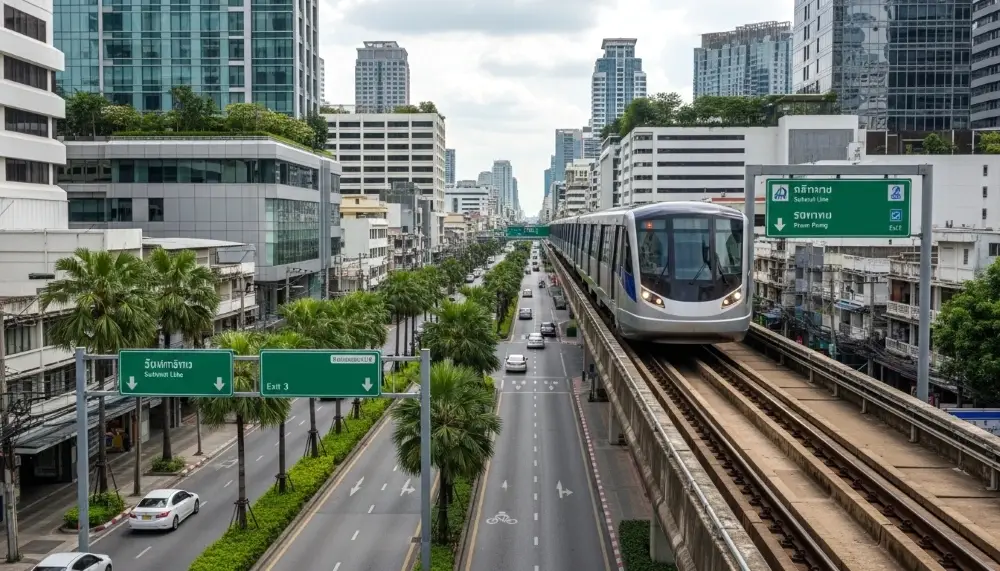
Location in Thai cities is defined by proximity to transit infrastructure, and getting this right fundamentally changes your quality of daily life. In Bangkok, the BTS Skytrain and MRT subway are the arteries of the city. Selecting a condo within 500 metres of a station eliminates the need for a private vehicle in most cases and significantly reduces commute times in tropical heat that makes walking distances feel considerably longer than they look on a map.
The Sukhumvit Line is Bangkok’s primary expat corridor. Areas like Phra Khanong and On Nut offer a strong blend of local market life and modern condominiums at a substantially lower price point than Central Sukhumvit, while remaining on the same train line. For those who prefer a quieter neighbourhood feel, Ari and the Riverside area provide a more local texture while staying connected.
In Chiang Mai, the transit logic shifts to proximity to the Nimman hub and the main Superhighway. The city is compact enough that a bicycle or scooter covers most daily needs comfortably, and the cost of a monthly scooter hire (around 3,500 to 5,000 THB) is manageable for most budgets.
In coastal regions like Phuket, personal transport is essentially non-negotiable. The island’s distances and the absence of meaningful public transit mean a scooter or car is a functional requirement rather than a convenience. When searching for properties in coastal areas, on-site parking should be a high-priority filter, and proximity to the beach you actually want to use daily matters more than it appears on an overview map.
For longer intercity trips, 12GO handles bus, train, and ferry bookings across the country reliably. Booking ahead during Thai national holidays and the peak December to February season is worth doing: popular routes sell out and last-minute options disappear quickly.
Types of Apartments Available
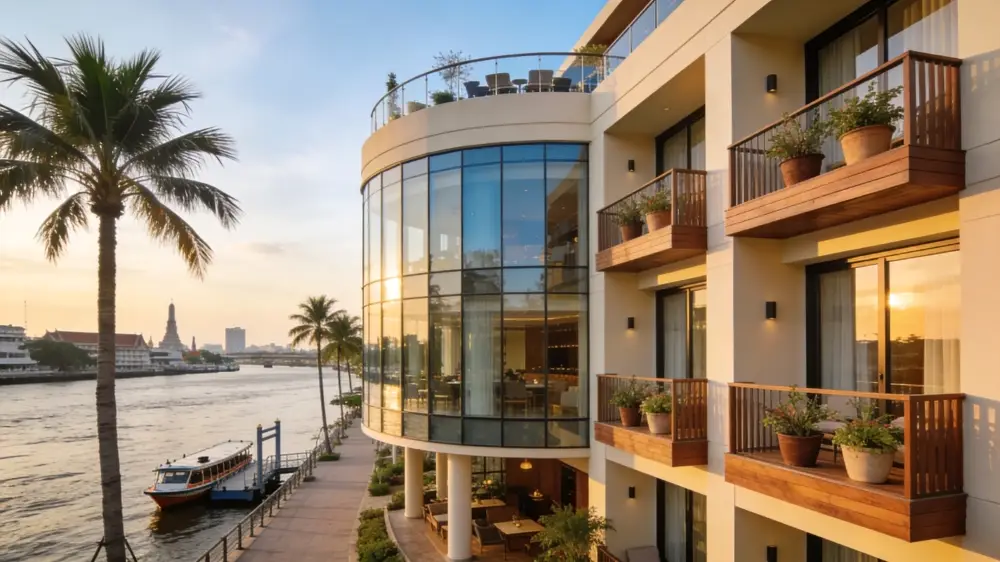
Condominiums
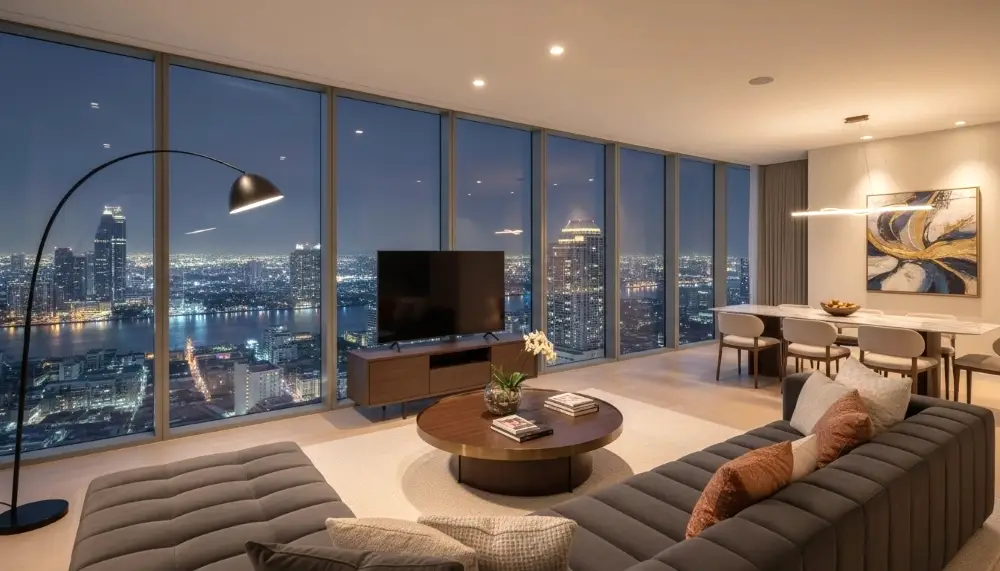
Condominiums are the most popular and practical housing choice for foreigners living in Thailand, providing a familiar standard of modern living across all major cities. These are purpose-built apartment buildings operating on a private ownership model within a shared building structure, and they generally represent the best balance of quality, security, and value in the mid-to-upper rental market.
Most mid-range and higher condos come with an impressive package of lifestyle amenities that, in many cases, remove the need for external memberships or services entirely:
- Swimming Pools: Often rooftop or infinity-style with city or sea views.
- Fitness Centres: Well-equipped gyms that save the cost of external memberships.
- 24-Hour Security: Professional security staff and CCTV monitoring throughout.
- Key Card Access: Secure entry systems for lifts and residential floors.
- On-Site Laundry: Either dedicated laundry rooms or in-unit washing machine hookups.
In Bangkok and Chiang Mai, living in a quality condo offers a remarkably seamless transition for arrivals from Western cities. The design, functionality, and standards feel genuinely contemporary and familiar.
Serviced Apartments
Serviced apartments occupy the space between a hotel stay and a conventional rental, making them the most practical option for arrivals who want to settle in quickly without the administrative friction of setting up utility accounts, sourcing cleaning services, or navigating a long-term contract on their first week in the country.
The standard package in a quality serviced apartment typically includes:
- Weekly Cleaning: Regular housekeeping and fresh linen.
- Reception Services: Front-desk staff for mail, maintenance requests, and general assistance.
- All-Inclusive Billing: Electricity, water, and high-speed internet bundled into a single monthly figure.
- Flexible Rental Periods: Monthly contracts without a 12-month commitment requirement.
Serviced apartments cost more per month than conventional rentals at the same standard, but the all-inclusive billing, plug-and-play convenience, and short-term flexibility make the premium worthwhile for anyone in the first one to three months of a long stay. Using Agoda to book a serviced apartment as an initial base while you scout for a longer-term property in your chosen area is a widely used and practical strategy.
Budget Apartments
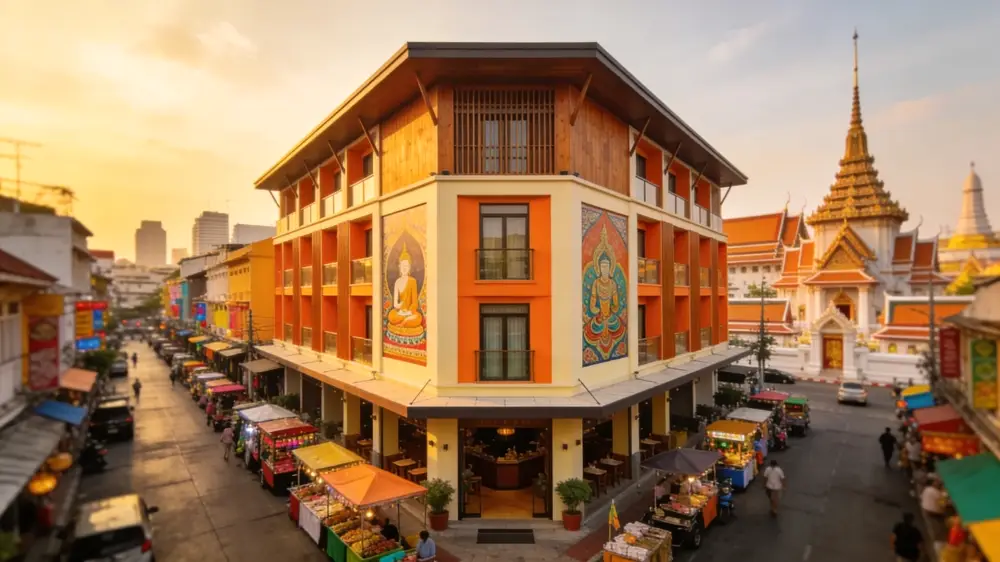
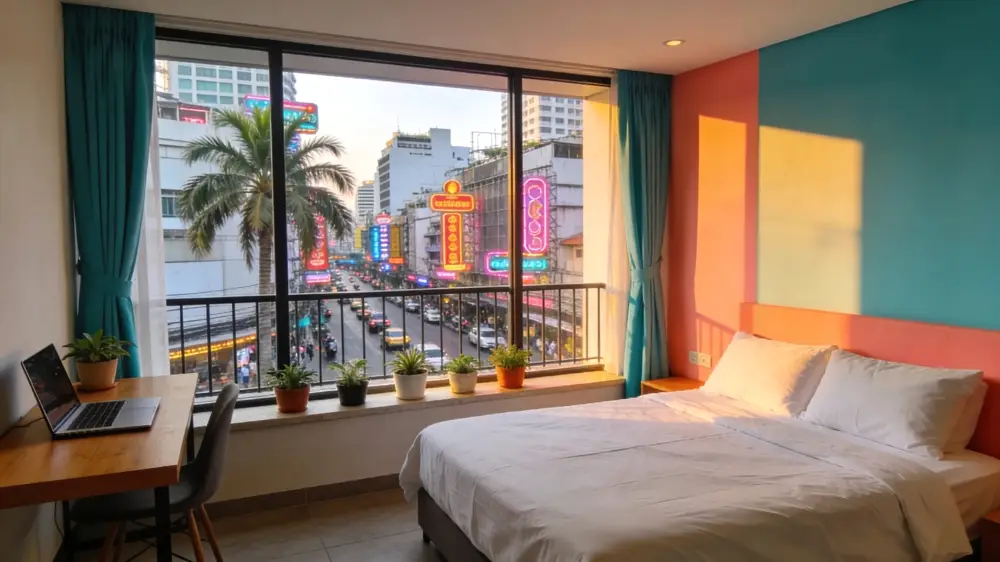
If you are planning an extended stay on a tighter budget, or simply prefer to spend your money on experiences and travel rather than on a premium address, Thailand has a vast network of simple apartment buildings catering specifically to monthly renters. These are often referred to locally as “mansions” or simply “apartments,” distinct from the condo category, and they form the backbone of local housing in every city and town across the country.
Finishes in budget apartments are basic: tiled floors, functional furniture, split-system air conditioning, and a small kitchenette setup. What they consistently deliver is safety, cleanliness, and genuine affordability. In Chiang Mai, a well-located budget studio can be found for 6,000 to 9,000 THB per month. In Bangkok’s less tourist-heavy neighbourhoods, similar options exist from 8,000 to 12,000 THB. The deposit requirements are typically lower than higher-end condos, making them the most accessible entry point for those beginning their first long stay in Thailand.
Popular Places to Rent in Thailand
Bangkok
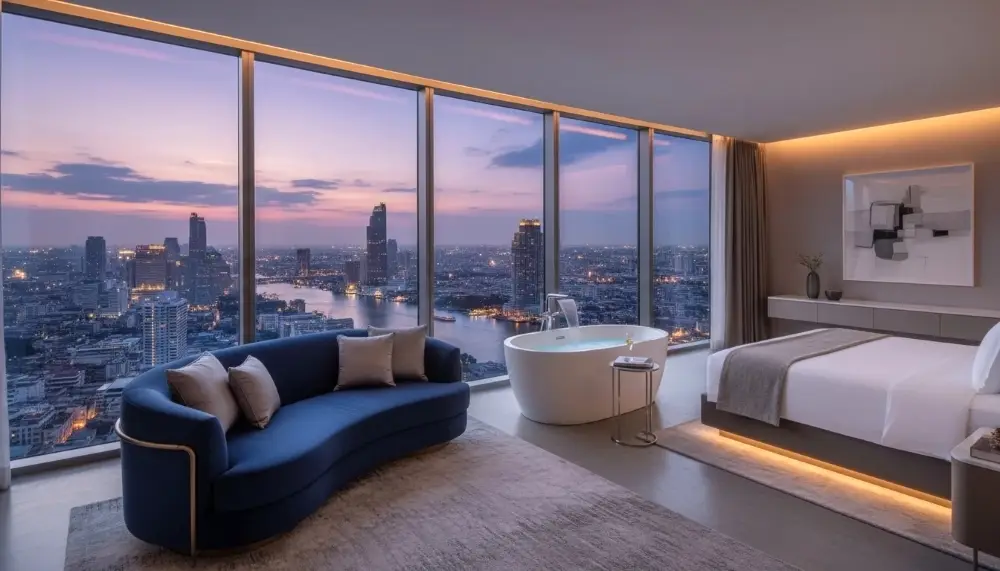
As Thailand’s capital, Bangkok offers the most extensive and diverse selection of apartments in the entire country. The range is genuinely extraordinary: high-rise luxury condos in the heart of the CBD at Silom or Asoke, affordable studios within walking distance of BTS stations for easy car-free living, and serviced apartments throughout the city designed for professional short-term stays.
The Sukhumvit corridor remains the most popular expat corridor, but many long-term residents actively choose areas like Ari, Lat Phrao, or Phra Khanong precisely because they offer lower rents, a stronger local neighbourhood feel, and excellent transit connections without the tourist-facing pricing that inflates costs in Central Sukhumvit. Bangkok rewards those who take the time to explore beyond the obvious areas before committing to a lease.
Chiang Mai
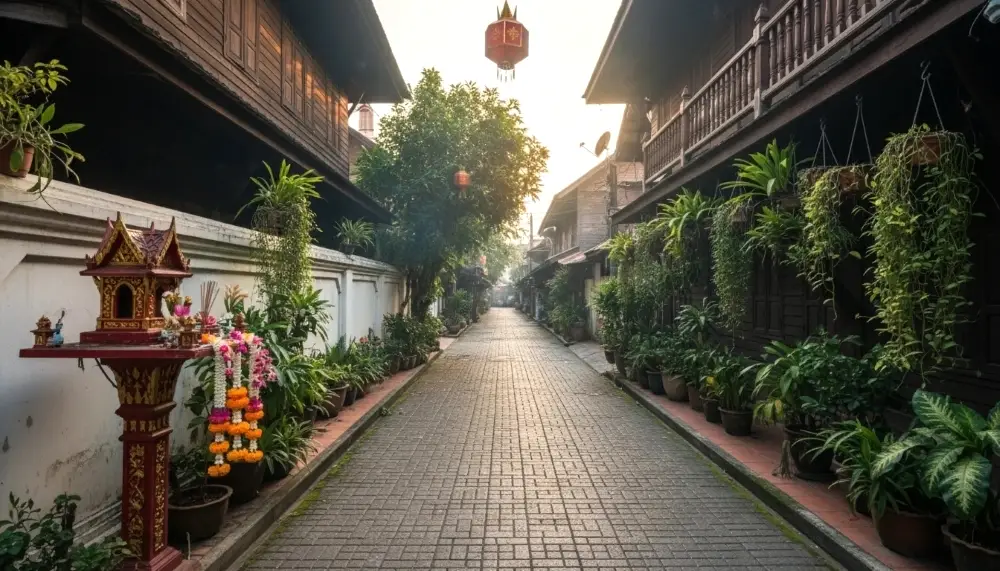
Chiang Mai has earned a global reputation as one of the world’s premier destinations for digital nomads and long-stay travellers, and its rental market reflects that. The overall atmosphere is significantly more relaxed than Bangkok, the cost of living is noticeably lower, and the rental prices are among the most competitive of any quality destination in Southeast Asia.
Many newer condominiums in the Nimman and Santitham areas are designed specifically with remote workers in mind, featuring high-speed fibre internet, quiet dedicated workspaces, and rooftop pools with mountain views. The combination of quality accommodation, an established coworking cafe scene, and easy access to genuinely extraordinary nature makes Chiang Mai a compelling first base for anyone new to long-term Thailand living.
Southern Islands
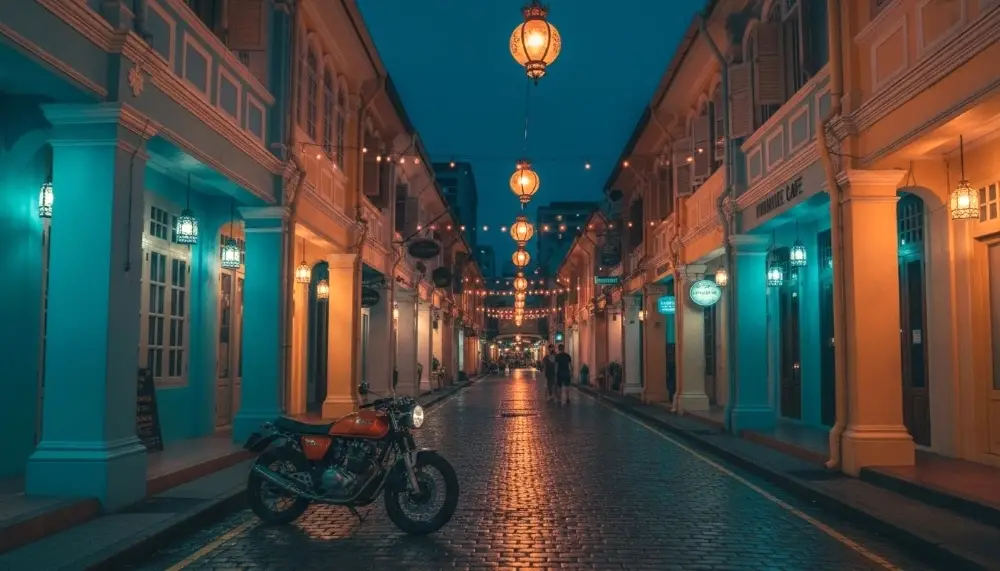
For those drawn to tropical living, Phuket, Koh Samui, and Krabi offer a striking variety of beachside and hillside rentals ranging from simple functional studios to ultra-luxury sea-view condominiums with panoramic Andaman or Gulf of Thailand views.
Prices vary significantly by proximity to the beach and by season. In Phuket specifically, the rental market is mature and well-organised, with strong long-stay inventory in Rawai, Nai Harn, Bang Tao, and Phuket Town. The southern islands carry higher rental premiums than Chiang Mai but remain genuinely affordable by any Western comparison. Waking up five minutes from one of the world’s most beautiful coastlines every morning is a quality of life addition that most residents feel is simply worth the difference in cost.
Typical Rental Prices by Category
One of the most pleasant surprises for first-time arrivals is just how much rental quality is available at prices that feel extraordinary when converted from pounds or dollars. The figures below represent broad monthly ranges across the major destinations and reflect furnished, move-in-ready properties:
- Budget Apartments: 5,000 to 12,000 THB per month
- Modern Mid-Range Condos: 12,000 to 30,000 THB per month
- High-End City Condos: 30,000 to 65,000 THB per month
- Luxury or Beachfront Properties: 65,000 THB and above per month
Utilities including internet, water, and electricity are billed separately in most conventional rentals. Internet from AIS or TrueMove runs around 600 THB per month on a standalone plan. Electricity varies with air conditioning usage but typically adds 1,000 to 3,000 THB monthly depending on how heavily the AC runs. Even factoring in utilities, the total monthly expenditure for a quality mid-range condo in Bangkok or Chiang Mai sits well below the equivalent cost in any comparable Western city.
What Is Usually Included in a Thai Rental
A significant advantage of the Thai rental market is that the vast majority of apartments come fully furnished and move-in ready. You can arrive with just your luggage and settle into a functional, comfortable home almost immediately. A typical furnished rental unit includes:
- Bed and Mattress: Usually queen or king-sized in mid-range and above properties.
- Sofa and Seating Area: A comfortable lounge setup.
- Wardrobe: Ample storage for clothing and luggage.
- Air Conditioning: Absolutely essential in the tropical climate and standard across all categories.
- Refrigerator: Mid-to-large size units in most furnished properties.
- Television: Often smart TVs in modern condos.
- Basic Kitchen Setup: Typically a microwave, kettle, and induction hobs. Full cooking kitchens are less common in condo-style properties where most residents eat out.
Items that are sometimes included and worth specifically asking about: a washing machine (either in-unit or shared on-floor), a dedicated workspace or desk, blackout curtains, and a water filter or dispenser. In the heat of a Thai summer, reliable air conditioning and cold drinking water are practical necessities rather than luxuries.
Rental Contracts and Deposits

The standard long-term lease in Thailand runs 6 to 12 months, though many landlords are open to more flexible arrangements for shorter stays, particularly in areas with high turnover of international visitors. The typical financial commitment to move in:
- 1 month rent: Paid in advance as the first month’s payment.
- 1 to 2 months rent: Held as a refundable security deposit.
Shorter-stay agreements often carry a modest monthly premium above the annual rate, but remain very manageable. The most important questions to resolve before signing any lease agreement are: what is the electricity billing rate and can it be confirmed in writing as the Government Rate, what notice period is required to exit the lease early, and is the TM30 filing something the landlord is aware of and will handle promptly.
Keep a signed copy of your lease agreement in a secure digital location. It is required for various administrative purposes including the TM30 filing, opening a Thai bank account, and in some cases for visa applications. Losing access to it creates unnecessary friction at the most inconvenient moments.
Helpful Tips for First-Time Renters
A handful of practical points make the first-time renting experience considerably smoother:
Visit the apartment in person before signing. Photos online in the Thai rental market can be creatively optimistic. A video call walkthrough narrows the field; an in-person visit confirms the decision. Pay attention to natural light, ventilation, noise levels at the time of day you would actually be there, and the condition of the air conditioning units specifically.
Test the commute during your trip. Use Grab to simulate the journey from any property you are seriously considering to your coworking space, nearest market, or wherever you plan to spend your time. The time and cost of that journey repeated daily over months matters more than it seems at viewing stage.
Ask specifically about internet speed. Request the actual provider and package, and where possible test it in the unit before signing. For remote workers, this is non-negotiable. A fibre connection from AIS or TrueMove in the building itself is the gold standard.
Understand air conditioning electricity costs. Thailand is hot. You will use the AC. A unit running all day in peak season can add 2,000 to 4,000 THB to a monthly electricity bill. Budget for it, and confirm the electricity billing rate before you sign.
Keep digital copies of everything. Lease agreement, TM30 confirmation, passport, visa, and deposit receipt all stored in accessible cloud storage. The moment you need them in a hurry is never the moment you want to be searching a physical folder.
Understanding Thai Rental Culture
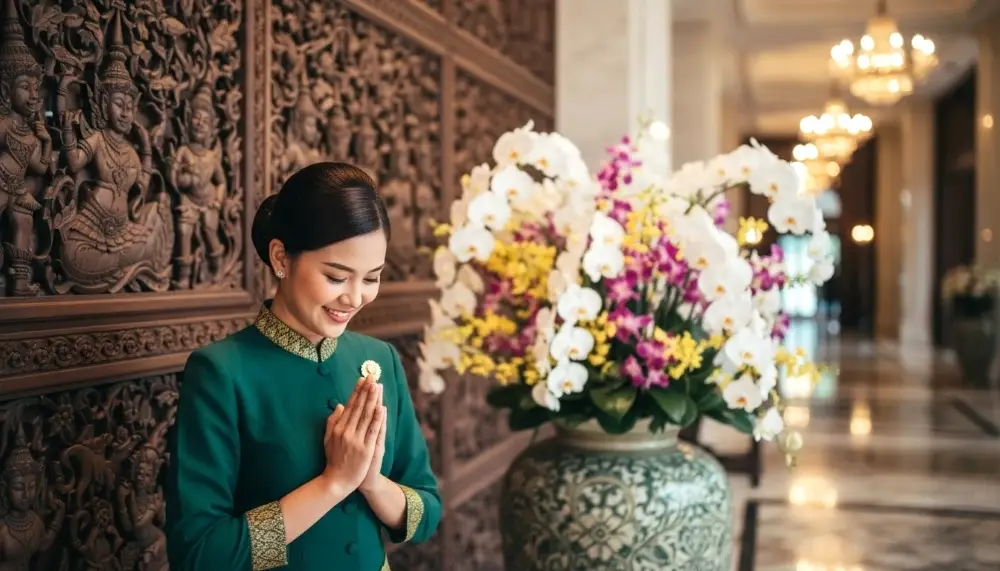
Thai rental culture is shaped by the same broader cultural values that define life in the country generally: a strong emphasis on politeness, flexibility, face, and harmony. Understanding a few nuances makes the landlord relationship considerably smoother.
Thai landlords are typically welcoming to foreign tenants, particularly in areas with established international communities. A polite, patient, and respectful approach to communication builds trust quickly and tends to produce more flexible outcomes when lease terms, maintenance requests, or deposit questions arise. Confrontational or aggressive communication achieves the opposite effect in a cultural context where maintaining a pleasant relationship is valued on both sides.
Building staff and management teams in well-run condominiums are often genuinely helpful beyond their formal roles: receiving packages, answering questions about local services, flagging maintenance issues before they become problems, and in some buildings maintaining a real community atmosphere. This is one of the details of daily life in Thailand that long-term residents consistently describe as something they did not anticipate and genuinely value.
Maintenance requests are best handled calmly and in writing on Line, with photos of any issue attached. This creates a clear record, makes it easy for the landlord or building manager to understand exactly what is needed, and generally produces faster resolution than phone calls.
Nervous About Renting Abroad?
Feeling uncertain about renting property in a new country is entirely understandable, particularly for those doing it for the first time. The reassuring reality is that Thailand has been hosting millions of international visitors, digital nomads, retirees, and long-stay travellers for decades, and the rental system in most areas is genuinely well-adapted to foreign tenants.
English is widely spoken in tourist regions and major expat areas. Building management teams are accustomed to international residents. Most rental agreements can be produced in both Thai and English. And the broader community of experienced expats already living in any major destination is usually very willing to share practical advice, landlord recommendations, and neighbourhood guidance with newcomers.
The expat Facebook groups for Bangkok, Chiang Mai, Phuket, and Koh Samui are active and genuinely useful. Questions about specific buildings, landlords, and areas get honest responses from people with direct experience. Using these communities as a research resource before arrival removes a significant amount of uncertainty.
Many people who planned to stay for just a few weeks end up extending their stays once they experience how comfortable, affordable, and enjoyable long-term life here actually is. That pattern repeats itself often enough that it is worth planning for from the start.
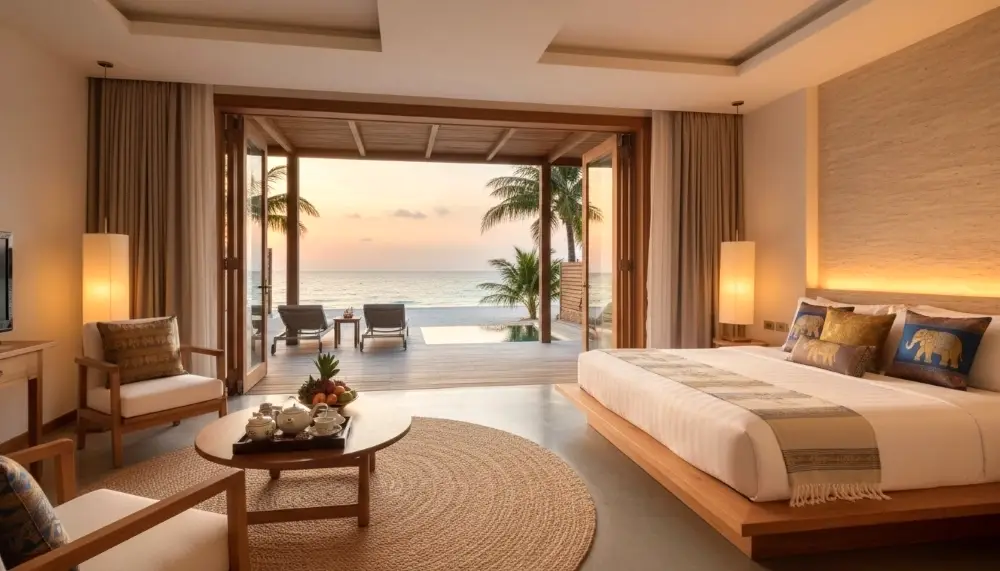
A New Way to Experience Thailand

Renting an apartment in Thailand changes the texture of your time here in a way that no hotel stay quite replicates. Instead of rushing through itineraries, you wake up slowly. You discover a morning coffee spot two minutes from your building that serves better food than any hotel restaurant. You find the local market, the neighbourhood convenience store, the shortcut through the side street. The country reveals itself differently when you are living in it rather than passing through.
Whether you choose the energy of Bangkok, the cool mountain charm of Chiang Mai, or a quiet apartment near the tropical beaches of the south, renting a base opens a richer and more authentic experience of one of the world’s most welcoming countries.
And once you settle in, you will very likely discover what so many people before you have found: Thailand has a way of making people want to stay just a little longer. And then longer still.
Frequently Asked Questions
Can foreigners rent apartments in Thailand without a visa?
Yes. There is no requirement to hold a specific long-stay visa in order to rent an apartment in Thailand. Landlords are generally happy to rent to foreigners on tourist visas, visa exemptions, or any other legal entry status. That said, for stays beyond 30 to 60 days, a longer-stay visa such as the DTV or O-A retirement visa is strongly advisable for legal clarity and for accessing services that require proof of residence such as opening a bank account. The TM30 registration requirement applies regardless of visa type whenever a foreign national occupies a Thai residence.
What is the TM30 and why does it matter for renters?
The TM30 is a mandatory immigration notification requiring any landlord hosting a foreign national to report that person’s address to the local immigration office within 24 hours of arrival. The landlord bears the legal obligation, but the foreign tenant suffers the practical consequences if it is not filed: specifically, complications at visa extensions and 90-day reporting appointments. Before moving in, confirm explicitly with your landlord that they understand this requirement and will file it promptly. Many experienced landlords with foreign tenants handle it routinely; others are less familiar with it and may need a gentle explanation.
How much should I budget to move into an apartment in Thailand?
Standard move-in costs are three months’ rent paid upfront: one month as advance rent and two months as a refundable security deposit. For a mid-range condo in Bangkok or Chiang Mai at 20,000 THB per month, that means having 60,000 THB available to move in. Budget apartments at the 8,000 to 10,000 THB monthly range require 24,000 to 30,000 THB upfront. Having this amount accessible in cash on arrival is advisable, as most landlords expect the initial payment in Thai Baht. Services like Wise and Revolut offer significantly better rates for converting and withdrawing currency than standard foreign bank cards.
Is electricity billed at a fair rate or can landlords add surcharges?
Both situations exist in Thailand. The Government Rate for electricity sits at approximately 4.5 to 5 THB per unit consumed. In some older buildings and with some less scrupulous landlords, a surcharge is added on top of this, effectively doubling the electricity cost for the tenant. The practice is more common in older “mansion” style apartment buildings than in modern condos. Always verify in writing before signing that electricity is billed at the Government Rate. Refusing to sign anything that does not include this confirmation is entirely reasonable.
Which areas of Bangkok offer the best value for long-term renters?
The highest-value areas for long-term renters in Bangkok are consistently found slightly off the Central Sukhumvit corridor. Phra Khanong and On Nut on the BTS Sukhumvit Line offer excellent transit connections, strong local market and restaurant scenes, and rental prices 20 to 35 percent lower than equivalent properties at Asoke or Thong Lor. Ari on the BTS Silom Line is popular with a creative and professional expat crowd and maintains a genuine neighbourhood character. Lat Phrao and Ratchada offer the lowest prices of any reasonably central area, with improving MRT connections making them increasingly practical.
Can I negotiate the rent with a Thai landlord?
Yes, and it is expected for longer lease terms. Thai landlords are generally open to negotiation, particularly for tenancies of six months or more. The most effective leverage points are lease length (longer term in exchange for a lower monthly rate), payment structure (offering several months upfront can produce a meaningful discount), and the absence of agency commission when dealing directly. Approaching negotiations politely, calmly, and without pressure produces better outcomes in the Thai cultural context than a confrontational style. A reasonable opening negotiation for a 12-month lease is asking for one month free or a 5 to 10 percent reduction on the asking price.
What is the difference between a condo and a mansion apartment in Thailand?
In Thai property terminology, a condo (condominium) is a purpose-built modern apartment building where individual units may be privately owned and rented out by their owners. Condos typically offer amenities such as pools, gyms, and 24-hour security. A mansion is the local term for a simpler apartment building, often older, with basic but functional rooms catering primarily to monthly renters at lower price points. Mansions offer minimal amenities but are genuinely clean, safe, and affordable. The choice between them comes down to budget and lifestyle priorities rather than any meaningful safety or comfort concern.
Do I need a Thai bank account to rent an apartment?
No, a Thai bank account is not a requirement to rent. Many landlords accept cash for deposits and monthly rent payments, and others can receive international transfers via Wise or similar services. That said, having a Thai bank account makes monthly rent payments significantly more convenient once you are settled. Opening a Thai bank account typically requires a passport, your visa, a Thai address (which your lease agreement provides), and in some cases a visit to a specific branch that handles foreign accounts. The process is easier in Bangkok and Chiang Mai than in smaller towns.
How do I find short-term furnished rentals for one to three months?
For one to three month stays, the most practical starting points are Agoda and Booking.com for their long-stay filters, which surface serviced apartments and furnished condos with monthly pricing. For direct owner sourcing in that timeframe, Facebook Marketplace with a location filter and a message asking specifically about monthly rates often produces options not listed on formal portals. Serviced apartments throughout Bangkok, Chiang Mai, and Phuket cater specifically to this duration, offering all-inclusive billing and short-term contracts that avoid the standard 6 to 12 month commitment.
What should I do if my landlord refuses to return my deposit?
Start with a polite, documented conversation on Line, referencing the lease terms and the 2025 consumer protection regulations that require deposit refunds within 30 days for landlords managing more than three units. If that does not resolve the issue, the next step is the local Consumer Protection Office or the Civil Court for Small Claims, both of which handle landlord-tenant disputes. Having your move-in inventory documentation, timestamped photographs, and written communications is essential for any dispute. Most deposit disputes are resolved through conversation before reaching any formal process, particularly when the tenant has thorough documentation from the beginning of the tenancy.