Thailand Currency & Money Guide
This site contains affiliate links. We may earn a commission at no extra cost to you.
The good news is that Thailand is very easy to navigate financially. ATMs are everywhere, credit cards are widely accepted in tourist areas, and the local currency is straightforward to use. With a little preparation, managing money in Thailand becomes one of the easiest parts of your trip.
This guide will walk you through everything you need to know so you can travel confidently and focus on enjoying the adventure.
See Live Exchange Rates:

Keep your Thailand plans flexible with
Booking.com’s free-cancellation stays.
Reserve now, decide later, and pay
only when your dates are confirmed.
What Currency Does Thailand Use?
Thailand uses the Thai Baht (THB) as its official currency.
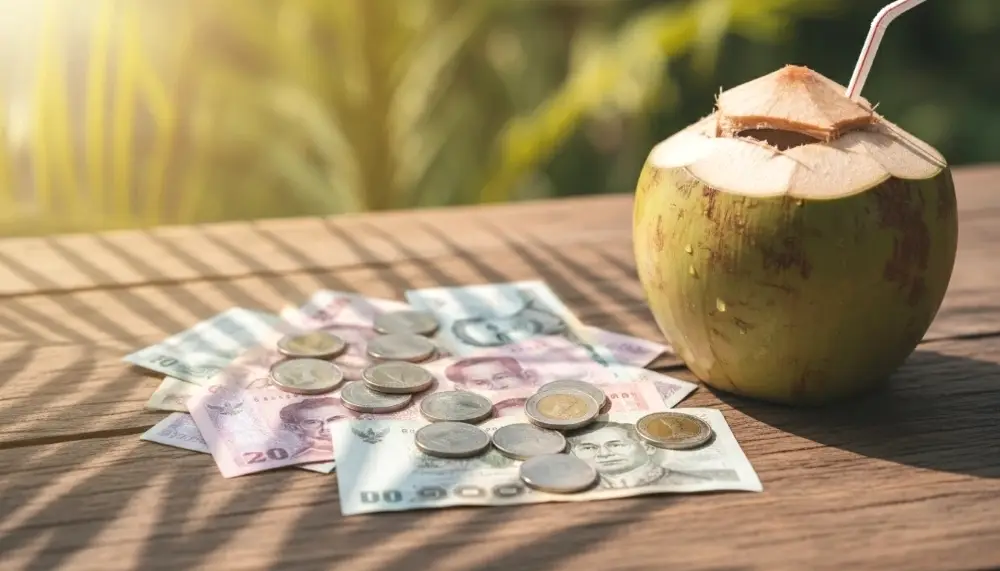
Banknotes typically come in the following values:
- 20 baht (green), 50 baht (blue), 100 baht (red),
500 baht (purple), 1000 baht (brown)
Coins include:
- 1 baht, 2 baht, 5 baht, 10 baht
- 25 and 50 satang (rarely used)
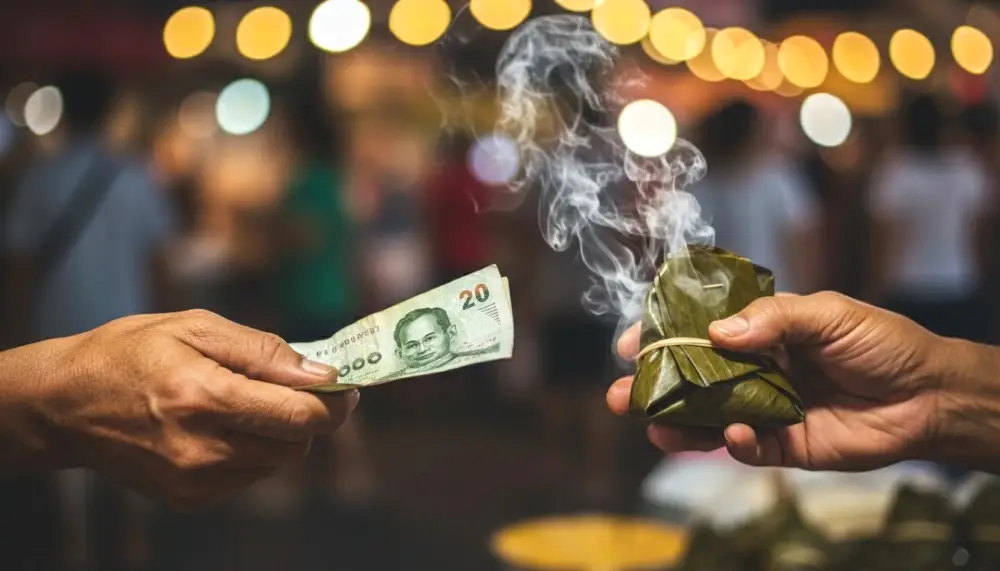
Most travellers will primarily handle 20, 50, and 100 baht notes, especially when paying for street food, taxis, or small purchases.
As a rough guideline, many visitors find that 100 baht feels similar to spending around a few dollars or pounds, making it a convenient mental benchmark when budgeting. The portrait on every banknote is of the late King Bhumibol Adulyadej (Rama IX), and Thai people hold their currency with genuine reverence, so treat banknotes with care and never place them on the floor.

Skip-the-line tickets and guided walks
in Thailand with English-speaking
guides. Read real traveller reviews
before committing to a single one.
Should You Bring Cash to Thailand?
Yes, but not a huge amount.
Thailand is still a cash-friendly society, especially outside major shopping malls and hotels. You’ll likely use cash for:
- Street food
- Local markets
- Taxis and tuk-tuks
- Small restaurants
- Massage shops
- Island transport
However, in large cities like Bangkok and Chiang Mai, many businesses also accept credit cards.
A practical approach is simple: carry some cash and keep a card available for larger purchases. In the glittering malls of Sukhumvit or the sleek cafes of Nimman, credit cards are welcomed with a smile. However, once the path leads to the vibrant chaos of a “soi” market or a remote island in the Andaman Sea, the digital world fades. Small vendors often lack change for 1,000 THB notes; breaking these at a 7-Eleven is a seasoned traveller’s ritual.

Book Thailand day trips, attractions,
and activities in one place. Check
real reviews and lock in your spot
before the popular slots go.
The Best Cards to Use in Thailand
Not all cards are created equal when travelling in Southeast Asia, and choosing the right one before you fly can save you a meaningful amount over a two-week trip.
Fee-free travel cards such as Wise, Revolut, and Starling (for UK travellers) are widely recommended by long-term Thailand visitors. They use the mid-market exchange rate with no hidden markup, which beats the rate offered at most airport exchange counters and hotel desks by a measurable margin.
Key things to check before you travel:
- Does your card charge a foreign transaction fee? (Typically 1.5% to 3%)
- Does it reimburse ATM withdrawal fees?
- Is it on the Visa or Mastercard network? (Both work broadly in Thailand)
- Have you notified your bank of your travel dates?
Always carry at least two cards from different networks as a backup. If one is blocked or swallowed by an ATM, having an alternative means you are never stranded. Booking your accommodation in advance through Agoda or Booking.com also helps you avoid having to carry large sums of cash upon arrival.

Pick a Thailand eSIM plan that matches
your trip length on Airalo’s global
marketplace. Install before departure
and you’re online the moment you land.
Pro Tips For Stress Free Travel:
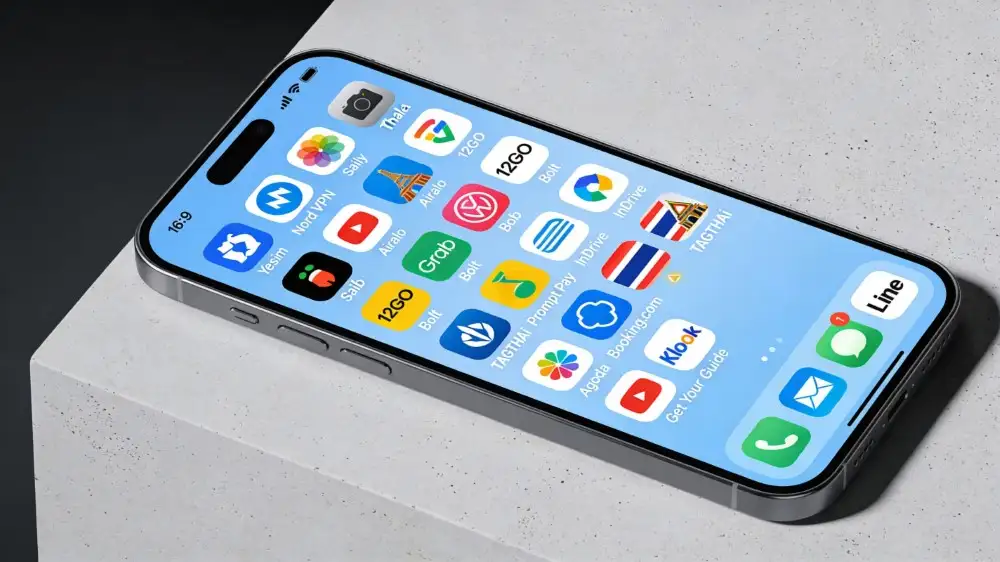
Grab & Bolt: Essential for getting to and from the piers without overpaying. Bolt is often 20% cheaper in Phuket, while Grab is more reliable in Koh Samui. Both apps require instant mobile data the moment you clear baggage claim to process SMS network verification codes. Activate your Airalo, Yesim, or Saily eSIM data plan before departure so it is live the second you land.
Yesim or Saily: Secure an eSIM before landing. Having 5G signal while crossing from Krabi to Koh Lanta allows for real-time tracking of the ferry’s progress and instant access to your banking app if you need to check balances mid-journey.
Klook & Get Your Guide: Use these for pre-booking day trip ferries where snorkelling gear and lunch are included. Paying in advance also means you carry less cash on the day.
NordVPN: Vital for booking through 12Go or Agoda on public pier Wi-Fi to protect your financial data. Shared networks in beach cafes and ferry terminals are notoriously easy to exploit without a VPN running in the background.
12Go: Lock in bus, ferry, and train tickets ahead of national holiday surges like Songkran (Thai New Year). Prices and availability shift fast during these periods, and booking early via 12Go removes the stress entirely.
Currency (THB): Always keep 500 THB in small notes (20s and 100s). Many smaller piers on islands like Koh Kood do not accept cards for the mandatory cleaning fees.

Skip the airport SIM queue in Thailand.
Yesim’s eSIM activates before takeoff
so you’re online the second your
plane touches the tarmac.
Using ATMs in Thailand

Thai ATMs are notorious for a 220 THB flat fee per withdrawal for foreign cards, regardless of the amount. To minimise losses, use Krungsri (yellow) or Bangkok Bank (blue) machines, which often allow higher limits of 30,000 THB per transaction, and always decline the “Guaranteed Exchange Rate” to avoid conversion markups. Choose “Continue without conversion” and let your home bank handle the exchange at their rate instead.
You’ll find machines at:
- Airports
- Shopping malls
- Convenience stores (7-Eleven, Family Mart)
- Banks
- Tourist areas
- Major islands
Most ATMs accept international debit and credit cards on the Visa and Mastercard networks. American Express acceptance is more limited, so carry at least one Visa or Mastercard as a backup.
Before travelling, notify your bank of your destination and travel dates so your card is not flagged for unusual activity and blocked mid-trip. This simple step takes two minutes and can save significant stress later.
Comparison of Withdrawal Options:
| Provider | Typical ATM Fee | Max Withdrawal Limit | Best Use Case |
|---|---|---|---|
| Standard Thai ATM | 220 THB | 20,000 THB | Emergency cash in tourist hubs |
| Krungsri (Yellow) | 220 THB | 30,000 THB | Maximising cash-to-fee ratio |
| Bangkok Bank | 220 THB | 25,000 THB | Widespread availability |
| Yellow Exchange Booths | 0 THB | N/A | Best rates for physical cash (USD/GBP/EUR) |
| SuperRich (Orange/Green) | 0 THB | N/A | Top-tier rates for GBP and EUR in Bangkok |
Where to Exchange Currency in Thailand:
Currency exchange is simple and widely available throughout Thailand, but the rates vary significantly depending on where you go. As a general rule, always exchange in Thailand rather than at home. The rates offered at supermarkets, post offices, and banks in the UK, US, or Europe are noticeably worse than what you will find at a street-level booth in Bangkok or Chiang Mai.
SuperRich (orange or green branches) in Bangkok are consistently rated among the best for GBP, EUR, and USD. Their rates are updated throughout the day and are significantly better than any airport counter.
Other reliable options include:
- Exchange booths in tourist areas (look for the yellow branded kiosks)
- Bank branches in city centres
- Licensed hotel exchange desks (rates are lower but convenient for small amounts)
Always bring your physical passport for any cash exchange transaction. It is a legal requirement in Thailand, and no reputable booth will proceed without it. Do not exchange money with unofficial street vendors offering suspiciously good rates.
For airport arrivals, exchange only what you need for the taxi or transfer (around 500 to 1,000 THB). Wait until you reach the city to exchange larger sums at a better rate. If you have booked an airport transfer through Welcome Pickups, you can skip that first scramble entirely and arrive with calm.
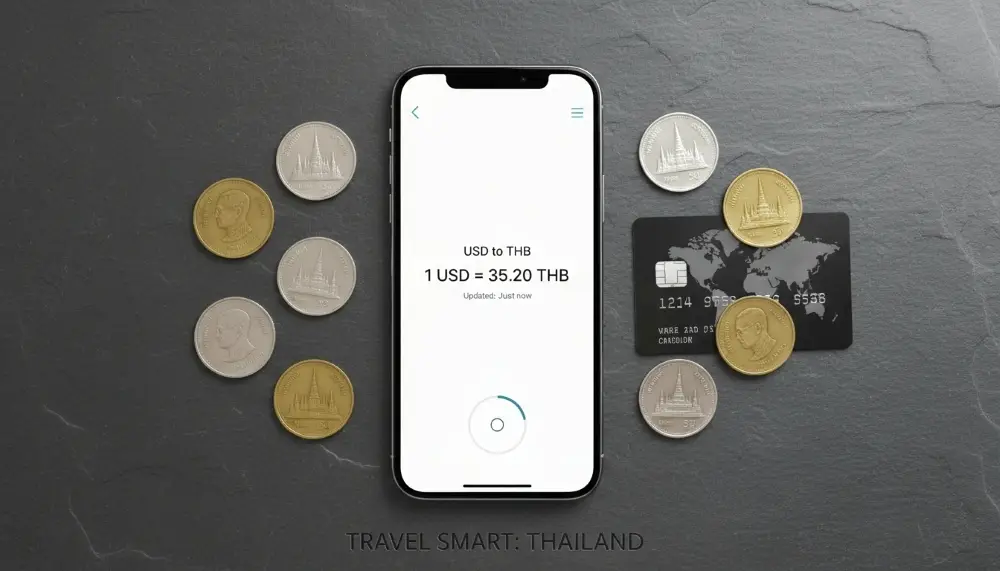
Credit Cards in Thailand:
Credit cards are commonly accepted in:
- Hotels
- Shopping malls
- Upscale restaurants
- Tour booking offices
- Large supermarkets
Cities such as Bangkok and Chiang Mai are particularly card-friendly, especially in modern areas.
However, smaller businesses often operate on a cash-only basis, including:
- Street vendors
- Local markets
- Small guesthouses
- Island cafes
- Transportation services
Because of this mix, most travellers use a combination of cash and card throughout their trip. Some restaurants in tourist areas may also add a 2% to 3% surcharge for card payments, so it is worth asking before you hand one over.
Is Thailand Expensive?
Thailand has a reputation for being an affordable destination, and for many travellers that still holds true. Costs have risen in popular tourist hubs since the pandemic, but the overall value remains exceptional by global standards, particularly for food, accommodation, and local transport.
Your daily spending can vary enormously depending on travel style, but typical costs might look like:
Budget traveller
- Street food meals: 40 to 80 baht per dish
- Local buses or BTS Skytrain: 16 to 59 baht
- Guesthouses or hostels: from 300 baht per night
- Daily total: 800 to 1,500 baht
Mid-range traveller
- Comfortable hotels: 1,200 to 3,000 baht per night
- Restaurant dining: 200 to 600 baht per meal
- Organised tours via Klook or Get Your Guide
- Daily total: 3,000 to 6,000 baht
Luxury traveller
- Beach resorts and boutique hotels: 5,000 baht and above
- Private tours and speedboat charters
- Fine dining and rooftop bars
- Daily total: 8,000 to 20,000 baht
The beauty of Thailand is that it can suit nearly any budget, making it ideal for both backpackers and honeymooners alike.
Do You Need to Tip in Thailand?

Thailand does not have a mandatory tipping culture, but a gesture of 20 to 50 THB for a massage therapist or rounding up the fare for a Grab driver is genuinely appreciated. It is never expected, always welcomed, and adds meaningfully to a service worker’s day.
In mid-to-high-end restaurants, look for the “++” on the menu. This indicates a 10% service charge and 7% VAT are added to the bill, meaning the price you see is not the final amount you pay. Budget for roughly 17% on top of the listed price in these venues.
Common tipping practices include:
- Leaving small change at casual restaurants
- Rounding up taxi and tuk-tuk fares
- Tipping massage therapists 50 to 100 baht
- Leaving 20 to 50 baht for hotel housekeeping
- Tipping tour guides 100 to 200 baht for full-day tours
Thailand has a deep culture of hospitality, and genuinely warm service is often given regardless of tips. A small thank-you simply adds to the goodwill that makes this country so memorable to visit.
Mobile Payments and PromptPay in Thailand
Thailand’s national QR payment system, PromptPay, is found everywhere from high-end boutiques to street-side mango sticky rice stalls. Vendors simply display a QR code and buyers scan it to transfer funds instantly between Thai bank accounts.
Historically this system was reserved for those with Thai bank accounts, but by 2026 international providers like Wise have bridged the gap. Travellers can now link their Wise account to scan and pay directly from their digital balance in many locations, avoiding ATM fees entirely for smaller transactions.
Other digital payment options worth knowing:
- TrueMoney Wallet: a popular Thai e-wallet used for top-ups, convenience store payments, and utilities
- Rabbit LINE Pay: widely used for BTS Skytrain travel cards and linked app payments
- Google Pay and Apple Pay: accepted at major chains including some 7-Elevens and Starbucks, but not universal
To use any of these reliably from the moment you land, you need live mobile data. Activate your Airalo, Yesim, or Saily eSIM before departure so verification codes can be received at the baggage carousel rather than at a roaming cost.
Helpful Money Tips for First-Time Visitors
A few small habits can make managing money in Thailand much easier from day one.
Carry smaller notes
Large 1,000-baht bills can be difficult to break at markets or street stalls. Keep a supply of 20, 50, and 100-baht notes readily available and replenish them at 7-Eleven when you have the chance.
Check exchange rates before you go
Currency exchange booths are common in tourist areas and airports. Some offer significantly better rates than others, so it is worth comparing a few before exchanging large sums. The Wise app shows you the real mid-market rate for instant comparison.
Avoid airport exchanges for large sums
Airport counters are convenient but almost always have worse rates than city exchanges. Grab just enough for your first taxi or transfer at the airport, then head to a reputable city exchange for the rest.
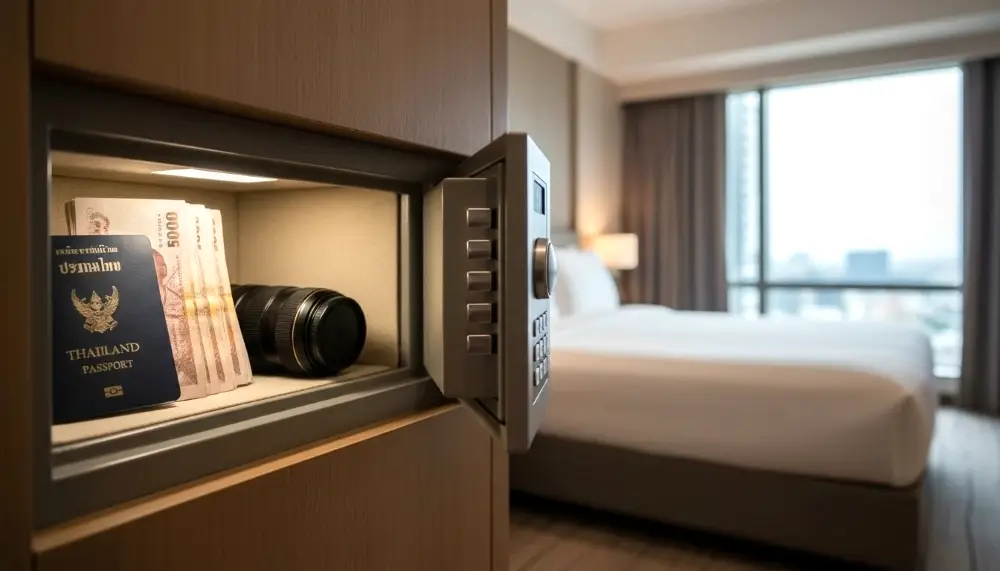
Use hotel safes
Keep your passport, backup card, and any extra cash in your hotel room safe. Carry only what you need for the day in a slim wallet or money belt in crowded areas.
Watch for flight disruptions
If your journey to Thailand involves a connecting flight and things go wrong, AirHelp can help you claim compensation for significant delays or cancellations under applicable regulations. It is worth registering your flight details before you travel.
Money Tips for Digital Nomads and Long-Stay Visitors
Thailand has become one of the world’s most popular destinations for remote workers, and for good reason. The cost of living is low, the food is extraordinary, the coffee culture (particularly in Chiang Mai) is thriving, and co-working spaces are available in every major city.
If you are planning to stay for more than a few weeks, a few additional financial considerations apply:
- Wise multi-currency account: Ideal for receiving payments in GBP, USD, or EUR and converting to THB at the mid-market rate with minimal fees
- SafetyWing insurance: Comprehensive travel medical coverage designed specifically for nomads and long-stay travellers, available by the month with no minimum commitment
- NordVPN: Essential for using banking apps and managing financial accounts on cafe and co-working Wi-Fi. Thailand’s cybercafe networks vary widely in security
- Agoda and Booking.com: Both platforms offer competitive long-stay rates on apartments and serviced studios in Bangkok, Chiang Mai, and Phuket, often with flexible cancellation
Opening a Thai bank account as a foreigner is possible but requires a valid visa and some patience. Kasikorn Bank (KBank) and Bangkok Bank are the most foreigner-friendly institutions. Having a local account unlocks PromptPay, removes the 220 THB ATM fee entirely, and makes everyday life significantly smoother for longer stays.
Is It Safe to Carry Cash in Thailand?
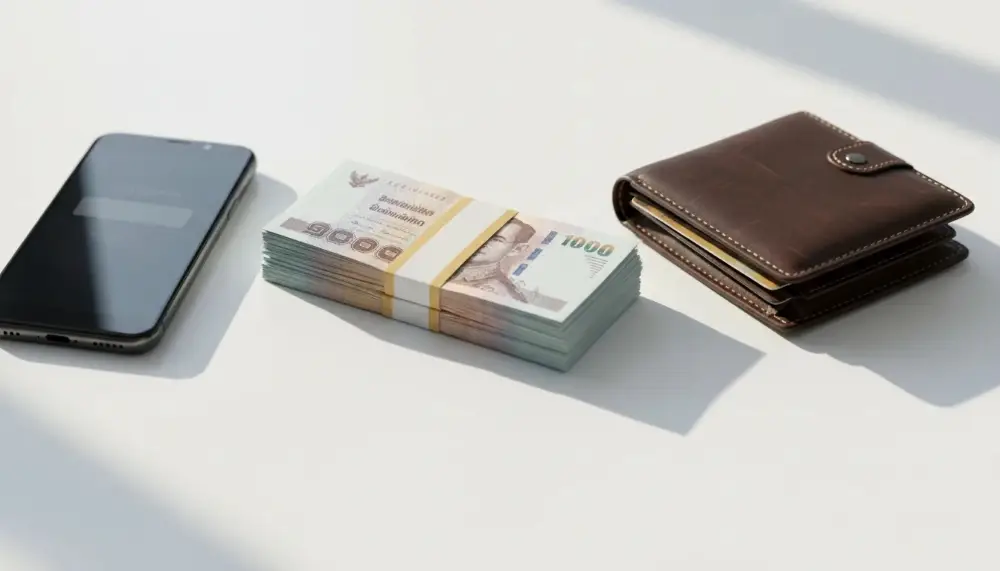
Thailand is generally considered very safe for travellers, including when carrying cash. Violent crime against tourists is rare, and Thailand consistently ranks as one of the safer countries in Southeast Asia for visitors.
Petty theft can happen anywhere in the world, but it is relatively uncommon compared to many other tourist destinations. The most common issue is bag-snatching from motorbikes in busy city areas, which is easily avoided by keeping bags close and on the side away from the road.
Simple precautions help:
- Use a slim wallet or money pouch worn under clothing in crowded markets
- Avoid displaying large amounts of cash at ATMs or exchanges
- Keep valuables secure in crowded night markets
- Use hotel safes for passports and extra money
- Carry only the day’s spending money in your pocket
Millions of travellers explore Thailand every year without any money-related issues. With basic awareness, you will feel comfortable and at ease from the first day.
Reassurance for First-Time Travellers
If this is your first international trip, money worries can feel intimidating. Fortunately, Thailand is one of the easiest countries in the world to travel through. The infrastructure for tourists is excellent, English is widely spoken in tourist areas, and locals are genuinely warm and patient with visitors who are finding their feet.
Tourism is a huge part of the Thai economy, and systems are well set up to help visitors feel comfortable from arrival.
You’ll find:
- ATMs almost everywhere, including on major islands
- Friendly locals willing to help with directions and payments
- Clear pricing in most tourist areas
- Plenty of convenience stores and banks in towns of any size
- Accommodation easily bookable in advance through Agoda or Booking.com
Within a day or two of arriving, most travellers feel completely at ease managing Thai baht. The learning curve is genuinely short, and the rewards for navigating it are immense.
Final Thoughts:
Money is simply a tool that helps you experience Thailand’s incredible culture, food, landscapes, and people.
Whether you’re tasting street food in Bangkok, wandering temples in Chiang Mai, or watching the sunset on a southern island beach, everyday spending quickly becomes part of the adventure.
With a little preparation and the tips in this guide, you’ll be ready to explore Thailand confidently, leaving you free to focus on the moments that truly matter.
Thailand has a wonderful way of welcoming visitors with open arms.
All that’s left now is to start the journey.
Frequently Asked Questions:
Is it better to exchange money in my home country or Thailand?
Always exchange in Thailand. Local booths like SuperRich (orange or green branches in Bangkok) offer significantly better rates than any airport counter, post office, or bank in the UK, US, or Europe. Exchange only a small amount at the airport for your first taxi, then find a proper exchange booth in the city once you have settled in. Always bring your physical passport, as it is a legal requirement for every exchange transaction.
Can I use my phone to pay at 7-Eleven in Thailand?
Yes, in many cases. Credit and debit cards are accepted for purchases over 200 THB at 7-Eleven. Apple Pay and Google Pay work at some locations but are not universal. The PromptPay QR system works for those with Thai bank accounts, and the TrueMoney Wallet app is a popular option among residents. Travellers using Wise may also be able to scan and pay via PromptPay at participating locations.
Do I need to carry my passport when exchanging money?
Yes. It is a legal requirement in Thailand to present a physical passport for any currency exchange transaction at a booth or bank. A photo on your phone or a photocopy is not sufficient. Keep your passport safe in a hotel room safe when not needed and carry it only when you plan to exchange money or are crossing borders.
What happens if I run out of cash on an island?
Most inhabited islands have at least one ATM, but the 220 THB flat fee still applies. On very small islands such as Koh Kradan or parts of Koh Kood, cash is mandatory and ATMs may be non-existent or frequently out of service. Always withdraw sufficient baht on the mainland before heading to remote islands. Keep a reserve of at least 1,000 to 2,000 THB in small notes for these situations.
What is the ATM withdrawal fee in Thailand for foreign cards?
Every Thai ATM charges a flat fee of 220 THB per withdrawal for foreign-issued cards, regardless of how much you withdraw. To minimise the impact of this fee, withdraw the maximum amount your card allows each time. Krungsri (yellow ATMs) offer limits up to 30,000 THB per transaction, making them the most efficient choice. Always decline the ATM’s offered exchange rate and let your home bank handle the conversion instead.
Is it safe to use credit cards in Thailand?
Yes, credit cards are safe to use in Thailand at established businesses including hotels, shopping malls, restaurants, and tour operators. Always check your statements after returning home as occasional card-skimming does occur at informal or roadside ATMs. Use ATMs located inside banks or shopping centres where possible, and never let your card leave your sight when paying at a restaurant or shop.
How much cash should I bring to Thailand for a two-week trip?
This depends heavily on your travel style. As a rough guide, a budget traveller can manage on 800 to 1,500 THB per day, a mid-range traveller on 3,000 to 6,000 THB, and a comfort-focused visitor on 6,000 THB and above. Rather than bringing a large sum of foreign cash, most experienced travellers bring just enough for the first day or two and rely on ATMs and exchange booths for the rest. Having a fee-free travel card such as Wise or Revolut significantly reduces costs over a longer trip.
Can I use US dollars or British pounds directly in Thailand?
In most cases, no. The Thai baht is the only currency accepted for everyday transactions. Some tourist businesses in areas like Khao San Road or Patong Beach may quote prices in USD, but they will apply their own unfavourable exchange rate. Always pay in baht and you will get a fair price. Major foreign currencies can be exchanged at booths and banks throughout the country, with USD, GBP, and EUR attracting the best rates.
What is PromptPay and can tourists use it?
PromptPay is Thailand’s national QR code payment system, used for instant transfers between bank accounts. It is displayed as a QR code by vendors across the country, from street food stalls to high-end boutiques. Traditionally it required a Thai bank account, but by 2026 travellers using Wise can link their account to scan and pay via PromptPay in many locations. TrueMoney Wallet is another e-wallet popular with both residents and some longer-staying visitors.
Should I get travel insurance for Thailand?
Absolutely, and it should be one of the first things you arrange before departure. Thailand’s private hospitals are excellent but can be expensive without coverage. For short holidays, standard travel insurance from your home provider is usually sufficient. For longer stays, remote work periods, or multi-country trips through Southeast Asia, SafetyWing offers flexible nomad-friendly medical coverage available month to month with no long-term commitment.