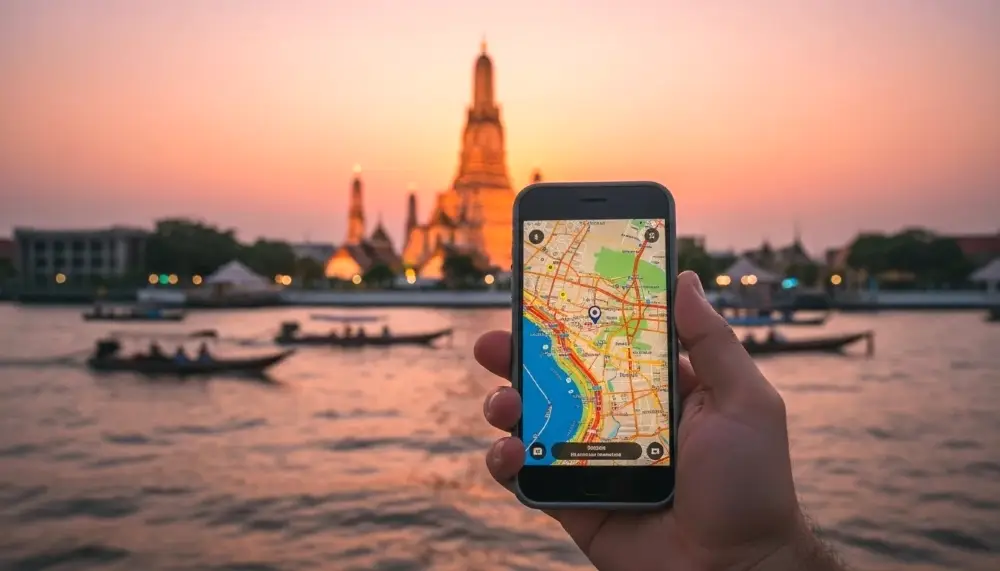
June 2026 Thailand Visa Guide
Welcome to the Land of Smiles! If you are planning your first-ever trip to Thailand, you are about to embark on an incredible journey. From the neon-lit food stalls of Bangkok to the misty mountains of Chiang Mai and the turquoise waters of the southern islands, Thailand is a dream destination that genuinely rewards those who plan ahead.
Right now, Thailand is in the middle of its most significant visa policy shift in years. The rules are changing, and this guide exists to make sure you have the correct, up-to-date picture before you book your flights. Read this carefully, bookmark it, and check back before you travel.
URGENT: The 60-Day Visa Exemption Is Being Scrapped
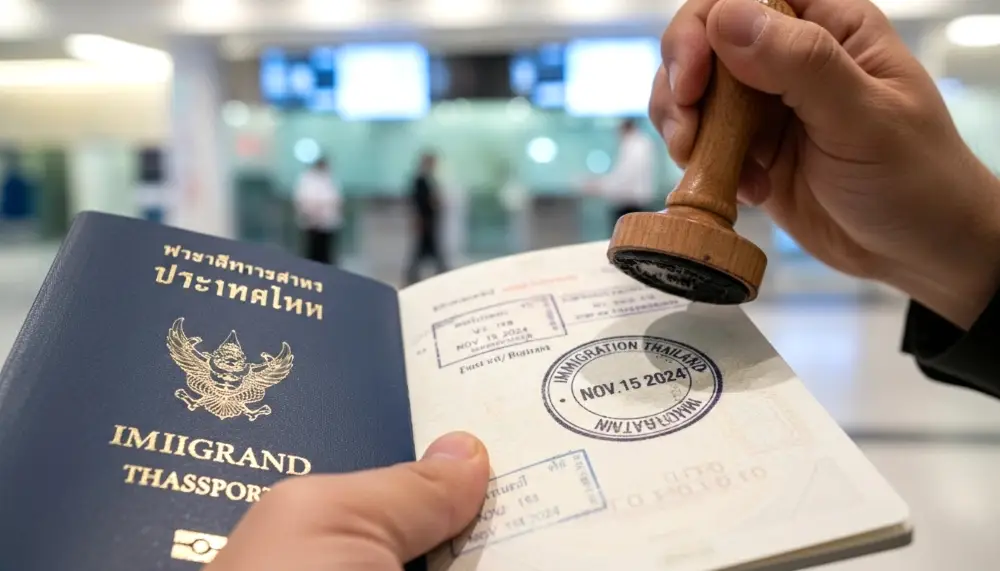
This is the most important update in this guide. On 19 May 2026, the Thai Cabinet formally approved the end of the 60-day visa exemption scheme that has been in place since July 2024. The change is approved and is not a rumour. Here is what you need to know right now:
- Current Status (as of June 2026): The 60-day exemption is still technically valid today. The revised rules will not take effect until 15 days after publication in the Royal Gazette, which has not yet occurred at time of writing. If you are entering Thailand this week, you will still receive a 60-day stamp.
- What Changes Once Published: The 60-day scheme for 93 countries will be revoked. Most affected nationalities (including the UK, USA, and Australia) will revert to a 30-day visa exemption. A small number of countries may be reduced further to 15 days.
- Extensions Remain: A one-time 30-day extension will still be available at local immigration offices for 1,900 THB, giving a maximum of 60 days total for most travellers.
- Existing Stays Are Protected: If you entered Thailand before the Royal Gazette publication, you are allowed to remain until your current permitted period expires.
- Why the Change? The Thai government cited concerns over illegal work, nominee businesses, and transnational crime operations exploiting the generous 60-day window. Tourism data also showed that the average foreign visitor stays around 9 days, making the 60-day window largely unnecessary for genuine tourists.
Our advice: If your trip is 30 days or under, the impact on you is minimal. If you planned a longer stay relying on the 60-day exemption, read the visa options below carefully.

GetYourGuide has Thailand’s best
tours and experiences covered with
verified operators and instant
mobile vouchers on arrival.
The New Tiered Entry System at a Glance
The new framework operates on a principle of “one country, one visa exemption privilege.” Each nationality is assigned to a single category. Here is how the tiers break down once the Royal Gazette publishes:
- 30-Day Visa Exemption: Available to nationals of 54 countries and territories, covering most of Europe, North America, Australia, and key Asian markets. Extendable once for 30 days at an immigration office.
- 15-Day Visa Exemption: A new, smaller category for 3 countries and territories, subject to final review by the Visa Policy Committee.
- Bilateral Agreements: Separate agreements with ASEAN and treaty partners remain untouched. These cover arrangements of 14, 30, or 90 days depending on the country.
- Visa on Arrival: The VOA list has been significantly reduced from 31 eligible countries to just 4. Check the official Thai Immigration portal to see if your passport qualifies.
- Mandatory TDAC: Regardless of which tier applies to you, all arrivals must complete the Thailand Digital Arrival Card (TDAC) before landing. This is non-negotiable.

Book Thailand day trips, attractions,
and activities in one place. Check
real reviews and lock in your spot
before the popular slots go.
Thailand Digital Arrival Card (TDAC)
Regardless of the visa policy changes, one requirement is already fully in force and will not change: the mandatory Thailand Digital Arrival Card (TDAC). This replaced the old paper TM.6 form that you used to fill in on the plane. Do not skip this step.
- Who Must Complete It: Every foreign national entering by air, land, or sea.
- When to Do It: Within 72 hours (3 days) before your arrival. Not earlier, not on arrival.
- Cost: Completely free. Be extremely wary of third-party websites charging a fee. Only use the official Thai Immigration government portal.
- What You Get: A QR code sent to your email. Save it on your phone and print a backup copy. Immigration officers will scan it at the border.
- Mobile Data Tip: To access your QR code and complete last-minute checks at the airport, you need reliable data the moment you land. Activate an Airalo, Yesim, or Saily eSIM before departure. SMS network verification codes for apps like Grab and PassApp cannot be received without live mobile data at the baggage carousel.

Compare hotel prices across Thailand’s
best areas and book with confidence.
Filter by budget, location, or score
to find the right stay for your trip.
Visa Comparison Table (Post-Change):
| Visa Type | Duration per Entry | Cost (Initial) | Best For |
|---|---|---|---|
| Visa Exemption (new) | 30 Days (extendable to 60) | Free | Short-term tourists from 54 eligible countries |
| Tourist Visa (SETV) | 60 Days | Approx. 2,000 THB (~£45 / $57) | Longer holidays, guaranteed 60 days |
| DTV | 180 Days per entry | 10,000 THB (~£225 / $285) | Remote workers and freelancers |
| Retirement (Non-O) | 90 Days / 1 Year | 2,000 THB (~£45 / $57) | Travellers aged 50+ |
Which Visa is Right for You?
1. The Visa Exemption (Most Visitors)
For most people planning a holiday of up to a month, this is still your entry route. Once the Royal Gazette publishes the new rules, nationals of the 54 eligible countries will arrive at the airport and receive a 30-day stamp at no cost. If you want more time, you can extend once at a local immigration office for 1,900 THB (~£43 / $54), taking your total to 60 days.
- Best for: Short holidays, island hopping, and first-time visitors staying under 60 days.
- Requirement: A passport with at least 6 months validity, a confirmed return or onward ticket, and a completed TDAC QR code.
- Land Border Note: Visa-exempt entries via land borders are limited to two per calendar year.


2. The Tourist Visa (SETV): Now Worth Considering
With the exemption dropping to 30 days, the Single Entry Tourist Visa suddenly becomes a smarter choice for anyone planning a longer trip. Apply at a Thai embassy or consulate before you leave home and you will receive a guaranteed 60 days with less scrutiny at the border. This is especially useful if your country is not on the 54-country exemption list, or if you are a frequent visitor who has raised flags at immigration before.
- Best for: Travellers wanting more than 30 days without border runs or extensions.
- Apply: Via your nearest Thai embassy or the Thai e-Visa portal before departure.
- Pro tip: Book your intercity buses and trains in advance through 12GO, particularly around Songkran and national holidays when everything sells out fast.
3. The Destination Thailand Visa (DTV)
If you are a digital nomad or a remote worker, the DTV is the gold standard and the change to the exemption scheme makes it even more attractive. This is a 5-year multiple-entry visa that allows you to stay for 180 days at a time, with a 180-day extension available per entry. The visa changes around you, but the DTV remains completely unaffected.
- Best for: Remote workers, freelancers, and anyone taking long-term Muay Thai or cooking courses.
- Extension: Extend once per entry for another 180 days (1,900 THB) without leaving the country.
- Requirements: Proof of 500,000 THB (~£11,200 / $14,200) in a bank account, seasoned for 3 to 6 months. Proof of remote employment or course enrolment. Minimum $50,000 USD health insurance coverage. SafetyWing is a popular and cost-effective option used widely by the DTV community for meeting this requirement.
- Security: When working from cafes and co-working spaces across Bangkok or Chiang Mai, NordVPN is essential for protecting financial data on public networks. It is also useful for booking through Agoda or 12GO on pier Wi-Fi.


4. Retirement Visa (Non-Immigrant O)
For travellers aged 50 and above looking to spend extended time in Thailand, the Non-Immigrant O Retirement Visa remains one of the most straightforward long-stay options in Southeast Asia. It grants a full year at a time, renewable in-country, and the financial requirements are very manageable compared to many other countries’ retirement visa programmes.
- Best for: Over-50s planning to base themselves in Thailand for the year.
- Requirements: Proof of 800,000 THB (~£18,000 / $22,800) in a Thai bank account, or a monthly income of at least 65,000 THB (~£1,460 / $1,850). No criminal record. Valid health insurance.
- Accommodation: When setting up a longer base, Agoda and Booking.com both offer strong long-stay monthly rates that are often significantly lower than nightly pricing.

Airalo covers Thailand with a range of
data plans from days to a month.
No physical SIM swap, no roaming
bill shock when you get back home.
Practical Tips for a Smooth Arrival
Thai immigration officers are generally warm and professional, but the current climate of stricter policy enforcement means they are paying closer attention than they were a year ago. Come prepared and you will breeze through.
- Proof of Funds: Technically, immigration can ask to see that you have at least 20,000 THB per person (approximately £450 or $570) in cash or equivalent. While they rarely check casual tourists, having some cash on hand is good practice and good sense.
- Onward Travel: Your airline may not let you board without proof you are leaving Thailand within your permitted stay. If you have a one-way ticket, book a throwaway bus or cheap flight to a neighbouring country like Laos or Malaysia. Booking platforms like 12GO are useful for this.
- Frequent Visitors: If this is your third or more visa-exempt entry within a rolling 12-month period, expect additional questions. Officers at major hubs are actively monitoring this pattern. A Tourist Visa or DTV removes this friction entirely.
- Print Your Documents: Even in 2026, having a physical printout of your TDAC QR code and your first hotel booking can save the day if your phone dies or airport Wi-Fi is unreliable.
- Flight Delays and Disruption: If your inbound flight is significantly delayed or cancelled, AirHelp can assist you in claiming compensation for disrupted international travel under EU261 and related frameworks.
- Airport Transfers: For families or groups arriving at Suvarnabhumi or Don Mueang, Welcome Pickups offers fixed-price pre-booked transfers that eliminate the stress of taxi negotiation at the arrivals gate.
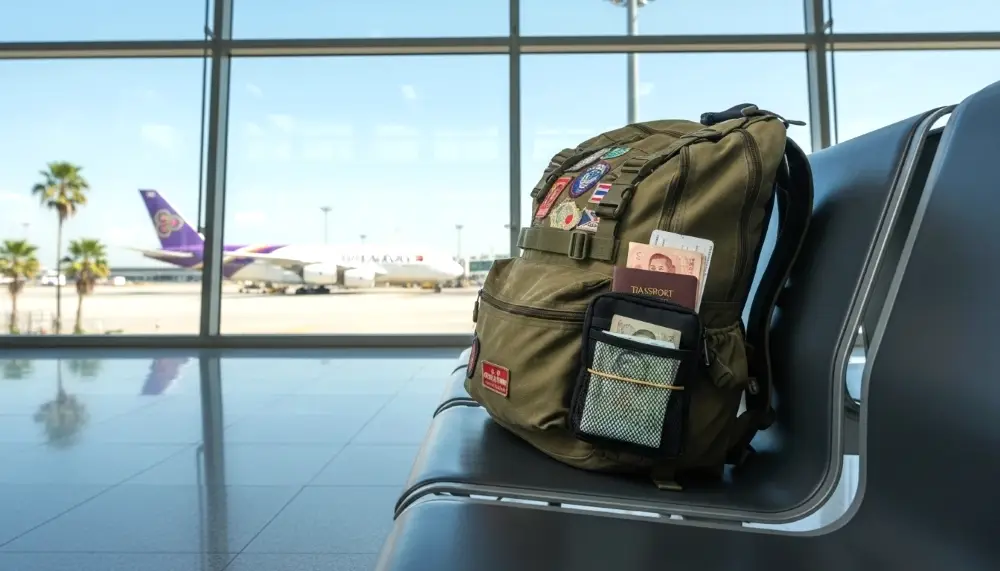

Forget swapping physical SIMs in Thailand.
Yesim works on most modern phones,
activates remotely, and keeps your
home number live on WhatsApp too.
Overstay Penalties: Do Not Push Your Luck
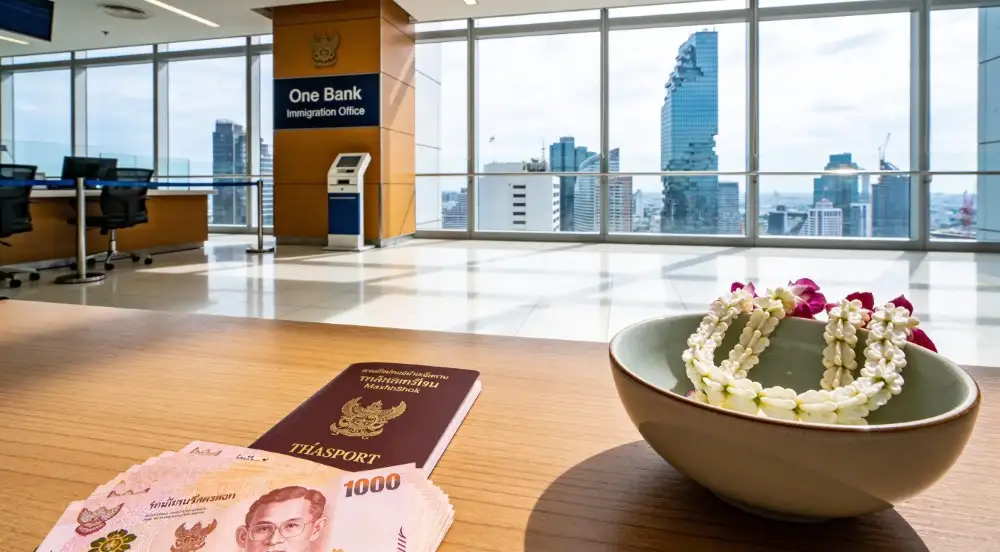
With immigration scrutiny tightening, the consequences of overstaying are worth taking seriously. The fines and penalties have not changed, but enforcement has become noticeably stricter at major entry and exit points.
- Daily Fine: 500 THB per day overstayed, capped at 20,000 THB total.
- Discovery During a Check: If an officer discovers an overstay during a random check rather than at the airport on departure, it can lead to immediate detention and deportation. This is not a theoretical risk.
- Bans: Overstays exceeding 90 days trigger a ban of 1 year. Overstays exceeding 1 year trigger a ban of 5 years. Overstays of 3 or more years trigger a permanent ban from Thailand.
- The Simple Fix: If you need more time, pay 1,900 THB at your local immigration office for a 30-day extension. It is a straightforward process and a far better outcome than any of the above.
Pro Tips For Stress-Free Travel
Grab and Bolt: Essential for getting around Bangkok and reaching piers without overpaying. Both apps require an active mobile connection and SMS verification when you first install them, so activate your eSIM before you land.
Yesim or Saily: Secure an eSIM before landing. Having 5G signal the moment you step off the plane is not just a convenience, it is a practical necessity for verifying apps and accessing your TDAC QR code.
Klook and Get Your Guide: Use these to book day trips, snorkelling excursions, and cooking classes. Pre-booking means guaranteed spots and no pier-side haggling.
NordVPN: Vital when booking through 12GO or Agoda on public pier or cafe Wi-Fi. Protect your financial data anywhere you connect.
Currency (THB): Always carry 500 THB in small notes (20s and 100s). Smaller island piers like Koh Kood do not accept cards for mandatory cleaning and departure fees.

Where to Stay: Accommodation Hubs

Thailand’s accommodation scene is genuinely one of the most diverse in the world. Budget travellers can find clean guesthouses in Bangkok’s Khao San Road area or Chiang Mai’s Nimman neighbourhood for well under £15 a night. Mid-range comfort seekers will find that 2,000 to 4,000 THB (~£45 to £90) per night unlocks boutique hotels with rooftop pools that would cost triple the price in Europe.
Agoda consistently offers the strongest rates for properties across Thailand, particularly for last-minute or longer-stay bookings. For international comparison and flexible cancellation policies, Booking.com is a solid complement. For day trips, snorkelling tours, and everything in between, Klook and Get Your Guide let you lock in experiences ahead of time so nothing gets sold out beneath your feet.
Cultural Insights
Understanding a little bit of Thai etiquette goes a long way toward a warmer welcome, and that includes at immigration. When you hand your passport to the officer, a small nod and a genuine smile are appreciated far more than you might expect.
In Thailand, the head is considered the most sacred part of the body, while the feet are the lowest. Never point your feet at people or sacred objects, and always remove shoes before entering temples and many guesthouses. You will also notice the Wai, the traditional greeting where palms are pressed together. As a visitor, a polite smile paired with Sawasdee-ka (for women) or Sawasdee-krab (for men) will make you friends everywhere from temple courtyards to night market stalls.
The Thai royal family and monarchy are held in the deepest respect. Be mindful of your words and conduct around images, symbols, and any conversation on the subject. Lèse-majesté laws in Thailand are actively enforced.

A Note for First-Timers

The current policy changes might feel overwhelming if you are planning your first visit, but the reality is this: if your trip is under 30 days and you have your TDAC completed, a passport with 6 months validity, and a return ticket, you will walk through immigration without a hitch. The officers at major hubs like Suvarnabhumi Airport see thousands of first-timers every single day.
The 2026 changes are aimed at frequent long-stay visitors and those misusing the tourist exemption for income. They are not designed to deter genuine tourists who simply want to explore one of the most extraordinary countries on earth. Come with honest intentions, follow the steps in this guide, and Thailand will take care of the rest.
Frequently Asked Questions
Is Thailand still giving 60 days visa-free in 2026?
Not for much longer. The Thai Cabinet approved the end of the 60-day visa exemption scheme on 19 May 2026. As of the publication of this guide in June 2026, the 60-day rule is technically still in effect because the change has not yet been published in the Royal Gazette. However, the new rules will take effect just 15 days after that publication, which is expected imminently. If you are travelling soon, assume the new 30-day exemption will be in place. Plan for 30 days, and extend at an immigration office if needed.
Which countries still qualify for a 30-day visa-free entry to Thailand?
Under the new framework, 54 countries and territories will be eligible for a 30-day visa exemption for tourism purposes. This list includes the United Kingdom, United States, Australia, Canada, most EU member states, and key Asian markets. A separate group of 3 countries will receive only 15 days. Nationals of countries that fall outside these lists will need to apply for a Visa on Arrival or obtain a Tourist Visa before travelling. Always check the official Thai Ministry of Foreign Affairs website to confirm your passport’s current category, as the full country list will only be confirmed once published in the Royal Gazette.
Is the Thailand Digital Arrival Card (TDAC) still mandatory?
Yes, the TDAC is mandatory for all foreign nationals entering Thailand by air, land, or sea and this requirement is entirely separate from the visa exemption changes. You must complete registration for free via the official Thai Immigration portal within 72 hours before your arrival. You will receive a QR code to present at the border. Do not use third-party websites charging a fee for this service. The TDAC is free and takes only a few minutes to complete.
Can I still extend my stay beyond 30 days inside Thailand?
Yes. Once the new rules take effect, travellers entering on a 30-day visa exemption can apply for a one-time 30-day extension at any local immigration office in Thailand. The fee is 1,900 THB (approximately £43 or $54). This gives a maximum stay of 60 days total. Extensions are granted at the discretion of the immigration officer, so bring supporting documents including your return ticket, hotel bookings, and proof of funds. Do not rely on extensions as an automatic right, but they are routinely approved for genuine tourists.
What are the full requirements for the Destination Thailand Visa (DTV) in 2026?
The DTV remains a 5-year multiple-entry visa allowing 180-day stays per entry, with a further 180-day extension available in-country. To qualify, you must show proof of 500,000 THB (approximately £11,200 or $14,200 USD) held in a personal bank account for at least 3 to 6 months, depending on the embassy. You also need either a remote work contract with a non-Thai employer, a professional freelance portfolio, or proof of enrolment in an eligible course (such as Muay Thai or Thai cooking). Minimum health insurance coverage of $50,000 USD is required. The DTV is completely unaffected by the 2026 visa exemption changes.
What is the penalty for overstaying a Thai visa?
The fine is 500 THB per day overstayed, capped at 20,000 THB. However, the consequences escalate significantly beyond the fine. An overstay discovered during a random check by immigration police, rather than at the airport when you depart, can result in immediate detention and deportation. Overstays of over 90 days trigger a 1-year re-entry ban. Overstays of over 1 year trigger a 5-year ban. Overstays of 3 or more years trigger a permanent ban. With enforcement tightening in 2026, a 1,900 THB extension at an immigration office is the obvious and sensible alternative.
Does the 30-day exemption apply to land border crossings?
Yes, but with a significant restriction. Visa-exempt entries via land borders are limited to two per calendar year. This rule has been in place for some time and is designed to prevent the old practice of frequent border runs, where visitors repeatedly crossed into a neighbouring country and returned the same day to reset their stamp. Air arrivals have more flexibility for genuine tourists, but immigration officers at all entry points are monitoring repeat patterns more closely than ever in 2026.
Is travel or health insurance mandatory for entering Thailand?
For the standard visa exemption (30 days or 60 days), proof of insurance is not strictly required at the border and officers rarely ask for it. However, the DTV and Retirement visa categories formally require a minimum of $50,000 USD in health insurance coverage. Regardless of your visa type, carrying comprehensive travel insurance is strongly recommended. Medical costs in Thailand can be significant without cover, and evacuation costs in remote island areas are considerable. SafetyWing is widely used by long-stay travellers and digital nomads as a cost-effective option that meets DTV insurance requirements.
I am already in Thailand on a 60-day stamp. Am I affected by the new rules?
No. The Thai government has confirmed that travellers already in Thailand under the existing visa exemption will be permitted to remain until their current approved stay expires. You will not be asked to leave early or to pay any additional fees. The new rules apply only to entries made after the Royal Gazette publication date. If your 60-day stamp is still valid, your stay is protected in full.
Should I apply for a Tourist Visa before travelling rather than relying on the visa exemption?
For trips of 30 days or under, the exemption remains the simplest option and requires no advance preparation beyond the TDAC. For trips longer than 30 days, a Single Entry Tourist Visa (SETV) applied for at a Thai embassy or consulate before you leave home guarantees 60 days and removes the need for an in-country extension. This is also a sensible choice for frequent visitors who have made multiple visa-exempt entries in the past 12 months, as immigration officers are paying closer attention to this pattern. The SETV costs approximately 2,000 THB (around £45 or $57) depending on your local embassy.