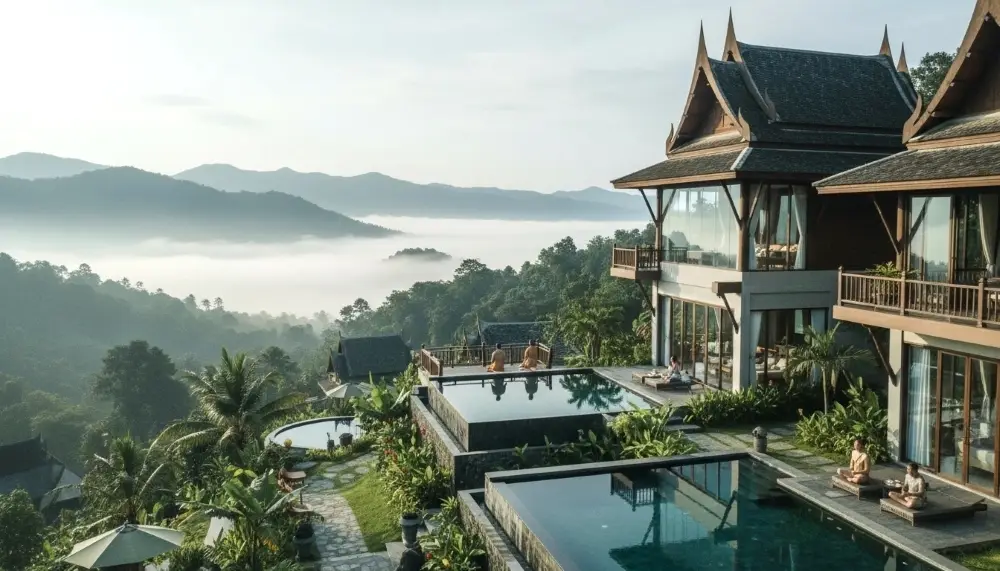
Thailand Digital Nomad Guide
This site contains affiliate links. We may earn a commission at no extra cost to you.
If you have ever imagined answering emails from a beachfront cafe, finishing a project brief from a jungle-view balcony, or spending your lunch break wandering a vibrant street market, Thailand makes that lifestyle surprisingly achievable. Not just achievable in a fantasy-brochure sense, but practically, affordably, and legally achievable in 2026 in a way that simply was not possible a few years ago.
The country has long been a favourite destination for remote workers thanks to its affordability, welcoming culture, extraordinary food, reliable infrastructure, and landscapes that make the backdrop to your working day genuinely extraordinary. From the electric energy of Bangkok to the cool mountain calm of Chiang Mai and the tropical rhythm of the southern islands, Thailand offers something for every kind of remote worker, every budget, and every personality. This guide covers everything you need to know to make it work.
The Quick Summary
Primary Visa: The Destination Thailand Visa (DTV) is the current gold standard for remote workers, offering a 5-year multi-entry stay with 180 days per entry, extendable once for a further 180 days.
Tax Residency: Staying 180 days or more in a calendar year triggers Thai tax residency, potentially subjecting remitted foreign income to local personal income tax. Double Tax Agreements with over 60 countries offer meaningful protection for most nationals.
Work Rights: The DTV allows remote work for foreign clients and employers but strictly prohibits local Thai employment without a separate Non-B visa and work permit. This distinction matters and is enforced.
Financial Proof: Applicants must demonstrate a minimum of 500,000 THB in liquid savings, maintained for 3 to 6 months prior to application depending on which consulate you apply through.

From budget rooms to high-end resorts
in Thailand, Booking.com has the lot.
Genius members unlock an extra 10%
off thousands of properties worldwide.
Is Thailand Good for Digital Nomads?
Yes, Thailand is one of the most digital-nomad-friendly countries in the world, and the gap between it and most of its regional competitors has widened considerably since the DTV arrived.
Here is why remote workers keep choosing it, and keep extending their stays well beyond their original plans:
- A cost of living that makes a modest remote income feel like genuine prosperity
- Exceptional food available at every price point, from 60 THB street noodles to serious fine dining
- A strong and mature cafe and coworking culture built around the needs of remote workers
- Fast, reliable internet in cities, towns, and most tourist destinations
- A landscape that provides extraordinary variety within easy reach: mountains, beaches, temples, jungles, and cities within a few hours of each other
- Locals who are genuinely warm and patient with foreigners who make the effort to be respectful
Whether you are planning a three-month stint or seriously considering a multi-year base, Thailand has the infrastructure, the legal framework, and frankly the quality of life to make it work. The DTV has removed the single biggest friction point that previously defined nomad life here: the visa run anxiety. That change alone has transformed the experience.

Lock in top-rated Thailand tours with
GetYourGuide’s free cancellation
up to 24 hours before. Reserve now
and pay later if dates aren’t set.
The Destination Thailand Visa (DTV) Breakdown
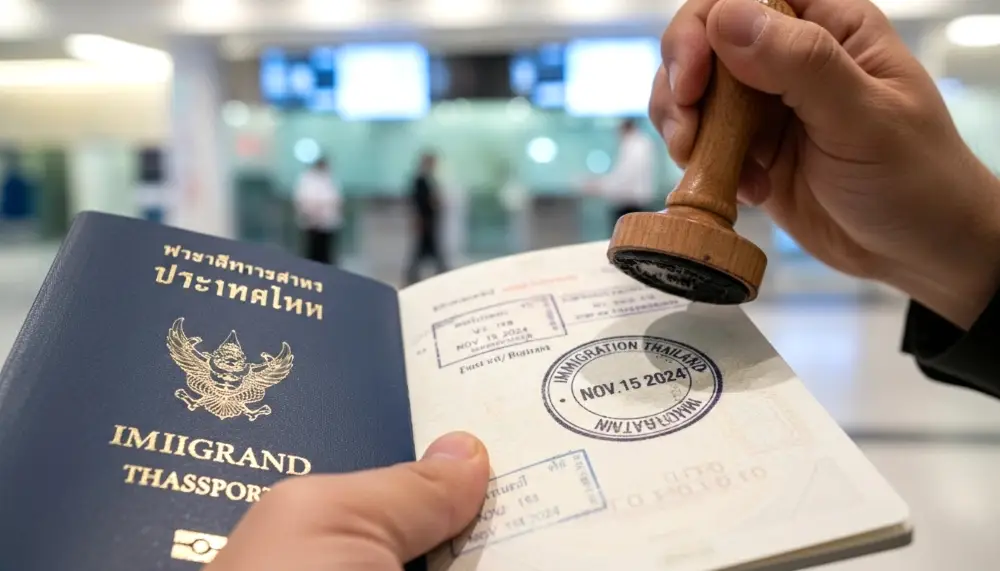
The Destination Thailand Visa (DTV) is a 5-year multiple-entry visa specifically designed for remote workers, freelancers, and creative professionals working for non-Thai entities. It grants a 180-day stay per entry, extendable once for an additional 180 days for a fee of 1,900 THB, making it theoretically possible to stay in Thailand continuously for a full year on a single entry before needing to leave and re-enter.
The DTV has changed the nomad experience in Thailand by eliminating the border run anxiety that previously defined it. Unlike the elite-tier Long-Term Resident (LTR) visa, which targets high-net-worth individuals earning over 2,800,000 THB annually, the DTV is accessible to the broader creative and technical class: designers, developers, writers, marketers, consultants, and anyone else earning their income from clients or employers outside Thailand.
Application is handled via the official Thai E-Visa portal and must be submitted while the applicant is physically located outside Thailand. Specific neighbourhood clusters, particularly Nimmanhaemin in Chiang Mai and Phra Khanong in Bangkok, are now noticeably populated with DTV holders who enjoy the stability of a semi-permanent base without the bureaucratic grind of older visa routes.
One important boundary to understand: the DTV is a lifestyle permit, not an employment route. It does not provide a path to permanent residency, and it does not allow the holder to sign contracts with Thai companies, take local employment, or sell products within the Kingdom. Work must genuinely be for foreign entities.

Public wifi in Thailand cafes is
convenient but rarely secure.
NordVPN encrypts everything so
passwords and card details stay safe.
Comparison of Long-Stay Options
| Feature | Destination Thailand Visa (DTV) | Long-Term Resident (LTR) | Tourist Visa (TR) |
|---|---|---|---|
| Validity | 5 Years (Multi-entry) | 10 Years (Renewable) | 60 Days (Single/Multi) |
| Entry Fee | 10,000 THB | 50,000 THB | 1,200 – 5,000 THB |
| Savings Req. | 500,000 THB | 28,000,000 THB+ (Assets) | None |
| Max Stay/Entry | 180 + 180 Days | 1 Year | 60 + 30 Days |
| Work Permit | Remote only (No local) | Digital Work Permit included | Strictly prohibited |

Skip the planning headache in Thailand.
Klook offers day tours, tickets, and
experiences from around $25, with
instant confirmation to your phone.
Navigating Thai Tax Residency in 2026

Thailand classifies any individual spending 180 days or more in the country during a calendar year as a tax resident. Under 2026 regulations, tax residents are liable for Thai Personal Income Tax (PIT) on all foreign-sourced income that is remitted into Thailand, regardless of when that income was originally earned. This is the single most misunderstood aspect of long-term nomad life here, and getting it wrong is expensive.
The Revenue Department has modernised its approach to global income and closed the loophole that many nomads previously relied on, where income earned in one year was simply transferred into Thailand in the following year to avoid assessment. That approach no longer works. If you transfer 100,000 THB from a UK or US bank account into a Thai account to pay your rent in 2026, that 100,000 THB is treated as assessable income in the year of transfer.
The progressive tax structure starts at 0% on the first 150,000 THB of assessable income and scales to a maximum of 35% on amounts above 5,000,000 THB. Most nomads earning moderate incomes find that the cost-of-living savings from being in Thailand significantly outweigh the tax liability, particularly when Double Tax Agreements (DTAs) between Thailand and over 60 other nations are properly utilised to prevent being taxed twice on the same income.
The practical recommendation: if you are planning to stay beyond 180 days in a calendar year, speak to a Thai-based tax advisor before that threshold arrives rather than after. The planning options available before residency triggers are considerably more useful than remediation options afterwards. This is not an area to improvise.

Pick a Thailand eSIM plan that matches
your trip length on Airalo’s global
marketplace. Install before departure
and you’re online the moment you land.
Pro Tips for Stress-Free Arrival and Daily Life
Get your data sorted before you land. This is genuinely the most practical piece of advice in this entire guide. Grab and Bolt, the two ride and food delivery apps you will use constantly, require SMS verification on a Thai mobile network before they function. If you land with no data, you cannot verify the apps, which means you cannot get a taxi from the airport without joining a queue or negotiating on the pavement. Activate an Airalo, Yesim, or Saily eSIM before you board your flight and have it running before you clear immigration. The network verification codes come through instantly and you step out of arrivals already set up.
Transport and food: Grab and Bolt are essential daily tools. Bolt tends to be cheaper for car journeys, while Grab dominates food delivery. Both are reliable and metered, which removes the negotiation entirely.
Currency and banking: PromptPay is the local QR payment standard used at markets, restaurants, and shops. Most DTV holders find opening a full Thai bank account takes several weeks of paperwork. In the meantime, Wise and Revolut are widely used for ATM withdrawals. Budget for a 220 THB foreign card fee on every ATM transaction.
Connectivity for long stays: Yesim and Airalo eSIMs are excellent for arrival and short-term coverage. For stays beyond a month, a physical SIM from AIS or TrueMove purchased at any major shopping centre offers significantly better 5G speeds for around 600 THB per month. The improvement in video call stability is meaningful.
Security and access: NordVPN is a genuine everyday necessity rather than an optional extra. Thai-based IP addresses are geo-fenced out of UK banking apps, various streaming services, and certain work platforms. With NordVPN connected you route through your home country and everything works normally. It also protects you on the unencrypted public Wi-Fi networks in cafes, which is where most nomads spend a significant portion of their working day.
Luggage between bases: When moving between cities or heading on a weekend island trip without wanting to drag everything, Radical Storage lets you book secure luggage storage at verified local businesses near major stations and landmarks. It is straightforward, well-priced, and removes a logistical headache that is otherwise surprisingly easy to underestimate.


Stay online in Thailand without the
daily data limits of tourist SIMs.
Yesim’s eSIM offers unlimited 5G
from around $10 for the whole trip.
Best Cities for Digital Nomads
Bangkok
Thailand’s capital is energetic, chaotic, endlessly fascinating, and genuinely one of the best cities in the world for remote work infrastructure. For a first base, Bangkok delivers everything simultaneously: world-class restaurants at every price point, an extraordinary density of coworking spaces, massive shopping centres with every amenity, and a legendary after-hours scene for when the work is done.
Internet speeds across the city are among the best in Southeast Asia. The BTS Skytrain and MRT subway make navigating the urban sprawl fast and air-conditioned, which matters in 35-degree heat. Neighbourhoods like Ari, Phra Khanong, Thonglor, and Silom each have their own character and their own coworking communities. Bangkok rewards those who pick a neighbourhood and settle into it rather than trying to cover the whole city at once.
For accommodation, Agoda and Booking.com both carry strong long-stay listings in Bangkok, and the serviced apartment market is mature enough that you can find genuinely good furnished options at every budget level. Book a week’s accommodation before arriving and use that time to scout your preferred neighbourhood properly before committing.
Chiang Mai
Chiang Mai is widely considered the digital nomad capital of Southeast Asia, and after years of that title it still earns it. Located in the mountainous highlands of northern Thailand, the city offers a slower pace of life, ancient temples on every other corner, cool evening air that feels like a gift after Bangkok’s heat, and a remote worker community so well-established that entire neighbourhoods have oriented themselves around it.
Easy access to nature: Proximity to lush jungle trails and mountain scenery means weekends are genuinely restorative rather than just a change of coworking venue.
Dozens of coworking spaces: The Nimmanhaemin area alone has more purpose-built coworking offices than many European cities. Quiet rooms, standing desks, fast fibre, and meeting rooms are standard across the better ones.
Affordable long-stay rentals: Chiang Mai remains one of the most budget-friendly quality options in the country. A comfortable one-bedroom apartment in a good location costs a fraction of the equivalent in Bangkok or any beach area.
Exceptional cafe culture: The cafe scene is the social and professional heart of the nomad community here. Many people find their first genuine friendships in Thailand formed over a flat white at a Nimman cafe rather than at any organised networking event.

Southern Islands
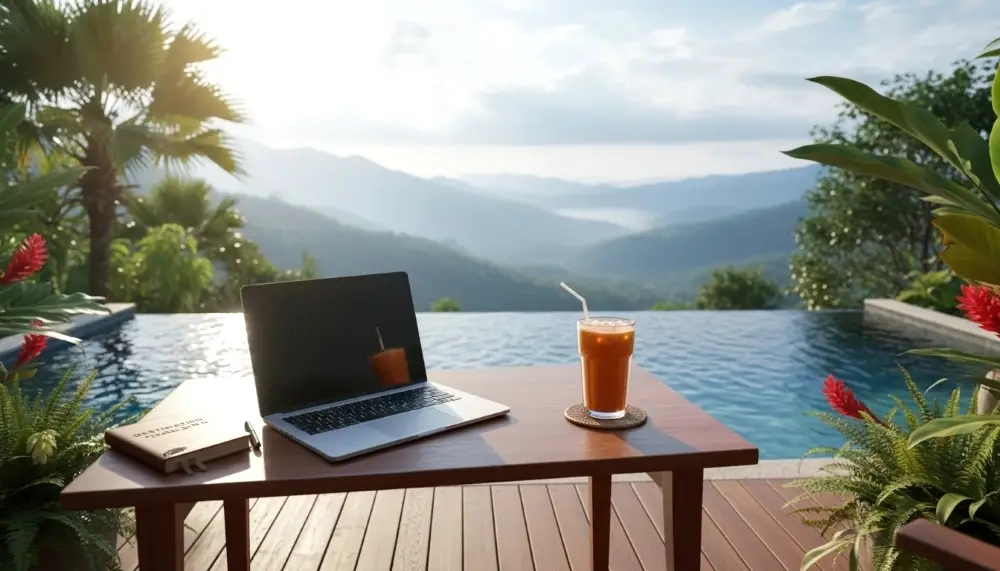
If your dream office includes panoramic ocean views and the sound of the Andaman, Thailand’s southern islands deliver an experience that genuinely lives up to the fantasy. Phuket, Koh Samui, and Koh Phangan each have developed areas with strong Wi-Fi, coworking facilities, and the infrastructure needed to support a genuine remote working lifestyle rather than just a working holiday.
Island rhythm is slower and the social scene is more fragmented than in Chiang Mai or Bangkok. For some people that is exactly what they need: focused mornings with a sea view, afternoons at the beach, and evenings that do not demand anything of them. For others, the relative isolation from a larger nomad community becomes noticeable after a few weeks. The honest advice is to trial an island base for a month before committing to a long lease.
Beautiful tropical backdrop: The scenery provides a working environment that makes every day feel quietly extraordinary.
Wellness and community: Access to yoga studios, retreat facilities, and health-focused communities is unusually strong across all three islands.
Diving and outdoor activities: When you close the laptop, the options for snorkelling, scuba, boat trips, and coastline exploration are world-class. Book day trips and diving excursions through Get Your Guide or Klook to compare options and secure spots during peak season.
Internet and Coworking in Thailand
Internet reliability is the first practical question every new nomad asks about Thailand, and the answer in 2026 is genuinely reassuring. Major cities and tourist destinations perform extremely well, with Thailand consistently ranking among the global top 10 for internet speed. Most coworking spaces and quality serviced apartments offer gigabit fibre as standard. The days of painfully slow connections in tourist areas are largely behind us.
The typical connectivity options available to a nomad in Thailand:
- Purpose-built coworking offices with fast fibre, backup connections, and meeting rooms
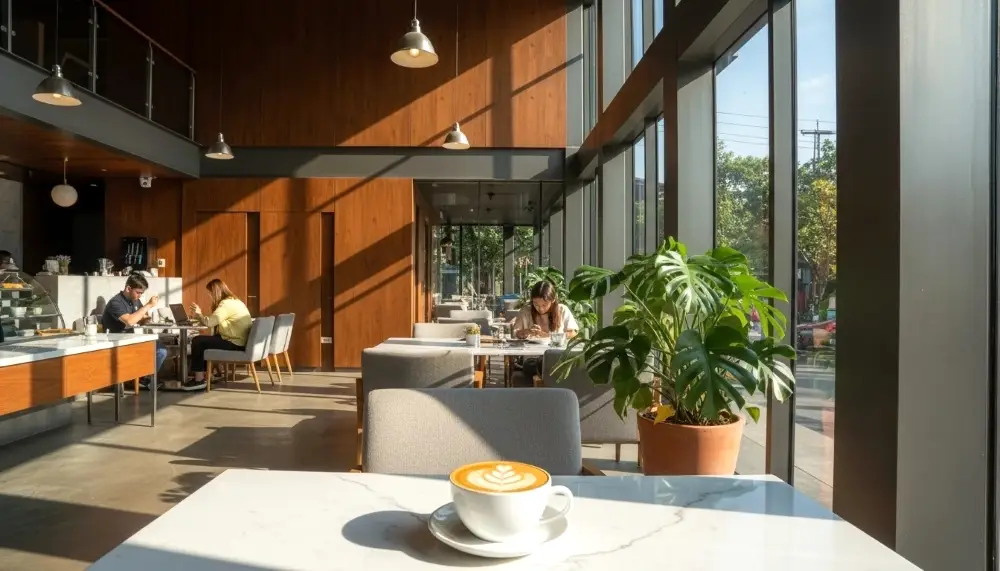
- Cafe working spaces with reliable Wi-Fi and a culture that genuinely welcomes laptop workers
- Residential apartments and villas with dedicated fibre connections, increasingly standard in newer builds
- 5G mobile data plans as a solid backup for any location that needs it
Local SIM cards are inexpensive and available at every airport and convenience store. For arrival day, use your Airalo or Yesim eSIM. For stays beyond a month, upgrade to a physical AIS or TrueMove SIM for better 5G coverage and data speeds at around 600 THB monthly.
One important caveat: always use NordVPN when working on cafe or coworking shared Wi-Fi networks. Public connections in Thailand are unencrypted, and a VPN is the only practical protection for client communications, banking access, and any work involving sensitive data. It also restores access to geo-fenced services from your home country.
Cost of Living for Digital Nomads

Thailand’s affordability is one of the main reasons nomads who arrive planning to stay two months end up staying two years. The numbers genuinely change the mental arithmetic around what income level constitutes a comfortable life, and that shift in perspective is difficult to give up once you have experienced it.
Broadly speaking, three budget tiers cover the range of nomad lifestyles:
Budget nomad (30,000 to 45,000 THB/month): A studio apartment in Chiang Mai or an inland area of Phuket, eating mostly local food, using a scooter or public transport, and working from cafes rather than paying for a coworking membership. This level is genuinely comfortable, not spartan.
Mid-range nomad (50,000 to 90,000 THB/month): A quality one-bedroom apartment in a well-located area, a mix of local and international dining, a monthly coworking membership, a scooter for personal transport, and regular weekend trips to nearby destinations. This is the sweet spot that most nomads settle into.
Comfortable nomad (90,000 THB+ per month): A private pool villa or high-spec serviced apartment, frequent restaurant dining, car hire or personal vehicle, international school costs if applicable, and regular travel. This level applies to senior remote professionals and those with families.
- Street food meal: 60 to 120 THB
- Local restaurant meal: 100 to 250 THB
- Coffee at a quality cafe: 80 to 150 THB
- Monthly scooter hire: 3,500 to 5,500 THB
- Monthly coworking membership: 3,000 to 8,000 THB
- Monthly AIS or TrueMove SIM data plan: around 600 THB
Street food is not only cheap, it is genuinely some of the best food you will ever eat. Nomads who resist the temptation to eat in tourist restaurants every night and instead follow the locals to the market stalls and small family spots save a significant amount monthly and eat considerably better in the process.
Health Insurance for Long-Term Nomads
Health insurance is not optional for DTV applicants: most consulates require proof of coverage with a minimum of 50,000 USD (approximately 1,750,000 THB) to approve the application. This is not arbitrary bureaucracy. Phuket and Bangkok’s international hospitals are excellent but not free, and an emergency hospitalisation without coverage can run into the hundreds of thousands of baht.
The most common insurance choices in the nomad community in Thailand are:
SafetyWing Nomad Insurance: The default recommendation for the majority of nomads on mid-range budgets. Covers hospitalisation, emergency treatment, and outpatient care across Thailand at a monthly cost that sits dramatically below comparable Western policies. It is renewable monthly, which suits the flexibility of nomad life. For DTV applications, confirm with your specific consulate whether SafetyWing meets their coverage threshold requirements.
International comprehensive policies: Providers like Cigna Global, Allianz Care, and AXA offer full international health coverage including dental and specialist access. These suit those staying long-term or with pre-existing conditions requiring ongoing management. Higher monthly premiums but broader coverage and often smoother claim processes.
For anyone moving between Thailand and other countries regularly, confirming that your policy covers treatment in both your home country and Thailand is essential. Some nomad-specific policies have geographical limitations that create gaps in coverage without you realising it.
Understanding Thai Culture
Thailand is famously known as the Land of Smiles, and anyone who spends meaningful time here quickly understands why. The warmth and patience of Thai people towards respectful foreigners is genuine and consistent. It is not performance for tourists. It persists in daily neighbourhood life in ways that make long-term living here genuinely pleasant in a way that is difficult to replicate elsewhere.
Respect and politeness are not just nice to have here: they are functional social currency. Speaking calmly, smiling, and being patient in difficult situations will get you significantly further than assertiveness will. Thai culture prioritises face and harmony, and understanding that shapes everything from how you negotiate a rental disagreement to how you handle a misunderstanding at a restaurant.
A few cultural norms worth internalising from day one:
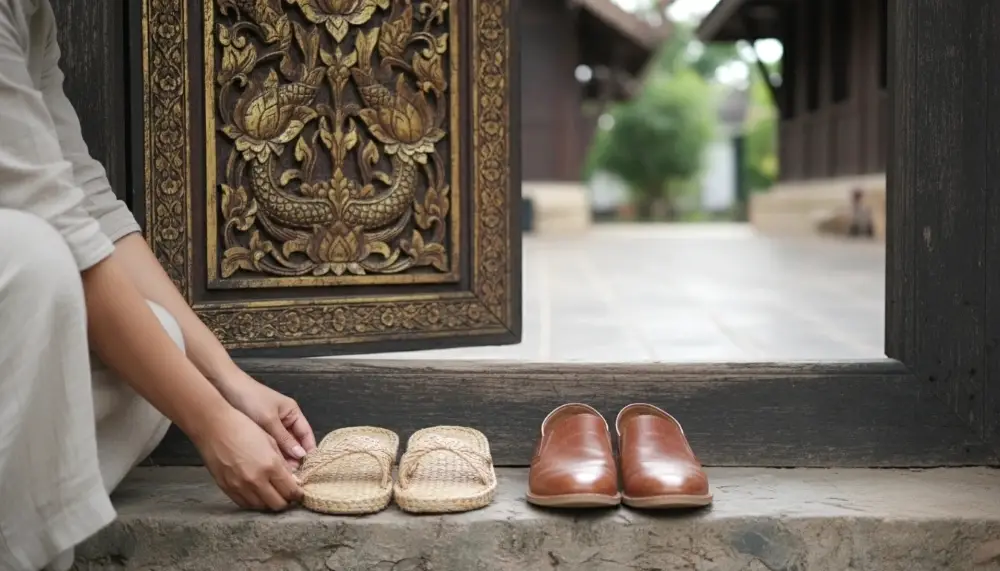
- Dress modestly when entering temples: shoulders and knees covered, shoes removed
- Remove shoes before entering homes, many small shops, and any space where you notice others doing so
- Never touch anyone on the head, including children: the head is considered spiritually significant
- Show genuine respect to the Thai monarchy and national symbols: commentary that would be unremarkable at home can cause serious offence, and lese-majeste laws carry real consequences
Learning even a small amount of Thai, just greetings, numbers, and food vocabulary, is received with disproportionate warmth. It signals effort and respect, and it makes navigating markets, local restaurants, and neighbourhood interactions considerably easier and more enjoyable.
Is Thailand Safe for Nomads?
For people arriving in Southeast Asia for the first time, Thailand is one of the most accessible and least intimidating entry points in the region. Tourism has been the backbone of the economy for decades, the infrastructure around international visitors is mature and well-managed, and English is spoken across all tourist and major residential areas.
Day-to-day life across Bangkok, Chiang Mai, Phuket, and the main island destinations is safe and comfortable. The practical areas of risk that deserve honest attention:
- Road safety: scooter accidents are the most common cause of injury among foreign visitors. Wear a helmet always, take time to understand local traffic before riding, and consider a car if you are not an experienced rider
- Digital security: use NordVPN on all public Wi-Fi, use strong unique passwords, and be cautious about the SIM-swap scam that has occasionally targeted foreigners using local numbers linked to banking apps
- Flight disruptions: long-haul connections through Bangkok and regional hops can be affected by weather or delays. AirHelp is worth bookmarking for EU-regulated flight compensation claims, which can be worth several hundred pounds for a delayed or cancelled leg
Beyond those specific areas, most visitors quickly conclude that Thailand is far less intimidating than they imagined before arriving. The combination of well-developed tourism infrastructure, genuinely helpful locals, and a large existing expat and nomad community makes settling in straightforward.

Balancing Work and Adventure

One of the genuine pleasures of working remotely in Thailand is how natural the boundary between work and exploration feels. The country does not demand that you be on holiday mode constantly. You can have focused, productive working weeks and then step out into something extraordinary on Saturday morning.
Weekend options depending on your base:
- Island hopping across the Andaman or Gulf of Thailand, with dozens of destinations reachable by speedboat
- Temple visits and mountain trails around Chiang Mai and the northern highlands
- National park day trips: Khao Yai from Bangkok, Doi Inthanon from Chiang Mai
- Thai cooking classes: one of the most enjoyable things you can do with a Saturday morning anywhere in the country. Book through Get Your Guide or Klook for vetted options with good reviews
- Night markets and street food exploration: a genuinely different experience in every city and town
For intercity travel between bases or longer weekend trips, 12GO is the platform to use for booking buses, trains, and ferries. Book ahead during Songkran (April), the Christmas and New Year window, and Chinese New Year: routes sell out and last-minute availability disappears entirely during those periods.
Thailand rewards curiosity consistently. The more you explore between working weeks, the more you understand why so many people who arrived planning a short stint are still here years later.
Why So Many Fall in Love with Thailand
It is genuinely difficult to explain what makes Thailand so compelling to people who have not experienced it yet. The components are obvious enough: incredible food, golden temples, warm tropical air, a welcoming culture, and a cost of living that makes a good life feel accessible. But the combination of those things creates something that exceeds the sum of its parts.
For digital nomads specifically, Thailand offers something rare and genuinely valuable: a place where work, travel, culture, and daily life fit together without constant friction. You are not constantly compromising the quality of your work environment to get a beautiful location. You are not sacrificing cultural richness for modern convenience. You are not paying Western prices to live somewhere that does not feel particularly special. All of those things coexist here in a way that very few places manage.
Whether you stay for three months or three years, Thailand has a way of leaving its mark. Most remote workers who spend meaningful time here return. Many do not leave. And for those who eventually do move on, it sets a standard for what a working life abroad can actually feel like that is very difficult for anywhere else to match.
Frequently Asked Questions
Where is the best place for digital nomads in Thailand in 2026?
Chiang Mai remains the digital nomad capital due to its low cost of living, world-class cafe scene, and the sheer density of coworking infrastructure in the Nimmanhaemin area. However, Bangkok‘s Phra Khanong and Ari neighbourhoods have surged in popularity with DTV holders in 2026, and Koh Phangan has developed a dedicated remote worker community centred around its wellness and co-living scene.
How fast is the internet in Thailand for remote work?
Thailand consistently ranks among the global top 10 for internet speed. Most quality coworking spaces and higher-end serviced apartments offer 1Gbps fibre as standard. For mobile data, AIS and TrueMove offer 5G unlimited plans that provide reliable coverage even on most developed islands, making it realistically possible to work from a wide range of locations across the country. A physical SIM from either provider costs around 600 THB per month for a comprehensive data plan.
Can I legally work from a cafe in Thailand on a Tourist Visa?
While many thousands of nomads do exactly this, it sits in a legal grey area. A Tourist Visa is technically issued for leisure purposes, not remote work. The DTV was created specifically to legitimise the laptop-in-a-cafe lifestyle for those working for foreign entities, removing that ambiguity entirely. If you are staying beyond a few weeks and working regularly, the DTV is the correct and cleaner route.
How do I get a Tax Identification Number (TIN) in Thailand?
A TIN is obtained at your local Revenue Department office by presenting your passport, proof of Thai address (typically a rental contract), and your current visa. This is essential for anyone staying beyond 180 days who wants to be fully compliant with Thai tax law. The process is generally straightforward but worth completing promptly once the 180-day threshold is approaching.
Is health insurance mandatory for the DTV?
Yes. Most consulates require proof of health insurance with a minimum coverage of 50,000 USD (approximately 1,750,000 THB) as part of the DTV application. This requirement reflects the genuine cost of private medical care in Thailand. SafetyWing nomad insurance is a widely used and affordable option, though applicants should confirm with their specific consulate that the coverage level meets their threshold before applying.
What is the 500,000 THB seasoning rule?
Many embassies and consulates require the 500,000 THB savings balance to have been maintained in the applicant’s account for a minimum of 3 months prior to application submission. Transferring the funds the week before applying is a very common reason for rejection. Plan ahead, ensure the balance is stable for the required period, and obtain an official bank statement confirming the balance history.
What happens if my flight to Thailand is delayed or cancelled?
For flights operating under EU or UK regulations, AirHelp is the most practical tool for pursuing compensation claims. Delayed or cancelled flights on qualifying routes can result in compensation of several hundred pounds per passenger, and the claim process requires minimal effort from the traveller once submitted. It is worth bookmarking before any long-haul journey.
Do I need a VPN in Thailand and which one should I use?
Yes, for practical rather than purely privacy reasons. Thai-based IP addresses are geo-fenced out of many home-country banking apps, streaming services, and certain work platforms. NordVPN is the most widely used option in the nomad community and consistently reliable for restoring access to geo-restricted services. It also encrypts your connection on public Wi-Fi networks, which is important when working from cafes and coworking spaces where networks are shared and unencrypted.
Can I bring my family on a DTV and what are the arrangements for children’s schooling?
Spouses and dependants can typically accompany a primary DTV holder on accompanying visas, though the specific arrangements vary by consulate. Children of expat families in Thailand are most commonly enrolled in international schools following British National Curriculum or IB frameworks. Thailand has a strong international school sector, particularly in Bangkok, Chiang Mai, and Phuket, with tuition costs ranging from approximately 300,000 to 700,000 THB per child annually. This single cost is the biggest variable in any family budget calculation.
What is the best way to book intercity travel and island ferries in Thailand?
12GO is the recommended platform for booking buses, trains, and ferry connections across Thailand. It allows advance booking on most major routes, which matters significantly during peak periods like Songkran in April, the Christmas and New Year window, and Chinese New Year, when popular routes between Bangkok, Chiang Mai, and the southern islands sell out well ahead of departure. For day trips and excursions, Get Your Guide and Klook both carry vetted options with genuine reviews for activities across the country.