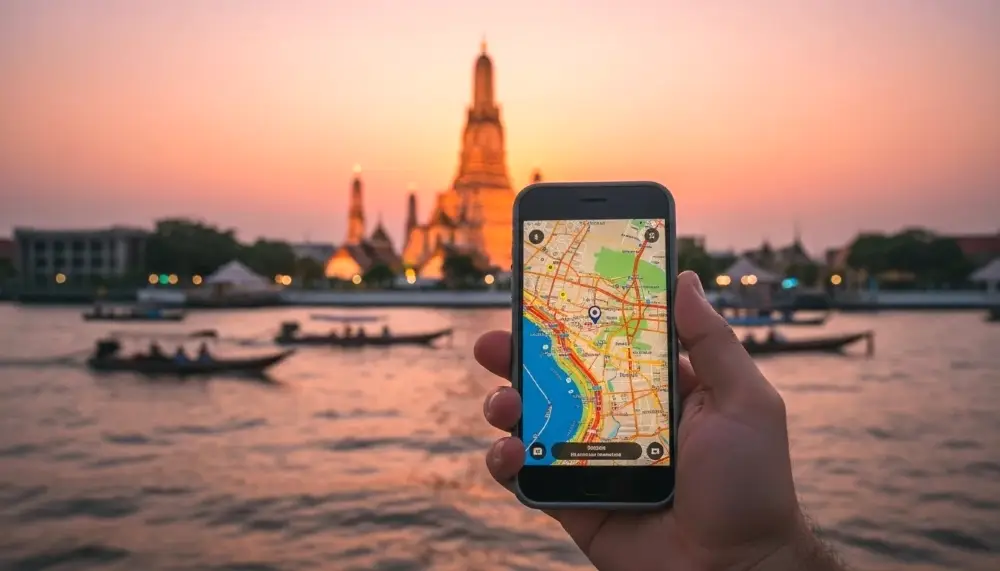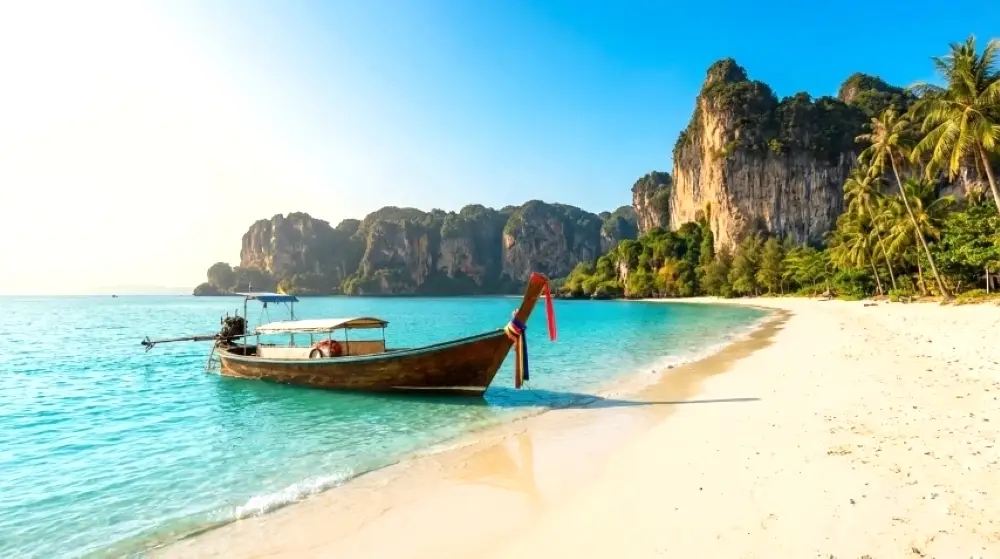
10 Days in the Islands: Andaman vs Gulf Routes
This site contains affiliate links. We may earn a commission at no extra cost to you.
Whether you’re drawn to the dramatic cliffs of the Andaman or the calm, sun-warmed waters of the Gulf, this guide will help you choose your route, plan your time, and make the most of every day on the islands.
Ten days is just enough time to scratch the surface of southern Thailand, and just long enough to fall completely in love with it. All prices in this guide use a rate of 35 THB = $1 USD.
The Quick Summary:
Best Time to Visit: Andaman (November–April); Gulf (January–August).
Budget Expectation: Mid-range travelers should budget 2,150–3,600 THB (~$61–$103) daily for private rooms and transport.
Regional Variance: Andaman offers dramatic limestone karsts and deep-sea diving; the Gulf features gentler seas and a world-renowned wellness and party scene.
Transportation: Internal flights range from 1,000–4,500 THB (~$29–$129); ferries between islands cost 400–1,200 THB (~$11–$34) depending on speed.

Stay closer to the action in Thailand.
Agoda lists guesthouses to resorts
with verified reviews and instant
booking at competitive rates.
Choosing Your Coast:
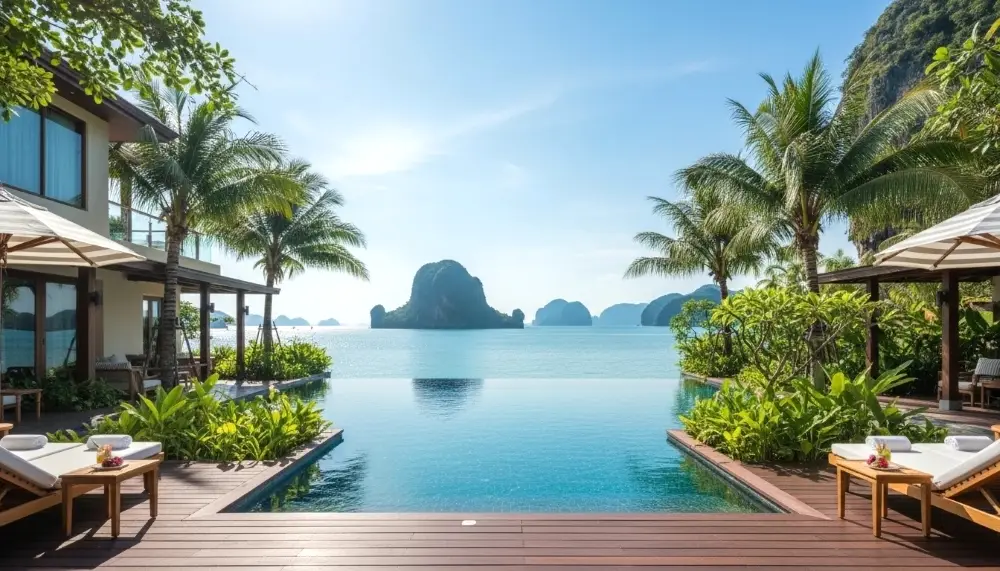
The first thing to know is that the two coasts run on opposite schedules. The Andaman Sea on the west is at its best from November to April, calm, clear, and impossibly photogenic. Come May, the monsoon rolls in and the west coast gets rough. That’s exactly when the Gulf of Thailand on the east comes into its own, staying sunny and swimmable right through to September. So in many ways, the choice isn’t just about where, it’s about when.
But the two coasts do have very different personalities, and that’s worth thinking about too.
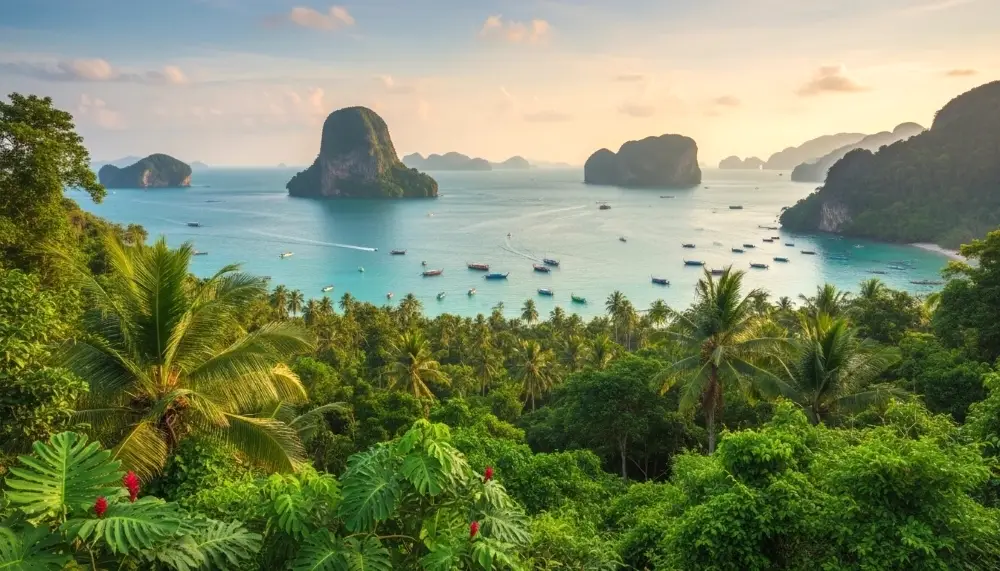
The Andaman is dramatic. Think Phuket, Krabi, Koh Lipe, places where vast limestone cliffs shoot straight up out of the water and the horizon always seems to have something extraordinary on it. It feels wild and cinematic, the kind of scenery that doesn’t look real until you’re actually sitting in front of it. If you’re into diving deep reefs, chasing sunsets from a longtail boat, or just being somewhere that feels genuinely epic, the Andaman delivers.
The Gulf is a different mood entirely. Koh Samui, Koh Phangan, Koh Tao, the water here is often almost glassy, the beaches are soft and sheltered, and the whole atmosphere is a little more easy and unhurried. Less jaw-dropping perhaps, but in the best possible way. It’s the kind of place you arrive at for a few days and find yourself still there a week later.
So if you’re travelling between May and September, the Gulf is simply the smarter call, better weather, calmer seas, and still genuinely beautiful. Either side of that window, the Andaman is hard to beat.
| Feature | Andaman Route (West) | Gulf Route (East) |
|---|---|---|
| Primary Hubs | Phuket, Krabi, Koh Phi Phi | Koh Samui, Koh Phangan, Koh Tao |
| Best Season | November–April | January–September |
| Daily Boat Cost | 1,500–3,000 THB (~$43–$86) private longtail | 400–1,200 THB (~$11–$34) speedboat/ferry |
| Landscape | Limestone Karsts and Sea Caves | Granite Boulders and Coconut Groves |
| Vibe | High Adventure and Cinematic Views | Social Wellness and Underwater Focus |

From classic Thailand highlights to
hidden-gem private tours. Cancel
free up to a day before your
start time if plans change.
The Andaman Expedition:
The Andaman route starts in Phuket or Krabi, moving toward the Phi Phi Islands and ending in the Trang Islands or Koh Lipe. It is the definitive choice for travelers seeking iconic geography, world-class rock climbing at Railay Beach, and the bioluminescent waters of Phang Nga Bay.
The journey begins in Phuket, specifically the historic Old Town or the southern quiet of Rawai. Skip the chaos of Patong and secure a private longtail boat from Chalong Pier. The destination is not the crowded Maya Bay, but the secret lagoons of Koh Hong or the emerald silence of Phang Nga Bay.
By day four, the transition to Railay Beach in Krabi is essential. Accessible only by boat, Railay feels detached from the mainland. The limestone walls are a magnet for climbers, but for the leisure traveler, the hike to the Phra Nang Lagoon offers a sensory reward of thick jungle scents and cool, hidden waters.
The final leg descends toward Koh Lipe. Known as the Maldives of Thailand, this tiny island near the Malaysian border offers visibility exceeding 20 metres. Walking Street provides the local pulse, but the true magic lies in a sunset at North Beach, watching the sky turn a bruised purple over the Adang-Rawi Archipelago.

Andaman Day-by-Day: 10-Day Sample Itinerary
Days 1–2: Phuket Old Town and Phang Nga Bay. Fly into Phuket International (HKT). Spend your first afternoon in the Old Town’s Sino-Portuguese shophouses and eat dinner at a local crab curry restaurant on Thalang Road (200–400 THB / ~$5.70–$11.40). On Day 2, take a full-day longtail tour of Phang Nga Bay, including James Bond Island and the sea caves (1,500–2,500 THB / ~$43–$71 for a shared tour booked through Klook).
Days 3–4: Krabi and Railay Beach. Take the ferry from Ao Nang or a direct bus-ferry from Phuket to Krabi (350–600 THB / ~$10–$17). Check into Ao Nang and take a longtail to Railay (100 THB / ~$2.90). Spend Day 4 rock climbing the karst walls (half-day course: 1,500–2,000 THB / ~$43–$57) or snorkelling the nearby Four Islands (1,000–1,500 THB / ~$29–$43 per person).
Days 5–6: Koh Phi Phi. Ferry from Krabi to Koh Phi Phi (350–500 THB / ~$10–$14). Arrive early and check into a hillside guesthouse away from the beach strip. Spend Day 6 snorkelling at Bamboo Island and Shark Point in the morning (tour: 800–1,200 THB / ~$23–$34), and hike the Phi Phi viewpoint in the late afternoon when the light is golden and the worst of the day-trippers have left.
Days 7–10: Koh Lipe. Ferry from Phi Phi to Koh Lipe via Pak Bara (1,200–1,800 THB / ~$34–$51, book through 12GO). This is a long travel day, plan for it. Spend three nights here. Hire a longtail for a private day trip to the Tarutao National Park reefs on Day 9 (1,500–2,500 THB / ~$43–$71 split between passengers). Eat at Walking Street in the evenings. A beachside grilled fish dinner costs 300–500 THB (~$8.60–$14). Fly home from Hat Yai (HDY) via Bangkok, book a speedboat-transfer-flight combination through 12GO in advance.

Pick a Thailand eSIM plan that matches
your trip length on Airalo’s global
marketplace. Install before departure
and you’re online the moment you land.
The Gulf Circuit:
The Gulf route connects Koh Samui, Koh Phangan, and Koh Tao via efficient ferry networks. This path excels in infrastructure, offering a blend of high-end luxury in Samui, holistic healing and vibrant nightlife in Phangan, and the highest density of diving schools globally in Koh Tao.
Koh Samui serves as the sophisticated entry point. Utilize the private airport, one of the most beautiful in Asia, to land directly in paradise. While Samui offers luxury, the real soul of the Gulf is found in Koh Phangan. Beyond the lunar-timed parties of Haad Rin, the northern coast around Sri Thanu is a sanctuary for yoga, vegan gastronomy, and slow travel enthusiasts.
The route culminates in Koh Tao. This is the underwater capital. The island is small enough to traverse by motorbike in twenty minutes, yet deep enough to hold a lifetime of secrets. Shark Bay offers near-guaranteed sightings of blacktip reef sharks and sea turtles in knee-deep water. Skip the overcrowded Koh Nang Yuan viewpoint at midday; instead, hike to John-Suwan Viewpoint at sunrise for a panoramic look at the dual bays of Chalok and Thian Og without the selfie sticks.

Skip the planning headache in Thailand.
Klook offers day tours, tickets, and
experiences from around $25, with
instant confirmation to your phone.
Gulf Circuit Day-by-Day: 10-Day Sample Itinerary
Days 1–3: Koh Samui. Fly into Koh Samui Airport (USM) directly from Bangkok (2,500–4,500 THB / ~$71–$129 on Bangkok Airways). Check into a beach resort on the quieter north coast, Bophut or Mae Nam, rather than the busy Chaweng strip. Day 2: rent a scooter with a valid IDP and circle the island (250–350 THB / ~$7–$10 per day rental). Visit the Big Buddha, the secret gardens, and Na Muang Waterfall (free entry). Day 3: book a full-day snorkelling tour to Koh Tan and Koh Mud Sum for clear water and hard coral starting at 900 THB (~$26 per person, book through Get Your Guide).
Days 4–6: Koh Phangan. Take the Lomprayah or Raja Ferry from Samui to Phangan (250–350 THB / ~$7–$10, 30 minutes). Stay on the north or west coast, Sri Thanu or Haad Yao, not Haad Rin unless a Full Moon Party is specifically why you came. Day 5: take a half-day yoga class at one of the beachside shalas (600–1,200 THB / ~$17–$34) in the morning and kayak the mangroves of Thong Nai Pan in the afternoon. Day 6: snorkel around the boulders of Mae Haad beach where the sandspit connects Phangan to the tiny islet of Koh Ma (free, walk in).
Days 7–10: Koh Tao. Ferry from Phangan to Koh Tao (350–600 THB / ~$10–$17, 1.5 hours on Lomprayah). This is your diving window. A PADI Open Water course takes three to four days and costs 9,000–12,000 THB (~$257–$343). If you are already certified, a two-dive day trip to Chumphon Pinnacle or Southwest Pinnacle costs 1,500–2,000 THB (~$43–$57). Non-divers are well catered for: snorkelling tours to Shark Bay and Japanese Gardens run from 500 THB (~$14). On Day 10, catch the morning Lomprayah to Chumphon Pier and the connecting bus-transfer to Bangkok (combined ticket around 1,200–1,600 THB / ~$34–$46, book through 12GO) or fly from Samui back to Bangkok.
Booking Your Ferries:
Ferry booking is one of the areas where poor planning consistently costs travelers time and money. On both coasts, the principle is the same: book in advance during peak season (December–February and July–August), and always use a consolidated platform rather than buying at the pier.
12GO is the most reliable booking platform for both coasts, covering all major ferry operators, bus-ferry combinations, and Lomprayah/Raja Ferry routes in the Gulf. It allows you to compare journey times, operators, and prices in one place and sends e-tickets directly to your phone. Book at least three to five days ahead during peak periods.
Andaman ferry tips: Speedboats are faster (45–90 minutes between main stops) but significantly rougher in any swell. If you are prone to seasickness, take slow ferry options. On the Phuket to Phi Phi route, the 8:30am and 1:30pm ferries run by PP Ferry and Pha-Ngan Ferry are the most comfortable. Always confirm the departure pier the night before, as Phuket has multiple piers (Rassada, Chalong, Bang Rong) and the wrong one adds an expensive taxi to your morning.
Gulf ferry tips: Lomprayah is the gold standard for the Samui-Phangan-Tao triangle, running high-speed catamarans on a reliable schedule. Raja Ferry is slower but cheaper and takes vehicles. The combined bus-ferry-bus tickets to Bangkok from Koh Tao or Koh Samui are genuinely good value and remove the stress of coordinating each leg yourself.

Stay online in Thailand without breaking
the budget. Saily offers flexible
eSIM plans with no contract and
no roaming charges going home.
Pro Tips For Stress Free Travel:

A bit of practical groundwork before you go makes everything smoother once you’re there.
Getting around is easiest with Grab or Bolt, both show you the price upfront so there’s no haggling or guesswork. Grab tends to be more reliable in bigger spots like Phuket and Samui, while Bolt can be cheaper but driver availability is patchier. On smaller islands like Koh Tao, apps don’t really apply, you’ll be flagging down converted pickup trucks with fixed rates (50–100 THB / ~$1.40–$2.90 per person).
Always have some cash on you. Pier fees when hopping between islands are almost always cash-only (usually 20–100 THB / ~$0.60–$2.90), and local markets won’t take cards.
Thai ATMs charge a flat 220 THB (~$6.30) fee every time you withdraw, regardless of the amount. Rather than making lots of small withdrawals, take out as much as you’ll need in one go. The maximum per transaction is usually 20,000–30,000 THB (~$571–$857).
For booking accommodation, Agoda tends to offer better prices for this region than the bigger global platforms, and has deeper inventory for smaller island guesthouses that don’t appear elsewhere.
For staying connected, pick up a physical SIM from AIS or TrueMove at the airport (easy, cheap, works well across all islands), or sort it before you travel with an eSIM through Yesim so you land connected without queuing.
For tours and day trips, Klook or Get Your Guide are worth using. The operators are vetted, prices are clear, and you can book everything before you leave home.

Maps, Grab, translation apps all need
data in Thailand. Yesim’s eSIM installs
in a minute and gives you reliable
5G from the moment you arrive.
Packing for Island Travel:
Island travel has its own packing logic. You will be moving between boats, beach bars, and temples in quick succession, and the last thing you want is a heavy bag that won’t fit in an overhead locker on the Lomprayah catamaran.
Reef-safe sunscreen: The Thai government has been progressively banning certain chemical sunscreen ingredients in national marine parks. Pack a mineral sunscreen (zinc oxide or titanium dioxide), it protects the coral, and it protects you. SPF 50 is the minimum for a full day on the water. Sunscreen is available across the islands but costs significantly more than at home (250–400 THB / ~$7–$11 for a reef-safe brand).
A dry bag or waterproof phone case: You will get wet on longtails, speedboats, and from unexpected afternoon rain. A 10-litre dry bag (available on every island for 150–300 THB / ~$4.30–$8.60) protects your passport, phone, and cash on every boat transfer.
A lightweight sarong: Required for temple visits, doubles as a beach towel and luggage filler. Markets on every island sell them for 100–200 THB (~$2.90–$5.70).
Flip-flops you can walk in: You will remove your shoes constantly at temples, guesthouses, and restaurants. Bring one pair of sandals that are comfortable enough for walking on uneven paths, and a pair of close-toed shoes for any evening scooter use.
The Thai Spirit:
Respect in Thailand is anchored in the concept of “Greng Jai” (consideration) and “Nam Jai” (generosity). Tipping is not a cultural mandate but is a deeply appreciated gesture of gratitude for service staff, particularly in the hospitality and wellness sectors.
When visiting temples such as Wat Plai Laem in Samui, shoulders and knees must be covered. Tipping etiquette is straightforward: at local stalls, rounding up to the nearest 10 or 20 THB is plenty. For a one-hour Thai massage (typically 300–500 THB / ~$8.60–$14), a 50–100 THB (~$1.40–$2.90) tip handed directly to the therapist is the gold standard. In “++” restaurants, the service charge is already included, so additional tipping is entirely optional.

Confidence Booster:
Thailand is statistically one of the safest destinations for solo and family travel in Southeast Asia. Common sense remains the best defense: use reputable transport apps, avoid unlit beach paths at night, and always wear a helmet if operating a scooter.
The most significant risk in the islands is not crime, but the sun and the scooters. Sunstroke can derail a ten-day trip in hours. Hydrate with electrolytes found at any 7-Eleven (30–50 THB / ~$0.85–$1.40 per sachet). Drink more water than you think you need, two to three litres minimum on any day you spend on the water.
If you have never ridden a motorbike, the steep, sandy hills of Koh Tao are not the place to learn. Stick to the songthaews (passenger trucks) or hire a private driver for the day (800–1,200 THB / ~$23–$34 for a full day). Travel insurance that explicitly covers scooter use is non-negotiable if you do plan to ride, SafetyWing covers this with the appropriate upgrade.
FAQ: Island Hopping Essentials
Is the Andaman or the Gulf better in July?
The Gulf of Thailand is significantly better in July. The Andaman Sea experiences heavy rain and rough swells during this period, often leading to ferry cancellations and closed national parks. Head to Koh Samui, Koh Phangan, or Koh Tao instead.
How much does a ferry cost between islands?
Standard ferries generally cost between 400 and 700 THB (~$11–$20). High-speed catamarans like Lomprayah in the Gulf or speedboats in the Andaman range from 800 to 1,200 THB (~$23–$34). Book through 12GO to compare operators and secure seats during peak season.
Do I need to book tours in advance?
For peak season (December–February), pre-booking via Klook or Get Your Guide ensures availability and locks in the price. In the shoulder season, you can often negotiate better rates directly with longtail captains at the pier.
What is the DTV Visa cost?
The Destination Thailand Visa application fee is approximately 10,000 THB (~$286). It requires a bank balance of 500,000 THB (~$14,286) maintained for at least three months.
How much does island hopping cost for 10 days?
A mid-range budget for 10 days island hopping is approximately 35,000–55,000 THB (~$1,000–$1,571) per person, excluding international flights. This covers guesthouse accommodation (1,500–2,500 THB per night), daily meals (500–800 THB), ferry transfers, and one or two activities per day. Budget travelers can do it for around 20,000–25,000 THB (~$571–$714).
Is reef-safe sunscreen required in Thailand?
Yes. Several marine national parks including Ko Chang, Ko Lipe, and the Similan Islands prohibit chemical sunscreens (oxybenzone and octinoxate) to protect coral reefs. Rangers enforce this at entry points. Use mineral sunscreen (zinc oxide or titanium dioxide) throughout your island trip. It is available on all major islands but cheaper to bring from home.
Do I need a diving certification to enjoy Koh Tao?
No. Koh Tao is an excellent snorkelling destination even without a certification. Shark Bay has near-guaranteed turtle and blacktip reef shark sightings in knee-deep water. Snorkelling day tours start from 500 THB (~$14). However, if you want to dive the deeper sites like Chumphon Pinnacle, a PADI Open Water certification is required. Koh Tao offers the most affordable PADI courses in the world, starting from around 9,000 THB (~$257).