Digital Nomad Gear: 2026 Essentials
This site contains affiliate links. We may earn a commission at no extra cost to you.
The scent of roasting coffee beans mingles with the salty humidity of the Andaman breeze. Sunlight filters through teak shutters in a Chiang Mai co-working space, or perhaps it glints off the turquoise waters of Koh Samui. This is the 2026 mobile office: a seamless blend of high-performance technology and the freedom of the tropics. For the modern professional, success in Thailand depends on a gear ecosystem that survives heat, humidity, and the rapid pace of nomadic life. All prices in this guide use a rate of 35 THB = $1 USD.
The Quick Summary:
Budget: A high-performance 2026 mobile setup ranges from 85,000 to 160,000 THB (~$2,429 to $4,571) for professional-grade hardware and ergonomic essentials.
Connectivity: Physical SIMs are largely obsolete for nomads. 5G-enabled eSIMs and Starlink Mini integration are the gold standard for island hopping.
Entry Requirements: The Destination Thailand Visa (DTV) allows for five-year multi-entry stays, making robust long-term hardware investments more practical than ever.
Power Protection: GaN (Gallium Nitride) charging blocks are mandatory to combat the 220V Thai grid while maintaining a small footprint in your bag.

Lock in your Thailand accommodation
early and beat peak-season price hikes.
Agoda’s filters let you compare options
side by side before you commit.
The Core Hardware:

Thailand’s heat and humidity put real demands on your kit, so it is worth thinking carefully about what you travel with. For your laptop, fanless or efficient cooling matters more than you would expect. Working from a terrace in Sukhumvit or a riverside café in Ayutthaya in 35-degree heat is a different experience to working from home.
Aim for something with at least 1,000 nits of screen brightness if you plan to work outdoors at all. Anything less and you will be squinting. A 20,000 mAh power bank that is airline-compliant is essential, and noise-cancelling headphones will earn their weight many times over.
On connectivity, public Wi-Fi is fine for browsing, but if you are handling anything sensitive use NordVPN. It is a risk not worth taking. A compact 5G travel router gives you your own encrypted connection wherever you are, and when moving between somewhere like Nimman in Chiang Mai and a quieter retreat in Mae Hong Son, having a backup power source is just sensible.

From classic Thailand highlights to
hidden-gem private tours. Cancel
free up to a day before your
start time if plans change.
Environmental Protection:
The humidity in Thailand sits around 80% for much of the year, and that is not just uncomfortable. It is genuinely damaging to electronics over time.
Motherboard corrosion is a real thing that creeps up slowly. Tuck silica gel packets into your laptop sleeve, and when doing boat transfers your gear should be in a proper IP67-rated dry bag, not just a regular backpack.
For your posture, a collapsible laptop stand such as the Roost or Nexstand makes a significant difference if you are working for long stretches. It brings the screen to eye level and prevents the kind of neck strain that compounds quickly over weeks.
Add a lightweight mechanical keyboard and you have a setup that works whether you are in a bamboo hut or a polished co-working space in the FYI Center. Laptop stands cost 1,200 to 2,500 THB (~$34 to $71) at IT malls like Pantip Plaza or MBK. Mechanical keyboards run 1,500 to 4,000 THB (~$43 to $114) depending on switch type.
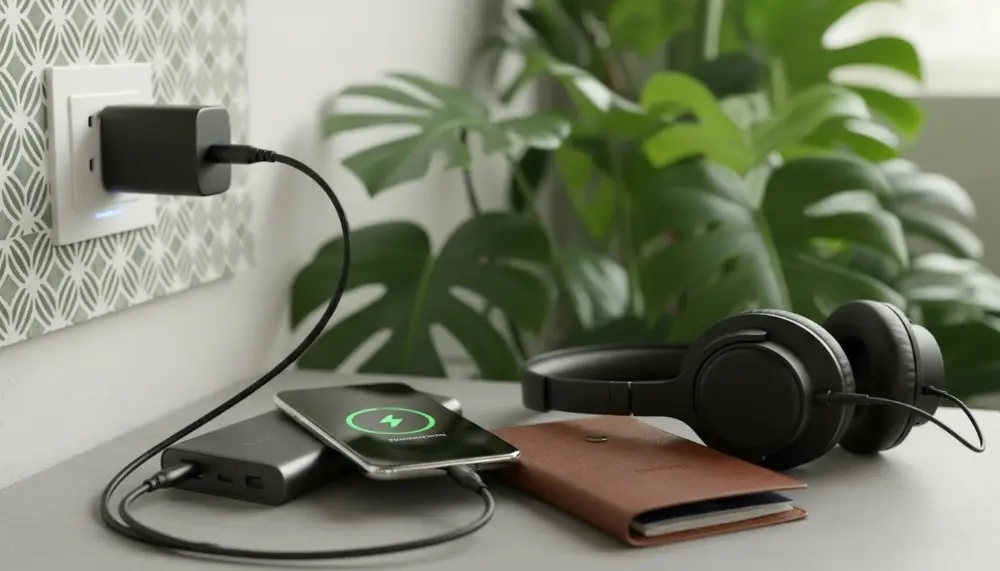

Hotel and cafe wifi in Thailand isn’t
always secure. NordVPN encrypts
your connection so banking and
messaging stay private on the go.
The Complete Nomad Gear List:
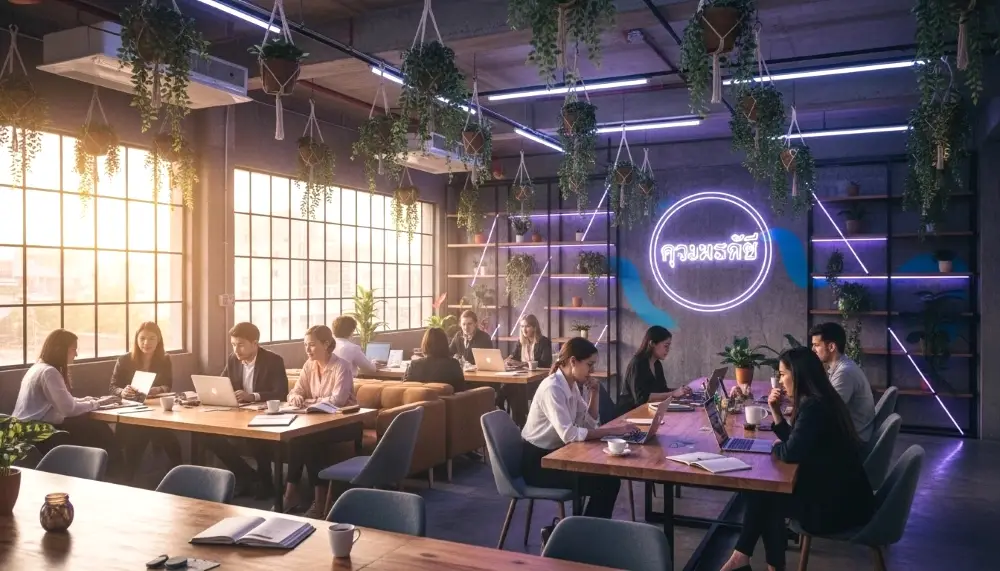
The following list covers everything a working nomad needs to operate effectively across Bangkok, Chiang Mai, and Thailand’s island hubs. Items are grouped by category with approximate Thai retail prices where relevant.
Computing: Laptop with minimum 1,000 nits brightness and efficient thermal management; portable external SSD (1TB is standard, 800 to 1,800 THB / ~$23 to $51 at MBK); USB-C hub with HDMI and SD card slots (available at Pantip Plaza for 600 to 1,500 THB / ~$17 to $43).
Power: GaN USB-C charger capable of 100W minimum output (800 to 2,000 THB / ~$23 to $57 on Lazada Thailand); 20,000 mAh airline-compliant power bank; universal travel adapter with Type A, B, and C socket compatibility for Thailand’s mixed socket environment.
Connectivity: Yesim or Airalo eSIM for instant 5G on arrival; compact 5G travel router for creating a personal encrypted hotspot from any SIM or eSIM; NordVPN subscription active before landing.
Ergonomics: Collapsible laptop stand (Roost or Nexstand style, 1,200 to 2,500 THB / ~$34 to $71); lightweight wireless keyboard and mouse; noise-cancelling headphones or earbuds for open-plan co-working environments.
Protection: IP67-rated dry bag (700 to 1,200 THB / ~$20 to $34) for boat transfers and heavy rain; silica gel packets for the laptop sleeve; hardshell laptop case or a 16mm-padded sleeve.
Bag: A 35 to 40-litre technical backpack under 1.2kg empty. This serves as both your carry-on and your daily work bag, keeping the entire kit within the 7kg airline carry-on limit on domestic flights.

Book Thailand day trips, attractions,
and activities in one place. Check
real reviews and lock in your spot
before the popular slots go.
Co-Working Spaces and Costs:
Thailand has one of the most developed co-working ecosystems in Southeast Asia. Costs are significantly lower than comparable facilities in Europe or North America, and the quality of the best spaces in Bangkok and Chiang Mai matches anything globally.
Bangkok: Day passes at premium spaces like The Hive (Ekkamai), Hubba, and True Digital Park run 250 to 500 THB (~$7 to $14) per day. Monthly hot-desk memberships start from 4,000 THB (~$114) per month, rising to 8,000 to 15,000 THB (~$229 to $429) for a dedicated desk with 24-hour access and meeting room credits.
Chiang Mai: The Nimman area has the highest concentration of quality co-working cafes and dedicated spaces. CAMP (inside Maya Mall) and MANA are the well-established anchors. Day passes run 150 to 350 THB (~$4.30 to $10) at most Nimman spots. CAMP operates on a cafe-style system with a minimum spend rather than a fixed day rate.
Islands: Koh Phangan has developed a genuine co-working scene around the Sri Thanu and Srithanu Yoga area, catering to the wellness-nomad crossover. Expect 200 to 400 THB (~$5.70 to $11.40) per day. Koh Tao and Koh Samui have functional spaces but fewer options. Internet speeds on the islands are generally adequate for video calls but not reliable enough for large file transfers or live stream production work.
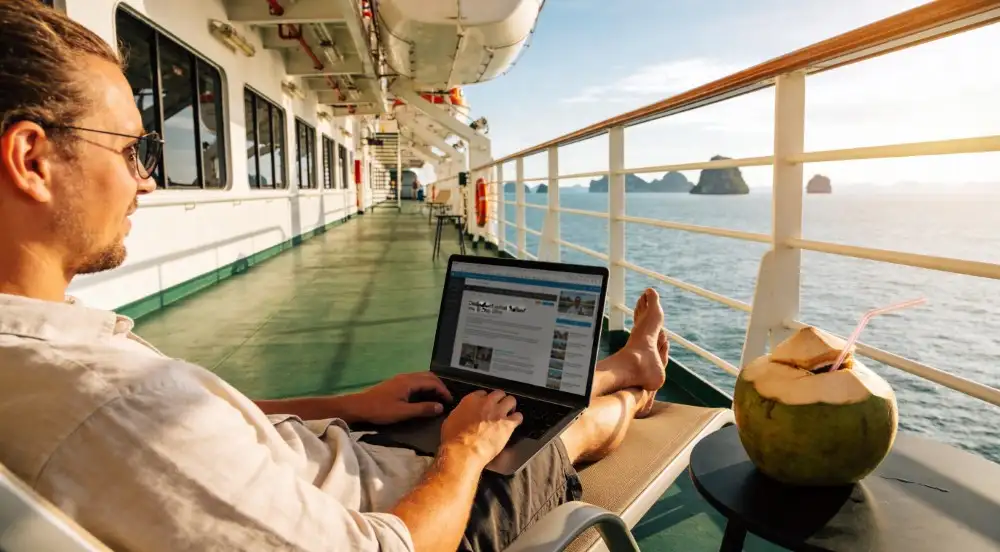

From short trips to long stays in Thailand,
Airalo has flexible eSIM data plans
you install in minutes. Top up
remotely if you need more data.
The DTV Visa and Your Gear Decisions:
The Destination Thailand Visa (DTV) changes the calculus on gear investment entirely. The DTV costs approximately 10,000 THB (~$286) and grants a five-year multi-entry visa allowing stays of up to 180 days per entry. For anyone planning to spend extended time in Thailand, it eliminates the border-run rhythm that shorter visas required.
When you know you will be in Thailand for months rather than weeks, spending 8,000 THB (~$229) on a quality collapsible monitor or 3,000 THB (~$86) on a premium laptop stand makes financial sense in a way it does not for a two-week visitor. The same logic applies to investing in a quality dry bag, an ergonomic travel keyboard, and a proper backup storage solution.
DTV holders also benefit from the ability to receive couriered gear through the Thai postal system or Kerry Express without customs complications on goods under the personal use threshold. Ordering replacement tech from Lazada Thailand or JD Central on arrival is genuinely cost-effective, often 10 to 20% cheaper than equivalent Western retail prices on the same items.
When moving between cities on the DTV, Radical Storage is worth bookmarking. It lets you store gear securely at vetted local businesses near BTS and MRT stations across Bangkok and Chiang Mai on transit days, so you can check out of one place and explore freely before checking into the next.
Pro Tips For Stress Free Travel:
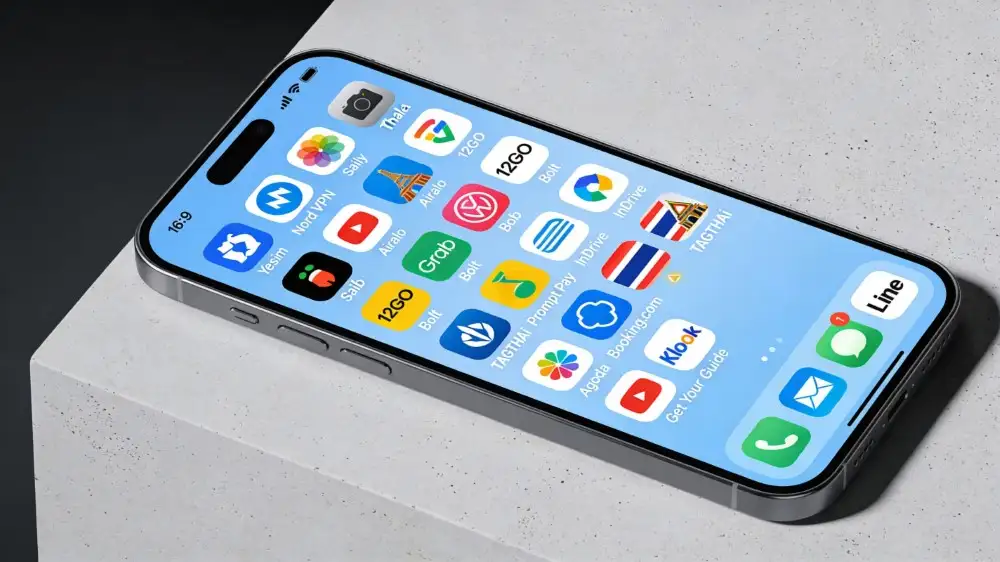
The 2026 digital toolkit integrates essential Thai infrastructure apps with global security software. Critical applications include Grab for transport, Bolt for competitive pricing, and PromptPay-compatible wallets. Reliable VPNs and localised booking platforms like Agoda or Klook ensure seamless navigation through Thailand’s digital-first economy.
Connectivity: Yesim or Airalo provide instant 5G data, though a local AIS or TrueMove H physical SIM often provides better throughput for heavy uploads. Monthly unlimited plans cost 600 to 900 THB (~$17 to $26).
Transport: Grab remains the dominant force, but Bolt offers lower rates in cities like Chiang Mai.
Logistics: Use Kerry Express or Flash Express apps for moving gear between provinces. Standard parcel delivery costs 60 to 150 THB (~$1.70 to $4.30) per package.
Money: Ensure your banking app supports QR scanning. Thailand is nearly cashless in urban areas. The PromptPay system is used from street food stalls to high-end boutiques. Thai ATMs charge a flat 220 THB (~$6.30) fee per foreign card withdrawal, so withdraw the maximum (20,000 to 30,000 THB / ~$571 to $857) per transaction.
Security: NordVPN is essential for accessing home-country banking and securing public connections in co-working cafes and shared spaces.
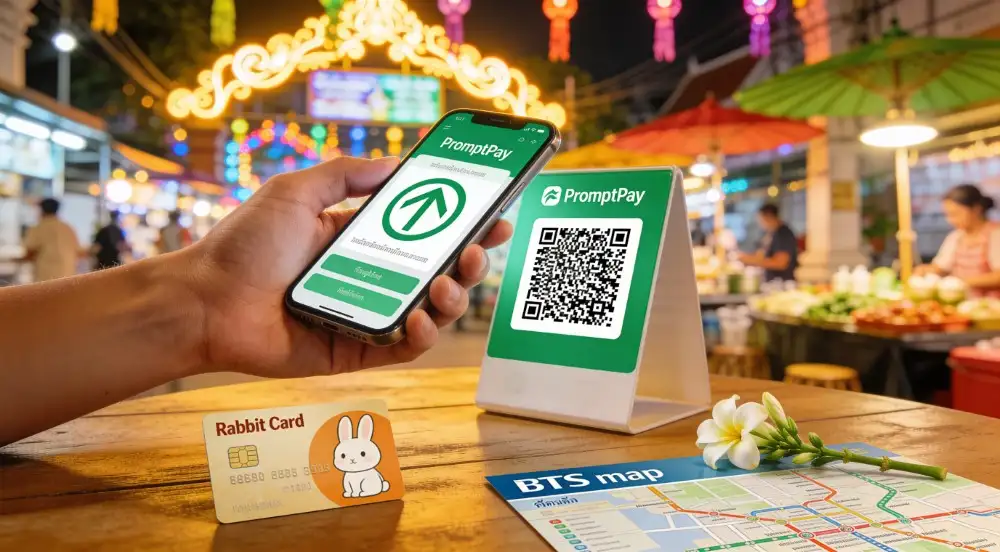

Maps, Grab, translation apps all need
data in Thailand. Yesim’s eSIM installs
in a minute and gives you reliable
5G from the moment you arrive.
Etiquette and Costs:
A couple of things worth knowing about working from cafes and co-working spaces in Bangkok. The “++” you will see on some bills means a 10% service charge and 7% VAT will be added on top. It is standard in upscale spots and not something to query, just something to factor in when budgeting.
Tipping is not a Thai custom as such, but rounding up your bill at a place you are sitting in for four hours with a single coffee is a decent way to show appreciation.
There is also a concept called Kreng Jai, a kind of consideration for others, a reluctance to impose. It runs deep here. Taking a loud video call in a quiet shared space is the kind of thing that makes people uncomfortable without them saying anything.
Good noise-cancelling headphones help. So does just being aware of the room.
Confidence Booster:
Thailand is genuinely safe for working with expensive kit. Violent crime is rare, and the biggest threats to your hardware are honestly more likely to be a wobbling Thai milk tea or a sudden downpour than anything else.
That said, use common sense. Do not leave a laptop unattended in an open cafe, and if you are somewhere busy, a Kensington lock is a small precaution worth taking. They cost 600 to 1,200 THB (~$17 to $34) at any IT mall.
The local community tends to be tech-savvy and respectful of people’s workspace. Most of the time you will barely think about security. The bigger practical risk is power cuts, which occasionally affect guesthouses outside major cities. A fully charged power bank and an auto-save habit cover this completely.
FAQ Section:
What is the best way to handle THB for gear purchases?
While international cards are accepted at major retailers like Central World or IconSiam, carry at least 2,000 THB (~$57) in cash for smaller tech repairs or accessory shops in MBK Center. Local QR payments via PromptPay are the most efficient method for daily expenses. Thai ATMs charge a flat 220 THB (~$6.30) fee per foreign card withdrawal, so withdraw the maximum in a single transaction.
Will my Western power plugs work in Thailand?
Thailand uses Type A, B, and C sockets and operates on 220V. A universal GaN adapter is the best solution as it handles the 220V current and fits both flat and round pin configurations commonly found in older guesthouses. GaN adapters cost 800 to 2,000 THB (~$23 to $57) at Pantip Plaza, MBK, or on Lazada Thailand.
Where can I get professional tech repairs in Bangkok?
Fortune Town at the Rama 9 MRT station is the premier destination for specialised hardware repair, surpassing the more tourist-oriented MBK Center. It is the gold standard for motherboard cleaning, screen replacements, and water damage treatment. Most repairs are significantly cheaper than equivalent work in Europe or Australia.
Is Starlink Mini viable for digital nomads in Thailand?
As of 2026, Starlink is a powerful tool for those staying in remote villas in Northern Thailand or isolated islands. In urban centres like Bangkok and Chiang Mai, the 5G infrastructure from AIS or TrueMove H is generally faster and more cost-effective for day-to-day work.
What internet speeds can I expect at Thai co-working spaces?
Premium co-working spaces in Bangkok and Chiang Mai typically offer 200 to 500 Mbps symmetric fibre connections with dedicated business-grade Wi-Fi. Cafe-based working varies from 30 to 150 Mbps. On the islands, expect 20 to 80 Mbps at best and plan accordingly for large file uploads or video production work. Always have your eSIM as a mobile hotspot backup.
How do I protect my laptop from humidity damage in Thailand?
Store silica gel packets in your laptop sleeve and rotate them regularly. Desiccant packs cost 50 to 150 THB (~$1.40 to $4.30) at any hardware shop or supermarket. Never leave your laptop in a sealed bag in direct sun. When doing boat transfers, use an IP67-rated dry bag rather than a standard backpack. If you are based in one place for more than two weeks, a portable dehumidifier for the room costs 1,500 to 3,000 THB (~$43 to $86) and prevents creeping corrosion.
Is the DTV visa worth it for digital nomads?
Yes, for anyone planning to spend more than 60 days per year in Thailand. The DTV costs approximately 10,000 THB (~$286) and grants a five-year multi-entry visa with 180 days permitted per entry. It eliminates border runs, gives you legal residence stability for long-term gear investment decisions, and unlocks access to longer-term accommodation rates that are typically 20 to 30% cheaper than short-term bookings.
Where should I store gear when moving between Thai cities?
Radical Storage operates a network of verified storage locations near major BTS and MRT stations in Bangkok and in Chiang Mai. Book online before arriving and drop gear off on transit days so you can move freely without dragging a full kit through the city. Most major hotels will also hold luggage for free if you have an upcoming booking.
What is the cheapest place to buy replacement tech in Thailand?
Pantip Plaza (Bangkok, near BTS Ratchathewi) and Chiangmai Expo (Chiang Mai) are the best IT malls for hardware, accessories, and repairs at local prices. Lazada Thailand and JD Central offer delivery-to-door convenience with prices 10 to 20% below equivalent Western retail. For secondhand or refurbished hardware, the upper floors of MBK Center have reliable vendors with return policies.
How do I handle video calls from Thai co-working spaces or cafes?
Always use noise-cancelling headphones with a built-in microphone rather than relying on your laptop’s internal mic in noisy environments. Move to a quieter area or book a private phone booth if your co-working space has them, typically 100 to 200 THB (~$2.90 to $5.70) for 30 minutes. In cafes, be mindful of the Kreng Jai cultural expectation that you will not disturb others. A quick check of the room before an extended call goes a long way.