Thai Temples Guide: Everything to Know
This site contains affiliate links. We may earn a commission at no extra cost to you.
Thailand has more than 40,000 temples, and they are not simply tourist attractions. They are living, breathing centres of community life, spiritual practice, and daily ritual. Monks wake before dawn and walk through neighbourhoods collecting alms.
Families arrive with offerings of lotus flowers and incense before school runs and work shifts. Elderly residents sit in courtyards that have been their meditation space for decades. This guide will help you understand what Thai temples are, why they matter, and how to visit them with the confidence and respect that ensures the experience is as rich for you as it is considerate to those for whom these places are genuinely sacred.
What Are Thai Temples?
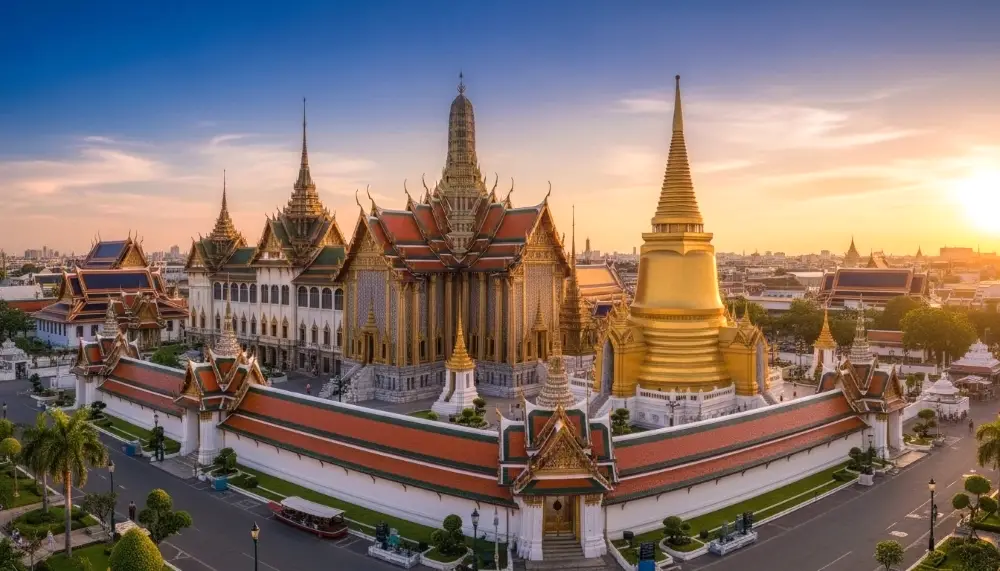
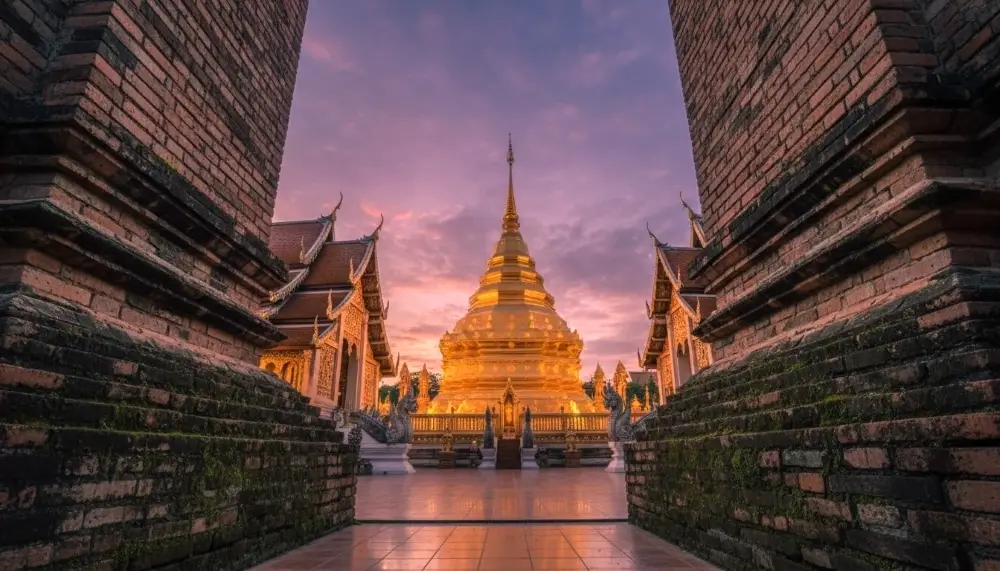
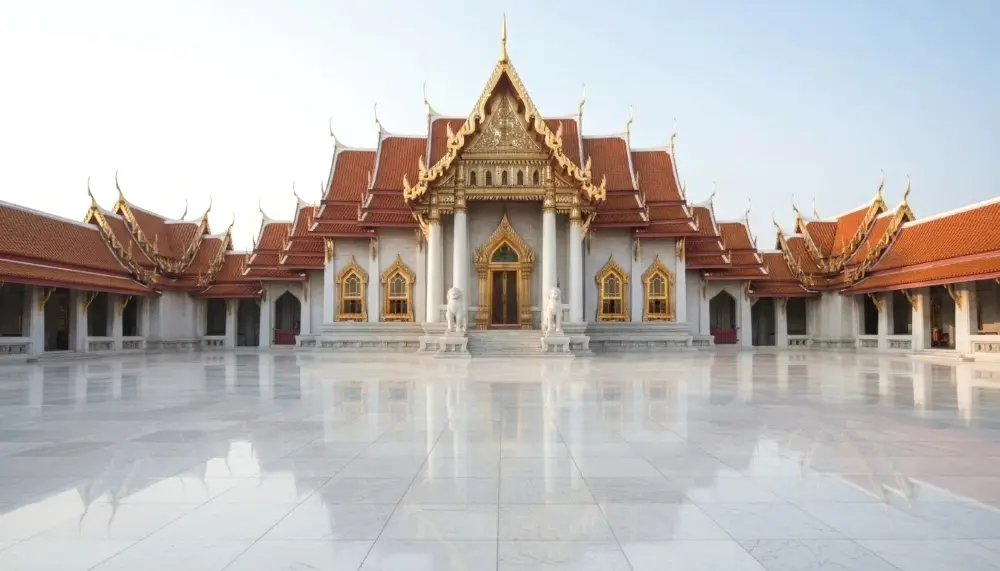
A Thai Wat consists of several distinct structures, primarily the Ubosot (ordination hall), Viharn (assembly hall), Chedi (reliquary stupa), and Prang (tower). These elements serve specific religious functions, ranging from housing the principal Buddha image to containing sacred relics, all characterised by multi-tiered roofs and Naga serpents guarding the entrances.
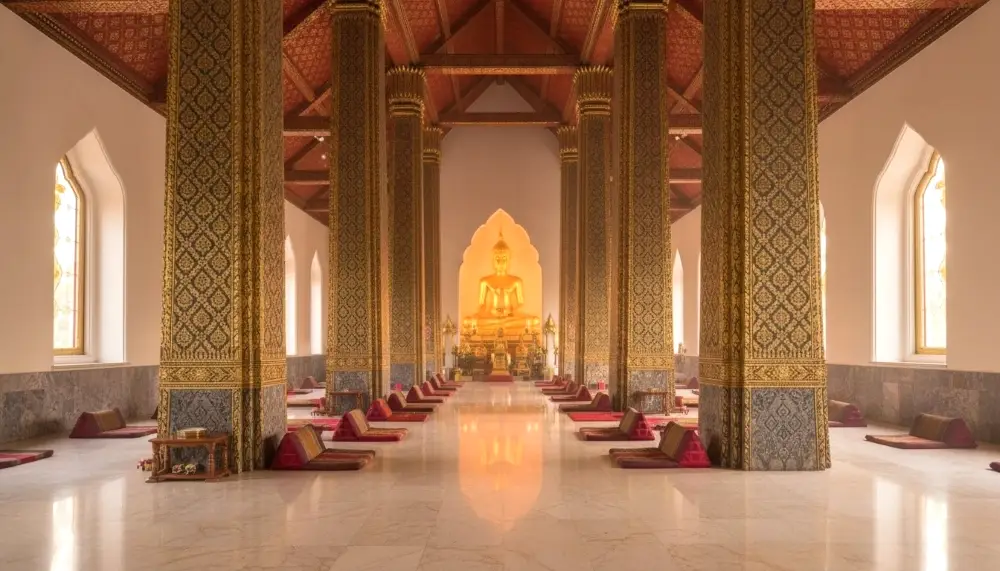
Thai temple architecture is a masterclass in symbolic geometry. The Ubosot stands as the most sacred space, demarcated by eight Bai Sema stones that signify the boundary of consecrated ground. Inside, the primary Buddha image faces east, surrounded by murals depicting the Jataka tales. Contrast this with the Viharn, where the public gathers for sermons. The rooflines, known as Chofah, represent the head of a Garuda, slicing through the sky to protect the sanctuary from evil spirits.
Most temple complexes include:
- Ubosot (ordination hall) – the most sacred building where monks perform ceremonies
- Viharn (assembly hall) – a prayer hall that often houses Buddha statues
- Chedi or stupa – a tall structure that may hold sacred relics
- Monk living quarters
- Gardens, bells, statues, and courtyards
| Structure Type | Primary Function | Distinguishing Feature |
|---|---|---|
| Ubosot | Ordination of monks | Surrounded by eight boundary stones (Bai Sema) |
| Chedi | Housing sacred relics | Bell-shaped or conical spire pointing skyward |
| Mondop | Storing sacred scriptures | Square building with a multi-tiered pyramidal roof |
| Prang | Symbolic representation of Mount Meru | Tall, corn-cob shaped tower of Khmer origin |
| Sala | Open-sided rest pavilion | Roofed but open on all sides, used for community gatherings |
The Quick Summary
- Entry requirements for most Royal Temples involve a fee ranging from 50 THB to 500 THB (~$1.40 to $13.90 USD) for non-residents.
- Strict dress codes mandate covered shoulders and knees for all genders to maintain spiritual sanctity. Sarongs are often available to borrow at the gate of major temples.
- Regional architectural styles vary significantly between the Lanna structures of the North and the Rattanakosin style of Bangkok.
- Ritual etiquette requires removing shoes before entering any Viharn or Ubosot and keeping the head lower than Buddha images at all times.
- The best time to visit most temples is between 06:00 and 08:30, before the heat builds and tour groups arrive. Late afternoon around 16:00 to 17:30 is the second-best window.

Compare tours and tickets for Thailand
and book instantly on your phone.
Klook mobile vouchers mean no
printing, just turn up and go.
Why Visiting Temples Is a Must
For many visitors, temples become the most unforgettable part of their Thailand experience. Not because of the photographs, though those are extraordinary, but because of what they reveal about the country’s interior life. Thai temples offer far more than beautiful architecture. They provide a window into the culture, religion, and daily rhythms of a society in which Buddhism is not a weekend practice but a living, breathing framework for how people move through the world.
When you visit a temple, you may see:
- Monks chanting morning prayers in the golden light of the Ubosot
- Locals lighting incense and placing offerings of fresh lotus flowers
- Intricate wall murals telling the stories of the Buddha’s past lives
- Golden statues glowing in shafts of early morning sunlight
- Quiet courtyards that feel genuinely removed from the world outside
Temples also showcase some of Thailand’s most extraordinary craftsmanship. Gold leaf applied by hand over centuries, hand-cut ceramic tiles forming thousand-piece mosaics, carved teak wood that has survived humidity and time alike. The technical skill embedded in these structures is humbling, and standing inside a well-preserved Ubosot, surrounded by floor-to-ceiling Jataka murals, is one of the most visually overwhelming experiences Thailand offers.

Lock in top-rated Thailand tours with
GetYourGuide’s free cancellation
up to 24 hours before. Reserve now
and pay later if dates aren’t set.
Understanding Thai Buddhism: The Context That Changes Everything
Approximately 95% of Thailand’s population practices Theravada Buddhism, the oldest surviving school of Buddhist thought. Unlike some traditions that emphasise monastic isolation, Theravada Buddhism in Thailand is deeply woven into civic and family life. Almost every Thai man will ordain as a monk for at least a short period during his life, typically between the ages of 20 and 30. This temporary ordination, known as Buat Phra, is considered a way of making merit for the family and is treated as a significant milestone.
The concept of merit-making (Tham Bun) is central to understanding what you observe at temples. When a local offers food to monks at dawn, places flowers before a statue, or releases a bird from a cage, they are not performing a ritual for show. They are making a deliberate spiritual investment. Understanding this transforms temple visits from sightseeing into something more like respectful participation in a living tradition. You do not need to share the beliefs to feel their weight. Simply paying attention with genuine curiosity is enough, and the warmth it generates from local visitors and resident monks is immediate.

Compare hotel prices across Thailand’s
best areas and book with confidence.
Filter by budget, location, or score
to find the right stay for your trip.
Pro Tips for Stress-Free Temple Travel
Apps: Grab and Bolt provide reliable car and motorbike bookings for reaching temples outside the city centre. Agoda and Booking.com offer the widest selection of heritage stays near temple districts, including guesthouses inside Chiang Mai’s old city walls within walking distance of the major Wats.
Connectivity: Ensure a stable connection with Yesim or a local SIM to use Google Maps for navigation between sites. Activate your eSIM before you land so it is ready the moment you clear arrivals. A Nord VPN is recommended for secure browsing on the public Wi-Fi networks that tend to cluster around major tourist sites.
Money: While entry fees at Wat Pho or the Grand Palace accept credit cards, smaller regional temples are strictly cash-only in Thai Baht (THB). Always carry a supply of 50 THB and 100 THB notes specifically for entrance fees, donation boxes, and incense offerings.
Currency: Large denominations (1,000 THB notes) are often difficult for small temple vendors and guesthouse cashiers to change. Breaking them at a 7-Eleven before heading to a temple district saves considerable friction. ATM fees across Thailand run approximately 220 THB (~$6 USD) per foreign card transaction, so withdraw in larger amounts less frequently.


Forget swapping physical SIMs in Thailand.
Yesim works on most modern phones,
activates remotely, and keeps your
home number live on WhatsApp too.
Famous Thai Temples Worth Visiting
Bangkok
Thailand’s capital is home to some of the most famous temples in the country, and the concentration of extraordinary sites within a relatively compact riverside district makes Bangkok the natural starting point for any temple itinerary. The three absolute must-see sites are within easy reach of each other and can be combined in a single well-planned morning.
- Wat Phra Kaew (Temple of the Emerald Buddha) – located inside the Grand Palace complex; entry 500 THB (~$13.90 USD)
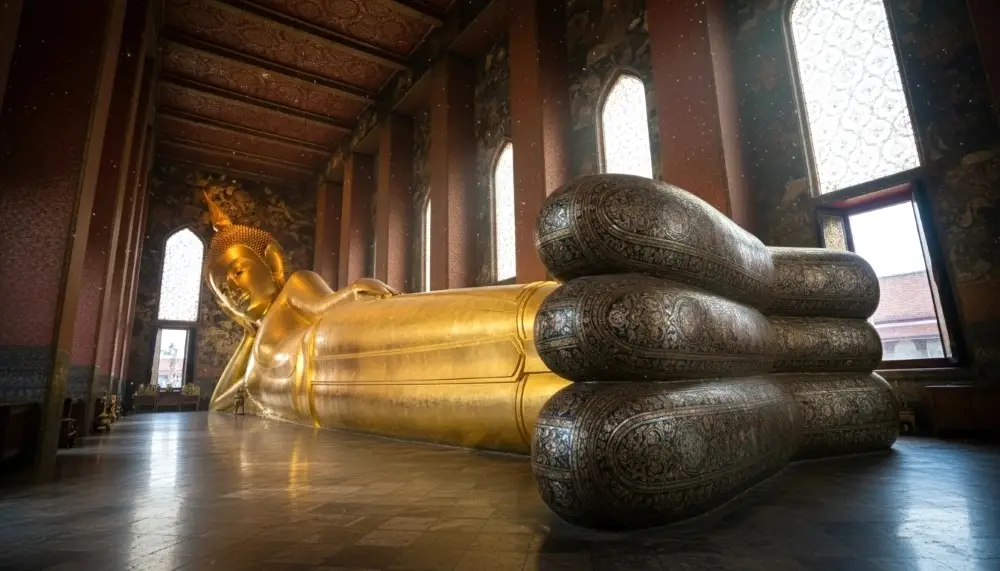
- Wat Pho – home to the enormous 46-metre Reclining Buddha; entry 200 THB (~$5.55 USD)
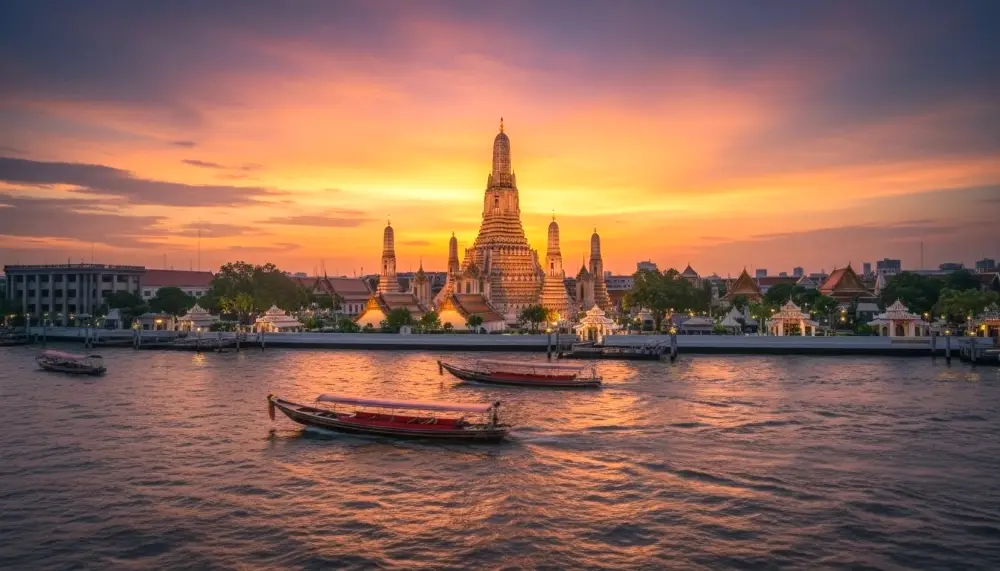
- Wat Arun – the stunning “Temple of Dawn” beside the Chao Phraya River; entry 100 THB (~$2.78 USD)
Bangkok temple hopping is most efficient via the Chao Phraya Express Boat. For 16 to 30 THB, the Orange Flag boat connects the Grand Palace pier to the riverside approach of Wat Arun in minutes. This is both the cheapest and most enjoyable routing, cutting through the river traffic with the kind of breezy efficiency that no tuk-tuk through congested Rattanakosin streets can match. Avoid the tuk-tuk scams near major sites where drivers insist a temple is closed for a special holiday: these are tactics to redirect tourists to overpriced gem shops. Trust the official opening hours on the gates.
Chiang Mai
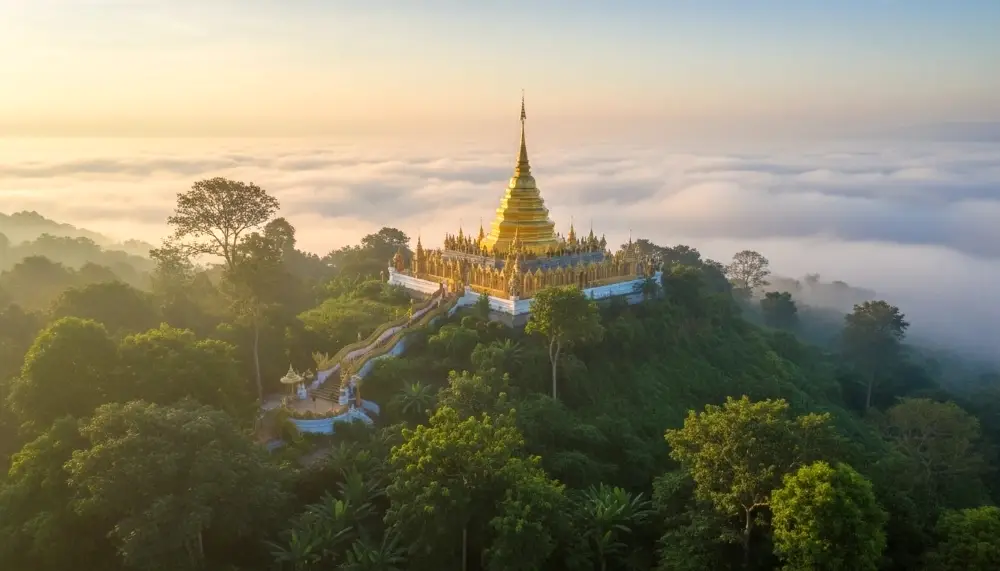
In Chiang Mai, the historic walled centre allows for a relaxed walking tour of Wat Chedi Luang and Wat Phra Singh. These two temples alone justify a full morning, and the surrounding lanes of the Old City, filled with coffee shops and craft vendors, make the pacing feel natural and unhurried. For the mountaintop Wat Phra That Doi Suthep, a red Songthaew (shared truck) from the zoo entrance is the standard local choice, costing approximately 40 THB per person each way.
- Wat Phra That Doi Suthep – a golden hilltop temple at 1,073 metres with panoramic views over the city
- Wat Chedi Luang – a partially ruined but deeply atmospheric ancient chedi dating to the 14th century
- Wat Phra Singh – home to the revered Phra Singh Buddha image and one of the finest examples of Lanna architecture in the country
Exploring temples in Chiang Mai feels calmer and more spacious than Bangkok. The city’s scale invites lingering, and the Lanna architectural tradition, characterised by low-slung rooflines, carved teak, and gilded Buddhas with a distinctly Northern Thai physiognomy, is unlike anything in the capital. Allow at least two full days to do the temple circuit justice.
Southern Thailand
Even Thailand’s beach destinations have temples worth seeking out, and the best of them reward the small detour with experiences that feel completely removed from the resort strip. While travellers often visit the south for its islands and beaches, the temple culture here reflects a different regional blend: Chinese Mahayana influences mix with Theravada tradition, and in the deep south, the Islamic culture of the Thai-Malay border adds another layer to the spiritual landscape entirely.
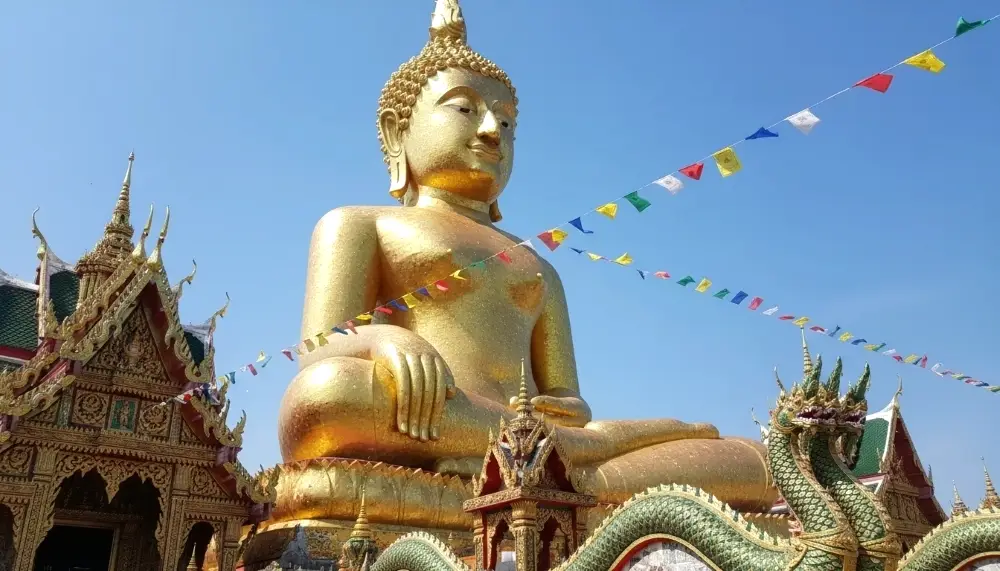
- The Big Buddha in Phuket – a 45-metre white marble statue visible from much of the island, sitting atop Nakkerd Hill
- Wat Chalong – Phuket’s most important and visited temple, with a chedi said to contain a bone fragment of the Buddha
- Cliffside temples and jungle shrines across Krabi – including Tiger Cave Temple (Wat Tham Suea), where 1,237 steps lead to a summit Buddha with staggering Andaman Sea views
Combining southern temples with beach exploration creates a genuinely balanced itinerary. A morning at Tiger Cave Temple followed by an afternoon at Railay Beach is one of the most satisfying single-day contrasts Thailand offers. Book temple and activity tours through Get Your Guide or Klook for skip-the-queue access and bilingual guides at the larger sites.
Chiang Rai’s Extraordinary Temple Trinity
No temple guide for Thailand is complete without giving Chiang Rai its proper chapter. This small northern city, often dismissed as a day trip from Chiang Mai, is home to three temples so visually distinct from each other and from everything else in the country that they justify an overnight stay on their own terms.
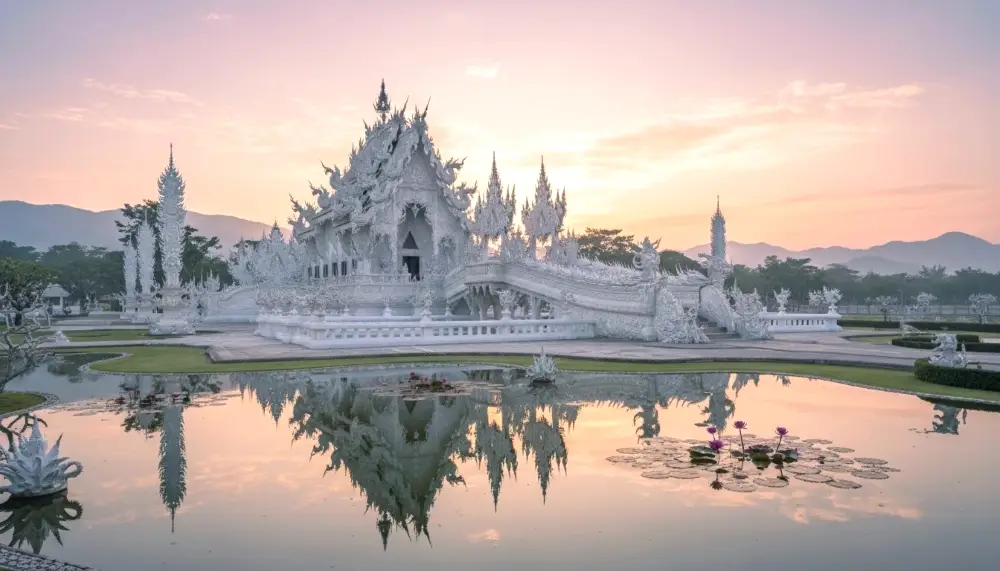
Wat Rong Khun (the White Temple) is the work of contemporary artist Chalermchai Kositpipat, who began construction in 1997 and intends it to take another 60 to 90 years to complete. It is dazzling in full sunlight: a blinding mosaic of white plaster and mirrored glass that looks almost science-fictional against the blue northern sky. Entry is 100 THB (~$2.78 USD). Arrive before 09:00 to beat the coach groups.
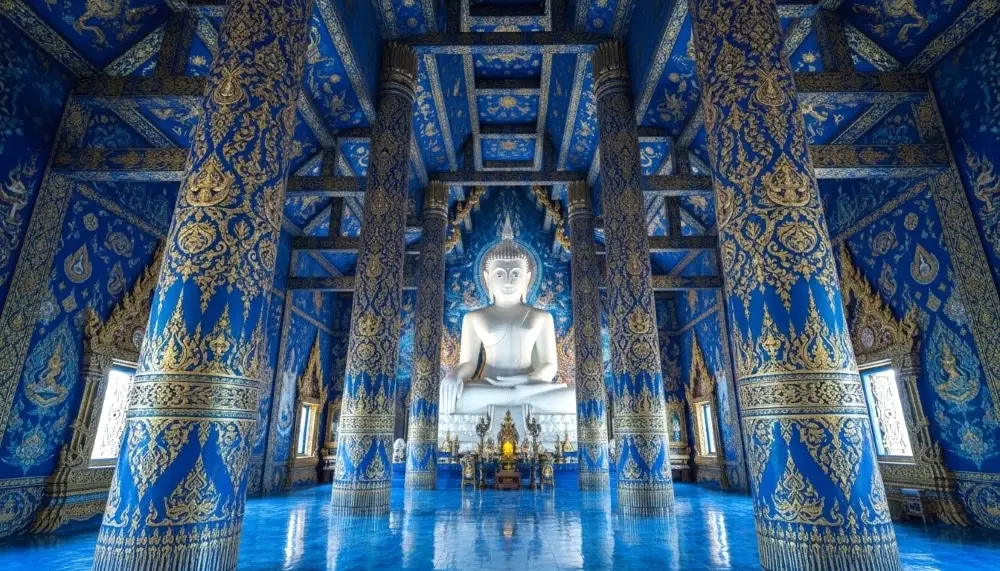
Wat Rong Suea Ten (the Blue Temple) is the colour counterpoint: deep cobalt and electric turquoise murals covering every surface inside a relatively new structure completed in 2016. There is no entry fee, and it sees a fraction of the White Temple’s crowds despite being equally spectacular inside. Baan Dam (the Black House), while technically a museum rather than a temple, sits in this trinity and provides a darkly compelling counterpoint to the White Temple’s radiance. Entry is 80 THB (~$2.22 USD).
Temple Etiquette: Visiting Respectfully
Thai temples are sacred places, so visitors are expected to behave respectfully. The good news is that the rules are simple, logical once you understand their meaning, and easy to follow with a small amount of preparation.
- Dress modestly – shoulders and knees must be covered for all genders. Sarongs and wraps are available to borrow at most major temples.
- Remove your shoes before entering any temple building. Sandals are strongly recommended over lace-up trainers for practical comfort.
- Speak quietly and move calmly inside prayer halls and courtyards.
- Do not point your feet at Buddha statues or monks – feet are considered the lowest and most spiritually impure part of the body.
- Avoid any physical contact with monks, especially if you are a woman. Even accidentally brushing a monk’s robe requires a purification ritual on their part.
When sitting before a Buddha image, use what is colloquially called the mermaid pose: legs tucked to one side so that the feet point away from the altar entirely. Avoid taking selfies with your back directly to a large Buddha image, as this is interpreted as placing the self above the sacred. A slight angle achieves a perfectly good photograph while remaining respectful.
If an offering must be made to a monk, it should be placed on a saffron cloth provided by the monk rather than handed directly. Women giving offerings should ensure no physical contact occurs during the exchange. This is not a sign of hostility or social hierarchy; it is a discipline monks observe as part of their ordination vows, and local women follow the same protocol without a second thought.
What to Expect When Visiting a Temple
Many temple complexes are peaceful places filled with small details worth noticing. You might hear bells ringing in a breeze, smell incense drifting across an open courtyard, or see a monk methodically sweeping fallen leaves from a path that has been swept the same way for generations. Locals arrive with jasmine garlands and lotus buds purchased from vendors just outside the gate for around 20 to 40 THB (~$0.55 to $1.10 USD).
- Small donation boxes positioned throughout the grounds
- Vendors selling incense, lotus flowers, and gold leaf for offerings
- Monks quietly walking through the grounds or sitting in meditation
- Temple cats relaxing in the shade of a Chedi, entirely unbothered
Making a small merit donation of 20 to 100 THB (~$0.55 to $2.78 USD) in the designated wooden boxes is a sincere and appreciated gesture. While photography is generally permitted in open courtyards and exterior structures, always look for signs indicating otherwise, particularly inside the Ubosot. Some of the finest mural paintings in Thailand are inside Ubosots where photography is restricted, and this rule exists to protect both the paintings and the sanctity of the space. The restriction is a small price to pay for the privilege of standing in front of them.
How to Read a Temple: Symbols, Stories, and Hidden Meaning
One of the most enriching shifts a visitor can make is moving from simply looking at temples to actively reading them. Thai temple iconography is a dense visual language, and even a basic working knowledge of it transforms a beautiful but opaque experience into a genuinely absorbing one.
The hand positions (mudras) of Buddha statues are not decorative variations. Each mudra communicates a specific moment or teaching: the right hand touching the earth (Bhumisparsha) represents the moment of enlightenment. Both hands in the lap (Dhyana) represent meditation. The raised right hand (Abhaya) signifies protection and the absence of fear. Recognising these transforms a room full of golden statues into a coherent theological library.
The Naga serpents flanking stairways are not simply decorative. The Naga is a protective deity of water and fertility in Theravada Buddhist cosmology, believed to guard sacred spaces from malevolent forces. The number of heads on a Naga statue (typically five, seven, or nine) carries specific symbolic weight. The Garuda above doorways represents the vehicle of Vishnu and symbolises the protective force of royal patronage over the temple. The Singha lion statues flanking entrances serve the same protective function as the lions of European cathedrals, just expressed through a distinctly Southeast Asian visual vocabulary.
Best Time to Visit Thai Temples
Temples can be visited year-round, but some times of day and year are considerably more rewarding than others.
Early morning (06:00 to 08:30) is consistently the best window. The air is cooler, the light is golden, the tour groups have not yet arrived, and you may witness monks performing daily rituals that give the entire space a completely different quality of atmosphere. The smell of incense from morning prayers, the sound of chanting carrying across an empty courtyard: these are the moments that stay with people for years. They are only available to early risers.
Late afternoon (16:00 to 17:30) is the second-best window, particularly at temples with sunset views or riverfront locations. Wat Arun in Bangkok is extraordinary in the late afternoon light, when the porcelain mosaic surface catches the western sun in a way that photographs can barely capture. The Doi Suthep summit in Chiang Mai at dusk, looking out over the city lights beginning to appear in the valley below, is one of Thailand’s genuinely unmissable views.
Buddhist holy days (Wan Phra) occur on the full moon, new moon, and quarter moon days each month. Visiting on these days gives access to a much richer ceremonial atmosphere, with merit-making activities, offerings, and sometimes public Dhamma talks. The dates vary monthly; a quick web search for “Wan Phra [month] Thailand” gives the current schedule.
For First-Time Travellers: There Is Nothing to Feel Nervous About
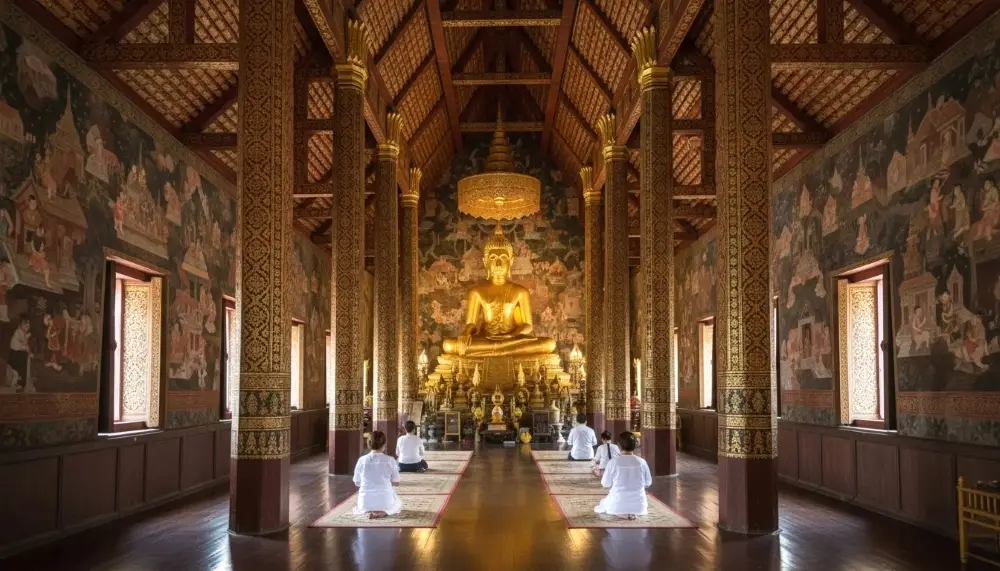
If you have never visited a Buddhist temple before, it is completely normal to feel uncertain about what to do. The truth is that Thai temples are extraordinarily welcoming places, and visitors from every background and belief system explore them every single day without incident. As long as you dress respectfully and behave calmly, you will be perfectly fine. Temple staff and resident monks have seen thousands of foreign visitors and are patient, helpful, and genuinely pleased when tourists make even a small effort to observe the customs.
The checklist for a first visit is straightforward: wear a top that covers your shoulders, wear trousers or a skirt that covers your knees (or borrow a sarong at the gate), wear shoes that slip on and off easily, carry some small-denomination banknotes, and keep your voice down inside the buildings. That is genuinely all there is to it. Everything else you will learn simply by watching the people around you for the first five minutes.
Many travellers who arrive uncertain about temple visits end up making them the centrepiece of their entire itinerary. The combination of visual grandeur, genuine tranquillity, and cultural depth is simply hard to find anywhere else in Thailand at zero or minimal cost. The temples are the country’s greatest open museum, and they have been admitting curious visitors for centuries.
Final Thoughts: Discovering the Soul of Thailand
Thailand’s temples are some of the most fascinating places you will visit anywhere in the world. They combine history, art, religion, and community life in a way that few other landmark types can match. They are not frozen in time. They are not museums to a dead culture. They are places where people come every day to find meaning, offer gratitude, seek guidance, and connect with something larger than themselves. That energy is palpable the moment you step through a temple gate, and it stays with you long after you leave.
From the glittering temples of Bangkok to the mountain sanctuaries of Chiang Mai and the peaceful shrines tucked into the cliffs and jungles of the southern islands, each temple tells a story that is unique to its place, its patrons, and its era. No two Wats are identical. The differences between the Lanna style of the north and the Rattanakosin grandeur of Bangkok are as striking as the differences between Gothic cathedrals and Renaissance churches in Europe, and just as rewarding to explore with informed curiosity.
For first-time visitors, exploring these sacred spaces offers a connection to Thailand that goes considerably deeper than beaches and night markets. Take your time, wander respectfully, and let curiosity guide you. Discovering Thailand’s temples is one of the most genuinely rewarding adventures the country has to offer, and it is available to everyone with comfortable shoes and an open mind.
Frequently Asked Questions
What is the best time of day to visit Thai temples?
Arriving at 06:00 allows you to witness the monks’ morning chanting, experience the temple at its most atmospheric, and avoid the midday heat and heavy tour groups that arrive after 09:00. The golden light of early morning also makes for far better photography than the harsh midday sun. A secondary window of 16:00 to 17:30 works well for sunset temples such as Wat Arun in Bangkok or Doi Suthep in Chiang Mai.
Are there entry fees for Thai temples?
Most local village temples are entirely free and welcome visitors without charge. Major historical and royal sites carry entry fees for international visitors: Wat Arun costs 100 THB (~$2.78 USD), Wat Pho costs 200 THB (~$5.55 USD), and the Grand Palace complex including Wat Phra Kaew costs 500 THB (~$13.90 USD). Wat Rong Khun (the White Temple) in Chiang Rai charges 100 THB. Always carry small-denomination banknotes as many temple entrance counters do not accept cards.
Can I wear sandals to a temple?
Yes, and sandals are actively recommended over lace-up trainers or boots. Shoes must be removed before entering every temple building, and this happens frequently across a single temple complex. Slip-on sandals make this process fast and painless. Ensure the rest of your outfit meets the modesty requirements regardless of footwear: covered shoulders and knees for all genders.
What does “Plus Plus” mean on bills near tourist sites?
Near major temple districts and tourist landmarks, cafes and restaurants frequently list prices with a ++ symbol, for example 200++. This means the displayed price does not yet include the 10% service charge and 7% VAT that will be added to the final bill. Always factor in approximately 17% on top of any ++ price when budgeting for meals in these areas.
What should I wear to a Thai temple?
Clothing must cover shoulders and knees for all genders without exception. Light, breathable cotton or linen works best given Thailand’s heat. Avoid sleeveless tops, vest shirts, shorts, and short skirts. Most major temples keep a supply of sarongs and wraps that visitors can borrow for free or for a small deposit at the gate, so if you arrive underdressed you will generally be offered a solution rather than turned away. Wearing a light scarf in your bag as a backup shoulder cover is a simple habit that saves considerable inconvenience.
Is it disrespectful to take photographs inside a temple?
Photography is generally permitted in open temple grounds and exterior areas. Inside the Ubosot (ordination hall) and certain Viharns, photography may be restricted or prohibited; look for posted signs at the entrance to each building. Never use flash photography around murals, as it accelerates pigment degradation. Avoid taking selfies with your back directly to a large or significant Buddha image, as this is considered disrespectful by Thai standards. When in doubt, observe what local visitors are doing and follow their lead.
Can I participate in merit-making rituals as a non-Buddhist visitor?
Yes, and doing so with genuine respect is welcomed rather than frowned upon. Purchasing a lotus flower garland (20 to 40 THB) and placing it before a Buddha image is a simple, sincere gesture. Lighting incense and making a small donation to the merit boxes are both open to all visitors regardless of faith. The key distinction is participation with genuine respect versus participation for social media content. Thai Buddhists are warm and inclusive by nature; the temple community is happy to share these practices with curious, respectful outsiders.
How do I interact with monks I encounter in a temple?
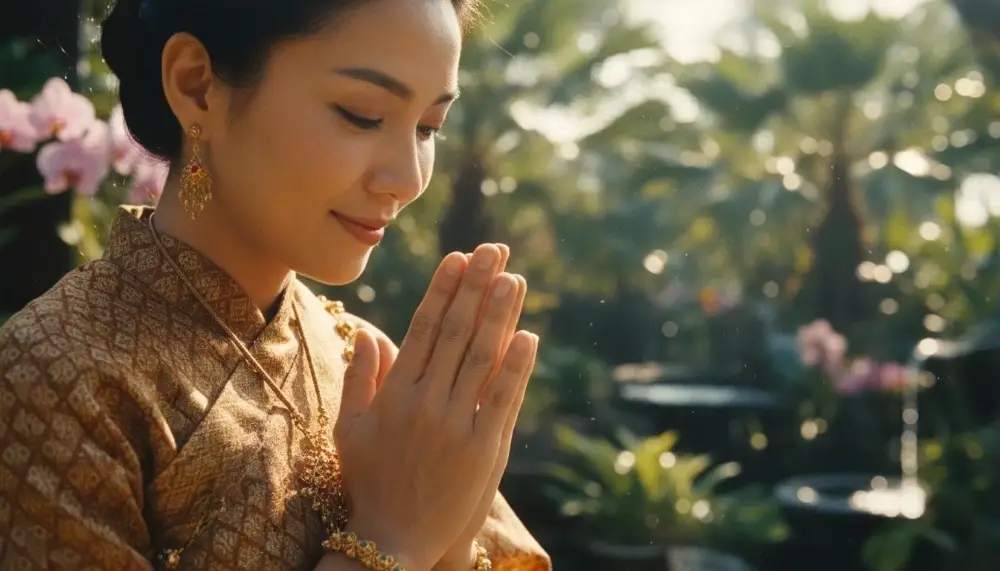
A respectful nod or a gentle Wai (palms pressed together, slight bow) is always appropriate when making eye contact with a monk. Monks are generally not available for casual conversation during meditation periods or morning alms rounds, but many are happy to exchange a few words at quieter moments, particularly in temple complexes that host monk-chat programmes (Wat Suan Dok in Chiang Mai and Wat Pho in Bangkok both have these). Women must not touch monks under any circumstances or hand objects directly to them; place items on a nearby surface instead.
What is the difference between Lanna and Rattanakosin temple styles?
Lanna temples, found predominantly in Chiang Mai and the northern provinces, are characterised by low-swept rooflines that almost touch the ground, intricate carved teak woodwork, Burmese and Shan artistic influences, and Buddhas with a distinctly northern Thai physiognomy. Rattanakosin temples, the dominant style in Bangkok and central Thailand, are grander in scale, feature higher and more elaborate multi-tiered rooflines, and reflect the ornate aesthetic of the Chakri dynasty’s royal patronage. Chiang Rai’s contemporary temples (the White and Blue temples) represent a third strand: individual artistic vision applied to Buddhist form, producing something entirely unique to the 21st century.
Are Thai temples safe for solo female travellers?
Yes. Thai temples are among the safest environments for solo female travellers in the entire country. The atmosphere is calm, the spaces are public and well-populated during opening hours, and the presence of monks and temple staff provides an additional layer of security. The only specific considerations for women are the etiquette rules around monks (no physical contact, no direct handoffs) and the dress code, both of which are straightforward to navigate. Solo women visiting temples in the early morning will often find themselves in genuinely peaceful and uncrowded environments that are among the most relaxed experiences the country offers.