The 5 Best Chiang Mai Cooking Classes
This site contains affiliate links. We may earn a commission at no extra cost to you.
In the Lanna heartland of Northern Thailand, food is not merely sustenance. It is a complex language of heritage and hospitality. Mastering the perfect Khao Soi or the delicate balance of a Som Tum requires more than a recipe. It demands an immersion into the local wet markets, the organic soil of rural farms, and the expert guidance of Thai culinary masters. All prices in this guide use a rate of 35 THB = $1 USD.
This guide breaks down the elite cooking experiences in the Rose of the North, categorised by budget and intensity, to ensure every traveler finds their seat at the table.
The Quick Summary:
Budget Range: Group classes cost 800 to 1,500 THB (~$22.85 to $42.85) per person. Luxury private sessions reach 8,500 THB (~$242.85) per person at the Four Seasons.
Entry Requirements: No prior culinary experience is necessary. Most schools provide all equipment, aprons, and round-trip transport from Old City or Nimman hotels.
Regional Variance: Chiang Mai classes focus on “Lanna” style, utilising ingredients like Burmese curry powder and fermented fish that are distinct from the coconut-heavy flavours of the South.
Seasonal Advice: Book morning classes during the hot season (March to May) to visit markets before the midday heat peaks. Book at least 3 to 5 days in advance during peak season (November to February) as popular schools fill quickly.

Compare tours and tickets for Chiang Mai
and book instantly on your phone.
Klook mobile vouchers mean no
printing, just turn up and go.
Comparison of Top-Tier Cooking Schools:
| School Name | Experience Type | Primary Focus | Price (THB) | Price (USD) |
|---|---|---|---|---|
| Grandma’s Home Cooking School | Organic Farm Immersion | Farm-to-Table Lanna Classics | 1,200 to 1,500 THB | ~$34 to $43 |
| Thai Akha Kitchen | Tribal Heritage | Akha Minority Cuisine | 1,000 to 1,200 THB | ~$29 to $34 |
| Rim Tai Kitchen (Four Seasons) | Ultra-Luxury Private | High-End Gourmet Mastery | 7,500 to 8,500 THB | ~$214 to $243 |
| Asia Scenic Thai Cooking | City Centre Convenience | Urban Gardening and Quick Mastery | 800 to 1,200 THB | ~$23 to $34 |
| Mama Noi Organic School | Sustainable Education | Organic Ingredient Identification | 1,000 to 1,300 THB | ~$29 to $37 |
What to Expect at a Chiang Mai Cooking Class:
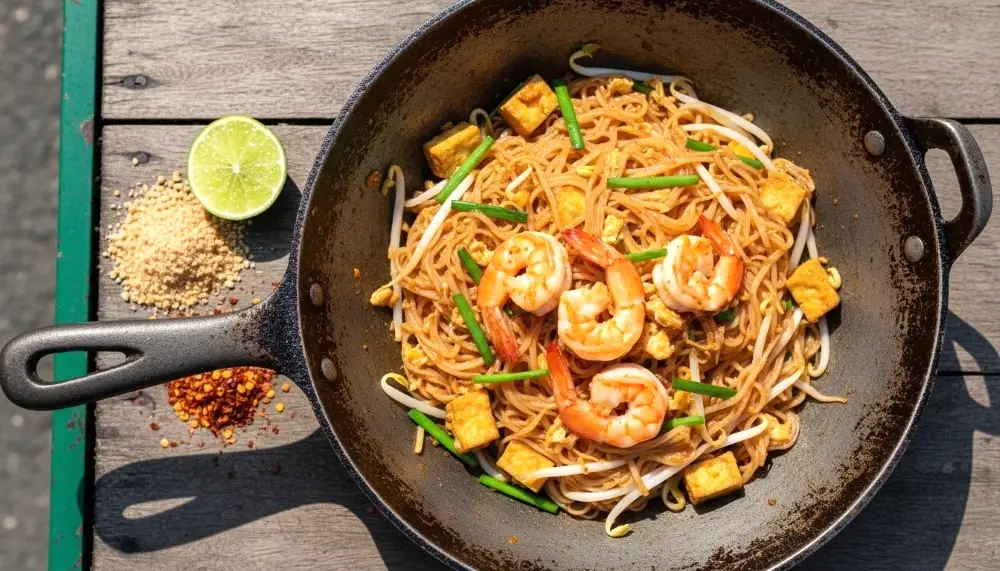
Most Chiang Mai cooking classes follow a similar structure regardless of school, making it easy to know what you are committing to before booking. A standard half-day class (08:30 to 13:00 or 14:00 to 18:30) covers four to five dishes and costs 800 to 1,200 THB (~$22.85 to $34.30) per person. A full-day class (08:30 to 17:00) covers seven to eight dishes and costs 1,200 to 1,500 THB (~$34.30 to $42.85) per person including a wet market tour at the start.
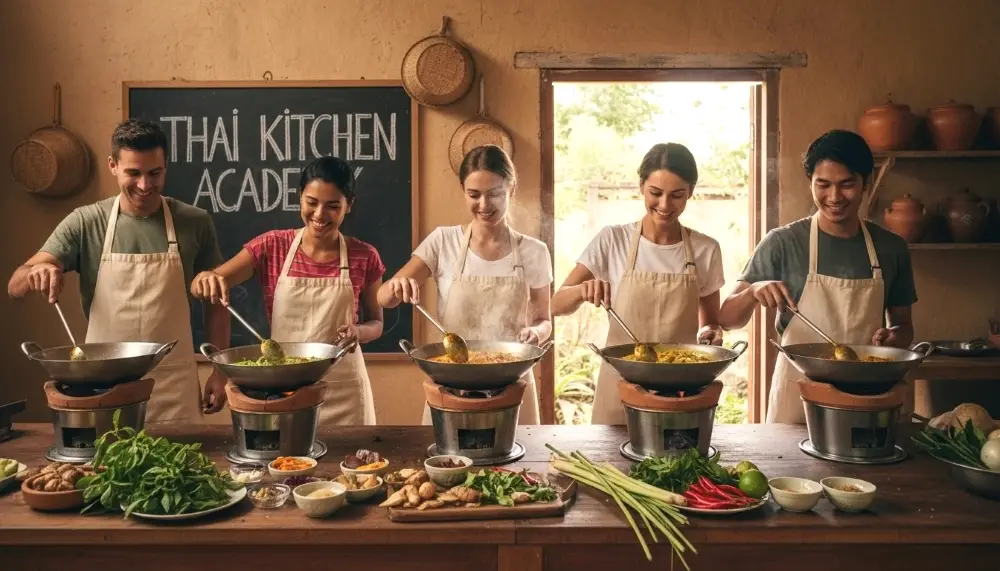
The typical day: Hotel pickup by minivan at 08:30, wet market visit (45 to 60 minutes) where the instructor explains ingredients and freshness markers, arrival at the school kitchen by 10:00, hands-on cooking of four to five dishes with each student at their own individual station, sit-down lunch of everything you cooked, recipe booklet distributed at the end, and return transfer to your hotel by 13:30.
What is always included: All ingredients, all equipment, aprons, filtered drinking water, and your cooked meal. Most reputable schools also include round-trip hotel transport for bookings made within the Old City and Nimman areas. Credit cards incur a 3% surcharge at most schools, so bring THB cash or use PromptPay QR payment.

Skip-the-line tickets and guided walks
in Chiang Mai with English-speaking
guides. Read real traveller reviews
before committing to a single one.
The Gold Standard: Grandma’s Home Cooking School
Grandma’s Home Cooking School is the premier choice for travelers seeking a rural farm-to-table experience. Located in the Saraphi District, it offers full and half-day courses starting at 1,200 THB (~$34.30), featuring market tours, organic garden harvesting, and hands-on preparation of six traditional Thai dishes in a scenic open-air pavilion.
The experience begins at a local wet market, where instructors explain the vital role of galangal, lemongrass, and kaffir lime. Upon arriving at the Saraphi farm, guests trade city noise for the rustle of fruit trees. The curriculum covers the Big Five of Thai cuisine: stir-fry, soup, appetizer, curry paste, and curry. A standout feature is the manual coconut grating and charcoal grill mastery, providing a tactile connection to historical Thai cooking methods.
Book through Klook or Get Your Guide for verified availability and free cancellation up to 24 hours before the class starts.
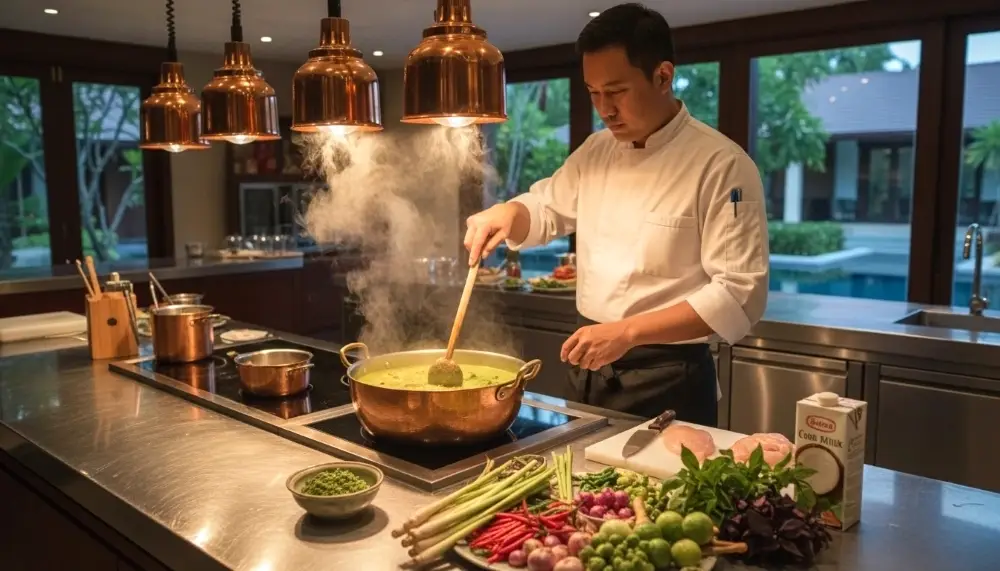
The Cultural Deep-Dive: Thai Akha Kitchen
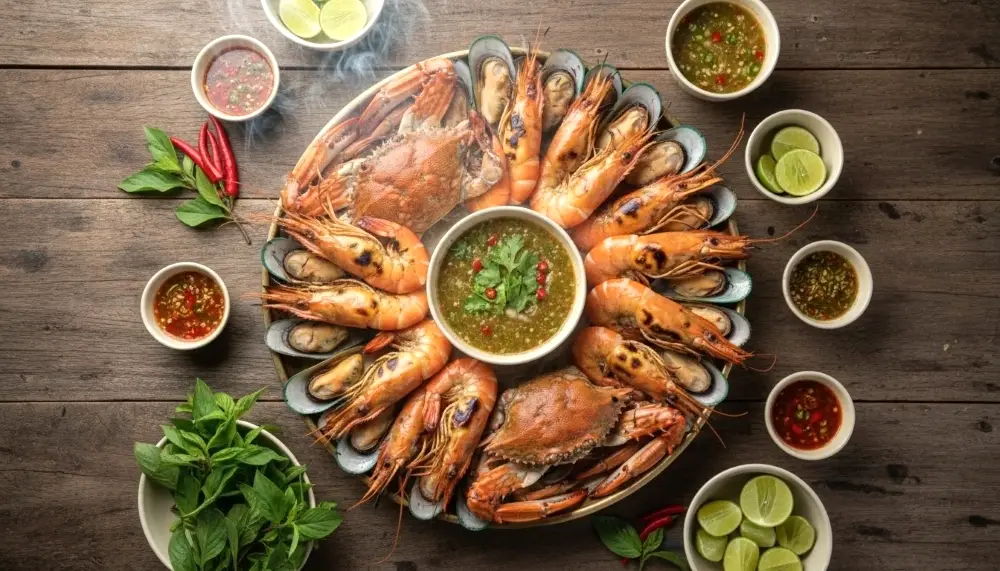
Thai Akha Kitchen specialises in the unique culinary traditions of the Akha hill tribe alongside standard Thai favourites. Located near the Old City, classes cost approximately 1,000 to 1,200 THB (~$28.55 to $34.30) per person and provide rare insight into indigenous ingredients and specific tribal techniques like Sapa (Akha salad) and unique dipping sauces.
For those weary of standard Pad Thai loops, the Akha Kitchen offers a contrarian alternative. The instructors, members of the Akha community, share stories of mountain life while teaching students how to handle ingredients like rattan shoots or local herbs not found in standard supermarkets. It is a highly interactive session that prioritises the “why” behind the flavours, making it a favourite for seasoned travelers looking for depth over decoration.

Airalo covers Chiang Mai with a range of
data plans from days to a month.
No physical SIM swap, no roaming
bill shock when you get back home.
The Masterclass: Rim Tai Kitchen at Four Seasons
Rim Tai Kitchen provides an ultra-premium, private culinary education within the Four Seasons Resort Mae Rim. At 8,500 THB (~$242.85) per person, this experience includes professional chef mentorship, premium organic ingredients, and a sophisticated environment focused on technical precision and high-concept presentation.
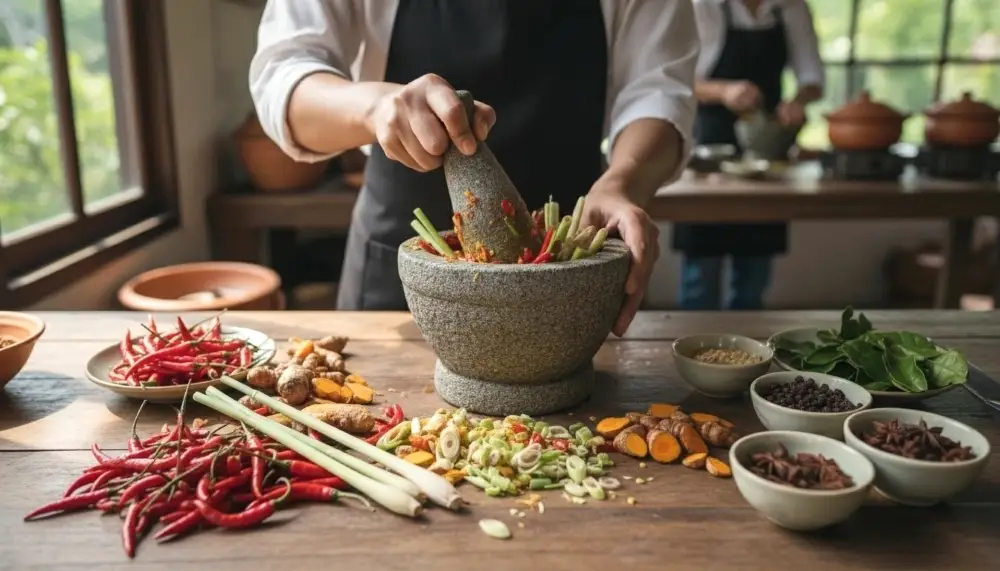
This is not a casual group activity but a rigorous dive into the architecture of Thai flavour. Set in a teak-wood masterpiece overlooking rice paddies, the kitchen emphasises meticulous detail. The menu is customisable, allowing students to tackle complex dishes like Massaman Curry from scratch, including the laborious process of pounding paste to the perfect consistency. Note that the listed price of 8,500 THB is before the 17% “Plus Plus” (++) charges at Four Seasons, making the true all-in cost closer to 9,945 THB (~$284.15). It is the definitive choice for those who value privacy and professional-grade instruction.
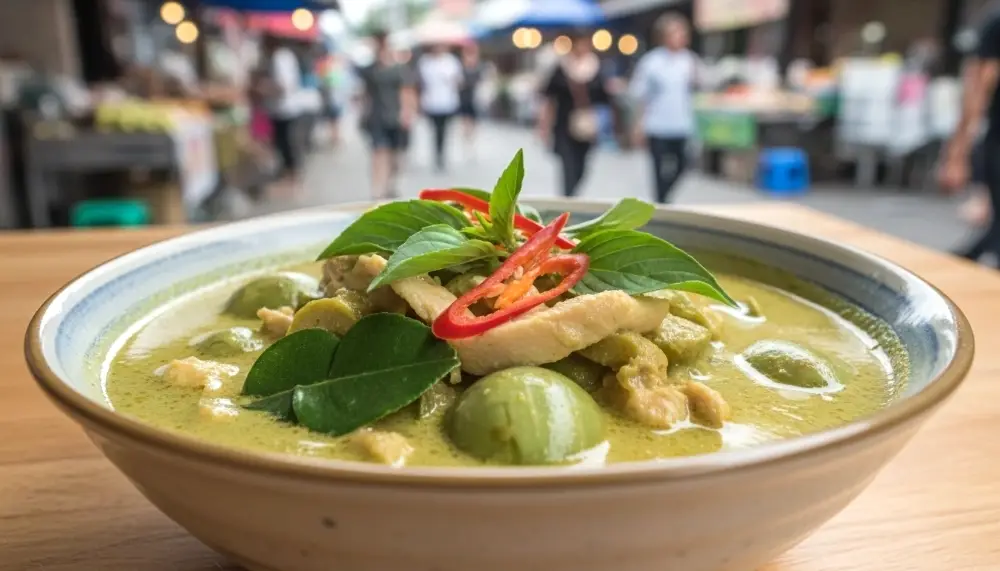

Compare hotel prices across Chiang Mai’s
best areas and book with confidence.
Filter by budget, location, or score
to find the right stay for your trip.
Asia Scenic Thai Cooking School:
Asia Scenic is the best option for travelers short on time or staying in the Old City. With prices starting at 800 THB (~$22.85) per person, it offers a City School garden experience and a Farm School option outside the moat, providing flexible morning and afternoon scheduling and a comprehensive introduction to Thai herbs grown on-site.
Convenience does not come at the cost of quality here. The city location features an impressive vertical garden where guests can see herbs growing before they reach the wok. It is a high-energy environment, perfect for social travelers. The school provides a cookbook at the end of the session, ensuring the skills learned in the Chiang Mai heat can be replicated at home. Book through Klook for the best published rate with instant confirmation.
Mama Noi: The Most Booked School in Chiang Mai
Mama Noi Organic Cooking School consistently ranks as the highest-reviewed cooking school in Chiang Mai on both TripAdvisor and Klook, making it the safe default booking for first-time visitors. Located near Nimman Road, classes cost 1,000 to 1,300 THB (~$28.55 to $37.15) per person for a half-day and include a morning market visit, organic garden tour, and five to six dishes cooked at individual stations.
What distinguishes Mama Noi is the focus on organic ingredient identification and sustainable sourcing. Students learn to distinguish between commercially grown and organically farmed versions of the same ingredient and understand why the difference matters for both flavour and health. The class size is kept small, typically 8 to 12 students, which means instructors can give individual attention at every station.
The school covers northern Thai classics including Khao Soi (the signature Chiang Mai curry noodle soup), Pad Thai, green and red curry from scratch, and mango sticky rice. A recipe booklet, a reusable shopping bag of surplus herbs, and a certificate of completion are included. Book through Klook or Get Your Guide with free cancellation up to 24 hours before.

Affordable Chiang Mai data without the
tourist SIM hassle. Saily’s eSIM
works on most modern phones and
tops up remotely whenever needed.
Beyond the Holiday: Slow Travel Sidebar

For those captivated by the northern lifestyle, Chiang Mai is a primary hub for the Destination Thailand Visa (DTV). The DTV requires proof of 500,000 THB (~$14,286) in liquid assets and remote employment, and grants five years of multi-entry stays with individual stays of up to 180 days.
Long-term stays often involve rentals in Nimman at 12,000 to 20,000 THB (~$343 to $571) per month, or more spacious villas in Hang Dong or Mae Hia at 15,000 to 35,000 THB (~$429 to $1,000) per month, where private gardens allow for the cultivation of your own organic Thai herbs. If you are considering a permanent move and have pets, be aware that cat and dog relocation requires a meticulous 30-day quarantine notice and specific vaccinations via the Chiang Mai Animal Quarantine Station.
Pro Tips For Stress Free Travel:
Transport: Use Grab or Bolt for transparent pricing to schools outside the moat. A Grab ride from Nimman to the Saraphi district (Grandma’s) costs 80 to 140 THB (~$2.30 to $4.00), though most schools include hotel pickup in the class price.
Booking: Klook and Get Your Guide often offer discounted rates for Grandma’s and Mama Noi with free cancellation. Use Agoda for nearby boutique stays at 1,500 to 3,000 THB (~$42.85 to $85.70) per night.
Connectivity: Ensure a stable connection with Yesim or an AIS eSIM for 600 to 900 THB (~$17.15 to $25.70) per month. Use NordVPN if you need to access home banking while on the school’s public Wi-Fi.
Currency: Most schools require THB cash or PromptPay QR bank transfer. Credit cards incur a 3% surcharge. Thai ATMs charge a flat 220 THB (~$6.30) per foreign card withdrawal, so bring sufficient cash before the class day.


Skip the airport SIM queue in Chiang Mai.
Yesim’s eSIM activates before takeoff
so you’re online the second your
plane touches the tarmac.
Note for the Nervous Traveler:
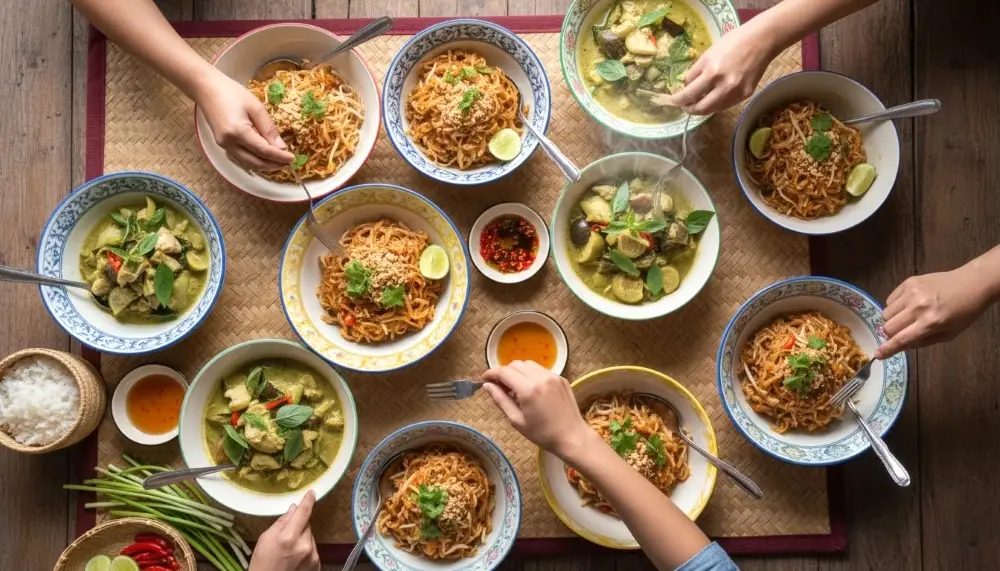
Chiang Mai is widely regarded as one of the safest cities in Southeast Asia. For those worried about hygiene, these professional cooking schools adhere to high international standards. You will wash your hands frequently, use bottled water for prep, and consume food you have cooked yourself at high heat.
If you have allergies, especially to peanuts or shellfish, these schools are exceptionally accommodating. Simply inform them during the booking process and they will adjust your station ingredients accordingly. All five schools in this guide have English-speaking instructors and are experienced with dietary restrictions including vegan, vegetarian, and halal requirements. Tourist Police are reachable on 1155 throughout Chiang Mai if you need any assistance during your visit.
FAQ: Frequently Asked Questions
Do I need to tip the cooking instructor?
Tipping is not a strict requirement in Thailand, but a tip of 100 to 200 THB (~$2.85 to $5.70) is deeply appreciated for exceptional service. If a 10% service charge is already included in your bill, which is common at high-end schools like Rim Tai, further tipping is entirely optional.
Are there vegan or halal options?
Yes. Most schools, particularly Thai Akha Kitchen and Grandma’s, are experienced at substituting fish sauce with soy sauce and meat with tofu or mushrooms. Always specify ‘Gin Jay’ (vegan) or halal requirements when booking. Asia Scenic and Mama Noi are also very accommodating of both dietary restrictions with advance notice.
What is the ‘Plus Plus’ charge on some luxury bills?
In higher-end establishments, you may see ‘++’ next to the price. This refers to a 10% service charge and 7% government VAT, which are added to the base price. Always factor this 17% increase into your budget for luxury classes. A listed price of 8,500 THB++ at the Four Seasons becomes approximately 9,945 THB (~$284.15) at checkout.
How far in advance should I book a Chiang Mai cooking class?
During peak season (November to February), book at least 3 to 5 days in advance as Mama Noi and Grandma’s fill quickly. During the green season (June to October) and shoulder periods, same-day or next-day bookings are often possible. Booking through Klook or Get Your Guide gives free cancellation up to 24 hours before most classes.
What is the best cooking class for complete beginners?
Asia Scenic Thai Cooking School at 800 to 1,200 THB (~$22.85 to $34.30) per person is the best option for first-timers due to its flexible scheduling and Old City location. Mama Noi at 1,000 to 1,300 THB (~$28.55 to $37.15) is the most reviewed and highest-rated overall, making it the safest default booking for visitors who want quality assurance. Both include hotel pickup.
What dishes will I learn to cook?
Most half-day classes cover four to five dishes. Standard Chiang Mai cooking class dishes include Pad Thai, green curry from scratch (including paste), Tom Kha Gai (coconut chicken soup), Massaman curry, spring rolls, and mango sticky rice. Schools specialising in Lanna cuisine also cover Khao Soi (the signature Chiang Mai curry noodle soup), Sai Oua sausage, and Nam Prik Noom (roasted green chilli dip).
How long does a cooking class last?
A half-day morning class typically runs from 08:30 to 13:00 (approximately 4.5 hours) covering four to five dishes. A half-day afternoon class runs from 14:00 to 18:30. A full-day class runs from 08:30 to 17:00 (approximately 8 hours) covering seven to eight dishes including a morning market visit. Most full-day class prices of 1,200 to 1,500 THB (~$34.30 to $42.85) include both the market tour and hotel transport.
Is transport to the cooking school included?
Most reputable schools include round-trip hotel pickup for bookings from the Old City and Nimman areas. Always confirm when booking as some schools charge 100 to 200 THB (~$2.85 to $5.70) extra for pickups from further areas like the Night Bazaar or Riverside. If transport is not included, a Grab ride to most school locations costs 60 to 150 THB (~$1.71 to $4.30).
Which school is best for learning about Northern Thai (Lanna) cuisine specifically?
Grandma’s Home Cooking School in Saraphi at 1,200 to 1,500 THB (~$34.30 to $42.85) is the best for genuine Lanna-style cooking with organic farm sourcing. Thai Akha Kitchen at 1,000 to 1,200 THB (~$28.55 to $34.30) goes even further by focusing on Akha hill-tribe indigenous cooking techniques not available at any other school. Both are distinct from Bangkok-style Thai cooking classes and teach dishes specific to the north.
Can I take a cooking class on the same day I arrive in Chiang Mai?
Yes, if you book in advance before travelling. Most schools have morning and afternoon sessions daily. If you have not pre-booked, same-day availability is common in low season but rare in peak season (November to February). The Asia Scenic city location is the most likely to have same-day spots due to its larger capacity and two daily sessions. Book through Klook or Get Your Guide for real-time availability.