Flying with Pets to Bangkok
The Quick Summary
Top Carriers: Thai Airways and Qatar Airways offer the most dependable infrastructure for temperature-controlled pet transport into Suvarnabhumi Airport (BKK). For regional arrivals, Bangkok Airways punches well above its weight.
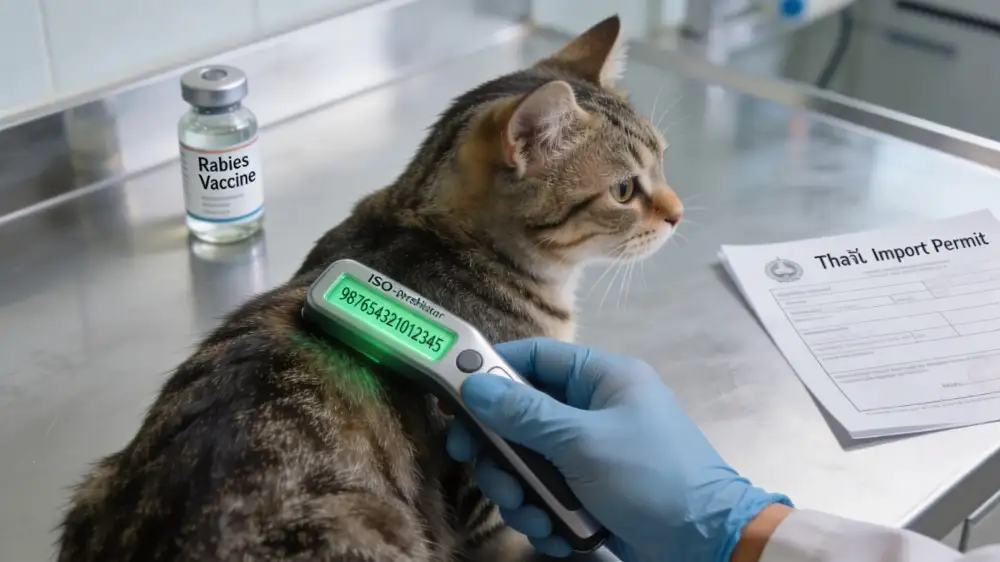
Essential Documents: Every animal must have an ISO-compliant 15-digit microchip implanted before the rabies vaccination, a valid rabies jab administered at least 21 days before travel, and a Thai DLD Import Permit (Form R1/1) secured between 7 and 60 days prior to arrival.
Arrival Fees: Budget for a flat 500 THB (~$14 USD) entry fee per animal at the Animal Quarantine Station (AQS). Cash only, in Thai Baht, no exceptions.
Age Rule: Your pet must be at least 4 months old at the time of travel. Arrive with an underage animal and Thai authorities will send it straight back on the next flight at your cost.
Bangkok is magnetic for a reason. The food, the energy, the warmth of its people, and yes, the fact that it genuinely welcomes animals if you arrive prepared. The difference between a smooth landing and a nightmare at the cargo terminal comes down to choosing the right airline and understanding exactly what Thailand expects at the door.

From boutique guesthouses to five-star
resorts, Agoda has Bangkok covered.
Strong Asia inventory means deeper
discounts than you’d find elsewhere.
Choosing the Right Airline: What Actually Matters

The airline you choose is not just a seat on a plane. It is your pet’s entire environment for anywhere between 8 and 22 hours. Temperature stability in the hold, trained live animal handlers on the ground, and a hub airport with a purpose-built animal facility are the three things that separate the good options from the genuinely risky ones.
Most North American and European carriers have quietly tightened their pet policies over the past few years, restricting animals to manifest cargo only and removing the option to fly as excess baggage. This matters because manifest cargo and excess baggage follow completely different collection processes on arrival in Bangkok. Excess baggage pets come through the main terminal near Baggage Carousel 8. Manifest cargo animals require a separate trip to the Cargo Terminal Free Zone, which only operates between 08:30 and 16:30. Book your flight accordingly.
If your journey involves a layover, the transit hub matters as much as the airline itself. Animals transiting through airports in the Middle East during summer face extreme tarmac heat. Qatar Airways is the standout exception because their Doha facility includes a dedicated live animal terminal with climate control, meaning your pet is not sitting in a ground vehicle in 45°C desert heat between connections.

GetYourGuide has Bangkok’s best
tours and experiences covered with
verified operators and instant
mobile vouchers on arrival.
Thai Airways: The Home Ground Advantage
Thai Airways is the national carrier, and that status carries practical weight at Suvarnabhumi. Their ground staff have a working relationship with the AQS team and understand the local documentation requirements with a precision that foreign carriers simply cannot match. When something is unclear with your paperwork, having an airline with institutional knowledge on your side is genuinely reassuring.
For small pets traveling on select international routes, Thai Airways still permits cabin travel, provided the combined weight of the animal and its carrier stays within their strict limit. This is increasingly rare among long-haul carriers, which makes Thai Airways a valuable option for owners of cats, toy breeds, and small terriers who would rather keep their companion under the seat in front of them than in the hold.
For larger animals, Thai Airways accepts hold transport up to 32kg and their cargo handling team at BKK is familiar with the handoff procedure to AQS. Fees for hold travel typically range between 3,500 THB and 12,000 THB (~$88 to $300 USD) depending on route length, pet size, and crate dimensions. Always confirm at the time of booking and again 72 hours before departure, as fees and policies are subject to change without much notice.
Qatar Airways and EVA Air: The Long-Haul Specialists
For travelers flying from Europe or the Americas, Qatar Airways is consistently the most recommended routing for pet transport to Bangkok. The Qatar Animal Hotel at Hamad International Airport is a genuine facility, not just a holding pen. Animals are housed in temperature-controlled suites, provided with water and basic monitoring during layovers, and handled by staff trained specifically for live animal transit.
Qatar does not permit pets in the cabin on most routes (with the notable cultural exception of falcons, which travel as carry-on in certain Gulf states). All pets travel as specialized cargo, with fees ranging from 7,000 THB to 25,000 THB (~$175 to $625 USD) depending on the route and animal size. It is expensive, but the level of professional handling justifies it for long journeys where the hold environment is genuinely a welfare concern.
EVA Air, Taiwan’s premium carrier, is a strong alternative for travelers originating in North America or Oceania who route through Taipei. EVA handles pets as checked baggage in the hold and their Taoyuan hub is well-equipped and notably cooler than Middle Eastern transit points. Fees run between 5,500 THB and 15,000 THB (~$138 to $375 USD). EVA does not offer cabin pet travel to Bangkok, but their hold standards are reliable and their ground team at BKK is experienced. If your journey naturally routes through Taipei, it is worth serious consideration.

Airalo covers Bangkok with a range of
data plans from days to a month.
No physical SIM swap, no roaming
bill shock when you get back home.
Comparative Airline Overview for BKK Arrivals
| Airline | Cabin Travel | Hold / Cargo | Est. Fee (THB) | Est. Fee (USD) |
|---|---|---|---|---|
| Thai Airways | Small Pets (select routes) | Yes (up to 32kg) | 3,500 – 12,000 | ~$88 – $300 |
| Qatar Airways | Falcons / Service Only | Yes (Specialized Cargo) | 7,000 – 25,000 | ~$175 – $625 |
| EVA Air | No | Yes (Checked Baggage) | 5,500 – 15,000 | ~$138 – $375 |
| Bangkok Airways | No | Yes (Regional) | 2,000 – 6,000 | ~$50 – $150 |
| Lufthansa / KLM | Small Pets (under 8kg) | Yes (Cargo) | 6,000 – 20,000 | ~$150 – $500 |
Prices are indicative and vary by season, route, and pet size. Always confirm current fees directly with the airline at the time of booking. If your flight is significantly delayed or cancelled due to disruption, AirHelp is worth checking to understand your compensation rights as both a passenger and as someone travelling with an animal as checked baggage.
Bangkok Airways: The Regional Gem
Known affectionately as Asia’s Boutique Airline, Bangkok Airways operates a network that connects BKK with Chiang Mai, Koh Samui, Luang Prabang, Siem Reap, and a handful of other regional gems. If you are already in Southeast Asia with a pet and need a short onward hop to Bangkok, they are excellent. Their service culture extends genuinely to animals, and their smaller aircraft and quieter airports result in less stressful ground handling for nervous pets.
Bangkok Airways does not offer cabin travel for pets; all animals travel in the hold. But on a 90-minute regional flight from Chiang Mai or Phnom Penh, that is a minor inconvenience rather than a welfare concern. Fees are notably lower than the long-haul carriers, sitting between 2,000 THB and 6,000 THB (~$50 to $150 USD) depending on the route and the size of the crate.
For expats already living in Southeast Asia who are relocating to Bangkok or making a regional move, Bangkok Airways is often the most practical and cost-effective option for a single leg of the journey.

Thai DLD Import Requirements: The Paperwork That Cannot Be Improvised
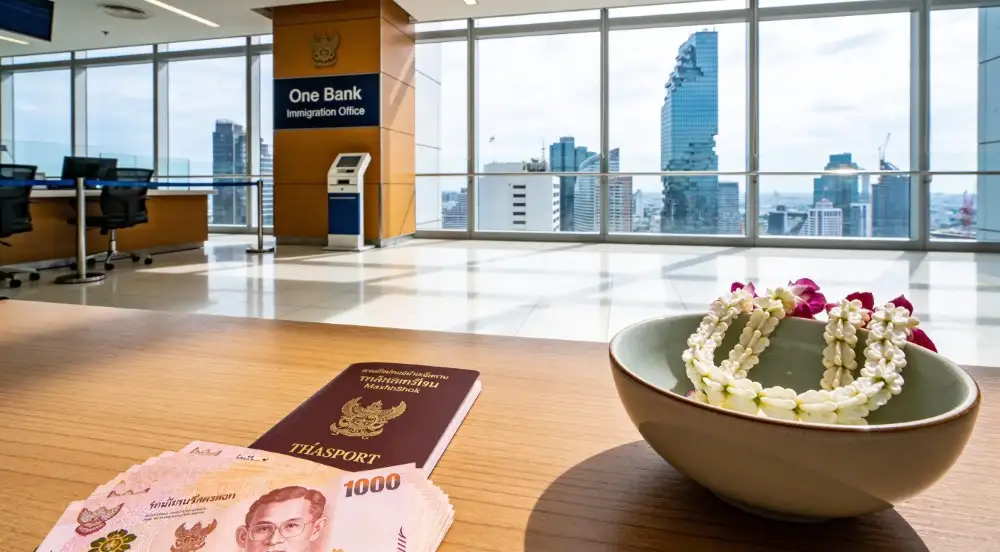
Thailand’s entry requirements for animals are governed by the Department of Livestock Development (DLD) and they are precise, logical, and unforgiving if you miss a step. The good news is that none of it is particularly difficult once you know the sequence. The bad news is that the sequence is non-negotiable.
Step 1: The Microchip. Your pet must have an ISO-11784/11785 compliant 15-digit microchip. This must be implanted before the rabies vaccination is administered. If your vet vaccinated first and chipped second, Thai authorities may consider the vaccination record invalid. This is the single most common and most expensive mistake people make. A new shot is required, followed by a mandatory 21-day wait before travel.
Step 2: Rabies Vaccination. The jab must be administered at least 21 days before arrival in Thailand. It must be current and within the manufacturer’s valid period. Bring the original vaccination certificate in English. If your certificate is in another language, have it officially translated before you fly.
Step 3: Health Certificate. A government-endorsed health certificate from a licensed veterinarian in your home country is required. This must be issued within 10 days of your flight. Many countries require an additional government endorsement on top of the vet signature. Check your own country’s export requirements carefully, as this varies significantly.
Step 4: Import Permit (Form R1/1). Apply to the Thai DLD for an Import Permit between 7 and 60 days before arrival. You can apply through the DLD’s online portal or via a licensed pet relocation agent. The permit is animal-specific, meaning each pet requires its own permit. Do not attempt to group multiple animals under a single permit.

Stay online in Bangkok without breaking
the budget. Saily offers flexible
eSIM plans with no contract and
no roaming charges going home.
The Arrival Process at Suvarnabhumi: What Happens After You Land
Clearing immigration for yourself is the easy part. Your pet’s arrival follows a separate and parallel process, and the route through the airport depends entirely on how the airline classified your animal during booking.
If your pet traveled as Excess Baggage: Head to Baggage Carousel 8 after clearing immigration. The Animal Quarantine Station (AQS) office is located in this area and operates 24 hours a day, every day of the year. This is the more convenient option for arrivals at any hour, and it is the route most travelers with small to medium animals will use.
If your pet traveled as Manifest Cargo: After collecting your own luggage, you need to exit the main terminal and proceed to the Cargo Terminal Free Zone, which is a separate building on the airport grounds. This office keeps standard business hours: 08:30 to 16:30, Monday through Friday. If your flight lands outside those hours, your pet will be held in the cargo facility overnight and you will collect them the following morning. Plan your arrival date carefully if this applies to you.
At the AQS desk, the officer will verify your Import Permit, microchip certificate, vaccination records, and health certificate. They will perform a brief visual inspection of the animal. If everything is in order, the 500 THB (~$14 USD) entry fee is collected in cash and your pet is released. The entire process typically takes between 20 and 45 minutes.
Print every document in colour. The AQS does not accept digital copies on a phone screen. Bring originals where required and colour-printed copies as backup. Have at least 1,000 THB (~$25 USD) in cash on you to cover the entry fee and any minor processing charges.

Book Bangkok day trips, attractions,
and activities in one place. Check
real reviews and lock in your spot
before the popular slots go.
Crate Requirements and Pre-Flight Preparation

IATA-compliant travel crates are mandatory for hold travel on all airlines accepting pets to Bangkok. The key standard is that your animal must be able to stand, turn around, and lie down naturally inside the crate. Most airlines will reject an undersized crate at check-in, so measure your pet and cross-reference the IATA sizing guidelines before purchasing a crate. Do not leave this until the week before your flight.
For long-haul hold travel, line the crate base with an absorbent pad rather than loose bedding, which can shift and create a hazard. Attach a water dispenser that can be refilled from outside the crate without opening the door. Many airlines will top up water during layovers; attaching a note to the crate requesting this is standard practice and generally respected.
Avoid sedating your pet for the flight. Most vets advise against it for hold travel, as sedation affects the body’s ability to regulate temperature and can increase risk during pressure changes. If your animal is highly anxious, discuss natural calming options with your vet well in advance of the trip and do a trial run at home to see how they respond.
Familiarise your pet with the crate at least three weeks before travel. Feed them inside it, let them sleep in it, and treat it as their regular space. Animals that associate the crate with safety handle the journey dramatically better than those encountering it for the first time at the check-in desk.
Getting from BKK to Your Accommodation with a Pet
Once your pet clears the AQS desk, you need transport. This is where many first-time arrivals make a costly mistake: assuming a standard taxi or airport shuttle will accommodate a large crate. Most lime-green Bangkok taxis will flat-out refuse a crate larger than a carry-on bag, particularly late at night. Do not count on finding a willing driver at the kerb.
The practical solution is to pre-book transport before you land. Welcome Pickups is ideal for family arrivals or anyone with multiple bags and an animal crate, as their vetted drivers use larger vehicles and confirm your requirements in advance. Alternatively, use the GrabPet option within the Grab app, which pairs you with drivers who have specifically opted in to carry animals.
Here is where mobile data becomes genuinely critical, not just convenient. Both Grab and PassApp (useful if you onward travel to Cambodia) require SMS verification codes to activate on a new device. If you land without a working data connection, you cannot easily set up or use these apps in the arrivals hall. Activate your Airalo, Yesim, or Saily eSIM data plan before you board your final flight, while you still have reliable Wi-Fi. The few minutes it takes could save you an hour of confusion at the airport with a stressed animal in tow.
If your pet arrived via the Cargo Terminal and you need to navigate across the airport grounds to collect them, use Google Maps with the satellite view to orientate yourself. The terminal layout at BKK is large and the cargo zone is not well-signposted for first-time visitors. Having a local SIM from AIS or TrueMove, or a working eSIM, also lets you ring the AQS directly on 02-134-0636 if there is any delay in releasing your animal from the hold.

Finding Pet-Friendly Accommodation in Bangkok
Bangkok’s accommodation scene is enormous and varied, but genuinely pet-friendly options require active filtering rather than assumption. The phrase “pet-friendly” in Thai property listings often means small dogs under 5kg or cats only, with larger breeds simply not mentioned. Read the fine print before you book.
For holiday stays, Agoda and Booking.com both have dedicated pet-friendly filters and allow you to specify breed and weight during the search process. Use both platforms and compare, as inventory and pricing between them varies. Many boutique hotels in Thonglor, Ekkamai, and Ari actively market themselves as pet-welcoming and some even provide food bowls, walking leads, and recommended vet contacts for guests.
For longer stays and expat-level relocations, the weight limit issue becomes more pressing. Many condominiums in Bangkok officially cap pets at 10kg in their house rules, though enforcement is inconsistent. Developments in On Nut, Phra Khanong, and Bang Na tend to be more relaxed than prime Sukhumvit towers, where building management is stricter. If you have a larger dog, be upfront with the landlord or property manager and get written permission in your rental agreement. Verbal assurances are not reliable.
Neighbourhoods worth targeting for pet owners include Thonglor (expensive but genuinely pet-welcoming with excellent vet access), Ekkamai (slightly more affordable with good parks and a strong expat community), and Ari (quieter, more residential, with green spaces). All three have English-speaking veterinary clinics within easy reach.
Veterinary Care in Bangkok: Better Than You Expect
Bangkok has a genuinely excellent veterinary sector, particularly in the Thonglor and Ekkamai corridor. Clinics like Thonglor Pet Hospital and Paws & Claws operate with international standards, employ English-speaking vets, and manage international pet passports for owners who plan to travel onward from Thailand to other countries. Several clinics also offer 24-hour emergency services, which is worth knowing if you have a pet prone to anxiety or health complications.
One thing to understand about Thai veterinary billing is the “Plus Plus” system. High-end pet hospitals will add a 10% service charge and 7% VAT on top of the base cost of treatment. This is standard practice and not negotiable. A consultation that appears to cost 800 THB (~$20 USD) will come out at roughly 970 THB (~$24 USD) after Plus Plus. Budget for it and it will not surprise you.
For expats and long-stay remote workers, it is worth considering pet insurance or a broader health and evacuation plan. SafetyWing offers nomad-focused insurance that can be extended to cover some pet-related emergency costs when bundled with their broader plans. It is not a dedicated pet insurance product, but for people already using SafetyWing for their own medical coverage, it is worth understanding what is and is not included.
Routine preventatives like heartworm, tick, and flea treatments are widely available in Bangkok at a fraction of Western prices. Stock up when you arrive. Thailand’s warm climate means year-round parasite risk, so monthly preventatives are not optional; they are part of responsible pet ownership in a tropical city.
Navigating Bangkok with a Pet: City Logistics
Bangkok’s public transport system is excellent for humans and completely off-limits for animals. The BTS Skytrain, MRT Subway, and Airport Rail Link all prohibit pets outright, including animals in covered carriers. There are no exceptions, no special carriages, and no workarounds. Accept this early and plan accordingly.
Grab’s GrabPet service is the most reliable daily transport solution. Drivers who offer GrabPet have confirmed their vehicle is suitable and they are willing to take animals. Standard GrabCar drivers may or may not accept a pet, and declining at the last moment is common. Book GrabPet specifically to avoid frustration.
Bolt is an alternative ride-hailing platform that has grown significantly in Bangkok and is often cheaper than Grab for standard journeys. However, Bolt does not have a dedicated pet option, so you are reliant on the driver’s willingness. For routine transport with a large dog or a crate, GrabPet remains the safest bet.
For intercity travel with a pet, meaning journeys to Chiang Mai, Hua Hin, or Pattaya, private vehicle hire is the most practical option for most pet owners. Bus and rail travel with animals is technically possible but logistically complicated, as regulations vary by operator and animals in holds are not always well-supervised. Use 12GO to research routes and compare options in advance, particularly around national holidays when transport fills up weeks ahead.
Long-Term Stays, the DTV Visa, and Settling Your Pet in Thailand
Thailand’s Destination Thailand Visa (DTV) has changed the calculus for remote workers and digital nomads considerably. A five-year visa with multiple entries and a 180-day stay per visit means that Bangkok is no longer a pit stop but a genuine base. If you are making that kind of commitment, bringing your pet along is not a holiday indulgence; it is part of building a real life in a new place.
Long-term residents should register with a local vet clinic in their neighbourhood soon after arriving. This creates a medical history record, keeps vaccinations current on the Thai calendar, and positions you to obtain the necessary documentation if you plan any future regional travel. Vets in Thonglor and Ekkamai are accustomed to managing international pet passports and handling the paperwork for onward travel to countries like Singapore, Japan, and Australia, all of which have their own strict import protocols.
For co-working and daily life, Bangkok’s cafe culture is expansive but not universally pet-friendly in the way that some European cities are. The dog-friendly cafe scene is growing fast in Thonglor, Sukhumvit 49, and Ari, with dedicated pet cafes and outdoor terraces welcoming animals on leads. Use Get Your Guide or Klook to find walking tours and day excursions in Bangkok that are operated with flexibility for pet-owning travellers, particularly in the more relaxed outer districts like Bang Krachao, Bangkok’s green lung across the Chao Phraya.
If you rely on cafe Wi-Fi for remote work, and most DTV holders do at some point, a VPN is not optional. Public networks in co-working spaces and coffee shops across Bangkok carry genuine security risk. NordVPN is worth having active whenever you are on a network you do not control, particularly for banking, client communications, and anything that involves sensitive data. It also allows you to access home-country streaming services without restriction, which matters when you are settling into a long stay.
Pro Tips for a Stress-Free Arrival
Cash first, always. Carry at least 2,000 THB (~$50 USD) in Thai Baht for the airport entry fee, transport, and any unexpected minor charges. While Sukhumvit malls and international hotels accept cards freely, the administrative world of pet entry runs entirely on cash. The AQS does not accept credit cards or foreign debit transfers.
Colour-print everything. Your Import Permit, microchip certificate, vaccination records, and health certificate should all be printed in colour. Bring originals where you have them and colour copies as backup. A folder with dividers, labelled by document type, makes the AQS desk process noticeably smoother.
Book your airport transfer in advance. Welcome Pickups allows you to specify a large vehicle at the time of booking and confirm that you are travelling with an animal in a crate. Do this 24 hours before you land so there is no scramble in arrivals.
Activate your eSIM before you board your final flight. Whether you are using Airalo, Yesim, or Saily, get your data plan running while you still have reliable airport Wi-Fi. The baggage hall at BKK has patchy connectivity and the last thing you want is to be fumbling with an eSIM activation while your pet is waiting at the AQS desk.
Save the AQS number. Programme 02-134-0636 into your phone before you travel. If there is any delay in releasing your pet from the hold, this is the number to call. Having it saved saves valuable minutes.
Thai people genuinely love animals. The AQS officers see hundreds of pets a week and are generally efficient and kind if your paperwork is in order. If you are feeling overwhelmed in the arrivals hall, look for the Information desks. Ask for help without hesitation. The warmth you receive in return is one of the first and most genuine impressions Bangkok makes on new arrivals.

Stay online in Bangkok without the
daily data limits of tourist SIMs.
Yesim’s eSIM offers unlimited 5G
from around $10 for the whole trip.
Frequently Asked Questions
What is the pet entry fee at Suvarnabhumi Airport and how do I pay it?
The official entry fee charged by the Animal Quarantine Station (AQS) is 500 THB (~$14 USD) per animal. Payment must be made in Thai Baht cash at the AQS desk, located near Baggage Carousel 8 for excess baggage arrivals, or at the Cargo Terminal Free Zone for manifest cargo arrivals. No credit cards, foreign debit cards, or digital payments are accepted. Carry at least 1,000 THB to cover the fee and any minor processing charges that occasionally apply.
Does my pet need to be quarantined when entering Thailand?
No mandatory quarantine applies provided all your documentation is complete and correct. The AQS officer will conduct a brief visual health check, verify your Import Permit, microchip certificate, vaccination record, and health certificate, then release your animal immediately upon payment of the 500 THB entry fee. If documentation is incomplete or the microchip and vaccination sequence is incorrect, your pet may be held until the issue is resolved, which can extend to days or weeks depending on the nature of the problem.
Which airlines allow pets in the cabin on flights to Bangkok?
Thai Airways permits small pets in the cabin on select international routes, provided the combined weight of the animal and its carrier does not exceed their limit (confirm current limits directly with the airline at booking). Certain European carriers including Lufthansa and KLM may also permit small pets in-cabin, typically under 8kg including the carrier. Most other long-haul carriers restrict all pets to hold or cargo transport. Policies change frequently, so always confirm at the time of booking and again 72 hours before departure.
What is the correct order for the microchip and rabies vaccination?
The ISO-compliant 15-digit microchip must be implanted before the rabies vaccination is administered. This is the single most important sequence to get right. If the vaccination was given first, Thai authorities may deem the vaccination record invalid because the chip was not in place to link the record to the animal. In that case, a new vaccination must be administered and you must wait a minimum of 21 days before travelling. Book your vet appointment well in advance and confirm the sequence explicitly.
How far in advance do I need to apply for the Thai DLD Import Permit?
The Import Permit (Form R1/1) from the Department of Livestock Development must be applied for between 7 and 60 days before your arrival date in Thailand. Applications made fewer than 7 days before arrival are not processed in time. Applications can be submitted via the DLD’s online portal or through a licensed pet relocation agent. Each animal requires its own individual permit. The permit is specific to the animal, the date of arrival, and the entry point.
Can I take my pet on the BTS Skytrain or MRT Subway in Bangkok?
No. Pets are strictly prohibited on the BTS Skytrain, MRT Subway, and Airport Rail Link, including animals in enclosed carriers or bags. There are no exceptions. Transport options for pet owners in Bangkok include GrabPet (the most reliable option), Bolt (no dedicated pet service but some drivers are willing), Welcome Pickups for pre-booked transfers from the airport, and private vehicle hire for intercity journeys. Budget for private transport as an ongoing city living cost.
What happens if my pet arrives as manifest cargo rather than excess baggage?
If your airline classified your pet as manifest cargo, you will not collect them from the main terminal. After clearing immigration and collecting your own luggage, you need to proceed to the Cargo Terminal Free Zone, which is a separate building on the Suvarnabhumi Airport grounds. This office operates Monday to Friday, 08:30 to 16:30. If your flight lands outside these hours, your pet will be held in the climate-controlled cargo facility until the office reopens. Plan your arrival day and time accordingly to avoid an overnight wait.
Is a Rabies Titer Test (RNATT) required to bring a pet into Thailand?
A Rabies Neutralising Antibody Titre Test (RNATT) is not strictly required for entry into Thailand from all countries. However, it is highly recommended for several reasons. If you are arriving from a country classified as high-risk for rabies, it significantly reduces the risk of complications at the AQS desk. If you plan to travel onward from Thailand to countries like Japan, Australia, New Zealand, or Singapore, an RNATT is essential for those destinations and must be conducted at a specific interval before travel. Getting the test done proactively is always the safer long-term strategy.
What are the best neighbourhoods in Bangkok for pet owners to live in?
Thonglor, Ekkamai, and Ari are consistently the top choices for pet-owning expats in Bangkok. Thonglor offers the highest concentration of pet-friendly cafes, boutique pet shops, and English-speaking veterinary clinics, though rental costs are correspondingly high. Ekkamai sits just east and is slightly more affordable with a similar community feel. Ari is quieter and more residential with good parks and a strong neighbourhood character. On Nut and Phra Khanong are increasingly popular for budget-conscious expats with pets, with more relaxed building rules and lower rents. Always confirm a building’s specific pet policy and weight limits before signing any rental agreement.
What is the minimum age for a pet to enter Thailand and what happens if this rule is not met?
All animals must be at least 4 months old at the time of arrival in Thailand. If your pet does not meet this age requirement, Thai authorities will refuse entry and the animal will be returned on the next available flight to the country of origin. All costs associated with the return journey are the responsibility of the owner. There is no appeal process and no temporary holding period offered. Do not attempt to travel with an underage animal; it is distressing for the pet, expensive for you, and completely avoidable with proper planning.