Thailand Jungle Trekking
This site contains affiliate links. We may earn a commission at no extra cost to you.
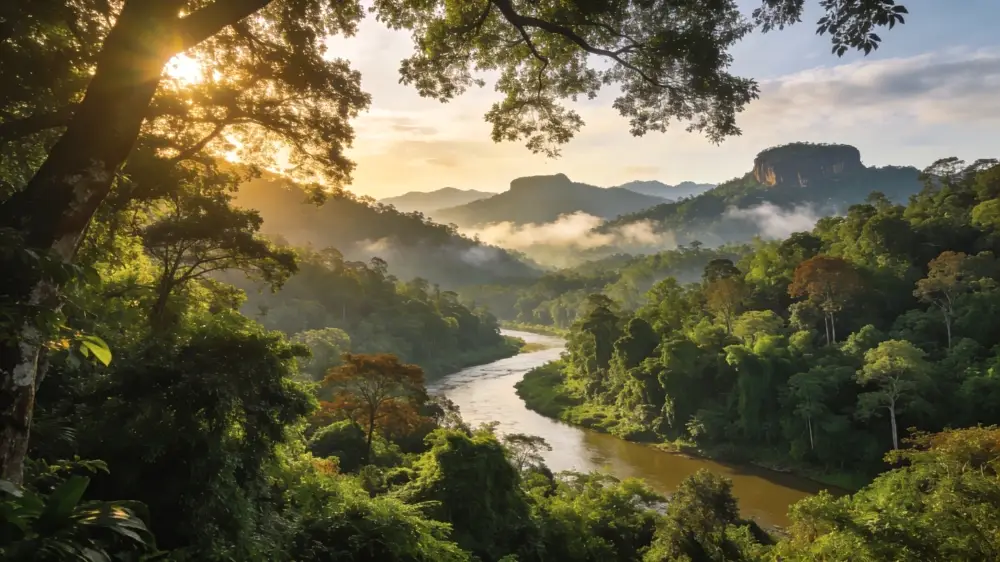
Jungle trekking in Thailand offers something genuinely rare in modern travel: the chance to step away from the busy tourist hubs and experience a more natural, wilder, and more honest side of the country. Whether you are walking through misty northern mountain ranges at dawn, pushing through rainforest valleys in the south, or discovering a hidden waterfall that does not appear on any map, trekking is one of the most memorable and physically rewarding things you can do here.
For first-time visitors, it is also surprisingly accessible. With guided treks operating at every fitness level, welcoming local hill tribe communities, and well-established routes across multiple regions, you do not need to be an experienced hiker to enjoy Thailand’s incredible jungles. You just need to show up with the right mindset, comfortable footwear, and a sense of adventure.
The Quick View
Entry Requirements: Most National Parks charge a tiered entry fee of 200 THB to 400 THB (roughly £4 to £8) for foreign visitors, payable in cash at the gate. ATMs are rarely available near park entrances, so always carry Thai Baht before you leave your base town.
Seasonal Timing: The peak trekking window runs from November to February, when trails are dry, temperatures are cooler, and visibility through the canopy is at its best. June to October brings lush greenery, roaring waterfalls, and dramatically reduced crowds, though trails can be muddy and leeches become more active.
Gear Essentials: Leeches, humidity, and uneven terrain are the primary physical challenges. Moisture-wicking fabrics, leech socks, solid ankle-support footwear, and a quality water bottle are non-negotiable for any trek beyond two hours.
Logistics: Khao Yai in central Thailand and Khao Sok in the south are the primary hubs for organised multi-day expeditions, both accessible via private transfer, local bus networks, or intercity coaches booked through 12GO. Chiang Mai remains the undisputed gateway for northern highland trekking.
Connectivity: Activate your Airalo, Yesim, or Saily eSIM data plan before you board your flight to Thailand. Many trekking apps, offline maps, and booking platforms require SMS verification that will not reach a foreign SIM once you are under heavy jungle canopy with patchy signal.

Book Thailand day trips, attractions,
and activities in one place. Check
real reviews and lock in your spot
before the popular slots go.
What Is Jungle Trekking in Thailand?
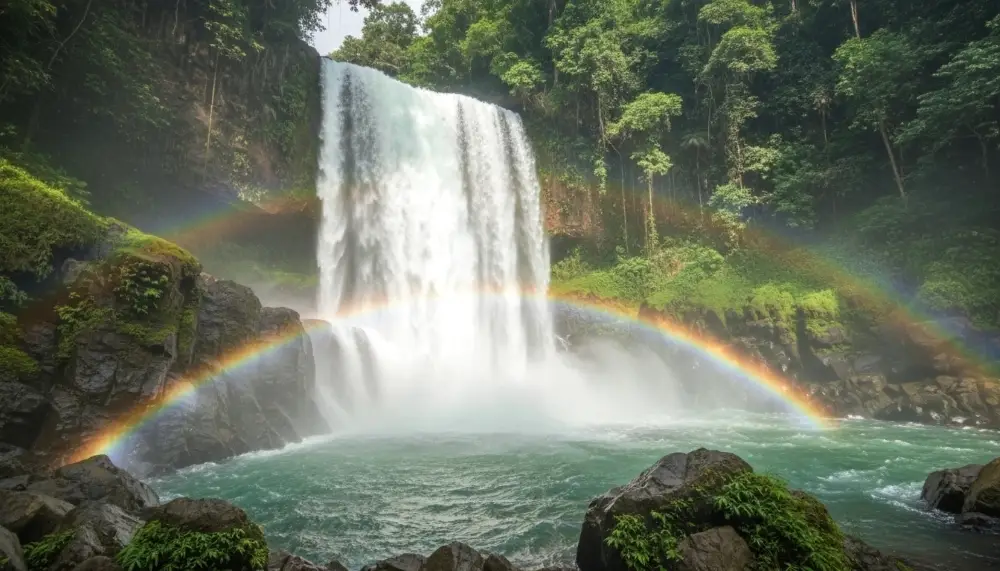
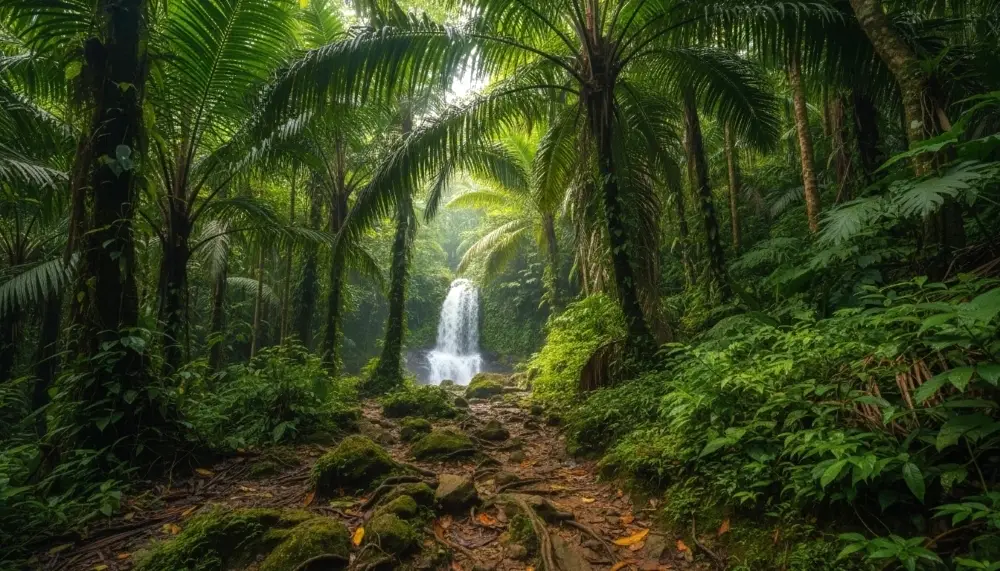
In practical terms, jungle trekking means hiking through Thailand’s tropical forests and mountainous national parks, almost always with a local guide who knows the terrain intimately. It is fundamentally different from hiking in Europe or North America. The environment is denser, more humid, more alive, and far more unpredictable in the best possible way.
Most treks include a combination of activities such as:
- Hiking through dense rainforest along trails that have been used by local communities for generations
- Visiting remote hill tribe villages and spending time with communities that maintain traditional ways of life
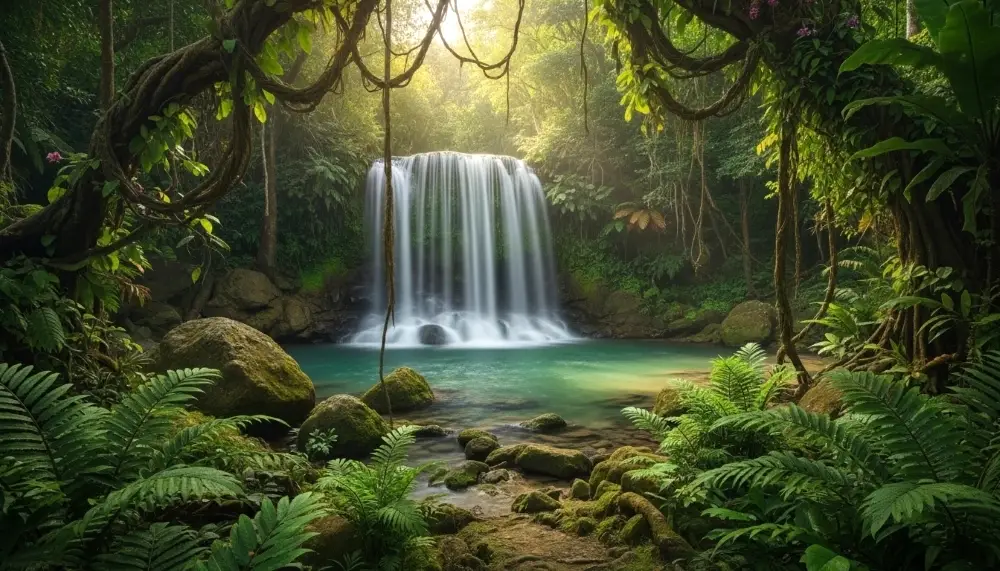
- Swimming in jungle waterfalls that you will likely have entirely to yourself
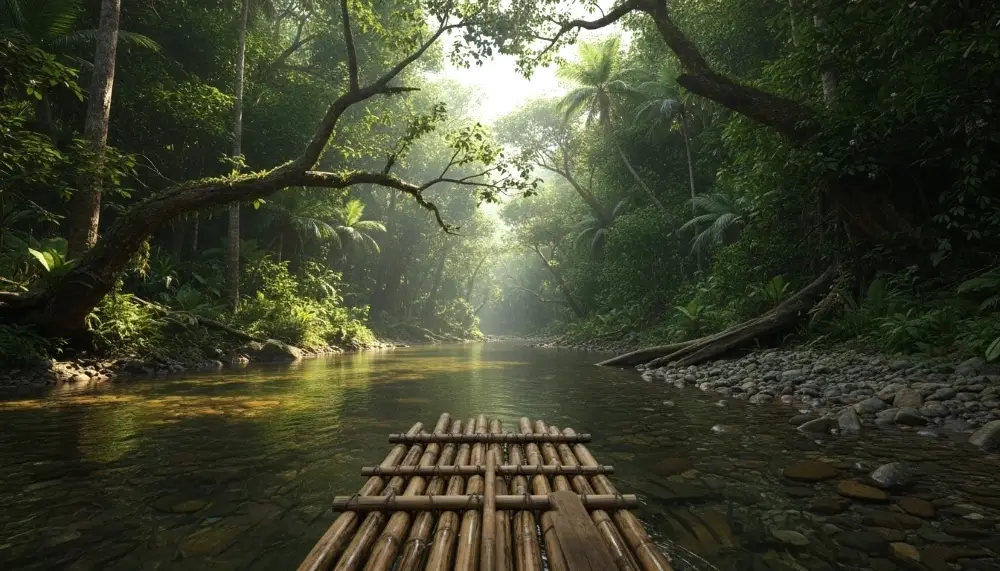
- Bamboo rafting down rivers with a local guide steering from the back
- Learning about jungle plants, medicinal herbs, and wildlife from guides who grew up reading the forest
Treks can range from a focused half-day hike to multi-day adventures with overnight stays in local villages or jungle camps. The physical demand scales accordingly, and most operators are excellent at matching the itinerary to the group’s fitness level before departure.
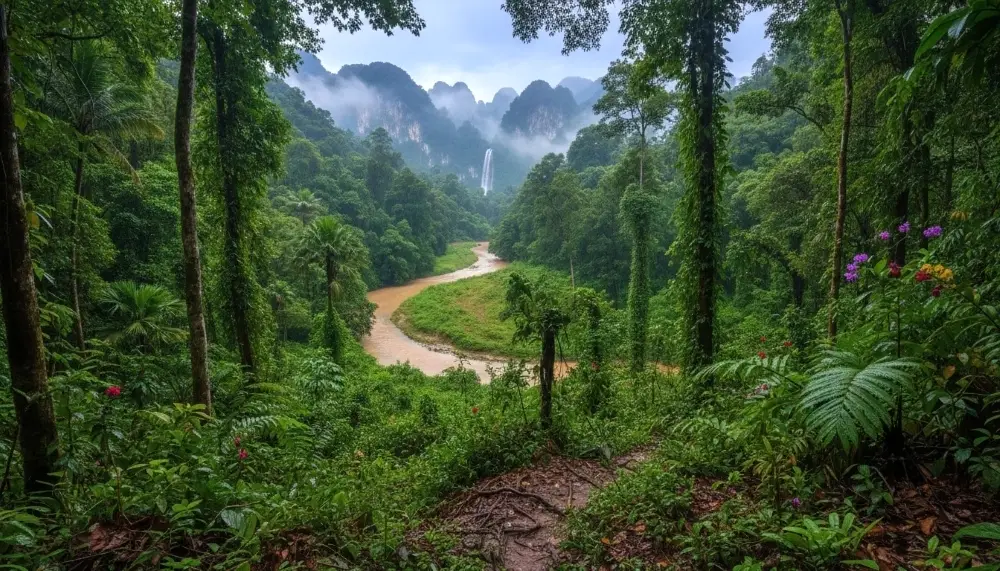
Thailand offers three distinct trekking ecosystems. The northern regions focus on high-altitude ridges, cooler cloud forests, and deep hill tribe cultural immersion. The central parks provide accessible monsoon forests with extraordinarily high wildlife density. The southern parks feature some of the most ancient rainforests on earth, combined with dramatic limestone karst topography that makes the scenery feel almost prehistoric. Choosing a destination depends on the balance you want between physical challenge, wildlife observation, and cultural experience.
| Region | Primary National Park | Terrain Type | Key Feature |
|---|---|---|---|
| North | Doi Inthanon | Cloud Forest | Highest peak in Thailand |
| Central | Khao Yai | Monsoon Forest | Wild elephant sightings |
| West | Erawan (Kanchanaburi) | River Valley Forest | Multi-tiered waterfalls |
| South | Khao Sok | Ancient Rainforest | Limestone karsts and lake bungalows |

Skip-the-line tickets and guided walks
in Thailand with English-speaking
guides. Read real traveller reviews
before committing to a single one.
The Best Places for Trekking
Northern Thailand
The north, anchored by Chiang Mai, is the ultimate gateway to Thailand’s rugged highlands and misty mountain ranges. Doi Inthanon National Park, sitting at the highest point in the country at 2,565 metres above sea level, provides a collection of diverse trails that wind through moss-covered cloud forests and past cascading waterfalls, where temperatures can genuinely drop toward 0°C during December nights. This is the one part of Thailand where you might actually need a light jacket.
Beyond Doi Inthanon, the broader Chiang Mai and Chiang Rai highlands offer some of the most culturally rich trekking experiences in the country. Routes through Doi Chiang Dao, the third highest peak in Thailand, pass through relatively untouched cloud forest with excellent birdwatching opportunities and occasional sightings of barking deer at dawn. The northern region is ideal for travellers seeking cooler climates, a strong connection to the coffee-growing cultures of the highland villages, and multi-day treks with genuine community immersion rather than a tourist performance.
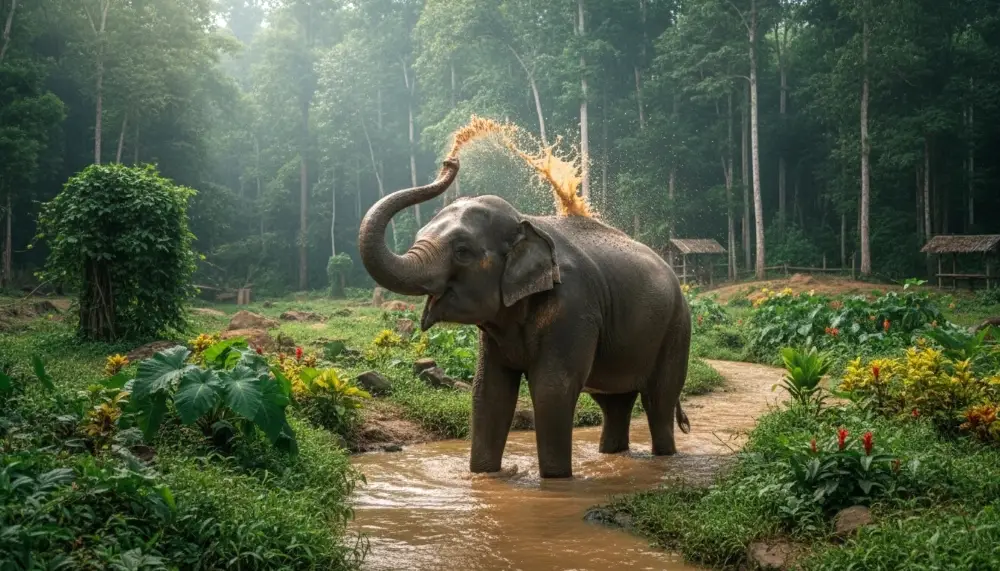
Central Thailand is dominated by Khao Yai, a UNESCO World Heritage site and arguably the country’s most impressive showcase of biodiversity. The infrastructure here is exceptionally well-developed, featuring clearly marked trails such as the Haew Narok waterfall path, where hikers regularly spot wild elephants, macaques, and stunning exotic birdlife within a sprawling tropical canopy. Guided night drives in open vehicles are a particularly popular addition for wildlife enthusiasts visiting this park.
Western Thailand
Western Thailand offers more remote jungle environments and significantly fewer crowds than the major tourist hubs further north and south. The Kanchanaburi province is home to beautiful, dense forest trails, winding river systems, and expansive national parks including Erawan and Sai Yok that remain genuinely undervisited by international travellers despite their extraordinary natural quality.
Erawan National Park is named after the mythical three-headed white elephant of Hindu tradition, and the seven-tiered waterfall cascade that gives the park its fame is among the most beautiful natural features in the country. Treks here are often multimodal, combining traditional forest hiking with refreshing swims in the emerald pools at each waterfall tier and serene bamboo rafting experiences on the River Kwai. The historical weight of the region, shaped by the famous Death Railway of the Second World War, adds an extraordinary depth to the overall experience that most visitors do not anticipate.
This is the region for travellers who want to disappear into greenery and explore a landscape characterised by dramatic limestone caves, dense bamboo groves, and a quieter pace of adventure. Getting here from Bangkok is straightforward on bus or train via 12GO, and Agoda lists a solid selection of riverside guesthouses and eco-lodges near the park boundaries that make an ideal base for two or three days of exploration.
Southern Thailand
While the south is globally famous for its postcard-perfect beaches and turquoise islands, it also contains some of the most extraordinary rainforest trekking on the planet. Khao Sok National Park is widely considered the crown jewel of jungle trekking in the country, featuring an ancient ecosystem that is believed to be older than the Amazon rainforest by tens of millions of years. Walking through it, you get a visceral sense of just how primordial this landscape actually is.
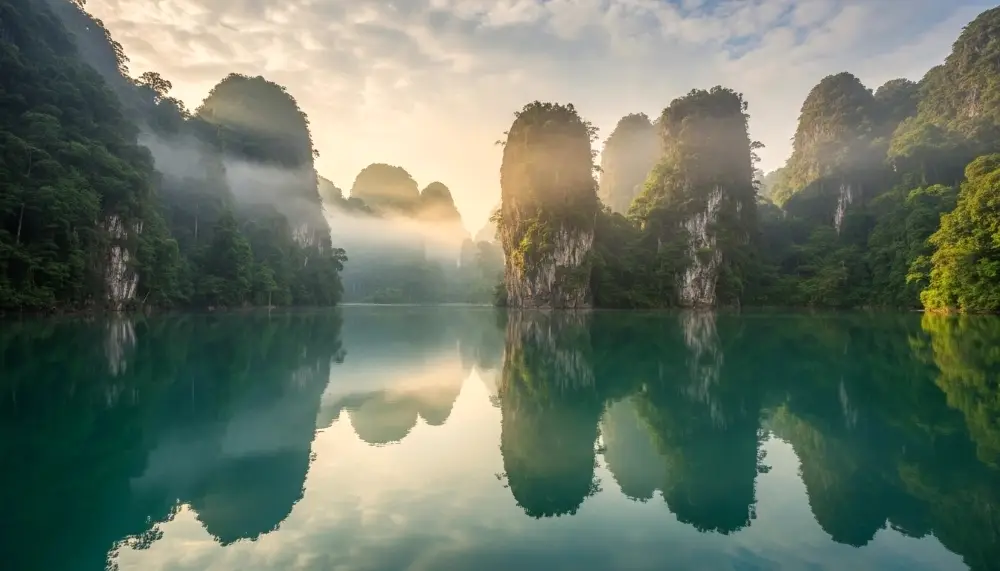
The landscape is defined by towering limestone karst cliffs rising hundreds of metres from the jungle floor, hidden cave systems, and extraordinary wildlife diversity ranging from white-handed gibbons whose morning calls carry across the entire valley to the rare and spectacular Rafflesia flower, the world’s largest bloom, which appears seasonally on the forest floor. To fully experience this environment, most travellers combine intense jungle trekking with long-tail boat tours across Cheow Lan Lake and an overnight stay in the famous floating bungalows, waking before dawn to the sight of mist rising off the still water with limestone towers emerging from it like ancient sentinels.
Pre-booking your Khao Sok accommodation is strongly recommended during peak season. Booking.com and Agoda both carry excellent lakeside floating bungalow options, and they go quickly between November and February. For organised trekking day trips that include boat transfers and guide fees, Get Your Guide offers curated packages with transparent pricing and flexible cancellation.

Stay closer to the action in Thailand.
Agoda lists guesthouses to resorts
with verified reviews and instant
booking at competitive rates.
What to Expect on the Trail
Most jungle treks in Thailand are designed to be thoroughly enjoyable rather than punishing. The vast majority of operators pitch their routes at travellers with moderate fitness rather than seasoned mountaineers, and the emphasis is firmly on experience and environment over speed and distance covered.
A typical single-day trek might include four to six hours of walking along forest trails, with regular stops to rest, photograph wildlife, swim in a waterfall pool, or simply sit and listen to the sounds of the jungle. Guides routinely pause to point out interesting plants, insects, animal tracks, and edible species that the average visitor would walk straight past without noticing.
Multi-day treks typically include:
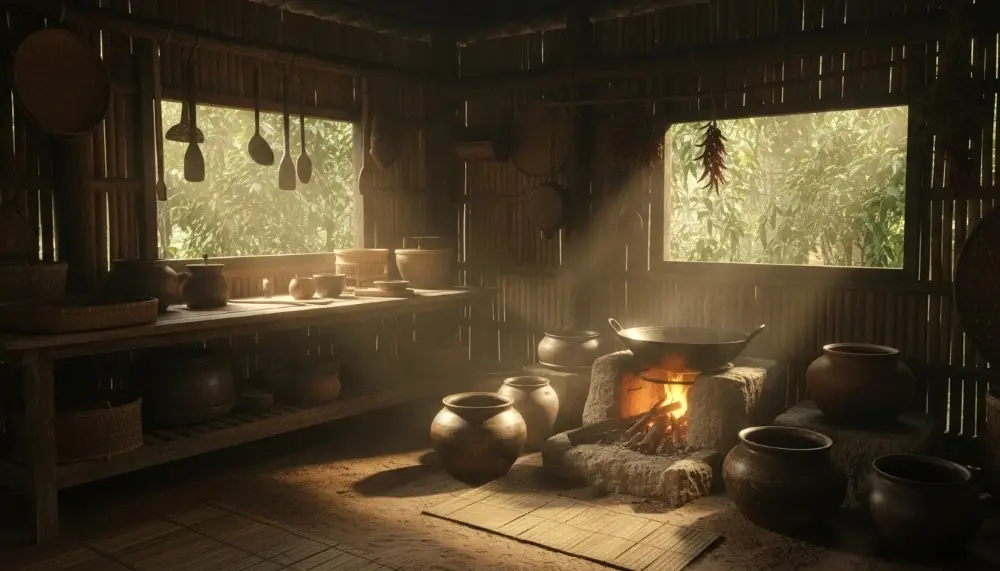
- Simple but comfortable village accommodations, usually in bamboo longhouses with sleeping mats and mosquito nets
- Local Thai meals cooked over open fires using ingredients sourced from the surrounding forest and village gardens
- Meaningful cultural experiences with hill tribe communities who actively welcome responsible trekking groups
- River crossings or bamboo rafting sections that break up the walking and add variety to the day
- Evening campfire gatherings where guides share stories about the forest, local history, and wildlife behaviour
The overall pace is genuinely relaxed, which makes trekking accessible to families with older children, solo travellers of any age, and couples who want an active holiday without the pressure of a rigid athletic schedule. That said, the humidity alone requires a baseline level of physical resilience, and anyone with serious cardiovascular or joint conditions should consult a doctor before booking a full-day trek.

Airalo covers Thailand with a range of
data plans from days to a month.
No physical SIM swap, no roaming
bill shock when you get back home.
Pro Tips For Stress-Free Trekking
Successful jungle expeditions rely on a considered combination of digital tools, physical preparation, and local knowledge. Getting these right before you leave your guesthouse makes an enormous difference to the quality of the experience.
Booking Tours: Use Get Your Guide for vetted guided jungle trek bookings with transparent pricing and free cancellation. Klook is also worth checking for regional day trip packages, particularly around Khao Yai and Chiang Mai, where they frequently list exclusive group discounts.
Cash: Always carry Thai Baht (THB) in cash. National park entry gates, rural food stalls, village guesthouses, and local guide tips all require cash. There are no ATMs near most trailheads.
Health: Carry a basic first aid kit with rehydration salts, antiseptic wipes, blister plasters, and dedicated leech socks, particularly if you are heading into Khao Sok, Hala-Bala Wildlife Sanctuary, or any southern rainforest during the wet season. A small roll of medical tape is more useful than almost anything else you can pack.
Connectivity: Secure a local SIM or activate an eSIM through Airalo, Yesim, or Saily before departure. Download offline maps on Google Maps or AllTrails for your specific trek area before you leave the city, as signal strength drops dramatically under heavy forest canopy. GPS still works without mobile data, but you need the map downloaded in advance.
Transport: Use Grab or Bolt for transfers from provincial towns to park entrance points. For intercity routes (Bangkok to Kanchanaburi, Surat Thani to Khao Sok, Chiang Mai to Pai), 12GO locks in bus and train tickets ahead of national holiday surges when services sell out days in advance.
Security: Use NordVPN when connecting to public Wi-Fi in guesthouses near park boundaries to protect your payment details and personal data. Trekking guesthouse networks are often unsecured.
Long-Stay Medical Cover: If you are combining an extended trekking trip with remote work in Thailand, SafetyWing provides affordable monthly health insurance designed specifically for nomads and long-stay travellers, covering hospital treatment at a fraction of the cost of traditional travel insurance.
Flight Delays: If your inbound flight is significantly delayed and you miss a pre-paid guided trek, check your compensation entitlements through AirHelp. EU-regulated delays can result in meaningful payouts that more than cover a rebooking fee.


Skip the airport SIM queue in Thailand.
Yesim’s eSIM activates before takeoff
so you’re online the second your
plane touches the tarmac.
Wildlife You May See
Thailand’s jungles are extraordinarily rich in biodiversity, though many of the more spectacular animals are naturally shy and require patience, silence, and a skilled guide to spot. Managing expectations honestly is important here: you are not walking through a safari park, and sightings of large mammals are never guaranteed. What the jungle does guarantee is a continuous, layered sensory experience that is unlike anything most travellers have encountered before.
During a typical trek you are likely to see:
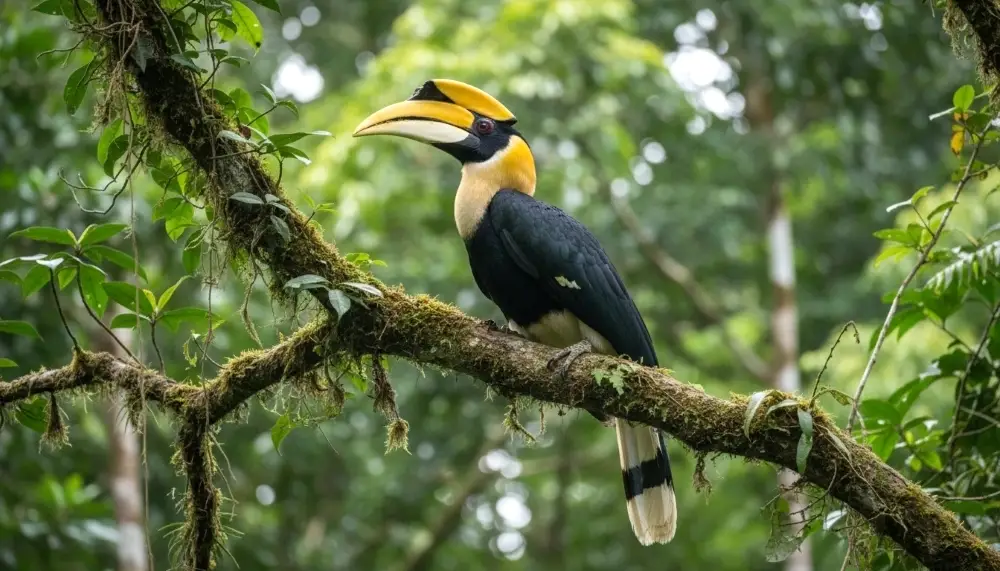
- Colourful tropical birds, including kingfishers, bee-eaters, broadbills, and multiple hornbill species whose wingspan and dramatic casques make them one of the most extraordinary sights in Asian birdlife
- Butterflies of improbable size and iridescence, along with stick insects, walking leaves, and bioluminescent fungi after dark
- Monitor lizards up to two metres in length moving unhurriedly through the understorey
- Several species of macaque and langur monkeys in forested areas near rivers and fruiting trees
- Unique jungle plants including giant bamboo, strangler figs, carnivorous pitcher plants, and the occasional Rafflesia bloom in southern forests
In Khao Sok and Khao Yai, patient visitors occasionally spot hornbills in full flight, white-handed gibbons swinging through the upper canopy at dawn, or wild Asian elephants moving through clearings in the early morning. These moments, when they come, are genuinely unforgettable.
Even when the larger animals stay hidden, the sounds of the jungle create an atmosphere that has its own profound quality. The layered calls of hundreds of bird species, the rhythmic percussion of insects at dusk, the crashing of something large moving unseen through the undergrowth: the jungle communicates constantly, and learning to listen to it is one of the quiet joys of spending time in it.
Hill Tribe Communities
One of the most meaningful and genuinely moving parts of jungle trekking in northern Thailand is the opportunity to visit traditional hill tribe villages that exist largely outside the mainstream tourist circuit. This is not a cultural performance staged for visitors. It is an encounter with communities that have maintained their own languages, clothing traditions, agricultural practices, and spiritual beliefs for centuries, often in deliberate geographic separation from the lowland Thai population.
Several distinct ethnic communities live in the mountains of the far north, including the Karen, Hmong, Akha, Lahu, and Lisu groups. Each has its own distinct cultural identity, and the differences between them are striking even to a first-time visitor. Many trekking routes include overnight stays in these villages, where travellers sleep in bamboo longhouses, share meals prepared by village families, and participate in the rhythms of daily life at whatever level feels comfortable and respectful.
Visitors typically encounter:
- Traditional bamboo and teak houses built on stilts above the forest floor
- Handmade clothing and intricate embroidered crafts that have been produced using the same techniques for generations
- Terraced rice farming and village agricultural systems that work in careful harmony with the surrounding forest
- Open-fire cooking using local ingredients, including herbs and vegetables that grow wild in the surrounding jungle
Responsible trekking companies with genuine ethical standards work directly with these communities under revenue-sharing agreements that ensure tourism supports local livelihoods without creating dependency or cultural erosion. When choosing a trekking operator, ask directly how they compensate the villages they visit, and avoid any company that cannot answer the question clearly. The quality of this answer tells you almost everything you need to know about how they operate in the field.
Permits, Guides, and Practical Logistics
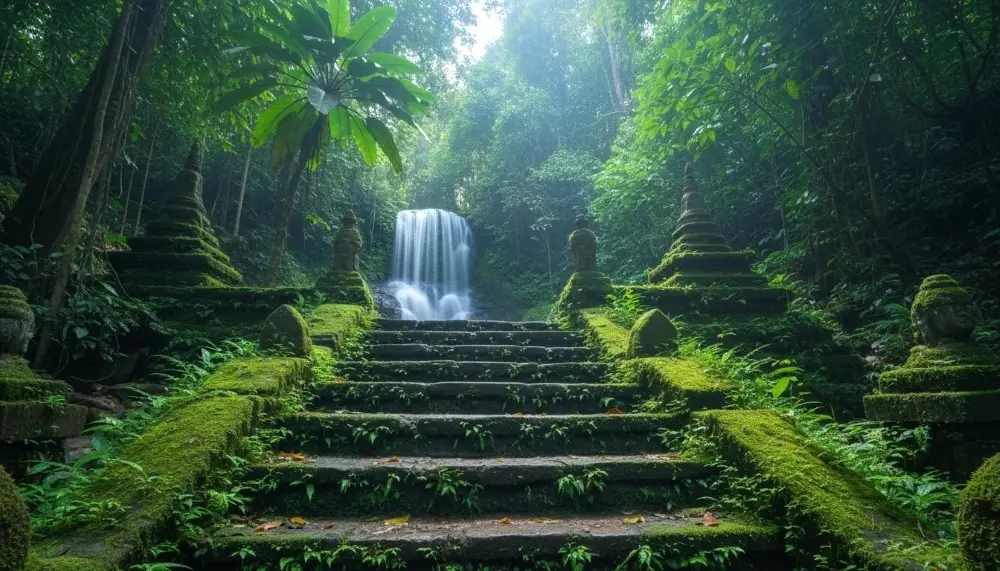
Accessing Thailand’s National Parks requires a combination of pre-arranged transport, on-site registration, and in many cases a certified local guide. The process is straightforward once you understand how it works, but skipping any step can result in being turned away at the trailhead or fined inside the park boundary.
Foreign visitors pay a tiered entry fee of 200 THB to 400 THB depending on the park and current season. This is paid in cash at the gate. Hiring a local ranger or certified guide is often mandatory for deep-forest trails and is always strongly recommended for first-time visitors, both for safety and for the quality of experience. A knowledgeable guide does not just keep you on the trail. They transform the experience from a walk in the woods into a genuine education in one of the world’s most complex ecosystems.
Wildlife protection is taken seriously by the Department of National Parks (DNP), particularly in sensitive zones like Kaeng Krachan and Kui Buri. Most short nature loops of under three kilometres are self-guided, but any trek beyond that threshold typically requires a registered guide. These experts are skilled at spotting camouflaged pit vipers before anyone steps on them, identifying medicinal plants, tracking large mammal movements, and reading the environmental signals that even experienced hikers from outside the region consistently miss.
For transport, Grab or Bolt handle short-distance transfers from provincial towns to park entrance points efficiently. For longer intercity routes, 12GO provides reliable advance booking for buses and trains, which is particularly valuable during Thai public holidays when services between Bangkok, Kanchanaburi, Surat Thani, and Chiang Mai fill rapidly. Accommodation near park boundaries is most conveniently booked through Agoda or Booking.com, both of which carry a high density of local guesthouse and eco-lodge listings with verified reviews from recent trekking visitors.
Is Jungle Trekking Safe?
The jungle can seem intimidating from the outside, but the infrastructure supporting trekking tourism in Thailand is genuinely world-class. Emergency services are reachable in most park areas, and the Tourist Police maintain a dedicated English-language assistance line specifically for travellers in difficulty. Serious incidents on guided commercial treks are rare.
The most consistently underestimated risk is not wildlife or terrain but heat and dehydration. Thailand’s humidity amplifies the physical effect of exercise significantly, and most people need to drink two to three times more water than they would during a similar walk at home. Start treks at sunrise to take advantage of the cooler hours before 10am, and carry at least two litres of water per person per half-day of walking. Electrolyte sachets are worth their weight in any jungle pack.
Always register your trekking plans with your accommodation before departure and carry a charged power bank for your phone. Even if you lose signal, GPS remains functional and your offline maps will guide you back to the trailhead. For serious multi-day expeditions in remote areas, a basic personal locator beacon is a sensible addition for experienced trekkers going beyond the standard tourist circuits.
Guided treks are the standard in most areas and provide several concrete benefits:
- Expert navigation through forest trails where paths branch and unmarked junctions are common
- Deep local cultural and ecological knowledge that transforms every hour of walking
- Practical safety support in remote areas, including first aid knowledge and emergency communication protocols
- Language mediation when interacting with park rangers, village elders, or local food vendors along the route
How Trekking Fits into a Thailand Itinerary
Jungle trekking pairs perfectly with almost every other element of a Thailand travel itinerary, which is one of the reasons it slots so naturally into trips of every length and style.
Many travellers begin their journey in Bangkok, spending two or three days exploring temples, street food markets, and canal neighbourhoods before taking an overnight train or bus northward. A Welcome Pickups airport transfer on arrival in Bangkok removes the chaos of navigating the city with heavy gear, and getting that first transfer right sets the tone for the whole trip.
From Bangkok, the journey north to Chiang Mai for trekking experiences takes around 10 to 12 hours by sleeper train (an experience worth doing in itself) or just over an hour by domestic flight. Most travellers spend three to five days in and around Chiang Mai, mixing city exploration with one or two days of jungle trekking in the surrounding highlands before deciding whether to push further north toward Chiang Rai or head south toward the beaches.
After spending time in the mountains and jungles, visitors often continue south to decompress on Thailand’s famous beaches and islands, perhaps stopping at Khao Sok for a floating bungalow night en route to the Gulf or Andaman coasts. This arc of city life, highland trekking, ancient rainforest, and coastal relaxation is the classic Thailand journey for good reason. Each element genuinely enhances the one that follows it, and the contrast between dense jungle and open sea is one of the most satisfying travel progressions available anywhere in Southeast Asia.
One of the Best Experiences Thailand Offers
Thailand’s jungles offer something that an increasing number of modern travellers are actively seeking and struggling to find elsewhere: a genuine, unmediated encounter with a natural world that is older, wilder, and more complex than anything most of us encounter in daily life.
Walking beneath a canopy of trees that have been standing for centuries, hearing the distant call of gibbons echo across a valley, stumbling across a hidden waterfall that does not appear on any tourist map, sitting around a fire in a hill tribe village as darkness closes in around the jungle: these are the kinds of experiences that do not photograph well but stay with you for years. They create a completely different relationship with the country than temples and beaches alone ever could.
For first-time visitors especially, jungle trekking adds a dimension of adventure and discovery that reframes everything else about the trip. It reveals a Thailand that is not on the main tourist circuit, not managed for comfort, and not repeatable. Whether you choose a short three-hour jungle hike near Chiang Mai or commit to a four-day multi-region expedition through the hills and rivers of the far north, stepping into Thailand’s wild landscapes is an experience you will remember long after every hotel room and temple visit has blurred together in memory.
The jungle is patient. It has been here for millions of years. All you have to do is show up.
Frequently Asked Questions
What is the best time of year for jungle trekking in Thailand?
The cool dry season from November to February offers the most comfortable trekking conditions, with lower humidity, dry trails, and temperatures that are manageable even at midday. This is also when wildlife is most active around water sources. The shoulder months of May and early October are excellent alternatives, offering spectacular waterfall flow and dramatically reduced crowds, though trails can be muddy after rainfall. The core wet season months of July and August are still trekable but require leech socks, waterproof gear, and a guide experienced with wet-weather routes. Each season has its own character, and none is truly off-limits for a well-prepared trekker.
Do I need a permit for Thailand’s National Parks?
Standard entry permits are purchased in cash at the park gate on arrival, typically costing 200 THB to 400 THB for foreign visitors. For overnight camping in designated zones, restricted research areas, or certain deep-forest trails, additional permits must be arranged in advance through the Department of National Parks (DNP) headquarters in Bangkok or through the specific park administration office. Most reputable guided trekking companies handle this paperwork as part of their service fee, which is one of the practical benefits of booking through an established operator rather than attempting to self-organise a deep-forest route.
Are leeches a serious problem in the Thai jungle?
Leeches are common in damp rainforest environments like Khao Sok, Hala-Bala, and much of the southern highlands, particularly during and immediately after the wet season from June to October. They are completely harmless, leave no lasting effects, and are far more startling than dangerous. The most effective prevention is a combination of dedicated leech socks worn over your trousers and tucked into your boots, and a spray of DEET-based insect repellent applied to footwear before you enter the forest. Most guides carry salt or a lighter to remove any that do attach, and the bite stops bleeding quickly on its own. Experienced trekkers treat them as a minor inconvenience rather than a threat.
Can I trek in Thailand without a guide?
A small number of short, designated nature trails within national parks are officially open for self-guided walking. These are typically well-marked loops of one to three kilometres designed specifically for independent visitors. However, for any trail that enters the interior forest, crosses rivers, involves overnight stays, or ventures beyond clearly signed paths, a certified guide is required under DNP regulations. This rule exists for two equally important reasons: visitor safety in complex terrain where getting lost is a genuine risk, and habitat protection in sensitive ecological zones where unguided foot traffic causes measurable damage. Most self-guided travellers who try to bypass this rule end up regretting it when they realise how much their guide added to the experience.
What should I do if I encounter a wild elephant?
Maintain a minimum distance of 30 metres at all times and do not approach further regardless of how calm the elephant appears. If an elephant is blocking your trail or road, stop moving completely, stay quiet, switch off any music or audio, and put away your camera or phone. Never use flash photography near wild elephants under any circumstances. Back away slowly and steadily along the path you came from, keeping the elephant in your peripheral vision without making direct eye contact. Never position yourself between a mother and her calf, and never attempt to block an elephant’s path or cut off its escape route. Your guide will have specific protocols for your trail and region, and following their instructions without debate is the single most important thing you can do in this situation.
What fitness level do I need for jungle trekking in Thailand?
Most commercially offered jungle treks in Thailand are designed for travellers with a moderate baseline fitness level rather than experienced athletes. If you can walk comfortably for three to four hours on uneven ground without needing to stop frequently, you will be fine on a standard day trek. The primary challenge is heat and humidity rather than elevation or technical terrain. Multi-day treks covering eight to twelve kilometres per day require good general fitness and ideally some prior hiking experience. Always be honest with your booking operator about your fitness level when choosing a route. Good operators will recommend an appropriate itinerary, and pushing beyond your capability in remote jungle is genuinely dangerous.
What should I pack for a jungle trek in Thailand?
The core packing list for a Thai jungle trek starts with moisture-wicking clothing (avoid cotton, which holds sweat and causes chafing), sturdy closed-toe shoes or hiking boots with good ankle support, and a lightweight waterproof layer for afternoon downpours. Add dedicated leech socks, high-DEET insect repellent, a minimum of two litres of water per person, electrolyte sachets, high-energy snacks, a basic first aid kit including blister plasters and antiseptic, a headlamp with spare batteries, and a fully charged power bank. Sunscreen is essential for any open sections. Leave valuables at your guesthouse and carry only what you genuinely need on the trail. Most operators provide lunch and water refills at midpoints, but confirming this before departure is always wise.
How do I choose a responsible trekking company?
A genuinely responsible trekking operator will be transparent about three things: how they compensate the hill tribe villages they visit, what their environmental policies are inside national park boundaries, and whether their guides hold certified qualifications from a recognised Thai guiding institution. Ask all three questions directly before booking. Companies that hesitate, deflect, or answer vaguely are telling you something important. Look for operators who are members of the Thailand Responsible Tourism Institute or the Ecotourism Society of Thailand, and read recent reviews on Google and TripAdvisor specifically for mentions of guide quality and community interaction. The cheapest price in trekking almost always reflects the lowest ethical standard somewhere in the chain.
Is it safe to trek alone as a solo female traveller?
Yes, with sensible precautions that apply to any solo traveller in remote environments. Joining a small-group guided trek rather than attempting a solo independent route is strongly recommended, both for safety and for the quality of experience. Reputable trekking companies in Chiang Mai, Khao Sok, and Kanchanaburi actively accommodate solo travellers and will pair you with other small groups if needed. Share your trekking itinerary and expected return time with your guesthouse before departure. Download offline maps before entering the forest and keep your phone charged. The vast majority of solo female trekkers in Thailand report feeling safe and well-supported throughout their experience, particularly on organised guided routes.
Can families with children go jungle trekking in Thailand?
Yes, and Thailand offers some genuinely excellent family-oriented trekking options, particularly around Chiang Mai, Erawan National Park in Kanchanaburi, and the shorter day trails in Khao Yai. The key is choosing routes that match the age and fitness of your youngest family member. Half-day treks with waterfall swims, bamboo rafting sections, and village visits are consistently popular with families travelling with children aged eight and above. For younger children, elephant sanctuary visits and nature walks on well-maintained park trails are more appropriate alternatives. Always inform your operator about the ages of children in your group when booking so they can recommend a suitable route and pace. Most good operators are experienced at adjusting for family groups.