Living In Bangkok
This site contains affiliate links. We may earn a commission at no extra cost to you.
Living in Bangkok, even for a short visit, means stepping into a world where ancient temples stand beside glittering skyscrapers, street food rivals the best restaurants in the world, and daily life flows with an energy unlike anywhere else. Whether you are a backpacker on a tight budget, a family relocating for work, or a remote worker hunting for your next long-stay base, Bangkok delivers in ways that few cities on earth can match.
The Quick Summary:
Monthly Budget: A comfortable lifestyle for a single resident averages 45,000–65,000 THB per month, while families should budget 120,000–180,000 THB, including international school fees.
Transit Strategy: Living within 500 metres of a BTS (Skytrain) or MRT (Subway) station is non-negotiable if you want to avoid the city’s legendary gridlock.
Visa Standards: The Destination Thailand Visa (DTV) is the premier long-stay option for remote workers and slow travellers, offering a 5-year multi-entry permit with 180 days per entry. Requirements and processing procedures changed significantly in 2024–2025, so always verify current conditions at your nearest Thai embassy before applying.
Education: International schools are categorised into three tiers, with annual tuitions ranging from 250,000 THB to over 1,000,000 THB. Book assessment places well in advance as waitlists at Tier 1 schools can stretch to 12 months.
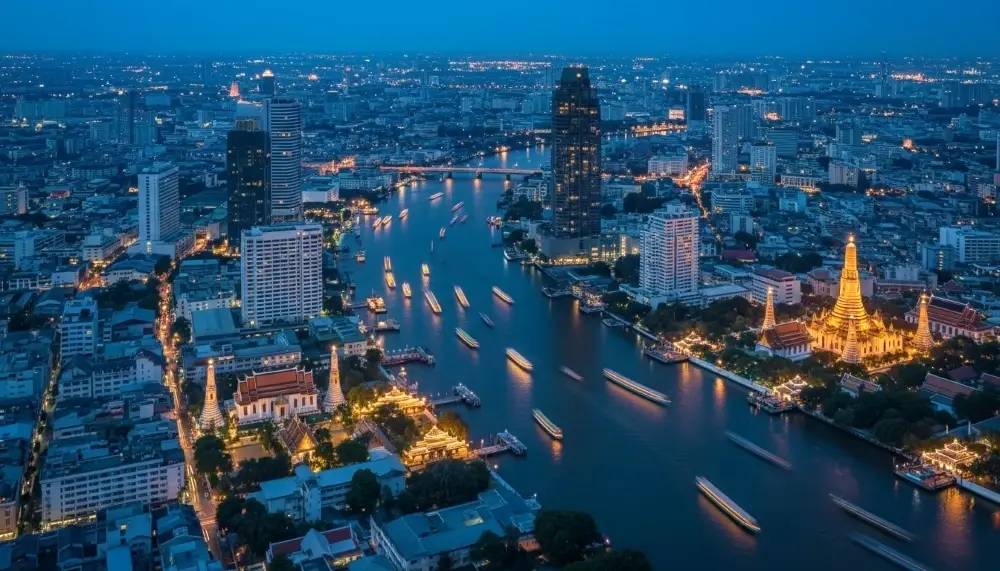

From boutique guesthouses to five-star
resorts, Agoda has Bangkok covered.
Strong Asia inventory means deeper
discounts than you’d find elsewhere.
What Is It Really Like Living In Bangkok?
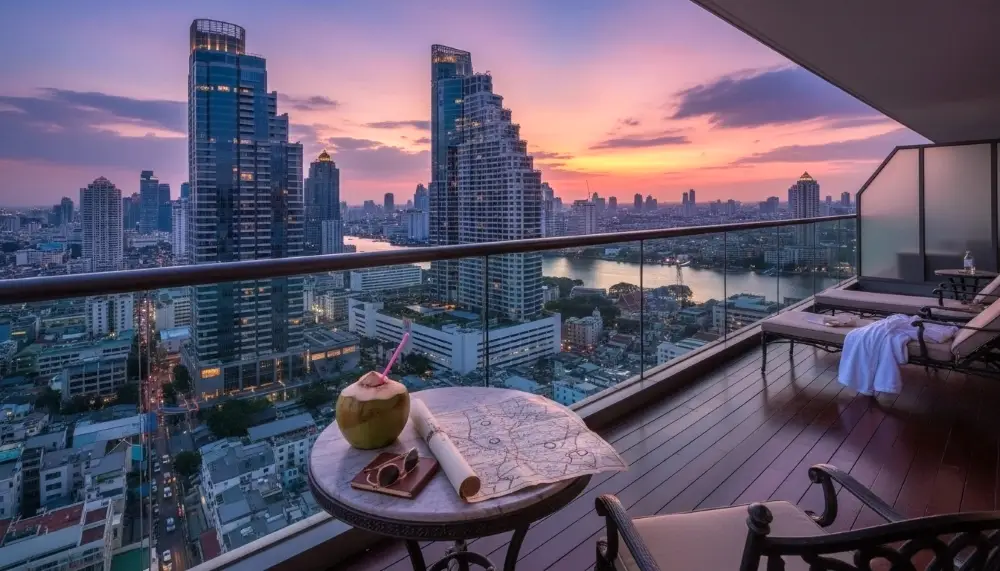
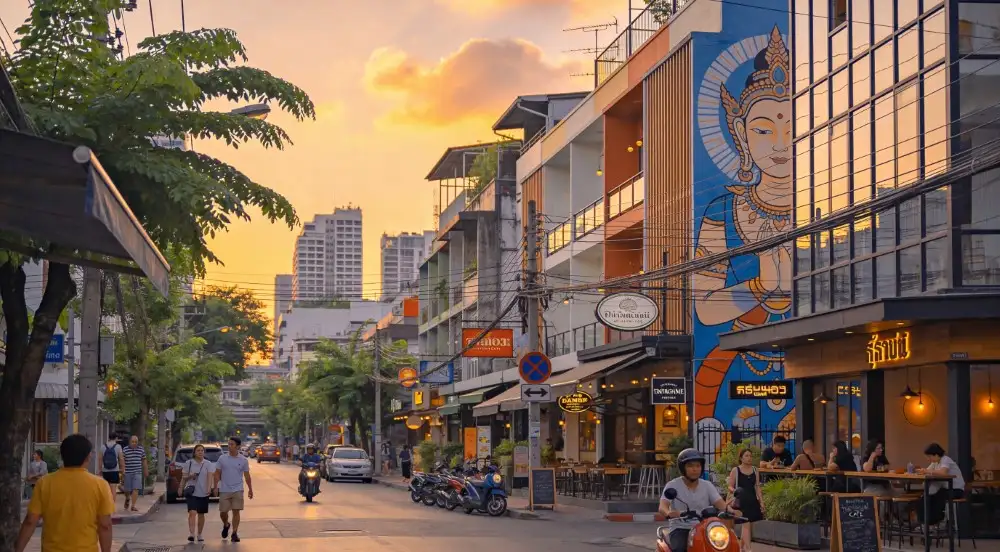
Living in Bangkok means experiencing one of the most vibrant cities in Southeast Asia. The lifestyle blends modern urban living with deep cultural traditions that have barely shifted in generations. You will find world-class hospitals, a cafe culture that rivals Melbourne, and a food scene so extraordinary that UNESCO recognised Thai cuisine as an intangible cultural heritage of humanity.
Visitors quickly notice a few defining features:
- Incredible street food on nearly every corner
- Efficient public transport systems like the BTS Skytrain and MRT Subway
- Friendly locals who are genuinely accustomed to welcoming international visitors
- A remarkable mix of luxury malls, historic temples, and bustling markets
- A tropical climate that fundamentally shapes everyday life and routine
The city moves fast, but it also has moments of complete calm: quiet temple courtyards, peaceful canals where longtail boats glide past lotus flowers, and shaded parks where locals escape the heat over iced coffee. For travellers and residents alike, this contrast is central to Bangkok’s magic and its deep, lasting appeal.

GetYourGuide has Bangkok’s best
tours and experiences covered with
verified operators and instant
mobile vouchers on arrival.
Thailand Visa Guide: What You Actually Need to Know in 2026
Thailand’s visa landscape has shifted considerably over the past two years, and it is essential to work from current, verified information rather than advice that was accurate in 2023. Here is a practical breakdown of the main pathways available to travellers and long-stay residents in 2026.
Visa Exemption (Tourist Entry)
Citizens of over 60 countries, including the UK, most of the EU, Australia, New Zealand, and the United States, currently receive a visa-exempt entry stamp of 60 days on arrival. This was extended from the previous 30-day default as part of Thailand’s post-pandemic tourism recovery strategy. A single extension of 30 days can be obtained at any immigration office inside Thailand for 1,900 THB, giving a total stay of up to 90 days. Border runs to obtain a fresh stamp are technically possible but immigration officers have become far more attentive to repeat entries, particularly at land borders. Always carry proof of onward travel and adequate funds when arriving under visa exemption.
Tourist Visa (TR)
Applied for at a Thai embassy or consulate before travel, the Single Entry Tourist Visa allows a 60-day stay with one 30-day extension. The Multiple Entry Tourist Visa (METV) allows repeat 60-day entries over six months and suits those planning regional travel with Thailand as a base. Applications require a passport photograph, bank statements, and a confirmed accommodation booking. Processing times vary by consulate, typically 2 to 5 working days.
The Destination Thailand Visa (DTV): The Remote Worker’s Best Option
Launched in mid-2024 and updated through 2025, the DTV is Thailand’s clearest signal yet that it wants to attract long-stay remote workers, freelancers, and their families. The key facts for 2026 are as follows:
- Valid for 5 years from the date of issue with multiple entries permitted
- Each entry allows a 180-day stay, extendable once for a further 180 days at an immigration office (1,900 THB)
- Minimum applicant age: 20 years old
- Financial requirement: a bank balance of at least 500,000 THB (approximately £11,000 / $14,000 USD at current rates), evidenced by a bank statement dated within 3 months of application
- Application fee: 10,000 THB, paid at the Thai embassy or consulate in your home country
- You cannot work for Thai-based employers on this visa, but you may continue remote work for overseas clients or companies
- Dependants (spouse and children under 20) can be included on a separate but linked application
The DTV is a genuine game-changer compared to the older, restrictive Non-Immigrant B (work permit) route and the Retirement Visa, which requires applicants to be aged 50 or above with 800,000 THB in a Thai bank account. If you are a remote professional under 50, the DTV is almost certainly your best long-stay option. That said, always confirm current requirements directly with your nearest Royal Thai Embassy before applying, as criteria have been refined multiple times since launch and may continue to evolve.
Long-Term Resident Visa (LTR)
For high-net-worth individuals, the LTR Visa introduced by the Board of Investment offers a 10-year renewable visa with significant tax benefits. It targets wealthy pensioners, highly skilled professionals, and remote workers earning a minimum of $80,000 USD per year. It comes with fast-track airport clearance and a privileged entry card. Applications are processed through the Thailand Board of Investment website.
Thailand Elite Visa (Now Rebranded as Thailand Privilege)
The Thailand Elite programme (rebranded as Thailand Privilege in 2023) offers 5-year to 20-year renewable membership visas for a one-time fee starting at approximately 600,000 THB. It includes VIP airport services, concierge support, and annual renewals without the need to maintain bank balance evidence after the initial purchase. It is popular among affluent retirees and long-stay property investors.
Best Neighbourhoods for Expats and Families
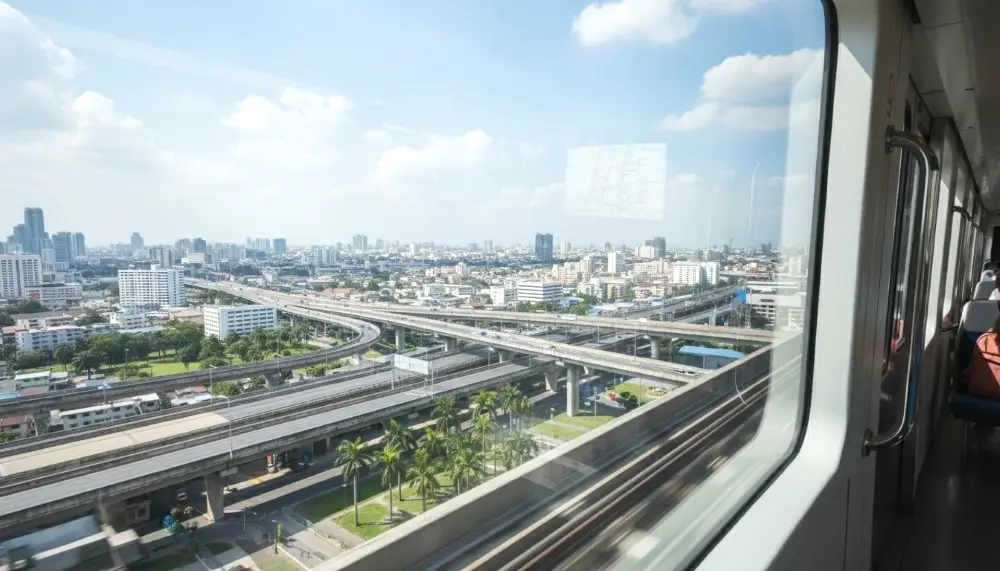
Bangkok’s residential landscape is almost entirely defined by its transit hubs. The golden rule: live within 500 metres of a BTS or MRT station and your quality of life immediately doubles. Sukhumvit (Phrom Phong to Ekkamai) serves as the primary expat corridor with maximum amenities. Silom and Sathorn cater to the financial elite, while Ari offers a boutique, local-meets-modern aesthetic. Nonthaburi and Bang Na provide spacious family villas near major international school campuses.
Sukhumvit: The Cosmopolitan Heart
Sukhumvit is the city’s primary artery and the neighbourhood most new arrivals gravitate towards for good reason. The area around Phrom Phong and Thong Lo, often called the Japanese Quarter, offers high-end luxury condominiums, boutique coffee shops, and the EmDistrict malls. Thong Lo is the undisputed capital of nightlife and fine dining, while Ekkamai provides a slightly more relaxed residential feel with excellent access to the Eastern Bus Terminal for weekend escapes to Pattaya and Koh Chang.
Silom and Sathorn: The Business District
This is the financial core of Thailand. Sathorn is characterised by wide boulevards, embassies, and some of the city’s most prestigious high-rise condominiums. It feels more structured and serious than Sukhumvit and provides immediate access to Lumpini Park, the city’s green lung and a genuinely lovely place to spend a morning run or evening walk.
Ari: The Local Alternative
For those seeking to avoid the expat bubble entirely, Ari is the superior choice. This neighbourhood in north Bangkok has resisted mega-mall development, favouring independent cafes, weekend markets, and mid-century architecture. It is quieter, greener, and increasingly popular with creative professionals and digital nomads who want to feel embedded in a genuine local community rather than a sanitised international enclave.

Streaming and banking apps sometimes
geo-block from Bangkok. NordVPN
gives you a home-country IP so
things work like they do at home.
Neighbourhood Comparison Table:
| District | Average 1BR Rent (Monthly) | Vibe | Primary Transit |
|---|---|---|---|
| Thong Lo | 45,000–70,000 THB | Luxury / Nightlife | BTS Sukhumvit Line |
| Sathorn | 35,000–60,000 THB | Executive / Serious | BTS Silom Line / MRT Blue |
| Ari | 20,000–35,000 THB | Boutique / Local | BTS Sukhumvit Line |
| Phrom Phong | 30,000–55,000 THB | Family / Japanese Quarter | BTS Sukhumvit Line |
| Bang Na | 15,000–28,000 THB | Suburban / Family Villas | BTS Sukhumvit Line (extended) |
International Schools and Education Tiers
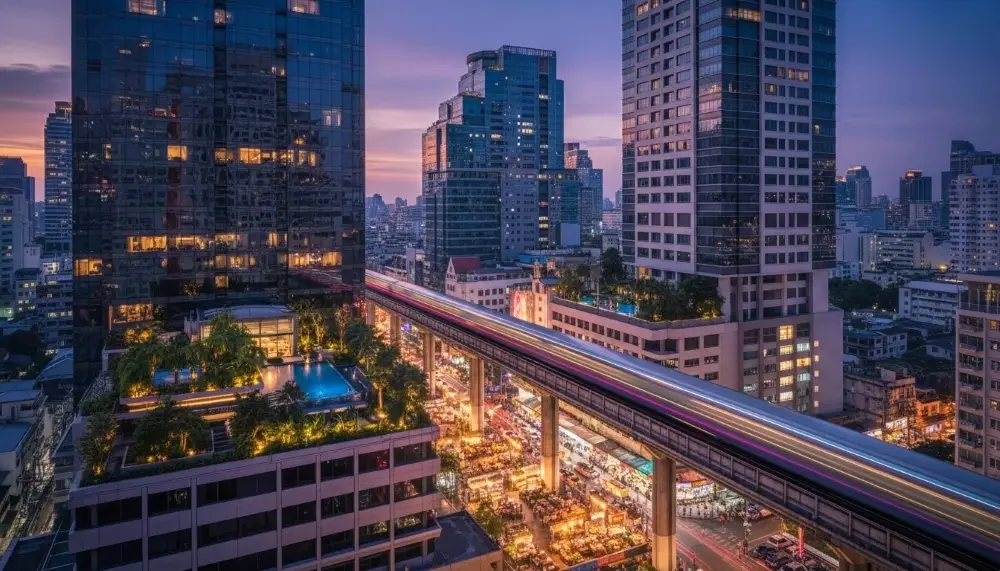
Bangkok hosts over 150 international schools offering British, American, and IB curricula. Schools are ranked by tier, where Tier 1 institutions provide world-class facilities and high tuition (800,000+ THB annually), Tier 2 offers a balance of quality and cost (450,000–700,000 THB), and Tier 3 provides affordable, community-focused learning (250,000–400,000 THB).
Tier 1: The Gold Standard
Schools like ISB (International School Bangkok) and Shrewsbury International School are institutions with decades of history and exceptional graduate university placement records. They offer sprawling campuses that resemble small universities, complete with Olympic-sized pools, professional theatres, and extensive extra-curricular programmes. The application process is competitive and should begin 12 to 18 months before your intended start date.
Tier 2: The Balanced Choice
Bangkok Patana School and NIST International School are highly sought after by embassy staff and senior corporate executives. They maintain rigorous academic standards with a heavy focus on the International Baccalaureate (IB) or the British curriculum (IGCSE and A-Levels). Class sizes are manageable and the pastoral care is consistently praised by expat parent communities.
Tier 3: Value and Community
Schools such as St Andrews (Sathorn) and Wells International offer smaller class sizes and far more accessible price points. These are excellent for families who prioritise a tight-knit community over massive athletic facilities, and for those who anticipate a shorter relocation window of one to three years.
Mastering the Transit Network
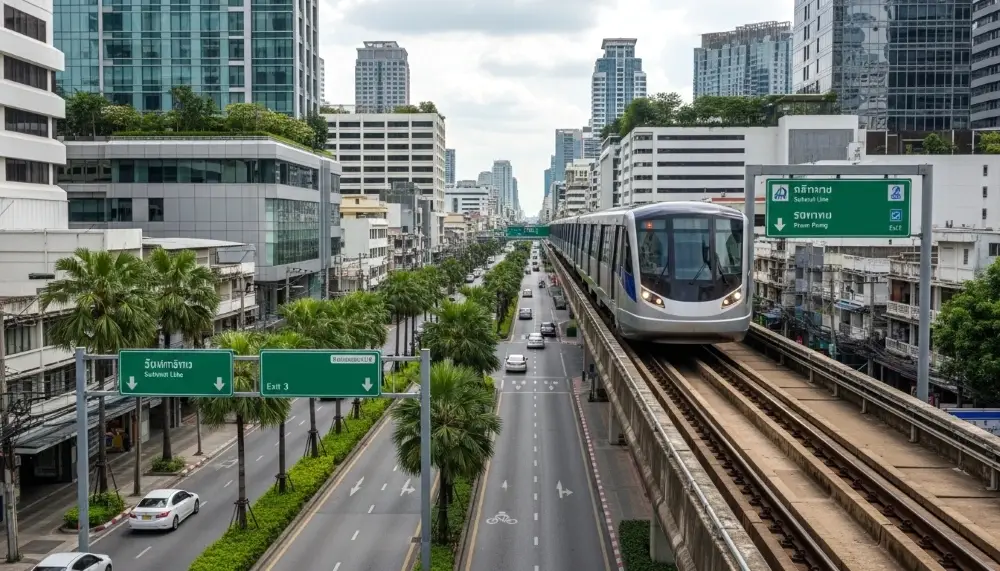
The integrated rail network, consisting of the BTS Skytrain, MRT Subway, and Airport Rail Link, is the only truly reliable way to navigate Bangkok at predictable speeds. Fares range from 17 to 62 THB per journey depending on distance. Use the Rabbit Card for the BTS and a contactless Visa or Mastercard for the MRT. Top both up at any station kiosk.
The BTS Skytrain (Green Lines)
The Sukhumvit Line and Silom Line intersect at Siam Square, making it the absolute epicentre of the network. This is the backbone of daily life for most Bangkok residents. In 2026, extensions have made it possible to reach the outer suburbs of Samut Prakan and Pathum Thani in air-conditioned comfort, opening up a far wider range of affordable residential options for families willing to commute.
The MRT Subway (Blue and Purple Lines)
The Blue Line is a loop that connects the business districts with the historic Old City (Rattanakosin) and Hualamphong. It is often less crowded than the BTS and provides a vital link to Bang Sue Grand Station (Krung Thep Aphiwat Central Terminal), which serves all intercity trains across Thailand. If you are planning to travel between cities by rail, use 12GO to lock in your tickets well ahead of national holiday surges, when trains sell out weeks in advance.
Taxis and Ride-Hailing Apps
Colourful taxis are everywhere but street hails during rain or rush hour often result in drivers refusing the meter and quoting inflated fixed prices. The smarter approach is to use Grab or Bolt exclusively. Use Bolt for the cheapest rates and Grab for the most reliable service and food delivery. Both apps require working mobile data immediately on arrival, so activate your Airalo, Yesim, or Saily eSIM before your flight departs to ensure the apps are ready to use from the baggage carousel at Suvarnabhumi or Don Mueang. Airport queues for local SIM cards are long, and both Grab and Bolt require SMS verification to complete registration on a new device.
For group arrivals, families, or anyone travelling with significant luggage, Welcome Pickups offers pre-booked private transfers from both Bangkok airports with fixed pricing, English-speaking drivers, and child seat options on request. It eliminates the taxi negotiation entirely and is genuinely worth it on that first exhausted arrival day.

Skip the airport kiosk queue in Bangkok.
Airalo eSIMs are pre-loaded before
you fly and ready the instant you
connect to the local network.
Cost of Living: Surprisingly Affordable
One of the primary reasons travellers fall in love with Bangkok and never quite leave is how generously the city rewards you for every baht you spend. Even in the heart of the city, you can eat extraordinarily well for very little money, and the gap between budget and luxury is narrower than in almost any other world capital.
Typical daily costs for a visitor:
- Street food meal: 50–120 THB (~$1.40–$3.30 USD)
- Mid-range restaurant meal: 180–450 THB (~$5–$12 USD)
- Skytrain ticket: 17–62 THB (~$0.50–$1.80 USD)
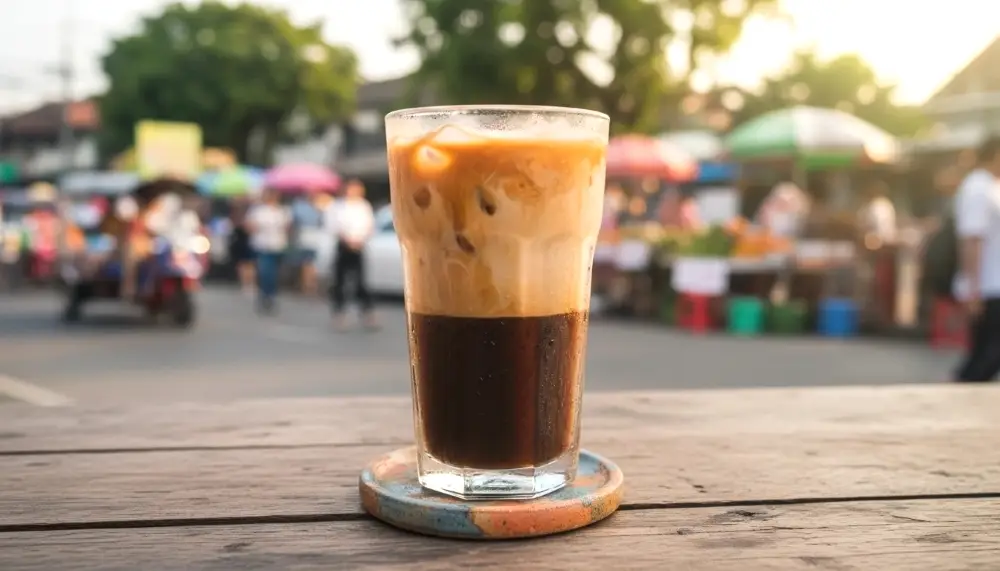
- Local iced coffee from a street cart: 35–60 THB (~$1–$1.70 USD)
- Specialty cafe coffee: 120–180 THB (~$3.30–$5 USD)
- Budget guesthouse (Khao San area): 600–1,200 THB (~$17–$33 USD) per night
- Mid-range hotel: 1,800–4,000 THB (~$50–$111 USD) per night
For accommodation, Agoda and Booking.com remain the strongest platforms for Bangkok, particularly for negotiating longer-stay discounts of 7 nights or more. Agoda‘s Bangkok inventory is particularly deep given the platform’s local roots in the region.
Long-stay residents quickly realise that the biggest cost variable in Bangkok is almost always air conditioning. Running split-unit AC in a Bangkok apartment around the clock during the hot season (March to May) will add 3,000 to 5,000 THB to your monthly electricity bill compared to moderate use.
Bangkok’s Famous Street Food
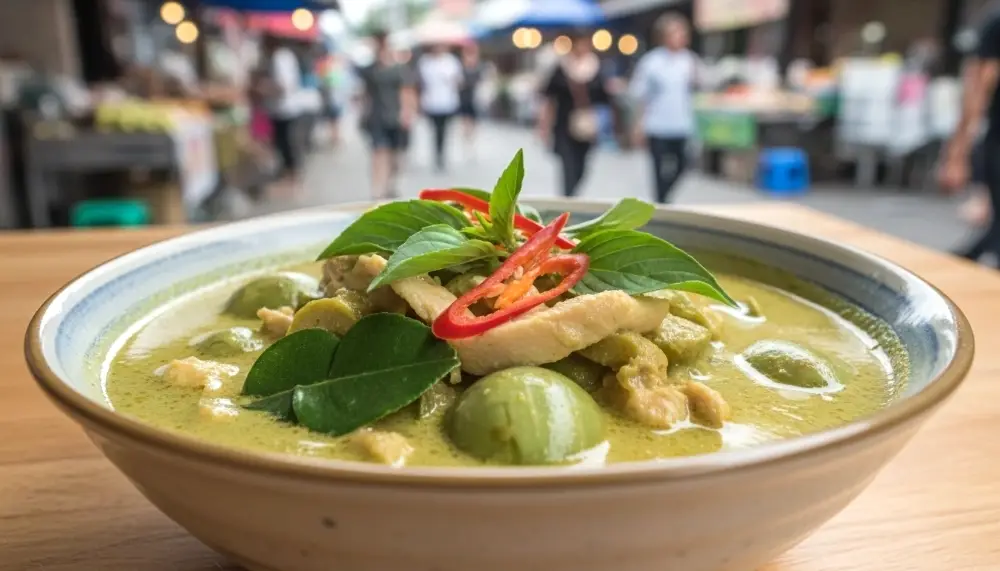
Living in Bangkok means eating incredibly well at almost no cost. Food is everywhere, and it is frequently better at a 40-year-old street stall than in a polished restaurant charging three times the price. Vendors across Bangkok specialise in a single dish perfected over decades, which is why locals queue at tiny plastic-stool operations while the nearby air-conditioned cafe sits half empty.
Some must-try Bangkok street foods:
- Pad Thai cooked fresh in a sizzling wok over a charcoal flame
- Mango sticky rice with sweet coconut cream (peak season: April to June)
- Crispy pork belly and rice dishes (khao moo daeng) piled generously high
- Boat noodles from the floating market stalls around the Chao Phraya
- Fresh fruit smoothies and iced Thai milk tea with condensed milk
- Grilled pork skewers (moo ping) for breakfast from 6am at any market
Street food is not simply cheap sustenance. It is a defining cultural institution. Locals often eat out three times a day rather than cooking at home, and the social fabric of many Bangkok neighbourhoods is built entirely around the food vendors who appear at dawn and pack up after midnight. For visitors, joining that rhythm is one of the most memorable parts of experiencing real Bangkok life.
If you want to take the experience deeper, cooking classes and market tours booked through Get Your Guide or Klook are consistently highly rated and offer genuine hands-on learning in small groups, rather than the tourist-factory formats that dominated a decade ago.

From temples to island tours, Klook
covers Bangkok’s best experiences.
Hotel pickup is often included and
prices beat the pier walk-in rate.
Culture, Temples, and Respect
Bangkok may feel modern and fast-paced on the surface, but Thai culture remains deeply rooted in Buddhist tradition and a strong sense of social decorum. Understanding this makes your time here richer and your relationships with locals far warmer.
Temples, known as wats, are scattered throughout every neighbourhood and play an active role in daily life. Locals visit to pray, give offerings, consult monks, or simply find a moment of genuine quiet in an otherwise relentless city.
When visiting temples, observe these simple rules:
- Dress modestly: cover shoulders and knees. Sarongs are usually available to borrow at major temples if you arrive underprepared.
- Remove shoes before entering any temple building.
- Never touch anyone’s head or point the soles of your feet towards a Buddha statue or a monk.
- Women must not hand objects directly to monks. Place donations or items on the cloth in front of them.
- Speak quietly, move slowly, and photograph respectfully.
The Thai monarchy is also held in the highest respect under Thai law. Disrespectful remarks about the royal family in public, on social media, or even privately to locals who may report them, can result in serious legal consequences under Thailand’s lèse-majesté statutes. This is not a theoretical concern. Always be measured and respectful on this topic.
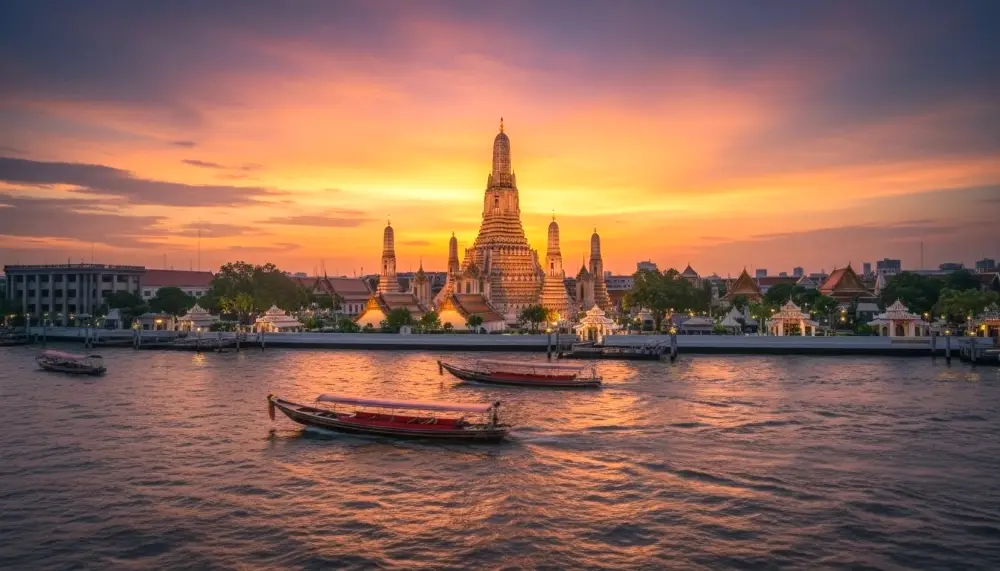
Top temple visits in Bangkok include Wat Arun (Temple of Dawn), Wat Pho (home to the giant reclining Buddha), and the Grand Palace complex. Book your Wat Pho and Grand Palace entry tickets in advance through Klook or Get Your Guide to skip the queue, particularly during peak season between November and February.
Living With the Climate
Bangkok’s tropical climate is one of the biggest lifestyle adjustments for new arrivals and first-time visitors alike. The city is hot and humid for the majority of the year, with temperatures regularly sitting between 28°C and 36°C (82°F to 97°F). There are three broadly defined seasons:
- Cool Season (November to February): The most comfortable time. Temperatures drop to around 25°C to 30°C with lower humidity and occasional breezy evenings. This is peak tourist season and hotel prices reflect it accordingly.
- Hot Season (March to May): Intense. Temperatures regularly exceed 35°C with oppressive humidity. Outdoor sightseeing should be restricted to mornings before 10am and after 5pm. Air conditioning is non-negotiable.
- Rainy Season (June to October): Daily downpours, usually intense and short-lived, arrive in the afternoon. The city cools slightly, the air quality improves, and accommodation prices drop significantly. Many long-term residents actually prefer this season.
To stay comfortable year-round: drink at least 2 litres of water daily, wear light linen or moisture-wicking fabrics, carry a compact umbrella that lives permanently in your bag, and plan any serious outdoor exploration for early mornings. The heat can feel genuinely overwhelming in your first week, but most residents adapt completely within a month.

Healthcare and Medical Facilities

Bangkok’s private hospital network is genuinely world-class and represents one of the most compelling reasons to choose the city as a long-stay base. Hospitals like Bumrungrad International, Bangkok Hospital, and Samitivej consistently rank among the top private medical facilities in Asia, offering same-day appointments with English-speaking specialists, diagnostic results within hours, and consultation fees that are a fraction of equivalent private care in the UK, Europe, or Australia.
A GP consultation at a top-tier private hospital in Bangkok typically costs 800 to 1,500 THB. A comprehensive blood panel with results the same afternoon runs 2,000 to 4,000 THB. Dental care is similarly excellent and affordable, making Bangkok a popular destination for medical and dental tourism from across the region.
For long-stay visitors and remote workers without corporate health coverage, SafetyWing’s Nomad Insurance or Remote Health plans are the most commonly used solutions in the expat community. SafetyWing offers rolling monthly coverage with no minimum commitment period, which aligns perfectly with the flexible nature of DTV-based residency. Ensure your policy explicitly covers Thailand and check the hospitalisation daily limits against Bangkok’s premium hospital rate cards before you commit.
Is Bangkok Safe?
Bangkok is generally very safe for tourists and long-term residents. Violent crime against visitors is rare, and the city consistently ranks as one of the safer major capitals in Southeast Asia. That said, petty opportunism exists, as it does in any large international city with a constant flow of visitors.
The classic scams to be aware of:
- The “tuk-tuk to a gem shop” tour: a friendly stranger offers an impossibly cheap sightseeing tour that detours via a government-endorsed gem or tailor shop. Politely decline any unsolicited tours.
- Taxi meter refusals during rain or evening peak hours. Use Grab or Bolt to eliminate this entirely.
- Overly friendly strangers near tourist sites who strike up conversation and eventually lead to a card game or business opportunity.
- Bag snatching from motorbike passengers on busy pavements near major tourist areas.
Common sense and basic situational awareness handle all of the above. Thai people are genuinely warm and hospitable by nature, and the overwhelming majority of interactions with locals will be positive, generous, and often surprisingly funny. Most visitors feel welcomed almost immediately and quickly understand why so many people arrive for two weeks and stay for two years.
Beyond the Holiday: Slow Travel and Relocation
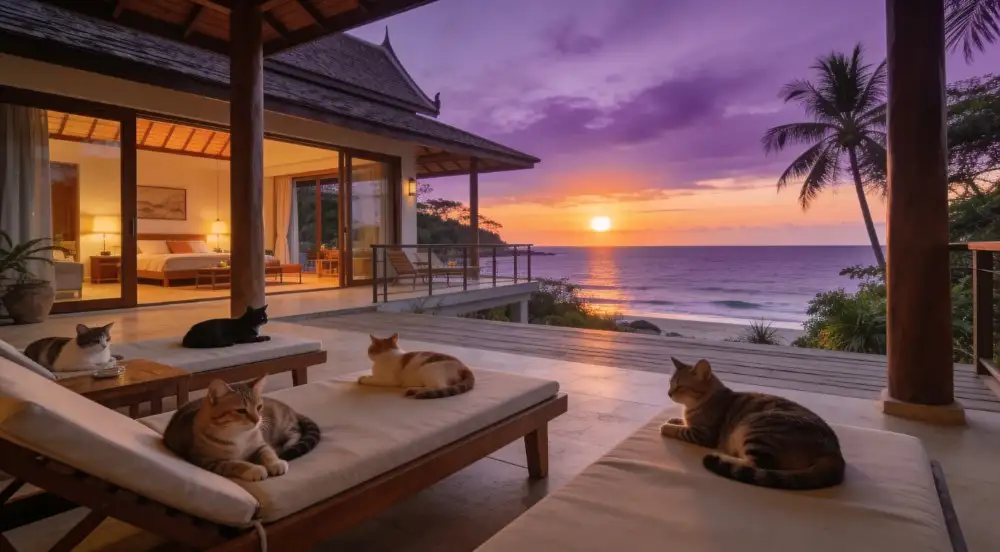
Moving to Bangkok more permanently requires a strategic visa approach and a clear logistical plan, particularly for those bringing dependants or pets. The DTV is the most practical tool for most remote workers (see the visa section above for full details). Below are the additional relocation logistics worth planning well in advance.
Finding Your First Apartment
Most expats arrive and stay in a serviced apartment or hotel (Agoda and Booking.com are your best tools for this) for the first two to four weeks while exploring neighbourhoods in person before committing to a longer lease. This approach is strongly recommended. Rental agreements in Bangkok are typically 12 months with a two-month security deposit. Shorter 3- or 6-month leases exist in some serviced condominiums but carry a premium of 20 to 30% above the monthly rate.
Pet Relocation Logistics
Moving with cats or dogs is entirely manageable but requires strict adherence to a precise documentation timeline. Requirements include: an ISO 11784/11785 microchip, a rabies vaccination administered at least 30 days before arrival and no more than 12 months prior, a health certificate issued by an accredited veterinarian within 10 days of travel, and an import permit from Thailand’s Department of Livestock Development (DLD) applied for at least two weeks before your flight. Avoid scheduling arrivals during the mid-day heat, particularly in the hot season, to reduce stress on animals during tarmac transit at Suvarnabhumi.
Connectivity and Digital Security
Thailand has excellent 5G coverage across Bangkok via AIS and DTAC. Local SIM cards are cheap and easy to obtain at any 7-Eleven or convenience store with your passport. Alternatively, activate an Airalo, Yesim, or Saily eSIM before departure for immediate connectivity. For those working remotely from cafes and co-working spaces, NordVPN is strongly recommended both for accessing home streaming services and for securing your data on the public Wi-Fi networks that are standard across Bangkok’s vast cafe ecosystem.
Bangkok as a Gateway to Thailand
Living in Bangkok, even briefly, opens the door to the rest of an extraordinary country. The city is exceptionally well connected both domestically and internationally, making weekend and week-long escapes genuinely easy.
From Bangkok, travellers can easily reach:
- The mountains, temples, and night markets of Chiang Mai (1.5-hour flight or 10-hour sleeper train)
- The famous beaches and islands of the south: Koh Samui, Koh Phangan, Koh Lanta, and Koh Tao
- Historic cities like Ayutthaya (90 minutes by train, easily a day trip) and Sukhothai
- Jungle landscapes and national parks including Khao Yai, a UNESCO World Heritage site just 2.5 hours from the city
- Pattaya for a quick coastal escape with a very different energy to the islands
For intercity buses and trains, 12GO is the most reliable booking platform for locking in seats ahead of Thai national holiday periods like Songkran (Thai New Year, mid-April), when transport books out weeks in advance and prices spike significantly. Book early and book in advance on 12GO. If your flight home is disrupted by any regional weather event or airline cancellations, AirHelp offers claim support for compensation on eligible delayed or cancelled flights, which is worth knowing about before you need it.
Pro Tips For Stress-Free Bangkok Living
Transport: Grab and Bolt are essential. Use Bolt for the cheapest rates and Grab for the most reliable service and food delivery. Neither works without mobile data, so sort your Airalo, Yesim, or Saily eSIM before you fly.
Currency: PromptPay is the national QR payment system. While most vendors accept cash (THB), almost every stall, even a 35 THB mango on a stick, now accepts PromptPay via a QR code pinned to their cart. Foreigners can use it via the Bangkok Bank or Kasikorn Bank mobile apps once you have a Thai bank account open.
Booking: Agoda and Booking.com remain the standards for both short stays and longer-term property scouting, while Welcome Pickups is best for booking stress-free airport transfers.
Connectivity: Yesim or local SIMs from AIS/DTAC provide 5G coverage across Bangkok. Use NordVPN to access home streaming services and secure your connection on public Wi-Fi.
Health Coverage: SafetyWing’s nomad plans offer flexible monthly coverage well-suited to DTV holders and long-stay travellers without employer-provided insurance. Register before you arrive rather than after, as some plans have waiting periods for certain claim types.


Maps, Grab, translation apps all need
data in Bangkok. Yesim’s eSIM installs
in a minute and gives you reliable
5G from the moment you arrive.
A City That Grows On You
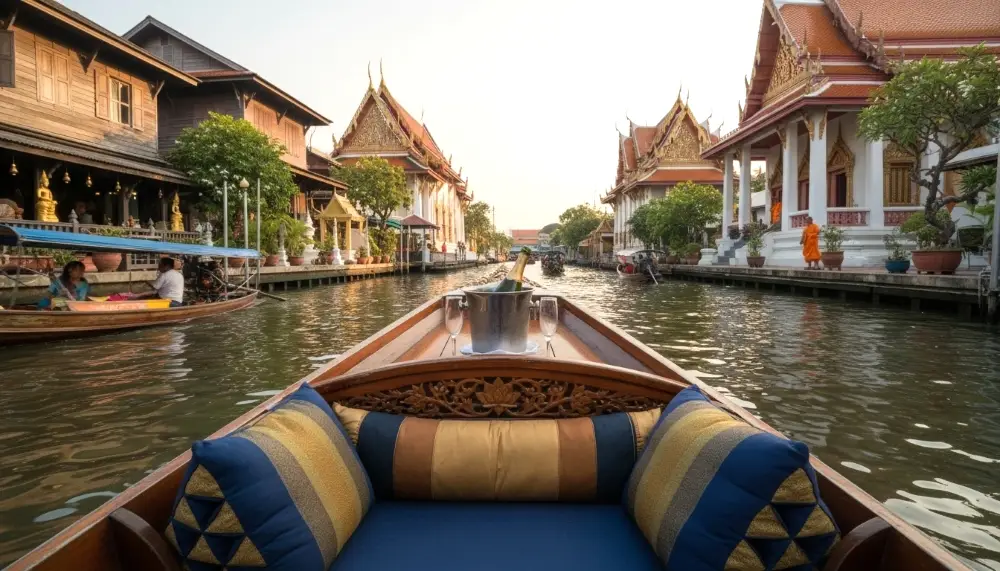
At first, Bangkok can feel completely overwhelming. The traffic, the heat, the sheer scale of it, and the crowds can seem intense compared to quieter destinations. But after a few days, most visitors begin to see the deeper layers that lie beneath the chaos.
You start recognising your favourite street food stalls. The Skytrain becomes easy to navigate without a map. A busy commercial street suddenly reveals a centuries-old temple hidden behind its walls, incense curling upwards into an indifferent sky. The city reveals itself slowly, and always on its own terms.
Bangkok rewards curiosity and punishes complacency. Those who push past the obvious tourist circuit and explore with genuine openness discover a city of extraordinary depth: brilliant architecture, world-class contemporary art, avant-garde dining, and a nightlife scene that ranges from dive bars to rooftop venues with views that make you feel like you are standing at the centre of Asia itself.
For first-time visitors to Thailand, spending real time in Bangkok offers a fascinating introduction to the country’s culture, cuisine, and contradictions. It is a city that surprises you constantly and often becomes the place travellers miss most acutely once they leave. If your Thailand adventure begins here, embrace the chaos, explore with an open mind, and enjoy every unexpected moment of discovering one of Asia’s most genuinely unforgettable cities.
Frequently Asked Questions:
What is the current visa exemption period for UK and EU citizens visiting Bangkok in 2026?
UK and EU citizens currently receive a 60-day visa exemption stamp on arrival in Thailand, extended from the previous 30-day default as part of Thailand’s post-pandemic tourism strategy. This can be extended once at any Thai immigration office for 1,900 THB, giving a total stay of up to 90 days. Always carry proof of onward travel and sufficient funds at the point of entry.
What is the Destination Thailand Visa (DTV) and who qualifies for it?
The DTV is Thailand’s remote work and slow travel visa, valid for 5 years with multiple entries of up to 180 days each. To qualify you must be at least 20 years old and evidence a bank balance of 500,000 THB. The application fee is 10,000 THB paid at your nearest Royal Thai Embassy. It does not permit working for Thai-based employers, but you may continue remote work for overseas clients. Requirements have been updated multiple times since the visa launched in 2024, so always verify current criteria directly with your embassy before applying.
What is the average monthly cost of living in Bangkok for a single person?
A comfortable lifestyle for a single resident, including rent in a mid-range area, eating out regularly, transport, utilities, and leisure, typically costs 45,000 to 65,000 THB per month. Living more frugally in a local neighbourhood and eating primarily street food can bring this down to 25,000 to 35,000 THB. Luxury living with a premium condo, gym membership, and regular fine dining pushes costs toward 100,000 THB and above.
What is the ‘Plus Plus’ charge and how does it affect my dining bill?
When you see ‘++’ on a Bangkok menu, it means the listed price excludes a 10% service charge and 7% Value Added Tax (VAT). Always calculate an additional 17.7% on top of any advertised price at mid-to-high-end restaurants. Street food stalls and local eateries never add these charges.
What is the best neighbourhood in Bangkok for expat families with children?
Phrom Phong and Thong Lo on the BTS Sukhumvit Line are the most popular choices for families, offering proximity to international supermarkets, family-friendly dining, and good access to Tier 1 and Tier 2 international schools. Bang Na and Nonthaburi offer more spacious villa-style housing at lower cost and are often preferred by families whose children attend ISB or Shrewsbury, which are located closer to those outer districts.
Is Bangkok safe for solo female travellers?
Yes. Bangkok is considered one of the safer major Asian capitals for solo female travellers. Violent crime against visitors is rare. The main risks are opportunistic scams and occasional unwanted attention in nightlife districts. Using Grab or Bolt rather than street taxis at night, staying in well-reviewed accommodation, and sharing your itinerary with someone at home are the basic precautions that most experienced solo female travellers in Bangkok follow.
What is the average electricity bill in Bangkok for a one-bedroom condo?
For a one-bedroom condo with moderate air conditioning use, expect to pay between 2,500 and 4,500 THB per month. Running AC continuously during the hot season (March to May) can push this to 6,000 THB or above. Buildings with older, less efficient cooling units often charge significantly more. Always ask your landlord for the previous 12 months of utility bills before signing a lease.
How does tipping work in Bangkok?
Thailand does not have a mandatory tipping culture. In ‘Plus Plus’ establishments where a 10% service charge is already added to the bill, a further tip is not expected. For street food vendors, market stalls, or taxis, rounding up to the nearest 20 or 50 THB is appreciated but never demanded. Massage therapists typically receive a tip of 50 to 100 THB per session and genuinely appreciate it.
Can I bring my pets when relocating to Bangkok?
Yes, but it requires careful advance planning. You will need: an ISO-standard microchip, a rabies vaccination given at least 30 days before arrival and no more than 12 months prior, a health certificate from an accredited vet issued within 10 days of travel, and an import permit from Thailand’s Department of Livestock Development applied for at least 2 weeks before your flight. Avoid mid-day arrivals during the hot season to protect your pets from tarmac heat at Suvarnabhumi Airport.
What health insurance should I use as a long-stay visitor or remote worker in Bangkok?
SafetyWing’s Nomad Insurance is the most widely used option among DTV holders and digital nomads in Bangkok for its flexible monthly billing and straightforward claims process. For those planning stays of 12 months or longer, a locally underwritten international health policy with a reputable Thai insurer such as Allianz Ayudhya or AXA Thailand often provides better inpatient cover. Bangkok’s private hospitals are world-class and relatively affordable, but a single hospitalisation without cover can easily exceed 200,000 THB.