
The Best Surf Lessons in Kata Beach, Phuket: Top Instructors You Can Book Online
This site contains affiliate links. We may earn a commission at no extra cost to you.
All prices below are calculated at a baseline rate of 35 THB to 1 USD. Actual rates fluctuate daily; check your bank’s live rate before travel.
Kata Beach is Phuket’s surf heartland. While the rest of the island’s west coast flattens out during the dry season, Kata keeps rolling from May through October, pulling in consistent swells off the Andaman Sea that are forgiving enough for first-timers yet lively enough to keep intermediate surfers genuinely entertained. The sandy bottom, the warm 29°C water, and the relaxed village atmosphere surrounding the beach all work together to make this one of Southeast Asia’s most welcoming places to pick up a board for the first time.
The good news is that choosing an instructor here in 2026 has never been easier. Several well-established schools have built strong reputations across Google, Klook, and Get Your Guide, with verified reviews and online booking that lets you lock in a spot before your flight even lands. This guide covers the schools worth your time, what each one actually costs, who each suits best, and a few insider details that the booking platforms never mention.
Why Kata Beach Works So Well for Learning to Surf
Not every beach in Phuket is kind to beginners. Patong can be crowded and choppy. Kamala is lovely but inconsistent. Kata, however, hits a reliable sweet spot: a gently curving bay about one kilometre long, protected from the harshest open-ocean energy, with a sandy seabed that is far more forgiving than the reef breaks further south.
The peak surf window runs May through October, when Indian Ocean swells generated north of Sumatra funnel into the bay at waist-to-chest height. That is exactly the kind of wave that gives beginners time to pop up and balance without being immediately knocked back. November through April still sees small, manageable surf, and many schools switch their focus to stand-up paddleboard (SUP) lessons during the calmer months.
Morning sessions, typically starting between 7:00 AM and 10:00 AM, offer the cleanest conditions. Afternoon onshore winds tend to roughen the surface, so if your school offers a choice, take the earlier slot without hesitation.

From boutique guesthouses to five-star
resorts, Agoda has Phuket covered.
Strong Asia inventory means deeper
discounts than you’d find elsewhere.
Price Comparison: Kata Beach Surf Schools at a Glance
Before diving into the individual schools, here is a side-by-side overview of what you can expect to pay in 2026. Prices are per person for a single session unless stated otherwise.
| School | Group Lesson | Private Lesson | Best Booked Via |
|---|---|---|---|
| Whale Surf School | 1,200 THB / $34 (standard) | 1,600 THB / $46 (with photos) | Direct / Walk-in |
| SSS Phuket | From 1,500 THB / $43 | From 1,500 THB / $43 | Direct / WhatsApp |
| Phuket Surf (Phuketsurf.com) | ~1,000 THB / $29 | Higher rate on request | Direct / On beach |
| Get Your Guide (Kata Private) | N/A (private only) | From ~1,500 THB / $43 | Get Your Guide |
| Beyond Surf (via Klook) | Included package | 1 hr lesson + 1 hr free rental | Klook |
| Kata Surf School | ~1,000 THB / $29 | Under 1,050 THB / $30 | On beach / TripAdvisor |
The Top Surf Schools and Instructors at Kata Beach
1. Whale Surf School: Best for Photography and Progress Tracking
Whale Surf School has built one of the most enthusiastic followings on Kata Beach in recent years, and the pricing structure reflects genuine thought about what actually matters to travellers. A standard 90-minute lesson starts at 1,200 THB ($34), but the Full Experience package at 1,600 THB ($46) adds in-water professional photography and video coverage that captures your first wave from the moment you pop up. For anyone who wants shareable content from their holiday, that is exceptional value.
Duo sessions (two people together) start at 2,000 THB ($57) for a standard lesson and 2,600 THB ($74) with photography. Their 3-day surf-and-stay package combines six hours of intensive instruction across three days with two nights at Tall Tree Kata Phuket, a stylish property minutes from the beach. The instructors are known for genuine patience, and the school’s social media channels show a remarkable range of students: a 72-year-old completing her first ride, young children as small as six years old, and solo travellers who booked on a whim.
Lock in your spot through Get Your Guide, which lists Whale’s beginner lessons with free cancellation up to 24 hours before. For the surf-and-stay package, check Agoda for the Tall Tree accommodation component and book the lesson separately to compare total costs.
2. SSS Phuket: Best for Multi-Day Camps and Language Flexibility

SSS Phuket sits at 40/14 Kata Road and operates as part of a larger water sports and dive centre, which means the equipment maintenance here is taken seriously in a way that standalone beach vendors sometimes are not. Lessons run April through December, making SSS one of the most consistent options across the full surf season. When the swell drops, they shift the programme towards SUP from October to May.
Single lessons start from 1,500 THB ($43), but the real value proposition is the surf camp: a 2-to-10-day intensive programme delivering three hours of instruction per day split across two sessions, morning and afternoon. Boards come with optional GoPro mounts, and the school can deliver equipment to alternative beaches like Nai Harn if you want a different setting. The team speaks English, French, Russian, German, Spanish, Chinese, and Thai, which makes SSS the strongest choice for non-English-speaking families or groups.
Basic onsite rooms are available from 900 THB ($26) per night for street view and 1,000 THB ($29) for sea view, subject to availability. Reach SSS directly via WhatsApp or Line on +66 895 869 920 to confirm current room status. For longer stays in the area, cross-check nightly rates on Agoda alongside the SSS rooms, as nearby guesthouses sometimes offer better value for groups.
3. Phuket Surf (Phuketsurf.com): Best for Pedigree and Local Knowledge
Operating since 1999, Phuket Surf at 186/11 Koktanod Road claims the title of original surf school on Kata Beach, and that history shows. The instructors here have competed in and judged the annual Phuket Surf Contest at Kata (typically held August to September) and carry a level of wave knowledge that comes only from decades of reading this particular beach. Group lessons run at approximately 1,000 THB ($29) per hour, and the team will tell you honestly whether conditions are worth booking for that day before you commit.
One of Phuket Surf’s less-advertised strengths is their board rental service for those who have already found their feet and just need equipment. Rates sit at roughly 200 to 300 THB ($6 to $9) per hour and up to 800 to 1,000 THB ($23 to $29) for a full day, making this the most cost-effective option for returning visitors who want to practise independently between lessons.
Phuket Surf handles most of its booking directly or through walk-ins on the beach. Call ahead on 093 582 2987 to check the surf forecast and confirm instructor availability, especially during the August to September competition season when the school’s top coaches are sometimes occupied with events.
4. Get Your Guide Private Lessons: Best for Couples and Solo Travellers Who Want Guaranteed Attention

The private surf lesson listed on Get Your Guide for Kata Beach caps each session at a maximum of two participants, which effectively guarantees a personal coaching ratio that no group session can match. The 1.5-hour format starts with a beach briefing covering ocean safety, stance, paddling, and the pop-up, then moves into the water with the instructor guiding wave selection and providing real-time feedback throughout. Photos and video are included as standard.
Instructors Ti and Ja have accumulated a strong track record of positive mentions by name in traveller reviews, with particular praise for their communication skills and ability to adapt pace to each student. The lesson price on Get Your Guide starts from around 1,500 THB ($43) per person and the platform’s free cancellation policy applies up to 24 hours in advance. That flexibility is worth paying a small premium for if your travel schedule is not fully fixed.
Get Your Guide also lists group beginner lessons at the lower end of the market (from around 31 USD per person), making it a genuine one-stop comparison tool. Check both the private and group listings side by side before deciding: the price gap is often narrower than expected once photography inclusions are factored in.
5. Beyond Surf Kata (via Klook): Best for Flexible Package Value
Beyond Surf Kata Phuket is listed on Klook and offers a package format that works particularly well for beginners who want structured entry and exit from the experience. The session delivers one hour of instructor-led surfing followed immediately by a second free hour of independent board rental, allowing students to practise what they have just learned while confidence is still fresh. If you are staying within the Kata or Karon Beach area, free pick-up is included.
Beyond Surf’s instructors are described consistently as local, professional, and genuinely enthusiastic, with between five and ten years of experience each. The school caters to beginners, children, teenagers, and private groups. Klook‘s booking platform adds the convenience of verified traveller reviews alongside transparent pricing and its standard cancellation terms, making it easy to compare Beyond Surf against other activities you might be stacking into the same day or trip.
For families travelling with children under 12, use Klook to check the minimum age requirements per session before booking. Some packages set the minimum at six years old, which suits most family configurations without adjustment.
6. Kata Surf School: Best Budget Option for Solo Backpackers

Kata Surf School occupies a spot near the Boathouse Hotel on the main beach and consistently draws praise for delivering genuine value at the budget end of the market. Private lessons here sit under 1,050 THB ($30) per hour, putting it comfortably below the mid-market average, and TripAdvisor reviews repeatedly highlight the sense of humour and patience of the instructors, with multiple accounts of complete beginners standing up and riding whitewater within their first session.
The approach here prioritises smaller class sizes and a slow-build progression rather than getting everyone vertical as fast as possible. That suits students who lack athletic confidence or who are surfing for the first time well into adulthood. Board hire is also available for those who want extra time in the water after a lesson.
Kata Surf School does not have a heavy online booking presence, so walk-ins from beach accommodation are common. Arrive before 9:00 AM to catch the best conditions and secure a morning slot. If you are travelling with a tight budget and want to keep accommodation costs low nearby, Agoda lists a strong selection of guesthouses in the Kata area starting from around 600 to 800 THB ($17 to $23) per night.

From temples to island tours, Klook
covers Phuket’s best experiences.
Hotel pickup is often included and
prices beat the pier walk-in rate.
Practical Tips Before You Book
Getting to the beach: Taxis from Phuket’s tourist areas to Kata are typically quoted far above fair value. Use Grab or Bolt on your phone instead. A ride from Patong to Kata Beach runs around 150 to 200 THB ($4 to $6) via app versus 400 to 600 THB ($11 to $17) for a flagged street taxi. Both apps require mobile data and an SMS verification code the moment you create your account, so activate your Airalo, Yesim, or Saily eSIM before you land at Phuket International Airport. Airport Wi-Fi is rarely stable enough to complete the verification process reliably.
Arriving with family or a group: If you are landing with children, luggage, and the general chaos that comes with family travel, Welcome Pickups pre-negotiates your transfer rate and assigns a named driver, removing the usual pier-side pressure completely. This is worth the modest premium over a Grab ride when you have small children in tow.
Travel insurance: Standard policies frequently exclude water sports activities. Ensure your cover specifically lists surfing and water-based activities. Emergency evacuation from a remote beach to a Phuket hospital can reach tens of thousands of baht if medical transport is required. Digital nomads on extended stays should layer SafetyWing’s Nomad Insurance on top of any existing policy for longer-term health scenarios that standard travel insurance does not cover.
Cash: Almost all beach-based schools and instructors prefer physical THB. Carry 1,000 and 500 denomination notes. ATMs charge a standard 220 THB ($6) withdrawal fee; always select “Continue Without Conversion” to let your home bank apply its own exchange rate.
What to wear: The water sits at a consistent 29°C year-round. Rash guards are optional but useful for prolonged sessions. Reef-safe sunscreen is strongly recommended and required if you venture into any nearby marine park areas.

From classic Phuket highlights to
hidden-gem private tours. Cancel
free up to a day before your
start time if plans change.
Kata Beach Beyond the Surf Lesson
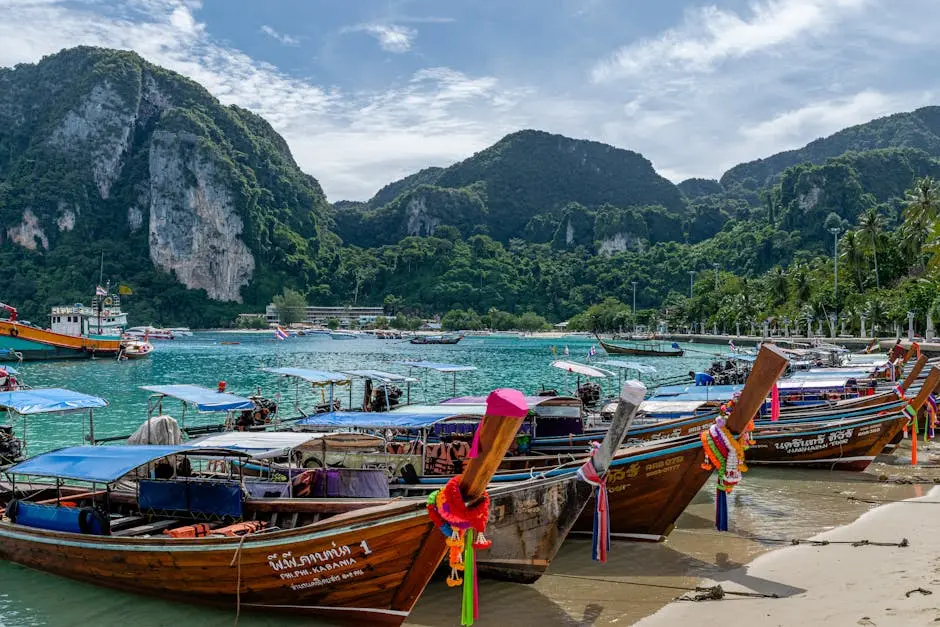
A surf lesson at Kata rarely occupies more than two hours of the morning. What you do with the rest of the day is where Kata’s personality really comes through. The beach road behind the sand is lined with good-value Thai restaurants, smoothie bars, and night market stalls that run from early evening. A whole grilled fish with rice will cost you 200 to 280 THB ($6 to $8) at any of the beachfront shacks.
Surf House Phuket at 4 Pakbang Road operates a flowrider machine that runs daily from 11:30 AM to 8:00 PM, making it a natural afternoon follow-on from a morning lesson on the ocean. For those wanting to extend the day into the water, Kata Noi Beach directly to the south offers snorkelling over coral in remarkably clear water. Browse Klook for half-day snorkelling tours that depart from the Kata area and combine two or three stops in a single trip.
For digital nomads spending a week or more at Kata, the neighbourhood now has reliable 4G coverage across all the major Thai networks (AIS, DTAC, True Move). Use NordVPN whenever you connect to a resort or cafe Wi-Fi network, particularly when accessing banking apps or making accommodation bookings on shared connections. The co-working scene here is smaller than Koh Lanta or Chiang Mai, but the beachside cafe environment more than compensates for the lack of formal co-working spaces.
If your flight home involves a domestic connection through Bangkok or a tight international transfer, keep AirHelp in mind as a service that handles compensation claims for significant delays on your behalf, including those involving domestic Thai routes.

Stay online in Phuket without the
daily data limits of tourist SIMs.
Yesim’s eSIM offers unlimited 5G
from around $10 for the whole trip.
Frequently Asked Questions:
What is the best time of year to take surf lessons at Kata Beach?
May through October is the prime surf window. Indian Ocean swells create consistent waist-to-chest-height waves during this period, and most schools run their full lesson and camp programmes. November through April still offers small rideable surf, but many schools also offer stand-up paddleboard (SUP) sessions during the calmer months. Morning sessions before 10:00 AM produce the cleanest surface conditions regardless of season.
How much does a surf lesson at Kata Beach cost in 2026?
Group lessons start from around 1,000 THB ($29) per hour. Standard single lessons at the established schools typically run 1,200 to 1,500 THB ($34 to $43) for 90 minutes. Private lessons with photography included (such as those at Whale Surf School) sit around 1,600 THB ($46). Duo sessions average 2,000 to 2,600 THB ($57 to $74) depending on extras. Prices have risen roughly 10 to 15 percent since 2024.
Can complete beginners learn to surf at Kata Beach?
Yes, and Kata is arguably one of the best beginner beaches in Southeast Asia. The sandy bottom, consistently warm water (29°C year-round), and manageable wave height make it far more forgiving than reef breaks elsewhere in Phuket. Most schools report that the majority of true beginners manage to stand up and ride whitewater within their first 90-minute session.
Should I book my surf lesson online or just walk up on the day?
Booking in advance through Get Your Guide or Klook is strongly recommended during peak surf season (July to September) and over Thai public holidays when popular morning slots sell out. Both platforms offer free cancellation up to 24 hours in advance. Walking up works fine during quieter months, particularly for schools like Phuket Surf and Kata Surf School that have strong on-beach presences, but you may miss the best morning conditions if slots fill early.
Is Kata Beach surf suitable for children?
Yes. Most schools accept children from six years old, and several (including SSS Phuket and Whale Surf School) have strong track records teaching young beginners. Kata’s gentle, sandy-bottom waves are well suited to children. For family groups, book via Klook or Get Your Guide to confirm the minimum age requirement for each specific session before arrival. Larger Kata-area beach resorts with pools and kids’ clubs are bookable through Agoda and make a practical base for families mixing surf lessons with downtime.
What is included in a typical surf lesson at Kata Beach?
Standard inclusions are: a surfboard appropriate to your level (usually a foam soft-top for beginners), instructor supervision in the water for the full lesson duration, a beach briefing covering safety, stance, paddling, and the pop-up technique, and use of a rash guard if required. Some schools (notably Whale Surf School and the Get Your Guide private lesson) also include in-water photography and video. Free board rental time after the lesson is offered by Beyond Surf via Klook. Always confirm exactly what is included before paying.
How do I get from Phuket Airport or Patong to Kata Beach?
Use Grab or Bolt rather than street taxis or airport touts. A Grab ride from Phuket International Airport to Kata Beach costs approximately 500 to 650 THB ($14 to $19). From Patong, expect 150 to 200 THB ($4 to $6). Both apps require mobile data and an SMS verification code on first use, so activate an Airalo, Yesim, or Saily eSIM before departure. For families arriving with luggage and young children, Welcome Pickups offers pre-negotiated fixed-rate transfers with a named driver and removes the usual airport pressure entirely.
Which school is best for multi-day surf camps at Kata Beach?
SSS Phuket offers the most structured multi-day camp experience, running 2 to 10-day programmes with three hours of instruction per day split across morning and afternoon sessions. Lessons start from 1,500 THB ($43) per day with onsite rooms available from 900 THB ($26) per night. Whale Surf School’s 3-day surf-and-stay package combining lessons with accommodation at Tall Tree Kata is another well-reviewed option, particularly for those who want a more boutique setting. Check Agoda alongside each school’s direct rates for the accommodation component.
Do I need travel insurance for a surf lesson in Phuket?
Yes, without exception. Standard travel insurance policies frequently exclude or limit cover for water sports and surfing activities. Read the small print carefully before purchasing and confirm that surfing is explicitly covered. Emergency medical evacuation from a beach area to a Phuket hospital can be extremely costly without proper cover. For anyone on an extended stay or working remotely, SafetyWing’s Nomad Insurance covers healthcare in Thailand at far lower cost than standard expat medical plans and handles longer-term health scenarios that travel policies typically exclude.
Can I surf at Kata Beach during the rainy season?
Yes, and the rainy season (May to October) is actually Phuket’s best surf season. The misconception that rain means no surfing comes from conflating the wet season with bad conditions. Swells are at their most consistent and powerful during this period. Rain typically arrives in short afternoon bursts rather than all-day downpours. The main practical consideration is that afternoon onshore winds can roughen conditions, so morning lessons (7:00 AM to 10:00 AM) are always the priority. Check conditions with your school the morning of your lesson before committing.