Top 5 Places To Stay In Chiang Rai
This site contains affiliate links. We may earn a commission at no extra cost to you.
Chiang Rai sits at the northern edge of Thailand, cradled by jungle-covered hills and ancient trade routes that once connected kingdoms across Southeast Asia. It is smaller, quieter, and considerably less commercialised than Chiang Mai, and that is precisely the point. Mist hangs over rice paddies in the early morning, temple courtyards smell of incense and jasmine, and the streets clear out by ten at night. If Chiang Mai is Thailand’s northern capital, Chiang Rai is its soul. All prices in this guide use a rate of 35 THB = $1 USD.
Knowing where to stay here makes an enormous difference. The city is compact but its districts each have their own rhythm, their own price range, and their own particular kind of magic. Whether you are arriving for two nights on a loop through the north or settling in for a proper slow-travel week, the right neighbourhood unlocks a completely different experience.
Quick Answer: The Best Areas To Stay In Chiang Rai
Best for First-Timers: City Centre (Clock Tower district, Night Bazaar, easy day-trip pickups). Rates from 400 to 2,500 THB (~$11 to $71) per night.
Best for Riverside Relaxation: Kok Riverside (resort pools, sunset terraces, colonial elegance). Rates from 2,500 to 8,000 THB (~$71 to $229) per night.
Best for Temple Proximity: Rop Wiang / South Chiang Rai (near the White Temple and Blue Temple). Rates from 1,200 to 4,500 THB (~$34 to $129) per night.
Best for Nature and Families: Singha Park and Mae Fah Luang Area (resort grounds, tea-hill views, wide open space). Rates from 3,000 to 9,000 THB (~$86 to $257) per night.
Best for Luxury and Exclusivity: Golden Triangle / Chiang Saen (Anantara, Four Seasons, tri-border river views). Rates from 10,000 to 35,000+ THB (~$286 to $1,000+) per night.
Entry Strategy: Mae Fah Luang Chiang Rai International Airport (CEI) is located approximately 8 kilometres north of the city centre. A Grab ride to the Clock Tower area costs 120 to 180 THB (~$3.40 to $5.15). Activate your Airalo, Yesim, or Saily eSIM before landing: Grab and local transport apps require SMS verification at the network level and will not complete setup without an active data connection at the baggage carousel.

Stay closer to the action in Chiang Rai.
Agoda lists guesthouses to resorts
with verified reviews and instant
booking at competitive rates.
1. City Centre: The Natural Base For First-Time Visitors
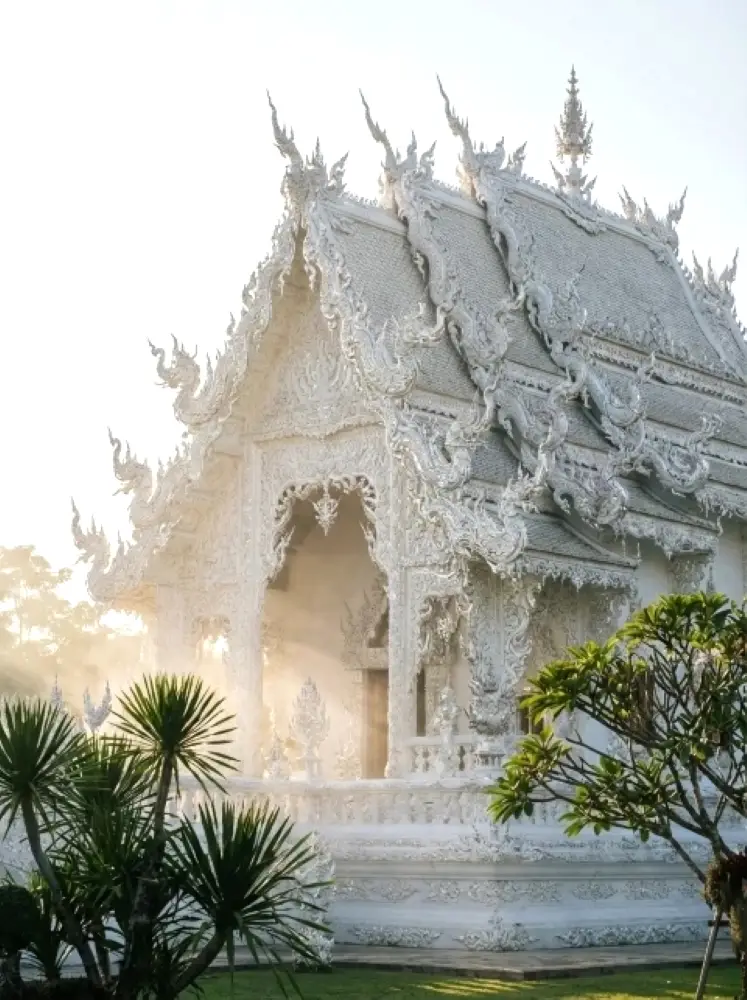
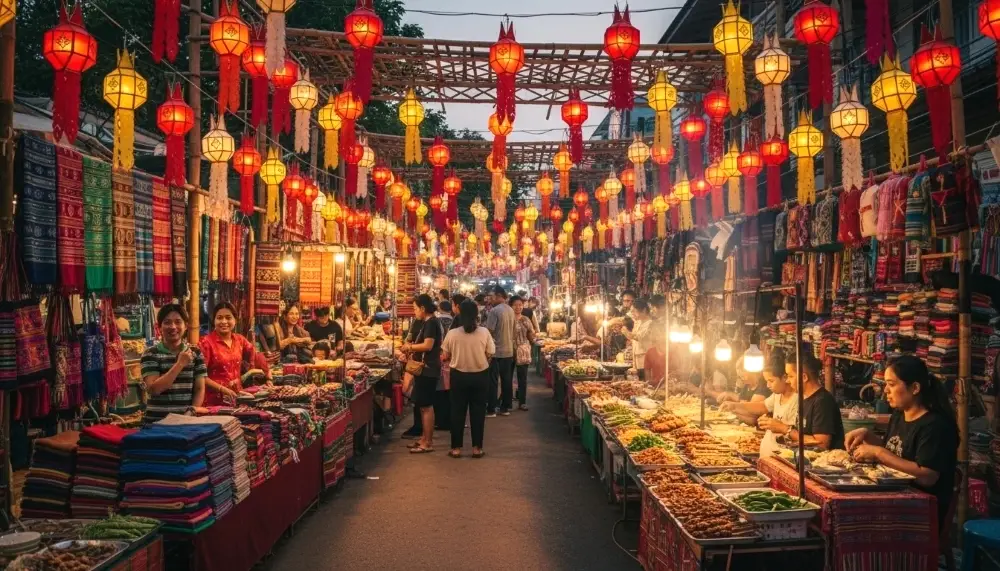
The city centre anchors itself around Chiang Rai’s famous Clock Tower, the golden landmark designed by artist Chalermchai Kositpipat that comes alive each evening with a colour and music show at 19:00, 20:00, and 21:00. This district is compact and genuinely walkable: the Night Bazaar, Saturday Walking Street, Wat Phra Kaew, the bus terminal for White Temple day trips, dozens of coffee shops, and a cheerful scatter of noodle stalls are all within fifteen minutes on foot.
Accommodation here covers every budget generously. Clean guesthouses with air conditioning, private bathrooms, and reliable Wi-Fi start from 400 to 800 THB (~$11 to $23) per night. Mid-range boutique hotels with pools and included breakfast run 1,000 to 2,500 THB (~$29 to $71) per night. Properties like Mora Boutique Hotel and Hotel Selene Chiang Rai sit in this range and consistently earn high marks on Agoda and Booking.com for their central position and service quality.
Highlights of staying in the city centre include:
- The Clock Tower evening light show (free, three times nightly from 19:00)
- Chiang Rai Night Bazaar on Phahonyothin Road (daily from 18:00 to 23:00)
- Saturday Night Walking Street (18:00 to 23:00, local crafts, street food from 40 to 80 THB / ~$1.15 to $2.30 per dish)
- Wat Phra Kaew and Wat Phra Singh within walking distance
- Tour pickup points for White Temple, Blue Temple, Golden Triangle, and hill-tribe visits
- Multiple Grab and Bolt pickup zones for easy day-trip logistics
For families, this area works brilliantly as a practical base. Collect the kids from Klook-booked temple tours and White Temple excursions (entrance 200 THB / ~$5.70 per person), drop off bags at the hotel, and walk straight into the night market for dinner. Families travelling with groups will find Welcome Pickups a reliable option for arriving together in one vehicle from the airport rather than splitting across multiple taxis.
One honest note: city centre streets can feel a touch thin on atmosphere after 22:00. This is not Bangkok. It is cool and quiet by late evening, which suits most travellers perfectly well but is worth knowing if you are chasing nightlife.

Book Chiang Rai day trips, attractions,
and activities in one place. Check
real reviews and lock in your spot
before the popular slots go.
2. Kok Riverside: Chiang Rai’s Most Atmospheric Address
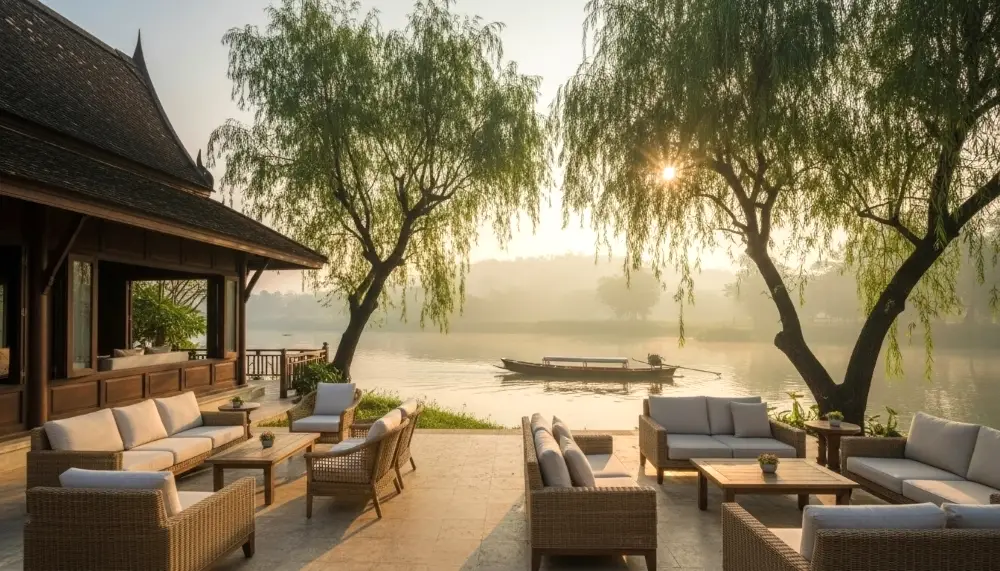
The Mae Kok River winds along the northern edge of Chiang Rai, and the hotels and resorts that line its banks represent the city’s most polished accommodation. This is where you come for a proper holiday feel: lush gardens that slope toward the water, outdoor pools overlooking the current, terraces built for golden-hour drinks, and restaurants that take their time. The pace here is slower and more deliberate than the city centre, which is exactly the appeal.
The flagship property along this stretch is Le Meridien Chiang Rai Resort, which occupies a commanding riverside position with landscaped grounds, a large outdoor pool, spa facilities, and multiple dining options serving Thai and international cuisine. Rates here typically run 4,500 to 8,000 THB (~$129 to $229) per night depending on season and room type. For something with more intimate character, The Riverie by Katathani is Chiang Rai’s five-star benchmark, with elegant rooms, an outdoor infinity pool facing the river, and on-site dining that genuinely competes with Chiang Rai’s best standalone restaurants. Expect to pay 5,500 to 9,500 THB (~$157 to $271) per night.
At the more accessible end of the riverside tier, Imperial River House Resort offers a nine-score rating on multiple platforms, great value at around 2,500 to 4,000 THB (~$71 to $114) per night, and a garden-pool combination that feels far more expensive than it costs. Booking.com and Agoda frequently list it among the top-rated properties in the province.
Practical notes for the riverside area: the distance to the city centre is 2 to 4 kilometres depending on your specific property. A Grab or Bolt ride runs 60 to 100 THB (~$1.70 to $2.85) and takes under ten minutes. Some resorts offer complimentary shuttle services to the Night Bazaar in the evenings, worth confirming at check-in. For day trips, tour operators and Klook-booked excursions to the White Temple, Golden Triangle, and Doi Mae Salong typically include hotel pickup from the riverside area at no added cost.
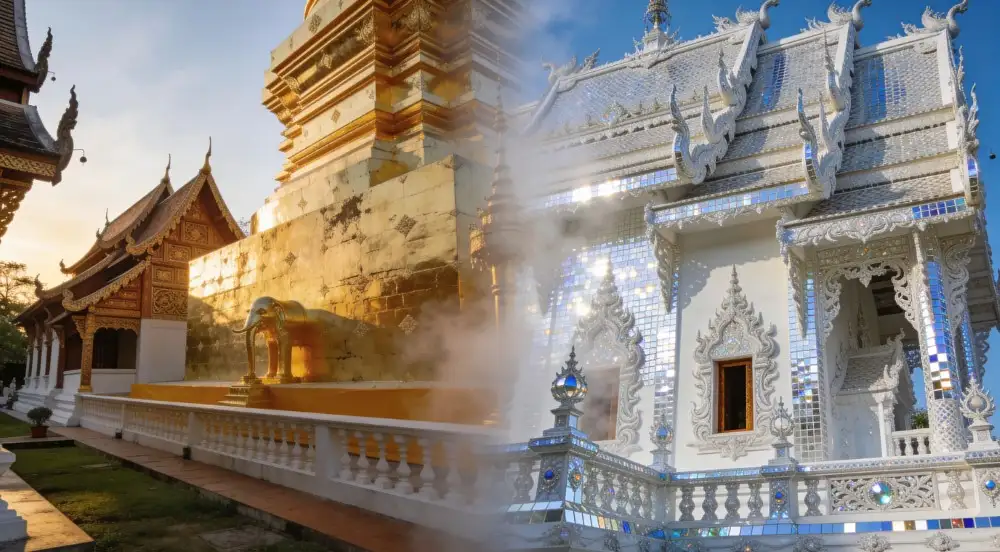
3. Rop Wiang / South Chiang Rai: Closest to the White Temple
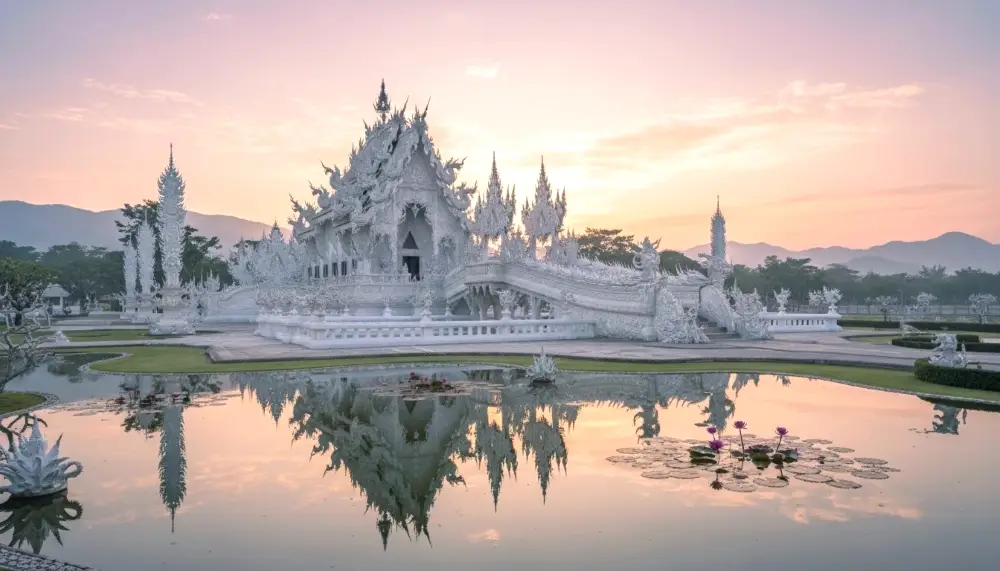
Rop Wiang is the residential district that wraps around the southern and eastern edges of the city, and it is where you will find the most sensible base for travellers whose primary purpose is temple-ticking. Wat Rong Khun (the White Temple) is approximately 12 kilometres south of the city centre, reachable by local bus for 25 THB (~$0.71) per person from Terminal 1, or by Bolt for around 150 to 200 THB (~$4.30 to $5.70) direct. Wat Rong Suea Ten (the Blue Temple) sits roughly 4 kilometres east of the centre and costs almost nothing to visit (entry is free). Staying in Rop Wiang shaves meaningful time and money off both.
Hotels here skew toward mid-range boutique properties and small family-run guesthouses with large grounds. Phowadol Resort and Spa is the area’s standout property: 159 rooms and villas spread across tropical gardens roughly 8 kilometres from the city centre, with a full-service spa, large outdoor pool, bicycle rentals, and a wellness focus that draws guests who want something more immersive than a standard hotel stay. Rates run 3,000 to 6,000 THB (~$86 to $171) per night. Smaller guesthouses and locally-run boutique stays in this district begin at 1,200 THB (~$34) per night and offer excellent value for comfortable rooms with breakfast included.
The trade-off is distance from the Night Bazaar and the Clock Tower area. Rop Wiang is peaceful and genuinely residential, meaning restaurants thin out after 20:00 and evening entertainment is minimal. For travellers on tightly structured itineraries who intend to spend their days at temples and their evenings reading on a resort terrace, this is actually a selling point rather than a drawback. Get Your Guide lists several half-day and full-day White Temple and Black House (Baan Dam Museum) combination tours that depart directly from hotels in this district.
Budget travellers will also find Rop Wiang genuinely kind to their wallets. Small guesthouses here undercut city-centre equivalents by 20 to 30 percent while offering comparable cleanliness and connectivity. Local markets in the surrounding streets sell breakfast for 50 to 70 THB (~$1.40 to $2.00) per person.

Pick a Chiang Rai eSIM plan that matches
your trip length on Airalo’s global
marketplace. Install before departure
and you’re online the moment you land.
Chiang Rai Neighbourhood Price Guide:
| Area | Best For | Nightly Rate (THB) | Nightly Rate (USD) | Vibe |
|---|---|---|---|---|
| City Centre | First-timers and Solo Travellers | 400 to 2,500 THB | ~$11 to $71 | Walkable and Central |
| Kok Riverside | Couples and Comfort Seekers | 2,500 to 9,500 THB | ~$71 to $271 | Relaxed and Scenic |
| Rop Wiang / South | Temple Visitors and Budget Stays | 1,200 to 6,000 THB | ~$34 to $171 | Quiet and Residential |
| Singha Park / Mae Fah Luang | Families and Nature Lovers | 3,000 to 9,000 THB | ~$86 to $257 | Spacious and Green |
| Golden Triangle | Luxury Travellers and Honeymooners | 10,000 to 35,000+ THB | ~$286 to $1,000+ | Exclusive and Remote |

GetYourGuide has Chiang Rai’s best
tours and experiences covered with
verified operators and instant
mobile vouchers on arrival.
4. Singha Park and Mae Fah Luang: For Families and Nature Escapes
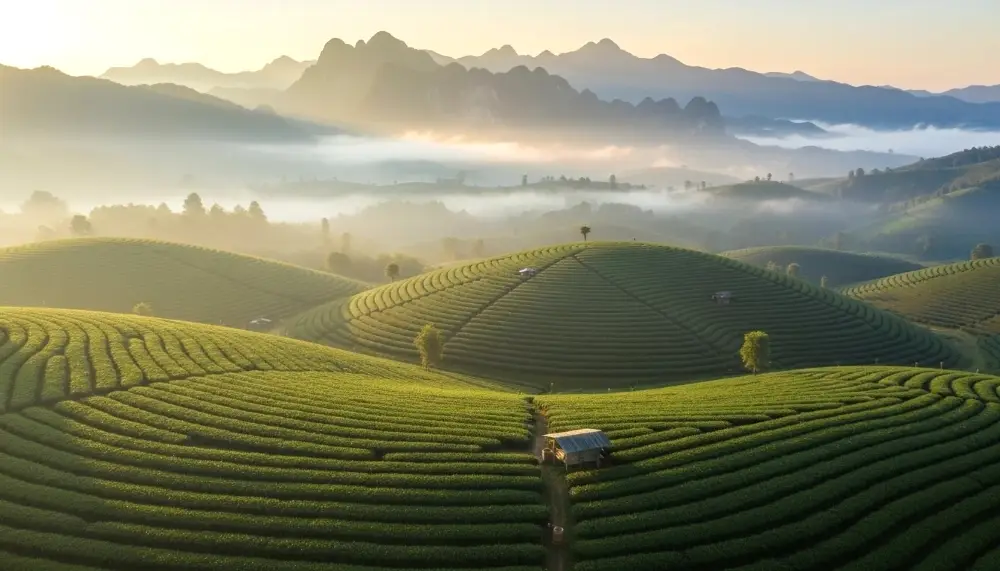
Roughly 15 kilometres south of the city sits Singha Park, a working tea and agricultural estate that has grown into one of northern Thailand’s most beloved family destinations. Tram tours through strawberry and tea fields, zip lines, farm animals that children can feed, cycling routes through flower meadows, and one of the most genuinely beautiful landscapes in the province. Staying in this broader zone, which includes the Mae Fah Luang area with its royal gardens and elevated cooler air, places you inside the scenery rather than visiting it as a day trip.
Resort properties here occupy wide grounds by design. Katiliya Mountain Resort and Spa is the area’s most celebrated address, a hillside retreat where rooms and villas look out over mountains and valleys, where herb-scented spa treatments use locally foraged ingredients, and where the infinity pool seems to float above the forest canopy. Rates run 5,000 to 9,000 THB (~$143 to $257) per night. At a more accessible mid-range, A Star Phulare Valley Resort offers an average guest rating above 8.5 on Agoda at around 2,400 to 3,500 THB (~$69 to $100) per night, with mountain views, a pool, and an on-site restaurant making it a strong value proposition for families.
The practical caveat is obvious: this zone requires wheels. Without a hire car or scooter, you are dependent on Grab (typically 200 to 350 THB / ~$5.70 to $10 per ride into the city centre) or private resort transfers. For a focused nature-and-family trip where the resort itself is part of the experience, this is irrelevant. For solo travellers or couples who want to mix city cafes with temple visits, it adds friction. Travellers arriving into Chiang Rai from Chiang Mai by bus (booked in advance on 12GO to secure seats during national holiday periods) often appreciate the flexibility of a hire car collected at the terminal for exactly this reason.
Digital nomads and remote workers should note that resorts in this zone typically offer strong but not always consistent Wi-Fi. If your work requires reliable symmetric connectivity, pack a local SIM card (AIS offers the best coverage in the northern hills at 600 to 900 THB / ~$17 to $26 per month for unlimited data). Using NordVPN on cafe or resort networks is standard practice for anyone handling sensitive client work in the region.
5. Golden Triangle and Chiang Saen: Where Three Countries Meet
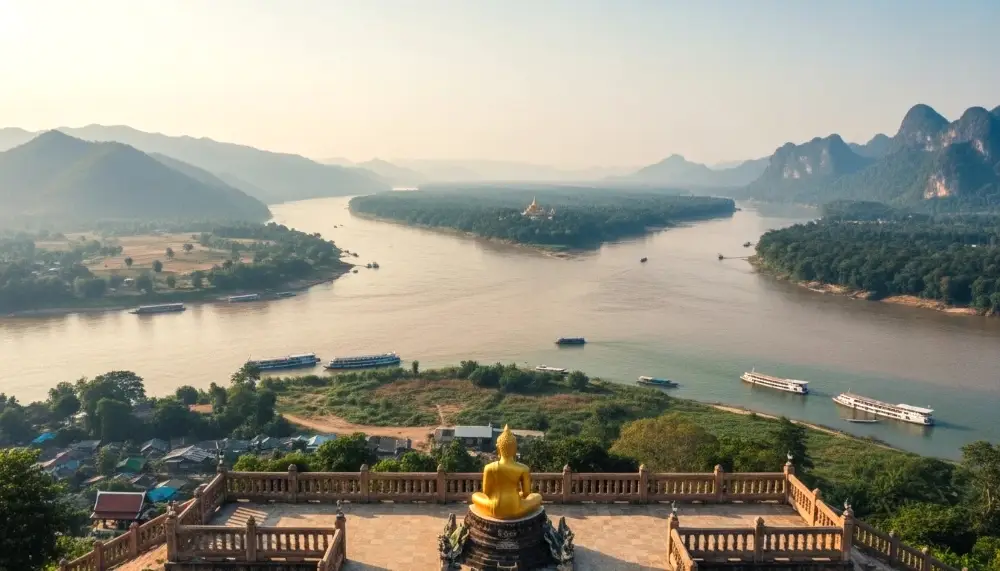
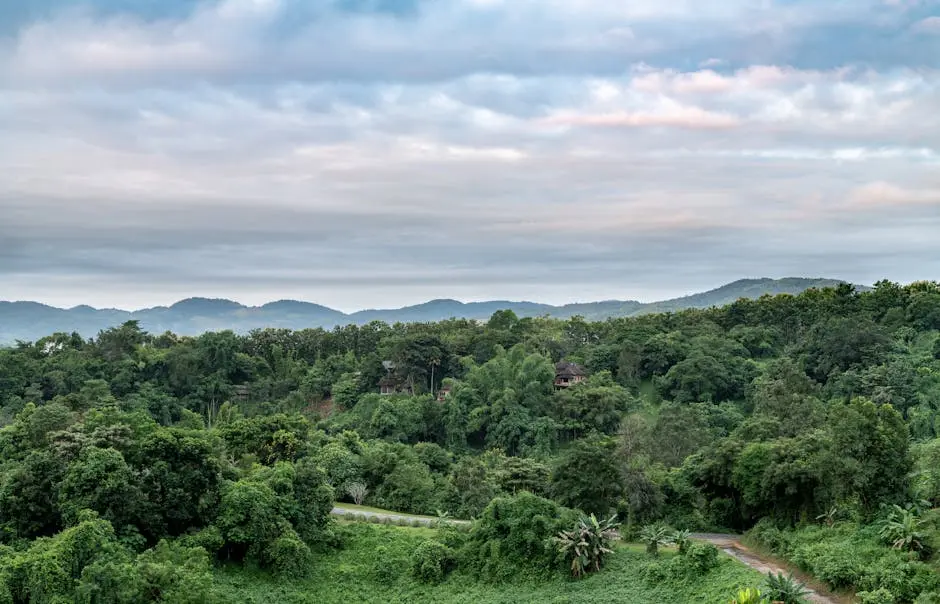
Some sixty kilometres north of Chiang Rai city, at the exact point where the Mekong River separates Thailand from Laos and Myanmar, two of the world’s most extraordinary resort properties sit watching the currents move. This is the Golden Triangle, and it is among the most charged and historically layered landscapes in all of Southeast Asia: ancient opium trade routes, Lanna kingdom ruins, river villages unchanged for generations, and the electric feeling of standing at a physical meeting point of three nations.
Anantara Golden Triangle Elephant Camp and Resort is the address that defines this zone. Perched on a hillside with the three-country panorama as its living wallpaper, the resort offers rooms and suites at 10,000 to 20,000+ THB (~$286 to $571+) per night, elephant interaction experiences conducted by in-house mahouts, river excursions, and a level of service calibrated for the most discerning international traveller. It sits in a different category from anything else in Chiang Rai province and should be considered as its own destination rather than a base for sightseeing.
The Four Seasons Tented Camp Golden Triangle takes the concept further: a genuine tented-camp luxury experience in the jungle, with rescued elephants living in a nearby natural habitat, gourmet dinners served by candlelight, and private butler service. Rates begin at 25,000 to 35,000+ THB (~$714 to $1,000+) per night and are booked well in advance by guests who have often been planning the trip for over a year. If budget is not the primary constraint and your idea of the perfect Chiang Rai stay involves sundowners while watching boats cross between three countries on the Mekong, there is nowhere in northern Thailand that compares.
For travellers visiting as a day trip rather than an overnight, Klook and Get Your Guide both list guided Golden Triangle excursions from Chiang Rai city at 1,200 to 2,000 THB (~$34 to $57) per person including transport, a boat crossing to Laos island, and the House of Opium museum entry. Those driving independently should note that the road north via Highway 1 and Route 1016 through Chiang Saen takes approximately 75 to 90 minutes each way. If a long-haul flight delay has disrupted your entry via Bangkok or another hub, AirHelp can assist with compensation claims for disrupted international legs before you connect north.

Need budget data in Chiang Rai? Saily’s
eSIM plans start cheap and install
in a couple of minutes. Built by
the NordVPN team, security is solid.
The Breakdown: Specific Stays Worth Knowing By Name
City Centre: The Practical Picks
Mora Boutique Hotel is consistently cited as the best mid-range option in the centre, with a rooftop pool, clean contemporary design, and a location that puts the Clock Tower light show about four minutes on foot from the lobby. Rates sit around 1,800 to 2,800 THB (~$51 to $80) per night. For budget stays with no compromises on cleanliness or Wi-Fi reliability, Spinomad Hostel serves the backpacker circuit well with dormitory beds from around 400 THB (~$11) and private rooms from 800 THB (~$23). Solo travellers and long-term nomads considering Chiang Rai as a slow-travel base should also explore SafetyWing for remote work medical coverage, especially given the limited English-language medical infrastructure outside the city centre.
Riverside: The Considered Splurge
The Riverie by Katathani is simply the finest hotel in Chiang Rai by most measures: views, food quality, pool setting, and room finish. For couples celebrating something, it is worth the stretch. Laluna Hotel and Resort offers charming bungalow-style accommodation in a tropical garden just 2 kilometres from the Clock Tower, with rates at around 2,000 to 3,500 THB (~$57 to $100) per night, making it one of the best value-for-atmosphere addresses in the entire province. Book via Agoda for the best rates, and always cross-check on Booking.com as the gap can be 10 to 15 percent.
Pro Tips For A Smooth Chiang Rai Stay:
eSIM First: Before you board your flight north, activate an Airalo, Yesim, or Saily eSIM. Grab and Bolt both trigger SMS verification codes when you first open the apps in a new location. Without an active data connection at the baggage carousel in Chiang Rai’s small terminal, you will spend your first 20 minutes negotiating an overpriced taxi when you could be in a comfortable, metered Grab within minutes.
Transport: Grab and Bolt cover the city and near-suburbs reliably. A ride between any two central areas costs 60 to 150 THB (~$1.70 to $4.30). Red songthaews (shared pickup trucks) run fixed routes within the city for 30 to 40 THB (~$0.85 to $1.15) per person. For the White Temple by public bus, Terminal 1 on Phahonyothin Road is the departure point: 25 THB (~$0.71) each way, every 30 minutes from 06:30.
Intercity Buses: The Chiang Mai to Chiang Rai route (approximately 3 to 3.5 hours by Green Bus or Prempracha) fills quickly around Songkran (April), the November Loi Krathong period, and Chinese New Year. Book tickets via 12GO at least three days in advance to lock in seats without the terminal queue.
Booking Strategy: Agoda offers the deepest inventory for northern Thai properties and frequently surfaces mobile-only rates not visible on desktop. Check both. For resort properties in the Singha Park and Golden Triangle zones, booking four to six weeks in advance during high season (November to February) is strongly advised. Shoulder season (May to September) offers significant rate reductions of 20 to 35 percent at most riverside and nature resort properties.
Smoky Season Warning: Between late January and mid-April, agricultural burning across northern Thailand and Myanmar produces significant air pollution. AQI readings in Chiang Rai can exceed 150 to 200 during peak burning weeks. If respiratory health is a concern, schedule your visit between November and January. October is also excellent: lush post-monsoon greenery, cooler temperatures, and noticeably thinner tourist crowds.

Stay online in Chiang Rai without the
daily data limits of tourist SIMs.
Yesim’s eSIM offers unlimited 5G
from around $10 for the whole trip.
Chiang Rai As Part Of Your Northern Thailand Journey:
Most travellers reach Chiang Rai as part of a broader northern Thailand circuit. The standard route arrives via Chiang Mai (3 to 3.5 hours by bus or 50 minutes by flight), spends two to four nights exploring the temples and hill-tribe areas, and continues either back south or crosses into Laos at Chiang Khong. Thai AirAsia and Nok Air operate the Bangkok Don Mueang to Chiang Rai route at 900 to 2,200 THB (~$26 to $63) booked early, while the overnight sleeper train from Bangkok to Chiang Mai followed by a Green Bus north remains a beloved classic for travellers with more time than urgency.
For the full northern Thai experience, a suggested rhythm might be: two nights in Bangkok to recover from international travel, four nights in Chiang Mai for temples and markets, then three nights in Chiang Rai for the White Temple, Golden Triangle day trip, and a Doi Mae Salong tea-hill excursion. The contrast between Chiang Mai’s urban energy and Chiang Rai’s quiet pastoral character is one of northern Thailand’s most satisfying travel pairings. Chiang Rai slows you down in the best possible way.
Frequently Asked Questions:
Which area of Chiang Rai is best for a first visit?
The city centre around the Clock Tower is the easiest base for first-timers. You are within walking distance of the Night Bazaar, the Saturday Night Walking Street, Wat Phra Kaew, and all the day-trip bus and tour pickup points for the White Temple, Blue Temple, and Golden Triangle. Budget guesthouses start from 400 to 800 THB (~$11 to $23) per night and mid-range boutique hotels with pools run 1,000 to 2,500 THB (~$29 to $71) per night.
How far is Chiang Rai from the White Temple (Wat Rong Khun)?
Wat Rong Khun is approximately 12 to 13 kilometres south of Chiang Rai city centre. By public bus from Terminal 1 on Phahonyothin Road, the fare is 25 THB (~$0.71) per person with buses running roughly every 30 minutes from 06:30. A private Bolt or Grab taxi costs 150 to 200 THB (~$4.30 to $5.70) each way. Entrance to the White Temple is 200 THB (~$5.70) per person. Staying in the Rop Wiang district puts you 5 to 7 kilometres closer and saves meaningfully on taxi costs across multiple visits.
Is Chiang Rai worth visiting for more than one night?
Absolutely. Two to three nights is the sweet spot for most itineraries. Day one covers the city centre, the Clock Tower light show, and the Night Bazaar. Day two handles the White Temple and Blue Temple circuit, plus Baan Dam (Black House Museum). Day three opens up the Golden Triangle drive, a Doi Mae Salong tea-hill excursion, or an ethical hill-tribe village visit booked through Get Your Guide or Klook. Travellers on longer stays of five to seven nights consistently discover that the region around Mae Fah Luang and the slow-moving mountain roads repay the extra time generously.
What is the smoky season and when should I avoid visiting?
Between late January and mid-April, farmers across northern Thailand, Laos, and Myanmar burn agricultural stubble. Wind patterns push that smoke across Chiang Rai province, and AQI levels can exceed 150 to 200 during the worst weeks (very unhealthy to hazardous). The best time to visit is November through January, when temperatures are coolest (around 15 to 28 degrees Celsius), skies are clear, and the air quality is excellent. October is also good for lush greenery and thinner crowds, though occasional rain remains possible.
How do I get from Chiang Mai to Chiang Rai?
The Green Bus (Greenbus Thailand) and Prempracha Transport both operate frequent services from Chiang Mai Arcade Bus Terminal 2 to Chiang Rai Bus Terminal 1. Journey time is 3 to 3.5 hours and tickets cost 150 to 180 THB (~$4.30 to $5.15) per person. Book via 12GO to secure seats in advance, especially around national holidays like Songkran (April) and Loi Krathong (November). Thai AirAsia and Nok Air operate the flight from Chiang Mai to Chiang Rai in around 50 minutes at 600 to 2,000 THB (~$17 to $57) booked early.
Is Chiang Rai good for digital nomads or remote workers?
It is a solid secondary base rather than a primary nomad hub. The city centre and riverside areas have reliable fibre internet at most mid-range hotels. A dense coworking scene comparable to Chiang Mai’s Nimman Road does not exist here, but several cafes (particularly around the city centre near the Clock Tower and along Jet Yod Road) offer stable connections at 100 to 200 Mbps. For cafe Wi-Fi security, using NordVPN is strongly recommended. Monthly accommodation from 4,000 to 8,000 THB (~$114 to $229) in guesthouses or serviced apartments makes Chiang Rai considerably cheaper than Chiang Mai for longer stays.
What is the best luxury hotel in Chiang Rai?
For a city hotel, The Riverie by Katathani is the five-star benchmark on the banks of the Kok River, with rates from around 5,500 to 9,500 THB (~$157 to $271) per night. For a full resort and experience-led stay, Anantara Golden Triangle Elephant Camp and Resort at the tri-border Mekong junction (10,000 to 20,000+ THB / ~$286 to $571+ per night) is the most iconic address in the province. The Four Seasons Tented Camp Golden Triangle represents the absolute pinnacle at 25,000 to 35,000+ THB (~$714 to $1,000+) per night for those seeking something genuinely once-in-a-lifetime.
How do I get from the airport to my hotel in Chiang Rai?
Mae Fah Luang Chiang Rai International Airport (CEI) is approximately 8 kilometres north of the city centre. A Grab ride to the Clock Tower area costs 120 to 180 THB (~$3.40 to $5.15). Airport taxis without Grab run 200 to 300 THB (~$5.70 to $8.55) negotiated at the rank. For families or groups arriving with luggage, Welcome Pickups offers pre-booked private transfers with a fixed price and meet-and-greet service. Activate your Airalo, Yesim, or Saily eSIM before landing so that Grab is ready to use the moment you clear customs.
Can I visit the Golden Triangle as a day trip from Chiang Rai?
Yes, and it is one of the most popular day trips in northern Thailand. The Golden Triangle (Sop Ruak village at the confluence of the Mekong, Ruak, and Thai borders) is approximately 60 to 70 kilometres north of the city via Highway 1 and Route 1016, taking around 75 to 90 minutes by car. Guided day tours bookable on Klook or Get Your Guide typically include a boat crossing to Don Sao island in Laos, the House of Opium museum, hill-tribe village visits, and Doi Mae Salong, all for 1,200 to 2,000 THB (~$34 to $57) per person with hotel pickup.
What is the cheapest way to get around Chiang Rai?
Red songthaews (shared pickup trucks with benches in the back) run fixed routes within the city for 30 to 40 THB (~$0.85 to $1.15) per person and are the most authentic local transport option. Grab and Bolt cover the city and suburbs for 60 to 150 THB (~$1.70 to $4.30) per ride. For exploring outlying areas like Doi Mae Salong, the tea hills, or Chiang Saen independently, hiring a motorbike from the city centre costs 200 to 300 THB (~$5.70 to $8.55) per day, while a small car hire runs 1,000 to 1,500 THB (~$29 to $43) per day from local agencies near the bus terminal.