Crossing Into Laos at Northern Thailand: The Overland Adventure Guide
This site contains affiliate links. We may earn a commission at no extra cost to you.
There is a particular kind of traveller who reaches Chiang Mai or Chiang Rai and feels the pull of what lies just beyond the northern border. Laos sits there quietly, a country that moves at its own pace, with river towns that have barely changed in decades and a landscape that rewards those willing to make the journey overland. The crossing from northern Thailand into Laos is one of Southeast Asia’s great travel rites of passage, and once you understand the logistics, it is far less complicated than it looks on paper.
Currency baseline used throughout this guide: 1 USD = approximately 35 THB (Thai Baht).
Why Cross Overland at All?
Flights between northern Thailand and Laos exist, but they miss the point entirely. The overland route hands you something no airline can: the slow reveal of the Mekong River as it widens toward the border, the border-town energy of Chiang Khong, and the immediate sense that you have stepped into a different world the moment your boots touch Lao soil.
Budget travellers save significantly too. A direct flight into Luang Prabang from Chiang Mai costs 3,000 to 6,000 THB (around $85 to $170 USD). The overland route, done independently, costs closer to 700 to 1,200 THB ($20 to $34 USD) all-in to reach the border, with the legendary slow boat to Luang Prabang adding another 900 to 1,200 THB ($26 to $34 USD) on top.
For families, couples, and solo travellers willing to trade speed for experience, the overland crossing delivers a story worth telling. The journey itself becomes the destination before Laos has even properly begun.


Lock in your Northern Thailand accommodation
early and beat peak-season price hikes.
Agoda’s filters let you compare options
side by side before you commit.
The Two Main Crossing Options from Northern Thailand

Chiang Khong to Huay Xai: The Classic Route
The Chiang Khong to Huay Xai crossing via Thai-Lao Friendship Bridge No. 4 is the crossing most travellers mean when they talk about the northern overland route. Chiang Khong is a small riverside town about 60 km from Chiang Rai, and getting there from Chiang Rai costs just 65 THB ($1.85 USD) by local bus. Once in Chiang Khong, a tuk-tuk to the immigration building runs 150 THB ($4.30 USD) per person.
At the Thai immigration counter, you collect your exit stamp. A mandatory shuttle bus across Friendship Bridge costs 25 THB ($0.70 USD) per person as foreigners can no longer walk or cycle across. On the Lao side, you queue for your Visa on Arrival before proceeding into Huay Xai proper.
A further tuk-tuk from the Lao border building to the slow boat pier runs approximately 30,000 to 50,000 Kip ($3.50 to $6 USD). The whole process from Chiang Khong town to being seated on the pier in Laos takes two to three hours on a quiet day.
Lock in your bus from Chiang Rai to Chiang Khong through 12GO Asia to avoid the uncertainty of showing up on spec during Thai public holidays, when local buses sell out fast.
Chiang Saen and the Golden Triangle: The Scenic Alternative
For travellers with a day or two to spare, the Golden Triangle area around Chiang Saen and Sob Ruak adds serious atmosphere to the border experience. This is where the borders of Thailand, Laos, and Myanmar converge at the Mekong. A boat crossing from Sob Ruak into Laos (entering at Don Sao or crossing toward Huay Xai by charter) is more scenic than practical, and is best treated as a day excursion rather than an entry point. Check the current crossing rules carefully, as this route has fluctuated in terms of what it permits.
The area itself is worth a half-day stop before reaching Chiang Khong. Agoda lists guesthouses in Chiang Saen from around 600 to 900 THB per night ($17 to $26 USD), making it a very cost-effective place to pause before the main border push the following morning.


From classic Northern Thailand highlights to
hidden-gem private tours. Cancel
free up to a day before your
start time if plans change.
Getting to the Border: From Chiang Mai or Chiang Rai

Most travellers approach this crossing from either Chiang Mai or Chiang Rai. From Chiang Mai, the direct route to Chiang Khong takes four to five hours by minivan or bus, with departures from the Arcade Bus Terminal. Expect to pay 250 to 350 THB ($7 to $10 USD) for a shared minivan, bookable through Klook or 12GO. From Chiang Rai, the journey to Chiang Khong is far shorter at around one hour and 65 THB ($1.85 USD) by local bus.
For groups with luggage or families travelling with children, Welcome Pickups offers pre-negotiated private transfers from Chiang Mai or Chiang Rai directly to the Chiang Khong border pier. The price is higher than a shared minivan but the stress reduction is considerable, particularly when travelling with young children or managing a strict ferry departure time.
One step that many travellers overlook: activate your Airalo, Yesim, or Saily eSIM data plan before you leave Thailand. The moment you arrive in Laos, local apps and booking platforms will send SMS verification codes to confirm your identity. Without mobile data at the border, completing these verifications smoothly is difficult, and airport or guesthouse Wi-Fi in Huay Xai is not always reliable enough for the task.

Pick a Northern Thailand eSIM plan that matches
your trip length on Airalo’s global
marketplace. Install before departure
and you’re online the moment you land.
The Visa Process: What to Expect at the Border
Most nationalities can obtain a Laos Visa on Arrival (VOA) at the Chiang Khong to Huay Xai crossing. The official fee typically ranges from $30 to $50 USD depending on your passport nationality, with most European, Australian, and North American passports paying around $35 to $40 USD (roughly 1,225 to 1,400 THB). Pay in USD wherever possible: paying in Thai Baht at the border typically uses an unfavourable exchange rate that costs you an extra 100 to 200 THB unnecessarily.
You will need: a passport valid for at least six months from entry, two passport-sized photographs, a completed application form (available at the window), and cash in USD. If you forget your photos, officials will usually process your visa for an extra $1 USD. An additional $1 USD overtime fee applies if you cross before 8am or after 4pm on weekdays, or at any time on weekends and Lao public holidays.
For those who prefer to avoid any queue at the border, the Lao eVisa can be applied for online in advance through the official Lao government portal for $45 to $65 USD (including processing fees). This is the smoother option for family groups or anyone with a tight itinerary who cannot afford a delay on the Lao side.

Compare tours and tickets for Northern Thailand
and book instantly on your phone.
Klook mobile vouchers mean no
printing, just turn up and go.
Cost Comparison: Overland Routes from Northern Thailand
Getting the numbers right before you depart prevents surprises at the border and on the river.
| Cost Item | Budget (THB) | Budget (USD) | Notes |
|---|---|---|---|
| Chiang Mai to Chiang Khong (shared minivan) | 250 – 350 THB | $7 – $10 | Book via 12GO or Klook |
| Chiang Rai to Chiang Khong (local bus) | 65 THB | $1.85 | Most affordable option |
| Tuk-tuk to Thai immigration | 150 THB | $4.30 | Negotiate as a group |
| Friendship Bridge shuttle bus | 25 THB | $0.70 | Mandatory for foreigners |
| Laos Visa on Arrival | 1,225 – 1,750 THB | $35 – $50 | Pay in USD to save 100 – 200 THB |
| Tuk-tuk to slow boat pier (Huay Xai) | ~175 THB | $3.50 – $6 | Prices vary, negotiate |
| Slow boat ticket to Luang Prabang (pier) | 900 – 1,200 THB | $26 – $34 | 2-day journey, overnight in Pak Beng |
The Slow Boat to Luang Prabang: Everything You Need to Know

The slow boat down the Mekong from Huay Xai to Luang Prabang is one of Southeast Asia’s most talked-about travel experiences, and it earns every word of its reputation. This is a two-day journey covering roughly 300 km of river, with an overnight stop at the small town of Pak Beng halfway along.
The public slow boat departs Huay Xai pier most mornings around 10:30am (though “Lao time” applies and punctuality is approximate). Tickets purchased directly at the pier run approximately 900 THB ($26 USD) for the full journey to Luang Prabang.
Buying at the border building rather than the pier itself can add 300 THB ($8.50 USD) to that price, so walk the short distance to the boat dock and buy there. Organised packages booked in Chiang Mai or Chiang Rai that include transport to the border plus the boat ticket cost around 1,650 THB ($47 USD), a reasonable premium for those who prefer everything handled in one booking.
Accommodation in Pak Beng is basic but perfectly functional. Budget guesthouses run 200 to 500 THB ($6 to $14 USD) per night and are booked on arrival rather than in advance. Booking.com occasionally lists options here, though Agoda tends to have better visibility of smaller regional properties in this part of Laos.
Slow Boat vs. Premium Cruise: Which to Choose
The public slow boat is the right choice for backpackers and anyone who wants the authentic shared experience: wooden benches filled with travellers from dozens of countries, market food wrapped in banana leaves, and a river that keeps revealing new limestone formations as hours drift by. It is long, it is sometimes cramped, and it is genuinely wonderful.
For families, honeymooners, and affluent travellers, the premium cruise market has expanded considerably. Options like the Mekong Lover Cruise start from $160 USD (5,600 THB) per person and cover the same Huay Xai to Luang Prabang route with proper cabin beds, included meals, and stops at Pak Ou Caves and riverside villages.
The Heritage Line Anouvong sits at the top end at around $400 USD (14,000 THB) per person for a boutique four-day journey through remote Mekong landscapes. Klook and Get Your Guide both list river cruise options for this route with verified reviews, so compare across platforms before committing.


Affordable Northern Thailand data without the
tourist SIM hassle. Saily’s eSIM
works on most modern phones and
tops up remotely whenever needed.
Practical Tips for a Smooth Crossing
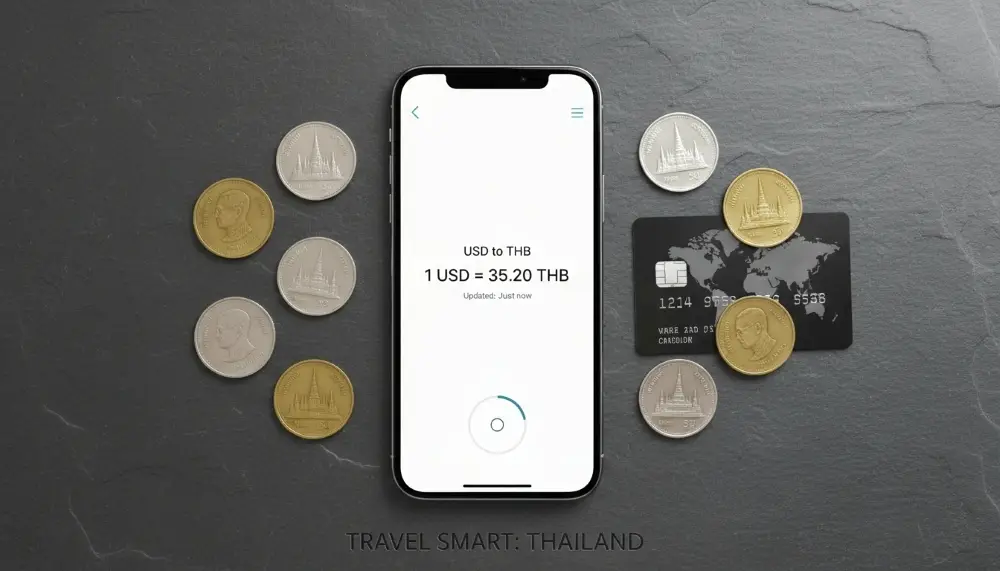
Cash is king. Carry a mix of USD and THB for the crossing itself. Once in Laos, ATMs in Huay Xai dispense Lao Kip (LAK), and using your home card here is far more sensible than exchanging at the border, where rates are consistently poor. Always select “Continue Without Conversion” at Lao ATMs to let your home bank handle the exchange rate. The ATM fee in Laos is typically around 20,000 to 30,000 Kip ($2.40 to $3.60 USD) per withdrawal.
Transport to the pier. Use Grab to reach the Chiang Khong border area from within town and avoid the fixed tuk-tuk rates quoted at guesthouses. Bolt is also active in Chiang Rai if you need a ride to the bus station. On the Lao side, tuk-tuks are your only option between the immigration building and the boat pier, so have small USD bills or Kip ready.
Packing for the boat. A 40-litre bag is perfect for this journey. Large suitcases are a genuine problem on the slow boat, where luggage is stacked at the bow in a manner that discourages excess. Bring snacks and water from Chiang Khong, as the boat sells food but at inflated prices. A sarong doubles as a blanket for the breezy river sections.
Travel insurance. Standard policies sometimes exclude river boat crossings under water activity clauses. Read the small print carefully and confirm that overland river transport is covered before departure. SafetyWing offers nomad-friendly policies that handle these scenarios with considerably less ambiguity for long-term travellers.

Skip the airport SIM queue in Northern Thailand.
Yesim’s eSIM activates before takeoff
so you’re online the second your
plane touches the tarmac.
Connectivity and Security on the Crossing
Huay Xai has reasonable 4G coverage from Lao Telecom and Unitel, but the signal drops significantly as you move down the river toward Pak Beng and into the more remote stretches toward Luang Prabang. The practical move is to download offline maps of the full route (Maps.me works well in Laos), any guesthouse booking confirmations, and your visa documents before leaving Chiang Khong.
Physical SIM cards are available in Huay Xai from around 50,000 Kip ($6 USD) for a 7-day data package. For travellers already running an Airalo, Yesim, or Saily eSIM, check that your chosen plan covers Laos before departure. Most regional Southeast Asia plans do include Lao networks, though data speeds can vary significantly once you are more than 50 km from a border town.
When connecting to guesthouse Wi-Fi in Chiang Khong, Huay Xai, or Pak Beng, run NordVPN across all devices before accessing banking apps or booking platforms. Shared Wi-Fi networks in border towns are used heavily, and the security standards of small guesthouses are rarely robust.

What Comes Next: Luang Prabang and Beyond
The slow boat arrives at the Luang Prabang boat dock on the afternoon of the second day. Tuk-tuks waiting at the dock charge around 15,000 to 20,000 Kip ($1.80 to $2.50 USD) per person for the short ride into town. Have small Kip ready and expect a brief negotiation.
Luang Prabang is where the journey properly begins. The UNESCO-listed old town sits on a peninsula between the Mekong and the Nam Khan River, and its pace will recalibrate yours within an hour of arriving. The famous morning alms-giving ceremony, the night market along Sisavangvong Road, and the waterfalls at Kuang Si are the core draws, but the town rewards aimless wandering as much as structured sightseeing.
For accommodation, Agoda consistently offers the best rates on mid-range boutique guesthouses in Luang Prabang, with many quality options from 700 to 1,400 THB ($20 to $40 USD) per night. For travellers planning day trips to Kuang Si or Pak Ou Caves, Klook and Get Your Guide both list well-reviewed options with clear cancellation terms.
If your flight home runs into significant delays on the return leg through Thai domestic connections or international departures from Bangkok, AirHelp manages compensation claims for disrupted flights and is worth knowing about before you leave home rather than after a delay has already ruined a final day.
Digital Nomads and Remote Workers: Making the Crossing Work
Luang Prabang has developed a small but functional remote work infrastructure. Co-working spaces have appeared along the riverfront, and several cafes near the night market offer stable connections. The town is not Chiang Mai, and it does not try to be, but for a one to two week productive stint between Thailand chapters, it delivers well above expectations.
The Laos 30-day tourist visa is extendable once at immigration offices in Vientiane or Luang Prabang for approximately $2 USD per day of extension. For a longer stay, a visa run back across the Friendship Bridge into Thailand and then back again costs around $40 USD for a fresh VOA and takes roughly two hours at the Huay Xai crossing.
NordVPN running on all devices is non-negotiable for anyone handling client work or banking from Luang Prabang’s shared networks. SafetyWing’s Nomad Insurance provides health coverage specifically designed for this style of continuous travel and costs a fraction of standard expat medical plan pricing. Both are worth sorting before you leave Thailand, not after you are sitting in a guesthouse in Pak Beng without reliable internet.

Frequently Asked Questions:
Do I need a visa to cross from Thailand into Laos at Chiang Khong?


Most nationalities require a visa and can obtain one on arrival at the Chiang Khong to Huay Xai crossing (Friendship Bridge No. 4). The Visa on Arrival fee typically ranges from $35 to $50 USD depending on your passport nationality. Citizens of most ASEAN countries enter visa-free for 14 to 30 days. Alternatively, the Lao eVisa can be applied for online before departure for $45 to $65 USD including processing fees. Pay the VOA in USD rather than Thai Baht at the border, as the Baht exchange rate used is consistently unfavourable and can cost you an extra 100 to 200 THB.


How long does the border crossing from Chiang Khong to Huay Xai take?


Allow two to three hours from Chiang Khong town to being seated at the Huay Xai slow boat pier on a normal day. This includes the 150 THB tuk-tuk ride to Thai immigration, exit stamp processing, the 25 THB mandatory shuttle bus across Friendship Bridge, visa application on the Lao side, and a tuk-tuk to the pier. During Thai or Lao public holidays, the queue at the visa window can extend this to four hours or more. Pre-applying for an eVisa before departure cuts the Lao immigration stop to a quick stamp.


What is the cheapest way to travel from Chiang Mai to the Laos border?


The most budget-friendly route runs from Chiang Mai to Chiang Rai by bus (around 150 to 180 THB, roughly $4 to $5 USD), then Chiang Rai to Chiang Khong by local bus (65 THB, $1.85 USD). This saves money compared to taking a direct Chiang Mai to Chiang Khong minivan at 250 to 350 THB ($7 to $10 USD). The trade-off is time: the split journey takes longer and requires a change at Chiang Rai bus station. Book the minivan option through 12GO if convenience matters more than the 100 to 200 THB saving.


How much does the slow boat from Huay Xai to Luang Prabang cost in 2026?


Buying your ticket directly at the Huay Xai boat pier costs approximately 900 to 1,200 THB ($26 to $34 USD) for the full two-day journey to Luang Prabang. Purchasing at the border building rather than the pier adds around 300 THB ($8.50 USD) unnecessarily. Organised packages booked in Chiang Mai or Chiang Rai that include transport to the border and the boat run around 1,650 THB ($47 USD) and are worth it if you value having everything pre-arranged. Budget an additional 200 to 500 THB ($6 to $14 USD) for one night's accommodation in Pak Beng, the midway overnight stop.


Should I pay the Laos Visa on Arrival in USD or Thai Baht?


Always pay in USD. The official Visa on Arrival fee is set in US Dollars, and the border exchange rate applied when paying in Thai Baht is consistently worse than the open market rate. Paying in Baht can cost you an extra 100 to 200 THB ($3 to $6 USD) compared to paying the equivalent in USD. Carry crisp, undamaged USD banknotes as border officials sometimes reject worn or torn notes. The money exchange desk at the Chiang Khong border building can convert THB to USD for you before you cross if you are short on dollars.


Can families with young children do this overland crossing comfortably?


Yes, though some planning makes the experience significantly smoother. The Friendship Bridge shuttle bus is comfortable and the immigration process is straightforward. The slow boat is the biggest consideration: it runs for seven to eight hours per day across two days, which is a long time for young children. Premium cruise options from $160 USD ($5,600 THB) per person offer proper cabin beds and included meals that make the river journey far more manageable for families. Welcome Pickups offers private transfer services to the Chiang Khong border that remove the chaos of shared minivans and tuk-tuks when travelling with children and luggage.


What should I do if my flights have a major delay on the way to or from the Thai-Laos border?


AirHelp is a compensation claim service that works on your behalf for qualifying flight delays and cancellations on the Thai domestic or international legs of your journey. Register the disruption through their platform promptly, as time limits apply for submitting claims. For the overland section itself, there are no flight delay protections, so always leave a buffer day at the Chiang Khong end before any critical onward booking on the Laos side. Ferries and slow boats are weather-dependent and do occasionally run late or skip a departure.


What connectivity options are available on the slow boat and in Huay Xai?


Huay Xai has reasonable 4G coverage from Lao Telecom and Unitel. Physical SIM cards are available in town from around 50,000 Kip ($6 USD) for a 7-day data package. Travellers already running an Airalo, Yesim, or Saily eSIM should verify their plan includes Lao networks before departing Thailand. Signal drops significantly on the river between Huay Xai and Pak Beng, and becomes very patchy in remote stretches toward Luang Prabang. Download offline maps (Maps.me), booking confirmations, and visa documents before leaving Chiang Khong. Run NordVPN on all devices when using guesthouse Wi-Fi along the route.


Is the overland crossing safe for solo female travellers?


The Chiang Khong to Huay Xai crossing is one of the most well-travelled overland routes in Southeast Asia and is generally very safe for solo female travellers. The slow boat is filled with an international mix of travellers and has a social atmosphere that makes it easy to meet people. Use Grab in Chiang Rai to reach the bus station at night rather than walking alone with luggage. Book accommodation in Chiang Khong and Huay Xai through Agoda or Booking.com and choose well-reviewed guesthouses in the central areas of each town rather than isolated riverside bungalows for a first solo crossing.


How far in advance should I book the slow boat and transport to the border?


During low season (May to October), walking up on the day is usually fine for both the bus from Chiang Rai and the slow boat ticket. During high season (November to March) and around Thai or Lao public holidays, ferries can sell out days ahead and buses fill quickly. Book the Chiang Mai or Chiang Rai to Chiang Khong minivan at least two to three days in advance through 12GO or Klook during peak periods. The slow boat itself is best booked through a Chiang Mai guesthouse or agency if you are visiting during December to February, the peak crossing window for travellers heading into northern Laos.