How to Visit the Long Neck Karen Village in Chiang Rai Ethically
This site contains affiliate links. We may earn a commission at no extra cost to you. All prices are quoted in Thai Baht (THB) with USD equivalents calculated at a rate of 35 THB to $1 USD.
There is a moment, somewhere along the winding road north of Chiang Rai, when you start to question the whole thing. You have seen the photographs. You know the images: women with elongated necks stacked with brass rings, sitting behind craft stalls, smiling for cameras held by strangers who will be gone in twenty minutes. It feels complicated before you even arrive. That feeling is worth listening to.
The good news is that visiting the Kayan (Long Neck Karen) communities in northern Thailand does not have to be extractive or exploitative. There is a right way to do this, and it looks very different from the tuk-tuk-and-tourist-bus circuit that most visitors inadvertently join. This guide is for people who want to go, think carefully about why they are going, and make sure their money and attention land somewhere useful.
The Quick Summary:

Community-Managed vs Commercial: The key distinction is whether entrance fees and craft sales go directly to the village or through a third-party operator. Baan Tong Luang near Mae Rim and the villages around Mae Hong Son are predominantly commercial. The communities near Chiang Rai’s Huai Pu Kaeng and Ban Mai Nai Soi are more directly managed and preferable for ethical visits.
Entrance Fees: Community-managed sites charge 300 to 500 THB (approximately $8.60 to $14.30 USD) per person, paid directly at the village entrance. This goes into a community fund rather than to a tour operator.
Best Approach: Hire a local Chiang Rai guide rather than joining a packaged group tour. The difference in experience and cultural depth is significant, and the economics are far better for the community.
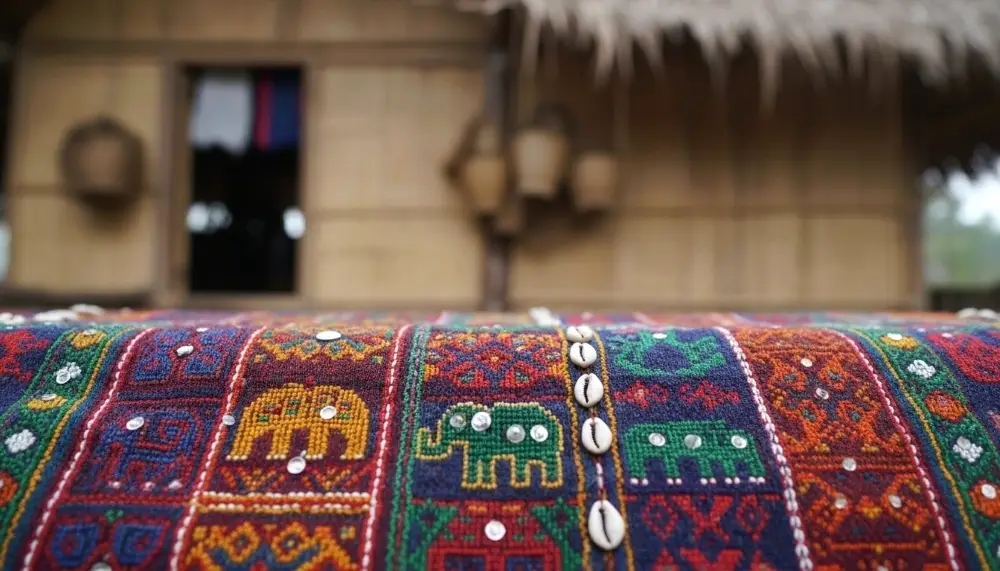
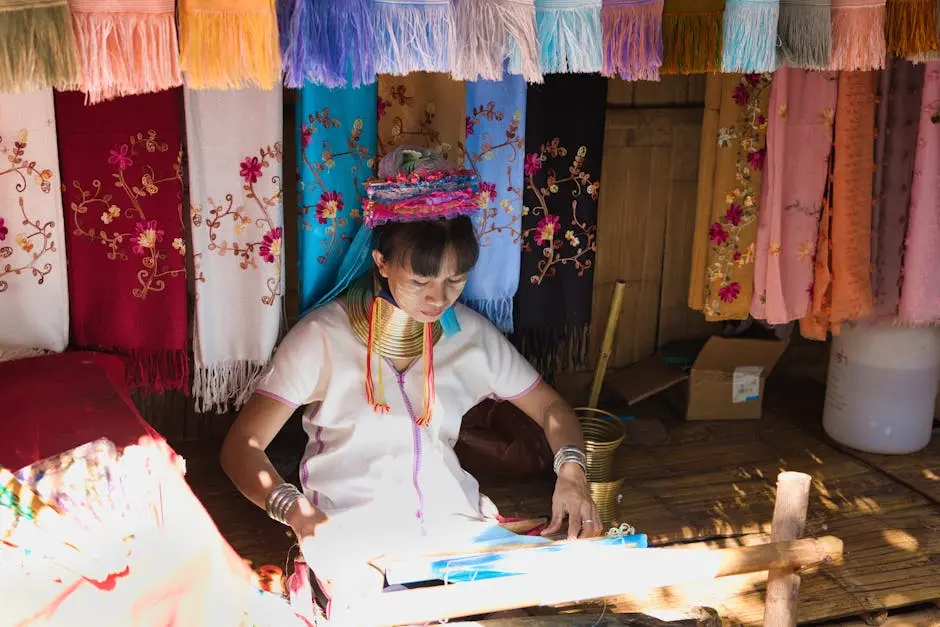
What to Buy: Woven cloth, beaded jewellery, and embroidered bags made by the women themselves. These are genuine craft items with real labour value behind them, not factory-produced souvenirs.
Best Season: November to February for comfortable temperatures in the hills. The villages are accessible year-round but the mountain roads to some communities become challenging during the June to October rainy season.

Stay closer to the action in Chiang Rai.
Agoda lists guesthouses to resorts
with verified reviews and instant
booking at competitive rates.
Understanding the Kayan People Before You Go:
The women you will meet are Kayan Lahwi, a subgroup of the larger Karen ethnic family. They are not Thai. Most are refugees or stateless persons who crossed from Myanmar beginning in the late 1980s, fleeing military conflict. The brass neck coils, which can weigh up to five kilograms and are added progressively from childhood, are a Kayan cultural tradition, not a Thai one. Their presence in northern Thailand is a consequence of displacement, not an indigenous feature of the landscape.
That context matters before you visit. These communities have limited options. Many women do not hold Thai citizenship or work permits, which means the craft economy of their villages is often one of their only legal income streams. When you buy directly from a weaver, you are participating in something economically meaningful. When you pay a tour operator who passes a small fraction back, you are not.
The practice of wearing the coils is entirely the women’s own choice in adulthood. Younger women in the community increasingly make independent decisions about whether to continue the tradition. This is worth knowing because it reframes the visit: you are not encountering a static display, but a living community navigating the same tensions around identity, modernity, and economic survival that many marginalised groups face worldwide.

Skip-the-line tickets and guided walks
in Chiang Rai with English-speaking
guides. Read real traveller reviews
before committing to a single one.
Commercial Villages vs Community-Managed Sites: Know the Difference
This is the most important distinction in the entire conversation, and it is one that most travel content glosses over entirely. There are two fundamentally different types of Kayan village visits available to tourists in northern Thailand, and they are not equal.
Commercial operator villages (most common around Chiang Mai and Mae Rim) function as managed tourism attractions. A private company controls access, sets the entrance fee, determines how much the villagers receive, and often restricts the women’s freedom of movement as a condition of their accommodation. Human rights organisations including Refugees International have documented concerns about this model, describing some sites as conditions resembling human zoos. Entrance fees of 300 to 500 THB ($8.60 to $14.30 USD) sound reasonable, but in these setups a large portion goes to the operator rather than the community.
Community-managed villages near Chiang Rai, particularly Huai Pu Kaeng and Ban Mai Nai Soi in Mae Hong Son Province, operate with greater community autonomy. The entrance fee goes into a village fund. The craft stalls are individually operated by the women themselves. Visitors are genuinely welcome rather than being processed through a tourist circuit. The experience is quieter, less polished, and considerably more meaningful.
The table below outlines the practical comparison:
| Factor | Commercial Village | Community-Managed Village |
|---|---|---|
| Entrance fee destination | Largely to operator | Directly to village fund |
| Craft sale income | Shared or reduced | 100% to individual weaver |
| Freedom of movement | Often restricted | Greater autonomy |
| Visitor experience | Managed, brief, scripted | Organic, slower, genuine |
| Typical entrance fee | 300 to 500 THB ($8.60 to $14.30) | 300 to 500 THB ($8.60 to $14.30) |
Getting There Ethically: Transport and Logistics From Chiang Rai
The most ethically sound and practically efficient way to visit is to hire a private driver or local guide from Chiang Rai city. Expect to pay 1,500 to 2,500 THB ($43 to $71 USD) for a half-day hire including fuel and the driver’s own entrance to the village. Split across a group of two to four people, this becomes extremely reasonable.
Grab operates in Chiang Rai for the city leg, so use it to reach your guide or meeting point from your accommodation. As always with Grab in smaller Thai cities, activate your Airalo, Yesim, or Saily eSIM before you leave home: the app requires SMS network verification on first setup, and standing at the airport or bus terminal trying to complete this process without live data is a situation best avoided entirely.
If you are combining this visit with travel from Chiang Mai or Bangkok, book your intercity transport through 12GO. The northern sleeper train fills quickly around Songkran and Chinese New Year, and locking in tickets weeks ahead is simply good planning. A Chiang Rai day trip from Chiang Mai is entirely feasible: the bus takes around three to four hours each way, with multiple daily departures.
For families or groups arriving by air into Chiang Rai International Airport (CEI), Welcome Pickups offers reliable pre-booked transfers to city accommodation without the airport taxi negotiation that often greets arrivals. Book your hotel near the night market hub through Agoda or Booking.com for convenient access to the city’s excellent restaurant scene after your village visit.


Pick a Chiang Rai eSIM plan that matches
your trip length on Airalo’s global
marketplace. Install before departure
and you’re online the moment you land.
Choosing a Guide Who Shares Your Values:

A good local guide changes everything about this visit. Not just logistically, but in terms of what you actually understand and take away from the experience. The right guide will have genuine relationships with community members, will speak to villagers in their own language rather than translating through Thai, and will have already made the ethical decisions about which sites to visit on your behalf.
Ask your guide these questions before booking:
- Does the entrance fee go directly to the village or through an operator?
- Have you visited this community before and do you have existing relationships there?
- Will craft purchases go directly to the individual women making the items?
- How long will we spend, and is the visit structured around the community’s schedule or a tourist timetable?
Klook and Get Your Guide both list Chiang Rai hill tribe tours, and some of the better-reviewed operators on these platforms specifically list community benefit as part of their model. Read the small print carefully: look for mentions of direct community fees, restricted group sizes (eight people or fewer is preferable), and genuine cultural interpretation rather than a photo opportunity dressed up as a cultural experience.
What to Expect Inside the Village:
A community-managed Kayan village is not a theme park, and it should not feel like one. There are no set show times, no performances on demand, and no script. Women will be weaving, cooking, tending to children, or sitting with friends. Some will welcome conversation. Others will be focused on their work and prefer not to be interrupted. Read the room in exactly the way you would in any unfamiliar community.
The craft stalls are typically arranged along a main path through the village. Woven scarves start around 200 THB ($5.70 USD), beaded bracelets at 100 to 150 THB ($2.85 to $4.30 USD), and more substantial woven bags or embroidered panels at 500 to 1,500 THB ($14.30 to $43 USD). These prices reflect genuine artisan labour and are not inflated for tourists. Bargaining aggressively is inappropriate here, for exactly the same reasons it is inappropriate at northern craft markets generally: the margin already accounts for skill, time, and the economic vulnerability of the seller.
If a woman agrees to be photographed, pay the standard photography fee if one is requested (typically 20 to 50 THB, or $0.60 to $1.40 USD) and show her the image if she is interested. Many are. Pointing a camera at someone without acknowledgement is rude anywhere; it is particularly so here given the history of objectifying photography that these communities have experienced.

Skip the planning headache in Chiang Rai.
Klook offers day tours, tickets, and
experiences from around $25, with
instant confirmation to your phone.
Digital Security on Community Networks: A Practical Note

This is a detail that surprises many visitors: some of the more established community villages, particularly those in areas with NGO or development organisation support, now offer Wi-Fi access to visitors. This sounds like a convenience, and practically it is. But open community networks in remote areas carry real security risks that are worth addressing before you connect.
If you are a digital nomad or remote worker making this visit as part of a longer Thailand stay, treat any community Wi-Fi with the same caution you would apply to a cafe network in Bangkok. NordVPN encrypts your connection regardless of the network you are on, which means your banking apps, work logins, and personal data remain secure even on an unverified rural hotspot. Activate it before you connect, not after.
The same applies to guesthouse and homestay Wi-Fi in the hill town areas around Mae Chan and Mae Sai, where networks are shared, ageing, and not routinely secured. For any extended northern Thailand itinerary involving remote work, NordVPN is simply sensible infrastructure rather than a luxury precaution.
Beyond security, there is a broader point worth making. Posting images from this kind of visit to social media on an open network is both a personal data risk and, depending on what you post, potentially complicated for the community. Check your privacy settings before you share, and consider whether location tagging the village serves any purpose beyond advertising its existence to a wider audience than the community may want.

Need budget data in Chiang Rai? Saily’s
eSIM plans start cheap and install
in a couple of minutes. Built by
the NordVPN team, security is solid.
How to Actually Spend Your Money Well:
Budget an honest total before you go. Here is a realistic breakdown for a solo visitor making the trip from Chiang Rai city:
- Local guide hire (half day, split between two): 750 to 1,250 THB ($21.40 to $35.70 USD) per person
- Village entrance fee: 300 to 500 THB ($8.60 to $14.30 USD)
- Craft purchases: budget at minimum 500 THB ($14.30 USD) if you intend to buy, which you should
- Photography contributions: 50 to 100 THB ($1.40 to $2.85 USD)
- Total realistic spend: 1,600 to 2,350 THB ($46 to $67 USD) per person
That figure gets significantly cheaper in a group of three or four sharing transport costs. It also represents genuine economic impact: the entrance fee funds community infrastructure, the craft purchase goes directly to a weaver’s household income, and the guide fee supports a local Chiang Rai business rather than a Bangkok-based operator.
Compare this with a packaged group tour from Chiang Mai, which might cost 1,200 to 1,800 THB ($34.30 to $51.40 USD) per person including transport, but where a much smaller fraction reaches the community directly. The numbers look similar on the surface. The distribution of that money is radically different.

Long-Stay Visitors and Remote Workers: Making This Part of Something Bigger

For digital nomads and remote workers basing themselves in Chiang Rai or Chiang Mai for an extended period, the Kayan village visit sits naturally within a broader engagement with northern Thai culture rather than as an isolated day trip. The north rewards slow travel in a way that Bangkok simply does not.
If you are here for more than a few weeks, consider returning. The women who sell you a woven scarf on your first visit may still be there on your third, and the dynamic shifts meaningfully when you are recognised as a returning visitor rather than another camera-carrying stranger. This is the kind of relationship that transforms cultural tourism from something passive into something mutual.
For extended stays, SafetyWing’s Nomad Insurance covers medical incidents including hospitalisation at a monthly cost that sits comfortably within most remote work budgets. The northern provinces have good hospitals in Chiang Rai city, but mountain road accidents and insect-related illness (dengue is present seasonally) are genuine considerations. Having coverage active removes a layer of background anxiety that otherwise limits how freely you move.
Book longer-term accommodation in Chiang Rai through Agoda, where monthly rate negotiations on guesthouses and serviced apartments are common and the savings over nightly rates are substantial. The areas around the night market and the Kok River offer the best balance of convenience, character, and price.
The Honest Conversation About Whether to Go at All:
Some travellers, after reading everything above, will decide not to go. That is a legitimate choice and not one to be talked out of. The concerns about reducing a community to a tourist attraction are real, have been raised by the communities themselves, and deserve to be taken seriously.
Other travellers will decide that going thoughtfully, spending directly, and bringing genuine curiosity and respect is better than the alternative of leaving these communities economically isolated from a tourism economy that surrounds them. That is also a legitimate position, and it is the one taken by most of the people who work in responsible cultural tourism in northern Thailand.
What is not defensible is going carelessly: joining a large group tour, spending thirty minutes taking photographs, buying nothing, and leaving with images that reduce the women to visual curiosities. That version of the visit is both ethically hollow and genuinely unpleasant as a travel experience. It is also, unfortunately, the most common version.
The version described in this guide takes more effort, costs modestly more, and results in an experience that is richer, slower, and more honest about what it is. That trade-off is worth making every time.

Skip the airport SIM queue in Chiang Rai.
Yesim’s eSIM activates before takeoff
so you’re online the second your
plane touches the tarmac.
Frequently Asked Questions:
Is it ethical to visit a Long Neck Karen village?
It depends entirely on which village and how you visit. Community-managed villages near Chiang Rai, where entrance fees go directly to a village fund and craft sales go to individual weavers, are considered ethical by most responsible travel advocates. Commercial operator villages near Chiang Mai and Mae Rim, where a private company controls access and profits, are far more problematic. The short answer: yes, but only if you go through the right channels and spend your money directly with the community.
How much does it cost to visit a Kayan village ethically?
Expect to budget 1,600 to 2,350 THB ($46 to $67 USD) per person for a well-organised independent visit from Chiang Rai. This includes a share of local guide hire (750 to 1,250 THB per person), entrance fee (300 to 500 THB), and a minimum craft purchase of 500 THB. Group visits of three or four people reduce the per-person cost significantly on the transport and guide components.
What is the difference between Kayan and Karen?
Karen is a broad ethnic category covering multiple distinct groups in Myanmar and Thailand. Kayan Lahwi is a specific subgroup within the larger Karen family. The women known for wearing brass neck coils are Kayan Lahwi, not Karen in the general sense. Using the term Long Neck Karen is widely understood but technically imprecise. If you are speaking with community members or guides, Kayan is the more respectful and accurate term.
Can I photograph the women in the village?
Photography is generally welcomed, but acknowledgement and consent matter. Make eye contact, smile, and ask with a gesture before pointing a camera at someone. If a woman requests a photography fee (typically 20 to 50 THB, around $0.60 to $1.40 USD), pay it without hesitation. This is a fair exchange for access to someone’s image and livelihood. Showing the person your photo afterwards is a small courtesy that is almost always appreciated.
Which specific villages near Chiang Rai are recommended?
Huai Pu Kaeng and the communities in the Mae Hong Son area around Ban Mai Nai Soi are the most commonly cited as community-managed and ethically preferable. Your local Chiang Rai guide will have current, ground-level knowledge of which specific communities are welcoming visitors and operating on community-benefit terms at any given time. This is one area where hiring a guide with genuine local relationships makes a significant practical difference.
How do I get from Chiang Rai city to the villages?
Hire a local driver or guide from Chiang Rai city for 1,500 to 2,500 THB ($43 to $71 USD) for a half-day, covering fuel and the driver’s entrance. Use Grab for the city leg to reach your meeting point. If travelling from Chiang Mai, book the bus or train through 12GO in advance, particularly around national holidays when seats fill quickly. The journey from Chiang Mai to Chiang Rai takes around three to four hours by road.
What should I buy at the village craft stalls?
Woven scarves (from around 200 THB, $5.70 USD), beaded jewellery (100 to 150 THB, $2.85 to $4.30 USD), embroidered bags (500 to 1,500 THB, $14.30 to $43 USD), and hand-loomed fabric panels are all made by the women themselves and represent genuine craft value. Buying at least one item is not just courteous, it is the primary economic reason these women participate in visits at all. Do not bargain aggressively: the prices are already fair.
Is it safe to use Wi-Fi in the villages?
Some established community villages with NGO support offer Wi-Fi to visitors. Treat any open community network with standard digital caution. NordVPN encrypts your connection on any network, making it safe to use banking apps, work logins, and personal accounts regardless of the network’s own security level. Activate it before connecting, not after. For the wider hill town areas around Mae Chan and Mae Sai, the same applies to guesthouse and homestay Wi-Fi.
What is the best time of year to visit?
November to February offers the most comfortable conditions, with cooler temperatures in the hills and reliable road access. The rainy season (June to October) is manageable for major routes but can make the mountain roads to more remote communities genuinely difficult. The villages operate year-round and there is no single best day of the week to visit, though weekday mornings tend to be quieter and more relaxed than weekend afternoons.
Are these communities Thai citizens?
Most Kayan Lahwi living in Thailand are stateless or hold refugee status rather than Thai citizenship. Many crossed from Myanmar following military conflict in the late 1980s and have lived in Thailand for decades without full legal status. This significantly limits their economic options, which is why the craft economy of their villages is so important. Buying directly from weavers is one of the few income streams fully accessible to them under current Thai law.