Phuket Elephant Care and Mud Spa Experiences: The Top 3 Klook-Approved Sanctuaries
This site contains affiliate links. We may earn a commission at no extra cost to you.
All prices below use a baseline of 35 THB to 1 USD. Exchange rates fluctuate daily; confirm the current rate with your bank before travelling.
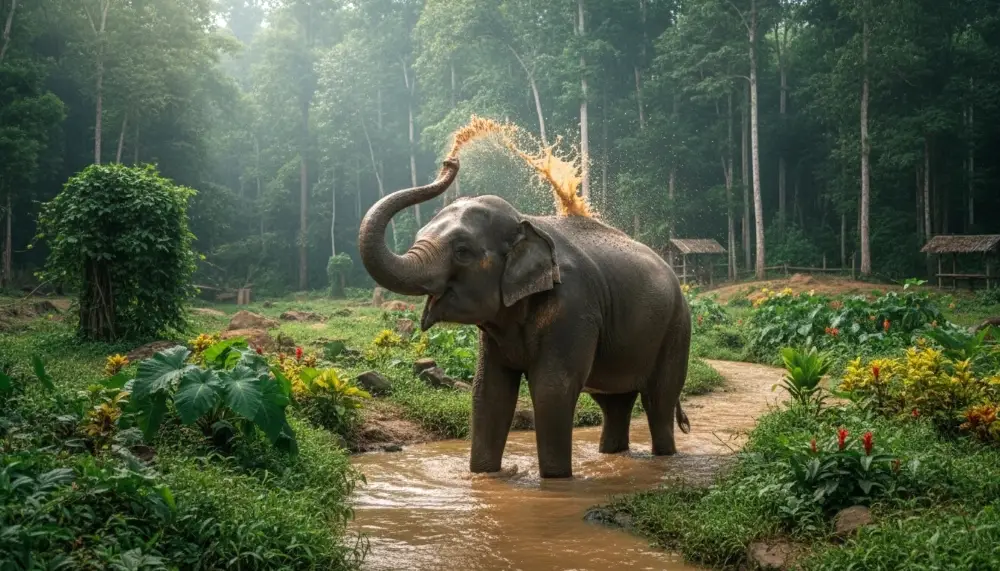
There is a moment that happens to almost every visitor who chooses an ethical elephant sanctuary over a trekking camp, and it arrives faster than anyone expects. You are standing a few metres from a rescued elephant, watching it throw mud across its own back with the casual satisfaction of an animal that has finally remembered what it feels like to just exist. No saddle. No chains. No performance. Just a very large, very gentle creature doing exactly what it wants on a warm Phuket morning. That moment is why these places matter, and why booking carefully makes all the difference.
Phuket’s ethical elephant tourism scene has matured considerably since the early 2020s. The island now has several genuinely responsible sanctuaries, each with a distinct approach and a different balance between immersive interaction and hands-off observation. This guide covers the top three Klook-listed options: Elephant Jungle Sanctuary Phuket, Phuket Elephant Sanctuary in Paklok, and the Phuket Elephant Care experience, with honest comparisons, up-to-date 2026 pricing, and everything you need to book and arrive correctly.
How to Choose an Ethical Sanctuary: What Actually Matters
The language used in elephant tourism marketing in Thailand is not always a reliable guide to what is actually happening on the ground. Words like “sanctuary,” “rescue,” and “ethical” appear on venues that still use bullhooks, chains, and riding saddles. Choosing correctly requires looking past the vocabulary and checking for specific practices instead.
The clearest markers of a genuinely responsible operation are: no elephant riding under any circumstances, no bullhooks or chains visible on site, free-roaming access to a natural forested space, group sizes that are kept small enough for elephants to move away if they choose to, and independent accreditation from bodies like World Animal Protection.
Klook‘s onsite welfare assessment adds a further verification layer, which is why booking via the platform gives extra confidence that listed experiences have been evaluated against meaningful standards rather than just marketing claims.
One important point for 2026 visitors: the spectrum of ethical experience now ranges from fully hands-on (mud spa, bathing, direct feeding) at the more interactive sanctuaries, all the way to purely observational programs at the strictest venues. Neither end is wrong. The right choice depends on what kind of encounter genuinely interests you.

Skip the planning headache in Phuket.
Klook offers day tours, tickets, and
experiences from around $25, with
instant confirmation to your phone.
Sanctuary Comparison at a Glance (2026)
| Sanctuary | Experience Type | Adult Price | Mud Spa | Book Via |
|---|---|---|---|---|
| Elephant Jungle Sanctuary | Hands-on: feed, mud spa, shower, lunch | 2,500 to 2,900 THB / $71 to $83 | Yes, included | Klook |
| Phuket Elephant Sanctuary (Paklok) | Observation-first: canopy walk, forest, vet hospital | 1,750 to 3,500 THB / $50 to $100 | No (elephants self-bathe) | Klook / Direct |
| Phuket Elephant Care | Mid-range: feed, mud spa, shower, cooking class | From ~825 THB / $24 (entry level) | Yes, on select packages | Klook / Get Your Guide |
Sanctuary 1: Elephant Jungle Sanctuary Phuket
Best for: Families, couples, and first-timers who want a fully immersive, hands-on experience with mud spa and lunch included
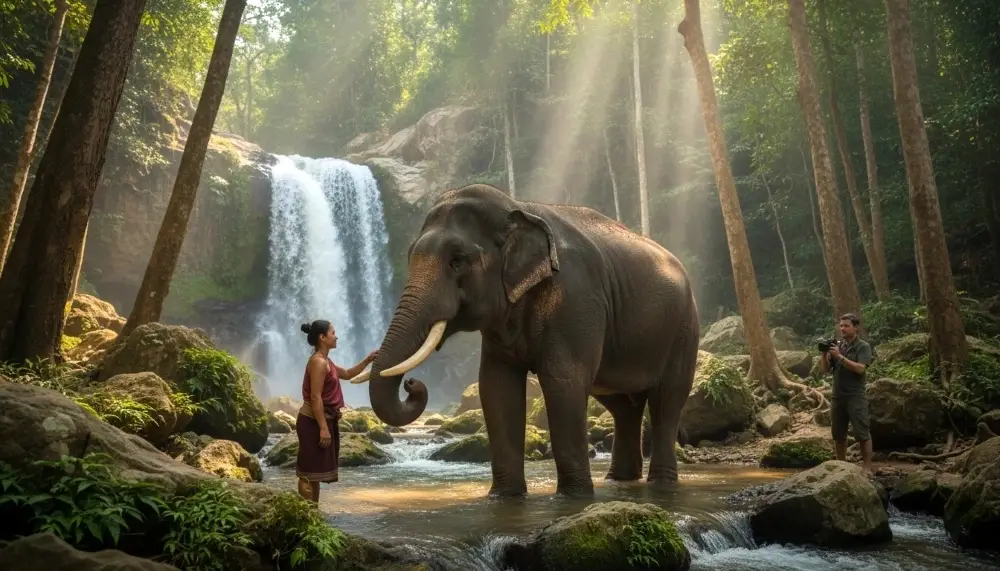
Elephant Jungle Sanctuary (EJS) is the most visited and most reviewed elephant experience in Phuket, and its presence on Klook with a Klook-verified welfare assessment makes it the easiest recommended starting point for most travellers. The sanctuary operates three camps across the island: Kathu (convenient to Patong and Kata), Thalang (convenient to the north and airport area), and Bang Tao (convenient to the Laguna and Surin hotel belt). With approximately 30 rescued elephants spread across the three locations, EJS is large enough to operate reliably without overcrowding any single herd.
The half-day programme is the most popular option and runs four to five hours including hotel pickup and drop-off. Morning pickups begin around 6:30 to 7:30 AM; afternoon pickups around 11:30 AM to 12:30 PM. The structure is warmly handled: arrival with a welcome snack, tea or coffee, and a guide briefing that covers each elephant’s name, age, and rescue story. Visitors help prepare natural dietary supplements for the herd, then feed them by hand, learning the correct technique to avoid alarming the animals.
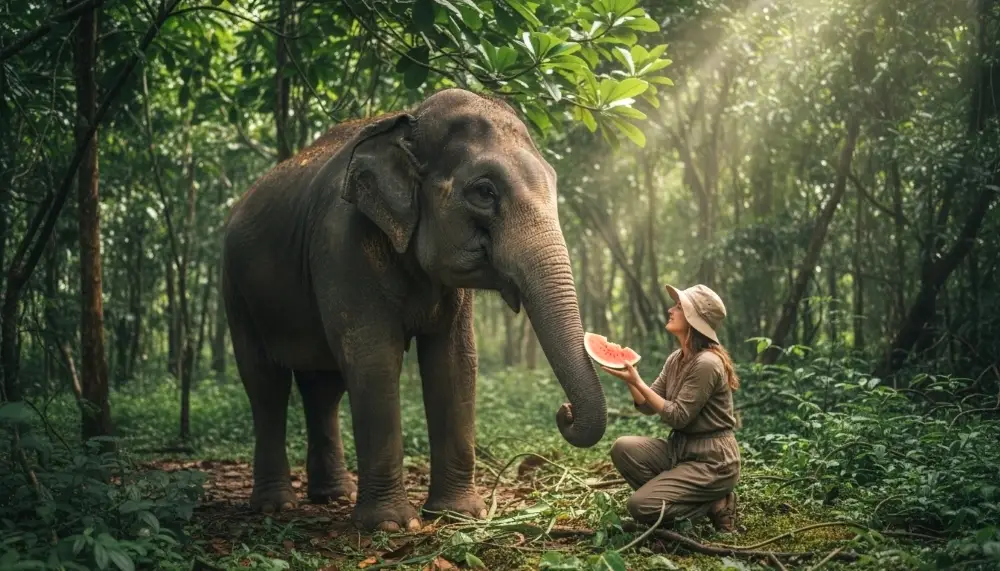
The centrepiece of the programme is the mud spa: a genuinely joyful chaos in which elephants coat themselves in cooling mud while visitors join alongside and get thoroughly splattered. A shower station follows, where guests help rinse the elephants down before cleaning themselves up with proper shower facilities on site. A traditional Thai lunch closes the day.
Pricing sits at 2,500 to 2,900 THB ($71 to $83) for adults and around 1,900 THB ($54) for children aged 4 to 10. Children under three enter free. A shorter “Feed Me” entry-level programme starts from 799 THB ($23) for visitors who want a meaningful encounter with less time commitment. Book via Klook for the clearest package comparison, the platform’s standard free cancellation terms, and mobile e-ticket delivery to your phone before departure.
EJS Package Breakdown
The “Feed Me” programme (799 THB / $23) is the entry point: sanctuary access, elephant feeding with a guide, and a short guided walk. Ideal for visitors tight on time who still want a meaningful moment. It suits older travellers or those with mobility considerations who would find a full four-hour session physically demanding.
The half-day with mud spa and lunch (2,500 to 2,900 THB / $71 to $83) is the experience the sanctuary is built around. Everything from food preparation to the mud session to the Thai lunch is included. Hotel transfers from across Phuket are available as an add-on or bundled depending on which Klook package tier you select. Transfers from Patong, Kata, Karon, Kamala, Bang Tao, Rawai, and most central hotel zones are covered.
A premium package adding a Pad Thai cooking demonstration alongside the elephant experience and lunch is also available and suits travellers who want to combine two of Phuket’s most memorable activities in a single morning. Search Klook under the Elephant Jungle Sanctuary Phuket listing to compare all tiers side by side before booking.

Lock in top-rated Phuket tours with
GetYourGuide’s free cancellation
up to 24 hours before. Reserve now
and pay later if dates aren’t set.
Sanctuary 2: Phuket Elephant Sanctuary, Paklok
Best for: Travellers who want the most rigorous, observation-led ethical experience in a truly wild jungle setting
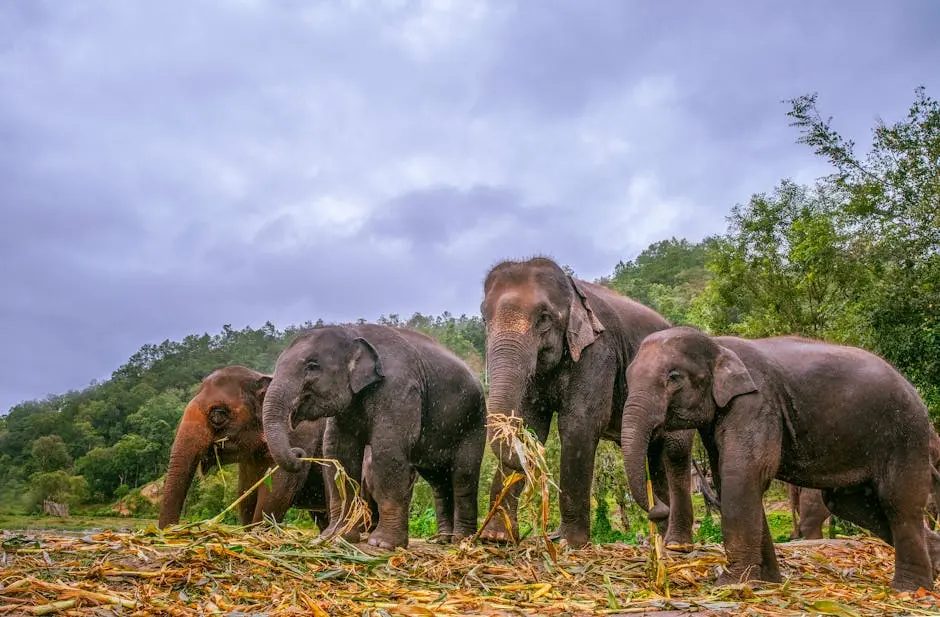
Phuket Elephant Sanctuary (PES) in Paklok, near Thalang in northeast Phuket, is the island’s original strictly ethical sanctuary. Established in 2016 and endorsed by National Geographic and World Animal Protection, PES pioneered the no-riding, no-bathing, no-chains model in Phuket well before it became the industry standard elsewhere. The 30-acre forested site borders Khao Phra Thaeo National Park, and the 13 resident elephants roam a natural jungle landscape with ponds, rivers, and open hillsides rather than a managed enclosure.
The signature feature of PES is Thailand’s longest canopy walkway: a structure that places visitors above the forest canopy level so they observe elephants roaming, bathing in natural ponds, foraging, and socialising completely on their own terms from a respectful distance. It is a fundamentally different feeling to any hands-on programme.
The elephants are not directed toward you. They are simply living their day, and you are watching quietly from above. For visitors who have come from a place of genuine conservation interest rather than a desire for physical interaction, this is the more meaningful experience.
From April 2026, PES discontinued all feeding interactions to further align with natural elephant behaviour, which makes it the most hands-off of the three sanctuaries covered here. The on-site elephant hospital, Phuket’s first, is visible during the tour, and guides explain the veterinary care provided not only to resident animals but to elephants brought in from across southern Thailand. A vegetarian and vegan Thai buffet closes each programme.
PES Pricing and Programmes
The half-day morning or afternoon programme runs 3.5 hours and costs 1,750 THB ($50) per adult and 1,200 THB ($34) for children aged 4 to 12, with children under 4 free of charge. The full-day programme costs 3,500 THB ($100) per adult and runs approximately seven to eight hours, covering a much larger section of the sanctuary including extended trail walking and a deeper engagement with the veterinary hospital.
An important logistical note: you cannot drive yourself into the sanctuary. All visitors must arrive at the PES office in Paklok, from where sanctuary vehicles take guests inside. Round-trip hotel transfers from across Phuket are included on the transfer packages. The Paklok location is roughly 25 to 35 minutes from Patong by Grab and around 15 minutes from the Phuket International Airport area, making it convenient for a morning programme on the day you arrive or the morning of departure if your flight leaves in the evening.
Book via Klook or directly through the PES website. The sanctuary’s own booking system is well organised and offers full cancellation up to 24 hours before the programme start time. Book at least 72 hours in advance during the peak December to March window as morning slots fill quickly with repeat visitors and travel agency groups.

Stay closer to the action in Phuket.
Agoda lists guesthouses to resorts
with verified reviews and instant
booking at competitive rates.
Sanctuary 3: Phuket Elephant Care (Mud Spa Focus)
Best for: Budget-conscious travellers and first-timers who want the mud spa experience at the most accessible price point
For travellers working with a tighter budget who still want the full mud spa and hands-on elephant care experience, Phuket Elephant Care sits at the accessible end of the market. Entry-level packages on Klook and Get Your Guide start from around 825 THB ($24) per person for a guided elephant encounter and feeding session. The more complete packages, including the mud spa, elephant shower, a Pad Thai cooking demonstration, and a traditional Thai lunch, typically run 2,500 to 3,500 THB ($71 to $100) for the full programme, broadly comparable to EJS at the upper tier.
The format follows a familiar and well-structured sequence: an educational briefing about the elephants’ background and natural behaviours, food preparation and hand feeding, a mud spa session where visitors participate alongside the elephants in a dedicated mud pit, a shower to clean the animals down, and a meal to close. Hotel transfers from resort areas including Patong, Kata, Karon, Bang Tao, and Laguna are available as either bundled inclusions or add-ons depending on the package tier selected on Klook.
Phuket Elephant Care has accumulated a strong review record on Klook with a 4.77 out of 5 rating from over 4,500 verified reviews, making it the highest-volume reviewed option of the three covered here. That volume is itself informative: it reflects consistent delivery at scale rather than the occasional exceptional visit. For visitors who are visiting Phuket for a short stay and want a reliable, well-organised elephant experience without extensive pre-research, this rating makes it easy to book with confidence.
What to Expect at the Mud Spa
Across all three sanctuaries that include a mud spa element, the experience follows a broadly similar sequence. The elephants are guided naturally toward a prepared mud pit or a section of the grounds where they choose to wallow. Visitors are given access to the surrounding area, where the elephants use their trunks to coat themselves and each other in mud, occasionally directing a trunkful at the nearest human with what appears to be considerable satisfaction.
A few practical points worth knowing in advance: do not wear white or any clothing you want to keep clean. The mud is fine-grained and stains efficiently. Wear old clothes or a swimsuit underneath. Bring a change of clothes in a dry bag if your hotel is not close to the sanctuary. Shower facilities are provided at all three sites. Closed-toe shoes or old trainers are recommended over sandals; the terrain around mud pits can be slippery and rocky underfoot. Reef-safe sunscreen is appropriate as a general practice even at land-based venues.


Skip the airport kiosk queue in Phuket.
Airalo eSIMs are pre-loaded before
you fly and ready the instant you
connect to the local network.
Practical Tips: Getting There, Booking Right, and Arriving Ready
Book in advance via Klook. Morning programme slots at all three sanctuaries, particularly during the December to March peak season and over Thai school holidays, fill days to weeks ahead. Klook‘s free cancellation policy on most elephant sanctuary listings gives you full flexibility to change plans up to 24 to 72 hours before the session without financial penalty. The platform’s mobile e-ticket is accepted at all three venues without needing to print anything.
Hotel transfers vs self-transport. All three sanctuaries offer hotel pickup packages that cover most Phuket resort zones including Patong, Kata, Karon, Rawai, Kamala, Bang Tao, Laguna, and Phuket Town. For visitors who prefer flexibility or are not staying in a covered zone, use Grab or Bolt for independent transfers.
For the EJS Kathu camp, a Grab from Patong costs around 80 to 120 THB ($2.50 to $3.50). For Paklok (PES), expect 250 to 350 THB ($7 to $10) from Patong. Both apps require mobile data and an SMS code at first setup, so activate your Airalo, Yesim, or Saily eSIM before landing at Phuket International Airport. Airport Wi-Fi does not reliably hold long enough to complete app registration at the carousel.
For family arrivals with multiple bags and young children: Welcome Pickups assigns a named driver at a pre-negotiated fixed rate, which removes the usual pier and taxi negotiation pressure entirely and suits families who want a calm, predictable start to the day before what is already an exciting programme.
Travel insurance: Standard policies cover general sightseeing but may not explicitly list close-contact wildlife experiences. Confirm your policy covers elephant sanctuary activities, particularly any physical interaction components such as mud spa sessions. Travellers on extended stays or working remotely from Phuket should look at SafetyWing’s Nomad Insurance, which covers Thailand-based health scenarios at a fraction of standard expat plan costs and handles longer-term situations that single-trip policies cannot.
Currency: Sanctuary gift shops, tip jars for mahouts, and transport outside the hotel pickup zone all operate in cash. Carry 100 and 500 THB notes. ATMs charge a standard 220 THB ($6) withdrawal fee: always select “Continue Without Conversion” to let your home bank handle the exchange rate. For secure booking on shared resort or cafe Wi-Fi, use NordVPN before entering payment details on any platform.

Keep your Phuket plans flexible with
Booking.com’s free-cancellation stays.
Reserve now, decide later, and pay
only when your dates are confirmed.
Combining Your Sanctuary Visit with the Rest of the Day
A morning sanctuary session typically wraps by 12:30 to 1:00 PM, leaving a full afternoon free. The EJS Kathu camp sits just 10 minutes from Patong and 15 minutes from Kata Beach, making a post-programme afternoon at the beach a natural and easy follow-on. The Paklok location for PES is convenient to the Thalang area, where the Thalang National Museum and Heroines Monument offer a half-hour of low-key cultural context if you want something quieter than the main beach strips.
Visitors who want to combine the elephant experience with other Phuket wildlife and nature activities can browse Get Your Guide for Phang Nga Bay sea kayaking, Similan Islands snorkelling day trips, and mangrove canoe tours, many of which depart in the afternoon or can be scheduled for the following morning. Klook covers cooking class add-ons, ATV tours to the Big Buddha, and ziplining packages in the Kathu jungle area, all within 20 minutes of the EJS Kathu camp.
If your onward journey involves a domestic connection through Bangkok or a tight international transfer, keep AirHelp in mind as the most straightforward way to handle compensation claims for significant flight delays. Their service covers domestic Thai aviation routes as well as international departures from Phuket International Airport.

Forget swapping physical SIMs in Phuket.
Yesim works on most modern phones,
activates remotely, and keeps your
home number live on WhatsApp too.
Frequently Asked Questions:
Which Phuket elephant sanctuary is best for a mud spa experience?
Elephant Jungle Sanctuary Phuket is the top choice for a full mud spa experience. The half-day programme (2,500 to 2,900 THB / $71 to $83) includes feeding, mud spa, elephant shower, and a Thai lunch. Phuket Elephant Care is the best budget alternative with the mud spa available from around 825 THB ($24) at entry level. Phuket Elephant Sanctuary in Paklok does not offer a mud spa for visitors as it operates a hands-off, observation-only model.
How much does an elephant sanctuary visit cost in Phuket in 2026?
Prices range from 799 THB ($23) for a short feeding-only session at Elephant Jungle Sanctuary up to 3,500 THB ($100) for a full-day programme at Phuket Elephant Sanctuary Paklok. The most popular mid-range option, a half-day with mud spa and lunch, sits between 2,500 and 2,900 THB ($71 to $83) per adult. Children typically pay 1,200 to 1,900 THB ($34 to $54) depending on age and sanctuary. Children under three or four are usually free.
Is Elephant Jungle Sanctuary Phuket ethical?
Yes. EJS does not permit riding, chains, or bullhooks. Elephants are free-roaming across a forested setting and can move away from visitors at any time. The sanctuary holds a Klook-verified welfare assessment and has consistently positive reviews highlighting genuine animal welfare standards. It was among the first venues in Phuket to move away from the trekking camp model and now operates three camps across the island caring for approximately 30 rescued elephants.
What is the difference between Elephant Jungle Sanctuary and Phuket Elephant Sanctuary?
These are two entirely separate organisations with similar-sounding names. Elephant Jungle Sanctuary (EJS) is an interactive, hands-on experience offering feeding, mud spa, and bathing across three Phuket camps. It allows close contact with elephants in a managed setting. Phuket Elephant Sanctuary (PES) in Paklok is a strictly observational experience: no feeding (from April 2026), no touching, no bathing with elephants. Visitors observe free-roaming animals from a canopy walkway and forest trails. PES is endorsed by National Geographic and World Animal Protection.
How do I get to Elephant Jungle Sanctuary from Patong or Kata?
Use Grab or Bolt. From Patong to the Kathu camp, expect 80 to 120 THB ($2.50 to $3.50) and around 10 minutes. From Kata, expect a similar fare. Both apps require mobile data and an SMS code at first setup, so activate an Airalo, Yesim, or Saily eSIM before landing at Phuket Airport. Alternatively, the Klook booking for EJS includes hotel pickup from most Phuket resort zones as an add-on or bundle. For families with luggage and young children, Welcome Pickups offers pre-arranged fixed-rate transfers with a named driver.
What should I wear to an elephant sanctuary mud spa?
Wear old clothes or a swimsuit underneath something expendable. The mud spa is genuinely messy and mud stains clothing effectively. Avoid white or anything you want to keep clean. Closed-toe shoes or old trainers are strongly recommended over sandals as the terrain around mud areas can be rocky and slippery. Shower facilities are provided at all three sanctuaries. Pack a dry bag with a change of clothes if your hotel is not nearby.
Can I book the elephant sanctuary on Klook?
Yes. Both Elephant Jungle Sanctuary Phuket and Phuket Elephant Care are listed on Klook with multiple package tiers, verified reviews, mobile e-tickets, and free cancellation on most options up to 24 to 72 hours before the programme. Klook also lists Phuket Elephant Sanctuary (Paklok) or you can book that directly via their own website. Always book via Klook or Get Your Guide rather than through hotel desks or taxi drivers who typically add a 200 to 500 THB ($6 to $14) commission to the listed price.
Are elephant sanctuaries in Phuket suitable for children?
Yes, all three sanctuaries covered here are suitable for families with children. Elephant Jungle Sanctuary accepts children from age 4 (free under 3), EJS’s interactive format particularly suits children aged 5 and up. Phuket Elephant Sanctuary Paklok is suitable for all ages and its calmer, observational format can actually be easier for very young children than the more physically active mud spa sessions. Phuket Elephant Care sets its minimum at 6 years old for the mud spa components.
What time of day is best for an elephant sanctuary visit in Phuket?
Morning sessions (starting around 9:30 AM, with hotel pickups from 7:00 to 8:00 AM) are consistently better. The temperature is lower, the elephants are more active and energetic, and the light is significantly better for photography. Afternoon sessions work well in the dry season (November to April) but can feel warm and humid during the rainy months. If you have flexibility, always take the morning slot.
Do I need travel insurance for an elephant sanctuary visit in Phuket?
Standard travel insurance typically covers general sightseeing activities, but confirm your policy explicitly covers close-contact wildlife experiences before you go. If your policy excludes physical animal interactions, consider a supplementary layer. Digital nomads and longer-stay visitors should look at SafetyWing’s Nomad Insurance, which provides comprehensive health coverage in Thailand including activities that standard single-trip policies often exclude, at a significantly lower cost than traditional expat medical plans.