Phu Langka National Park: Navigating Naka Cave and the Rock Formations
This site contains affiliate links. We may earn a commission at no extra cost to you.
Phu Langka National Park sits quietly in Bueng Kan Province, tucked into the far northeast corner of Thailand along the Mekong River corridor. It is one of those rare places that rewards the traveller who bothers to look beyond the southern beaches. The park covers roughly 300 square kilometres of forested sandstone plateau, and at its heart sits something genuinely extraordinary: Naka Cave, a geological formation so unusual that local legend insists the stone itself is the petrified skin of a colossal serpent.
This is not a mainstream tourist circuit. There are no luxury ferry connections, no organised speedboat tours, and no airport nearby. What you get instead is solitude, startling beauty, and an experience that feels entirely your own. Getting here takes intention, and that is precisely what makes it memorable.
What Makes Phu Langka Special?
Most international visitors to Thailand will never hear the name Phu Langka. That is their loss and, frankly, your gain. The park occupies a sandstone mountain range that rises dramatically from the agricultural flatlands of Bueng Kan, a province that only gained official status in 2011 and remains largely off the tourist map.
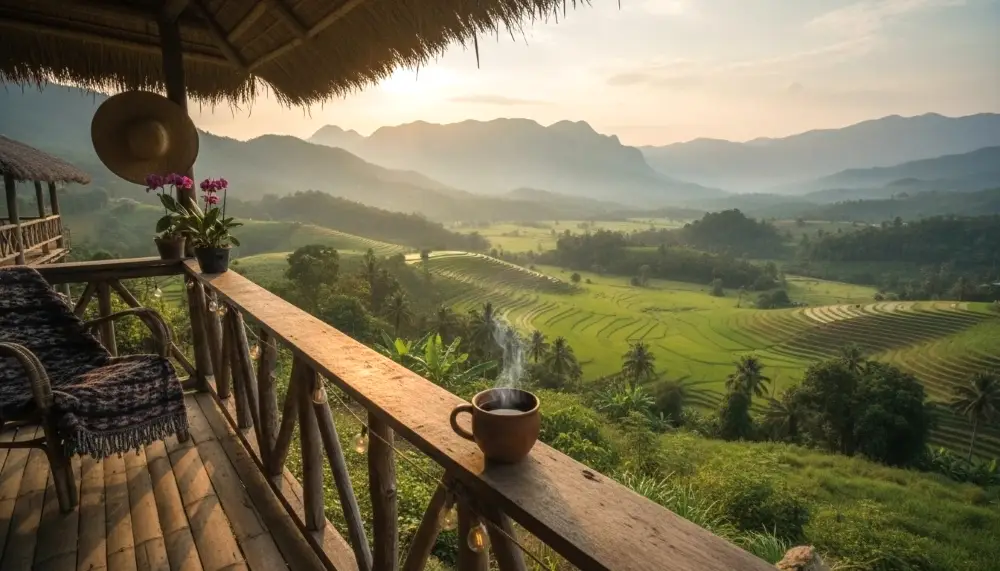
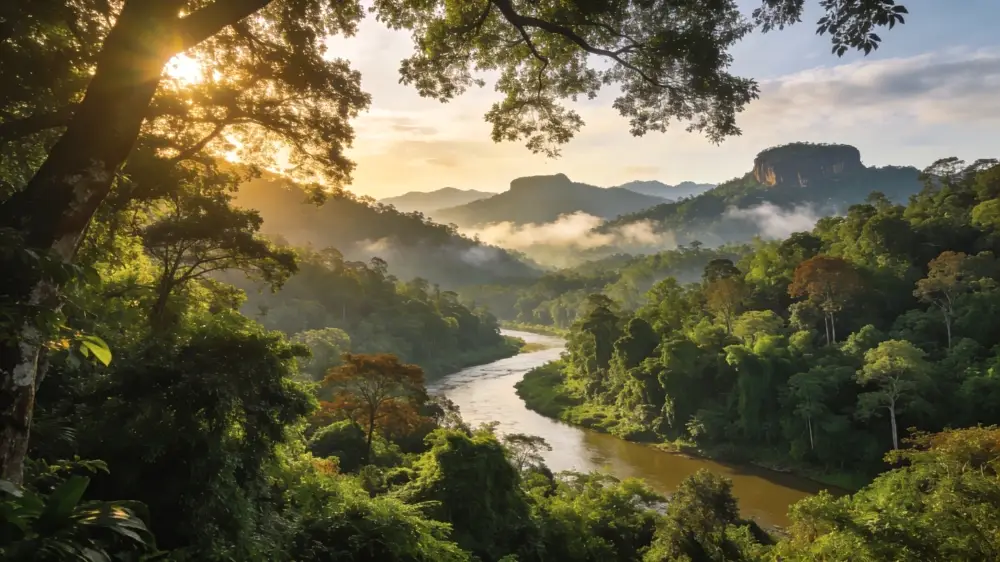
The landscape combines dense dipterocarp forest, jagged rock formations shaped by millennia of wind and water erosion, and sweeping viewpoints across the Mekong floodplain toward Laos. Sunrise from the park’s upper viewpoints, when low cloud fills the valleys below and the Mekong glints gold in the early light, is one of the most genuinely moving natural spectacles in the entire country.
The entry fee is 200 THB (approximately $5.60 USD) for foreign visitors and 40 THB ($1.10 USD) for Thai nationals. That modest outlay opens up a full day of trails, caves, and rock formations that would cost ten times as much to access in a national park with comparable drama in Europe or North America.

From budget rooms to high-end resorts
in Thailand, Booking.com has the lot.
Genius members unlock an extra 10%
off thousands of properties worldwide.
Naka Cave: The Legend and the Reality
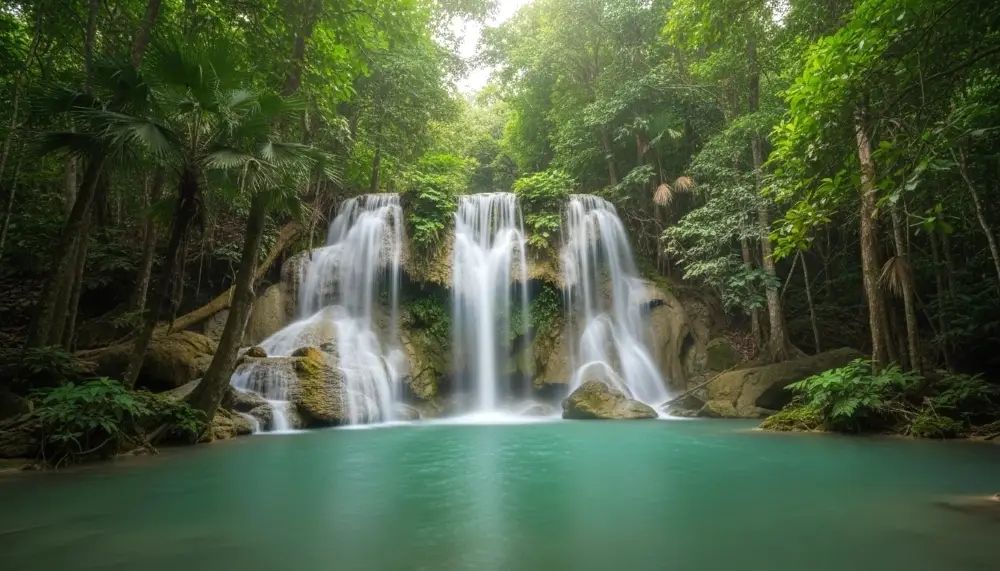
Naka Cave, known locally as Tham Naka, takes its name from the Naga serpent of Buddhist and Hindu mythology. The cave itself is not a conventional underground cavern. It is more accurately described as a massive rocky outcrop where centuries of erosion have sculpted the sandstone into interlocking scales that bear an uncanny resemblance to the skin of an enormous snake. Photographs circulated on Thai social media around 2020 and the formation went briefly viral internationally, drawing comparisons to something from a fantasy film set.
The geological explanation is satisfying in its own right. The “scales” are produced by a process called spheroidal weathering, where water infiltrates the rock along natural joint lines and gradually rounds the corners of each block. The result is a surface texture that genuinely looks organic. Standing on the hillside above it and looking down the slope, the impression of a colossal creature lying dormant in the forest is surprisingly convincing.

Skip-the-line tickets and guided walks
in Thailand with English-speaking
guides. Read real traveller reviews
before committing to a single one.
Getting to Phu Langka: The Honest Guide
Bueng Kan does not have a commercial airport. The nearest significant hub is Nakhon Phanom (KOP), roughly 150 kilometres south, or Udon Thani (UTH), approximately 250 kilometres to the southwest. Nok Air and Bangkok Airways both service the region. Lock in your domestic flight via 12GO to secure the best available pricing ahead of Thai public holidays, when northeast Thailand sees surges in domestic visitors.
If you experience a delay or cancellation on the domestic leg, AirHelp handles compensation claims efficiently and is worth registering with before you fly.
From either airport, the practical route is to hire a car or take a combination of minibus and songthaew. Car hire for the journey from Nakhon Phanom to Bueng Kan runs approximately 1,200 to 1,800 THB ($33 to $50 USD) through local operators. Before you land and before you need to verify any local app or book onward transport, activate your Airalo, Yesim, or Saily eSIM. The Grab and local booking apps used in this region require SMS verification the moment you open them, and airport Wi-Fi in smaller Thai airports is rarely stable enough to complete that process cleanly.
Where to Stay Near the Park
Accommodation near Phu Langka splits into three clear tiers. Budget travellers will find fan-cooled guesthouses in Bueng Kan town at 350 to 500 THB per night ($9.80 to $14 USD). Mid-range options, including newer boutique resorts with air conditioning, private bathrooms, and mountain views, run 900 to 1,800 THB ($25 to $50 USD). For families and remote workers wanting more comfort, there are a small number of well-appointed lodges closer to the park boundary at 2,500 to 4,000 THB ($70 to $112 USD) per night.
Search both Agoda and Booking.com for this destination, as rates vary noticeably between platforms for Bueng Kan Province properties. Agoda consistently delivers better rates for regional Thai guesthouses, but Booking.com occasionally surfaces newer boutique listings that Agoda hasn’t fully indexed yet. For longer stays of a week or more, contact properties directly after finding them on either platform, as many will negotiate a reduced rate that isn’t advertised online.
The park itself operates two campgrounds with basic facilities. Camping permits cost 30 THB ($0.85 USD) per person per night, with tent hire available on-site for 150 THB ($4.20 USD). Waking to forest sounds and mist on the sandstone cliffs at no real cost is, by any measure, extraordinary value.

Lock in your Thailand accommodation
early and beat peak-season price hikes.
Agoda’s filters let you compare options
side by side before you commit.
Cost Comparison: Phu Langka vs the Southern Islands
For travellers weighing up where to allocate their budget, this comparison is genuinely striking.
| Cost Category | Phu Langka (Bueng Kan) | Koh Phi Phi (Andaman) | Koh Samui (Gulf) |
|---|---|---|---|
| Park / Beach Entry | 200 THB / $5.60 | 400 THB / $11.20 | Free |
| Budget Room / Night | 350-500 THB / $9.80-$14 | 800-1,200 THB / $22-$34 | 700-1,100 THB / $20-$31 |
| Mid-Range Room / Night | 900-1,800 THB / $25-$50 | 2,500-4,000 THB / $70-$112 | 2,000-3,500 THB / $56-$98 |
| Avg Daily Spend | 1,200-1,800 THB / $34-$50 | 3,500+ THB / $98+ | 2,800+ THB / $78+ |
| Crowd Level | Very Low | Very High | High |

Compare tours and tickets for Thailand
and book instantly on your phone.
Klook mobile vouchers mean no
printing, just turn up and go.
The Trail Network: What to Expect on the Ground
The park has three primary trail routes, each serving a different type of visitor.
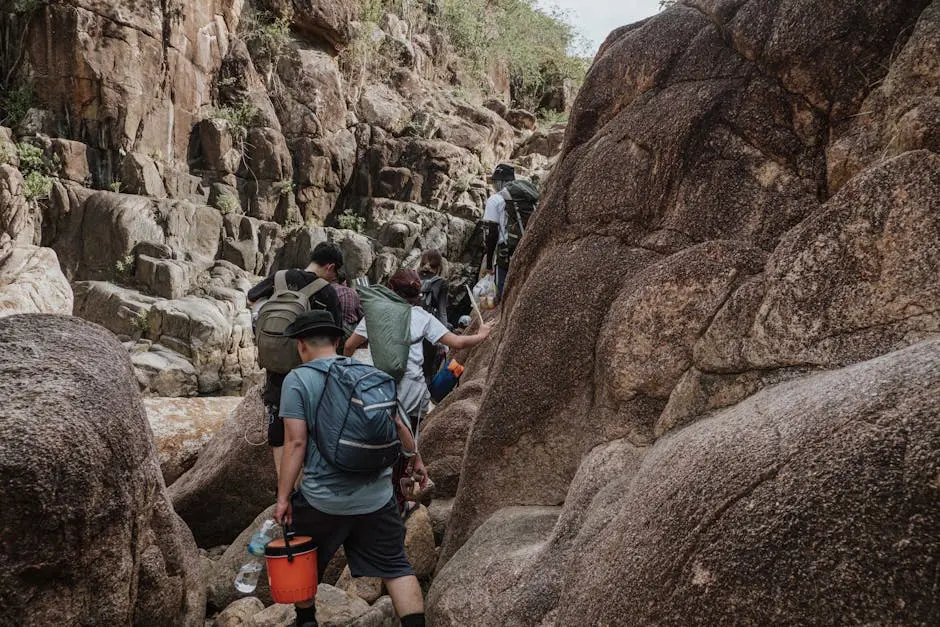
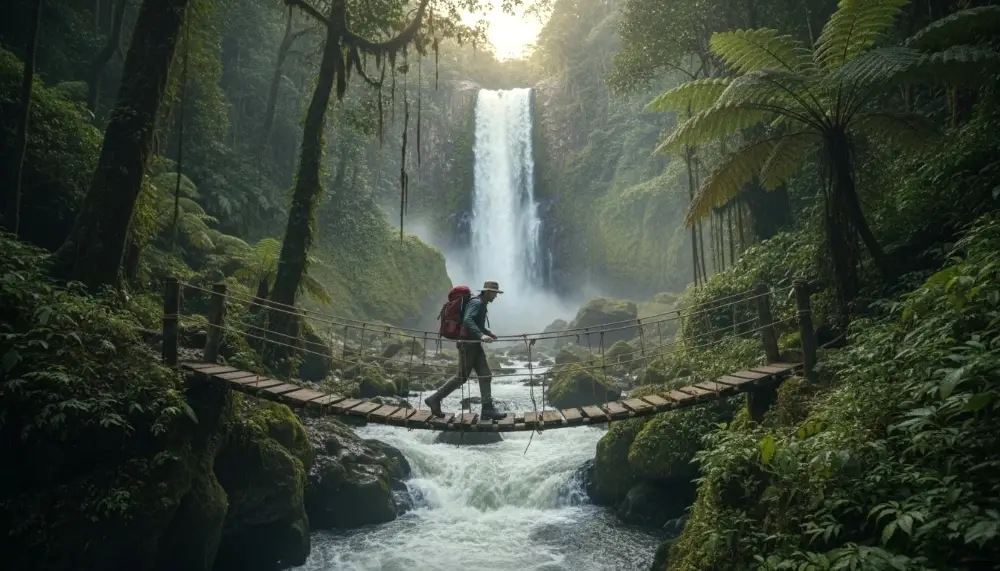
The Naka Cave Trail covers approximately 2.5 kilometres from the main car park and takes between 45 minutes and 90 minutes depending on pace and the number of stops. The path is well-marked, involves a moderate climb, and delivers you to the rock formation from above, which is the best angle for appreciating the serpentine scale pattern. Early morning is strongly recommended: the light is cooler, the forest is alive with birds, and the low-angle sun catches the texture of the rock in a way that afternoon haze completely eliminates.
The Viewpoint Circuit is a longer 5-kilometre loop that takes in the park’s highest accessible ridge. On clear days, the Mekong River and the Laos hills beyond are visible. This route is more demanding and requires proper footwear. Budget two to three hours.
The Forest Walk is a shorter, flatter 1.5-kilometre path ideal for families with younger children. It passes through old-growth sections of the park and typically offers the best bird and butterfly sightings in the early morning.
The Rock Formations Beyond Naka Cave
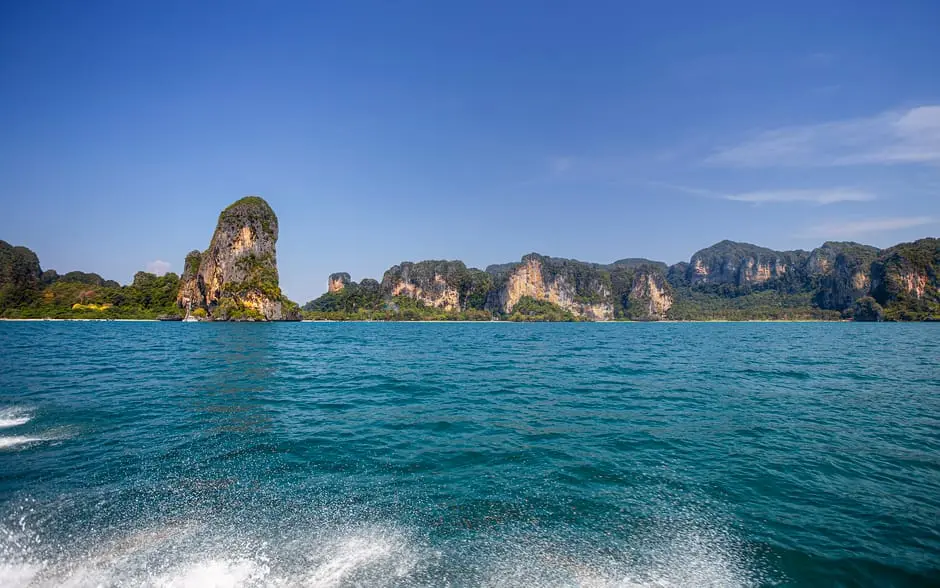
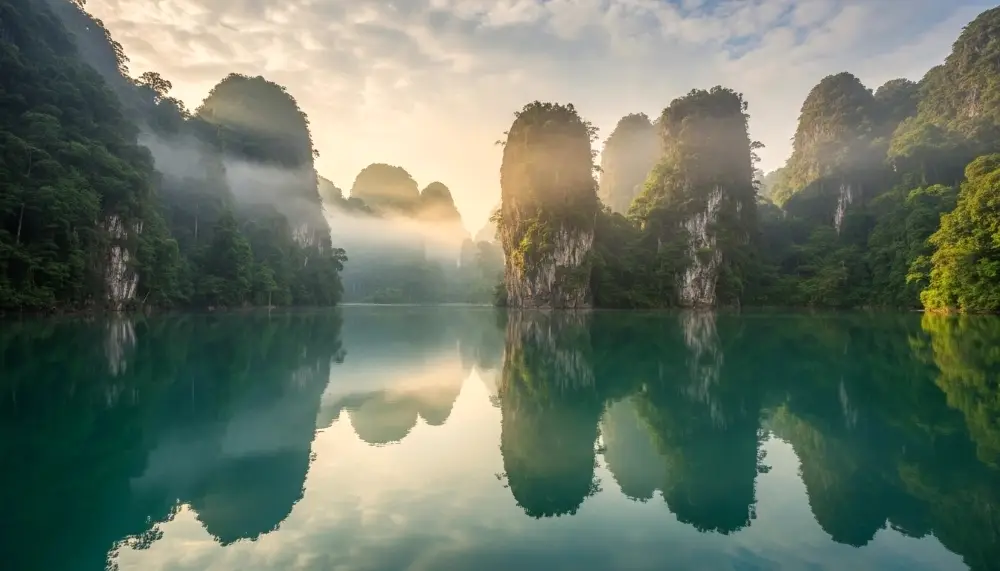
Naka Cave draws the visitors, but the broader collection of rock formations across the park is what makes the entire destination worthwhile. The sandstone here has been sculpted into shapes that each carry their own local name and story.
Hin Sam Wan, the Three Elephants Rock, is a cluster of three rounded boulders balanced on a narrow ridge with a sheer drop below. Hin Khon, roughly translated as the Sitting Rock, is a single massive formation that juts from the hillside at an angle suggesting deliberate placement. A local guide will point out a dozen smaller formations along the Viewpoint Circuit that are easy to miss without context, including a rock face with a natural indentation that casts a near-perfect Buddha shadow in late afternoon light.
Klook lists guided day tours that include Naka Cave, the principal rock formations, and return transport from Bueng Kan town for approximately 800 to 1,200 THB ($22 to $34 USD) per person. Get Your Guide occasionally features smaller-group specialist nature tours with English-speaking guides, which are worth the modest premium for those who want geological and ecological context rather than a simple walk-and-photograph itinerary.

Airalo covers Thailand with a range of
data plans from days to a month.
No physical SIM swap, no roaming
bill shock when you get back home.
Best Time to Visit
The northeast of Thailand, known as Isaan, follows a distinct weather pattern that differs from both the Andaman and Gulf coasts. The cool dry season from November to February is the most comfortable window for hiking, with temperatures ranging from 15°C at night to 28°C in the afternoon. This is also the period when morning mist settles in the valleys below the ridge viewpoints, creating the atmospheric conditions that produce the most dramatic photographs.
March through May brings increasing heat. The park remains accessible and significantly quieter, but midday temperatures above 35°C make the longer trails genuinely taxing. Start any hike before 7:30 AM.
June to October is the wet season. The forest turns a vivid green, waterfalls run at full volume, and the rock formations develop a wet sheen that makes the Naka Cave scales look even more organic and alive. Trails can be slippery and some sections may be temporarily closed after heavy rain. This is the off-season for a reason, but it rewards flexible travellers who can adjust plans around the weather with a strikingly different and far less crowded experience.
Pro Tips For a Smooth Visit:

Transport: Grab operates in Bueng Kan, but availability is limited compared to larger cities. Bolt is an alternative but requires walking outside some perimeters to be detected. Welcome Pickups is worth considering for families arriving with luggage at Nakhon Phanom Airport, as their pre-negotiated rates and named driver service eliminate the usual arrival uncertainty completely.
Connectivity: 4G signal is present in Bueng Kan town and along the main park access road. Deep inside the forest trails, signal drops noticeably. Download the park map and any navigation apps offline before you enter. Yesim and Airalo eSIMs use AIS and True Move infrastructure, which provides the best coverage in this region. For digital nomads working from guesthouse Wi-Fi, NordVPN is essential protection when accessing banking or client systems from shared networks.
Finance: ATMs in Bueng Kan town accept foreign cards. Always choose “Continue Without Conversion” to avoid the dynamic currency conversion surcharge. The standard ATM fee is 220 THB ($6.15 USD) per withdrawal. Carry sufficient cash before entering the park as there are no ATMs inside.
Insurance: Hiking on rocky, uneven terrain in a remote national park sits in the grey area of many standard travel policies. Confirm your coverage explicitly includes trekking and trail hiking before you go. SafetyWing’s Nomad Insurance is worth serious consideration for extended stays or anyone working remotely from the region, as it covers medical scenarios that standard short-stay travel insurance typically does not.

Stay online in Thailand without the
daily data limits of tourist SIMs.
Yesim’s eSIM offers unlimited 5G
from around $10 for the whole trip.
Phu Langka for Digital Nomads and Remote Workers
Bueng Kan is not Chiang Mai. There are no co-working spaces with standing desks and flat whites. What the town does offer is genuine affordability, reliable 4G connectivity in the central area, a pace of life that is genuinely restorative, and a cost base that makes a month-long stay considerably cheaper than a single week on Koh Samui.
A comfortable studio or one-bedroom in Bueng Kan rents for 4,000 to 7,000 THB ($112 to $196 USD) per month. Add food at local markets, a daily coffee, and occasional park visits, and a remote worker can comfortably live here for 20,000 to 25,000 THB ($560 to $700 USD) per month. Agoda surfaces the best medium-term rental options in this region, though contacting properties directly after finding them on the platform often yields better rates for stays of three weeks or more.
NordVPN is non-negotiable for anyone handling client work or financial transactions from local cafe and guesthouse Wi-Fi. SafetyWing’s Nomad Insurance provides the healthcare backstop that makes this kind of off-the-beaten-track remote work genuinely viable rather than reckless.

The Magic of the Northeast
There is a moment on the Naka Cave trail, about twenty minutes in, when the forest thickens and the path narrows and you lose sight of the car park completely. The only sounds are insects, birds, and the crunch of sandstone underfoot. It is the kind of quiet that the islands, for all their beauty, cannot offer.
Phu Langka rewards curiosity over convenience. It asks you to travel a little further, plan a little more carefully, and arrive without expecting the infrastructure of a mainstream resort destination. In return, it gives you a geological wonder that most visitors to Thailand will never see, viewpoints across one of Southeast Asia’s great rivers, and a sense of genuine discovery that is increasingly hard to find.
Sort your eSIM with Airalo or Yesim before departure, lock in your guesthouse on Agoda, check Klook and Get Your Guide for guided cave and formation tours, and let Bueng Kan Province surprise you. The Naka serpent has been waiting in the hillside for a very long time. It is remarkably patient.
Frequently Asked Questions:
Where exactly is Phu Langka National Park and how do I get there?
Phu Langka National Park is located in Bueng Kan Province in northeast Thailand, approximately 180 kilometres north of Nong Khai along the Mekong River. The nearest airports are Nakhon Phanom (KOP), roughly 150 kilometres south, and Udon Thani (UTH), approximately 250 kilometres southwest. From either airport, hire a car or take a combination of minibus and local songthaew to reach Bueng Kan town, then arrange onward transport to the park entrance. Book domestic flights and intercity connections in advance through 12GO, particularly around Thai public holidays when transport fills quickly.
What is the entry fee for Phu Langka National Park in 2026?
The current entry fee is 200 THB (approximately $5.60 USD) for foreign visitors and 40 THB (approximately $1.10 USD) for Thai nationals. Camping permits cost an additional 30 THB ($0.85 USD) per person per night, with tent hire available on-site for 150 THB ($4.20 USD). These fees are payable at the park entrance and cash is strongly recommended as card payment facilities are not available inside the park.
What exactly is Naka Cave and why does it look like snake scales?
Naka Cave, or Tham Naka, is a natural sandstone rock formation rather than a conventional underground cave. The surface texture that resembles interlocking serpent scales is produced by a geological process called spheroidal weathering, where water infiltrates joint lines in the rock and gradually rounds each block. The effect is most striking when viewed from above the slope. Local tradition connects the formation to the Naga, a mythological serpent deity central to Buddhist and animist beliefs across mainland Southeast Asia.
How difficult are the trails at Phu Langka and are they suitable for families?
The park offers three main routes at different difficulty levels. The Naka Cave Trail is 2.5 kilometres return with a moderate climb, suitable for most visitors with reasonable fitness. The Viewpoint Circuit is a 5-kilometre loop requiring proper footwear and two to three hours. The Forest Walk is a flat 1.5-kilometre path that works well for families with younger children. All trails are well-marked and signage is available in both Thai and English. Sturdy shoes are essential on the rocky surfaces near the cave formations.
What is the best time of year to visit Naka Cave?
November through February is the optimal window, offering cool dry conditions with temperatures between 15°C and 28°C, morning mist in the valleys, and the best light for photographing the rock formations. March to May is hotter but quieter. The wet season from June to October makes the forest dramatically green and waterfalls run fully, but trails can be slippery and some sections may close temporarily after heavy rain. Whatever the season, arrive at the trailhead by 7:30 AM to avoid heat and to secure the best natural light.
How much should I budget per day for a visit to Phu Langka?
Phu Langka is significantly cheaper than Thailand’s southern island circuit. Budget backpackers can manage comfortably on 1,200 to 1,500 THB ($34 to $42 USD) per day covering a fan-cooled guesthouse, local market meals, and park entry. Mid-range travellers should budget 2,000 to 2,800 THB ($56 to $78 USD) for air-conditioned accommodation, restaurant meals, and a guided tour. Families or those seeking boutique lodge accommodation should plan for 3,500 to 5,000 THB ($98 to $140 USD) per day. These figures are notably 30 to 50 percent lower than comparable daily spends on Koh Phi Phi or Koh Samui.
Are there guided tours available for Naka Cave and the rock formations?
Yes. Klook lists guided day tours that combine Naka Cave, the principal rock formations, and return transport from Bueng Kan town for approximately 800 to 1,200 THB ($22 to $34 USD) per person. Get Your Guide occasionally features smaller-group specialist nature tours with English-speaking guides that offer geological and ecological context beyond a standard walking itinerary. Park rangers at the entrance can also arrange informal guided walks for a negotiated tip, typically 200 to 400 THB ($5.60 to $11.20 USD), though English proficiency varies.
What connectivity and mobile data options are available near the park?
4G signal from AIS and True Move networks is reliable in Bueng Kan town and along the main access road to the park. Signal weakens on the deeper forest trails. Activate an eSIM from Airalo, Yesim, or Saily before departure to ensure immediate connectivity on arrival, including for app verification processes that require an SMS code. Download offline maps of the park before entering. For anyone working remotely from local guesthouses or cafes, NordVPN is strongly recommended when accessing banking or professional systems on shared Wi-Fi networks.
Is Phu Langka suitable for solo travellers and first-time visitors to northeast Thailand?
Yes, and it is particularly rewarding for independent travellers who are comfortable self-navigating without a dense tourist infrastructure. The trails are well-marked, the park staff are helpful, and Bueng Kan town has sufficient guesthouses, restaurants, and ATMs to support a comfortable stay. Solo female travellers report the region as welcoming and low-pressure compared to busier tourist destinations. Using Grab or Bolt for transport between town and the park, keeping an active eSIM for continuous connectivity, and booking the first night’s accommodation on Agoda in advance are the three practical steps that smooth the arrival considerably.
Can Phu Langka be combined with other destinations in northeast Thailand?
Absolutely, and this combination approach makes a compelling itinerary. Bueng Kan sits on the Mekong River directly across from Laos, making it a natural pairing with Nong Khai (known for the eccentric Sala Keoku sculpture park) and the temple circuit around Nakhon Phanom. Travellers with two weeks can combine Phu Langka with the waterfalls of Phu Kradueng National Park further south in Loei Province, creating a complete northeast loop that covers geological wonders, river culture, and forest landscapes at a daily spend well below the southern island circuit. Lock in intercity bus and minibus tickets through 12GO to avoid sold-out departures during school holiday periods.