Umphang Wildlife Sanctuary: The Remote Jungle Trek Most Tourists Never Find
This site contains affiliate links. We may earn a commission at no extra cost to you.
There is a corner of northwest Thailand that most travellers fly straight over on their way to Chiang Mai. Umphang sits at the end of one of the most dramatic mountain roads in the country, deep inside Tak Province, pressed against the Myanmar border. It is where the jungle gets serious, the waterfalls get genuinely massive, and the tourist crowds simply do not follow.
This is not a manicured national park experience with gift shops and food courts. Umphang Wildlife Sanctuary covers roughly 4,500 square kilometres of primary rainforest, river gorges, and Karen hill-tribe villages. The infrastructure is basic, the rewards are extraordinary, and the number of international visitors who find it each year remains surprisingly small. If that sounds appealing, read on.
What Makes Umphang Different?
Most trekking destinations in Thailand have been thoroughly absorbed into the tourist circuit. You book a night market tour online, a long-neck village visit follows, and the whole thing is polished to a frictionless finish. Umphang has not reached that point. The guides here are mostly local Karen tribespeople or Thai rangers who have worked these trails for decades. The logistics require a little more trust and flexibility. The experience, in return, feels genuinely wild.
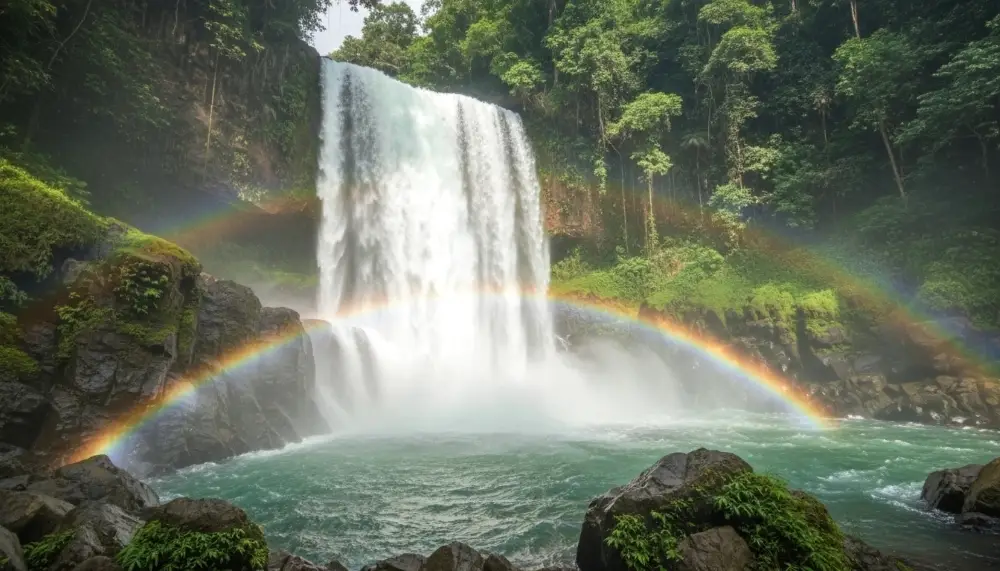
The centrepiece is Thi Lo Su Waterfall, frequently cited as the largest waterfall in Thailand and one of the most spectacular in all of Southeast Asia. During peak flow between October and February, it drops approximately 200 metres across a curtain of water nearly 500 metres wide. Photographs do not prepare you for standing in front of it.
Beyond the waterfall, the sanctuary offers elephant encounters with working mahout families, river rafting on the Umphang River through limestone gorges, and multi-day treks into forest that sees genuine darkness after sundown. This is the kind of trip that stays with people for years.

Skip the planning headache in Thailand.
Klook offers day tours, tickets, and
experiences from around $25, with
instant confirmation to your phone.
Getting There: The Road Less Travelled
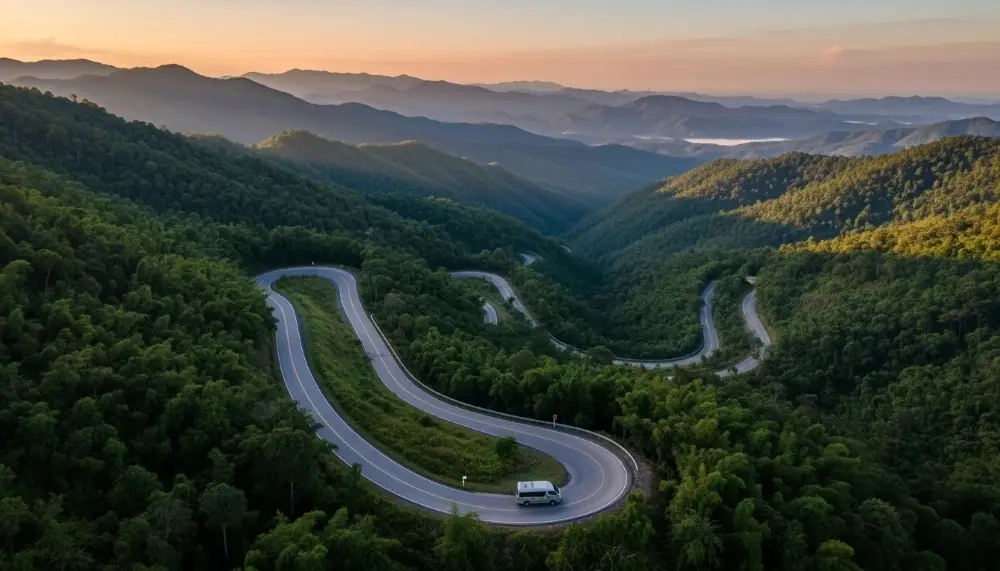
The journey to Umphang begins in Mae Sot, a border town on the Myanmar frontier roughly 80 kilometres from the sanctuary. From Chiang Mai, a combination of bus and songthaew (shared truck) is the standard approach. Lock in your intercity bus tickets through 12GO Asia well ahead of any Thai public holiday, when seats sell out faster than most visitors expect.
The final leg from Mae Sot to Umphang town covers 164 kilometres along Route 1090, locally nicknamed the “Sky Highway.” This road cuts through 1,219 curves across mountain ridges with drops falling hundreds of metres on either side. The songthaew ride takes around four hours and costs approximately 150 THB (roughly $4 USD). It is simultaneously one of the most nerve-shredding and jaw-dropping drives in the country. Families with young children or anyone prone to motion sickness should carry medication and position themselves near a window.
For those flying in, the nearest domestic airport is Mae Sot (MAQ), served by limited flights from Bangkok’s Don Mueang Airport. Nok Air and Bangkok Airways both operate this route. Delays are not uncommon on small regional routes like this, so if your connection involves a tight window, AirHelp is worth knowing about as a service that handles compensation claims for disrupted domestic Thai flights without requiring you to navigate the airline’s process yourself.

Skip-the-line tickets and guided walks
in Thailand with English-speaking
guides. Read real traveller reviews
before committing to a single one.
Connectivity Warning: Sort Your eSIM Before You Leave
Mobile signal in Umphang is patchy at best and nonexistent on the trails. However, Mae Sot and the first stretch of the Sky Highway do have coverage, and this is where you need to have things sorted. Dominant apps like Grab require SMS network verification the moment you open them, and that SMS will not arrive if you are fumbling with an unactivated SIM at the Mae Sot bus terminal.
Activate your Airalo, Yesim, or Saily eSIM data plan before departure from home. These plans use the same underlying Thai networks, activate instantly, and mean you arrive at the baggage carousel already connected rather than queuing at a phone shop. Download offline maps of Tak Province and the Umphang area before you leave Mae Sot. Once you are deep in the sanctuary, you are genuinely offline.
Thi Lo Su Waterfall: The Main Event
Reaching Thi Lo Su requires either a guided trek of two to three hours through the jungle from the park boundary, or a combination of 4WD vehicle and shorter walk arranged through a local tour operator in Umphang town. Independent access is technically possible but genuinely inadvisable. Trail markers are minimal, and the forest is dense enough that the wrong fork becomes a serious problem quickly.
Park entry fees currently sit at 200 THB (approximately $5.60 USD) for international visitors. The waterfall is accessible between October and May. Between June and September, the approach trail floods and the park service closes access entirely for safety reasons.
The best light hits the falls between 9:00 AM and 11:00 AM when the morning sun clears the treeline. Bring a dry bag for your electronics regardless of the weather forecast. The mist radius around the main falls soaks everything within 30 metres, even on a completely clear day. Swimming in the lower pools is permitted and extraordinary. The water temperature hovers around 18 to 20 degrees Celsius year-round, cold enough to feel genuinely refreshing after a jungle hike in 35-degree heat.
Trek Packages: What You Actually Pay
Booking a guided trek through a reputable Umphang operator is straightforward once you understand the structure. Most packages follow a two to four-day format that combines the waterfall, elephant interactions, river rafting, and village stays. Prices are generally quoted per person and drop significantly in groups of four or more.
| Package Type | Duration | Cost Per Person (THB) | Cost Per Person (USD) |
|---|---|---|---|
| Day Trip (Thi Lo Su only) | 1 day | 1,200 to 1,800 THB | $33 to $50 USD |
| Classic Trek (falls + rafting) | 2 days / 1 night | 2,500 to 3,500 THB | $70 to $97 USD |
| Full Jungle Trek | 3 days / 2 nights | 4,500 to 6,000 THB | $125 to $167 USD |
| Premium Private Tour | 4 days / 3 nights | 8,000 to 12,000 THB | $222 to $333 USD |
These packages typically include guide fees, park entry, accommodation in ranger camps or Karen village homestays, and meals. Transport from Umphang town is usually included; transport from Mae Sot is typically extra. Klook lists vetted Umphang day tours for the falls-only option at competitive rates, with verified reviews that give a realistic picture of the experience. Get Your Guide also carries multi-day options for those who want advance booking confirmation before arriving in the region.
River Rafting and the Umphang River Gorge
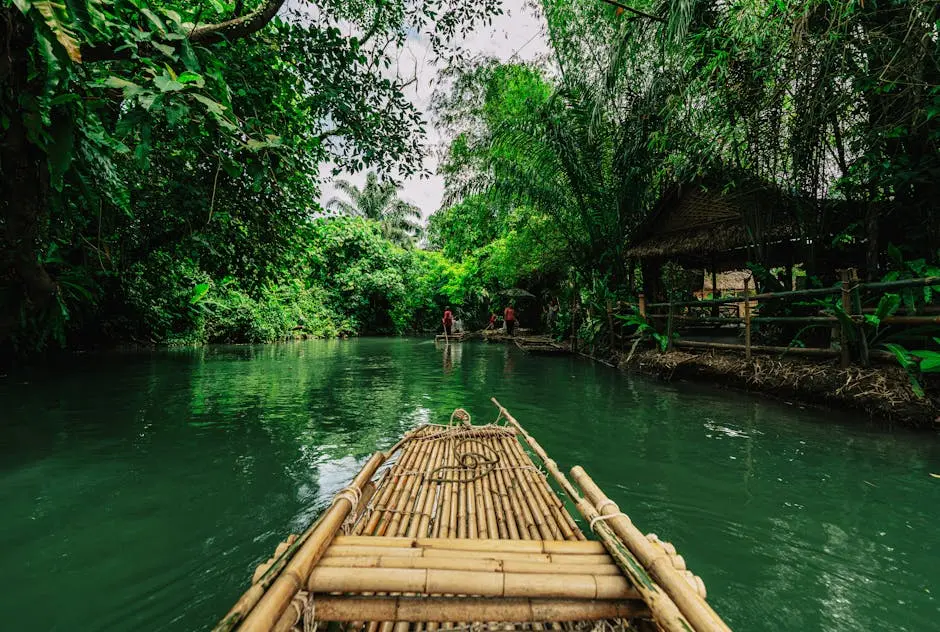
The Umphang River drops through a series of limestone gorges that rival anything on the more famous Mae Taeng circuit near Chiang Mai. Bamboo rafting is the traditional method, slower and quieter, letting you drift through sections of forest where gibbons call overhead and hornbills cross the river in pairs. Inflatable kayak options are available through some operators for those wanting a more active experience through the Class II and III rapids during high water season.
The rafting section typically runs three to five hours depending on water levels and stopping points. Lunch at a riverside Karen village is standard, usually a simple spread of rice, jungle vegetables, and grilled river fish costing nothing extra on a packaged tour. Budget travellers doing this independently should carry 200 to 400 THB (approximately $5.50 to $11 USD) for food at village stops along the way.

From short trips to long stays in Thailand,
Airalo has flexible eSIM data plans
you install in minutes. Top up
remotely if you need more data.
Karen Village Stays: The Honest Picture
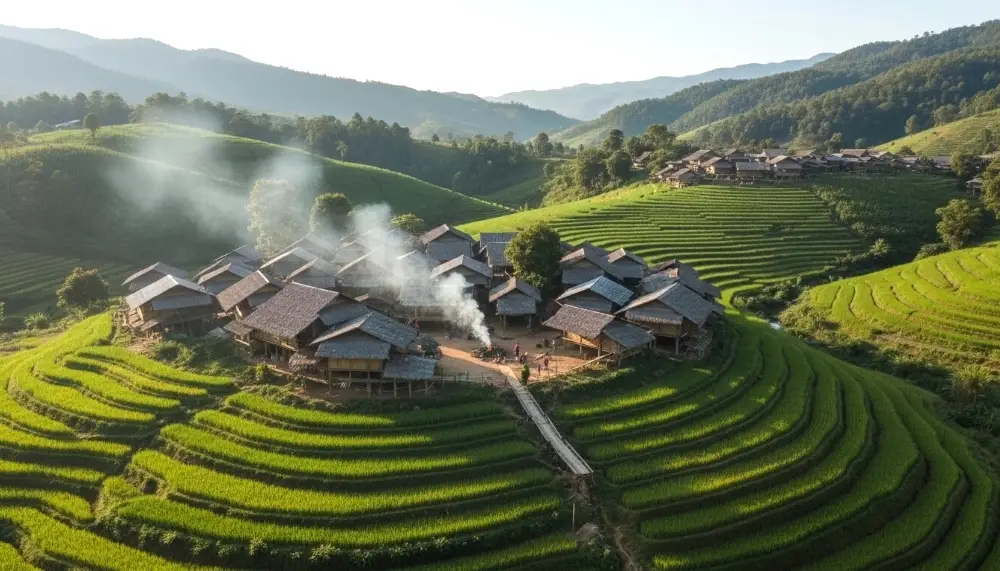
Overnight stays in Karen villages are included in most multi-day packages and represent one of the more genuine cultural encounters available to travellers in Thailand. These are functioning communities, not tourism showcases. Families host trekkers in their homes. Meals are cooked on wood fires. Evenings involve sitting around with local rice whisky if you accept, or strong tea if you do not.
The etiquette is worth understanding before you arrive. Remove footwear before entering any home, always accept offered food before declining (a small gesture of the first bite communicates respect even if you cannot finish the meal), and ask before photographing people. Tipping your Karen guide at the end of a multi-day trek is strongly appreciated. A figure of 300 to 500 THB (around $8 to $14 USD) per day of guiding is appropriate and genuinely impactful in communities with limited outside income.

Compare hotel prices across Thailand’s
best areas and book with confidence.
Filter by budget, location, or score
to find the right stay for your trip.
Where to Stay in Umphang Town
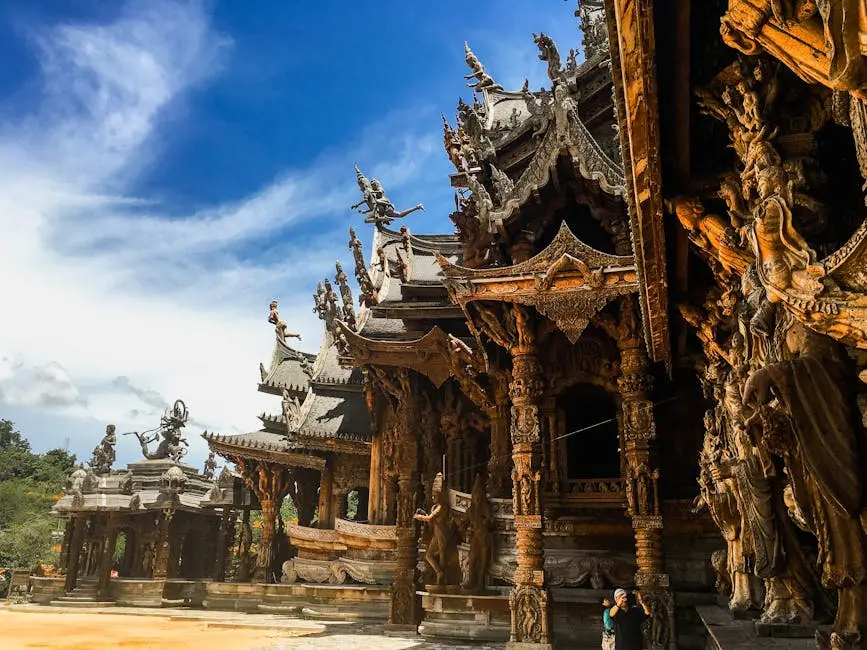
Umphang town itself is small and the accommodation options reflect that. Budget guesthouses charge between 350 and 600 THB (roughly $10 to $17 USD) per night for a fan room with a private bathroom. Mid-range riverside bungalows push to 900 to 1,600 THB ($25 to $44 USD) and offer the closest thing to comfort available in the area. There are no five-star resorts here and that is entirely the point.
Agoda consistently surfaces better rates for the guesthouses in this region than international booking platforms, particularly for the riverside properties. Booking.com is worth cross-referencing for the two or three properties that appear on both platforms, as prices occasionally diverge by 10 to 15 percent. For families arriving with a group from Mae Sot, Welcome Pickups offers pre-negotiated fixed transfers that remove the negotiation stress of arriving at an unfamiliar bus terminal and being approached by unlicensed drivers.
Best Time to Visit and Seasonal Realities:
The sanctuary has a clearly defined season that directly determines what you can access.
| Month Window | Conditions | Waterfall Access | Best For |
|---|---|---|---|
| October to February | Cool, clear, peak flow | Full access | Waterfall, trekking, photography |
| March to May | Dry, hot, reduced flow | Open but lower volume | Fewer crowds, better trail conditions |
| June to September | Monsoon, flash flood risk | Closed | Not recommended for visiting |
October and November represent the sweet spot: the rains have ended, the forest is still richly green, the waterfall is at maximum flow, and the cool mountain air makes trekking genuinely comfortable. December to February brings the most visitors (still a fraction of Chiang Mai numbers) and the coldest nights, dropping to 10 to 13 degrees Celsius at elevation. Pack a light fleece even if you are coming directly from beach weather elsewhere in Thailand.
For Digital Nomads Considering a Longer Stay:
Umphang is not a remote work base in the conventional sense. It has no co-working spaces and the Wi-Fi in most guesthouses is functional for messaging but not video calls. Mae Sot, however, has quietly developed a small but committed expat and remote worker community over the last few years, drawn by low costs, the border town energy, and proximity to the sanctuary for weekend adventures.
Monthly studio rentals in Mae Sot run between 3,500 and 6,500 THB ($97 to $181 USD), dramatically cheaper than Chiang Mai for an equivalent setup. The 4G coverage in Mae Sot town is solid. For anyone working from cafe networks or guesthouse Wi-Fi, NordVPN running across all devices is the essential security layer, particularly when accessing banking or client portals from shared connections. SafetyWing’s Nomad Insurance is the practical choice for remote workers here: it covers healthcare throughout Thailand for a fraction of standard expat medical plan costs and handles the longer-term health scenarios that standard travel policies do not.


Need budget data in Thailand? Saily’s
eSIM plans start cheap and install
in a couple of minutes. Built by
the NordVPN team, security is solid.
Practical Tips: What to Bring and What to Expect
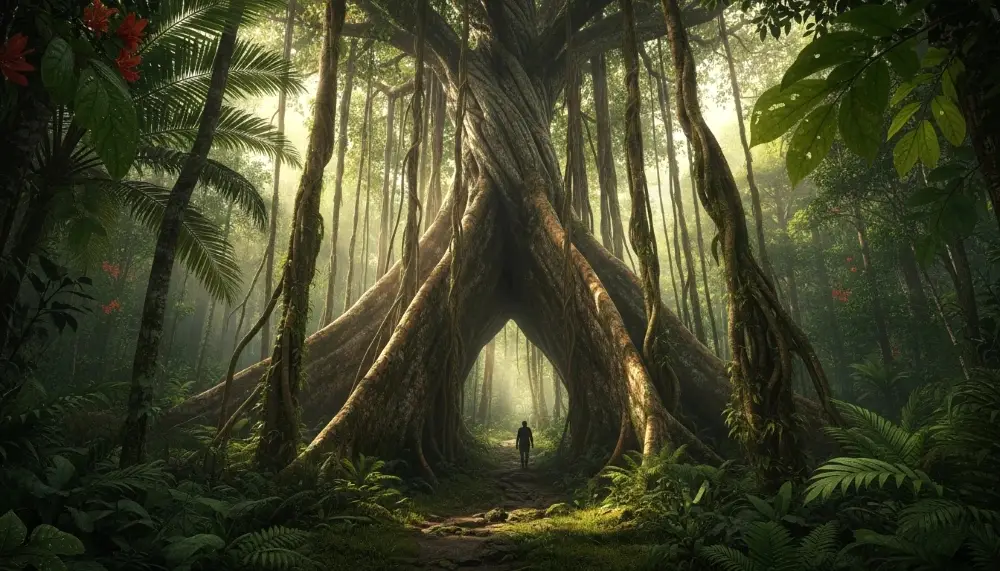
Pack light but smart. A 30-litre daypack handles a two-day trek comfortably. Your tour operator will supply camping equipment if required on longer routes.
Footwear matters. Trail shoes or sturdy sandals with grip are essential. The paths to Thi Lo Su involve river crossings on stepping stones that are slippery when wet. Flip-flops are not appropriate.
Cash is king. There is one ATM in Umphang town and it runs out of cash during peak season. The standard ATM fee is 220 THB per withdrawal. Withdraw enough in Mae Sot to cover your full stay and tip budget. Always select “Continue Without Conversion” at Thai ATMs to let your home bank handle the exchange rate.
Travel insurance is non-negotiable. Standard policies frequently exclude trekking activities above a certain elevation or rafting above a certain grade. Read the small print carefully. Emergency medical evacuation from the sanctuary to a hospital in Tak or Chiang Mai is the real risk to plan for.
Water purification. Bring purification tablets or a lightweight filter. Most river water in the sanctuary is clean but iodine tablets weigh nothing and remove the guesswork entirely.
The Magic of Going Somewhere Undiscovered
The travellers who make it to Umphang tend to share one thing when they come back: genuine surprise that more people do not know about it. The waterfall is objectively one of the most extraordinary natural features in Southeast Asia. The trekking is serious without being technical. The cultural encounters in Karen villages are the kind that remind you why you travel in the first place.
The relative difficulty of getting there is also, honestly, most of the point. The Sky Highway alone is a memorable experience. The fact that the guest house owner in Umphang town still remembers individual travellers and asks where they came from is a quality that the more discovered parts of Thailand have lost. It takes a little more effort to reach. The reward is a version of Thailand that still has room to breathe.

Maps, Grab, translation apps all need
data in Thailand. Yesim’s eSIM installs
in a minute and gives you reliable
5G from the moment you arrive.
Frequently Asked Questions:
How do I get to Umphang from Chiang Mai?
The most practical route is Chiang Mai to Mae Sot by bus (around 5 to 6 hours, approximately 250 THB or $7 USD), then a songthaew from Mae Sot to Umphang town along Route 1090, which takes 4 hours and costs roughly 150 THB ($4 USD). Book your intercity bus in advance through 12GO Asia, especially around Thai public holidays when vehicles fill up several days ahead.
When is Thi Lo Su Waterfall accessible?
The falls are open to visitors between October and May. Peak flow and the most dramatic conditions occur from October through February. The park service closes access entirely from June to September due to monsoon flooding on the approach trail. October and November offer the best combination of full water flow and comfortable trekking temperatures.
How much does a guided trek cost in 2026?
Day trips to Thi Lo Su alone run 1,200 to 1,800 THB (approximately $33 to $50 USD) per person. Classic two-day packages combining the waterfall and river rafting cost 2,500 to 3,500 THB ($70 to $97 USD). Full three-day jungle treks with village stays range from 4,500 to 6,000 THB ($125 to $167 USD). Prices drop noticeably in groups of four or more.
Is Umphang suitable for families with children?
Yes, with the right package. The day-trip waterfall visit works well for families with children aged eight and above who are comfortable with a two to three-hour jungle walk on uneven ground. River rafting on the bamboo sections is calm enough for older children. Multi-day camping treks are better suited to teenagers and adults. Accommodation in Umphang town is basic; set expectations with children accordingly.
Do I need to book a guide in advance?
For the waterfall, a guide is strongly recommended and required for access to certain inner zones of the sanctuary. You can arrange guides directly in Umphang town on arrival outside peak season, but booking through Klook or Get Your Guide in advance guarantees your spot and provides verified operator reviews. During October to December, popular tour slots fill several days ahead.
What mobile data options work in Umphang?
Signal in Umphang town is limited, and the trails have no coverage at all. The key is to arrive connected. Activate an eSIM from Airalo, Yesim, or Saily before departure from home, as apps like Grab require SMS verification the moment you open them at Mae Sot. Download offline maps of the Tak Province region before leaving Mae Sot. For security on guesthouse Wi-Fi, NordVPN is recommended for anyone handling banking or work communications.
Is travel insurance required for trekking in Umphang?
It is essential. Standard travel policies frequently exclude jungle trekking, river rafting, and activities above certain elevations. Read your policy carefully for water-activity and adventure-sport exclusions. Emergency medical evacuation from the sanctuary to a hospital in Tak or Chiang Mai is the primary financial risk to cover. Remote workers and longer-stay visitors should consider SafetyWing as a supplementary policy that handles extended health scenarios standard travel insurance does not cover.
Is Umphang safe for solo female travellers?
Yes. Umphang sees a small but consistent number of solo female travellers each season, and the town itself is quiet and low-crime. The main practical consideration is using reputable guided tour operators rather than accepting informal arrangements from unlicensed individuals near the bus stop. Staying in well-reviewed guesthouses on Agoda rather than isolated homestays for your first night provides a sensible baseline. The Karen guides operating the sanctuary treks are experienced and professional.
What currency should I carry and are there ATMs?
Thai Baht (THB) is the only currency accepted in Umphang. There is a single ATM in town that frequently runs out during peak season. Withdraw everything you need in Mae Sot before travelling the Sky Highway. The standard Thai ATM fee is 220 THB per transaction. Always select Continue Without Conversion to let your home bank handle the exchange rate rather than accepting the ATM’s dynamic conversion, which is typically less favourable.
How does Umphang compare to trekking around Chiang Mai?
The two experiences are genuinely different in character. Chiang Mai trekking is well-developed, easy to arrange, and heavily touristed by Thai standards. Umphang offers primary rainforest, a dramatically larger waterfall, and encounters with communities that see far fewer international visitors. Chiang Mai is better for first-time trekkers wanting infrastructure and flexibility. Umphang rewards those with a bit more travel experience who want something that still feels genuinely off the main circuit.