Railay Beach Rock Climbing: 4 Best Guided Schools for Beginners
This site contains affiliate links. We may earn a commission at no extra cost to you.
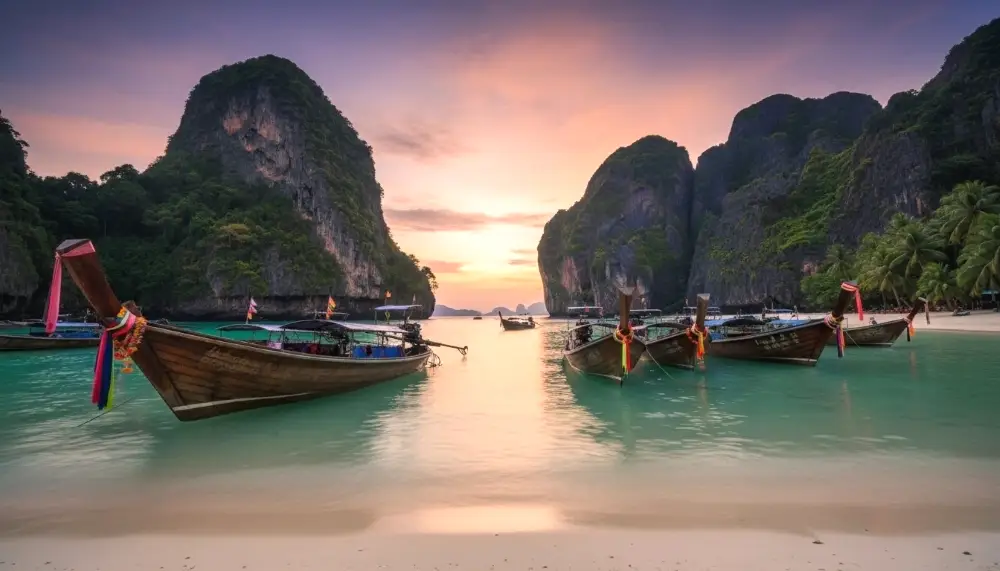
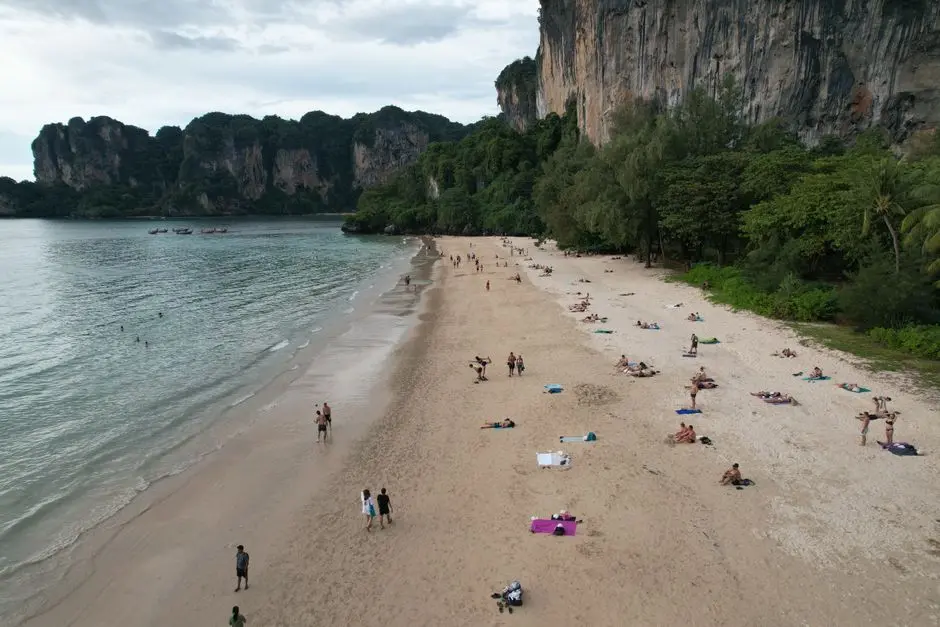
There is a wall of limestone at Railay Beach that rises straight out of the Andaman Sea and ends somewhere above the treeline. The first time you see it from a longtail boat, your brain has no reference for the scale. Then you notice the tiny coloured ropes running up its face, and even tinier people hanging off them. That is when the idea takes hold. All prices in this guide use a rate of 35 THB = $1 USD.
Railay is inaccessible by road, reachable only by a 10-minute longtail from Ao Nang or Ao Nam Mao pier (100 THB / ~$2.85 each way, cash only). That isolation has kept it raw and genuinely special. Over 700 bolted routes run up the karst cliffs here, graded from beginner-friendly 5.4 all the way to serious 5.14a, making it one of the most accessible world-class climbing destinations on the planet. You do not need to have climbed before. You just need to show up.
Quick Answer: Which School Should You Book?
If you have never climbed before and want the fastest path to standing on the cliff face, here is the short version:
- King Climbers, best all-round for first-timers, ACGA-certified guides, half-day from ~1,500 THB (~$43)
- Real Rocks Climbing, highest guide credentials in southern Thailand, international sport climbing certifications, half-day group from ~1,750 THB (~$50)
- Hot Rock Climbing School, small groups (2 to 3 people), great for gym climbers stepping outside for the first time
- Basecamp Tonsai, ideal for budget backpackers, direct access to the Tonsai crags, lowest walk-in rates
Budgeting: A half-day beginner course including all gear runs 1,200 to 1,750 THB (~$34 to $50) per person. Private options sit at 3,000 to 4,500 THB (~$86 to $129). Book via Get Your Guide or Klook to lock in a vetted operator and keep 24-hour free cancellation.

Book Railay day trips, attractions,
and activities in one place. Check
real reviews and lock in your spot
before the popular slots go.
Why Railay Beach for Rock Climbing?

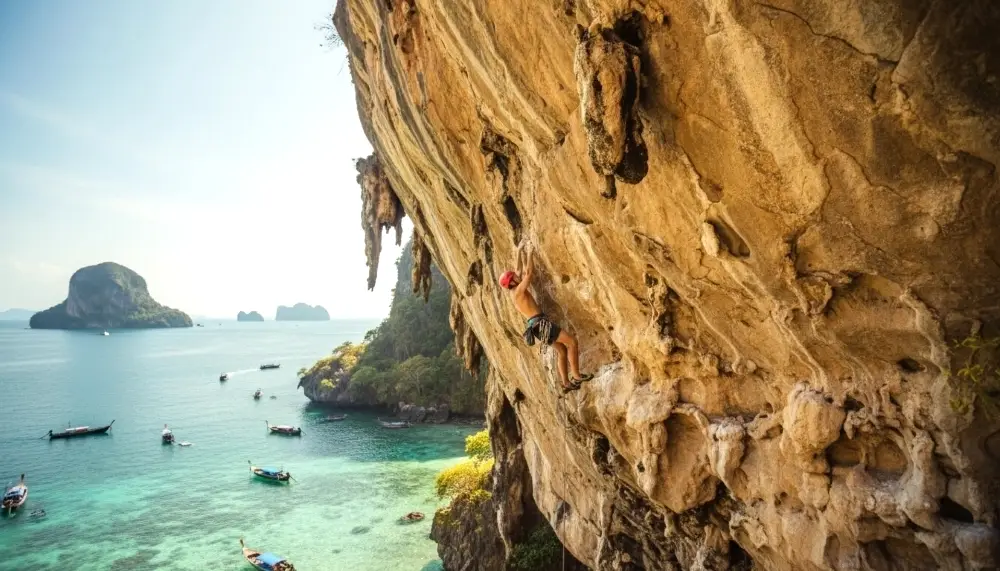
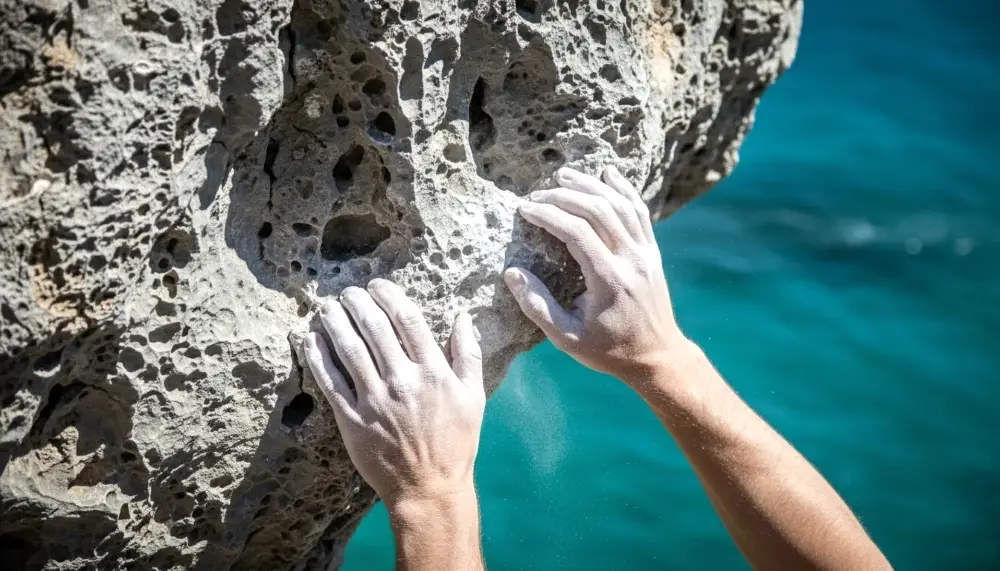
Limestone karst is close to the ideal beginner rock. It is rough-textured, porous, and covered in natural pockets and edges that your fingers find intuitively. The walls at Railay are fully bolted for sport climbing, meaning every route has pre-drilled anchors and the safety systems are already in place before you leave the ground.
The 1-2-3 Wall at Railay East and the walls of Phra Nang Beach cave are where most beginner courses run. Routes here sit between grade 4 and 6b, the kind of climbing where technique matters more than raw strength. Experienced guides talk you through body positioning from below, and the views across the Andaman Sea to the outer islands are genuinely extraordinary. Activate your Airalo, Yesim, or Saily eSIM before you leave home so you have data the moment you land at Krabi Airport, the boat pier Wi-Fi is unreliable and most longtail skippers will not wait while you sort connectivity at the dock.

Lock in top-rated Railay tours with
GetYourGuide’s free cancellation
up to 24 hours before. Reserve now
and pay later if dates aren’t set.
Climbing School Comparison: At a Glance
| School | Half-Day (Group) | Full-Day (Group) | Private Half-Day | Certification | Best For |
|---|---|---|---|---|---|
| King Climbers | ~1,500 THB (~$43) | ~2,100 THB (~$60) | ~3,000 THB (~$86) | ACGA | All-round beginners |
| Real Rocks Climbing | ~1,750 THB (~$50) | ~2,450 THB (~$70) | ~3,500 THB (~$100) | UIAA / Sport Climbing Lvl 1–3 | Certification seekers |
| Hot Rock | ~1,500 THB (~$43) | ~2,100 THB (~$60) | ~3,000 THB (~$86) | ACGA | Gym climbers going outside |
| Basecamp Tonsai | ~1,200 THB (~$34) | ~1,800 THB (~$51) | ~2,800 THB (~$80) | ACGA | Budget backpackers |
School 1: King Climbers
King Climbers is one of the original climbing schools at Railay, operating since the 1990s and registered with the TAT (Tourism Authority of Thailand). All guides hold a minimum of five years climbing experience and are accredited by the ACGA (Asean Climbing Guides Association) with certified first aid and emergency rescue training.
Half-day courses (4 hours, morning or afternoon) run from around 1,500 THB (~$43) per person in a group of up to 4 climbers. A full day costs approximately 2,100 THB (~$60) and covers top-rope climbing, basic lead technique, bouldering, and abseiling across 4 to 6 routes of increasing difficulty. Private instruction runs from 3,000 THB (~$86) for a half-day with dedicated one-on-one coaching. All equipment is included: harness, helmet, climbing shoes, and chalk bag.
King Climbers meets at their base at Ao Nam Mao pier at 08:20 for morning sessions and 13:00 for afternoon sessions, with hotel pickups from Ao Nang, Krabi Town, and surrounding areas. An extra transfer fee of 200 THB (~$5.70) applies for Klong Muang and Tubkaek Beach hotels.
- Group size: maximum 4 climbers per guide
- Includes: all gear, longtail transfer, hotel pickup
- 3-day multi-day courses available for those who want to progress to independent outdoor climbing
School 2: Real Rocks Climbing
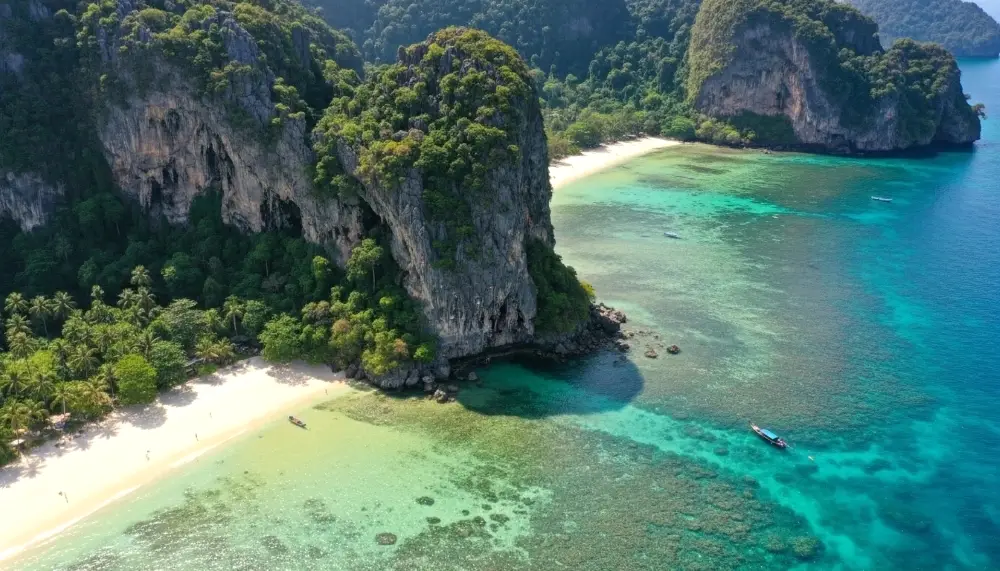
Real Rocks positions itself at the premium end of the Railay climbing schools, and for good reason. It is the only school in southern Thailand whose instructors are licensed to issue internationally recognised Sport Climbing Certifications at Levels 1, 2, and 3. For anyone who wants their time on the cliffs to count toward a credential they can use anywhere in the world, this is the standout choice.
Their half-day group session costs approximately 1,750 THB (~$50) per person, with a ratio of 4 climbers per guide. A full-day group session runs around 2,450 THB (~$70). Private half-day instruction sits at approximately 3,500 THB (~$100) and is ideal for those who want to move through more routes or have specific technique goals. Hotel pickups operate from Ao Nang, Klong Hang, and Ao Nam Mao at 07:30 and 12:30 daily. A surcharge applies for hotels in Krabi Town, Klong Muang, and Tubkaek Beach.
Reviews consistently highlight the attentiveness of guides with beginners, particularly for children aged 5 and up. The school has a 9.8 out of 10 rating on Expedia from verified bookings. Book through Get Your Guide or Klook for the best rate and guaranteed 24-hour free cancellation. If you are managing a group booking or researching tours from a shared cafe connection, use NordVPN to keep your payment details secure on public Wi-Fi.

From short trips to long stays in Railay,
Airalo has flexible eSIM data plans
you install in minutes. Top up
remotely if you need more data.
School 3: Hot Rock Climbing School
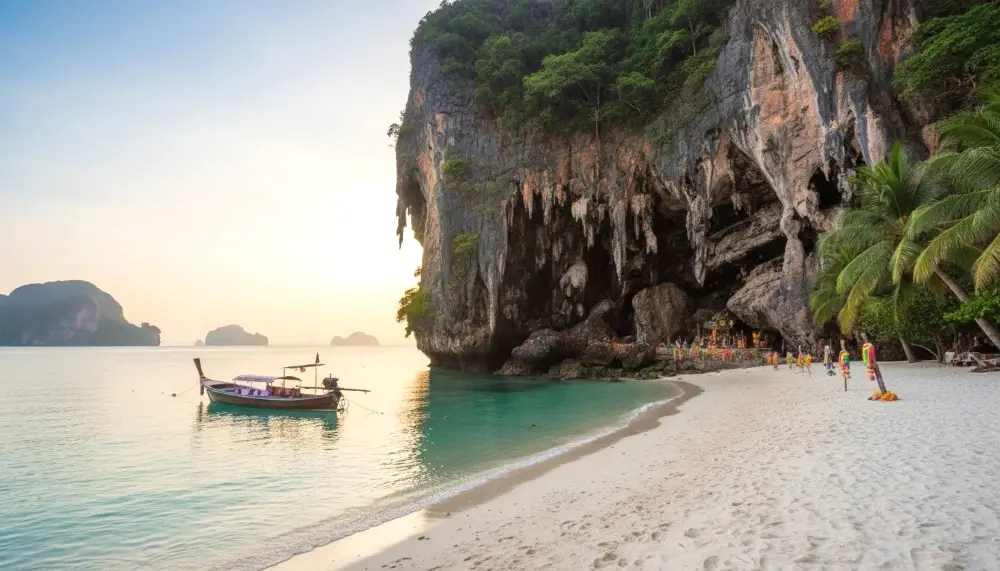
Hot Rock operates on Phra Nang Beach, arguably the most spectacular wall in the Railay area. Groups are deliberately kept small, typically 2 to 3 climbers per guide, which gives the experience a more personal, coaching-oriented feel than the larger school operations. This makes it particularly well-suited for gym climbers moving outdoors for the first time, where understanding footwork and reading the rock matters more than just hanging on.
Half-day sessions run at roughly the same price point as King Climbers, around 1,500 THB (~$43) in a small group. The meeting point is Railay Beach itself, so if you are staying at one of the Railay resorts, you simply walk over. If you are coming from Ao Nang, the longtail to Railay West costs 100 THB (~$2.85) and runs on a cooperative schedule (boats go when full, typically every 30 to 45 minutes). Hot Rock’s guides are ACGA-accredited and have drawn strong praise for patiently extending sessions when transport delays eat into the morning.
Accommodation near the cliffs helps enormously with logistics, as you avoid the longtail timetable entirely. Check current rates at Railay Beach Resort and surrounding guesthouses via Agoda or Booking.com, both of which carry the best local pricing for the area.
School 4: Basecamp Tonsai
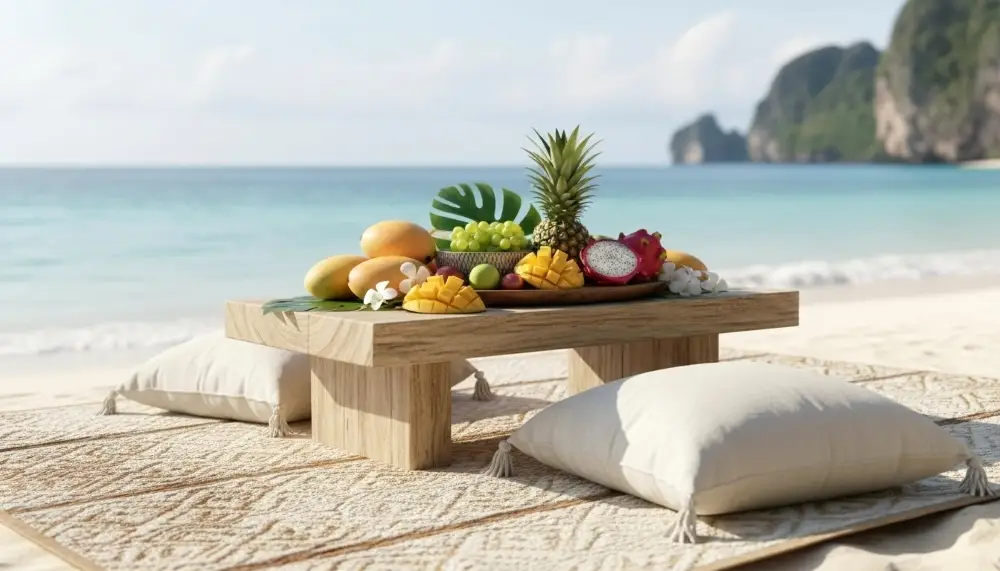
Tonsai Beach sits just around the headland from Railay West and is accessible either by a short wade at low tide or a jungle scramble above. It has historically been the heartland of the budget climbing crowd: cheaper bungalows, more relaxed energy, and walls that feel a little wilder than the polished Railay circuit. Basecamp Tonsai is the most prominent school here.
Half-day beginner courses start from approximately 1,200 THB (~$34) per person, the lowest entry point among the four schools covered here. Full-day sessions run around 1,800 THB (~$51). The Diamond Cave wall and One-Two-Three Wall are both within easy walking distance, offering beginner and intermediate routes with outstanding cliff-top views. Gear rental for independent climbers with their own qualifications costs approximately 700 to 900 THB (~$20 to $26) per day for a full set: shoes, harness, helmet, and quickdraws.
Tonsai suits travellers who want to spend several nights and get properly into it, rather than treating climbing as a half-day tick. The community here is unusually welcoming, and you will find experienced climbers happy to share beta on routes. If you plan to extend your stay in the Krabi region, use SafetyWing for travel health cover as standard holiday insurance often excludes climbing activities specifically.

Saily’s Railay eSIM costs less than
most tourist SIMs charge per day.
Easy install, transparent pricing,
and solid NordVPN infrastructure.
What to Expect in a Beginner Course
Every beginner course at Railay follows a similar structure regardless of school. The first 20 to 30 minutes are spent on gear fitting and a ground-level safety briefing covering harness checks, belay technique, knot tying, and fall protocol. You will not leave the ground until your guide is satisfied you understand the basics.
Most half-day courses complete 3 to 5 routes at increasing difficulty. The first route is typically a confidence builder, something in the 4 to 5a range that gets you comfortable with the movement and trusting the rope. By the third route, most beginners are surprised by what they are managing. A typical 4-hour session covers:
- Gear fitting and safety briefing (30 minutes)
- Top-rope technique and footwork fundamentals on a beginner route (45 minutes)
- 2 to 3 additional routes of increasing grade with coaching at each (2 hours)
- Introduction to basic belay and abseil technique if time allows (30 minutes)
You do not need upper body strength. Climbing on limestone is largely a balance and footwork exercise. The biggest determinant of enjoyment is trusting your feet, something every guide here will drill into you from the first move.

Stay closer to the action in Railay.
Agoda lists guesthouses to resorts
with verified reviews and instant
booking at competitive rates.
Half-Day vs Full-Day vs Multi-Day: Which Is Right for You?
The half-day is the right starting point for most people. Four hours is enough to get genuinely high on the cliff face, complete several routes, and finish feeling accomplished without being completely spent. If you have never climbed before and do not exercise much regularly, the half-day is the better call, your forearms will give out before the course does.
The full-day suits anyone who is reasonably fit, has done any indoor climbing, or wants to reach the lead climbing and abseiling sections of the curriculum. It typically costs around 2,100 to 2,450 THB (~$60 to $70) in a group setting and includes lunch and water.
A 3-day multi-day course (available through King Climbers and Real Rocks) is aimed at people who want to leave Railay capable of planning their own outdoor routes. Day one covers top-rope fundamentals. Day two introduces lead climbing and anchor building. Day three takes you onto multi-pitch routes. Prices for a 3-day group course run approximately 5,500 to 7,000 THB (~$157 to $200) depending on group size. Real Rocks issues internationally recognised certifications upon completion. Book these through Klook well in advance during high season (November to March), as multi-day instructor slots fill up fast.
Safety Standards: What to Check Before You Commit
Railay’s mainstream schools have a strong safety record. The UIAA and ACGA certifications are the benchmarks to look for when assessing any guide. ACGA (Asean Climbing Guides Association) requires a minimum of five years climbing experience plus certified first aid and emergency rescue training. UIAA certification goes a step further and aligns with international mountain guide standards.
Beyond credentials, do a quick visual check on the day: ropes should be brightly coloured and supple, not sun-bleached or stiff; harnesses should show no fraying at stress points; helmets should be modern UIAA-rated shells, not open-face foam constructions. Any reputable school will welcome these questions. A school that gets defensive about gear checks is a school worth walking away from.
The TAT licence number is another marker of legitimacy. King Climbers and Real Rocks both hold TAT registration. Book through Get Your Guide or Klook where possible, as both platforms vet operators independently and provide a refund pathway if a school fails to meet its listed standards. If a flight delay or transit chaos from Bangkok disrupts your Krabi arrival and you miss a pre-paid session, AirHelp can assist with any compensation claim for the disrupted leg of your journey. For transfers directly from Krabi Airport to your Railay-area hotel, Welcome Pickups offers pre-booked group transport that is especially useful for families with gear.
What to Wear and Bring
Climbing shoes are provided by all four schools and included in the course price. Bring your own if you have them, but rental shoes at Railay are generally well-maintained. Beyond footwear, the priorities are comfort and sun protection:
- Clothing: lightweight athletic leggings or shorts that allow full hip flexion, and a breathable top. Avoid loose cotton that soaks through quickly in heat. Good options are available on Amazon in athletic technical fabric that packs flat into a day bag.
- Sun protection: reef-safe sunscreen (SPF 50 minimum) is essential. You will be on exposed limestone from early morning. The Andaman Sea sits directly below some walls and runoff matters here. Brands like Stream2Sea and Badger are widely recommended and available on Amazon ahead of your trip if you cannot source them locally in Krabi.
- Liquid chalk: not strictly necessary for a beginner course (schools provide chalk bags), but a small bottle of liquid chalk (available on Amazon for around 500 to 800 THB equivalent) is useful in the tropical humidity where block chalk dissolves quickly.
- Water and snacks: bring at least 1.5 litres. The walls are in partial shade in the morning but fully exposed by late morning. No 7-Eleven exists on Railay. Stock up in Ao Nang before the longtail.
Getting to Railay: Logistics Made Simple
Railay is connected to the mainland only by water. There are two main departure points: Ao Nang Beach pier (longtail to Railay West, 100 THB / ~$2.85, cash only) and Ao Nam Mao pier (shorter crossing, used by most climbing schools for their morning pickup). Both piers are accessible from Krabi Town by Grab, songthaew shared taxi, or private transfer.
If you are coming directly from Bangkok or another island, book your Krabi intercity leg through 12GO to compare buses, trains, and budget flights in one place and lock in a seat before national holiday surges push prices up. Budget airlines including AirAsia and Thai Lion Air run Bangkok to Krabi from around 1,200 THB (~$34) booked in advance.
From the longtail dock at Railay East, the climbing walls are a 5-minute walk. From Railay West, add another 5 minutes through the resort strip. The entire peninsula is navigable on foot and there are no vehicles. It is one of the genuinely rare places in southern Thailand where you can leave your phone in the bungalow and walk to the crag in under ten minutes.
Best Time to Climb at Railay
The dry season from November to April is universally considered the best window. Limestone becomes dangerously slick when wet, and the Andaman coast sees significant rainfall from May through October. That said, climbing does happen year-round at Railay. Even in the wet season, mornings are often clear and walls that face inland rather than seaward dry more quickly after showers.
December and January are the peak months. Expect all schools to be busy, slot availability to be tight by mid-morning, and accommodation prices to reflect the demand. Book courses and hotels at least a week ahead during this window. February and March offer almost identical conditions with noticeably fewer crowds and easier walk-in availability at the schools.
April brings Songkran and a brief national holiday surge before the rains return. For remote workers or longer-stay climbers considering a month in Krabi, SafetyWing’s nomad health coverage is worth reviewing as it explicitly covers adventure sports at the base tier, unlike most standard travel insurance policies that class climbing as an excluded activity.

Stay online in Railay without the
daily data limits of tourist SIMs.
Yesim’s eSIM offers unlimited 5G
from around $10 for the whole trip.
Frequently Asked Questions:
Do I need any prior experience to join a beginner climbing course at Railay?
No. All four schools covered in this guide offer courses specifically designed for people who have never climbed before. Guides start with a ground-level safety briefing, gear fitting, and movement basics before you leave the floor. The limestone at Railay is textured and pocketed, making it more intuitive for beginners than many other rock types.
How much does a beginner rock climbing course at Railay Beach cost in 2026?
Group half-day courses (4 hours) start from approximately 1,200 THB (~$34) at Basecamp Tonsai and run up to around 1,750 THB (~$50) at Real Rocks Climbing. Full-day group sessions cost 1,800 to 2,450 THB (~$51 to $70). Private half-day instruction ranges from 3,000 to 3,500 THB (~$86 to $100). All prices include gear: harness, helmet, shoes, and chalk bag.
What is included in a typical half-day beginner course?
All schools include harness, helmet, climbing shoes, chalk bag, longtail boat transfer from the mainland pier, hotel pickup (from Ao Nang and nearby areas), professional guide instruction, and 3 to 5 top-rope routes of increasing difficulty across the 4-hour session. Meals and drinks are not included. Full-day courses at most schools include lunch and water.
Which school is best for families with children?
Real Rocks Climbing is frequently cited in reviews for its experience with young climbers, accepting children from age 5 with a parent or guardian present. Hot Rock has also received strong feedback for patience with younger participants. Group sizes are capped at 4 per guide, which allows guides to give close attention to children. King Climbers also welcomes families and can adapt routes to suit different heights and reach.
Is it safe to go rock climbing at Railay Beach?
Yes, when booked through a reputable school. The key markers to look for are ACGA or UIAA guide certification, current first aid training, and well-maintained gear (bright, supple ropes; modern UIAA-rated helmets; harnesses without fraying). All four schools in this guide meet these standards. Book via Get Your Guide or Klook for an additional layer of vetting and a refund pathway if a course does not meet its listed specifications.
Can I just rent gear and climb independently at Railay?
Yes, if you already hold a lead climbing certification. Gear rental costs approximately 700 to 900 THB (~$20 to $26) per day for a full set of shoes, harness, helmet, and quickdraws. Independent climbers should pick up the Railay Rock Climbing Guidebook by Elke Schmitz (available at climbing shops for around 500 THB / ~$14) for route descriptions and grade information. Beginners should not attempt unguided climbing.
How do I get to Railay Beach from Ao Nang?
Take a longtail boat from Ao Nang Beach pier. The crossing to Railay West takes approximately 10 minutes and costs 100 THB (~$2.85) per person. Boats run when full rather than on a fixed schedule, typically departing every 20 to 45 minutes throughout the day. Cash only: carry exact 100 THB notes. Most climbing schools departing from Ao Nam Mao pier include the longtail transfer in their course price.
What is the best time of year to go rock climbing at Railay Beach?
November to April is the dry season and offers the best conditions. Limestone becomes slippery when wet and is not safe to climb during or immediately after rain. December and January are peak months with more crowds and less walk-in availability. February and March give almost identical conditions with fewer visitors. Multi-day courses should be booked at least a week in advance during high season via Klook or Get Your Guide.
Does travel insurance cover rock climbing at Railay?
Standard travel insurance policies frequently exclude climbing as a high-risk activity. Always check the fine print before you travel. SafetyWing’s nomad health coverage explicitly includes adventure sports at its base tier, making it a practical option for climbers. Check individual policy terms carefully as exclusions vary significantly between providers.
Can I combine a Railay climbing course with a day trip from Krabi Town or Ao Nang?
Yes. Most schools offer hotel pickup from Ao Nang and Krabi Town, with a morning departure at around 08:00 to 08:30. The longtail crossing takes 10 minutes and you are on the cliff by 09:00. A half-day course wraps by 13:00 to 13:30, leaving the afternoon for Railay Beach, the Princess Lagoon, or a return to Ao Nang for lunch and the rest of the day. It is a very manageable day trip and one of the best-value activity days in the entire Krabi region.