Renting a 4×4 in Thailand: The Routes, Operators & Off-Road Rules for 2026
This site contains affiliate links. We may earn a commission at no extra cost to you.
Thailand’s mountain roads do not care about your hire car insurance excess. Up in Mae Hong Son Province, a sealed road turns to gravel within two kilometres of leaving the town centre, and by the time you reach the Shan border ridge, you will be very glad you paid the extra 600 THB (~$17) per day for a proper 4×4. This guide covers everything: which operators are worth trusting, which routes genuinely demand four-wheel drive, what the legal requirements look like in 2026, and how to avoid the common traps that catch first-timers out.
All prices in this guide use a baseline rate of 35 THB = $1 USD.
Quick Answer: Do You Actually Need a 4×4?
For Bangkok, Chiang Mai city, Phuket town, and the major coastal resorts: no. A standard saloon or compact hatchback handles sealed Thai roads perfectly well. But if your plans include any of the following, a 4×4 stops being a luxury and becomes a necessity:
- Driving the Mae Hong Son Loop from Chiang Mai
- Accessing Doi Inthanon’s outer forest trails
- Exploring Pai beyond the main valley roads
- Reaching remote national park guesthouses in Khao Yai or Kaeng Krachan
- Crossing into the Golden Triangle area from Chiang Rai during wet season
Budget baseline: A basic 4×4 pickup rental runs 1,500 to 2,500 THB per day (~$43 to $71). A mid-range SUV with full insurance comes in at 2,500 to 4,000 THB per day (~$71 to $114). Book through Klook or Get Your Guide for vetted operators with English-language contracts.

Stay closer to the action in Thailand.
Agoda lists guesthouses to resorts
with verified reviews and instant
booking at competitive rates.
4×4 Rental Cost Comparison: 2026
| Vehicle Type | Daily Rate (THB) | Daily Rate (USD) | Best For | Terrain Rating |
|---|---|---|---|---|
| Toyota Hilux (basic) | 1,500 to 2,000 THB | ~$43 to $57 | Budget travellers, light gravel | Moderate |
| Ford Ranger / Isuzu D-Max | 1,800 to 2,500 THB | ~$51 to $71 | Mae Hong Son Loop, family trips | Good |
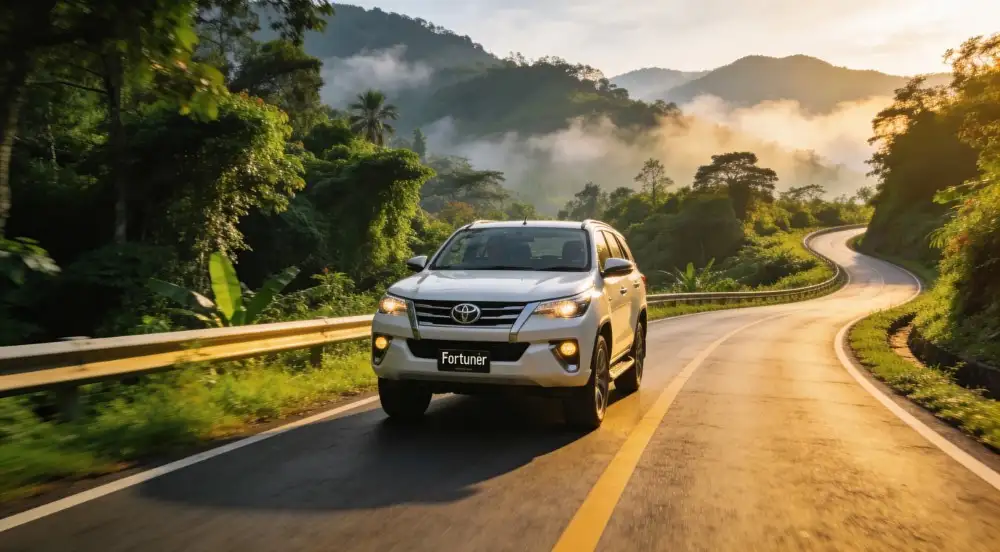
| Toyota Fortuner / Mitsubishi Pajero Sport | 2,500 to 3,500 THB | ~$71 to $100 | Families, national parks, comfort | Very Good |
| Toyota Land Cruiser (full spec) | 4,000 to 6,000 THB | ~$114 to $171 | Remote trails, wet season, expats | Excellent |
| Suzuki Jimny (compact) | 1,400 to 2,000 THB | ~$40 to $57 | Solo travellers, tight mountain roads | Good |
Licence Requirements & Legal Rules for 2026
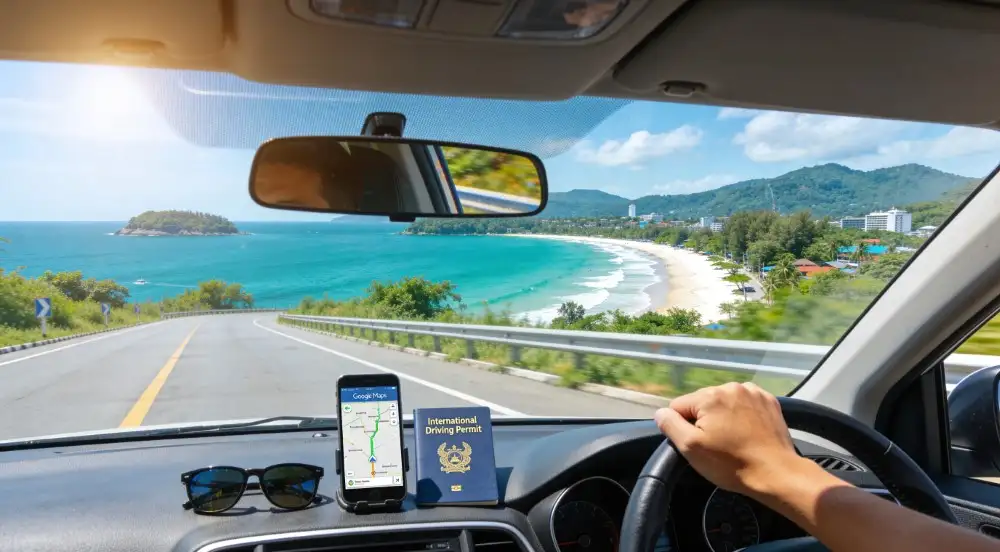
Thailand requires a valid International Driving Permit (IDP) alongside your home licence. A domestic licence alone is not legally sufficient for foreign nationals renting vehicles, though enforcement varies. If you are involved in an accident without an IDP, your insurance is void. Get one before you travel. Most rental operators will check.
Key legal points for 2026:
- Minimum driving age for rental vehicles is 21, and most operators require 23 for larger 4x4s
- Drive on the left. Speed limits: 90 km/h on highways, 60 km/h in towns
- Seatbelts are compulsory for all occupants in all seats
- Entering national parks with a rental vehicle requires a park entry fee: 200 THB (~$5.70) per person for foreigners
- Some border zones (notably near Myanmar) are designated restricted areas. Confirm with your operator before heading north of Mae Sai or west of Mae Hong Son town

Lock in top-rated Thailand tours with
GetYourGuide’s free cancellation
up to 24 hours before. Reserve now
and pay later if dates aren’t set.
The Mae Hong Son Loop: Thailand’s Premier 4×4 Route
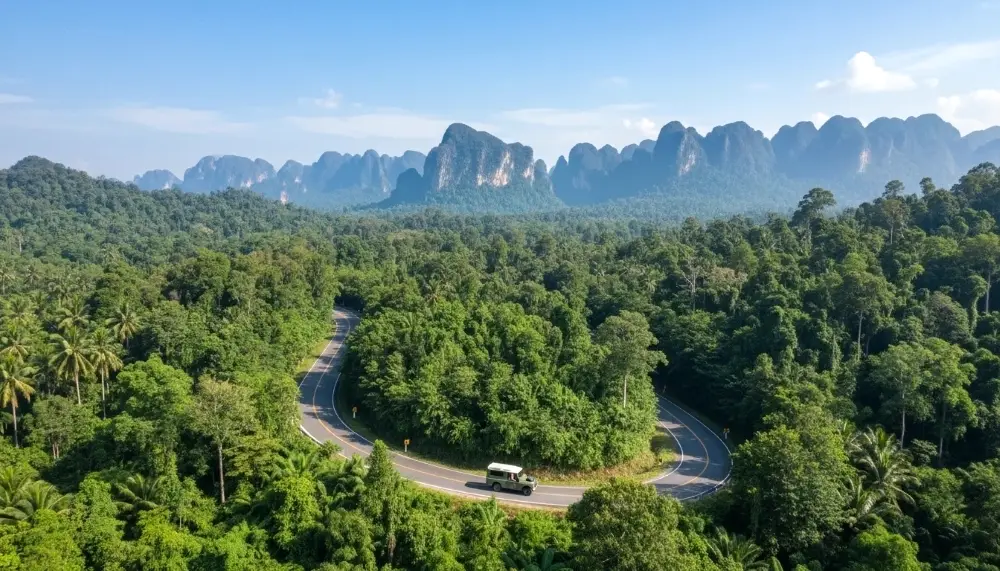
The Mae Hong Son Loop is a 600-kilometre circuit departing from Chiang Mai, traversing over 1,800 curves through the country’s highest mountain terrain. Most travellers complete it in three to five days. The road quality alternates between smooth asphalt and punishing unsealed sections, particularly between Soppong and Pang Mapha in the rainy season (June to October).
The loop passes through Pai (the laid-back valley town that earns its own detour), the Tham Lod cave system, Mae Hong Son town itself with its misty Burmese-style temples, and loops back via the warmer, lower Mae Sariang corridor. A Ford Ranger or Isuzu D-Max handles this route comfortably year-round. Fuel costs average 1,200 to 1,800 THB (~$34 to $51) for the full loop at current diesel prices of around 30 to 32 THB per litre (~$0.86 to $0.91).
Book your Chiang Mai accommodation at the start and end through Agoda for the best local rates. For guided driving tours along this route, Get Your Guide offers half-day and full-day options with local guides from 1,800 THB (~$51) per person.
Trusted Operators: Where to Rent in 2026
The Thai rental market is split between international brands (predictable but expensive) and well-established local operators (better value, English contracts available from the better ones). Here is the honest breakdown:
- Budget / Avis / Hertz (Thailand): Available at Chiang Mai, Bangkok, and Phuket airports. Most expensive at 3,500 to 6,000 THB per day (~$100 to $171) but carry clear international insurance policies and multilingual support. Best for affluent families wanting zero ambiguity.
- North Wheels (Chiang Mai): Consistent local favourite for the Mae Hong Son Loop and Doi Inthanon routes. Hilux and Fortuner available from 1,600 THB per day (~$46). English contracts, roadside assistance line, and good vehicle maintenance reputation.
- Chiang Mai Rent a Car: Strong fleet of Isuzu D-Max and Mitsubishi Pajero Sport. Rates from 1,800 THB per day (~$51) with optional comprehensive cover at 300 to 500 THB per day extra (~$8.60 to $14).
- Thai Rent A Car (nationwide): Mid-range local chain with pick-up points in Bangkok, Chiang Mai, and Phuket. Consistent pricing and clear fuel policies.
For group transfers from airports before picking up your rental, Welcome Pickups provides fixed-price, English-speaking drivers that remove the hassle of haggling after a long flight.

Pick a Thailand eSIM plan that matches
your trip length on Airalo’s global
marketplace. Install before departure
and you’re online the moment you land.
Insurance: What You Must Know Before You Sign
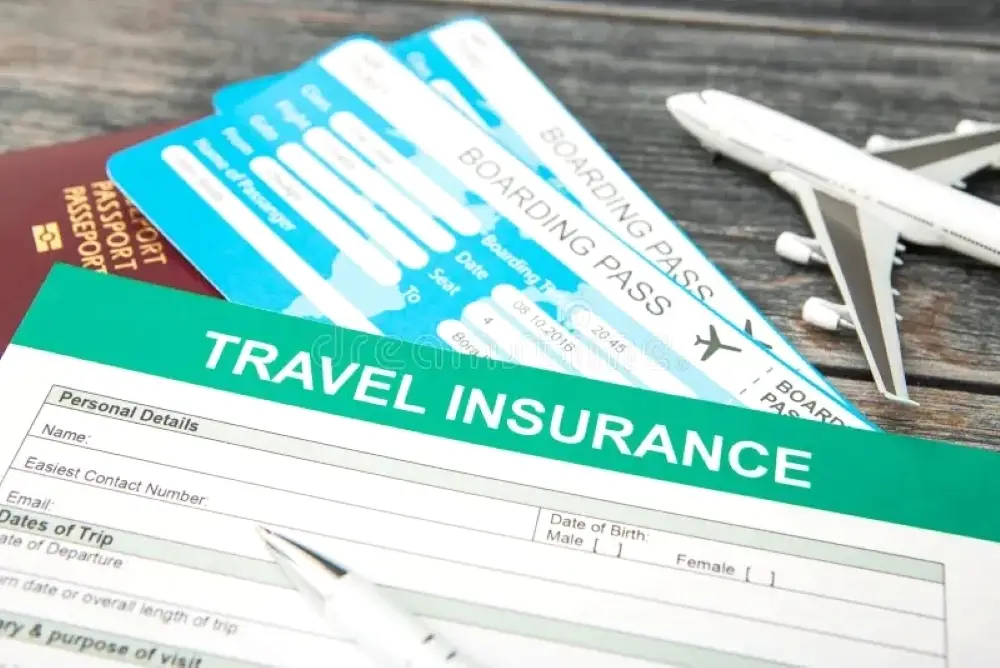
This is where things get serious. Standard Thai car rental insurance, called Class 1, covers third-party damage and theft but typically carries an excess (deductible) of 10,000 to 30,000 THB (~$286 to $857). On a mountain road, that is a real risk.
Your options for reducing or eliminating that exposure:
- Pay for excess waiver on the rental: Typically 300 to 600 THB per day (~$8.60 to $17). Worth every baht on technical terrain.
- Travel insurance with CDW cover: Some comprehensive travel policies cover rental excess. Check before you depart. SafetyWing’s longer-stay plans are worth reviewing for remote workers and expats planning extended driving trips through the north.
- Credit card rental cover: Some premium Visa and Mastercard products offer collision damage waiver. Confirm in writing that Thailand is included and that the vehicle category qualifies.
Never waive a damage walkthrough at collection. Photograph every panel, the roof, and the undercarriage before you drive out. Send the photos to yourself by email as timestamped evidence.

Skip the planning headache in Thailand.
Klook offers day tours, tickets, and
experiences from around $25, with
instant confirmation to your phone.
More Routes Worth the Upgrade to 4×4:
Chiang Rai to Doi Tung: The royal garden complex at the summit sits at 1,500 metres. The road is sealed but steep and narrow, and a 4×4 provides considerably more confidence on the hairpin return. Allow half a day from Chiang Rai town. Entry to Doi Tung Villa and Gardens costs 90 THB (~$2.60) per person.
Khao Yai National Park (Central Thailand): The sealed roads inside the park are fine for 2WD, but the outer tracks leading to the less-visited waterfalls like Haew Narok during wet season genuinely require clearance. A Fortuner or D-Max handles this well. Park entry is 400 THB (~$11.40) for foreigners.
Umphang Wildlife Sanctuary (Tak Province): This is the genuine deep end. The road from Mae Sot to Umphang, known locally as the Sky Highway (Route 1090), has 1,219 curves over 164 kilometres and sees landslides during heavy rain. A Land Cruiser is not overkill here. Accommodation at the end is rustic. Use Booking.com to confirm availability before committing to the drive.

Fuel, Roads & Practical Logistics
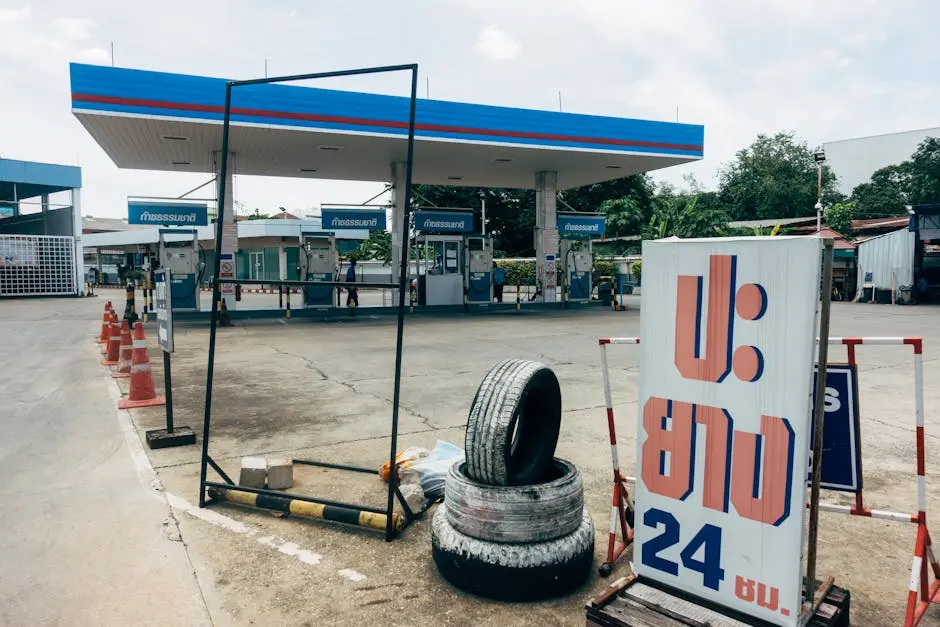
Most rental 4x4s in Thailand run on diesel (B7 or B10 blend). PTT stations are the most widespread and reliable. In remote northern areas, carry an extra 10 to 20 litres in a jerry can as petrol stations can be 80 to 100 kilometres apart on certain Mae Hong Son routes. Diesel costs around 30 to 32 THB per litre (~$0.86 to $0.91) at present.
Google Maps is accurate for main Thai highways, but in the highlands it frequently routes you over tracks that are not passable. Download an offline copy of Maps.me or OsmAnd as a backup before heading into the mountains. Mobile data is essential from the moment you land. Activate your Airalo, Yesim, or Saily eSIM data plan before departure so that ride apps like Grab and map verification processes can receive their SMS codes the moment you clear immigration.
For longer intercity legs (Bangkok to Chiang Mai, for example) where driving the whole way is impractical, use 12GO to book train or bus tickets in advance, particularly around Songkran in April when transport fills weeks ahead. This frees you to fly or take the train for the long straight sections and rent the 4×4 only for the mountain portions of your itinerary, cutting costs significantly.

Stay online in Thailand without breaking
the budget. Saily offers flexible
eSIM plans with no contract and
no roaming charges going home.
Digital Nomads & Remote Workers: Driving and Working
A growing number of remote workers are combining 4×4 travel with the work-from-anywhere lifestyle, spending a week in Pai, a week in a mountain guesthouse above Chiang Rai, and moving on. The freedom is genuine. The Wi-Fi is not always.
Cafes in Pai, Chiang Mai, and Mae Hong Son town all offer reasonable connectivity. In very remote areas, your eSIM mobile data is your only option. Use NordVPN on every public network: Thailand is broadly safe for digital work, but cafe Wi-Fi in tourist towns carries the same interception risks as any popular destination. A NordVPN subscription pays for itself the first time you need to access home banking or a client VPN from a shared network.
For stays exceeding four weeks, consider SafetyWing’s Nomad Insurance. It covers emergency medical treatment in Thailand, including in the smaller provincial hospitals near the Myanmar border areas, where a road accident far from Chiang Mai could otherwise be very expensive.

Tips to Avoid Common Rental Traps

Thailand’s rental industry is generally honest but not without its pitfalls. These are the ones worth knowing before you hand over your passport copy:
- Windscreen damage clauses: Many budget operators exclude stone chips from basic cover. Confirm in writing whether glass is included or pay the excess waiver.
- Tyre damage: Off-road tyre blowouts are frequently excluded from standard cover. Ask explicitly.
- Cross-border restrictions: Most Thai rental contracts prohibit taking the vehicle into Myanmar, Laos, or Cambodia. Violations void your insurance entirely.
- Fuel policy: Confirm whether the vehicle is returned full-to-full or whether a pre-paid fuel option applies. Full-to-full is always cheaper.
- Flight delay protection: If your arrival is delayed and you miss the rental collection window, AirHelp can assist with compensation claims against the airline for consequential costs.

Skip the airport SIM queue in Thailand.
Yesim’s eSIM activates before takeoff
so you’re online the second your
plane touches the tarmac.
Frequently Asked Questions:
Can I rent a 4×4 in Thailand with just my home country driving licence?
Legally, no. Foreign nationals require an International Driving Permit (IDP) alongside their home licence to drive in Thailand. Rental operators increasingly check for this at collection. Without an IDP, your insurance is void in any incident. Obtain one from your national motoring association before travelling.
How much does it cost to rent a 4×4 in Thailand per day?
Costs range from 1,400 THB (~$40) per day for a basic Suzuki Jimny from a local operator up to 6,000 THB (~$171) per day for a fully-specced Toyota Land Cruiser from an international chain. A mid-range Toyota Fortuner with comprehensive insurance sits at roughly 3,000 to 3,500 THB per day (~$86 to $100) from a reputable local rental company in Chiang Mai.
Do I need a 4×4 for the Mae Hong Son Loop?
A 4×4 pickup (Toyota Hilux, Isuzu D-Max) is strongly recommended, particularly between Soppong and Pang Mapha and during the wet season from June to October. In dry season (November to April), a high-clearance 2WD can manage the main loop road, but gravel sections are unpredictable. The peace of mind and traction of a proper 4×4 are worth the small daily premium.
Can I take a Thai rental car into Laos, Myanmar, or Cambodia?
Almost universally, no. The vast majority of Thai rental contracts explicitly prohibit cross-border travel. Crossing into a neighbouring country with a Thai rental vehicle voids your insurance and may result in the vehicle being impounded. If you need cross-border transport, arrange a separate vehicle on the other side, booked through 12GO or a local operator.
What is the best vehicle for driving northern Thailand?
For the Mae Hong Son Loop and Doi Inthanon area, a Ford Ranger, Isuzu D-Max, or Toyota Hilux (all with 4WD engaged on gravel) performs very well at 1,800 to 2,500 THB per day (~$51 to $71). For the Umphang Sky Highway or remote national park tracks, step up to a Fortuner or Land Cruiser. For solo travellers on tighter budgets, a Suzuki Jimny is surprisingly capable and easier to park on narrow mountain roads.
Where are the best places to rent a 4×4 in Thailand?
Chiang Mai is the best base for renting a 4×4, with the widest selection of operators, most competitive prices, and direct access to the northern routes. Reputable local operators include North Wheels and Chiang Mai Rent a Car. International chains (Budget, Avis, Hertz) operate from Chiang Mai Airport if you prefer a standardised contract. Rates in Chiang Mai are typically 15 to 25 percent cheaper than Bangkok airport locations.
Is insurance included in Thai 4×4 rental prices?
Basic third-party liability (Class 3 or Class 2+) is usually included. Comprehensive Class 1 cover, which protects your own vehicle against accident damage, is offered as an optional upgrade. Expect to pay 300 to 600 THB per day (~$8.60 to $17) to add full Class 1 cover with a reduced excess. Always pay for this upgrade on mountain or off-road routes.
What fuel do Thai rental 4x4s use?
The majority of 4×4 pickups and SUVs in Thai rental fleets run on diesel (B7 or B10 blend). Diesel is widely available at PTT, Bangchak, and Shell stations throughout northern Thailand. Current prices sit around 30 to 32 THB per litre (~$0.86 to $0.91). In remote areas, carry a spare 10 to 20 litres as stations can be far apart on Mae Hong Son and Umphang routes.
Are roads in northern Thailand safe to drive at night?
Night driving in rural northern Thailand carries real risks: unmarked curves, unlit road edges, livestock on the road, and fog at altitude. After dark on mountain routes like the Mae Hong Son Loop or the Umphang highway, the risks increase significantly. Plan to be at your destination before sunset. Roads around Chiang Mai and Chiang Rai town centres are well-lit and safe at night.
Do I need a 4×4 for Khao Yai National Park?
For the sealed roads inside Khao Yai, a standard 2WD is sufficient. However, if you plan to explore the outer gravel tracks (particularly near the Haew Narok waterfall trail) during or after the rainy season, a 4×4 with decent ground clearance provides genuine advantage. Park entry costs 400 THB (~$11.40) per person for foreigners. Book accommodation near the park via Agoda before arriving, as options inside the park fill quickly.