Choui Fong Tea Plantation: Chiang Rai’s Best High-End Cafe Escape
This site contains affiliate links. We may earn a commission at no extra cost to you.
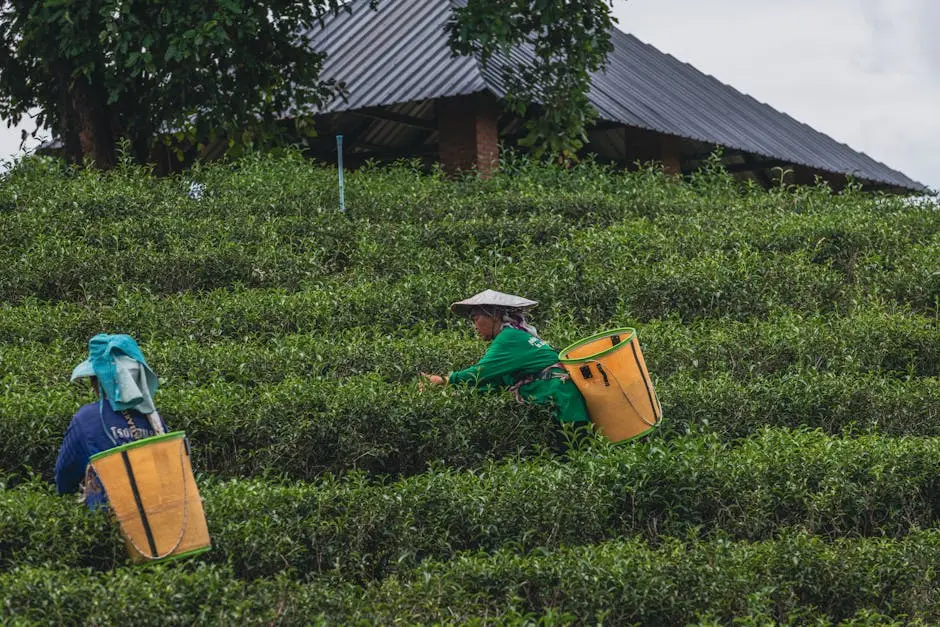
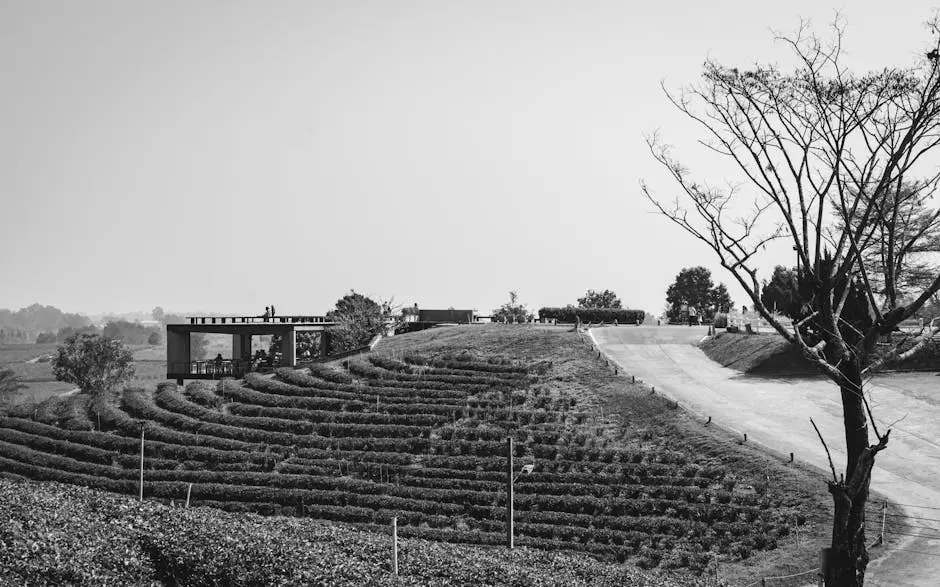
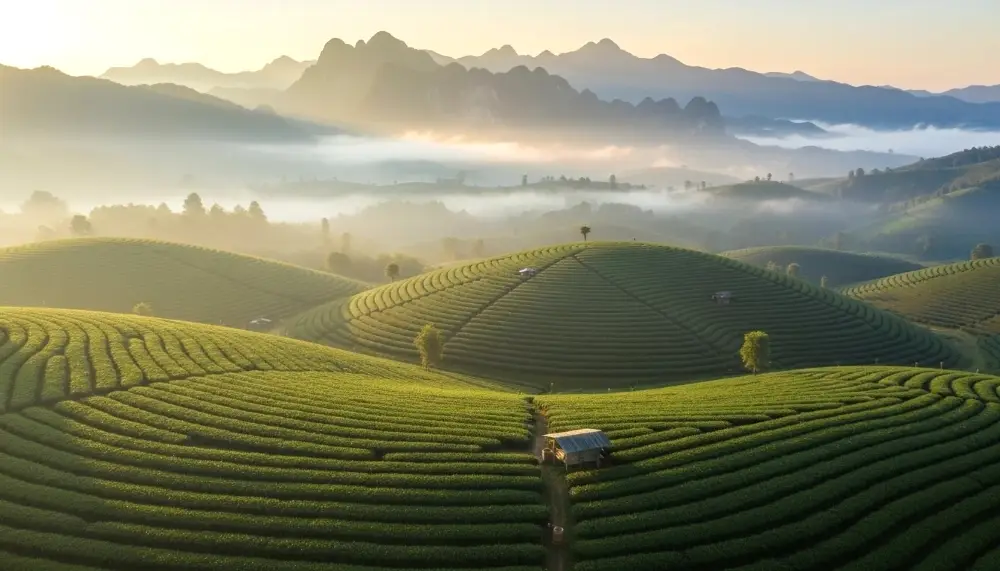
There is a specific moment on the road up to Choui Fong when the tree cover breaks and the hillside opens up in front of you: terrace upon terrace of deep emerald tea plants stepping down the mountain in perfect, geometric rows, the whole scene framed by the jagged Tenasserim peaks behind and a sky that in November turns almost impossibly blue. Most visitors stop the car at this point. Some never quite get over it.
Choui Fong Tea Plantation in Mae Chan District is Chiang Rai province’s most famous plantation destination, and the numbers back that reputation. Operated by Choui Fong Corporation, the largest tea producer in Chiang Rai, the estate covers over 1,000 rai (approximately 1.6 square kilometres) of hillside terrain across Mae Chan and Mae Fa Luang districts. It has appeared as a backdrop in Thai television dramas and national tea advertisements. None of that fully captures the experience of actually being there. This guide covers the logistics, the costs, the food and drink worth ordering, and the decisions that separate a genuinely rewarding visit from a rushed selfie stop.
The Quick Summary:
Location: Pa Sang, Mae Chan District, Chiang Rai 57110. Approximately 40 kilometres north of Chiang Rai city centre, roughly 45 to 60 minutes by road.
Entrance Fee: Free. No ticket or booking required to enter the plantation grounds.
Opening Hours: Daily, 8:30am to 5:30pm. Earlier arrival is strongly recommended for cooler conditions, fewer visitors, and the chance to see leaf pickers working the lower terraces.
Cafe Price Range: 50 to 250 THB (~$1.40 to $7.00 USD) per item. A comprehensive visit including drinks and a slice of the celebrated crepe cake costs around 200 to 350 THB (~$5.60 to $9.80 USD) per person.
Payment: Cash is strongly advised. Multiple visitor accounts confirm that card facilities are not reliably available at the cafe or shop. Carry Thai Baht in small denominations before you leave Chiang Rai city.
Best Season: November through February. The cool season brings clear skies, lower humidity, and the vibrant green flush of new growth on the tea plants that makes the terraces at their most photogenic. Late October, at the end of the rainy season, is also worth considering when the hillside is at its most intensely saturated green.

Compare hotel prices across Chiang Rai’s
best areas and book with confidence.
Filter by budget, location, or score
to find the right stay for your trip.
Getting There: Your Transport Options Compared:
Choui Fong sits roughly 40 kilometres north of Chiang Rai city, in the hills above Mae Chan District. There is no public transport that runs directly to the plantation, so independent travel requires either a hired vehicle or a pre-arranged tour. The road is well-maintained and fully paved: the winding section from Pa Sang Junction up through the plantation approach is scenic rather than technically challenging, and the signage for Choui Fong is clear once you turn off Highway 1.
Private car or scooter rental is the most flexible option. From Chiang Rai city, take Highway 1 (Phahonyothin Road) northbound to Mae Chan District, turn at Pa Sang Junction following signs for Doi Tung and Mae Salong, drive approximately 7 kilometres, then follow the Choui Fong signs for a further 3 kilometres to the entrance. The total drive from the city takes 45 to 60 minutes. A rental car costs approximately 900 to 1,200 THB (~$25 to $34 USD) per day from Chiang Rai; a scooter costs 200 to 350 THB (~$5.60 to $9.80 USD). A car is considerably more comfortable in the midday heat.
Grab or private taxi from Chiang Rai city to the plantation is straightforward if you want a door-to-door option without driving. Agree a return fare or a wait time with the driver before departing: the plantation itself has no dedicated taxi rank. Expect to pay 400 to 600 THB (~$11 to $17 USD) each way for a private hire. Activate your Airalo, Yesim, or Saily eSIM before you land at Chiang Rai Airport so Grab is ready at the baggage carousel rather than set up in a tuk-tuk queue.
Guided day tours are the most practical choice for visitors who want Choui Fong included as part of a wider Chiang Rai itinerary. Most operators bundle it alongside Doi Tung, Mae Salong, or the White Temple into a structured day trip. Get Your Guide and Klook both list well-reviewed full-day Chiang Rai excursions that include plantation stops with English-speaking guides. For first-time visitors to northern Thailand unfamiliar with the road network, this approach removes all logistical friction and adds context to the landscape.


Lock in top-rated Chiang Rai tours with
GetYourGuide’s free cancellation
up to 24 hours before. Reserve now
and pay later if dates aren’t set.
The Tea House Architecture: Why It Matters:
What surprises most visitors on arrival is not the scale of the plantation (expected) but the quality of the architecture sitting at its summit. The main Choui Fong building is a contemporary, multi-level structure with clean lines, full-height glass facades, and a flat rooftop observation deck that frames the descending terraces like a living landscape painting. It is the kind of building that feels designed by someone who understood exactly what the view deserved, and then had the restraint to step back and let it speak.
The interior is modern and well-appointed: large windows along the full length of the cafe and shop floor ensure that every seat has either a direct or angled view across the fields. The terrace extends outward from the main building with seating areas set at different elevations, each offering a slightly different perspective on the terraced rows below. In the cool season morning light, when low mist sits in the valley between the ridgelines, the view from the upper terrace is among the most arresting in northern Thailand.
The building has been specifically noted in travel writing and architecture features for attracting visitors with a design interest alongside the tea tourism angle. Tour itineraries from Chiang Rai regularly describe it as “attractive especially for architects,” which is an understatement: the integration of the structure into its hillside setting demonstrates a spatial intelligence that most tourist infrastructure in Thailand never approaches. The rooftop, accessible to all visitors, is the best single viewpoint on the property and is worth spending time on before descending into the cafe below.

Airalo covers Chiang Rai with a range of
data plans from days to a month.
No physical SIM swap, no roaming
bill shock when you get back home.
The Cafe: What to Order and What It Costs:
The cafe menu runs from 50 to 250 THB (~$1.40 to $7.00 USD) per item, which for a hilltop venue with extraordinary views is genuinely reasonable. The drink selection is built around the plantation’s own teas: hot and iced options span green tea, oolong, Ti Kuan Yim, and black tea varieties, all grown and processed on the estate. The matcha-based drinks are the most requested, and rightly so: the green tea here is produced at altitude, which slows the growth of the leaves and concentrates their flavour in ways that commercial grade supermarket matcha cannot replicate.
The food menu is the real revelation for visitors who arrive expecting only drinks. Choui Fong’s crepe cakes have acquired a reputation across northern Thailand that extends well beyond the plantation itself. The Thai tea crepe cake and the green tea crepe cake are the most ordered items, and the Choui Fong Cheesecake has its own dedicated following. A slice of any of these runs to around 150 to 200 THB (~$4.20 to $5.60 USD). The matcha crepe cake in particular is worth prioritising: the layers are thin, precisely stacked, and carry a clean, grassy bitterness that balances the cream between the layers without becoming cloying.
For a two-person visit covering two drinks and two slices of cake, budget approximately 500 to 700 THB (~$14 to $19.60 USD) in total. This is not cheap by Thai street food standards, but it is genuinely reasonable for what amounts to a premium cafe experience in a world-class setting. The restaurant section serves fuller meals if you are staying for lunch, with pricing at the higher end of the 200 to 250 THB range for main dishes.
One practical note that appears consistently in visitor accounts: bring cash. The cafe and shop do not reliably accept card payments. Withdraw Thai Baht from an ATM in Chiang Rai city before departure. Wise’s debit card gives consistently strong rates at Thai ATMs and is the most efficient option for travellers managing multiple currency withdrawals across a northern Thailand trip.

Saily’s Chiang Rai eSIM costs less than
most tourist SIMs charge per day.
Easy install, transparent pricing,
and solid NordVPN infrastructure.
The Tea Itself: What Choui Fong Grows and Why It Is Different:
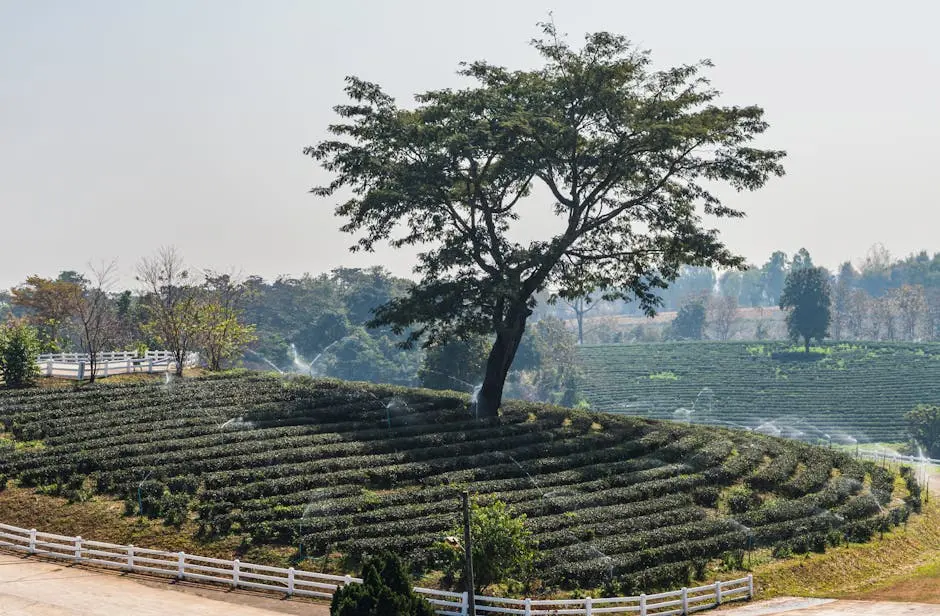
Choui Fong Corporation has been growing tea in Chiang Rai since 1977, making it one of the pioneer estates in Thailand’s northern highlands. The plantation sits at altitude in the Mae Chan hills, and the combination of elevation, cool-season temperatures, and the slow drainage of the terraced hillside creates conditions that produce genuinely distinctive tea. The Seashore Paspalum soil profile of the upper terraces is well-suited to both green and oolong varieties.
The estate produces green tea, black tea, oolong, and the prized Ti Kuan Yim variety, which is a lightly oxidised oolong with a floral, orchid-adjacent character. The differences between the varieties are meaningful rather than cosmetic: a Ti Kuan Yim brewed at the correct temperature in the tea house carries a fragrance and depth that the same leaf processed differently simply does not. The on-site shop sells packaged versions of all varieties at prices ranging from 150 to 800 THB (~$4.20 to $22.40 USD) depending on grade and weight, and they are among the more reliable tea souvenirs you can take home from northern Thailand.
The terraced growing method is worth understanding before you walk the fields. The stepped terraces, similar to rice terrace architecture seen further north in Chiang Rai province, serve a dual agricultural purpose: they slow the movement of rainwater down the hillside, preventing soil erosion during the monsoon months, while also creating the microclimatic variation between upper and lower rows that gives different harvest batches their distinct flavour profiles. Walking the lower paths between the rows gives a sense of the scale that no photograph from the viewing deck fully captures.

Book Chiang Rai day trips, attractions,
and activities in one place. Check
real reviews and lock in your spot
before the popular slots go.
Choui Fong vs. Singha Park: Which Should You Prioritise?
Chiang Rai has two main plantation destinations that often appear on the same itinerary. Here is how they compare for visitors deciding how to structure their time:
| Feature | Choui Fong Tea Plantation | Singha Park |
|---|---|---|
| Distance from Chiang Rai | ~40 km (45-60 min) | ~5 km (10-15 min) |
| Entrance Fee | Free | Free (activities extra) |
| Cafe Quality | High, hilltop views | Good, flat setting |
| Architecture | Contemporary, award-worthy | Resort/park style |
| Scenic Impact | Very high (mountain setting) | Moderate (flat fields) |
| Best For | Photography, cafe experience | Families, cycling, animals |
| Payment at Cafe | Cash preferred | Card accepted |
The honest answer is that both are worth visiting if your time in Chiang Rai extends to two or more days. Singha Park is convenient and family-friendly with more activities on offer. Choui Fong is architecturally and scenically in a different category. For visitors with a single day and a choice to make, Choui Fong is the one you will still be describing months later.
Where to Stay: Chiang Rai Accommodation for the Plantation Visit:
Most visitors to Choui Fong base themselves in Chiang Rai city, which has a strong and varied accommodation range from budget guesthouses to well-appointed boutique hotels. The city centre puts you 40 kilometres from the plantation, close to the Night Bazaar, the White Temple day-trip corridor, and Chiang Rai Airport (CEI). Agoda and Booking.com both carry competitive rates on the city’s most popular properties, and booking two to three weeks ahead during the November to February peak season is recommended to secure preferred locations.
For visitors specifically wanting proximity to the Mae Chan highlands, there are a small number of boutique guesthouses and eco-lodges in the Mae Chan and Mae Salong areas that position you closer to Choui Fong and the surrounding hill country. These suit travellers using the plantation as one stop on a longer northern loop rather than as a day trip from the city. Agoda‘s map view is the easiest tool for identifying accommodation within the Mae Chan District specifically.
Chiang Rai is also a natural staging point for onward travel to the Golden Triangle, Mae Sai, or across to Chiang Mai. If your itinerary includes overland routes to any of these destinations, 12GO is the most reliable platform for booking buses, shared vans, and domestic flights in advance. During Chinese New Year and Songkran, seats on the Chiang Rai to Chiang Mai corridor sell out ahead of schedule: lock in your route early if your dates overlap with either of these periods.
For arrivals at Chiang Rai Airport by group or with young children, Welcome Pickups offers pre-arranged fixed-price transfers directly to your hotel without the negotiation that often meets arrivals at smaller regional terminals.
Practical Tips for Getting the Most From Your Visit:

Arrive early. The plantation opens at 8:30am and the first two hours offer the most rewarding conditions: cooler air, softer morning light across the terraces, and a realistic chance of seeing the leaf pickers working the lower rows. By 10am on weekends and holidays the car park fills quickly and the terrace seating becomes contested. A 9am arrival is the sweet spot between access and atmosphere.
Wear sensible shoes. The terraced paths between the tea rows are uneven compacted earth, particularly after rain. Sandals are fine for the cafe and terrace; closed shoes or trail footwear make the walk down through the plantation considerably more comfortable and prevent the kind of impromptu mud experience that ruins an afternoon.
Bring a light layer. Even in high season, the altitude of the Mae Chan hills means early mornings can be genuinely cool compared to Chiang Rai city or Bangkok. A light jacket or long-sleeved shirt is useful until around 10am, after which you will likely want to remove it. The cool season months of December and January can produce genuinely cold mornings: pack accordingly.
Walk the lower terraces before the cafe. Most visitors head straight to the building on arrival. The better approach is to walk down through the plantation first while the light is low and the rows are still quiet, then reward yourself with a drink and a cake at the cafe once you have properly earned the view from the terrace. The sequence makes the whole visit feel more intentional.
Buy tea to take home, but selectively. The on-site shop stocks the full Choui Fong range at prices that are competitive with what you would pay for equivalent quality anywhere else. The vacuum-packed Ti Kuan Yim and the packaged green tea grades travel well and make genuinely good gifts for people who drink tea seriously. Avoid the tourist-adjacent branded items and focus on the tea itself.
Use mobile data confidently. The plantation is in a highland area with variable but generally workable signal. Having an active eSIM via Airalo or Yesim means GPS navigation works reliably on the road up from the junction, maps load without delays, and you are not dependent on the plantation Wi-Fi for anything sensitive. NordVPN is worth running on any public network if you need to access banking or booking platforms during the trip.

Maps, Grab, translation apps all need
data in Chiang Rai. Yesim’s eSIM installs
in a minute and gives you reliable
5G from the moment you arrive.
Managing Expectations Honestly:
A candid note that improves the visit: Choui Fong is primarily a commercial operation, and its approach to visitor experience reflects that. There are no formal guided tours of the plantation or processing facilities. Signage in the fields is minimal. If you arrive expecting a structured tea education experience with interpretive displays and production demonstrations, you will likely feel the gap between expectation and reality.
What it does exceptionally well is the setting, the cafe quality, and the atmosphere of calm that the hilltop location generates naturally. Visitors who arrive with curiosity and no fixed agenda, who are happy to wander, sit quietly with a well-made drink, and spend an hour letting the landscape work on them, consistently leave satisfied. Those who rush through for photographs without investing any time in the tea or the space tend to find it underwhelming.
For visitors who specifically want the tea education component, a guided day tour via Klook or Get Your Guide typically pairs Choui Fong with a local guide who provides the cultural and agricultural context that the plantation itself does not formally offer. This fills the knowledge gap effectively and adds genuine depth to a visit that would otherwise be primarily visual.
For long-stay visitors and digital nomads based in Chiang Rai, Choui Fong works as a regular escape rather than a single tick on an itinerary. The drive up from the city through Mae Chan is pleasant enough to justify the journey, and the cafe is quiet enough on weekday mornings to function as a working backdrop for a few hours. For anyone whose work is screen-based, a morning spent at altitude with good tea and an exceptional view is not a bad way to reframe a difficult deadline. SafetyWing Nomad Insurance is worth having active for longer northern Thailand stays: the highlands offer plenty of opportunities for outdoor activity that standard travel insurance may not adequately cover.
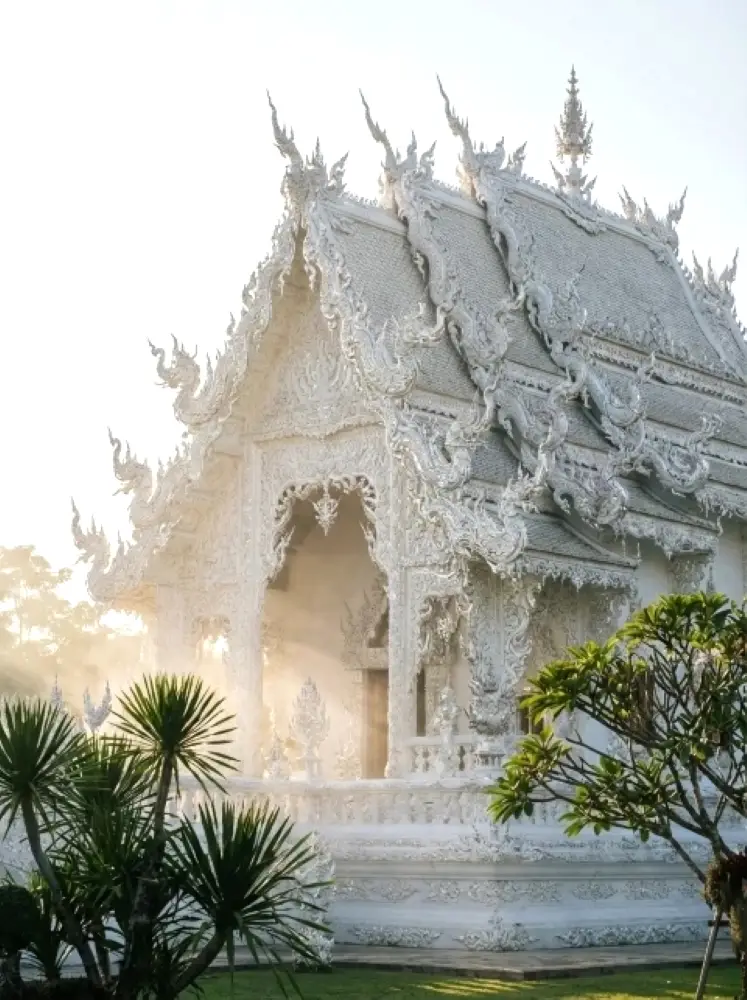
The Bigger Picture: Choui Fong as Part of a Northern Chiang Rai Loop:
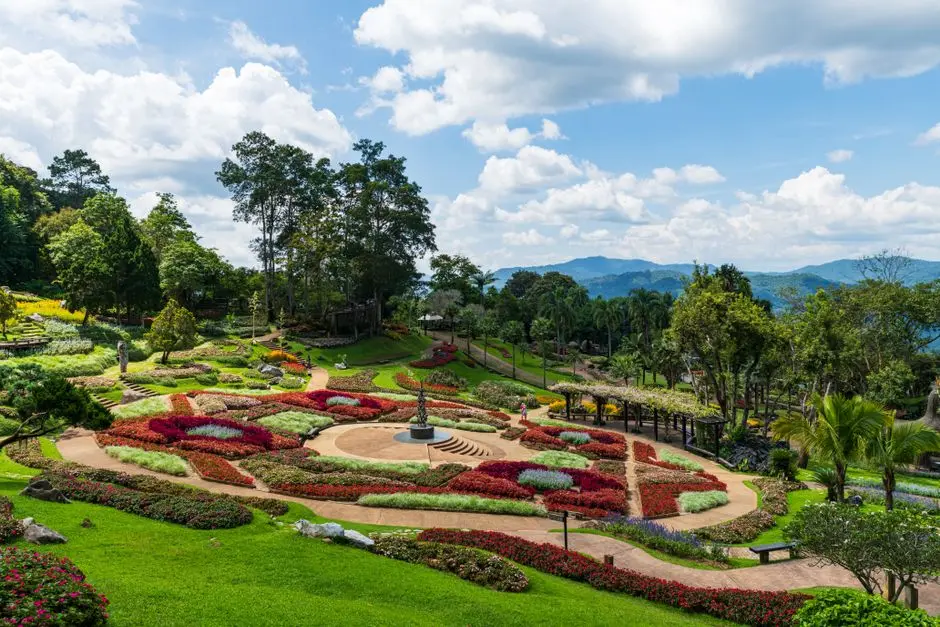
Choui Fong makes the most sense as a morning stop on a northward day trip that continues to either Doi Tung or Mae Salong, rather than as a standalone destination requiring a 40-kilometre return journey purely for a cafe visit. The geography supports this naturally: the plantation sits on the Pa Sang road that leads directly up toward the higher terrain of the Mae Salong tea hills and the Doi Tung Royal Development Project.
A well-paced northern loop from Chiang Rai might run: early morning departure, Choui Fong at 9am for an hour and a half including the terrace walk and a drink, then continue north and upward to Mae Salong for lunch in the Yunnanese market town, before looping back via the Doi Tung viewpoint in the afternoon. This structure uses a full day well, keeps the driving manageable, and delivers three genuinely distinct experiences: plantation serenity, mountain market culture, and royal botanical landscape.
Renting a car for this loop rather than relying on tour transport gives you the flexibility to linger where you want and move on when the mood shifts. 12GO can be useful for cross-referencing car rental options available from Chiang Rai, particularly for visitors wanting to pick up a vehicle on arrival at the airport and return it at tour end. Agoda‘s accommodation search filtered to the Mae Chan District or Mae Salong area is worth checking if an overnight stay in the highlands appeals more than a day-trip return.
Whichever way you approach it, Choui Fong rewards the effort of getting there. The terraces, the architecture, the quality of what comes out of the kitchen, and the rare satisfaction of sitting at altitude with excellent tea and a view that feels genuinely earned: this is the kind of place that defines what a slow, considered trip through northern Thailand can feel like at its best.
Frequently Asked Questions:
Is there an entrance fee at Choui Fong Tea Plantation?
No. Entry to the plantation grounds is completely free. Costs arise only if you purchase food and drinks at the cafe (50 to 250 THB / ~$1.40 to $7.00 USD per item) or buy packaged tea from the shop. Bring cash as card payment is not reliably available.
What are the opening hours at Choui Fong Tea Plantation?
The plantation is open daily from 8:30am to 5:30pm, including weekends and public holidays. Arriving between 8:30am and 10:00am gives the best conditions: cooler temperatures, softer light for photography, smaller crowds, and the chance to see leaf pickers working the lower rows.
How do I get to Choui Fong Tea Plantation from Chiang Rai?
Take Highway 1 northbound to Mae Chan District. At Pa Sang Junction, turn toward Doi Tung and Mae Salong. After approximately 7 kilometres follow the Choui Fong signs for a further 3 kilometres to the entrance. The total drive from Chiang Rai city takes 45 to 60 minutes. No public transport runs directly to the plantation: hire a car, scooter, or private taxi, or join a guided day tour via Klook or Get Your Guide.
What is the best thing to order at the Choui Fong cafe?
The green tea and Thai tea crepe cakes are the signature items and consistently well-reviewed. The matcha-based iced drinks and hot Ti Kuan Yim oolong are the recommended beverages. A drink and a slice of cake runs to approximately 250 to 350 THB (~$7 to $9.80 USD) per person. Cash only: bring Thai Baht before leaving Chiang Rai city.
Can I walk through the tea fields at Choui Fong?
Yes. Paths run between the terraced rows and are accessible to visitors. The terrain is uneven compacted earth, especially after rain, so closed shoes or trail footwear are recommended over sandals for the field walk. The lower terraces offer the best immersive experience of the scale and geometry of the plantation.
What tea varieties does Choui Fong produce?
The plantation grows green tea, black tea, oolong, and Ti Kuan Yim (a lightly oxidised oolong with floral character). All are grown at altitude in the Mae Chan hills and available to taste in the cafe or purchase in the on-site shop. Packaged teas range from 150 to 800 THB (~$4.20 to $22.40 USD) depending on grade and weight.
Is Choui Fong Tea Plantation suitable for families with young children?
Yes, with some practical awareness. The cafe and terrace are accessible and family-friendly. The field paths require reasonable footwear for children. There are no formal activities or play areas specifically for young children. For families wanting a more activity-focused plantation visit closer to Chiang Rai city, Singha Park is worth considering alongside or instead of Choui Fong.
When is the best time of year to visit Choui Fong Tea Plantation?
November through February offers the most comfortable and photogenic conditions: clear skies, cool mornings, and vivid green tea plants during the cool-season flush. Late October at the end of the rainy season is also excellent for intensely saturated colours. April and May are the hottest and driest months; the plantation is open but conditions are less pleasant for walking the fields.
Are there guided tours available at Choui Fong Tea Plantation?
The plantation itself does not currently offer formal guided tours of the fields or processing facilities. Visitors explore independently. For structured context about tea cultivation and the broader Chiang Rai highlands, booking a guided day tour through Klook or Get Your Guide pairs Choui Fong with a local English-speaking guide who provides the educational layer that the site itself does not formally offer.
What accommodation is best for visiting Choui Fong Tea Plantation?
Most visitors base themselves in Chiang Rai city, which is 40 kilometres from the plantation and well-served by hotels across all budget levels. Agoda and Booking.com both carry competitive rates and wide selection. For visitors wanting proximity to the Mae Chan highlands rather than the city, a small number of boutique guesthouses in the Mae Chan and Mae Salong area position you closer to the plantation for early-morning visits.