Mountain Biking Trails in Chiang Mai That Local Riders Actually Use
This site contains affiliate links. We may earn a commission at no extra cost to you.
Chiang Mai sits in the foothills of the last ridge of the Himalayas, and every kilometre of that geography translates directly into riding. Dense jungle descents, loamy hilltribe singletrack, volcanic rock gardens, and misty morning flow trails are all within a short drive of a city that also happens to have outstanding food, affordable accommodation, and a thriving local riding community. This is not a tourist brochure destination that happens to have a few dirt tracks. This is a proper trail town. All prices in this guide use a rate of 35 THB to $1 USD.
The dry season from November to February is the sweet spot. Trails are fast, the air is cool, and Doi Suthep looks like a film set at golden hour. Avoid February to mid-April when crop burning pushes PM2.5 levels between 150 and 300 µg/m³ and the mountain views disappear entirely. Locals ride year-round, but if you have flexibility, time it right.
Quick Answer: Best Trails For Each Rider Type
Whether you are renting a hardtail for the afternoon or travelling with your own enduro rig, the Chiang Mai trail network has a trail for your ability level:
- Beginners and families: Huay Tung Tao Lake Loop and Sticky Waterfall Cross-Country
- Intermediate riders: Bamboo Trail on Doi Suthep
- Advanced downhill: Old Smugglers Route and Doi Suthep Summit Descent
- Remote all-mountain: Mae Sa Valley and Chiang Dao
- Cross-country and gravel: Samoeng Loop and Ob Khan National Park
Budgeting: A self-guided day including bike hire, park entry, and street food costs 700 to 1,200 THB (~$20 to $34). A fully guided downhill tour with transport and lunch runs 2,500 to 4,500 THB (~$71 to $129) per person.

Book Chiang Mai day trips, attractions,
and activities in one place. Check
real reviews and lock in your spot
before the popular slots go.
Trail Comparison: Cost, Difficulty and Best Season
| Trail | Difficulty | Self-Guided Cost (THB) | Guided Tour (THB) | Best Season |
|---|---|---|---|---|
| Bamboo Trail, Doi Suthep | Intermediate (Blue) | 350 + 250 park entry (~$17) | 2,500 to 3,500 (~$71 to $100) | Nov to Feb |
| Doi Suthep Summit Descent | Advanced (Black) | 350 + 250 park entry (~$17) | 3,500 to 4,500 (~$100 to $129) | Nov to Feb |
| Huay Tung Tao Loop | Beginner (Green) | 350 + 100 lake entry (~$13) | 1,500 to 2,000 (~$43 to $57) | Year-round |
| Mae Sa Valley | Intermediate to Advanced | 350 + transport (~$20 to $25) | 3,000 to 4,500 (~$86 to $129) | Oct to Mar |
| Chiang Dao Remote Trails | Advanced | Guide recommended (~$86+) | 3,000 to 5,000+ (~$86 to $143+) | Nov to Jan |
| Samoeng Loop (Gravel / XC) | Moderate Endurance | 350 bike + snacks (~$15) | 2,000 to 3,000 (~$57 to $86) | Nov to Feb |
The Bamboo Trail: Doi Suthep’s Most Popular Run

The Bamboo Trail is the trail that local riders point every visitor towards first, and for good reason. Starting a few bends below Bhubing Palace on Sriwichai Road and ending near Wat Pong Noi Temple close to Canal Road, it is a 9-kilometre run of fast, flowy singletrack with enough roots, natural berms, rock sections, and small jumps to hold the attention of an experienced rider without terrifying a confident beginner.
The soil transitions from loamy and forgiving at the top to rocky and loose near the bottom, so technique matters on the lower section. Watch for low-hanging bamboo, particularly after rain. The trail is medium difficulty and is the benchmark introduction to Doi Suthep riding. Bike hire is 350 THB (~$10) per day from reputable local operators. The Doi Suthep-Pui National Park entry fee has been 250 THB (~$7.15) per person since October 2025. Carry small cash for the gate.
- Start point: Sriwichai Road, below Bhubing Palace
- End point: Wat Pong Noi Temple near Canal Road
- Distance: approximately 9 km, all downhill singletrack
- Difficulty: medium, suitable for confident beginners upwards

Lock in top-rated Chiang Mai tours with
GetYourGuide’s free cancellation
up to 24 hours before. Reserve now
and pay later if dates aren’t set.
The Summit Descent: Doi Suthep at Its Most Epic
If the Bamboo Trail is the warm-up, the full summit descent is the main event. Starting at 1,550 metres at the Doi Suthep summit and dropping all the way to Lake Huay Tueng Thao at 370 metres, this is a 20-plus kilometre ride through jungle canopy, Hmong hilltribe villages, and highland coffee plantations.
The ride runs through rugged jeep track in places, with genuine singletrack sections earning every descending metre. Views over the Mae Ping Valley are spectacular on clear days. Most riders take this as a guided tour through operators like No.1 Chiang Mai, with packages bookable through Get Your Guide or Klook starting from around 2,500 THB (~$71) per person, including transport to the summit, a professional guide, park fees, and Thai lunch at the lake. Activation of your Airalo, Yesim, or Saily eSIM before departure is worth doing here as Grab signal at the trailhead is unreliable and you will need data for pickup at the lake finish.
Huay Tung Tao: Where Families and Beginners Start

The reservoir trails around Huay Tung Tao Lake sit roughly 12 kilometres northwest of the old city and represent the most accessible entry point for families travelling with younger riders or anyone picking up a mountain bike for the first time. Dirt tracks ring the lake and push into light forest, the gradients are forgiving, and the whole circuit offers a relaxed half-day out.
Lake entry costs 100 THB (~$2.85) per person. Bamboo hut restaurants around the waterfront serve grilled fish and cold drinks for 80 to 150 THB (~$2.30 to $4.30) per dish, making this an ideal base for a long, casual afternoon. Bike hire from Chiang Mai city operators is 350 THB (~$10) per day. Grab the bike delivered to your guesthouse for an extra 300 THB (~$8.57) covering up to five bikes. Check Agoda or Booking.com for accommodation in the Mae Rim corridor if you want to be based close to this area.

Airalo covers Chiang Mai with a range of
data plans from days to a month.
No physical SIM swap, no roaming
bill shock when you get back home.
Mae Sa Valley: The Local Favourite for Varied Terrain
Mae Sa Valley, running north from the Mae Rim junction, is the trail zone that local riders keep coming back to. The terrain here offers something genuinely different on every visit: flowy descents one trail over from a rock garden, technical rooted singletrack transitioning into a wide highland jeep road with coffee shop stops in between. The valley sits roughly 20 to 25 kilometres from the old city.
Intermediate riders will find the terrain challenging enough to develop skills without the commitment of a full Doi Suthep commitment. Advanced riders can string together longer lines. Several small hill tribe resorts along the valley road offer overnight accommodation from 800 to 1,800 THB (~$23 to $51) per night, making a two-day riding trip an easy and affordable plan. Post-ride coffee at the highland cafes costs 80 to 150 THB (~$2.30 to $4.30). Use NordVPN on the cafe Wi-Fi if you are catching up on work or accessing home banking.
Chiang Dao: Advanced Riders Only, Worth Every Kilometre
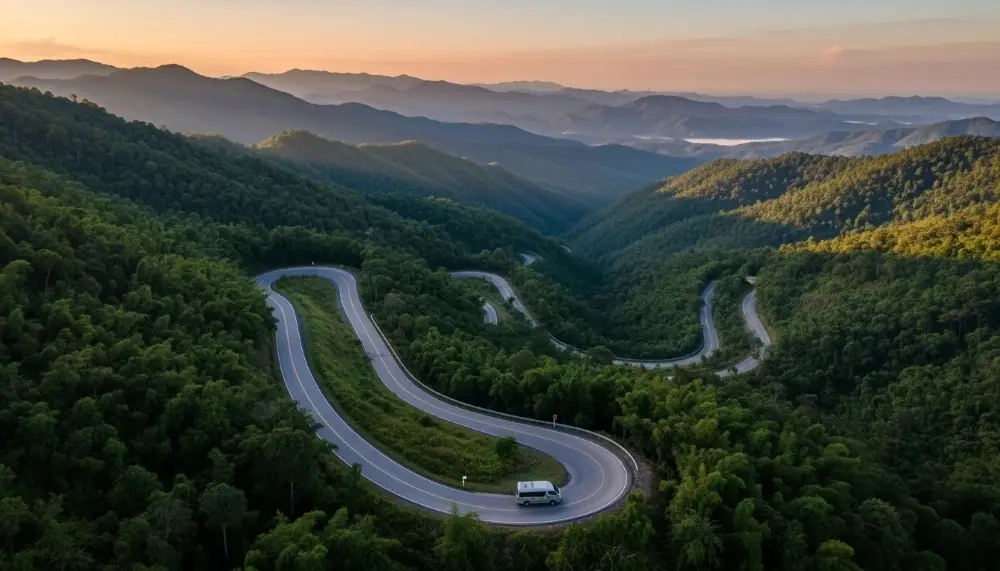
Around 70 kilometres north of Chiang Mai, Chiang Dao sits in the shadow of the last limestone peak of the Himalayan range. Local operators describe it as some of the most remote and interesting riding in the whole of northern Thailand. Trip 5a and 5b from the Chiang Mai local trail network are 90 per cent singletrack and demand genuine fitness and technical ability. The 4WD drive to the 5,800-foot (roughly 1,770-metre) start point is part of the experience.
Guided tours for Chiang Dao typically start from 3,000 THB (~$86) per person with a minimum group size, and are bookable through Klook. Navigation without a guide here is genuinely challenging: signage is almost non-existent, and unused trails overgrow quickly in the jungle. Do not attempt this zone solo on a first visit. Overnight stays in Chiang Dao town cost from 500 to 1,200 THB (~$14 to $34) at simple guesthouses. Remote workers staying longer should consider SafetyWing for medical cover, particularly for the kind of riding this zone involves.

Lock in your Chiang Mai accommodation
early and beat peak-season price hikes.
Agoda’s filters let you compare options
side by side before you commit.
Samoeng Loop: The Cross-Country Rider’s Long Day Out
The Samoeng Loop is a roughly 100-kilometre circuit through mountain villages, rubber tree forests, and highland road with minimal traffic. It sits in the gravel and cross-country bracket rather than pure downhill, and it rewards riders with genuine endurance as much as technical skill. Local roadies and XC riders do it as a full-day event, while those with a loaded touring setup take two days and stay overnight in Samoeng village.
Starting and finishing from Chang Phueak Gate in the old city, the northern gate is the natural launch point for this direction. The route climbs steadily through Doi Suthep National Park, drops into the valley to Samoeng town, and loops back via the Mae Rim road. Budget 800 to 1,200 THB (~$23 to $34) for a self-guided day including snacks, water, a meal in Samoeng, and a cold drink at the finish. Bike rental remains 350 THB (~$10) per day with helmet included. Pre-book your ride through Agoda for post-loop accommodation in the Mae Rim area if you are planning an overnight version.

Need budget data in Chiang Mai? Saily’s
eSIM plans start cheap and install
in a couple of minutes. Built by
the NordVPN team, security is solid.
Bike Hire, Gear, and Getting to the Trails

Rental: Quality hardtail mountain bikes with front suspension and hydraulic brakes rent for 350 THB (~$10) per day as of January 2025. Helmet and gloves are included. Delivery to your accommodation in Chiang Mai city costs an additional 300 THB (~$8.57) for up to five bikes. Inspect the drivetrain and brakes thoroughly before leaving the shop, as some rental fleets are overdue for a service.
Getting there: Doi Suthep trailheads are a 20 to 40 minute drive from the old city. Use Grab for a fixed-price songthaew or pickup. Activate your Airalo, Yesim, or Saily eSIM before you land to process the Grab SMS verification codes at the baggage carousel. Trying to register Grab on local Wi-Fi at the airport is frustrating and slow.
Intercity riders: If you are continuing north to Chiang Rai or looping to Pai after a riding week in Chiang Mai, book transport through 12GO well ahead of any national holiday periods when minivan and bus seats fill fast. If your flight was delayed getting in and you missed a pre-booked tour start, keep the AirHelp app handy to check your compensation eligibility. Delays over three hours on EU-covered routes can qualify for a refund.
Trail Etiquette, Safety, and the Smoke Season
The Chiang Mai trail scene is largely volunteer-maintained. Donate to the local trail association when prompted on Trailforks and respect the work that goes into keeping the singletrack clear. Unused trails overgrow fast in the jungle, so stick to established lines and report downed trees or erosion rather than rerouting around them.
Avoid February to mid-April without question if you have any respiratory sensitivity. PM2.5 during crop burning regularly exceeds 200 µg/m³ and the mountain views that make this region so spectacular simply disappear. The best months are November to early February, when temperatures sit around 18 to 25°C on the mountain and trails are at their fastest. Bottles of water cost 10 to 15 THB (~$0.30 to $0.43) at 7-Eleven in Chiang Mai. Carry two litres minimum for any Doi Suthep outing.
- Dress code for temple sections on any trail: shoulders and knees covered for any entry points near active wats
- Respect hill tribe villages on route: slow down, greet locals, do not photograph without permission
- Yield to hikers on shared trails in the national park
- Carry your park entry receipt and passport number for Doi Suthep-Pui gate checks

Where to Stay Near the Trails
Nimman (Nimmanhaemin Road) is the most convenient base for riders targeting Doi Suthep. It sits closest to Suan Dok Gate on the western side, which is the natural launch point for the mountain climb and trail access roads. Nimman guesthouses and boutique hotels range from 600 to 2,500 THB (~$17 to $71) per night depending on standard. The neighbourhood also has the best espresso and healthy-eating options for pre-ride fuelling.
The old city moat area is a slightly longer drive to the trails but is well connected via Grab and offers the most character and the best value for money, with mid-range guesthouses from 500 to 1,200 THB (~$14 to $34) per night. For the Mae Sa Valley and Mae Rim corridor trails, there are small resorts and hillside bungalows from 800 to 2,000 THB (~$23 to $57) sitting directly on the approach roads. Compare your options on Agoda and Booking.com before you book.

Stay online in Chiang Mai without the
daily data limits of tourist SIMs.
Yesim’s eSIM offers unlimited 5G
from around $10 for the whole trip.
Frequently Asked Questions
What is the best time of year to mountain bike in Chiang Mai?
November to early February is the sweet spot. Temperatures on Doi Suthep sit around 18 to 25°C, trails are fast and dry, and the air is clear. Avoid February to mid-April entirely if you can: crop burning pushes PM2.5 levels between 150 and 300 µg/m³, which makes long mountain efforts genuinely unpleasant and potentially harmful. Late April onwards improves once the first rains wash the air clean.
How much does it cost to hire a mountain bike in Chiang Mai?
Quality hardtail mountain bikes with front suspension and hydraulic disc brakes rent for 350 THB (~$10) per day as of January 2025. Helmet and gloves are included. Delivery to your hotel or guesthouse in Chiang Mai city costs an additional 300 THB (~$8.57) for up to five bikes. Always inspect the drivetrain and check brake feel before you leave the shop.
Is the Bamboo Trail suitable for beginner riders?
Confident beginners with some off-road experience can handle the Bamboo Trail. It is 9 kilometres of downhill singletrack from below Bhubing Palace to Wat Pong Noi, rated medium difficulty. The top section is loamy and forgiving; the lower section gets rocky and loose. Riders with zero trail experience should start on the Huay Tung Tao Lake Loop and work up from there.
Do I need to pay a national park entry fee to ride Doi Suthep?
Yes. Since October 2025, Doi Suthep-Pui National Park charges a formal entry fee of 250 THB (~$7.15) per person. Carry small cash for the gate as card payment is not always available. Keep your receipt and have your passport number ready for any checks on the mountain.
Are guided tours worth the cost compared to riding independently?
For Doi Suthep summit descents, Chiang Dao, and Mae Sa Valley technical lines, a guided tour is genuinely worth it on a first visit. Signage is almost non-existent in the national park, unused trails overgrow fast in the jungle, and a local guide adds hilltribe village stops and lunch that you simply would not find independently. Budget around 2,500 to 4,500 THB (~$71 to $129) per person for a full-day guided downhill through Get Your Guide or Klook. The Bamboo Trail and Huay Tung Tao Loop are easy enough to ride self-guided.
Which area of Chiang Mai is best to stay in for trail access?
Nimman (Nimmanhaemin Road) is the closest base to Doi Suthep and sits near Suan Dok Gate on the western side of the old city, which is the natural launch point for mountain access roads. Expect guesthouse and boutique hotel rates of 600 to 2,500 THB (~$17 to $71) per night. The old city moat area is a slightly longer drive but offers good value from 500 to 1,200 THB (~$14 to $34). For Mae Sa Valley and Mae Rim riding, small hillside bungalows sit directly on the approach roads from 800 to 2,000 THB (~$23 to $57).
How far is Chiang Dao from Chiang Mai and is it worth the drive?
Chiang Dao is roughly 70 kilometres north of Chiang Mai, approximately 1.5 hours by road. It is absolutely worth the drive for advanced riders. The terrain includes some of the most remote and technical singletrack in northern Thailand, with rides running 90 per cent off-road through jungle, hill tribe villages, and highland valleys beneath Thailand’s most dramatic limestone peak. A guide is essential for navigating here.
What is the Samoeng Loop and is it suitable for mountain bikes?
The Samoeng Loop is a roughly 100-kilometre circuit through mountain villages, rubber tree forests, and low-traffic highland roads starting and finishing from Chang Phueak Gate in Chiang Mai. It sits in the gravel and cross-country bracket. Hardtail mountain bikes handle it well. Budget a full day and around 800 to 1,200 THB (~$23 to $34) for food, water, and a meal in Samoeng village mid-route. The cooler months of November to February are far preferable to the summer heat.
Is it safe to eat at trail-side food stalls near the riding areas?
Yes, with the standard approach. Look for stalls with high turnover and local regulars rather than anything sitting out in the heat. Trail-side and hilltribe village stalls near Doi Suthep typically serve excellent and safe Thai food at 60 to 150 THB (~$1.70 to $4.30) per dish. Carry filtered water or buy bottled water at 10 to 15 THB (~$0.30 to $0.43) per bottle at any 7-Eleven in town. Most stomach issues in Thailand are caused by unfiltered water or ice rather than the food itself.
What connectivity and travel apps should I set up before arriving in Chiang Mai?
Download Grab before you land and activate an Airalo, Yesim, or Saily eSIM data plan before departure. Grab requires an SMS verification code on first use, and mobile data at the baggage carousel is far faster than airport Wi-Fi. Use 12GO to book any onward transport to Pai, Chiang Rai, or Bangkok ahead of national holiday periods. Use NordVPN on guesthouse and trail-side cafe Wi-Fi to keep home banking and streaming access secure. For longer-stay remote workers, SafetyWing provides solid medical cover that includes adventurous activity.