
Long Term Thailand Visas Explained
This site contains affiliate links. We may earn a commission at no extra cost to you.
So you’ve fallen for Thailand and two weeks just isn’t going to cut it. Good news: staying longer is absolutely possible, and heading into 2027 there’s a proper legal route for almost everyone. Whether you’re a remote worker, a retiree, someone married to a Thai partner, a student, an employee of a Thai company, or simply someone with the budget for a premium membership, there’s a visa built for you.
The catch is that the rules shifted quite a bit in late 2026. The visa-free stay was cut back to 30 days, the DTV got stricter about where you apply from, and the cheapest Thailand Privilege tier is on its way out. This guide walks through every major long-stay option as it stands for 2027, with the real requirements, the real costs, and an honest take on who each one actually suits.
The Quick Summary
DTV (Destination Thailand Visa): The go-to for remote workers, freelancers, and active early retirees. Five years, multiple entries, 180 days per entry plus one 180-day extension. You’ll need 500,000 THB in savings (any bank, anywhere), and since August 2026 you must apply from a country where you’re a citizen or permanent resident.
O-A Retirement Visa: The classic route for over-50s. You’ll need 800,000 THB in a Thai bank or 65,000 THB a month in income, plus health insurance. Renewed every year, and you can stay put without leaving.
LTR Visa: A 10-year visa for wealthy individuals, well-paid pensioners, remote professionals at larger companies, and highly skilled experts. The bar is high, usually around 80,000 USD a year in income or serious assets, but the perks are excellent.
Marriage Visa (Non-O): For anyone married to a Thai citizen. You’ll need 400,000 THB in a Thai bank or 40,000 THB a month in income. Renewed annually.
Business Visa (Non-B): The only legal route if you’re working for a Thai company. Needs a sponsoring employer and a Work Permit. Not to be confused with the DTV, which only covers work for foreign employers or clients.
Thailand Privilege: A paid membership giving 5 to 20-year multi-entry visas plus concierge help with immigration. From 2027 it’s expected to start at 900,000 THB for Gold, as the 650,000 THB Bronze tier closes to new applicants on 31 December 2026 unless it’s extended again.

Can You Stay in Thailand Long Term?

Yes, you can. Thailand has spent the last few years building proper long-stay routes. The LTR arrived in 2022 and the DTV in 2024, and between them they cover a lot of people who used to rely on border runs and back-to-back tourist stamps. The flip side is that those old workarounds are now firmly discouraged, so picking the right visa matters more than ever.
Here are the main options for 2027:
- Tourist visa with an extension (up to 90 days, great for a first long trip while you figure things out)
- Education (ED) visa for genuinely enrolled students
- Retirement visa (O-A) for over-50s
- DTV for remote workers, freelancers, and soft power participants aged 20 and up
- LTR for high earners, wealthy individuals, and highly skilled professionals
- Marriage visa (Non-O) for spouses of Thai nationals
- Business visa (Non-B) for people employed by Thai companies
- Thailand Privilege for anyone who’d rather pay for a hassle-free residency membership
Which one fits really comes down to your age, your income, whether you work remotely or locally, and how much paperwork you’re happy to deal with. We go through each one below.

Skip-the-line tickets and guided walks
in Thailand with English-speaking
guides. Read real traveller reviews
before committing to a single one.
Understanding Thailand’s Visa System
Thai visas are built around why you’re here and how long you want to stay. Most first-time visitors start with a visa exemption stamp. Since 15 September 2026, that’s 30 days for travellers from 60 countries including the UK, US, Canada, Australia and the EU, and you can extend it once at an immigration office for roughly 60 days in total. The other entry-level option is a tourist visa applied for online before you fly, which gives you 60 days plus a possible 30-day extension.
Beyond tourist stays, the system splits into Non-Immigrant visas labelled by letter: O for personal and family reasons (marriage, retirement, accompanying family), B for business and employment, and ED for education. The newer DTV and LTR sit in their own separate frameworks.
If you’re living here on a Non-Immigrant visa, you’ll also meet the 90-day report. It’s simply a notification to Immigration of where you’re living, done in person, by post, or online. It’s not the same as renewing your visa: you can be up to date on your 90-day reports and still need to do your annual extension separately.
Then there’s the TM30, which runs quietly in the background. Your landlord or hotel has to notify Immigration within 24 hours whenever you move in or return to their property. It sounds minor, but a missing TM30 is one of the most common reasons extensions and 90-day reports get held up, so it’s worth politely checking your landlord has done it.

Tourist Visas for Extended Travel
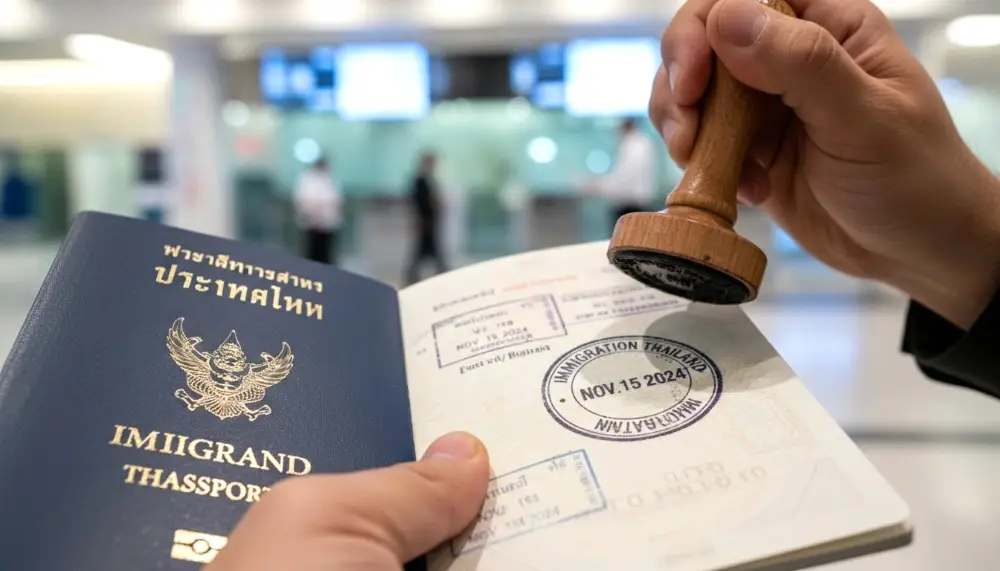
If you want more than a short holiday but aren’t ready to commit to anything bigger, the tourist visa is the easiest place to start, and with the visa-free stay now down to 30 days it’s more useful than it has been in years. You apply online through the official Thai e-Visa portal from your home country, and a Single-Entry Tourist Visa (TR) gives you 60 days on arrival. Add a 30-day extension at any immigration office for 1,900 THB and you’ve got up to 90 days.
Some Thai embassies also offer a Multiple-Entry Tourist Visa (METV), valid for six months with up to 60 days per entry. It suits people who want to hop around the region and keep coming back to Thailand. Fees and availability vary by embassy, so check your local mission’s page.
One honest word of warning: using back-to-back tourist entries and border runs to effectively live in Thailand is now on Immigration’s radar. Visa-exempt entries through land borders are capped at two per calendar year, and the Immigration Bureau has said travellers with repeated visa runs and no good reason can be turned away at airports too. If you’re really planning to live here rather than travel, the DTV or another long-stay visa is the right call and saves you a nervous moment at the passport desk.

Book Thailand day trips, attractions,
and activities in one place. Check
real reviews and lock in your spot
before the popular slots go.
The Destination Thailand Visa (DTV): Still the One to Beat
The Destination Thailand Visa is the biggest change to Thai visas in years, and for most people under 50 who want to stay long term, it’s the obvious starting point. It’s a 5-year multiple-entry visa giving you 180 days per entry. You can extend each entry once by another 180 days for 1,900 THB, which means up to almost a full year in Thailand before you need to leave and come back.
Who it’s for: Remote workers and freelancers earning from outside Thailand, digital nomads, “soft power” participants (think Muay Thai, Thai cooking, or extended medical treatment), and early retirees who aren’t 50 yet or would rather not park 800,000 THB in a Thai bank.
What you’ll need for 2027:
- To be at least 20 years old
- 500,000 THB in savings, which can sit in any bank in any country, held for at least 3 months (some embassies want 6). Crypto and investment statements generally don’t count
- Proof of remote work, freelance contracts, or enrolment in a qualifying soft power activity (Thai language schools don’t qualify)
- Since 31 August 2026: proof you’re a citizen or permanent resident of the country you apply from, plus a criminal record certificate
- An application through the official Thai e-Visa portal, made while you’re outside Thailand
- A one-time fee of 10,000 THB (charged in local currency by each embassy)
What it won’t let you do: Work for a Thai company, sign contracts with Thai clients, or sell goods and services locally. The work has to be for foreign employers or customers. It also isn’t a route to permanent residency. Health insurance isn’t on most embassies’ core checklist, but a few ask for it, so check yours.
The DTV has largely replaced the old tourist-visa shuffle that nomads relied on for a decade, and DTV holders are now a big, fast-growing part of the long-stay crowd in Chiang Mai and Bangkok neighbourhoods like Phra Khanong. One practical tip for arrival day: activate your Airalo, Yesim, or Saily eSIM before you board, because Grab and Bolt need SMS verification and you’ll want data the moment you land.

The O-A Retirement Visa
Thailand has been one of the world’s favourite places to retire for decades, and the Non-Immigrant O-A is the traditional way to do it if you’re 50 or over and want to live here year-round without regular trips out of the country.
What you’ll need:
- To be 50 or older
- 800,000 THB in a Thai bank account (in for 2 months before you apply, kept there for 3 months after, and never dropping below 400,000 THB for the rest of the year), OR a monthly income of at least 65,000 THB backed by an embassy letter or Thai tax records, or a combination of the two
- Health insurance: embassies commonly ask for cover of at least 3,000,000 THB (around 100,000 USD), and in-country renewals typically look for at least 40,000 THB outpatient and 400,000 THB inpatient cover
- A clean criminal record certificate from home
- A medical certificate
- 90-day address reports once you’re living here
The big advantage over the DTV is simple: you can stay a whole year without leaving, which matters a lot if travelling isn’t easy for you or you’d just rather not plan exits. You renew it each year at your local immigration office. The 800,000 THB stays yours, but it does need to sit in a Thai account, which is a real commitment compared with the DTV’s any-bank approach. Worth knowing: many retirees instead enter on a 90-day Non-O visa and convert it to a one-year retirement extension inside Thailand, a route that doesn’t carry the same insurance requirement. It’s worth asking your embassy which suits you.
Work of any kind isn’t allowed on a retirement visa. Paid local work needs a Non-B and a Work Permit. If you still do some consulting or freelance work for clients back home, the DTV is the cleaner legal fit even if you’re over 50.

Pick a Thailand eSIM plan that matches
your trip length on Airalo’s global
marketplace. Install before departure
and you’re online the moment you land.
The Long-Term Resident (LTR) Visa
The Long-Term Resident (LTR) visa is run by Thailand’s Board of Investment (BOI) and gives you 10 years (5 plus a 5-year renewal). It launched in 2022 and was made noticeably easier to qualify for in February 2025. Unlike most Thai visas, you can apply through the BOI’s online system even if you’re already in Thailand.
The four LTR categories:
- Wealthy Global Citizen: At least 1,000,000 USD in assets, plus 500,000 USD invested in Thai government bonds, Thai property, or approved Thai investments. Since 2025 there’s no longer a minimum income requirement for this category
- Wealthy Pensioner: Aged 50 or over with a pension or passive income of at least 80,000 USD a year (or 40,000 USD if paired with a qualifying investment in Thailand)
- Work-from-Thailand Professional: Earning at least 80,000 USD a year working remotely for a listed company or an established business with combined revenue of at least 50,000,000 USD over three years (lowered from 150,000,000 USD in 2025). Work experience requirements were also dropped
- Highly Skilled Professional: Specialists in targeted industries such as technology, healthcare, and advanced manufacturing, plus (since 2025) lecturers in higher and vocational education. Income thresholds vary
What you get: A Digital Work Permit, annual reporting instead of 90-day reports, fast-track lanes at major airports, and family-friendly rules that cover your spouse, children, and since 2025 your parents too. The tax perks are a big draw: Highly Skilled Professionals pay a flat 17% on Thai employment income instead of the standard rates of up to 35%, and some categories can bring foreign income into Thailand without Thai tax. The government fee is 50,000 THB.
It’s the most complete long-stay package Thailand offers, but let’s be honest: the income and asset thresholds rule out most long-stay visitors. If you do qualify, though, it takes away almost every bit of the usual visa admin.

The Marriage Visa (Non-Immigrant O)

If you’re married to a Thai citizen, the Non-Immigrant O (Marriage) visa lets you live here a year at a time, renewed for as long as you like. There’s no minimum age, and the money side is lighter than the retirement visa.
What you’ll need:
- A legal marriage to a Thai national, with the official Thai marriage certificate
- Either 400,000 THB in a Thai bank account for 2 months before you apply, OR a verified monthly income of 40,000 THB via embassy letter or Thai tax records (P.N.D. 1)
- 90-day address reports to Immigration
You’ll usually start at a Thai embassy back home, which issues a 90-day Non-O visa. Once you’re in Thailand, you convert that into a one-year extension at your provincial immigration office, and you’ll need to show your finances again at every annual renewal.
A heads-up so it doesn’t catch you off guard: immigration officers do sometimes pop round unannounced to check the marriage is genuine. They might chat to neighbours, ask to see signs of shared home life, and take a photo of you both at home. It’s routine and nothing to worry about if your marriage is real, but it’s good to know it happens.
Unlike the retirement visa, a marriage visa lets you apply for a Work Permit if you find a local job, which makes it a more flexible option if working in Thailand might be on the cards later.

From boutique guesthouses to five-star
resorts, Agoda has Thailand covered.
Strong Asia inventory means deeper
discounts than you’d find elsewhere.
Education (ED) Visas
The Education (ED) visa lets you stay in Thailand while you study at an approved institution, usually in 90-day blocks that are renewed for as long as your course runs. There’s no savings or income requirement, which makes it the most affordable long-stay option on paper. You do pay tuition, though, and you really do have to turn up.
Courses that can qualify include:
- Thai language courses at licensed language schools
- Muay Thai training at properly licensed and registered schools
- University degree programmes
- Other structured courses at institutions approved to sponsor ED visas
Here’s the reality check: the ED visa has been at the centre of a major crackdown. After years of “schools” that never really taught anyone, Thai authorities revoked close to 10,000 student visas in 2025 and built a central database to track students and institutions. Schools now have to report attendance, unlicensed providers have been shut down, and officers at extension time may well test whether you’ve actually learned anything. If you’re enrolled just for the visa, the risk of cancellation is real.
If you genuinely want to learn Thai or train at a licensed gym as part of a longer stay, the ED visa is still perfectly legitimate. Check the school’s licence before you pay a baht. If what you really want is a long-stay permit, the DTV is the honest route, and for Muay Thai or cooking it’s often the easier one too.


Need budget data in Thailand? Saily’s
eSIM plans start cheap and install
in a couple of minutes. Built by
the NordVPN team, security is solid.
The Business Visa (Non-B) and Work Permit
If you’re going to work for a Thai company or run a business here, the Non-Immigrant B is the visa you need. It’s completely separate from the DTV: the Non-B is for working for a Thai entity and comes with a Work Permit, while the DTV only covers remote work for employers and clients abroad.
What’s involved:
- A sponsorship letter from a Thai-registered company, usually with at least 2,000,000 THB in registered capital per foreign employee
- The company generally needs four Thai employees for every foreign worker (BOI-promoted companies get more relaxed rules)
- A separate Work Permit from the Department of Employment once you’ve arrived, now largely handled digitally
- 90-day address reports to Immigration
Your Work Permit spells out exactly what job you’re allowed to do, and stepping outside it can get you deported, so take it seriously. If you’re setting up your own Thai company, budget for the ongoing admin too: monthly accounting, social security contributions, and VAT filings mean most people hire a local accountant.
The good news is that the move to digital work permits has made things faster than they used to be. Straightforward applications through BOI-promoted companies can often be turned around in a week or two.
Thailand Privilege: The Premium Residency Programme
Thailand Privilege (formerly Thailand Elite) is a government-run membership that gives you a 5 to 20-year multi-entry visa plus concierge help with the immigration side of things. Think of it as paying to skip the paperwork: there’s no income, savings, age or job requirement, just a one-off membership fee and a background check.
Members get a personal assistant who handles immigration formalities (including 90-day reports), fast-track processing at Suvarnabhumi, and perks at partner hotels, spas, and golf clubs. One important update for 2027: the entry-level Bronze tier at 650,000 THB has been extended several times but is currently due to close to new applicants on 31 December 2026. Unless it’s extended again, Gold at 900,000 THB becomes the cheapest way in from 2027. Existing Bronze members keep their membership for its full term.
Thailand Privilege Tier Comparison (2027 Pricing)
| Membership Tier | Validity | Membership Fee (THB) | Annual Privilege Points |
|---|---|---|---|
| Bronze | 5 Years | 650,000 (new applications close 31 Dec 2026) | 0 |
| Gold | 5 Years | 900,000 | 20 |
| Platinum | 10 Years | 1,500,000 | 35 |
| Diamond | 15 Years | 2,500,000 | 55 |
| Reserve | 20 Years | 5,000,000 | 120 |
Choosing the Right Visa: A Practical Decision Tree

The question we get asked most is simply: which one is right for me? Usually it becomes obvious pretty quickly once you run through a few questions:
Working remotely for a foreign employer or clients? Go for the DTV. It was built for exactly this and gives you solid legal footing with the least hassle. Just remember to apply from your home country.
50 or over and fully retired? The retirement visa lets you stay all year without leaving, which the DTV doesn’t.
High passive income or serious assets? Look at the LTR’s Wealthy Pensioner or Wealthy Global Citizen categories. You get 10 years, a Digital Work Permit, and possible tax advantages.
Married to a Thai national? The Non-O Marriage visa is your route, with no age limit and lower financial requirements than retirement.
Working for a Thai company? It has to be a Non-B and a Work Permit. Nothing else covers it.
Want as little paperwork as possible and have the budget? Thailand Privilege takes almost all of the admin off your plate for the life of the membership.
Really enrolling in Thai language classes or Muay Thai at a licensed school? The ED visa is valid and legal, as long as you actually show up.
Tax Residency: The 180-Day Rule
This bit isn’t exciting, but it matters. Tax residency has nothing to do with which visa you hold. It’s purely about how long you’re here.
Spend 180 days or more in Thailand in a calendar year and you’re a Thai tax resident. Since January 2024, foreign income earned from 2024 onwards that you bring into Thailand as a tax resident is taxable, whichever year you transfer it. The old trick of waiting until the following year no longer works. Money earned before 2024 is still exempt when you bring it in. There has been talk of softening the rule, but it’s worth checking where that stands before relying on it.
Thai income tax runs from 0% on the first 150,000 THB of taxable income up to 35% on anything over 5,000,000 THB. Thailand has double tax agreements with over 60 countries, which stop the same income being taxed twice, and certain LTR categories get their own exemptions. Either way, the smart move is to get advice before you hit 180 days, not after.
NordVPN earns its place here too. Banks, payroll platforms, and tax portals back home often flag Thai IP addresses as suspicious and lock you out at exactly the wrong moment. Having NordVPN set up before you need it saves a lot of stress.
Pro Tips for Stress-Free Long-Stay Living

Mobile data on arrival: Activate an Airalo, Yesim, or Saily eSIM before you board. Grab and Bolt need SMS verification when you set them up, and you’ll also want your TDAC QR code handy at immigration. Being online the moment you land makes arrival day so much easier.
Transport: Grab and Bolt are the main ride apps in Bangkok and every big city. Bolt is often cheaper for car trips, while Grab wins on food delivery. Once your Thai bank account is up and running, link your card to both and you’ll rarely need cash for rides.
Accommodation: Agoda often has the best rates on boutique and long-stay properties in Thailand, with Booking.com as a handy backup for serviced apartments near immigration offices or hospitals. Use both for your first few weeks while you look at long-term rentals in person.
Experiences and day trips: Klook and Get Your Guide are both good for tours, island hopping, cooking classes, and day trips. Book ahead in peak season (November to March) and around Thai public holidays, as the popular ones do sell out.
Intercity travel: 12GO is the most reliable way to book buses, trains, and ferries in advance, especially around Songkran (April), Christmas, and Chinese New Year when routes between Bangkok, Chiang Mai, and the islands fill up fast.
Digital security: NordVPN keeps your home banking working, gets you into geo-locked work tools, and protects your details on shared cafe and coworking Wi-Fi.
Flight disruptions: If a long-haul flight on an EU or UK-regulated route is badly delayed or cancelled, AirHelp makes claiming compensation easy, and it can be worth several hundred pounds per passenger.

Maps, Grab, translation apps all need
data in Thailand. Yesim’s eSIM installs
in a minute and gives you reliable
5G from the moment you arrive.
Cultural Tips for Long-Stay Visitors

Living somewhere for months or years is different from passing through. The polite tourist manners start to become second nature, and you begin to understand how Thai society really works, what it values, and why it responds so warmly to people who make an effort.
The things that matter most day to day:
- Be respectful in temples: dress modestly, take your shoes off without being asked, and keep your voice down
- Get comfortable with the wai: return it when someone offers it, and offer it first to elders and people in formal roles
- Stay calm, always. Losing your temper in public makes everyone uncomfortable and almost never gets you what you want
- Show real respect for the monarchy and national symbols. This isn’t just good manners, it’s the law
- Learn some Thai. Even a few greetings, numbers, and food words earn you a huge amount of goodwill and make everyday life much more fun
Thailand didn’t get the name Land of Smiles by accident. People who embrace the culture rather than just putting up with it often say the local friendships and the feeling of belonging in their neighbourhood ended up being the best part of living here.
Why Long Stays in Thailand Are So Popular
Spend a few months here and it’s easy to see why so many people come back, and why some never really leave. Very few places manage to offer all of this at once:
- The buzz and world-class infrastructure of Bangkok
- The mountain temples, cooler air, and cafe culture of Chiang Mai
- The turquoise water and slower island life of the south
- Food that’s brilliant at every price point
- Healthcare that’s excellent and affordable
- A cost of living that makes a good life realistic rather than a dream
- A culture that’s warm towards foreigners who show respect
The rules did tighten in 2026, but there’s still a proper legal route for almost everyone who wants to stay. Pick the visa that genuinely matches your life here and the rest gets much simpler.

Your Thai Adventure Might Last Longer Than You Think

For a lot of people, Thailand starts as a two-week holiday and quietly turns into something much bigger. You come for a fortnight and three months later you’re reading up on DTV requirements in a Chiang Mai cafe. Or you fly out for winter and realise in February that there’s no real reason to rush home.
Whether you end up on a tourist visa for a longer first trip, the DTV as a remote work base, a retirement visa for a whole new chapter, or Thailand Privilege for the easy life, there’s a route that fits.
And one evening, watching the light fade over the Andaman Sea, or ordering breakfast noodles from a stall that already knows what you want, or wrapping up work in a mountain cafe with the best coffee you’ve had in years, you’ll probably catch yourself thinking what so many people have thought before you: I wish I could stay longer. And in Thailand, you often can.
Frequently Asked Questions
Can I work on a Marriage Visa?
Yes. If you find a local job with a Thai company, you can apply for a Work Permit on a Marriage Visa (Non-O). That’s a key difference from the Retirement Visa (O-A), where work of any kind isn’t allowed. If you work remotely for foreign employers or clients, the DTV is the right category whether you’re married or not.
What is the Plus Plus charge on restaurant bills in Thailand?
When you see ++ next to prices on a Thai menu, it means two charges will be added on top: a 10% service charge and VAT, currently 7%. You’ll find it at mid-range and upmarket restaurants, hotel restaurants, and beach clubs. Local restaurants and street food stalls almost always just charge the price you see.
Do I need to tip in Thailand?
Tipping isn’t expected in Thailand, but it’s becoming more common in tourist areas and staff really do appreciate it. Rounding up a taxi fare, leaving 50 to 100 THB for a great massage, or leaving a little at a restaurant where the service was good are all nice gestures. Keep it low-key: a note left quietly on the table goes down better than a big show.
Is the 90-day report still mandatory for all long-stay visa holders?
For most people, yes. If you’re on a Non-O (marriage or retirement), Non-B (business), ED or DTV visa and stay in Thailand for more than 90 days in a row, you need to report your address to Immigration every 90 days. LTR holders do an annual report instead. Thailand Privilege members still have the report, but their concierge usually handles it for them. You can report in person, by post, or online through the official immigration portal, although the online system can be hit and miss.
Can I bring my pets to Thailand on a long-stay visa?
Yes, you can bring pets to Thailand on a long-stay visa. You’ll need an import permit from the Bangkok Animal Quarantine Station (AQS) before you travel, a current rabies vaccination certificate, a health certificate issued within 7 to 10 days of travel, and microchip paperwork. Airlines often have their own breed and size rules for pets, so check those early. Plenty of condos in expat areas like Phrom Phong, Thong Lor, and Bang Tao advertise as pet-friendly, but always get it confirmed in writing before you sign a lease.
What is the difference between the DTV and the LTR visa?
The DTV is for remote workers and freelancers on almost any income. You need 500,000 THB in savings and proof of remote work, and you get a 5-year multi-entry visa with 180-day stays, but no work permit and no route to permanent residency. The LTR is aimed at higher earners and wealthier people: typically 80,000 USD a year in income, or for Wealthy Global Citizens at least 1,000,000 USD in assets with 500,000 USD invested in Thailand, or recognised specialist skills. It gives you 10 years, a Digital Work Permit, annual reporting instead of 90-day reports, fast-track airport lanes, and tax perks, including a flat 17% rate on Thai employment income for Highly Skilled Professionals. The LTR is the better package, but most remote workers and nomads simply won’t meet the thresholds, which is where the DTV comes in.
Can I apply for the DTV from inside Thailand?
No. You have to apply through the official Thai e-Visa portal while you’re outside Thailand. Since 31 August 2026 you also need to apply through the Thai embassy or consulate covering a country where you’re a citizen or permanent resident, and include a criminal record certificate. That means the old trick of popping over to Vientiane, Kuala Lumpur or Ho Chi Minh City to apply no longer works for most people. Plan to apply from home before your trip, or during a visit back home.
Does the 500,000 THB for the DTV need to be in a Thai bank?
No, and that’s one of the DTV’s big advantages over the retirement visa. You can show the 500,000 THB (or the equivalent in your own currency) on a statement from any bank in any country. Most embassies want to see it held for at least 3 months, and some ask for 6. Crypto and investment accounts generally aren’t accepted, and moving the money in the week before you apply is a classic reason for rejection, so let it sit there for a while first.
What happens to my Thai visa if I stay more than 180 days on the DTV?
Each DTV entry gives you 180 days, and you can extend once for another 180 days, so up to around 360 days in total. After that you’ll need to leave Thailand and come back in to start a fresh 180-day stay. The DTV itself stays valid for its full 5 years, so you can come and go as often as you like. Plenty of DTV holders turn the exit into a mini holiday, with Penang, Singapore, Bali, and Vietnam all popular choices.
Is Thailand working towards permanent residency or citizenship for long-stay foreigners?
Thailand does offer permanent residency (PR), but places are very limited, with a quota of around 100 per nationality each year. You’ll generally need at least 3 years in a row on a non-immigrant visa with extensions (usually for work or marriage), plus a Thai language interview and a full background check. Very few people get it each year. Citizenship by naturalisation is possible after holding PR and living here for at least 5 years, with further language and integration requirements. For most long-term residents, the DTV, LTR, a retirement or marriage visa, or Thailand Privilege offer plenty of stability without going down the PR route. The LTR in particular, with up to 10 years of residence, works as a practical long-term solution for those who qualify.