Navigating Bangkok: BTS, MRT, & Grab
This site contains affiliate links. We may earn a commission at no extra cost to you.
Navigating this metropolis is a rite of passage, where the sleek efficiency of elevated trains glides above the chaotic, neon-lit theater of the streets below. To master Bangkok is to master its movement, transitioning from the climate-controlled silence of the Skytrain to the frantic, wind-whipped agility of a motorbike taxi. All prices in this guide use a rate of 35 THB = $1 USD.
Quick Summary:
Best for Speed: The BTS Skytrain and MRT Subway are the primary tools for bypassing Bangkok’s legendary gridlock. Fares cost 17 to 62 THB (~$0.49 to $1.77) per journey.
Payment Standards: Use the Rabbit Card for BTS and EMV-compliant contactless credit or debit cards for the MRT. Thai ATMs charge a flat 220 THB (~$6.30) per foreign card withdrawal.
Ride-Hailing: Grab remains the most reliable all-rounder, while Bolt offers competitive pricing for the budget-conscious. A typical central Bangkok Grab ride costs 80 to 180 THB (~$2.30 to $5.15).
Cultural Note: Respect priority seating for monks, the elderly, and pregnant women. Always stand for the National Anthem at 08:00 and 18:00 at major stations and public spaces.

Stay closer to the action in Bangkok.
Agoda lists guesthouses to resorts
with verified reviews and instant
booking at competitive rates.
The BTS Skytrain: Moving Above the Chaos
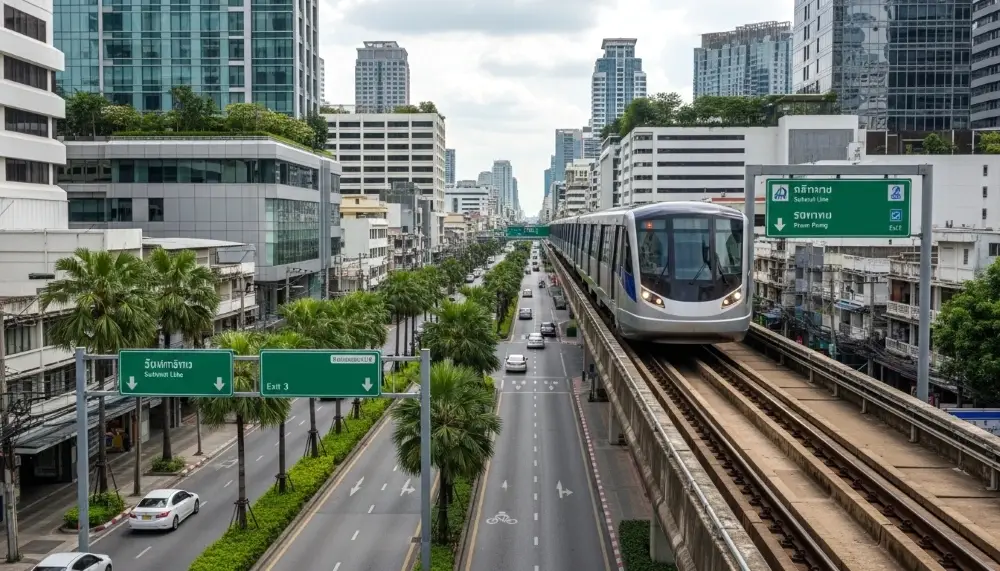
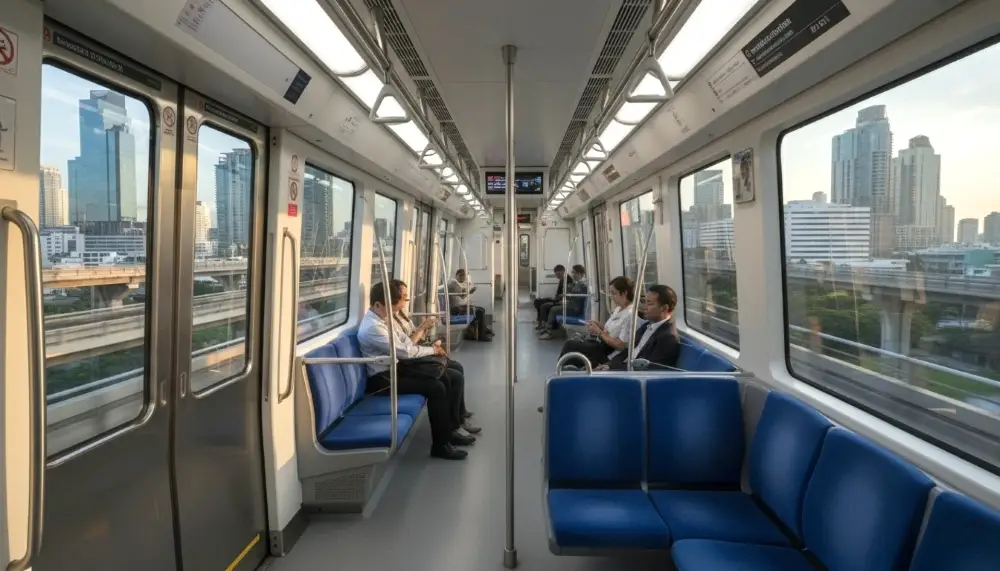
The BTS Skytrain is Bangkok’s elevated rail system, consisting of the Sukhumvit, Silom, and Gold lines. It is the most efficient method for reaching major commercial districts like Siam, Asok, and Thong Lo. Fares range from 17 to 62 THB (~$0.49 to $1.77), payable via the Rabbit Card or single-journey QR codes.
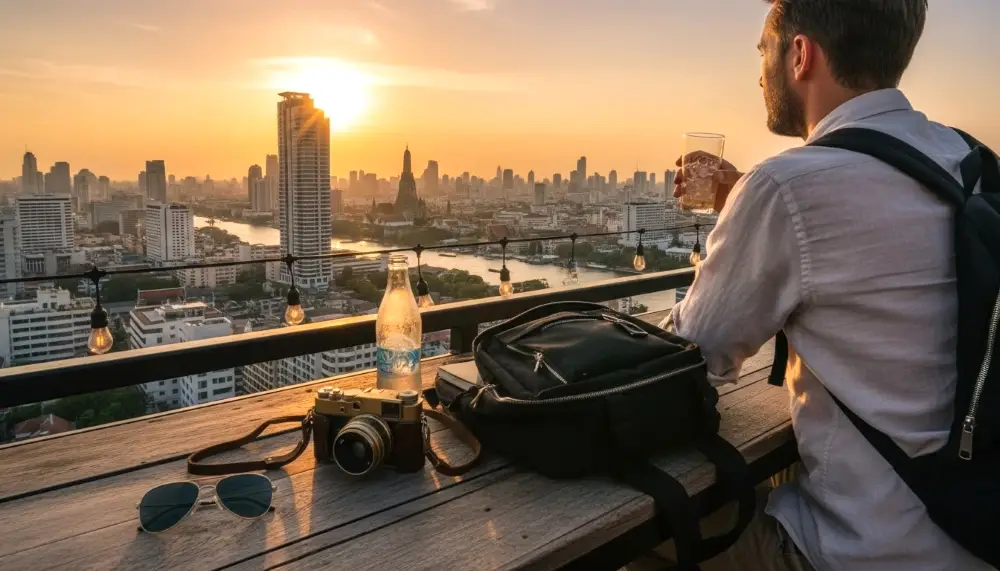
The BTS Skytrain offers a cinematic vantage point of the city’s skyline. The Sukhumvit Line acts as the city’s spine, connecting the northern hubs near Chatuchak Market with the residential stretches of Bang Na. Travelers frequently converge at Siam Station, the massive multi-level interchange where the Silom Line branches off toward the riverside and the financial district of Sathorn.
For those venturing to the ICONSIAM luxury complex, the Gold Line provides a short automated shuttle service from Krung Thonburi station at a flat fare of 16 THB (~$0.46). The Rabbit Card eliminates the need for standing in humid queues at ticket machines and offers a small discount per journey over single-trip tickets.
BTS Details:
- Operating Hours: 06:00 to 00:00 daily.
- Peak Times: 07:30 to 09:30 and 17:00 to 19:30. Trains arrive every 3 minutes during these windows.
- Fares: 17 to 62 THB (~$0.49 to $1.77) per journey based on distance. Rabbit Card top-up in 100 to 500 THB increments (~$2.85 to $14.30) at any BTS station.

Skip-the-line tickets and guided walks
in Bangkok with English-speaking
guides. Read real traveller reviews
before committing to a single one.
The MRT Subway: The Underground Backbone
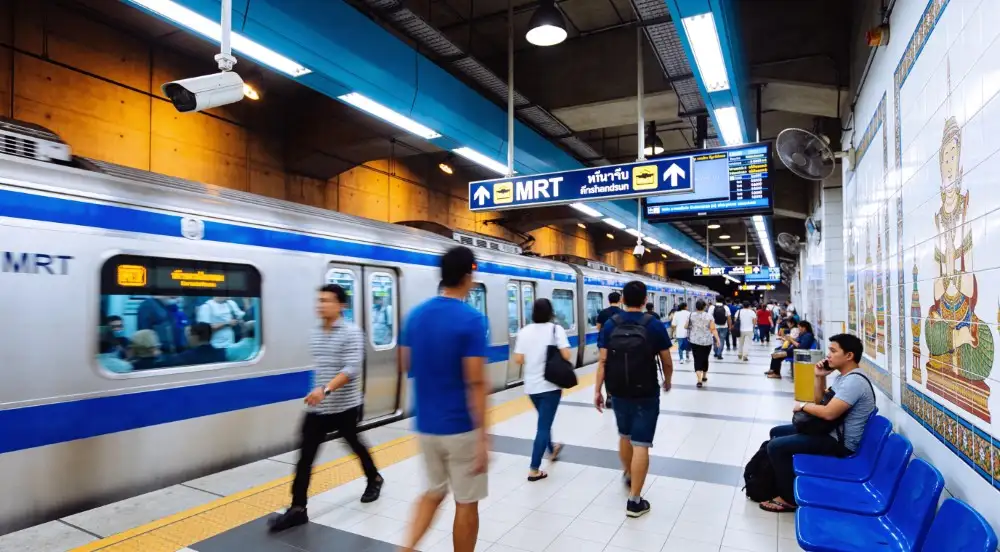
The MRT (Metropolitan Rapid Transit) comprises the Blue, Purple, Yellow, and Pink lines, covering both central Bangkok and the outer suburbs. It is the primary link to the Hua Lamphong railway area and the vibrant streets of Chinatown (Wat Mangkon). Fares are distance-based, typically between 17 and 50 THB (~$0.49 to $1.43).
While the BTS sits in the sky, the MRT Blue Line forms a loop anchoring the city’s most essential transit points. It intersects with the BTS at major hubs like Asok (MRT Sukhumvit) and Sala Daeng (MRT Si Lom). The MRT has fully integrated EMV contactless payments, meaning travelers can tap through the gates using a standard Visa or Mastercard, bypassing the need for local transit cards or tokens entirely.
The newer Yellow and Pink lines utilize monorail technology, serving the eastern and northern suburbs. These are essential for long-term residents or explorers heading to the Srinakarin Night Market (Yellow Line to Suan Luang Rama 9) or the government complexes in Chaeng Watthana.
Comparison of Rail Systems:
| Feature | BTS Skytrain | MRT Subway |
|---|---|---|
| Primary Payment | Rabbit Card / QR Code | EMV Contactless / Token |
| Interchange Hub | Siam (Internal) | Sukhumvit / Si Lom (External) |
| Scenic Value | High (Elevated City Views) | Low (Underground / Tunnels) |
| Typical Fare | 17 to 62 THB (~$0.49 to $1.77) | 17 to 50 THB (~$0.49 to $1.43) |

Compare tours and tickets for Bangkok
and book instantly on your phone.
Klook mobile vouchers mean no
printing, just turn up and go.
Ride-Hailing Dynamics: Grab, Bolt, and Apps:

Navigating Bangkok is mostly a choice between Grab and Bolt. Both give you upfront pricing and GPS safety, so you are not haggling over every ride. Grab is the heavy hitter, the app is polished, offers everything from cars to bikes, and even handles food delivery. If you are in a rush or caught in a tropical downpour, it is the most reliable fallback. For a real local hack to beat the legendary traffic, hop on a GrabBike for around 40 to 80 THB (~$1.15 to $2.30) for a short hop, a fraction of the price of a car.
Bolt is the rival, usually offering cheaper fares because they take a smaller cut from drivers. It is great for saving a few THB, but can be a test of patience during rush hour in spots like Lumphini or Ekkamai where driver availability is lower. A standard central Bangkok car ride on either platform costs 80 to 180 THB (~$2.30 to $5.15) before any expressway tolls (25 to 50 THB / ~$0.70 to $1.43 extra if applicable). Both apps accept cash (THB) or international credit cards.

From short trips to long stays in Bangkok,
Airalo has flexible eSIM data plans
you install in minutes. Top up
remotely if you need more data.
Pro Tips For Stress Free Travel:
To navigate the city like a professional, the following digital and physical tools are essential for the 2026 traveler:
Navigation: Google Maps is highly accurate for BTS and MRT schedules, but ViaBus is the superior app for tracking the city’s vast and complex public bus network in real-time. Bus fares typically cost 8 to 25 THB (~$0.23 to $0.71) and are cash-only.
Connectivity: Use Yesim or NordVPN combined with a local SIM to ensure the Grab app functions reliably in high-density areas like Phrom Phong.
Booking and Tours: Klook and Get Your Guide are the standards for securing discounted Airport Rail Link tickets or Chao Phraya Princess dinner cruises at 1,800 to 2,500 THB (~$51 to $71) per person.
Currency: All transit systems operate in THB. While MRT accepts contactless cards, BTS ticket machines often require coins or 20, 50, and 100 THB notes. Small change is vital. Thai ATMs charge a flat 220 THB (~$6.30) per foreign card withdrawal.
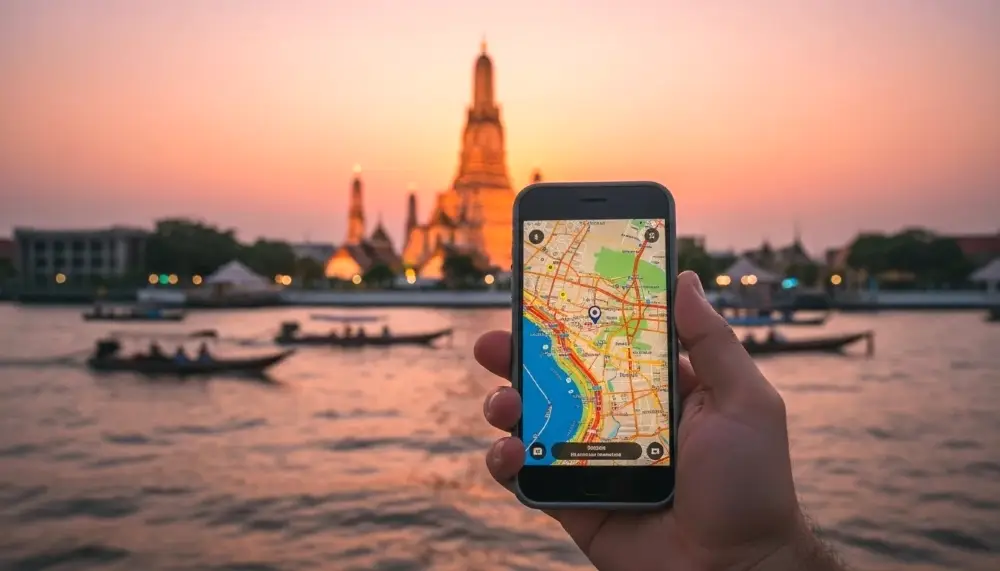

Maps, Grab, translation apps all need
data in Bangkok. Yesim’s eSIM installs
in a minute and gives you reliable
5G from the moment you arrive.
The Airport Rail Link: From Suvarnabhumi to the City
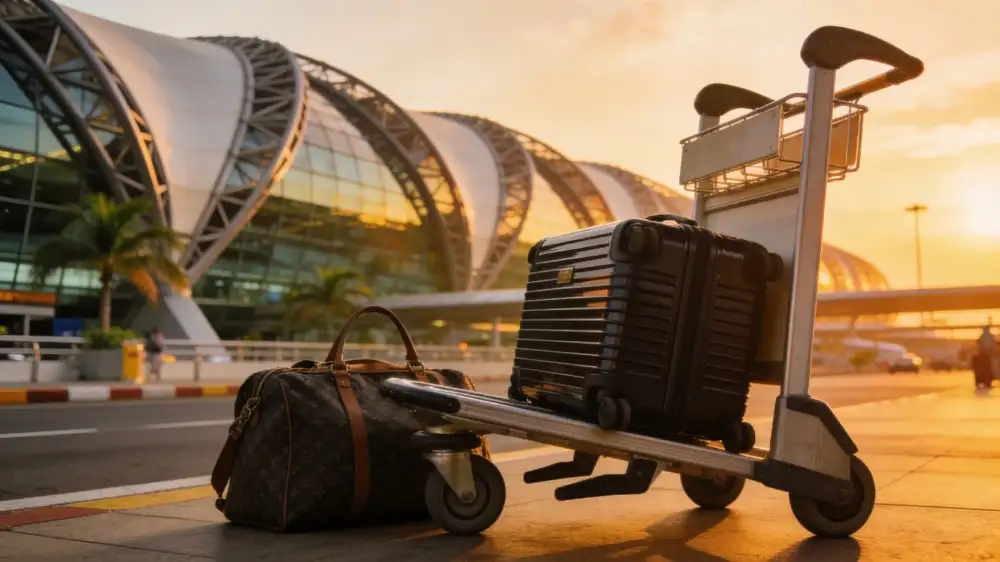
The Airport Rail Link (ARL) is the fastest way from Suvarnabhumi Airport (BKK) into central Bangkok. The journey to Phaya Thai takes 26 minutes and costs 45 THB (~$1.29). Makkasan Station provides an MRT Blue Line interchange, allowing direct connections onward without switching platforms in the heat.
The ARL operates from 06:00 to 00:00 and departs every 10 to 15 minutes. It is faster and significantly cheaper than a metered taxi (300 to 500 THB / ~$8.55 to $14.30 plus 50 THB / ~$1.43 airport surcharge plus expressway tolls). For most travelers staying in Sukhumvit or Silom, the ARL to Phaya Thai BTS station is the single best transport decision of the trip.
Don Mueang Airport (DMK): The low-cost carrier terminal does not have an ARL link. Take the SRT Red Line from Don Mueang station (15 THB / ~$0.43) to Bang Sue Grand Station, then switch to BTS or MRT. Alternatively, a metered taxi costs 200 to 350 THB (~$5.70 to $10) plus the 50 THB (~$1.43) airport surcharge.
Bangkok’s River and Canal Network:
Bangkok’s river and canal boats are one of the city’s most underused transport options and one of the cheapest. While tourists focus on the BTS and Grab, locals have used the waterways for centuries and they remain genuinely faster than road transport during peak hours.
The Chao Phraya Express Boat runs north to south along the river, stopping at major riverside piers including Tha Chang (Grand Palace and Wat Pho), Tha Tien (cross-river ferry to Wat Arun), and Saphan Taksin (BTS interchange). Fares are 9 to 32 THB (~$0.26 to $0.91) depending on the flag colour of the service. The Orange Flag (standard local service) is the cheapest at 9 to 15 THB (~$0.26 to $0.43). The Blue Flag (Tourist Boat) runs a dedicated circular route for 150 THB (~$4.29) per day unlimited hops and is the easiest option for temple-district sightseeing.
Klong (canal) boats on Khlong Saen Saeb run east to west across the city, connecting the Old City area near Banglamphu and Khao San Road with Pratunam and Asok at fares of 10 to 21 THB (~$0.29 to $0.60) per trip. Spray covers are provided for seated passengers. This is one of the fastest ways to cross the city during morning rush hour when the Sukhumvit corridor is completely gridlocked.
The Thai Spirit & Customs:
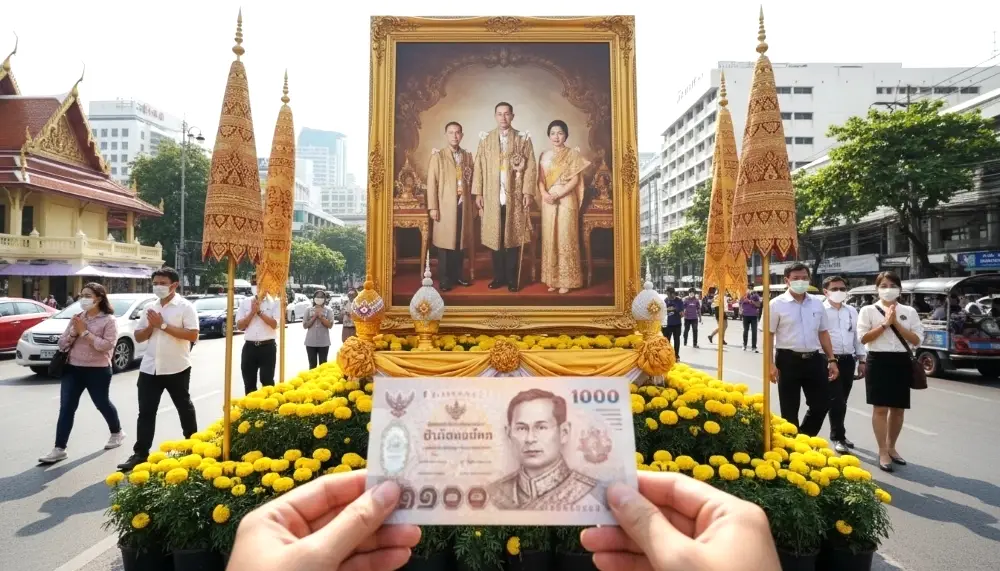
Navigating Bangkok is as much about social grace as it is about logistics. The BTS and MRT are quiet spaces. Loud conversations are frowned upon.
Respect the Crown: If you are at a major station at 08:00 or 18:00, the National Anthem will play. Stop walking and stand still until the music ends. This applies in parks, markets, and any public space where the anthem is broadcast.
Tipping: Tipping is not mandatory but highly appreciated. Rounding up an 84 THB (~$2.40) taxi fare to 100 THB (~$2.85) is a standard gesture of kindness. Motorbike taxi drivers and boat vendors appreciate a 10 to 20 THB (~$0.29 to $0.57) tip for good service.
The “Plus Plus”: When dining near transit hubs, be aware of “++” on menus. This indicates a 10% service charge and 7% VAT are not yet included in the listed price. A 200 THB (~$5.70) meal becomes 234 THB (~$6.70) at checkout.
Confidence Booster: Note for the Nervous
Bangkok is one of the safest major capitals in Asia. The transit systems are exceptionally clean, well-lit, and monitored by security personnel at every station.
If you feel overwhelmed by the heat or the crowds, retreat to the nearest shopping mall, usually connected directly to the BTS, to recalibrate in the air conditioning. The locals are notoriously helpful. A simple smile and a “Sawasdee-ka” (for women) or “Sawasdee-krap” (for men) will open almost any door.
If anything goes wrong, Tourist Police are reachable on 1155 and have English-speaking officers available 24 hours. Staff at BTS and MRT stations also routinely speak basic English and are trained to assist foreign travelers.

Frequently Asked Questions:
Does the BTS Skytrain go to the airport?
No. To reach Suvarnabhumi Airport (BKK), take the Airport Rail Link from Phaya Thai or Makkasan stations. The journey to the airport takes 26 minutes and costs 45 THB (~$1.29). For Don Mueang Airport (DMK), take the SRT Red Line from Bang Sue Grand Station. A metered taxi from the city costs 300 to 500 THB (~$8.55 to $14.30) plus the 50 THB (~$1.43) airport surcharge and any expressway tolls.
Can I use one card for all Bangkok trains?
Not currently. You need a Rabbit Card for the BTS and can use a contactless EMV Visa or Mastercard for the MRT. The Mangmoom (Spider) card exists but has limited integration across all private operators. For the Airport Rail Link, separate tickets are purchased at ARL station machines at 15 to 45 THB (~$0.43 to $1.29) depending on the stop.
Are Grab prices fixed in Bangkok?
Yes, the price shown on the app when you book is the final fare, excluding any expressway tolls. If the driver takes a toll road, you are expected to pay the fee of 25 to 50 THB (~$0.70 to $1.43) in cash at the booth or have it added to the in-app bill. Prices between Grab and Bolt are typically within 20 to 40 THB (~$0.57 to $1.15) of each other for the same route.
Is it safe to take a motorbike taxi?
Motorbike taxis (identifiable by orange vests) are the fastest way to travel short distances down narrow sois (streets). Always wear the provided helmet and keep your knees tucked in. Typical short-hop fares are 20 to 50 THB (~$0.57 to $1.43). Not recommended for those with heavy luggage or for long distances during heavy rain.
What is the cheapest way to get from the airport to central Bangkok?
The Airport Rail Link from Suvarnabhumi to Phaya Thai costs 45 THB (~$1.29) and takes 26 minutes. It is the cheapest option by far compared to a metered taxi (300 to 500 THB / ~$8.55 to $14.30 plus surcharge and tolls) or a private transfer (800 to 1,500 THB / ~$22.85 to $42.85). The ARL runs from 06:00 to 00:00.
How do I use the BTS Skytrain for the first time?
Purchase a single-trip ticket at the machine using the route map on screen: select your destination station, insert coins or 20 to 100 THB notes, and collect the plastic token. Tap the token on entry and insert it at exit. Alternatively, buy a Rabbit Card at any BTS station (100 THB / ~$2.85 deposit plus initial top-up) and tap in and out at each gate. The Rabbit Card gives a small discount per journey.
What is the Chao Phraya Tourist Boat and how much does it cost?
The Chao Phraya Tourist Boat (Blue Flag service) runs a dedicated circular route along the river connecting major riverside piers including the Grand Palace, Wat Pho, Wat Arun, ICONSIAM, and Asiatique. A day pass costs 150 THB (~$4.29) for unlimited hops throughout the day. It departs approximately every 30 minutes from 09:00 to 21:00. For the standard local Orange Flag service, fares are 9 to 15 THB (~$0.26 to $0.43) per pier hop.
Is Grab or Bolt cheaper in Bangkok?
Bolt is typically 10 to 30% cheaper than Grab for the same route, as Bolt takes a smaller commission from drivers. However, Grab has significantly better driver availability during peak hours and in areas like Lumphini, Ekkamai, and near major BTS stations at rush hour. For non-urgent journeys or off-peak travel, Bolt is the better value. For reliability in a time-sensitive situation, use Grab.
How do I get from Khao San Road to Sukhumvit?
The fastest route is the Khlong Saen Saeb canal boat from Phran Nok Pier (near Khao San Road) to Asok Pier, which takes around 30 to 45 minutes and costs 10 to 21 THB (~$0.29 to $0.60). This is significantly faster than any road option during peak hours. Alternatively, take a metered taxi or Grab (180 to 300 THB / ~$5.15 to $8.55 depending on traffic) or the MRT Blue Line to Hua Lamphong and switch.
What is the best transport app for Bangkok?
Download Grab before landing. It is the most essential transport app in Bangkok, covering cars, bikes, taxis, food delivery, and parcel services. Add Bolt as a secondary option for fare comparisons. Use Google Maps for BTS and MRT journey planning, and ViaBus for real-time public bus tracking. A Yesim eSIM ensures all apps stay connected from the moment you land without needing to queue for a physical SIM card.