Best Neighborhoods for Nomads: Ekkamai vs Ari
This site contains affiliate links. We may earn a commission at no extra cost to you.
Bangkok has become one of Southeast Asia’s premier destinations for digital nomads and long-term remote workers. Two neighborhoods stand above the rest for those who want to actually live here rather than just pass through. This guide gives you the honest breakdown of both. All prices use a rate of 35 THB = $1 USD.
Quick Summary:
Budgets: Expect monthly costs between 35,000 and 65,000 THB (~$1,000 to $1,857) for a comfortable lifestyle depending on accommodation standard and social spending.
Entry Requirements: The Destination Thailand Visa (DTV) is the gold standard for 2026, requiring proof of 500,000 THB (~$14,286) in liquid assets and remote employment status.
Lifestyle Vibe: Ekkamai offers high-octane nightlife and luxury infrastructure, while Ari provides a leafy, community-focused residential retreat with the city’s best coffee scene.
Pet Friendliness: Both districts are increasingly accommodating, though Ekkamai has more purpose-built pet-friendly condos and malls.
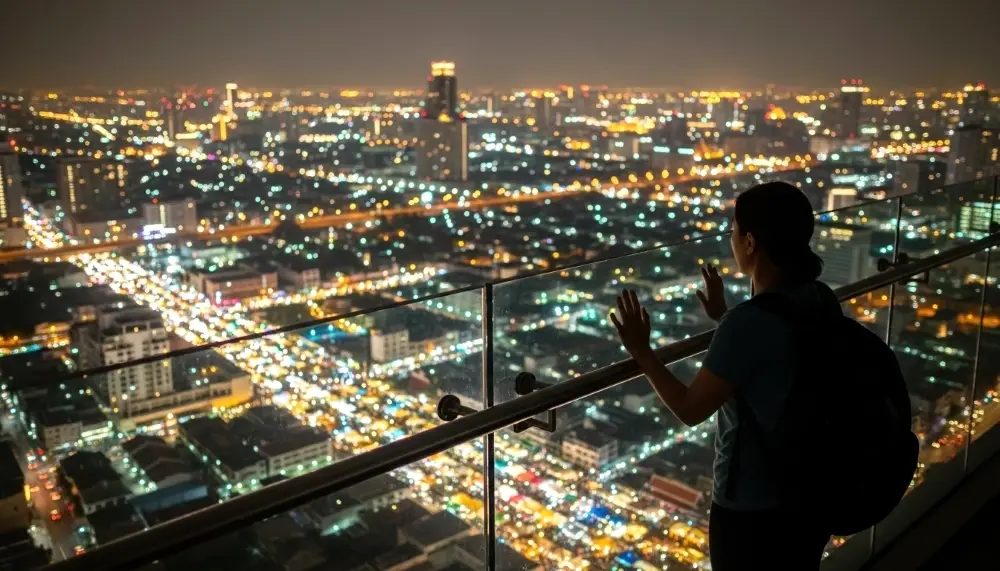

Lock in your Bangkok accommodation
early and beat peak-season price hikes.
Agoda’s filters let you compare options
side by side before you commit.
Ekkamai vs Ari:
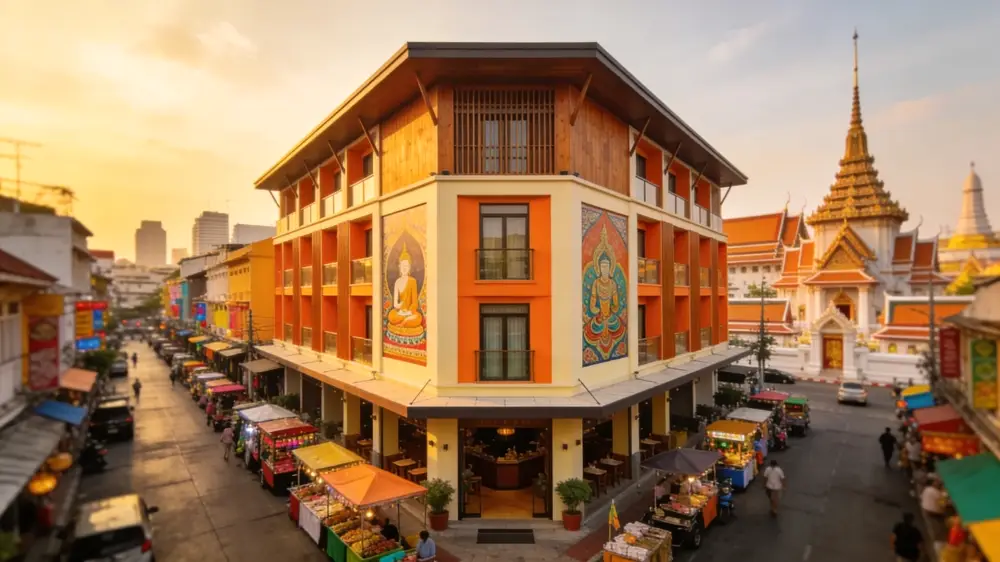
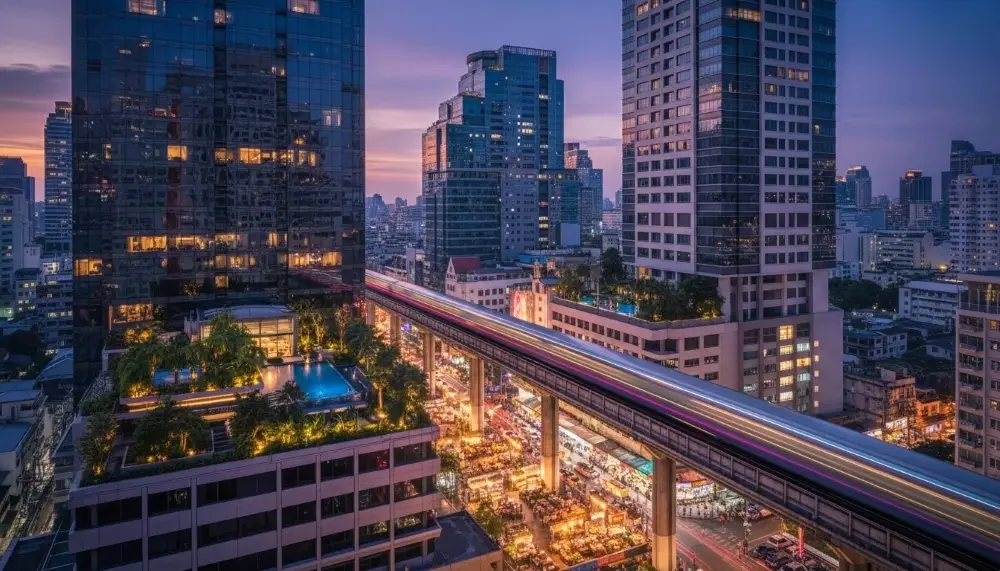
The choice between Ekkamai and Ari defines the Bangkok experience for the modern remote worker. One is a gleaming corridor of glass towers, craft breweries, and high-speed transit. The other is a low-rise sanctuary of mid-century architecture, quiet sois, and the city’s most sophisticated coffee scene.
As Bangkok evolves into the primary hub for Southeast Asian nomadism, these two neighborhoods have emerged as the leading contenders for those seeking a balance between professional productivity and Thai cultural immersion.
Ekkamai is the premier choice for nomads seeking a high-energy, central lifestyle with immediate access to Sukhumvit nightlife and luxury malls. Ari is the superior alternative for long-term residents prioritising a quiet, creative atmosphere, walkable streets, and a local community feel away from the primary tourist thoroughfares.

From classic Bangkok highlights to
hidden-gem private tours. Cancel
free up to a day before your
start time if plans change.
Neighbourhood Comparison:
| Feature | Ekkamai (Sukhumvit Soi 63) | Ari (Phahonyothin) |
|---|---|---|
| Average 1-BR Rent | 18,000 to 30,000 THB (~$514 to $857) | 15,000 to 25,000 THB (~$429 to $714) |
| Vibe | Cosmopolitan and Upmarket | Creative and Residential |
| Coworking Presence | High (UnionSPACE, Spaces) | Moderate (Yellow Lane, FabCafe) |
| Noise Level | Vibrant and Energetic | Calm and Peaceful |
| Transport Hub | BTS Ekkamai / Gateway Mall | BTS Ari / La Villa |
Ekkamai: The Sukhumvit Wonder
Ekkamai serves as a strategic base for digital professionals who require world-class infrastructure and proximity to the Thonglor business district. It excels in offering diverse international dining, high-end serviced apartments, and pet-friendly workspaces, making it the most convenient neighbourhood for those new to the Bangkok ecosystem.
The neighbourhood is anchored by Gateway Ekkamai, a Japanese-themed mall that provides everything from technical repairs to high-speed internet providers like AIS and True. Working from Ekkamai often means spending afternoons at UnionSPACE, a pioneer in the local coworking scene that offers hot desking for 250 THB (~$7.15) per day or dedicated desks from around 4,500 THB (~$128.55) per month.
Cultural etiquette here is important: when dining at the upscale eateries along Ekkamai Soi 12, many establishments add a 10% service charge and 7% VAT (noted as “++”) to the bill. Tipping is not mandatory, but rounding up the bill or leaving a 20 to 50 THB (~$0.57 to $1.43) note is a respectful gesture for exceptional service.
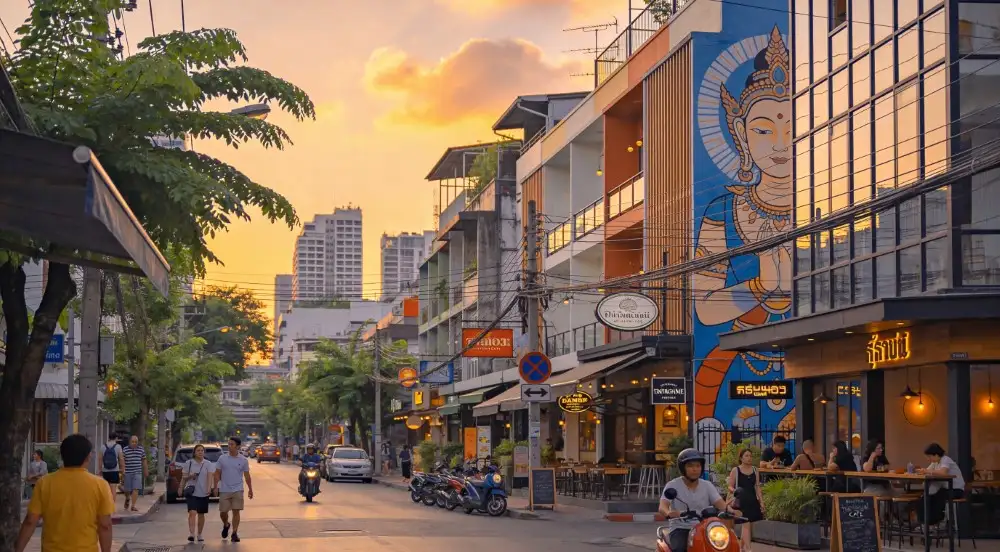
Ari: The Creatives’ Lifestyle
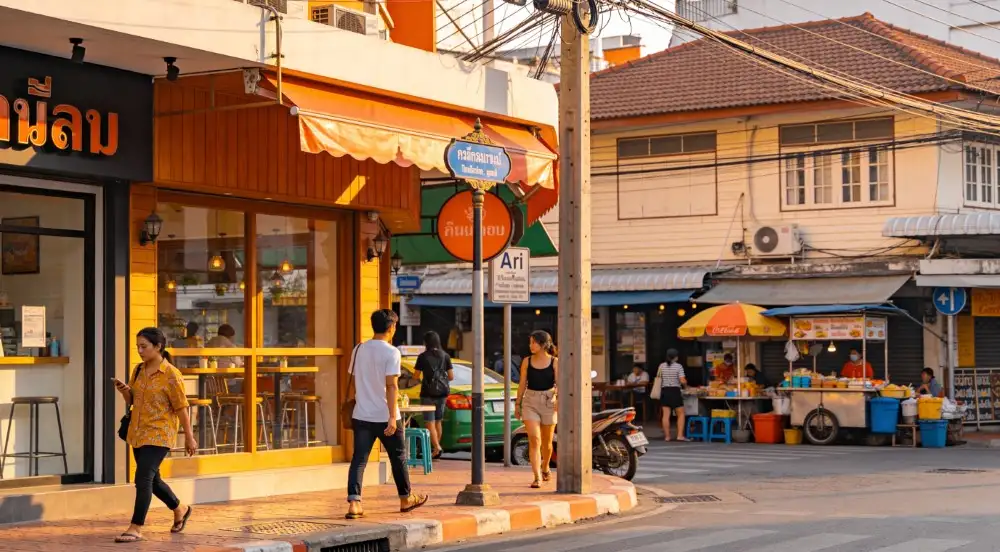
Ari is the definitive choice for nomads seeking a slower pace of life characterised by boutique cafes, independent galleries, and a distinct lack of high-rise congestion. It attracts a demographic of seasoned travelers and local creatives who value walkability and a neighbourhood where local vendors know your name.
Giant rain trees arch over Phahonyothin Soi 7, providing shade for the dozens of artisanal coffee shops that line the district. The neighbourhood lacks the massive malls of Sukhumvit, favouring small clusters like Gump’s Ari or Aree Garden. This creates a human-scale environment where the commute is a pleasant stroll rather than a battle with traffic.
The nomad community in Ari is tight-knit. You will find them at Yellow Lane, a lush garden-house converted into a coworking oasis at around 200 to 350 THB (~$5.70 to $10) per day, or at the newer Cafe Amazon Experience which spans several floors of dedicated work zones. Ari maintains a traditional Thai spirit. It is common to see residents offering food to monks in the early morning. While Ekkamai is about being seen, Ari is about belonging.

From temples to island tours, Klook
covers Bangkok’s best experiences.
Hotel pickup is often included and
prices beat the pier walk-in rate.
Monthly Budget Breakdown:
The 35,000 to 65,000 THB (~$1,000 to $1,857) range covers a wide spectrum. Here is what a realistic mid-range month actually looks like in both neighbourhoods for a solo nomad in 2026.
| Category | Ekkamai | Ari |
|---|---|---|
| 1-BR Condo (monthly) | 20,000 to 28,000 THB (~$571 to $800) | 15,000 to 22,000 THB (~$429 to $629) |
| Food (mix of street and cafes) | 8,000 to 12,000 THB (~$229 to $343) | 6,000 to 10,000 THB (~$171 to $286) |
| Coworking (monthly membership) | 3,500 to 6,000 THB (~$100 to $171) | 2,500 to 5,000 THB (~$71 to $143) |
| Transport (BTS, Grab, bike) | 2,500 to 4,000 THB (~$71 to $114) | 2,000 to 3,500 THB (~$57 to $100) |
| Utilities and internet | 1,500 to 2,500 THB (~$43 to $71) | 1,200 to 2,000 THB (~$34 to $57) |
| Social, fitness, and leisure | 4,000 to 8,000 THB (~$114 to $229) | 3,000 to 6,000 THB (~$86 to $171) |
| Monthly Total | 39,500 to 60,500 THB (~$1,129 to $1,729) | 29,700 to 48,500 THB (~$849 to $1,386) |
Ari runs approximately 20 to 25% cheaper than Ekkamai for a comparable lifestyle, primarily due to lower rents and a food scene dominated by affordable local restaurants rather than international dining venues.


Travelling in Bangkok with work?
NordVPN keeps remote access secure
on any network, even dodgy hotel
wifi or shared co-working hotspots.
Want To Move To Bangkok?
Moving permanently to Thailand in 2026 requires securing the Destination Thailand Visa (DTV), which allows for five years of multi-entry residency. Prospective residents must prove a 500,000 THB (~$14,286) bank balance and remote employment status. Long Term Resident and other visa options are also available for those who qualify.
For those looking to transition from nomad to resident, the DTV has replaced older, more restrictive options. This visa is perfect for the “Slow Travel” philosophy, allowing you to settle into a 12-month lease, which typically requires a two-month deposit plus the first month’s rent upfront. In Ekkamai, that means 54,000 to 84,000 THB (~$1,543 to $2,400) due at signing. In Ari, closer to 45,000 to 66,000 THB (~$1,286 to $1,886).
Pet relocation is another critical consideration for the modern nomad. Services like Pet Relocation Thailand handle the complex IATA-approved crating and import permits required at Suvarnabhumi Airport. Both Ekkamai and Ari have seen a surge in pet-friendly infrastructure, including the Trail and Tail pet park near Ekkamai.
The DTV Visa: What You Actually Need:
The Destination Thailand Visa (DTV) is the most practical long-stay option for remote workers in 2026. Here is what the process actually looks like.
The financial requirement: You must show a bank statement with at least 500,000 THB (~$14,286) in liquid assets. This means a current account or savings account balance, not investment holdings or property equity. The balance does not need to stay in Thailand. A foreign bank statement with a certified Thai translation is acceptable at most Thai embassies.
The work requirement: You must provide proof of remote employment or self-employment income. Acceptable documents include a letter from a foreign employer on company letterhead, freelance contracts showing consistent income, or proof of business ownership outside Thailand.
The application process: The DTV is applied for outside Thailand via the Thai E-Visa portal or at a Thai embassy or consulate. Processing typically takes 5 to 15 working days. The visa costs approximately 10,000 THB (~$286) in government fees. It grants five years of multi-entry status with individual stays of up to 180 days, extendable by a further 180 days at an immigration office inside Thailand for 1,900 THB (~$54).
Important note: The DTV does not grant the right to work for a Thai employer. It is specifically for people earning income from outside Thailand. Working for a local Thai company requires a separate work permit. For the full application checklist, see the complete DTV guide.

Airalo covers Bangkok with a range of
data plans from days to a month.
No physical SIM swap, no roaming
bill shock when you get back home.
Pro Tips For Stress Free Travel:
Transport: Use Grab or Bolt for cars, but rely on the BTS Skytrain (Sukhumvit Line) to bypass gridlock. A monthly BTS card loaded with 1,500 THB (~$42.85) covers most daily commutes in either neighbourhood.
Connectivity: Install a local SIM via the Airalo app before landing or visit a physical AIS shop for a monthly unlimited data plan typically costing 600 to 900 THB (~$17.15 to $25.70).
Digital Security: A NordVPN subscription is essential for accessing home-country banking and streaming services while on public Wi-Fi at coworking spaces and cafes.
Booking: Use Agoda for initial short-term stays before committing to a long lease. Agoda often has the deepest discounts for Thai properties and allows you to test a neighbourhood before signing a 12-month contract.

Stay online in Bangkok without the
daily data limits of tourist SIMs.
Yesim’s eSIM offers unlimited 5G
from around $10 for the whole trip.
A Note For The Nervous:
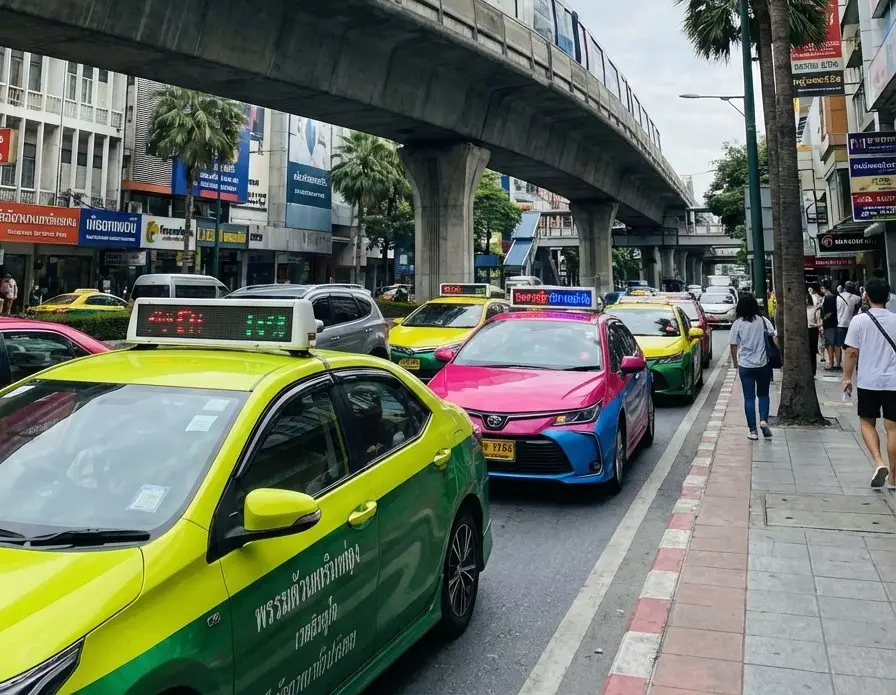
Bangkok is consistently ranked as one of the safest major cities for solo travelers and nomads. The most common “danger” is a stubborn taxi driver refusing to use the meter. Simply use the Grab app to ensure transparent pricing for every journey.
Respect the local culture, keep your voice at a moderate volume in public, and you will find Thais to be some of the most welcoming hosts on the planet. If anything goes wrong, Tourist Police are reachable on 1155 and have English-speaking officers available 24 hours a day.
Both Ekkamai and Ari have active expat and nomad communities on Facebook and Meetup, making it easy to meet people and get local advice within days of arriving. The transition from tourist to resident is smoother in Bangkok than almost any other major Asian city.
Frequently Asked Questions:
What is the monthly cost of living for a nomad in Bangkok in 2026?
A mid-range budget of 45,000 to 55,000 THB (~$1,286 to $1,571) per month covers a modern one-bedroom condo, daily dining out, coworking membership, transport, and weekend social activities in Ekkamai. Ari runs approximately 20 to 25% cheaper for a comparable lifestyle, with totals closer to 35,000 to 45,000 THB (~$1,000 to $1,286) per month.
Is Ekkamai or Ari better for digital nomads?
Ekkamai is better for those who want to be near the action, with the highest concentration of coworking spaces, luxury amenities, and proximity to Thonglor and the Sukhumvit nightlife corridor. Ari is better for those who want a quiet, leafy environment, a strong sense of local community, and a 20 to 25% lower cost of living. Long-term residents in Bangkok often start in Ekkamai and eventually move to Ari.
How do I apply for the DTV Visa?
Apply via the Thai E-Visa portal or at a Thai embassy or consulate outside Thailand. You need a bank statement showing at least 500,000 THB (~$14,286) in liquid assets and proof of remote employment or self-employment income. The visa costs approximately 10,000 THB (~$286) in government fees and grants five years of multi-entry status with stays up to 180 days each, extendable inside Thailand for 1,900 THB (~$54).
Are there many English-speaking doctors nearby?
Yes. Ekkamai is minutes away from Sukhumvit Hospital and Samitivej Sukhumvit, both offering world-class English-speaking medical staff with consultations from around 800 to 1,500 THB (~$22.85 to $42.85). Ari residents typically use Vichaiyut Hospital or Phaya Thai 2, both with strong English-language departments. Travel insurance covering hospitalisation at 150,000 to 400,000 THB (~$4,286 to $11,429) is strongly recommended.
What is the deposit required to rent a condo in Bangkok?
Most Bangkok condos require two months deposit plus the first month’s rent upfront. In Ekkamai, this means 54,000 to 84,000 THB (~$1,543 to $2,400) due at signing for a one-bedroom. In Ari, closer to 45,000 to 66,000 THB (~$1,286 to $1,886). Most landlords require a Thai bank account for ongoing payments, which can be opened with a DTV visa and passport at Bangkok Bank or Kasikorn Bank.
Can I work for a Thai company on a DTV Visa?
No. The DTV is specifically for people earning income from outside Thailand via remote employment or self-employment. Working for a local Thai employer requires a separate work permit. Violating this condition is treated seriously under Thai law. If you are offered local employment, your visa category will need to change.
How much does a coworking space cost in Bangkok?
Hot desking in Ekkamai typically costs 200 to 350 THB (~$5.70 to $10) per day or 3,500 to 6,000 THB (~$100 to $171) for a monthly membership. In Ari, day passes run 150 to 300 THB (~$4.30 to $8.55) and monthly memberships 2,500 to 5,000 THB (~$71 to $143). Many cafes in both neighbourhoods function as informal coworking spaces with 100 to 200 THB (~$2.85 to $5.70) coffee purchases accepted in lieu of a desk fee.
Is it easy to get a local SIM card in Ekkamai or Ari?
Yes. AIS and True Move H shops are located inside Gateway Ekkamai mall. AIS also has a branch near BTS Ari. Monthly unlimited data plans cost 600 to 900 THB (~$17.15 to $25.70). Alternatively, activate a Airalo or Yesim eSIM before landing and visit a physical shop to upgrade once settled. You will need your passport and, for a tourist SIM, your visa.
Which Bangkok neighbourhood is best for a first month stay?
Ekkamai is the better choice for a first month. The higher density of coworking spaces, international restaurants, and English-speaking services makes orientation much easier. Once you have established your routines, found a reliable grocery shop, and built a social network, transitioning to Ari for a lower-cost, higher-quality-of-life second month is a common and well-established nomad path in Bangkok.
How do I transfer money to Thailand as a digital nomad?
Wise is the most cost-effective method for regular international transfers, typically charging 0.5 to 1.5% per transaction versus 3 to 5% at most banks. Revolut and Instarem are solid alternatives. Thai ATMs charge a flat 220 THB (~$6.30) per foreign card withdrawal, so withdrawing the maximum per transaction minimises fees. Once you open a Thai bank account (available at Bangkok Bank with a DTV visa), direct domestic transfers become fee-free.