Thailand’s Rainy Season Adventures: Why Monsoon is Actually Underrated
This site contains affiliate links. We may earn a commission at no extra cost to you.
Ask the average travel booking platform when to visit Thailand and it will point you without hesitation toward November through February. The weather is reliable, the seas are calm, the skies are photogenic. All of that is true. What the algorithm does not mention is that those months also deliver the highest prices, the longest queues at the Grand Palace, the fullest beaches, and the most crowded elephant sanctuaries in Southeast Asia.
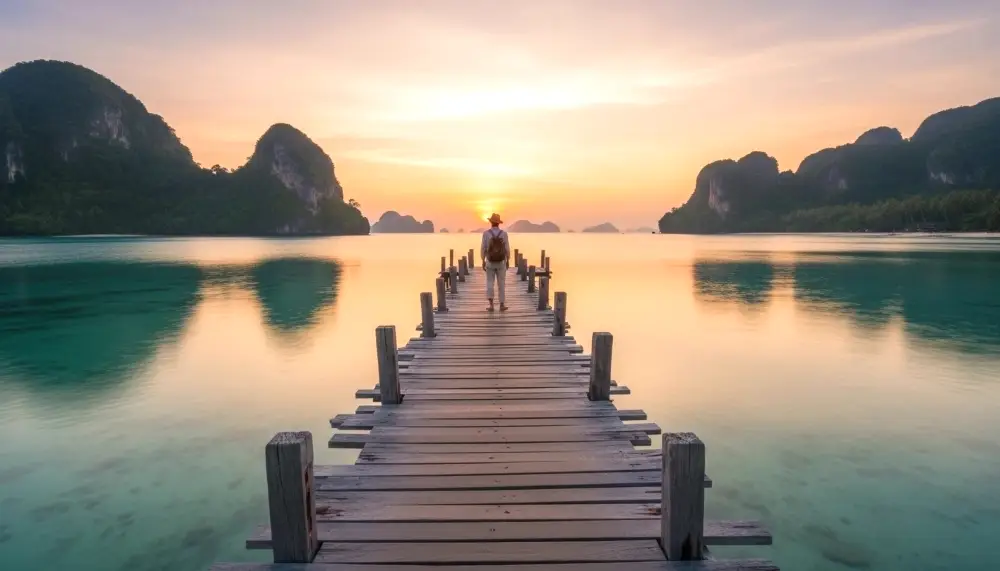
The rainy season runs roughly from mid-May through October across most of Thailand. It has a reputation for chaos, flooding, and ruined itineraries that is significantly worse than the reality for the vast majority of the country. In practice, monsoon showers in Thailand are short and intense rather than sustained and relentless. Mornings are frequently clear.
Afternoons bring an hour or two of rain that turns the air clean and cool. By evening, the streets are lively again and the light after a shower is remarkable. What the rain season actually delivers, for travellers willing to recalibrate their expectations, is a different Thailand: greener, quieter, cheaper, and in some places genuinely more spectacular than anything the dry season can offer.
The Quick Summary:
When is the rainy season? Mid-May to late October across most of Thailand. The two coastlines have different rainy seasons: the Andaman coast (Phuket, Krabi, Koh Lanta) is wettest May to October, while the Gulf coast (Koh Samui, Koh Phangan, Koh Tao) receives its heaviest rain November to January. This inverse pattern means dry-weather island travel is possible year-round with the right destination choice.
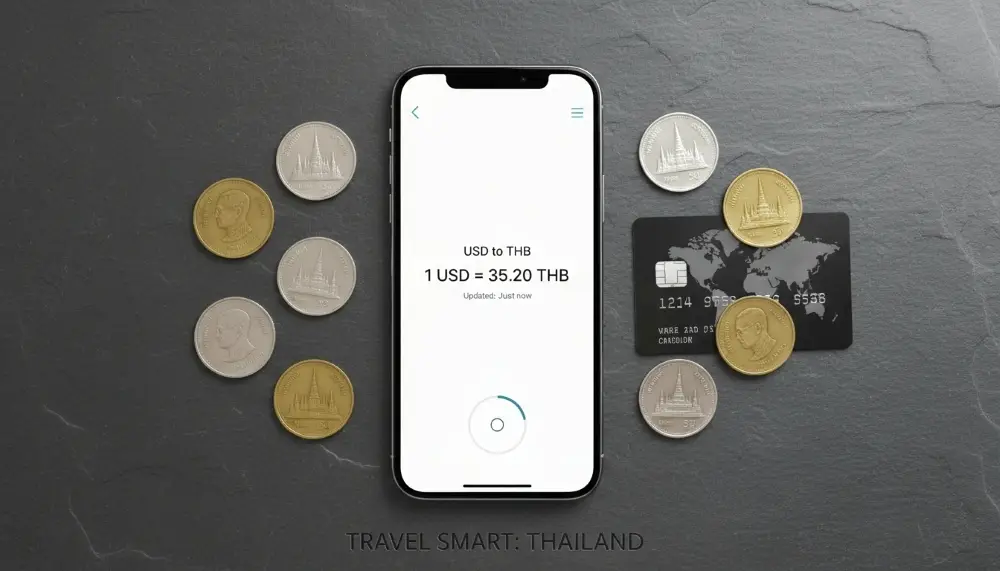
How much cheaper is it? Accommodation prices drop 30 to 50 percent compared to high season. A mid-range double room that costs 1,100 THB (~$30.80 USD) in December can drop to 350 THB (~$9.80 USD) in September on the Andaman coast. Bangkok’s 3 and 4-star hotels drop 30 to 40 percent. International flights also fall significantly in low season, compounding the savings.
What is the rain actually like? Typically short, heavy afternoon bursts followed by clear skies. Mornings are usually dry. The rain cleans the air, cools the temperature, and turns the landscape an intense green that the dry season cannot replicate. The haze and smoke from northern Thailand’s burning season, which affects Chiang Mai heavily in March and April, is entirely gone by June.
What to avoid: Andaman coast island-hopping in heavy monsoon (May to October). Rough seas make some ferry routes unreliable and some water activities unsafe. Khao Phangan Full Moon Party months overlap with Gulf coast dry season, so they are viable but crowded. Keep sea conditions and Thai Meteorological Department alerts in mind for any water-based activity.

From temples to island tours, Klook
covers Thailand’s best experiences.
Hotel pickup is often included and
prices beat the pier walk-in rate.
The Biggest Myth: It Does Not Rain All Day:
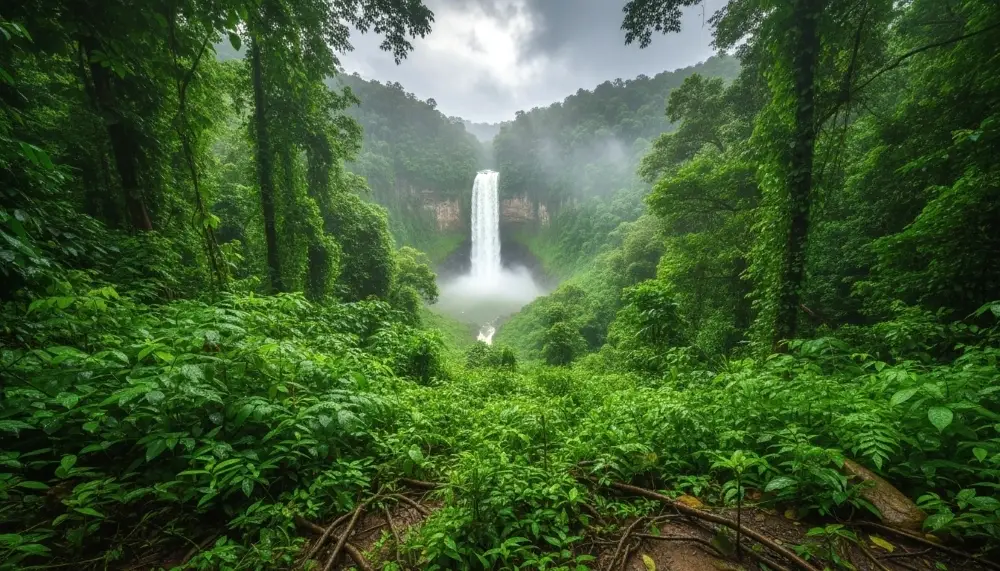
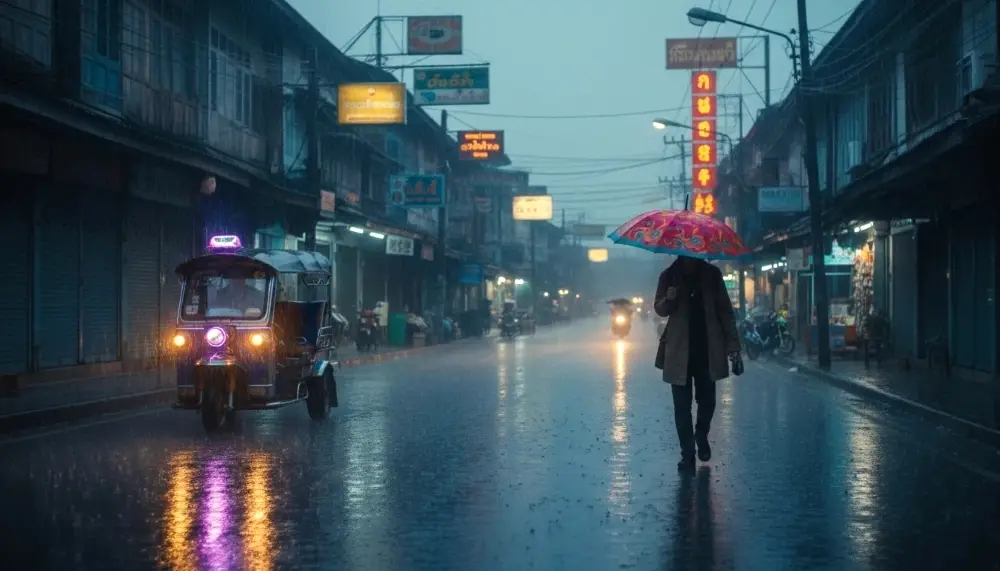
The single most persistent misconception about travelling Thailand in monsoon is the image of sustained grey downpours that cancel days wholesale. The reality, reported consistently by travellers who have made the journey, is something quite different. Rain in Thailand’s wet season is typically tropical in character: intense, brief, and followed by sunshine. A shower lasts one to two hours, usually in the late afternoon. The rest of the day is free.
One traveller who visited Bangkok and Ayutthaya in August noted using an umbrella primarily for shade from the sun rather than rain. Another who spent September across Chiang Mai, Kanchanaburi, and Bangkok described their only significant disruption as a one-hour evening shower in Chinatown that they waited out with a drink before continuing their food tour.
The key is the pattern: mornings are workable, afternoons are when the shower arrives, and evenings recover. Planning a schedule around this rhythm, outdoor activities before noon, something indoors or covered in the early afternoon, then the evening market or restaurant after the rain clears, is all the adaptation required.
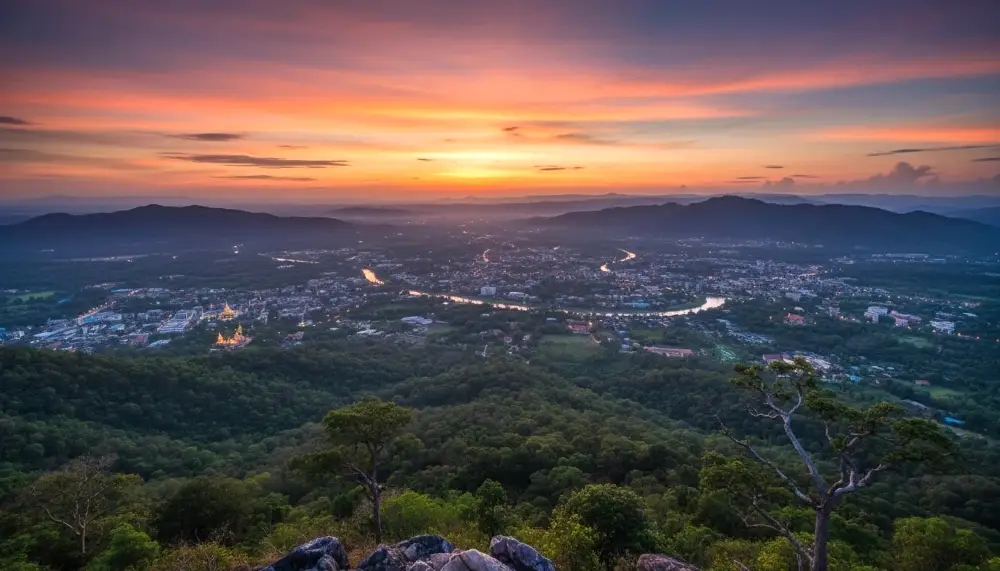
What the rain genuinely does change is the landscape. Thailand during the green season is visually a different country from the dry season version. The forests turn an almost impossible shade of green. Waterfalls that are a trickle in February become thundering falls by August. Rice paddies fill and reflect the sky. The mountains of the north, often hazy in burning season, clear completely and reveal ridgelines that high-season visitors simply never see. For photographers and anyone who finds beauty in lush rather than parched, the monsoon months deliver something the guidebook peak months cannot.

Skip-the-line tickets and guided walks
in Thailand with English-speaking
guides. Read real traveller reviews
before committing to a single one.
The Price Argument: What You Actually Save:
The financial case for monsoon travel to Thailand is compelling and specific. Accommodation prices on the Andaman coast drop by more than 50 percent in the rainy season. A double room at a well-reviewed Koh Lanta property that costs 1,100 THB (~$30.80 USD) in high season can fall to 350 THB (~$9.80 USD) in September.
Bangkok’s 3 and 4-star hotels drop 30 to 40 percent. Ferry prices fall by around 20 percent. Tours and activities including diving and snorkelling run 20 percent cheaper. International flights to Bangkok in low season cost significantly less than the peak December to February window, and the savings on both legs of the journey compound into a substantially lower total trip cost.
Booking accommodation through Agoda in the rainy season gives access to genuine value at properties that would require high-season budget stretching: boutique resorts, riverside pool villas, and jungle lodges all price aggressively for the low-season guest.
For digital nomads and remote workers on flexible schedules, the financial logic of a June through September stay in Thailand is straightforward: the same monthly budget that buys a mid-range experience in peak season buys something considerably more comfortable in the rainy season.
Shoulder months, May to early June and October, offer perhaps the best balance of all: the worst of the peak-season crowds are gone, the heaviest of the monsoon rain has not yet arrived or is tapering off, prices are already discounted, and the landscape is beginning its green transformation. Experienced Thailand travellers who return annually often target these windows specifically. Booking.com and Agoda both show strong availability and promotional pricing in these shoulder periods.
Khao Yai and Kanchanaburi: National Parks at Their Peak:
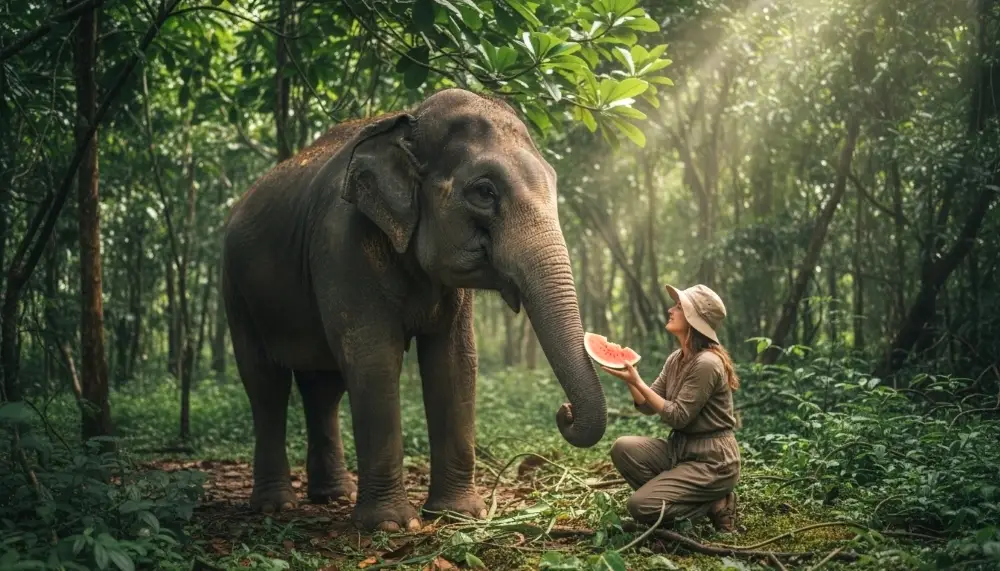
If there is a single argument for monsoon travel to Thailand that transcends price, it is the national parks. Khao Yai, a UNESCO World Heritage Site two hours north of Bangkok, transforms during the rainy season in ways that the dry-season version simply cannot match. The Haew Suwat waterfall, made internationally famous by its appearance in the film “The Beach,” turns from a modest cascade into a thundering torrent framed by forest that has deepened to an almost surreal intensity of green. Haew Narok, the park’s largest fall, is at its most powerful from July through September. Hiking trails that are dusty footpaths in February are canopied jungle paths in August.
Khao Yai is also Thailand’s best destination for wild elephant encounters, and the green season is when these encounters are most likely: elephants are more active in the cooler, post-rain temperatures and are often seen on the park roads in the late afternoon. One visitor described a young bull elephant emerging from the forest and walking alongside their car for a sustained period before disappearing back into the trees: an encounter that would be remarkable anywhere in the world and that the park’s green-season quiet makes significantly more probable than in peak tourist months.
Kanchanaburi, to the west of Bangkok, follows the same pattern. Erawan National Park’s seven-tiered emerald falls, among the most photographed in the country, reach their peak flow and colour saturation between July and October. Jumping into the pools beneath the lower tiers in July, with the cool water and lush forest on every side, is a genuinely memorable experience: one traveller described it as their favourite stop on a full summer trip.
Staying in a floating house by the River Kwai after an afternoon shower, when the valley fills with mist and the temperature drops into genuine cool, costs a fraction of what peak season would charge for the privilege. Book these national park day tours through Klook or Get Your Guide from Bangkok for confirmed transport and English-speaking guides.

Pick a Thailand eSIM plan that matches
your trip length on Airalo’s global
marketplace. Install before departure
and you’re online the moment you land.
Chiang Mai in the Green Season: The North Without the Haze:
Chiang Mai in high season is exceptional. It is also Chiang Mai with burning haze in the air from March through May, with long queues at the Sunday Walking Street, and with elephant sanctuaries operating at capacity during peak booking periods. The green season version, June through September, removes all three of those friction points simultaneously.
The burning season haze that affects air quality across northern Thailand from late February through May clears completely with the arrival of the monsoon rains. By June, the air in Chiang Mai is genuinely clean. Doi Inthanon, Thailand’s highest peak at 2,565 metres, can drop to 13 degrees Celsius in July after rain, creating an experience that requires a light jacket and produces a landscape that looks nothing like tropical Thailand. The Doi Suthep Monk Trail and the Ang Ka nature trail in Doi Inthanon National Park both remain open and are accessible even in the wetter months, rewarding morning hikers before the afternoon rain arrives.
The ethical elephant sanctuaries around Chiang Mai run at significantly lower occupancy in the green season, which directly improves the experience. Fewer visitors means more time with the elephants, less structured scheduling, and interactions that feel genuinely unhurried. Elephants in the cooler rainy-season temperatures are more active and playful than in the April heat. A sanctuary visit in June or July typically costs 10 to 20 percent less than the December equivalent and is booked far more easily. Search and book through Klook for current sanctuary options, availability, and transport from Chiang Mai accommodation.
Chiang Mai’s night markets and cafe culture continue undisturbed through the wet season. The Sunday Walking Street still operates. The food scene does not close for rain. Accommodation through Agoda shows strong low-season discounts, particularly at the boutique guesthouses and small hotels in the Old City area that operate at full capacity from November through February and offer genuine value in the quieter months.

Gulf Coast Islands: The Rainy Season Flip:

The two coastlines of Thailand experience their wet seasons at different times, which is one of the most useful and underused pieces of travel planning knowledge available for monsoon travel. While the Andaman coast (Phuket, Krabi, Koh Lanta, Koh Phayam) receives the heaviest southwest monsoon rain from May through October, the Gulf of Thailand coast (Koh Samui, Koh Phangan, Koh Tao, Koh Chang) is generally sunny and calm during those same months. The Gulf coast’s rainy season runs November through January.
This inverse seasonality means that a visitor arriving in July who would face rough seas and frequent rain on the Andaman coast can simply pivot east to the Gulf coast and find excellent beach conditions. Koh Samui in July has calm seas, manageable crowds, and accommodation priced at a significant discount from the December peak. Koh Tao’s dive sites are accessible and visibility is good. The switchover logic works in reverse too: Andaman coast visits in December through February, when the Gulf is being lashed by its own wet season, are ideal.
Koh Khao Sok National Park in Surat Thani province occupies an unusual position in this seasonal picture. It receives high rainfall year-round due to its protected valley geography, but the lake and river-based activities that define the Khao Sok experience: kayaking, wildlife spotting, floating raft-house stays, are not meaningfully affected by rain.
If anything, the rainy season makes the lake more dramatic and the jungle more alive. The wildlife is more active, the water levels are perfect for paddling, and the misty morning views across Cheow Lan Lake from a floating raft house are among the most atmospheric experiences available in Thailand at any time of year. Book through Klook for guided Khao Sok packages that include transport from Surat Thani or Phuket.

Stay closer to the action in Thailand.
Agoda lists guesthouses to resorts
with verified reviews and instant
booking at competitive rates.
Bangkok in Monsoon: The City at Its Most Liveable:
Bangkok is the city most resilient to the rainy season across Thailand’s destinations. Its major attractions are a mix of indoor and outdoor, the BTS and MRT network means you can move between them without street-level exposure to heavy rain, and the food scene, markets, and cultural sites operate year-round without meaningful weather disruption.
What the green season specifically delivers in Bangkok is the Grand Palace and Wat Phra Kaew without the high-season crowds that make photography nearly impossible during peak months. One traveller who visited the Grand Palace on a rainy-season morning described being able to take photographs without crowds in the background as “something that almost never happens in peak season.” Temple visits in the early morning before the afternoon rain arrives are among the most rewarding low-season activities available in the city. The Chao Phraya river cruise experience also benefits from quieter boats and better sight-lines.
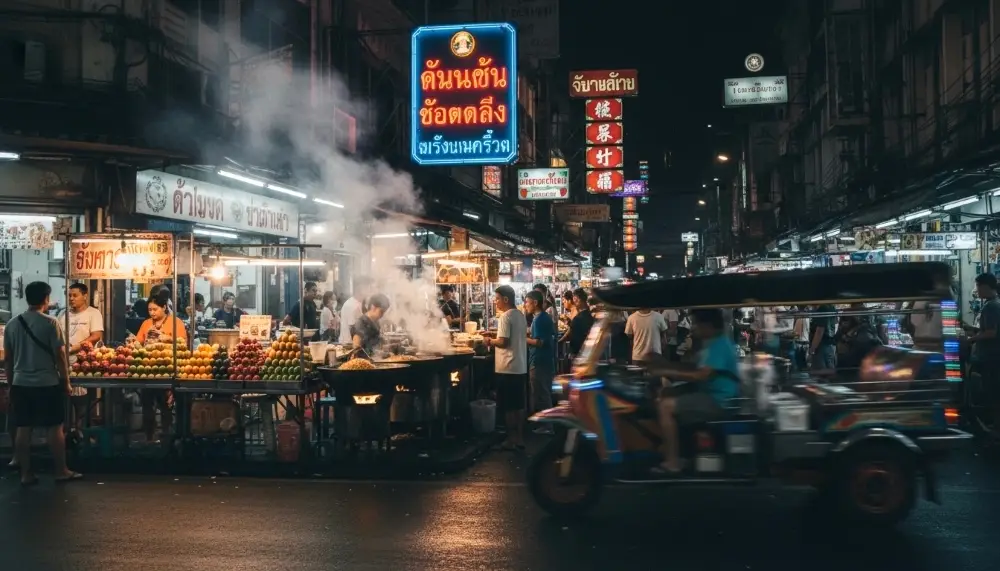
Bangkok’s Jodd Fairs market, the canal tours, and the Bang Krachao cycling route all continue through the rainy season. The canal tour in particular gains something in the wet months: the Thonburi klong network with rain-washed temple roofs and lush waterside planting is visually richer in June than in February. Book canal tours through Klook or Get Your Guide in advance even in low season, as guided departures still operate on fixed group sizes and popular morning slots fill on popular days.
For digital nomads choosing between Bangkok and a beach destination in the green season, Bangkok consistently wins on practicality: fast and reliable internet everywhere, the full range of co-working spaces operating at comfortable occupancy, air conditioning in every building, and cultural activities that work regardless of what the sky is doing outside. Use NordVPN on Bangkok’s co-working and cafe networks and Grab for all city transport. Activate Airalo, Yesim, or Saily before your inbound flight so data is live at the airport.

Need budget data in Thailand? Saily’s
eSIM plans start cheap and install
in a couple of minutes. Built by
the NordVPN team, security is solid.
Rainy Season by Region: A Quick Reference:
| Region | Rainy Months | Best Green-Season Activities | Avoid |
|---|---|---|---|
| Bangkok | May to October | Temples, canals, markets, food tours | Nothing significant |
| Chiang Mai / North | June to October | Elephant sanctuaries, waterfalls, Doi Inthanon | Some advanced trekking routes close |
| Khao Yai / Kanchanaburi | May to October | Erawan Falls, Haew Suwat, wild elephants | Some river activities in peak flood |
| Andaman coast (Phuket, Krabi) | May to October | Budget stays, day trips, emerald-green hills | Island-hopping, diving, rough sea routes |
| Gulf coast (Koh Samui, Koh Tao) | November to January | Beach, diving, calm seas during Andaman wet season | November to January for beach visits |
| Khao Sok National Park | Year-round rainfall | Kayaking, wildlife, raft-house stays | Some trekking paths become slippery |
Practical Preparation: Making the Rain Work For You:

Pack correctly and the rain stops being a problem. A compact travel umbrella and a light waterproof layer cover the practical gap entirely. Waterproof bags and phone cases cost almost nothing and prevent the only genuinely frustrating consequence of an afternoon shower. Quick-dry clothing is standard in Thailand year-round, and the green season simply makes it more relevant. Light trousers or shorts in quick-dry fabrics, a packable rain jacket, and waterproof sandals or shoes that do not hold water are the entire packing adjustment required.
Schedule around the pattern, not against it. Outdoor national park activities, temple visits, cycling, and running tours should be booked for morning slots. Most rain arrives in the early to mid-afternoon. The period from 3:00pm to 5:00pm is when accommodation, cafes, and indoor experiences earn their keep. After 6:00pm, the streets are typically clear and the evening market and food scene is in full operation. This rhythm, once understood, turns a potential frustration into a natural pacing device for the day.
Monitor sea conditions for any water-based activity. The one area where the rainy season requires genuine caution is the Andaman Sea between May and October. Ferry services can be suspended in bad weather. Diving and snorkelling sites can have reduced visibility. Checking the Thai Meteorological Department forecasts before any boat trip and choosing operators with flexible cancellation policies protects against the specific disappointment of arriving at a pier for a cancelled departure. Book activities through Klook and Get Your Guide, both of which offer cancellation and rescheduling protection that walk-up bookings at piers do not.
Travel insurance matters more in the rainy season. Disruptions are more likely: a cancelled ferry, a flooded road, a national park trail closed after heavy rain. SafetyWing Nomad Insurance covers medical incidents and can be complemented by standard trip disruption insurance that covers cancellations and rescheduling costs. Having both in place before departure removes the financial anxiety from weather variability and allows genuine flexibility rather than nervous schedule-watching.
The Rainy Season Mindset: What It Actually Requires:
The travellers who get the most from Thailand’s rainy season are the ones who arrive without a fixed idea of what perfect weather looks like. They are not primarily beach-maximisers. They are curious about the country rather than the suntan. They find a two-hour afternoon shower in a Chiang Mai cafe with good coffee and a book to be a reasonable trade-off for the clarity of the mountains the next morning. They understand that the Grand Palace with five other visitors is a profoundly different experience from the Grand Palace with two thousand.
The green season in Thailand rewards the same quality that the country rewards in general: willingness to show up without a rigid plan and follow the actual conditions rather than the idealised version. The afternoon rain is not an obstacle. It is part of the rhythm of a country that has organised itself around it for centuries. Markets, temples, food culture, and hospitality all continue regardless of what the sky is doing. The locals certainly do not stop.
For anyone whose Thailand trip has been delayed by waiting for the right season, the right conditions, the ideal forecast: the rainy season is not a compromise. For national parks, waterfalls, elephant sanctuaries, and budget-conscious travel across the country’s cultural heartland, it is genuinely the best time to come.

Forget swapping physical SIMs in Thailand.
Yesim works on most modern phones,
activates remotely, and keeps your
home number live on WhatsApp too.
Frequently Asked Questions:
When exactly is the rainy season in Thailand?
The rainy season runs from mid-May to late October across most of Thailand, brought by the southwest monsoon. The Andaman coast (Phuket, Krabi, Koh Lanta) is wettest during this period. The Gulf coast (Koh Samui, Koh Phangan, Koh Tao) has its heaviest rain November through January. This inverse pattern makes year-round beach travel possible by choosing the right coast for the season.
How much cheaper is Thailand in the rainy season?
Accommodation drops 30 to 50 percent compared to high season. A double room that costs 1,100 THB (~$30.80 USD) in peak season can fall to 350 THB (~$9.80 USD) in September on the Andaman coast. Bangkok 3 and 4-star hotels drop 30 to 40 percent. Tours and activities including diving run around 20 percent cheaper. International flights are also significantly lower in the low-season window.
Does it really rain all day in Thailand’s monsoon season?
No. Rain in Thailand’s wet season is typically tropical: short, intense bursts lasting one to two hours, usually in the afternoon, followed by clear skies. Mornings are generally dry. Multiple travellers visiting in August and September have reported mornings sunny enough to use an umbrella primarily for shade. Scheduling outdoor activities before noon and indoor or covered experiences in the early afternoon is all the adaptation required.
Which Thailand destinations are best to visit during the rainy season?
Bangkok is resilient year-round. Chiang Mai and northern Thailand are excellent from June to October once the burning-season haze has cleared. Khao Yai and Kanchanaburi national parks are at their most spectacular with full waterfalls and active wildlife. Gulf coast islands (Koh Samui, Koh Tao, Koh Phangan) are generally dry from May to October, making them ideal rainy-season beach destinations. Khao Sok National Park operates well in any weather.
Are the waterfalls in Thailand better in the rainy season?
Yes, significantly. Erawan Falls in Kanchanaburi, Haew Suwat and Haew Narok in Khao Yai, and waterfalls throughout Doi Inthanon and northern Thailand are at their fullest and most dramatic from July through October. The same waterfalls in February are often reduced to a trickle. If waterfalls are a travel priority, the rainy season is the only time that fully delivers.
Is it safe to travel in Thailand during the rainy season?
Yes, with specific awareness. The main areas of caution are Andaman Sea ferry routes and water activities from May to October, when rough seas can cancel services. Always check sea conditions before boat trips and use operators with flexible cancellation policies. Some trekking trails in national parks become slippery after heavy rain. For cities, cultural sites, and most land-based activities, the rainy season presents no safety concerns beyond standard awareness.
What should I pack for Thailand’s rainy season?
A compact travel umbrella, a light waterproof jacket, quick-dry clothing, waterproof sandals or shoes, and waterproof cases for your phone and electronics. The full packing adjustment over a dry-season visit is minimal. Insect repellent is more relevant in the wet season. Light layers for air-conditioned interiors remain essential year-round in Thailand.
Is the rainy season a good time to visit Chiang Mai?
Yes. From June onwards the burning-season haze that affects air quality from February through May has completely cleared. Elephant sanctuaries operate at lower occupancy with reduced prices and a more relaxed visitor experience. Doi Inthanon and the mountain trails are lush and green. Temperatures on the high peaks drop to around 13 degrees Celsius after rain. The city’s food and cultural scene continues unchanged throughout.
Do I need travel insurance for a rainy season trip to Thailand?
Yes, and it is more important in the rainy season than in peak months. Weather-related disruptions including cancelled ferries, flooded roads, and closed park trails are more common. SafetyWing Nomad Insurance covers medical incidents. Standard trip disruption insurance covers cancellations and rescheduling costs. Having both in place before departure is the sensible approach for any green-season itinerary with water-based or outdoor activity components.
Which months offer the best balance of good weather and low prices in Thailand?
May to early June and October offer the best shoulder-season balance. The worst of the peak-season crowds are gone, prices are already discounted, and the most extreme monsoon conditions have not yet arrived or are tapering. Experienced Thailand travellers who return annually often target these specific windows for exactly this reason. Search accommodation availability on Agoda or Booking.com for these months to see the price differential clearly.