Driving Thailand’s West Coast: From Ranong to Hat Yai by Motorbike
This site contains affiliate links. We may earn a commission at no extra cost to you.
Thailand’s west coast is a different country to the one most visitors see. Where the east coast runs on ferry timetables and party itineraries, this side moves at its own pace: jungle-draped hills tumbling into the Andaman Sea, fishing towns that haven’t changed in decades, and a highway that unspools through some of the most rewarding riding terrain in Southeast Asia.
The route from Ranong south to Hat Yai covers roughly 600 kilometres of Highway 4 and its coastal offshoots. It passes through Khao Lak, Phang Nga, Krabi, and Trang before crossing into Songkhla Province. You can push it in three hard days. Four is comfortable. Five lets you breathe. All prices in this guide use a rate of 35 THB = $1 USD.
Quick Answer: The Route At A Glance
The classic west coast motorbike run breaks down like this:
- Day 1: Ranong to Khao Lak (approx. 170 km)
- Day 2: Khao Lak to Krabi (approx. 175 km via Phang Nga)
- Day 3: Krabi to Trang (approx. 120 km)
- Day 4: Trang to Hat Yai (approx. 130 km)
Budgeting: Expect to spend 1,200 to 2,500 THB (~$34 to $71) per day covering fuel, accommodation, food, and ferry crossings. The motorbike itself is your biggest single decision.
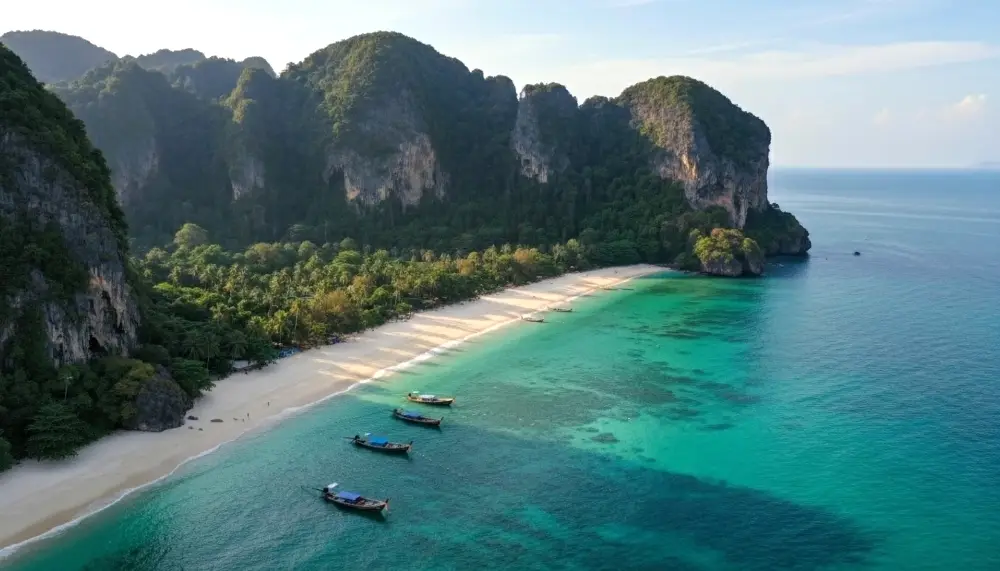

12Go takes the guesswork out of
Thailand transport. Check real-time
availability and book in your own
language and currency in minutes.
Renting Your Bike: What To Know Before You Go
Most riders pick up their bike in Ranong or fly into Phuket and begin heading north. Ranong is the practical choice if you are arriving overland from Myanmar via the Victoria Point crossing.
A Honda PCX 150 or Yamaha NMAX rents for 250 to 400 THB per day (~$7 to $11) from local shops. A Honda CB500X or bigger adventure bike runs 800 to 1,400 THB per day (~$23 to $40). For a 4-day trip, budget roughly 1,000 to 5,600 THB (~$29 to $160) in rental alone before fuel. Always photograph every scratch before you ride off and insist on a written condition report. Passport deposits are common. If your rental shop asks to hold your actual passport, decline and offer a photocopy instead. Reputable shops accept this.
Activate your Airalo, Yesim, or Saily eSIM data plan before you leave home. Grab and Google Maps both require a live mobile connection to function, and SMS network verification codes for these apps cannot be received without data. Do this at home, not at the baggage carousel.
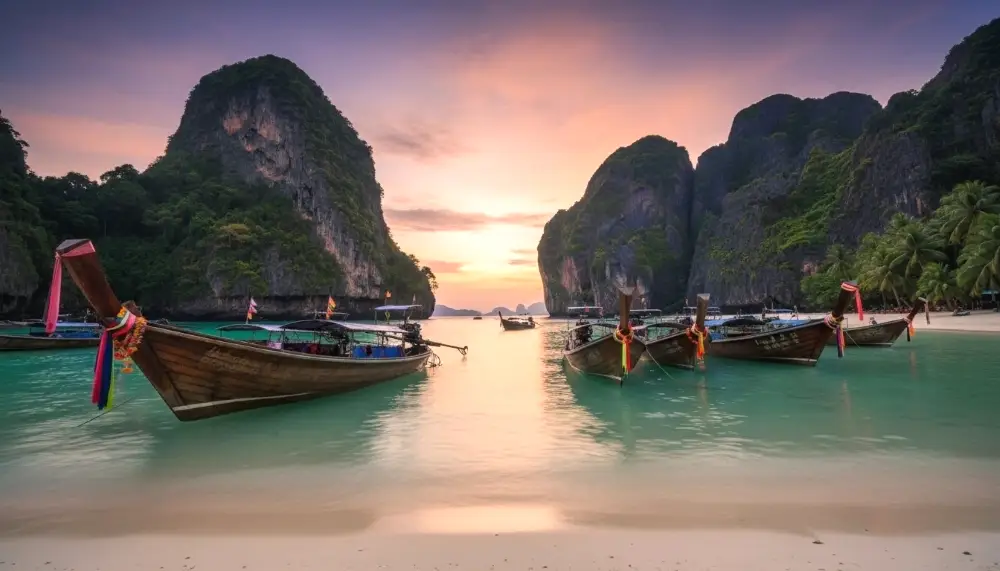

From temples to island tours, Klook
covers Thailand’s best experiences.
Hotel pickup is often included and
prices beat the pier walk-in rate.
Route Comparison: Costs At A Glance
| Leg | Distance | Fuel Cost (THB) | Fuel Cost (USD) | Highlights |
|---|---|---|---|---|
| Ranong to Khao Lak | ~170 km | ~120 THB | ~$3.40 | Jungle hills, hot springs, Kapoe Lakes |
| Khao Lak to Krabi | ~175 km | ~130 THB | ~$3.70 | Phang Nga Bay, James Bond Island detour |
| Krabi to Trang | ~120 km | ~90 THB | ~$2.55 | Limestone karst, Trang coast islands |
| Trang to Hat Yai | ~130 km | ~100 THB | ~$2.85 | Rubber plantations, Rattaphum Gorge |
Day 1: Ranong to Khao Lak
Ranong is Thailand’s wettest province and one of its least visited. That is the appeal. The town sits at the mouth of the Kraburi River, facing Myanmar’s Kawthaung across the narrow strait. Start early, around 07:00, before the humidity peaks.
Stop first at Ranong Hot Springs inside Raksawarin Park: entry is 20 THB (~$0.57) and the 65-degree mineral pools are genuinely restorative before a long riding day. South of Ranong, Highway 4 opens up through Kapoe, where the Kapoe Lakes reflect the surrounding hills in near-perfect stillness. Pull over and look. Nobody else will be there.
Khao Lak is the overnight stop: a beach town rebuilt with quiet dignity after the 2004 tsunami. A clean guesthouse room runs 500 to 900 THB per night (~$14 to $26). Mid-range beachfront hotels start around 1,800 THB (~$51). Check Agoda or Booking.com for current rates before committing. Dinner at a local seafood restaurant on the beach: 200 to 400 THB (~$5.70 to $11) for a full meal with fresh catches.
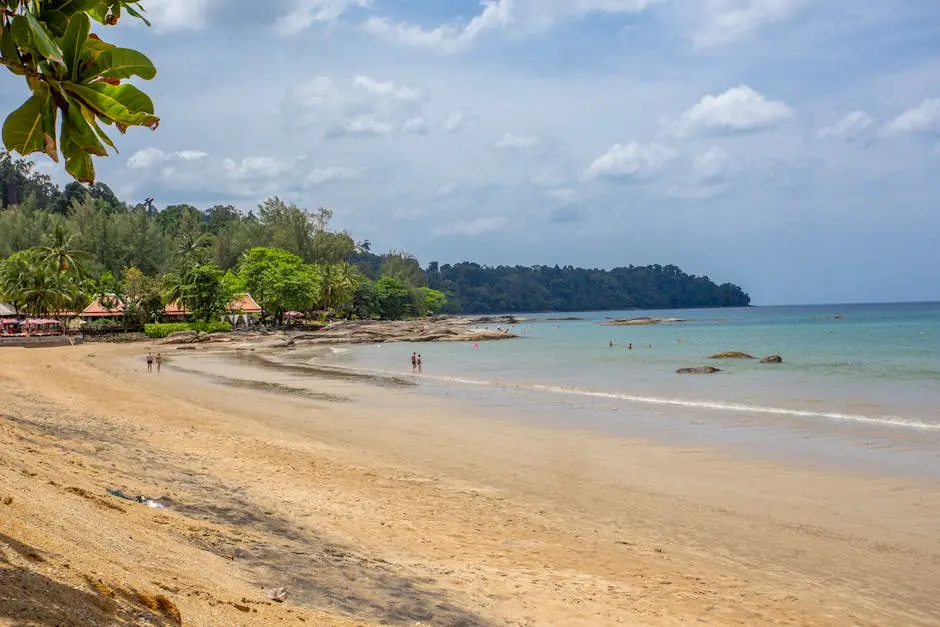

From boutique guesthouses to five-star
resorts, Agoda has Thailand covered.
Strong Asia inventory means deeper
discounts than you’d find elsewhere.
The Khao Sok Detour: Worth Every Kilometre

Between Khao Lak and Surat Thani, Highway 401 cuts east into Khao Sok National Park. The 15-kilometre detour to the Ratchaprapha Reservoir (Cheow Lan Lake) is one of the most visually extraordinary inland detours in southern Thailand: 165 square kilometres of jade-green water surrounded by jungle-draped limestone karsts.
National park entry is 300 THB (~$8.55) for foreigners. Floating raft house accommodation on the lake costs 1,500 to 3,500 THB per person (~$43 to $100) including dinner, breakfast, and a guided morning kayak. Book ahead through Get Your Guide or Klook to lock in vetted operators, particularly during the November to April peak season when floating accommodation books out weeks in advance.
If you are keeping this as a day ride rather than an overnight, budget 3 to 4 hours for the return loop. The road in is smooth and the views reward every turn.

Skip-the-line tickets and guided walks
in Thailand with English-speaking
guides. Read real traveller reviews
before committing to a single one.
Day 2: Khao Lak to Krabi via Phang Nga
This is the showstopper leg. Highway 4 south from Khao Lak enters Phang Nga Province through a corridor of rubber plantations and limestone bluffs. Phang Nga town itself is underrated: a quiet Thai city tucked between karst formations, with a morning market on Petkasem Road that opens at 06:00 and serves the best khanom jeen (rice noodles with curry) on the route for around 40 to 60 THB (~$1.15 to $1.70).
From Phang Nga pier, a longtail boat trip into Phang Nga Bay costs 500 to 800 THB per person (~$14 to $23) for a 3-hour group tour. James Bond Island (Ko Tapu) is the anchor attraction: the limestone pinnacle from The Man with the Golden Gun, entry included in most bay tours. Go in the afternoon when the morning tour groups have cleared. Book through Klook to secure a reputable operator and skip the pier-side hustle.
Continue south to Krabi for the night. The Ao Nang beachfront area has guesthouses from 500 THB (~$14) and boutique hotels from 1,500 THB (~$43). Krabi Town itself is cheaper and more local. Check Agoda for the current spread before you arrive. Dinner in Krabi Town: a full plate of pad kra pao (basil stir-fry with rice and egg) at a local shop costs 60 to 90 THB (~$1.70 to $2.55).
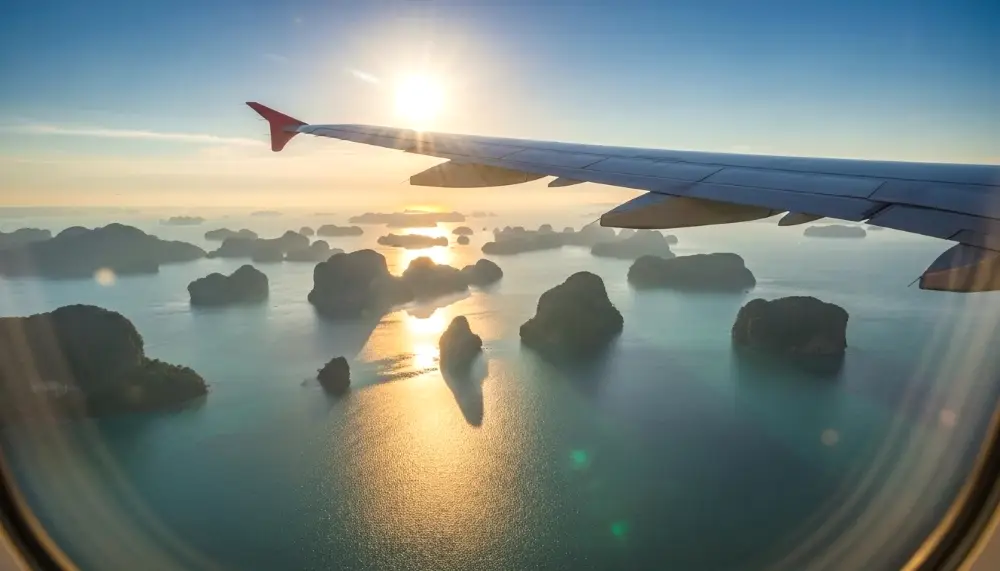

From short trips to long stays in Thailand,
Airalo has flexible eSIM data plans
you install in minutes. Top up
remotely if you need more data.
Pro Tips For A Stress-Free Ride

Navigation: Google Maps offline downloads for each province are essential. Download them on Wi-Fi the night before each leg. Grab works across all major towns on this route for when you park the bike and explore on foot.
Connectivity: Mobile data is non-negotiable on this route. Airalo, Yesim, and Saily all offer Thailand eSIM plans from approximately 350 THB (~$10) for 15 days of data. Activate before departure to avoid the SIM verification problem at the border or on arrival.
Cafe Wi-Fi Security: Use NordVPN on any public network, particularly in tourist-heavy areas like Ao Nang and Hat Yai Night Market. Bank-grade security on a travel VPN costs less than a single coffee per day.
Travel Insurance: SafetyWing covers motorbike accidents across Thailand for remote workers and long-stay travellers at around USD $42 per 4-week period. It is worth every baht if you go down on gravel.

Skip the airport SIM queue in Thailand.
Yesim’s eSIM activates before takeoff
so you’re online the second your
plane touches the tarmac.
Day 3: Krabi to Trang
Krabi to Trang is the quietest leg on the route and arguably the most beautiful riding. Highway 4 south of Krabi Town passes through a series of small Thai communities where the landscape shifts from limestone karst to flat coastal plain, with occasional viewpoints over the Andaman.
Stop at Tiger Cave Temple (Wat Tham Sua) just outside Krabi Town before you leave. It costs nothing to enter the lower temple grounds. The 1,237 steps to the hilltop chedi take 45 minutes and reward you with a panoramic view across the Krabi River estuary and offshore islands. Go before 09:00 to beat the heat and the tour buses.
Trang Province is extraordinary and criminally undervisited. The Trang Islands (Ko Muk, Ko Kradan, Ko Libong) are accessible by longtail from Pak Meng or Kuantungku pier. Day return boat trips cost 150 to 300 THB per person (~$4.30 to $8.55) depending on the pier and operator. Ko Muk’s Emerald Cave (Tham Morakot), where you swim through a dark sea tunnel into a hidden lagoon, is one of southern Thailand’s genuine highlights. Book the island ferry through 12GO during national holidays to avoid being stranded on the pier.
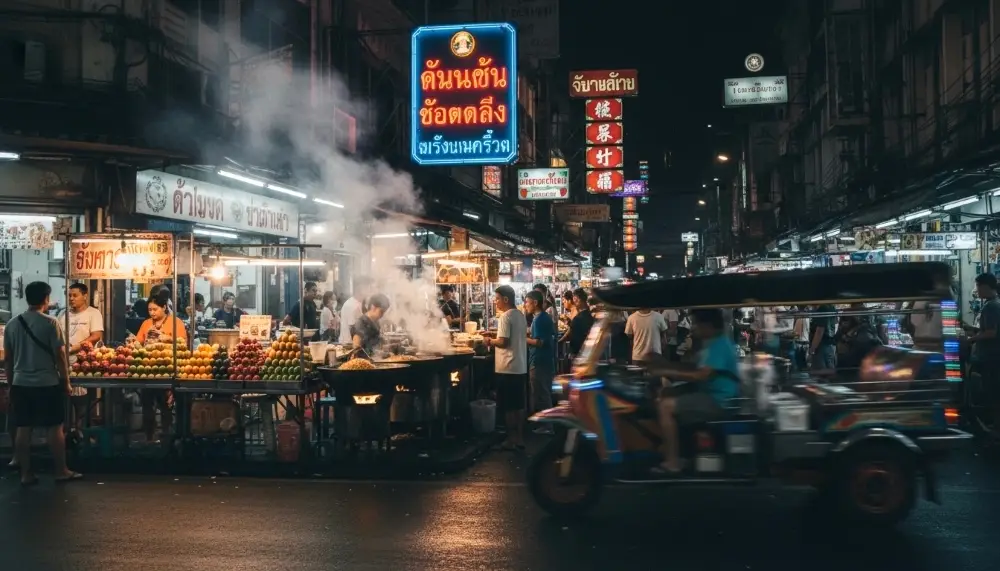
Trang Town for the night: guesthouses from 400 THB (~$11), mid-range hotels from 900 THB (~$26). The Trang Night Market off Ratsada Road is one of the south’s great food markets. Moo yang (grilled pork), khanom jeen, and the local roti with condensed milk will account for a very happy 150 to 250 THB (~$4.30 to $7.15) dinner.
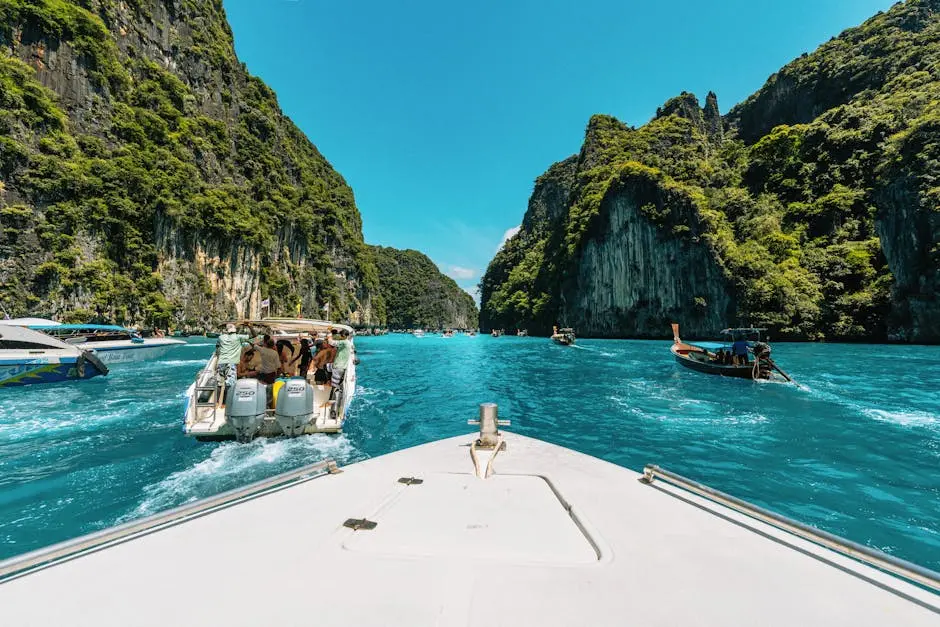
Day 4: Trang to Hat Yai
The final leg south cuts through Phatthalung Province and into Songkhla. The landscape here is flat and agricultural but punctuated by dramatic moments: Thale Noi Waterbird Park, a shallow lake sanctuary for purple swamphens and painted storks, sits just off Highway 41 near Phatthalung town. Entry is 200 THB (~$5.70). A slow-boat tour of the reed-lined channels takes 45 minutes and costs 60 THB per person (~$1.70).
Rattaphum Gorge, roughly 35 kilometres north of Hat Yai, is the last great natural stop on the route. A short hiking trail follows the gorge rim through a forested national park area. Entry is free. The swimming hole at the base is cold, clean, and completely unknown to most travellers passing through on buses.
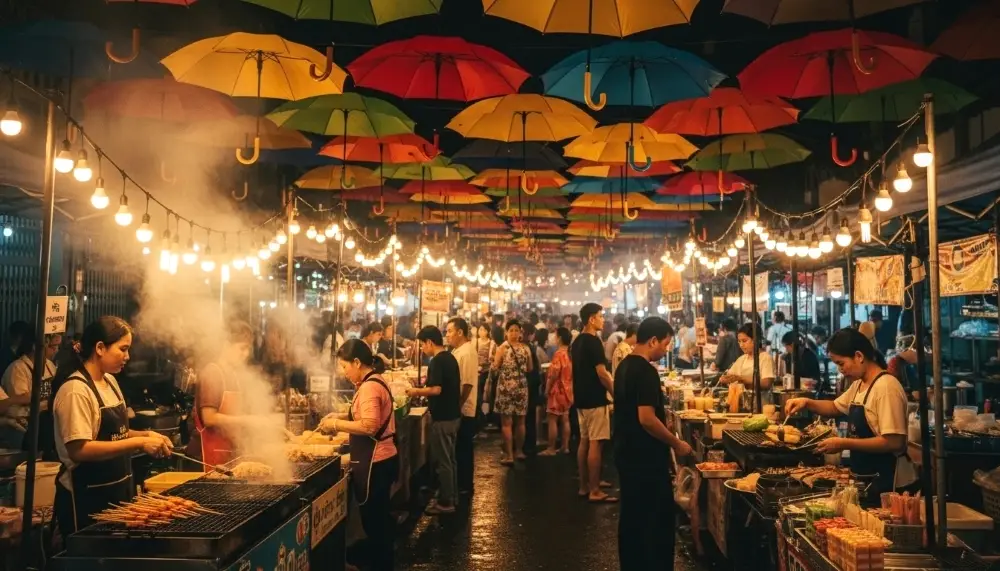
Hat Yai is southern Thailand’s commercial capital: a dense, energetic city with a large Malaysian-Thai border community and a food culture that is entirely its own. Hat Yai chicken rice, sold at stalls across the city for 60 to 100 THB (~$1.70 to $2.85), is the dish to eat here. The Hat Yai Night Market near Lee Garden Plaza runs nightly from 18:00 and is one of the south’s great street food concentrations. Budget 300 to 500 THB (~$8.55 to $14) for a proper feed with drinks.
What To Do In Hat Yai
Hat Yai rewards an extra half-day before you return or cross into Malaysia. The city punches well above its tourism reputation. Key stops include:
- Wat Hat Yai Nai: home to the third-largest reclining Buddha in Thailand, 35 metres long. Free entry.
- Kim Yong Market: a no-frills local market running since the 1950s. The best place to stock dried goods, southern spices, and cheap Thai-Muslim snacks.
- Hat Yai Municipal Park: the city’s breathing space, with a cable car to a hilltop viewpoint for 100 THB (~$2.85) return.
Hotels in Hat Yai range from 400 THB (~$11) guesthouses near the train station to 2,500 THB (~$71) business hotels near Lee Garden. Booking.com and Agoda both show strong Hat Yai inventory. Book at least a night in advance during Malaysian public holidays when the city fills rapidly with cross-border visitors.
Getting Back: Returning the Bike and Moving On

Most one-way bike rentals from Ranong to Hat Yai attract a drop-off fee of 500 to 1,500 THB (~$14 to $43) depending on the shop. Agree this in writing before you leave. Alternatively, some riders buy a secondhand 125cc in Ranong for 15,000 to 25,000 THB (~$429 to $714) and sell in Hat Yai or Penang. The maths can work in your favour on a long trip. Facebook Marketplace and local Thai Facebook groups are the primary marketplace.
Onward options from Hat Yai: the overnight train to Bangkok departs Hat Yai station at various times and costs 650 to 1,400 THB (~$18 to $40) depending on class. Book through 12GO well ahead of national holidays when sleeper berths sell out days in advance. Budget airlines from Hat Yai International Airport (HDY) connect directly to Bangkok Don Mueang from around 700 THB (~$20) booked in advance. Cross-border minivans to Penang run throughout the day for 350 to 500 THB per person (~$10 to $14) and take roughly 4 hours.
If your flight home was delayed due to any mechanical or weather issue, note that AirHelp handles compensation claims for disrupted flights and typically recovers several hundred dollars per passenger on eligible routes. Keep all boarding passes and booking references.
Road Safety and Riding Etiquette
Thailand’s roads are genuinely enjoyable once you adjust to the flow. A few ground rules apply on this route:
- Wear a full-face helmet. A cheap open-face costs 300 THB (~$8.55) at any roadside shop. A decent full-face starts at 800 THB (~$23). Bring your own if standards matter to you.
- Ride defensively. Trucks and buses own the outside lane on Highway 4 and will not yield. Stay left.
- Avoid night riding between provinces. Road lighting is inconsistent south of Krabi and stray dogs on rural roads are a genuine hazard after dark.
- Carry a basic puncture kit or the number of a local tyre shop (you will see them every 20 kilometres in any direction). A tyre repair costs 50 to 100 THB (~$1.40 to $2.85).
- International Driving Permit (IDP) is technically required for motorbikes. In practice, police checkpoints on this route are rare south of Phang Nga, but carry it regardless.

Full Trip Budget Breakdown
| Category | Budget (THB) | Budget (USD) | Mid-Range (THB) | Mid-Range (USD) |
|---|---|---|---|---|
| Bike rental (4 days) | 1,000 THB | ~$29 | 3,200 THB | ~$91 |
| Fuel (full route) | 450 THB | ~$13 | 900 THB | ~$26 |
| Accommodation (4 nights) | 2,000 THB | ~$57 | 5,600 THB | ~$160 |
| Food (4 days) | 1,200 THB | ~$34 | 2,800 THB | ~$80 |
| Attractions and tours | 800 THB | ~$23 | 3,000 THB | ~$86 |
| Total | 5,450 THB | ~$156 | 15,500 THB | ~$443 |
Frequently Asked Questions
Do I need a licence to ride a motorbike in Thailand?
Technically yes. A valid home country licence with an International Driving Permit (IDP) is required for any engine above 50cc. In practice, police checkpoints on the Ranong to Hat Yai route are infrequent, but you should carry your IDP regardless. Without one, your travel insurance may be void in the event of an accident.
What is the best time of year to ride the west coast?
November to April is the dry season on Thailand’s west coast and the ideal window for this route. May to October brings the southwest monsoon, with heavy afternoon rain, reduced visibility, and increased road hazards. Riding is still possible in the wet season but requires earlier daily starts and more flexible accommodation plans.
How much does fuel cost along this route?
Petrol (benzine 95) at PTT and Shell stations costs approximately 42 to 46 THB per litre (~$1.20 to $1.31). A 125cc scooter averages around 35 km per litre, so a full 600km route costs roughly 720 to 790 THB (~$20 to $22) in fuel. Larger 500cc adventure bikes will roughly double that figure.
Can I return the bike one-way from Ranong to Hat Yai?
Some Ranong rental shops offer one-way rentals with a drop-off fee of 500 to 1,500 THB (~$14 to $43). This must be agreed in writing before departure. Alternatively, buying a cheap used 125cc in Ranong and selling in Hat Yai is a viable option for trips longer than 2 weeks. Check local Thai Facebook groups and marketplace listings for current pricing.
Is mobile data reliable along this route?
AIS and DTAC both provide solid 4G coverage along Highway 4 and through all major towns on this route. Remote stretches near Kapoe and Khao Sok may drop to 3G. A Yesim, Airalo, or Saily eSIM plan activated before departure ensures you have navigation and maps from the moment you start riding.
What are the safest places to stop for the night?
Khao Lak, Krabi Town, and Trang are all safe, well-serviced overnight stops with strong accommodation options at multiple price points. Hat Yai is a large commercial city and perfectly safe for tourists with standard city awareness. Avoid leaving valuables visible on the bike overnight regardless of location.
Is travel insurance essential for this trip?
Yes, absolutely. Motorbike accidents are one of the leading causes of injury among travellers in Thailand. Standard travel insurance policies often exclude motorbike riding above 125cc. Check your policy carefully. SafetyWing covers motorbike travel and is popular with long-stay and nomadic travellers at approximately USD $42 per 4-week period.
How do I get from Bangkok to Ranong to start the route?
Budget flights from Bangkok Don Mueang or Suvarnabhumi to Ranong operate on select days via Nok Air and AirAsia, typically from 800 to 1,800 THB (~$23 to $51) booked in advance. The overnight bus from Bangkok Southern Terminal takes 9 to 10 hours and costs 500 to 700 THB (~$14 to $20). Book intercity buses and trains through 12GO to compare departure times and lock in seats.
Can families or couples do this route without motorbike experience?
The route is best suited to confident riders with prior experience in Asian traffic. Families with children are better served by renting a car, which is available from Hat Yai or Phuket from around 1,200 THB per day (~$34) through local agencies. The route’s sights are all accessible by car, and welcome pickup transfers can handle airport arrivals and group transfers between towns.
What happens if my flight home from Hat Yai is delayed or cancelled?
Hat Yai International Airport is served by AirAsia and Thai Lion Air on domestic routes and occasional regional connections. If your flight is disrupted due to mechanical or operational issues, you may be eligible for compensation under Thai aviation regulations or EU261 if the airline is EU-based or the flight originated in Europe. AirHelp specialises in processing these claims on your behalf and works on a no-win, no-fee basis.