Diving the Similan Islands in 2026: New Marine Park Rules You Need to Know
This site contains affiliate links. We may earn a commission at no extra cost to you.
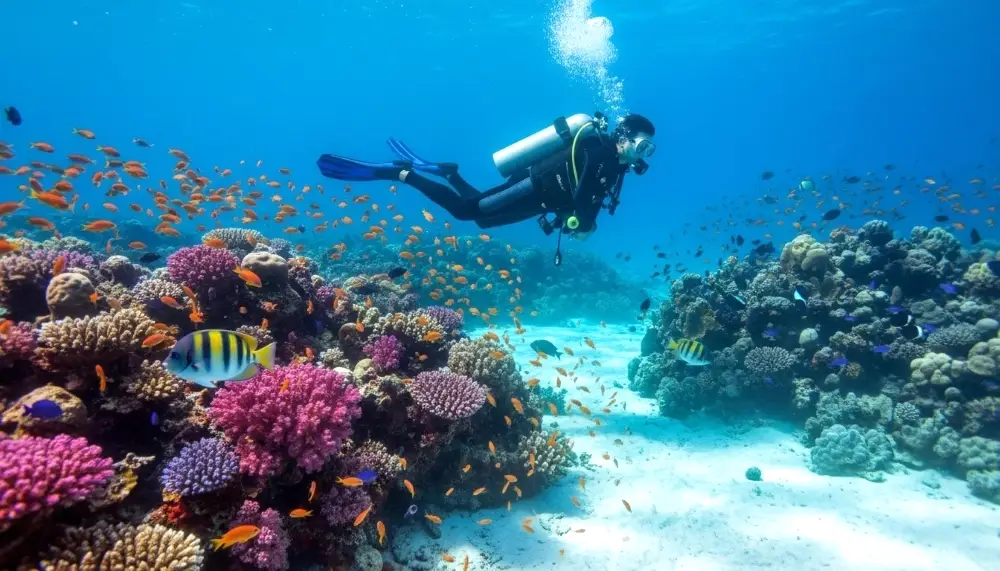
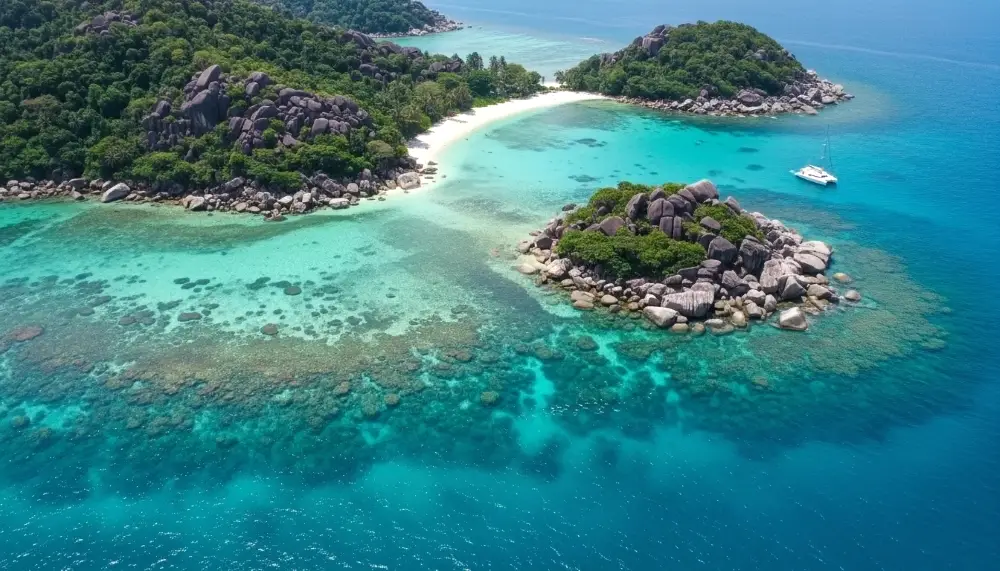
The Similan Islands are, by most honest reckonings, the best diving in Thailand. Possibly the best in all of Southeast Asia. Nine granite islands rising from the Andaman Sea with visibility that regularly stretches to 30 metres, coral gardens in extraordinary health, and a marine life roster that includes whale sharks, manta rays, leopard sharks, hawksbill turtles, enormous schools of jacks and barracuda, and macro life in bewildering variety. Add Richelieu Rock to a four-day liveaboard itinerary and you have one of the most celebrated dive sites on the planet.
But the Similans have changed. Not the underwater world, which remains magnificent, but the framework of regulations that governs how you access it. New rules introduced by Thailand’s Ministry of Natural Resources and Environment have reshaped what divers can and cannot do inside the marine park. If you’re planning a trip for the 2026 to 2027 season, reading the current rules before you book will save you surprises at the pier and ensure you’re fully prepared to comply from the moment you drop below the surface.
All costs are in Thai Baht (THB) and US Dollars (USD), calculated at 1 USD = 35 THB.
The Season Window: When You Can and Cannot Go
Mu Ko Similan National Marine Park operates on a strict seasonal calendar. The 2025 to 2026 season opened on 15 October 2025 and closed on 15 May 2026. The 2026 to 2027 season is expected to open again around mid-October 2026, following the same annual pattern. Between mid-May and mid-October each year, the park is closed to all visitors without exception. No day trips, no liveaboards, no private charters. This closure is non-negotiable and enforced.
The closure serves two purposes: it allows the marine ecosystem to recover from the seasonal visitor pressure, and it coincides with monsoon conditions that make the Andaman Sea genuinely hazardous. Any operator offering Similan access during the closed period is operating illegally, and no reputable liveaboard company will do so.
Within the open season, the optimal diving window runs from November through April. November and December offer excellent visibility and the first whale shark sightings of the season. January through March is peak season: the sea is at its calmest, visibility is consistently at or above 20 metres, and the full suite of marine life is reliably present. April remains excellent but marks the tail end of the season as conditions begin to shift. Book your liveaboard through Klook or Get Your Guide for verified operators with confirmed departure dates, or search specialist platforms for the full fleet comparison. Lock in Christmas and New Year departures at least three to four months ahead, as these sell out entirely.

Compare tours and tickets for Thailand
and book instantly on your phone.
Klook mobile vouchers mean no
printing, just turn up and go.
The New Rules: What Has Changed and Why It Matters
Guided Dives Only: No Independent Diving Inside the Park
This is the most significant operational change for experienced divers. All diving within both the Mu Ko Similan and Mu Ko Surin National Marine Parks must now be conducted under the direct supervision of a certified dive guide. The maximum ratio is four divers to one guide. Independent diving, regardless of experience level or certification, is no longer permitted inside the park boundaries.
For liveaboard divers, this is handled automatically by the operator: all reputable boats provide guides, and dive briefings now include explicit reference to the guided-dive requirement. For day trip divers departing from Khao Lak or Phuket, verify before booking that a dedicated dive guide is included in the ratio stated above, not simply a divemaster keeping general watch over a larger group. The four-to-one maximum is enforced by park authorities and operators who exceed it risk losing their access permits.
Underwater Camera Restrictions: Certification and Experience Thresholds
The Ministry of Natural Resources and Environment has published regulations in the Royal Gazette restricting underwater camera use to divers who meet specific criteria. To carry a camera during a dive inside the marine park, you must hold either an Advanced Open Water certification (PADI, RAID, SSI, or equivalent) or have a minimum of 40 verified logged dives. Cameras are not permitted on training dives under any circumstances unless a dedicated underwater photographer with a separate guide assignment is present.
The reasoning behind this regulation is straightforward: inexperienced divers focusing on camera use rather than buoyancy control are a primary cause of accidental coral contact and reef damage. Requiring a minimum experience threshold before allowing cameras removes a significant source of unintentional reef harm at popular sites. Liveaboard operators are responsible for implementing and enforcing this rule, and non-compliance can result in penalties for both divers and the operator. Bring your logbook and certification card. Park officials do check.
No Touch Policy and Strict Marine Life Interaction Rules
A formal no-touch policy now applies across all diving and snorkelling within the parks. Divers and snorkellers are prohibited from touching any marine life, including coral (both hard and soft), shells, and any animal species. Resting on the seabed or reef is explicitly prohibited. Chasing, pursuing, or in any way stressing marine animals is prohibited. This applies to whale sharks, manta rays, reef sharks, turtles, and every other species encountered.
These behaviours were always ecologically harmful, but they are now formally regulated. Dive guides are required to intervene and, where necessary, to report violations. The practical implication for divers is straightforward: excellent buoyancy control is not optional in the Similans. If your buoyancy is not consistently reliable enough to hover motionless over reef formations at depth without risk of contact, the responsible approach is to work on it before visiting. A buoyancy specialty course, available at Khao Lak and Phuket dive centres before departure, costs approximately 3,500 to 5,250 THB ($100 to $150 USD) and is genuinely worth the investment for reef health and the quality of your own dives.

GetYourGuide has Thailand’s best
tours and experiences covered with
verified operators and instant
mobile vouchers on arrival.
Entry Requirements, Fees, and What to Bring
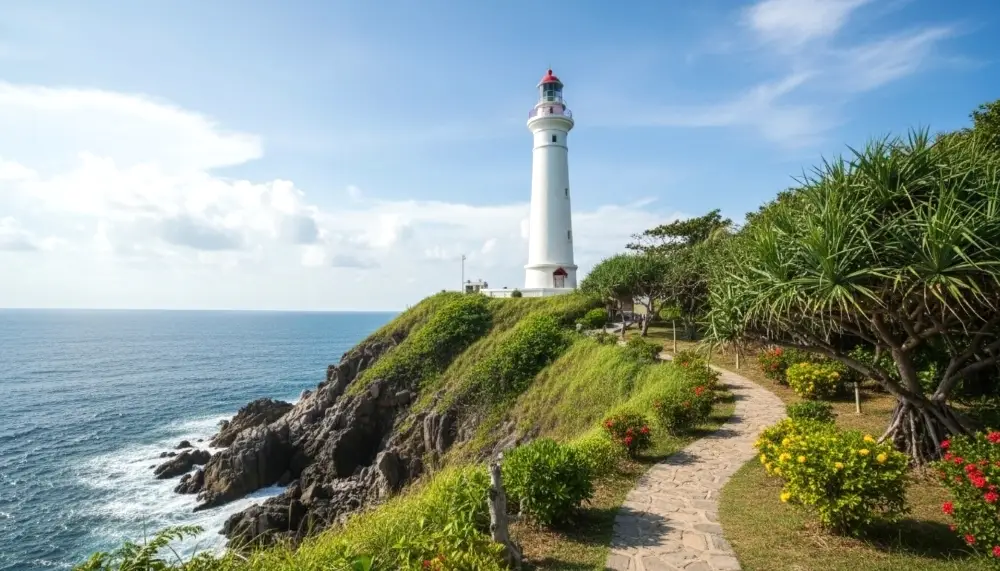
All visitors to Mu Ko Similan National Park must secure a national park entry ticket at least one full working day before their visit. Tickets are purchased through the official DNP e-ticket system via the QueQ app and are registered to individual passport details. Name changes and date changes are not possible once registered, and fees are non-refundable. Supplying your passport information at the time of booking your liveaboard or day trip is now mandatory rather than optional.
The fee structure for foreign visitors breaks down as follows: 500 THB ($14.29 USD) park entry fee per person, plus 200 THB ($5.71 USD) per diving day inside the park. For a standard four-day, four-night liveaboard covering both the Similan and Surin parks (which includes Richelieu Rock), the total national park fees reach approximately 2,100 to 2,300 THB ($60 to $65.71 USD) per person, depending on the exact itinerary. These fees are never included in quoted liveaboard prices and must be paid separately, in cash, in Thai Baht.
A daily visitor cap of approximately 3,325 to 3,850 people applies across the park. During Christmas, New Year, Chinese New Year, and Songkran, the cap fills completely. Outside these peak periods, last-minute ticket availability exists but cannot be relied upon: the only safe approach is to provide passport details when booking and let your operator register the entry in advance.
Bring Thai Baht cash for park fees. Bring a photocopy of your passport for the boat (park officials board and check documentation). Bring your dive certification card and logbook, both of which will be checked if you wish to carry a camera underwater. Island overnight stays have been permanently prohibited since 2018: the only multi-day option is a liveaboard that anchors offshore. All day trip visitors must leave before 4:00 PM.

Hotel and cafe wifi in Thailand isn’t
always secure. NordVPN encrypts
your connection so banking and
messaging stay private on the go.
Mandatory Insurance: What Your Policy Must Cover
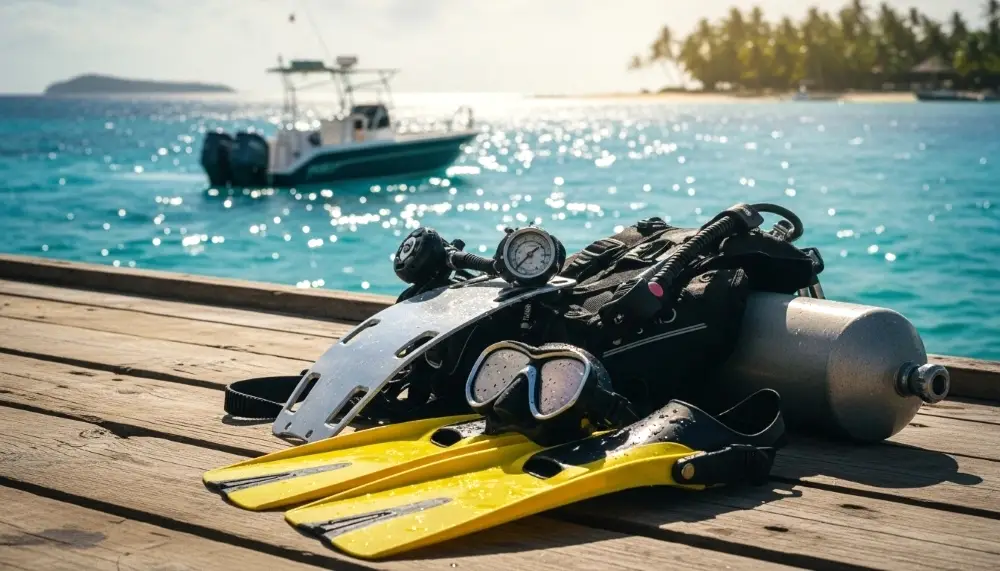
Scuba diving accident and evacuation insurance is now mandatory for all visitors joining any liveaboard trip into the national parks. This is not a recommendation: it is a legal requirement enforced at the pier. Divers who carry their own diving insurance must provide the insurer’s name, policy number, and contact number to the dive centre before boarding. Travellers relying on standard travel insurance must present policy sections that explicitly confirm scuba diving accident coverage.
This matters enormously because standard holiday travel policies frequently exclude scuba diving, particularly dives beyond 10 or 18 metres depending on the insurer. A policy that covers “recreational water sports” is not necessarily a policy that covers scuba diving to recreational depths. Read the small print before your trip, not at the pier.
If you arrive without adequate scuba diving insurance, operators are legally required to sell you a minimum coverage policy at approximately 250 THB ($7.14 USD) per day. This is a basic emergency cover and is not a substitute for comprehensive evacuation insurance, which matters significantly in the Similans given the distance from shore. For longer stays or multi-activity itineraries across Thailand, SafetyWing’s Nomad Insurance provides rolling coverage with meaningful medical limits and handles the extended-stay scenarios that holiday policies exclude. For pure dive trip insurance, dedicated diving insurers such as DAN (Divers Alert Network) are the gold standard.

From short trips to long stays in Thailand,
Airalo has flexible eSIM data plans
you install in minutes. Top up
remotely if you need more data.
No Single-Use Plastics Inside the Park
Single-use plastics are prohibited inside both national marine parks. This applies to all visitors including liveaboard staff. No single-use plastic bottles, plastic bags, plastic straws, or disposable plastic utensils are permitted within the park boundaries. All reputable liveaboard operators provide reusable water bottles and refill stations on board as standard practice. If you are bringing personal items aboard, pack accordingly: a reusable water bottle, a reusable bag, and solid toiletries or reef-safe products in non-plastic packaging.
The broader environmental approach at the Similans also prohibits the use of chemical sunscreens near the reef. Mineral-based, reef-safe sunscreen formulas are required. These are available at most dive shops in Khao Lak and Phuket at around 350 to 600 THB ($10 to $17.14 USD). Pack your own to avoid pier-side convenience pricing. Beyond sunscreen, the general principle applies: anything you bring into the park that could contaminate or damage the marine environment should remain on the boat.

Stay closer to the action in Thailand.
Agoda lists guesthouses to resorts
with verified reviews and instant
booking at competitive rates.
Costs at a Glance: Liveaboard vs Day Trip
| Cost Item | Day Trip | 4-Night Liveaboard (Budget) | 4-Night Liveaboard (Mid-Range) |
|---|---|---|---|
| Trip Cost (per person) | 3,500 – 6,000 THB ($100 – $171) | From 17,500 THB ($500) | From 35,000 THB ($1,000) |
| National Park Fees | 700 THB ($20) approx. | 1,800 – 2,300 THB ($51 – $66) | 1,800 – 2,300 THB ($51 – $66) |
| Park Fees Included? | Sometimes | Never (pay cash separately) | Never (pay cash separately) |
| Number of Dives | 2 – 3 | 14 – 16 | 16 – 20 |
| Richelieu Rock Included? | Rarely | Most itineraries | Yes |
| Insurance Required? | Yes (mandatory) | Yes (mandatory) | Yes (mandatory) |
What You’ll Actually See: The Marine Life Case for Going
The regulations exist because what is down there is worth protecting. A typical four-day liveaboard covering the Similan Islands, Koh Bon, Koh Tachai, and Richelieu Rock delivers a marine life catalogue that is genuinely difficult to describe without sounding like hyperbole.
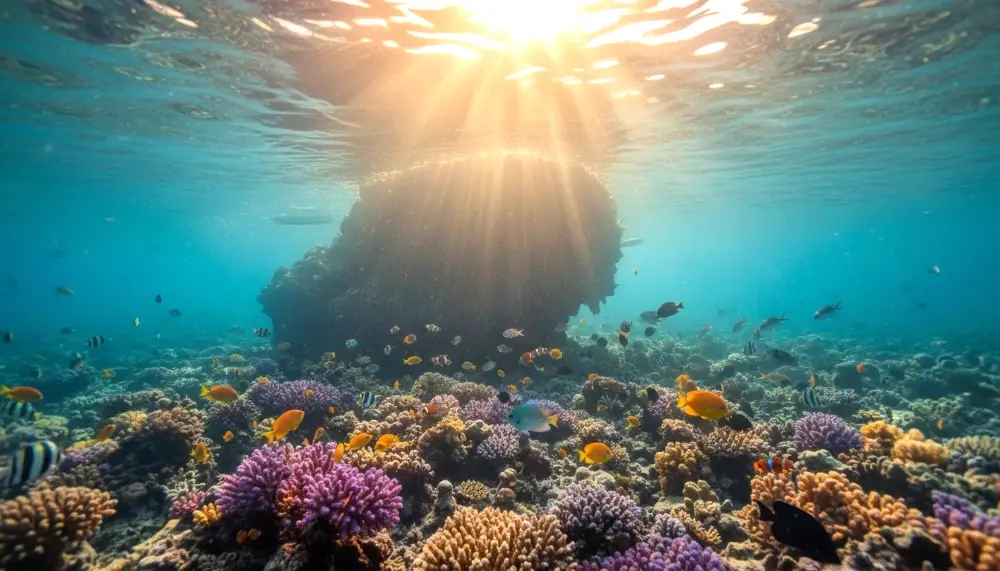
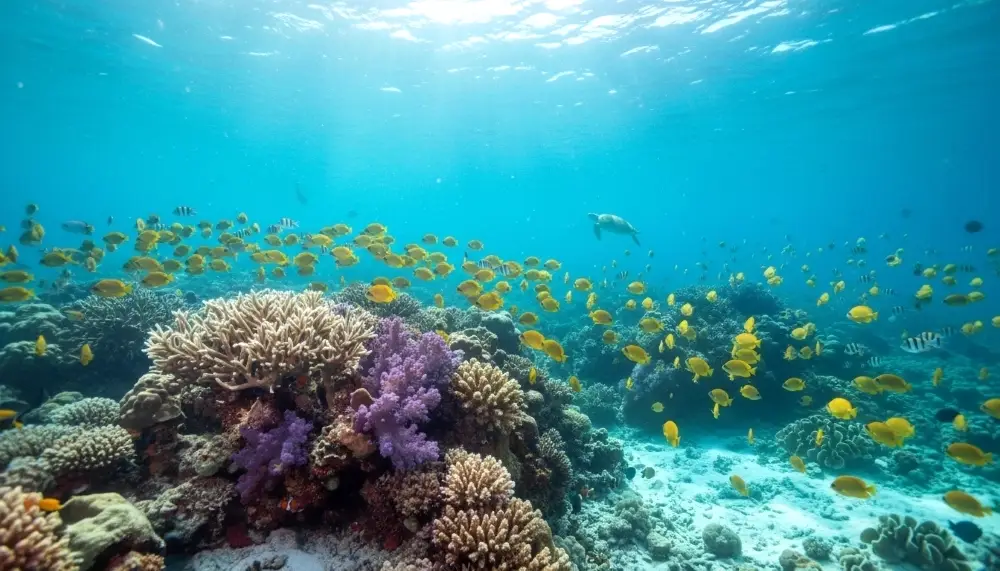
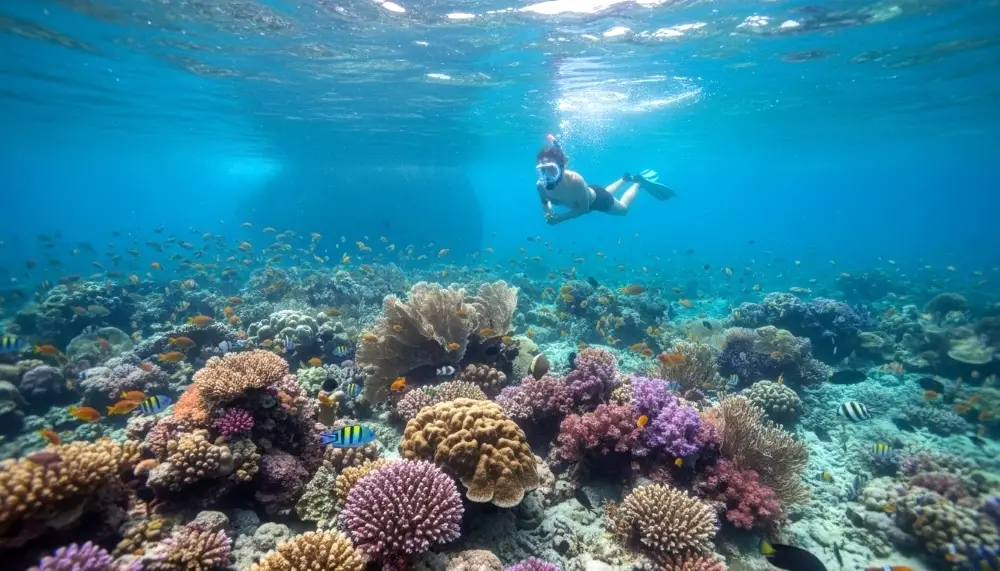
The Similan Islands themselves offer dramatic granite boulder formations on the west side, with swimthroughs and overhangs draped in soft corals, and extensive hard coral gardens on the calmer east coast where leopard sharks rest on sandy patches and hawksbill turtles are a near-certainty on most dives. Massive schools of yellow snapper, fusiliers, jacks, and batfish move through the water column in formation. Gorgonian fans grow to extraordinary size at depth.
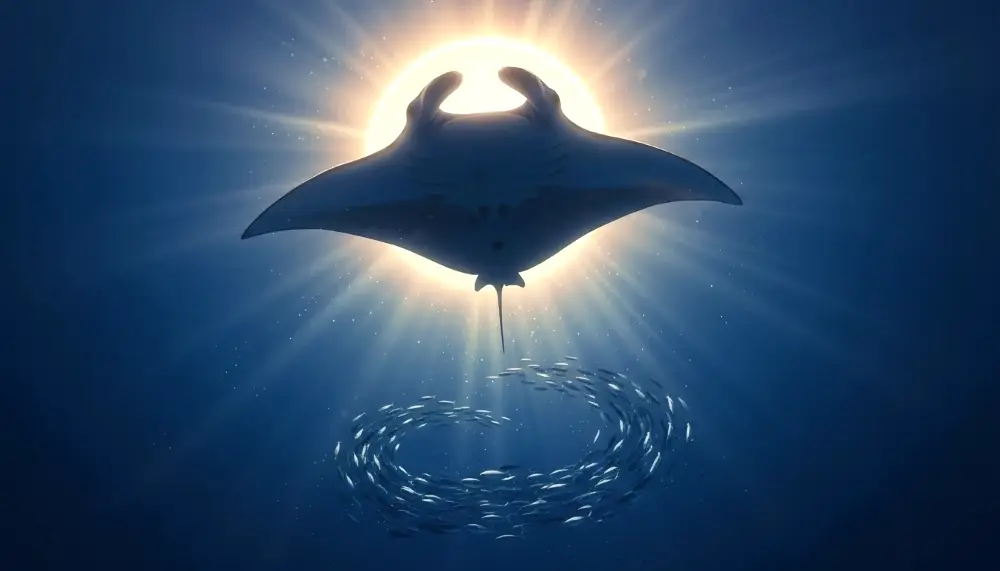
Koh Bon and Koh Tachai to the north are the sites for pelagic encounters. Manta rays aggregate at Koh Bon’s cleaning stations, and whale shark sightings peak between November and April. Richelieu Rock, widely considered Thailand’s single best dive site, is a submerged pinnacle whose soft coral density and sheer concentration of marine life leaves most divers speechless. Seahorses, pipefish, ghost pipefish, harlequin shrimp, and frogfish share space with whale sharks, manta rays, and stampeding schools of trevally. The site is genuinely extraordinary and alone justifies the logistics of getting there.
Getting There: Khao Lak, Phuket, and Logistics

Most liveaboards depart from Thap Lamu pier near Khao Lak, approximately 80 km north of Phuket. Khao Lak is the better base for Similan liveaboards: closer to the pier, quieter than Phuket, and with a good range of accommodation at mid-range prices. A well-reviewed guesthouse or resort in Khao Lak runs 1,400 to 3,500 THB ($40 to $100 USD) per night through Agoda. Some boats also depart from Phuket, adding transit time to the itinerary.
Flying into Phuket International Airport (HKT) is the standard arrival route. From the airport to Khao Lak, a private transfer costs approximately 1,400 to 2,100 THB ($40 to $60 USD) depending on vehicle size. For group arrivals heading directly to a liveaboard the following morning, Welcome Pickups offers fixed-price named driver transfers that remove the negotiation and vehicle-sizing stress of the arrival entirely.
Activate an Airalo, Yesim, or Saily eSIM before departing your home country. The QueQ app (required for DNP e-ticket purchase) and Grab (for local transport) both require SMS verification on first use: without live data from arrival, the registration loop fails and causes real problems when you’re trying to sort your park ticket the day before departure. NordVPN running on all devices keeps banking and booking activity secure on hotel and resort Wi-Fi in Khao Lak and Phuket. The standard ATM fee of 220 THB ($6.29 USD) applies: use a Wise card and select “Continue Without Conversion” to minimise the cost of cash withdrawals for park fees.

Stay online in Thailand without the
daily data limits of tourist SIMs.
Yesim’s eSIM offers unlimited 5G
from around $10 for the whole trip.
Frequently Asked Questions
When are the Similan Islands open for diving in 2026 to 2027?
The 2026 to 2027 season is expected to open around mid-October 2026, following the standard annual pattern. The park closes each year around 15 May and reopens around 15 October. The exact reopening date is announced by the Thailand Department of National Parks one to two weeks before opening. Between mid-May and mid-October, the park is closed to all visitors with no exceptions.
What are the new underwater camera rules at the Similan Islands?
New regulations published in Thailand’s Royal Gazette restrict underwater camera use to divers who hold an Advanced Open Water certification (PADI, RAID, SSI, or equivalent) or have a minimum of 40 verified logged dives. Cameras are not permitted on training dives. Liveaboard operators are legally responsible for enforcing these rules. Bring your certification card and logbook: they will be checked.
Is diving at the Similan Islands guided only?
Yes. All diving within Mu Ko Similan and Mu Ko Surin National Marine Parks must be conducted under the direct supervision of a certified dive guide. The maximum ratio is four divers to one guide. Independent diving is not permitted regardless of experience level or certification. Reputable liveaboard operators include guides as standard; verify the four-to-one ratio when booking day trips.
How much do national park fees cost at the Similans in 2026?
The fee structure is 500 THB ($14.29 USD) park entry fee plus 200 THB ($5.71 USD) per diving day. For a four-day, four-night liveaboard covering both Similan and Surin parks, total fees run approximately 1,800 to 2,300 THB ($51 to $66 USD) per person. These fees are never included in quoted liveaboard prices and must be paid separately in Thai Baht cash. Children’s entry is 300 THB ($8.57 USD).
Is scuba diving insurance mandatory at the Similan Islands?
Yes. Scuba diving accident and evacuation insurance is a legal requirement for all liveaboard visitors. Divers with their own coverage must provide insurer name, policy number, and contact details at the dive centre before boarding. Standard travel insurance must explicitly cover scuba diving accidents. If you arrive without adequate cover, the operator will sell you basic accident coverage at approximately 250 THB ($7.14 USD) per day, though this is minimal cover and not a substitute for full evacuation insurance.
Can I stay overnight on the Similan Islands?
No. All bungalows and campsites on the islands were permanently closed in 2018. Overnight stays on the islands themselves are not permitted under any circumstances. The only way to spend multiple days at the Similans is on a liveaboard that anchors offshore. All day trip visitors must leave the park before 4:00 PM.
Is a liveaboard better than a day trip for diving the Similans?
For serious divers, a liveaboard is significantly better. A day trip from Khao Lak typically allows two to three dives at the closer southern islands only. A four-day liveaboard covers fourteen to twenty dives across the full Similan chain plus Koh Bon, Koh Tachai, and Richelieu Rock, which is widely considered Thailand’s best dive site. The cost per dive on a liveaboard is substantially lower than day trip pricing once park fees and transfers are factored in.
What is the best time of year to dive the Similan Islands?
November through April is the optimal window. January through March offers the calmest seas, the most consistent 20-metre-plus visibility, and the full complement of marine life. November and December are excellent for first whale shark sightings of the season. April remains good but is the tail end of the season. Book Christmas and New Year departures three to four months in advance: they sell out entirely.
What marine life can I expect to see at the Similan Islands?
A typical four-day liveaboard encounter list includes whale sharks, manta rays, leopard sharks, hawksbill turtles, blacktip reef sharks, giant schools of jacks, barracuda, fusiliers, and yellow snapper. Macro life at Richelieu Rock includes seahorses, ghost pipefish, harlequin shrimp, and frogfish. Gorgonian fans, vibrant soft corals, and extensive hard coral gardens dominate the reef structure throughout.
What should I bring on a Similan Islands liveaboard?
Thai Baht cash for national park fees (1,800 to 2,300 THB for a four-day trip), a photocopy of your passport, your dive certification card and logbook (required if you wish to carry a camera), reef-safe mineral sunscreen, a reusable water bottle (single-use plastics are prohibited), and confirmed scuba diving insurance documentation. Activate an eSIM (Airalo, Yesim, or Saily) before departure for the QueQ app registration and park ticket purchase. Do not rely on Wi-Fi at the pier.