Thailand’s Best Wreck Dives: From HTMS Sattakut to the King Cruiser
This site contains affiliate links. We may earn a commission at no extra cost to you.
Thailand is one of the world’s great wreck diving destinations. Beneath its turquoise waters sit sunken warships, a ferry turned artificial reef, and a drowned cargo vessel that has become a home for some of the most spectacular marine life in Southeast Asia. Whether you’re a newly certified diver or a technical diving veteran, the wrecks here are genuinely world-class and far more accessible than most people expect.
The best part? You can combine wreck diving with island hopping, beach time, and everything else that makes a Thailand trip so memorable. A morning dive on the King Cruiser, an afternoon hammock on a quiet Krabi beach, and a sunset pad thai from a night market stall. That’s a Tuesday in Thailand.
Why Thailand’s Wrecks Are Special
Thailand’s wreck sites span both the Andaman Sea and the Gulf of Thailand, meaning there’s almost always a diveable wreck within reach regardless of which side of the peninsula you’re on. The visibility on the best dive days can reach 20 to 30 metres, warm water temperatures hover between 27 and 30 degrees Celsius year-round, and most of the major wrecks sit at depths accessible to recreational divers with an Open Water certification.
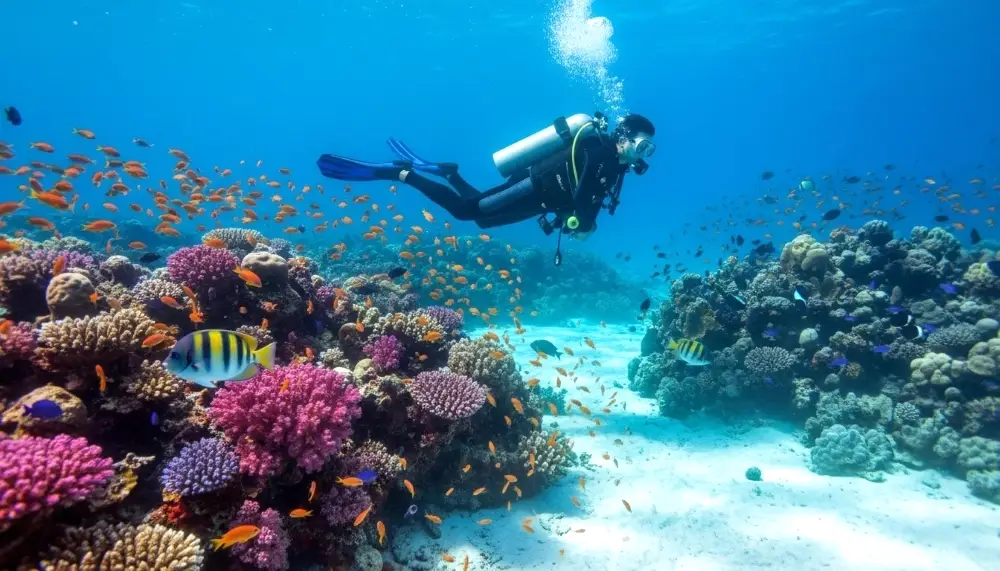
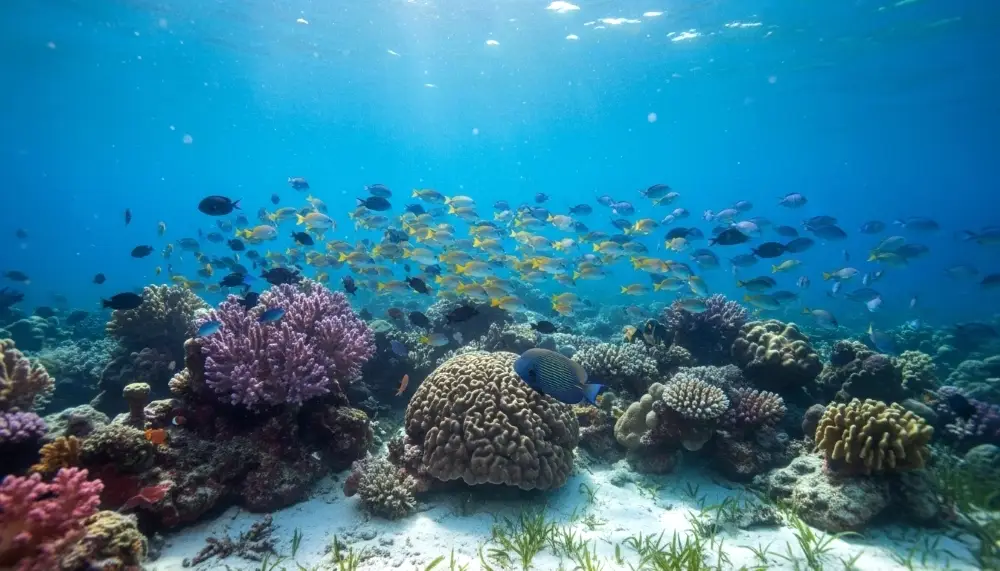
What makes Thailand’s wrecks genuinely exciting rather than just historically interesting is the marine life that colonises them. Within a few years of sinking, a ship becomes a thriving artificial reef. Lionfish patrol the corridors. Leopard sharks rest on sandy patches near the hull. Giant grouper lurk inside engine rooms. Visibility is only part of the story. The density of life on these wrecks rivals anything in the Indo-Pacific.
Costs are also extremely competitive. A two-dive wreck trip on the King Cruiser from Ao Nang typically costs 2,200 to 2,800 THB (around 58 to 74 USD) including equipment. Compare that with similar liveaboard-only wrecks elsewhere in Asia that charge five times more, and Thailand’s appeal becomes obvious. Book through Get Your Guide or Klook for verified operators with current reviews rather than walking up to pier touts on the morning of.

Book Thailand day trips, attractions,
and activities in one place. Check
real reviews and lock in your spot
before the popular slots go.
The King Cruiser, Andaman Sea
Thailand’s Most Famous Dive Wreck
The King Cruiser is the wreck most divers have in mind when they picture Thailand. A large car ferry that collided with Anemone Reef on 4 May 1997, it sank in roughly 30 minutes and now sits upright on the seabed at depths between 16 and 32 metres. The ship stretches 85 metres in length and is wide enough that swimming a full circuit takes a proper dive.
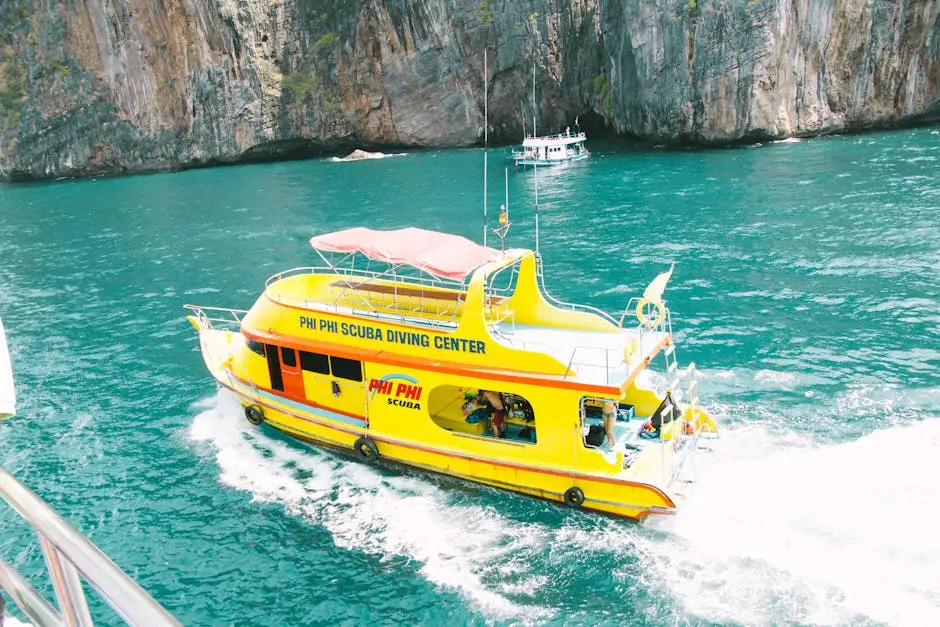
The wreck sits roughly 90 minutes by speedboat from Ao Nang in Krabi, making it a natural extension of any Andaman island-hopping trip. Access from Koh Phi Phi is even faster at around 45 minutes. Most operators run two-dive trips that include the King Cruiser alongside nearby Anemone Reef, which gives you both wreck and coral diving in a single day out.
Typical pricing runs from 2,200 THB (58 USD) for a shared speedboat two-dive trip to 4,500 THB (119 USD) for a private charter. Equipment rental adds roughly 500 to 800 THB (13 to 21 USD) if you’re not travelling with your own gear. Book through Klook or Get Your Guide at least a day ahead during peak season (November to April) as trips fill quickly.
What to Expect Inside the King Cruiser
The King Cruiser rewards divers who are comfortable with mild penetration. The car deck is cavernous and well-lit enough that a torch and basic wreck awareness are sufficient for most of the explorable sections. The bridge, accessible at around 18 metres, gives a genuinely eerie sense of the ship’s former life. Portholes and corridor walls are thickly encrusted with hard and soft corals that have been growing since 1997.
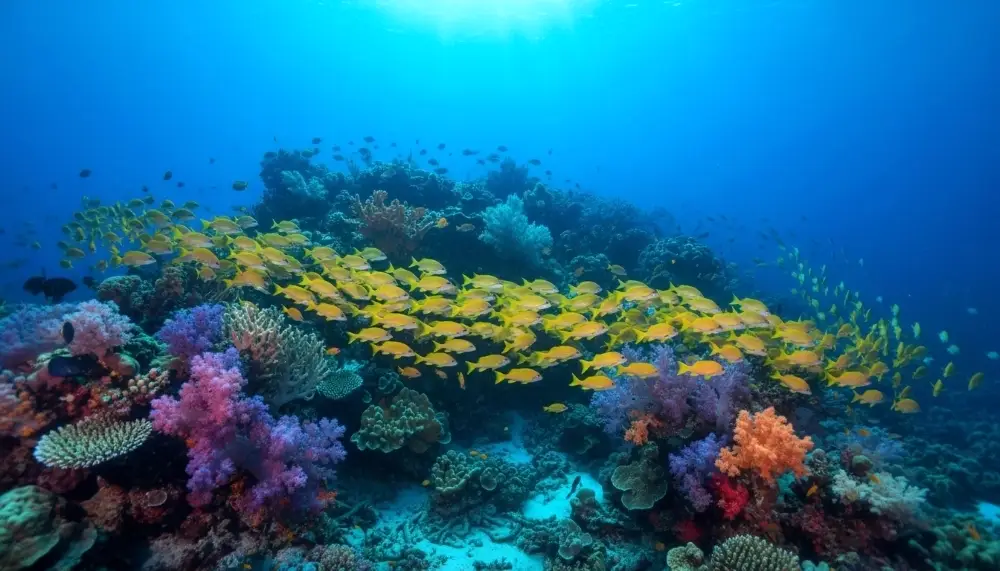
The marine life here is exceptional. Lionfish are everywhere. Huge schools of glassfish cluster near the hull, frequently pursued by trevally and barracuda. Leopard sharks are regularly spotted resting in the sandy areas beneath the bow. With over two decades of reef growth, the King Cruiser is now as much a coral garden as it is a shipwreck.

Skip-the-line tickets and guided walks
in Thailand with English-speaking
guides. Read real traveller reviews
before committing to a single one.
HTMS Sattakut, Gulf of Thailand
Koh Tao’s Prize Wreck
On the Gulf of Thailand side, the HTMS Sattakut is the standout wreck and one of the most accessible dive sites of its kind anywhere in Southeast Asia. A decommissioned US Navy sub-chaser originally built in 1944, the ship was deliberately sunk in June 2011 off the southwest coast of Koh Tao specifically to create an artificial reef and dive attraction. The intentional sinking meant it could be positioned perfectly: upright, at a depth that works for recreational divers, and cleared of any hazardous materials.
The Sattakut sits at a maximum depth of 30 metres with the shallowest point of the superstructure at around 14 metres. The ship is 49 metres long and remarkably intact. Deliberate penetration points were cut into the hull before sinking, meaning even Open Water certified divers can explore the main interior sections safely with a guide.
Dive trips to the Sattakut from Koh Tao cost between 1,200 and 1,800 THB (32 to 48 USD) depending on the operator and whether equipment is included. Many dive schools bundle the Sattakut into their Advanced Open Water courses as it ticks the required wreck dive module. Agoda lists a strong range of dive-focused guesthouses on Koh Tao’s west coast, most within a five-minute walk of the main dive piers.
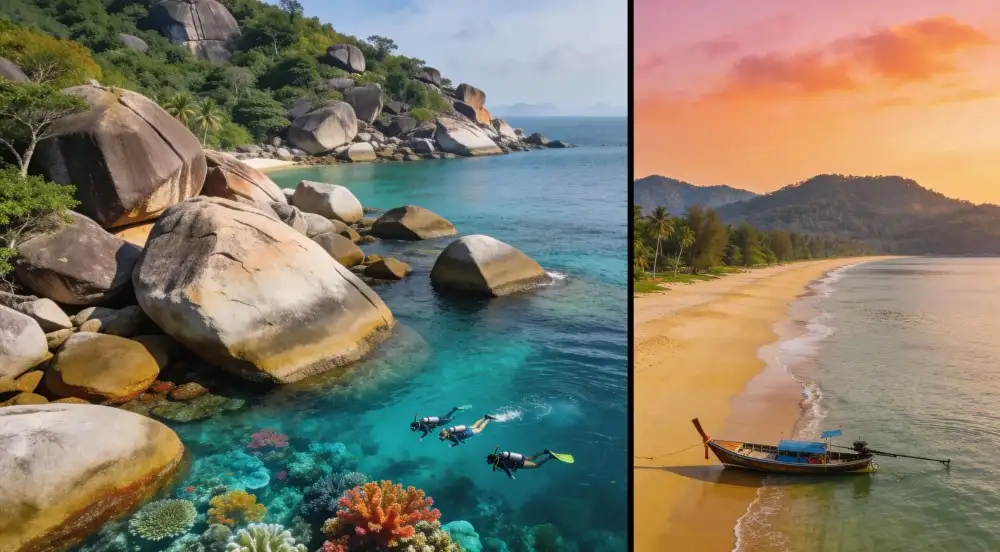
Wreck Dive Cost Comparison
Understanding the cost landscape helps you plan whether to do a single day trip or combine multiple wrecks into a longer diving holiday.
| Wreck Site | Location | Depth Range | 2-Dive Trip Cost | Best Season |
|---|---|---|---|---|
| King Cruiser | Andaman Sea (Krabi/Phi Phi) | 16 to 32m | 2,200 to 2,800 THB (58 to 74 USD) | Nov to April |
| HTMS Sattakut | Gulf of Thailand (Koh Tao) | 14 to 30m | 1,200 to 1,800 THB (32 to 48 USD) | Jan to August |
| HTMS Prab | Gulf of Thailand (Koh Tao) | 24 to 34m | 1,400 to 2,000 THB (37 to 53 USD) | Jan to August |
| Kled Kaew | Gulf of Thailand (Koh Tao) | 18 to 28m | 1,200 to 1,600 THB (32 to 42 USD) | Year-round |
| In-Daeng Wreck | Andaman Sea (Koh Lanta area) | 20 to 35m | 2,500 to 3,200 THB (66 to 85 USD) | Nov to April |

Stay closer to the action in Thailand.
Agoda lists guesthouses to resorts
with verified reviews and instant
booking at competitive rates.
HTMS Prab and Kled Kaew: Koh Tao’s Other Wrecks
A Gulf Triangle for Wreck Divers
Koh Tao punches well above its weight for wreck diving. Alongside the Sattakut, the island has two other deliberately sunk vessels within easy reach of its main dive operations. The HTMS Prab, another decommissioned Thai Navy vessel, was sunk in 2003 and sits at a slightly deeper 24 to 34 metres. It’s larger than the Sattakut at roughly 60 metres in length and draws divers looking to push toward the Advanced or Rescue certification depth range.
The Kled Kaew is the smallest of the three, a wooden cargo boat that sank in shallower water. At 18 to 28 metres it’s well within Open Water limits and is often paired with the Sattakut on a two-dive day. The Kled Kaew is particularly good for macro photography. Nudibranch, frogfish, and pipefish are reliably spotted along its heavily encrusted hull.
Booking a three-wreck day trip on Koh Tao requires an Advanced Open Water certification to include the HTMS Prab. Combined trips cost 2,500 to 3,000 THB (66 to 79 USD). This is genuinely exceptional value given the dive quality. Koh Tao consistently offers the cheapest PADI certification courses in the world, with Open Water packages running from 9,500 to 12,000 THB (251 to 317 USD) including all dives and materials. If you’ve been thinking about getting certified, there is genuinely no better place to do it, and wreck diving becomes immediately available once you qualify.

Pick a Thailand eSIM plan that matches
your trip length on Airalo’s global
marketplace. Install before departure
and you’re online the moment you land.
The In-Daeng Wreck and Andaman Alternatives
Beyond the King Cruiser
The Andaman Sea has wreck options beyond the King Cruiser for those who want variety. The In-Daeng Wreck near Koh Lanta is a steel-hulled cargo ship sitting at 20 to 35 metres and is far less visited than the King Cruiser, which makes it appealing to divers who prefer quieter sites. The marine life density here rivals Koh Tao’s best reefs, with impressive schools of batfish and regular whale shark sightings between March and May.
Closer to Phuket, the Premchai Wreck near Racha Yai sits at a shallower 12 to 25 metres and is accessible to Open Water divers with no experience of wreck diving. It makes an excellent first wreck for divers who want to build confidence before attempting the King Cruiser. A two-dive trip including Premchai from Rawai Pier, Phuket, costs around 2,800 to 3,500 THB (74 to 92 USD).
The Andaman’s premium liveaboard operators, who depart from Phuket’s Ao Chalong pier, often include both the King Cruiser and the In-Daeng Wreck on their southern Andaman itineraries. These four-night trips average 25,000 to 35,000 THB (660 to 924 USD) all-inclusive and are the most thorough way to experience Andaman wreck diving. Klook lists a selection of reputable liveaboard operators with departure schedules and current pricing.
What Certification Do You Need?
Most of Thailand’s key wrecks are accessible at recreational depth with standard PADI Open Water certification, which covers you to 18 metres. The shallowest points of the King Cruiser and HTMS Sattakut sit well within this range. However, to access the deeper sections and explore interior penetrations properly, PADI Advanced Open Water is the practical minimum. The Wreck Diver specialty course, a single-day add-on at most Koh Tao schools for around 4,500 THB (119 USD), significantly improves both safety and enjoyment inside confined spaces.
For liveaboard itineraries that include deeper technical wrecks or night dive components, a Rescue Diver certification gives you the practical safety awareness that responsible operators increasingly prefer. If you’re starting from scratch, Koh Tao is where the majority of divers do it. The island offers Open Water certification packages from 9,500 THB (251 USD), the most competitive pricing for PADI courses anywhere in the world.
Before travelling, activate an Airalo, Yesim, or Saily eSIM before departure. Local dive apps, booking platforms, and messaging services like Line (which Thai dive schools heavily use for confirmations) all require immediate SMS verification or data access the moment you land. Waiting to buy a physical SIM card at the airport adds unnecessary delay when you’re trying to confirm a morning dive departure.

Need budget data in Thailand? Saily’s
eSIM plans start cheap and install
in a couple of minutes. Built by
the NordVPN team, security is solid.
Pro Tips for Wreck Diving in Thailand
Book ahead: The King Cruiser and HTMS Sattakut fill up fast during peak season. Use Get Your Guide or Klook for verified operators. Klook also lists multi-day dive packages that bundle wreck trips with accommodation on Koh Tao or Phi Phi at a meaningful discount over booking separately.
Insurance: Standard travel insurance almost always excludes scuba diving. Before departure, confirm your policy explicitly covers recreational diving to the relevant depth. SafetyWing’s Nomad Insurance is worth checking as a supplementary option, particularly for longer stays combining diving with remote work. Emergency evacuation from a remote dive site to a mainland hospital is the cost that catches people out.
Transport to the pier: Use Grab or Bolt to reach departure piers from your accommodation. Tuk-tuks and unlicensed taxis near dive piers in Ao Nang and Koh Tao’s Mae Haad Pier often charge two to three times the metered rate. A Grab from central Ao Nang to the pier costs around 80 to 120 THB (2 to 3 USD). Unlock Grab immediately on landing by having your Airalo or Yesim eSIM already active so the SMS verification goes through at the baggage carousel without any hassle.
Connectivity on liveaboards: Signal drops to zero between islands on longer liveaboard routes. Download offline maps and your itinerary before departure. NordVPN is worth running on all devices when you return to resort or cafe Wi-Fi after a trip, particularly for banking access and online bookings from shared networks.
Accommodation near dive sites: Agoda consistently offers better rates than international platforms for Koh Tao guesthouses and dive resorts, particularly for mid-week bookings outside the peak January to March window. Compare Booking.com alongside Agoda for the deep south options near Koh Lipe where prices can vary significantly between platforms.

Stay online in Thailand without the
daily data limits of tourist SIMs.
Yesim’s eSIM offers unlimited 5G
from around $10 for the whole trip.
Planning a Wreck Diving Trip Around Island Hopping
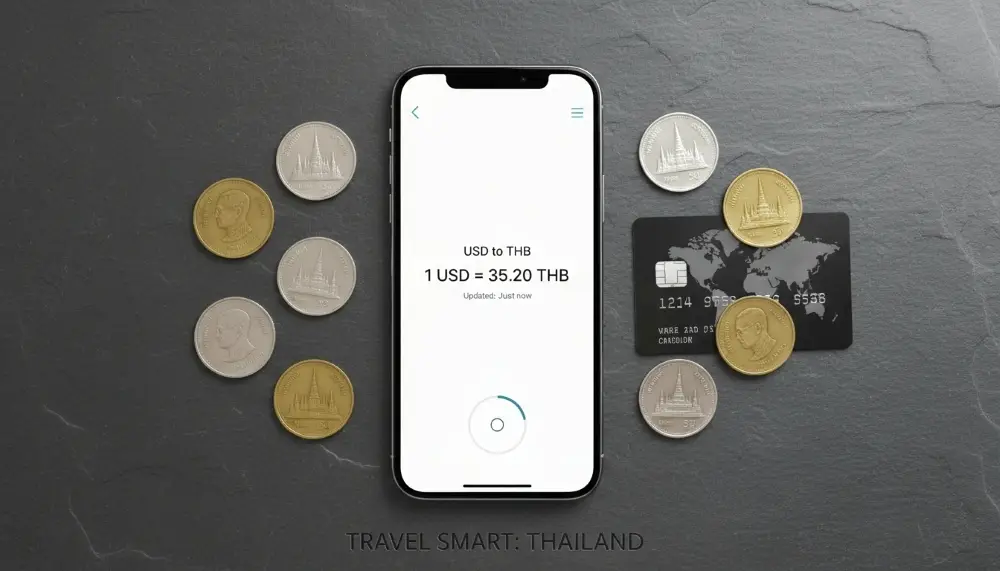
Wreck diving integrates naturally into a broader Thailand itinerary. The two most logical circuits are:
The Andaman Wreck Route: Fly into Phuket, take the Rassada Pier ferry to Koh Phi Phi (600 THB / 16 USD), spend two nights, do the King Cruiser on day two, then continue by speedboat to Ao Nang in Krabi (900 THB / 24 USD). This gives you the King Cruiser as a centrepiece with Phi Phi’s social scene and Krabi’s rock climbing and beaches on either side. Budget 5 to 7 days minimum. Use 12GO to lock in ferry tickets ahead of any Thai public holidays when crossings sell out days in advance.
The Gulf Wreck Circuit: Fly into Surat Thani (500 THB / 13 USD bus-and-ferry combo), arrive Koh Samui, ferry to Koh Phangan (30 minutes on Lomprayah, around 250 THB / 7 USD), then north to Koh Tao (90 minutes, 350 THB / 9 USD). Plan at least three nights on Koh Tao: one for the Sattakut, one for the Prab and Kled Kaew combo, and one spare day for conditions or an extra reef dive. Combined Lomprayah ticket from Samui to Tao runs around 700 THB (18 USD). Book via 12GO to guarantee seats during school holiday surges.
If you experience flight delays getting to your starting point, AirHelp handles compensation claims on your behalf for eligible disruptions. Many travellers successfully use this service for domestic Thai aviation delays and it costs nothing unless a claim is successful.
The Magic of Diving a Thai Wreck
There is a particular quality to diving a wreck that reef diving doesn’t replicate. Descending through clear water toward the silhouette of a ship growing larger below you, watching the structure resolve from shadow into detail, and then hovering above a deck that was designed for a completely different purpose. It’s exploration in the most immediate sense.
Thailand’s wrecks add another layer because the marine life is so extraordinary. You’re not looking at a bare metal hull. You’re looking at a coral landscape that has reclaimed a human structure and turned it into something entirely its own. The King Cruiser’s car deck, once a ramp for vehicles, is now a cathedral of soft coral hung with glassfish. The Sattakut’s bridge, once a navigation station, is now a cleaning station for reef fish.
For a first-time wreck diver, the experience is often the highlight of an entire trip. For experienced divers, Thailand’s combination of accessible depth, warm clear water, and extraordinary marine life keeps drawing people back. Sort your eSIM before flying with Airalo or Yesim, lock in your first two nights via Agoda, browse day dive trips on Klook, and let the wrecks do the rest.
Frequently Asked Questions
Do I need a special certification to dive the King Cruiser?
A PADI Open Water certification covers the shallowest sections of the King Cruiser at around 16 to 18 metres. To explore the deeper sections of the hull at 28 to 32 metres and conduct proper interior penetration dives, you need PADI Advanced Open Water at a minimum. The PADI Wreck Diver Specialty, available as a one-day add-on at most Koh Phi Phi and Ao Nang dive shops for around 4,500 THB (119 USD), is highly recommended before attempting any interior sections.
What is the best time of year to dive the King Cruiser?
November through April is the optimal window for Andaman Sea diving, including the King Cruiser. Visibility peaks between January and March, commonly reaching 20 to 25 metres. During the May to October monsoon period the site becomes weather-dependent, with frequent cancellations due to rough seas. If you’re visiting in the European summer months, the Gulf of Thailand circuit including Koh Tao’s wrecks is a more reliable option as it has better conditions from June to August.
How much does it cost to dive the HTMS Sattakut?
A standard two-dive trip to the HTMS Sattakut from Koh Tao costs between 1,200 and 1,800 THB (32 to 48 USD) depending on the operator and whether equipment hire is included. Most Koh Tao dive schools bundle the Sattakut into their Advanced Open Water courses as a wreck dive module, making it an efficient way to get certified and tick off a world-class wreck in the same trip. Equipment rental adds 500 to 800 THB (13 to 21 USD) if you need it.
Is it safe to dive inside the King Cruiser without a guide?
No. Interior wreck penetration without a certified guide is dangerous regardless of your experience level. Thailand’s reputable dive operators provide guides who know the wreck’s current condition, which changes seasonally as the structure continues to settle. Visibility inside the hull drops significantly in some corridors, silt can be disturbed easily, and navigation requires familiarity with the ship’s layout. Always dive with a licensed guide inside the King Cruiser or any Thai wreck. Never dive with operators who do not insist on this.
Can beginners dive the HTMS Sattakut?
Yes. The HTMS Sattakut was deliberately sunk to be accessible to recreational divers. The shallowest point of the superstructure sits at around 14 metres, well within Open Water certification limits. The ship was also cleared of hazardous materials and had penetration points cut into the hull before sinking, making guided interior sections safe for divers with basic open water training. It is an excellent first wreck experience and many Open Water graduates include it in their first post-certification dives.
What marine life can I expect to see on Thailand’s wrecks?
The wrecks are exceptional for marine life. Regular sightings include leopard sharks resting near the sandy seabed, lionfish patrolling hull corridors, large schools of glassfish and fusiliers, barracuda, grouper, and hawksbill sea turtles. The King Cruiser is particularly known for its density of soft coral and the large pelagic fish that circle the exterior. The HTMS Sattakut hosts impressive nudibranchs and frogfish on its encrusted hull. Whale shark sightings occur seasonally between March and May near some Andaman sites.
How do I book wreck dive trips in Thailand?
Get Your Guide and Klook are the most reliable platforms for pre-booking wreck dive day trips. Both show verified reviews, compare operators, and allow flexible cancellation. For liveaboard wreck itineraries, booking directly through the operator’s website is standard. On Koh Tao, walking into any of the main dive schools and booking for the following morning is perfectly normal outside peak season. During December to March, pre-book at least 48 hours ahead as popular operators fill their boats quickly.
What should I pack for a wreck dive day trip in Thailand?
Most essentials are provided: equipment, weights, tanks, a guide, and typically lunch and water on longer trips. Bring a rash guard or thin wetsuit (3mm is more than enough in Thailand’s warm water), reef-safe sunscreen for the surface intervals, a dry bag for valuables, and sea sickness medication if you’re prone to nausea on speedboats. A dive torch is useful even on day dives inside wreck sections where ambient light fades. Carry physical Thai baht in cash as many pier-side vendors and tip jars do not accept cards.
How do I get to the King Cruiser wreck site?
The King Cruiser is accessed by boat from Ao Nang in Krabi (roughly 90 minutes by speedboat) or from Koh Phi Phi (around 45 minutes). No ferry goes directly to the site as it sits in open water above Anemone Reef. All access is via dive operator boats. From Phuket, operators run day trips departing from Ao Chalong Pier that take around 2 hours to reach the site. Use Grab or Bolt to reach your departure pier rather than pier-side taxis, which routinely charge two to three times market rate.
Is travel insurance enough for wreck diving in Thailand?
Standard travel insurance policies frequently exclude or limit coverage for scuba diving. Read the small print carefully before travelling. Key things to confirm: recreational diving coverage to the relevant depth, emergency medical evacuation from a remote island to a mainland hospital (costs can reach hundreds of thousands of baht), and repatriation cover. For longer stays or those planning technical diving beyond 40 metres, check specialist dive insurance providers. SafetyWing’s Nomad Insurance is a useful supplementary option for remote workers combining diving with extended Thailand stays, covering health scenarios standard travel policies do not.